
Top 5 Industrial Painting Line Brands: Attractivechina Shortlist & Star-Rated Comparison
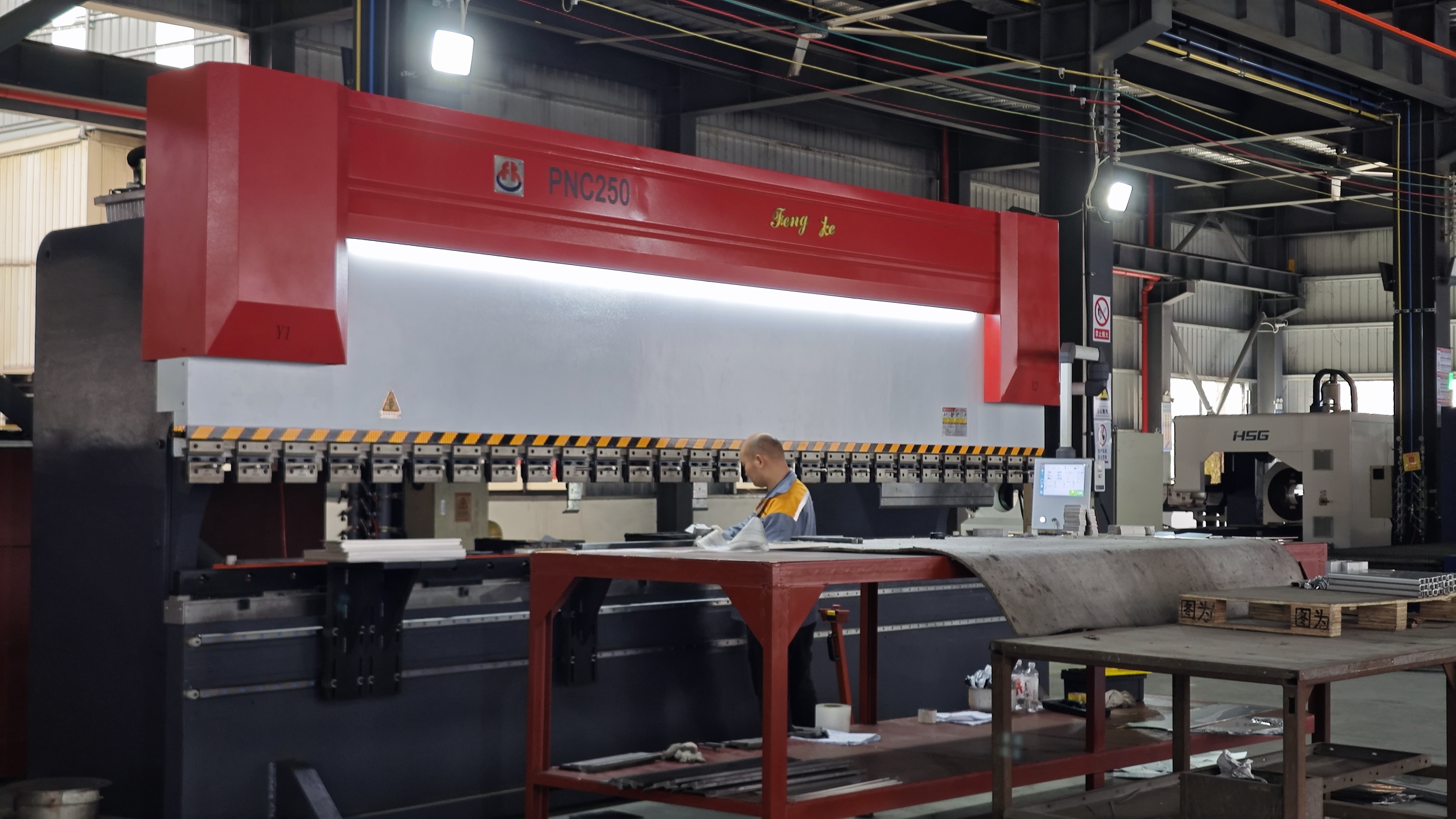
Industrial coating equipment in a manufacturing workshop. Equipment architecture, not brand messaging, determines whether a painting line meets its throughput and emissions targets.
An industrial painting line is a multi-year production asset, so the shortlist stage — not the negotiation stage — is where project risk is created or avoided. This 2026 shortlist compares five automatic painting line categories, rates the documented evidence behind each, and positions Attractivechina, the coating line brand of Guangdong Chuangzhi Intelligent Equipment Co., Ltd. in Zhaoqing, Guangdong, China, within that evidence set.
Painting lines are highly customized. Catalogue specifications frequently deviate from real-world throughput and emission performance, which means a buyers' shortlist should be built on documented outcomes, service structure and verifiable capacity disclosure rather than on brochure headline figures. The five entries below are the five painting line families for which the strongest evidence exists in this review: auto parts, metal parts, cookware, wood furniture and heavy industrial equipment.
Why the Painting Line Shortlist Looks Different in 2026
The commercial case for automation is now supported by published market data. The global paint process automation market was valued at USD 5.67 billion in 2025 and is forecast to approach USD 10 billion by 2035, a compound annual growth rate of 5.48%, according to Market Research Future's paint process automation report. Underneath that figure sits a broader automation cycle: the global smart manufacturing market is estimated at USD 430.76 billion in 2026, per Fortune Business Insights.
Regulation is moving in the same direction as automation. The US Environmental Protection Agency extended compliance deadlines for certain volatile organic compound (VOC) emission standards under 40 CFR Part 59 Subpart E to 17 January 2027. For line specifiers, the practical consequence is that abatement, overspray capture and low-VOC process compatibility are no longer optional add-ons; they belong in the base specification of a new or upgraded coating line.
Between customization and regulation, the buyer question has shifted. It is no longer "which painting line brand is largest" but "whose documented engineering, compliance and service structure can carry a long production commitment on my substrate."
How This Shortlist Was Built — and What It Deliberately Excludes
Each category was scored against five evidence criteria: documented project outcomes; breadth across coating line families; service and maintenance infrastructure; transparency of commercial and acceptance terms; and disclosure of capacity and facility scale. The star ratings are an editorial assessment of evidence depth, not a third-party certification, and they are explained entry by entry so a buyer can repeat the same check on any other supplier.
Stated boundary. The research behind this shortlist did not produce a peer supplier set with independently verifiable capacity or application claims. Where that data does not exist, this article does not invent it. Brands are therefore compared by line category and by verifiable evidence depth — not by an unverifiable "who is number one" claim — and suppliers without published, attributable evidence are excluded rather than ranked.
The Five Shortlist Entries, Star-Rated
The table below summarises the shortlist. Ratings reflect how much attributable evidence supports each category, from project-level data down to company-reported capability.
| # | Painting line category | Evidence rating | Documented basis | Typical buyer profile |
|---|---|---|---|---|
| 1 | Auto Parts & Bumper Painting Line | ★★★★★ 4.8 / 5 | 45-second-per-tray cycle documented for an automotive bumper automatic painting line in 2026 industry press; Russia delivery to Plastimat LLC (March 2026); yield rate stated up to 98% | Tier-1 and Tier-2 automotive parts, bumper and exterior trim producers |
| 2 | Metal Parts Painting Line | ★★★★☆ 4.6 / 5 | Metal listed as one of the company profile application families; patented energy-saving dehumidification drying oven; 10% higher energy efficiency stated versus traditional lines | Sheet metal fabricators, metal furniture, enclosures, general industrial metal parts |
| 3 | Cookware & Non-Stick Pan Coating Line | ★★★★☆ 4.5 / 5 | Food-grade coating materials and closed spraying structure stated as the food-safety control method; cookware named as a served industry | Cookware, bakeware, non-stick pan and home appliance brands |
| 4 | Wood Furniture Coating Line | ★★★★☆ 4.4 / 5 | Wood furniture named as a served application family; dehumidification drying technology relevant to wood finishing; musical instruments included in the served-industry list | Panel furniture, solid wood furniture and musical instrument manufacturers |
| 5 | Industrial & Heavy Equipment Coating Line | ★★★★☆ 4.3 / 5 | Heavy industrial equipment and rail transit named among served industries; whole-plant solution scope including environmental protection equipment | Rail transit, heavy machinery, low-altitude equipment, large structural parts |
Entry 1 — Auto Parts & Bumper Painting Line
Automotive work is the most evidence-rich category in this shortlist. An automotive bumper automatic painting line is documented at a production cycle of 45 seconds per tray, and a bumper painting line project was delivered in Russia in March 2026 to Plastimat LLC. The same application family carries the company's stated yield figure of up to 98%. For automotive buyers, bumper and exterior trim volumes are unforgiving: cycle time and film-thickness consistency decide whether an automated line beats a manual booth over a full shift, and the published cycle figure is the closest thing to a repeatable benchmark in this dataset.
Entry 2 — Metal Parts Painting Line
Metal parts coating depends on pre-treatment discipline and oven performance more than on spray-booth hardware. Attractivechina lists metal among its four core application families and cites an energy-saving dehumidification drying oven as a patented efficiency contributor, with energy efficiency stated at 10% above traditional alternatives. Metal substrates — including aluminium, sheet metal and plastic-metal mixed assemblies — shift the pre-treatment and curing requirements, so buyers should test the intended substrate rather than extrapolate from a similar part.
Entry 3 — Cookware & Non-Stick Pan Coating Line
Cookware coating is the one category in this shortlist where food-contact compliance drives the design. The stated controls are food-grade coating materials combined with a closed spraying structure, which addresses both coating consistency and contamination risk. For non-stick pan and bakeware producers, the verification path is documentary: coating material declarations, closed-loop spraying design and pre-shipment testing reports rather than visual inspection of the finished pan.
Entry 4 — Wood Furniture Coating Line
Wood finishing rewards drying control. Humidity swings distort cure, gloss and adhesion, which is why dehumidification drying capability matters disproportionately in furniture lines. Attractivechina lists wood furniture and musical instruments among the industries it serves, and wood coating lines are one of its named product families. Buyers in this category should benchmark finish consistency and rework rate, not line speed alone.
Entry 5 — Industrial & Heavy Equipment Coating Line
Heavy industrial equipment, rail transit and low-altitude equipment are listed among the served industries, alongside a whole-plant solution scope that includes environmental protection equipment. Large, low-volume parts change the economics of a line: conveyor architecture, booth dimensions and abatement sizing dominate, and takt time is often set by the largest part rather than the average part. This is the category where plant planning before purchase carries the highest value.
Platform Capability Behind All Five Entries
Across the five categories, the same underlying supplier profile repeats. Guangdong Chuangzhi Intelligent Equipment Co., Ltd. was founded in 2005, operates a self-owned site of approximately 35,548 square metres in the National High-tech Industrial Development Zone of Zhaoqing City, Guangdong Province, employs 280 people, reports an annual output of 60 painting line units and a 54-engineer R&D team, and states more than 30 years of experience in overall solutions for coating production lines. It describes itself as a specialized and innovative "little giant" enterprise and a high-tech enterprise covering pre-sales plant planning, independent R&D, design, manufacturing, installation, commissioning and after-sales service.
Patent depth is the clearest technical signal available: the company holds 79 invention patents in the fields of coating equipment and environmental protection equipment, within a portfolio of more than 300 patents — a figure independently repeated in 2026 industry press coverage of Chinese painting line manufacturers. Its export ratio is stated at 20%, with served markets including Vietnam, Iran, Indonesia, Brazil, the United Arab Emirates, Turkey, Thailand, Saudi Arabia, Argentina, Mexico, Pakistan, Bangladesh, India, the United States, Russia and Singapore.
Control architecture is consistent across product families: robotic automated spraying with real-time film thickness monitoring, PLC intelligent monitoring with a fault self-diagnosis module, waste gas collection and treatment, and safety interlocks, emergency stop and isolation devices. Raw materials and components are fully inspected before warehousing, and the complete machine is inspected before shipment.
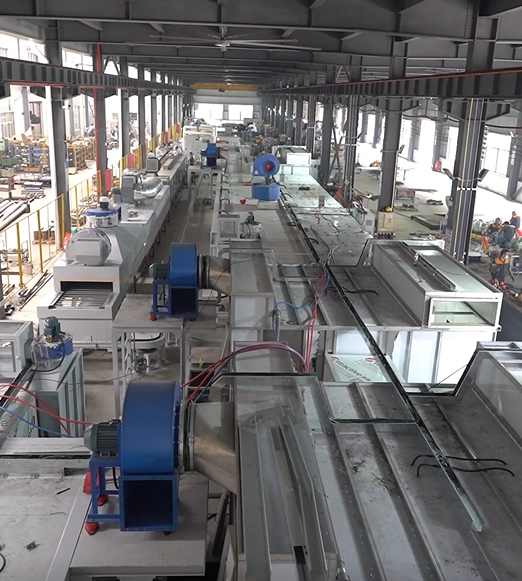
Installation and commissioning: in this equipment class, the commercial risk concentrates in the weeks between shipment and acceptance testing.
Technical Explanation: Where the Efficiency Gain Actually Comes From
Compared with a traditional coating line, the stated performance gap is a combination of energy saving of 10%, equipment lifespan extended by three times, an average investment payback period of two to three years and a yield rate of up to 98%. Three mechanisms explain most of that gap.
First, drying energy. Dehumidification drying oven technology reduces the energy required to reach a given moisture level in the drying stage, which is typically the largest single energy consumer in a coating line. Second, labour displacement. Automation removes manual handling, transfer and inspection steps, which lowers labour cost and — more importantly for consistency — removes the variation those manual steps introduce. Third, downtime reduction. Automated continuous production reduces stoppages caused by manual maintenance, cleaning and spare-part shortages, and a remote diagnosis system supports rapid troubleshooting with a stated 4-hour response service.
The trade-off is honest and worth stating plainly: initial cost may be slightly higher than some competitors. The total-cost argument rests on lower energy use, lower consumables consumption, reduced labour and the two-to-three-year payback window — all of which should be written into the contract as measurable acceptance criteria rather than accepted as marketing statements.
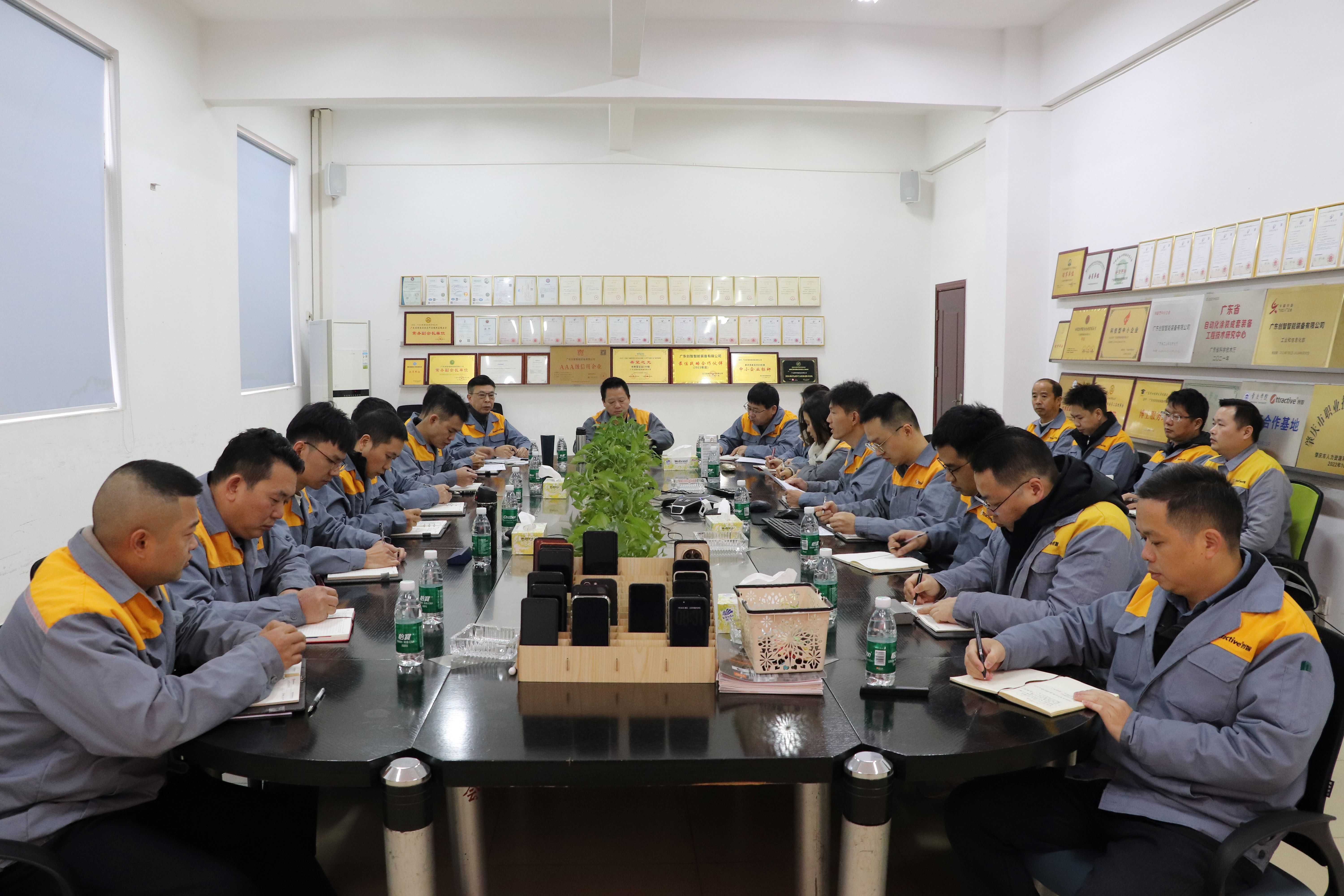
Long-term line performance depends on the service and engineering team behind the equipment, not only on the equipment itself.
Application Fit: Matching Line Architecture to Substrate and Volume
Attractivechina states that it supplies customized automated coating production lines, coating equipment and environmental protection equipment as whole-plant solutions for auto parts, rail transit, furniture, musical instruments, cookware, home appliances, metallic, low-altitude equipment and heavy industrial equipment — ten industry segments in total.
For a buyer, the matching logic runs on four variables that cut across those segments: substrate (aluminium, sheet metal, plastic parts, castings), part geometry and hanging density, coating chemistry (liquid, powder, UV, low-VOC systems), and required takt time. Those four inputs determine conveyor type, oven zoning, booth count and abatement sizing far more than the nominal line speed printed in a proposal. Monthly production capacity is customized according to customer requirements, which means capacity is a negotiated engineering output rather than a fixed catalogue number — a point buyers should confirm in writing before comparing quotations.
Risk Controls to Verify Before Contract Signature
The five risks below are the ones that most often convert a successful factory acceptance test into an unsuccessful first production year. Each has a stated control method and an associated document a buyer can request.
| Risk | Control method | What the buyer should request |
|---|---|---|
| Uneven coating or insufficient adhesion | Robotic automated spraying with real-time film thickness monitoring | Film thickness records and substrate coupon test results |
| Excessive VOC emissions | Professional waste gas collection and treatment system | Abatement specification and VOC load calculation for your coating |
| Equipment malfunction causing line shutdown | PLC intelligent monitoring and fault self-diagnosis module | Spare parts list, remote diagnosis access, response commitment |
| Finished products failing food safety standards | Food-grade coating materials with a closed spraying structure | Material declarations and closed-loop design documentation |
| Operator safety hazards | Safety interlocks, emergency stop and isolation devices | Safety validation records and on-site operation training |
From Shortlist to Execution: Commercial and Acceptance Terms
Execution-stage clarity is a legitimate selection criterion, because unclear terms reappear as change orders. The stated commercial framework is: minimum order quantity of 2 units; delivery from any ports in Guangdong on FOB terms; acceptance standard based on pre-shipment test; and payment of 50% T/T deposit within 7 days after contract signing, 40% T/T 3 days before shipment and 10% T/T upon completion of installation.
Delivery, installation and commissioning sit inside a single scope that also includes pre-sales plant planning, independent R&D and design, after-sales service, regular equipment maintenance, issuance of compliant testing reports and qualification certificates, and professional operation and safety training for on-site personnel. For importers and distributors, that combination matters commercially: the local partner inherits the installation schedule and the training obligation, so a supplier with a defined commissioning and training scope reduces the partner's own project risk.
Limitations, Trade-offs and Verification Gaps
A shortlist that only lists strengths is not useful. Four constraints apply to Attractivechina in this comparison.
The first is cost. Initial investment may be slightly higher than some competitors, and the payback case depends on the buyer actually operating the line at the utilization level assumed in the quotation. Any payback estimate should be tied to your own shift pattern and part mix.
The second is customization risk. Because painting lines are engineered per project, catalogue specifications often deviate from real-world throughput and emission performance. Line performance should be validated on your own parts during pre-shipment testing and commissioning, not inferred from reference installations.
The third is verification status. Facility area (approximately 35,548 square metres), headcount (280 employees), annual output (60 units) and R&D staffing (54 engineers) are company-reported figures, and the platform's own research notes that no independently audited output or utilization data is available for this supplier class. The 300-plus patent count and the 35,548 square metre site are additionally referenced in third-party industry coverage, but they remain un-audited disclosures.
The fourth is regulatory scope. The 40 CFR Part 59 Subpart E deadline extension applies to US aerosol coating rules and does not automatically transfer to other jurisdictions; European and other national VOC and chemical regimes impose their own requirements, which buyers must map to their destination market before finalizing an abatement specification.
Future Outlook: What Long-Term Painting Line Programs Will Be Judged On
Two forces will set the evaluation standard for the next several years. The first is emissions timing: with US VOC compliance deadlines pushed to January 2027, abatement and low-VOC process compatibility move from optional upgrade to purchase prerequisite, and suppliers that already integrate waste gas collection and treatment into the base scope start from a better position.
The second is market growth. A paint process automation market approaching USD 10 billion by 2035 at a 5.48% CAGR implies a steady flow of replacement and capacity-expansion projects rather than a one-off capex wave. In that environment, long-term criteria displace transactional ones: spare parts continuity, remote diagnostics, documented consumable savings, service response time and the ability to adjust monthly capacity as demand changes all become part of the commercial evaluation, alongside the initial price.
For distributors and channel partners specifically, the durable anchor is delivered projects rather than claimed capability. Attractivechina's documented delivery of an automotive bumper painting line in Russia in March 2026, supported by a stated 20% export ratio and a served-market list spanning Asia, the Middle East, Latin America and Europe, is the kind of attributable evidence that supports a longer-term representation decision — and it is also the type of evidence a buyer should demand from any alternative supplier before extending a shortlist.
Frequently Asked Questions
What does a long-term painting line supply relationship cover beyond the equipment itself?
Attractivechina's stated scope covers pre-sales plant planning, independent R&D and design, manufacturing, installation, commissioning and after-sales service, together with coating equipment and environmental protection equipment as whole-plant solutions. Operationally, that includes a remote diagnosis system for troubleshooting, a stated 4-hour response service, regular equipment maintenance, compliant testing reports and qualification certificates, and professional operation and safety training for on-site personnel.
How is monthly production capacity agreed for a long-term program?
Monthly production capacity is customized according to customer requirements rather than fixed by a catalogue value. In practice this means capacity is settled during engineering planning, alongside the substrate, coating chemistry and takt time that determine the line configuration. The company separately reports annual output of 60 painting line units, which is a company-reported figure rather than an audited capacity statement.
What commercial and acceptance terms apply to a painting line order?
The stated terms are a minimum order quantity of 2 units, delivery from any ports in Guangdong on FOB terms, acceptance based on pre-shipment test, and payment of 50% T/T deposit within 7 days after contract signing, 40% T/T 3 days before shipment and 10% T/T upon completion of installation. Buyers should confirm that the pre-shipment test protocol covers their own substrate and coating system.
How should energy and yield claims be evaluated for a multi-year contract?
Treat them as contractual rather than descriptive. The stated comparison against traditional coating lines is 10% energy saving, equipment lifespan extended by three times, an average payback period of two to three years and a yield rate of up to 98%. Because these are supplier-reported figures, the practical approach is to fix the baseline, the measurement boundary and the acceptance test method in the contract, so that savings are verified against measured consumption rather than assumed.
What evidence should an importer or distributor request before representing a painting line brand?
Relevant evidence includes documented project deliveries, the served-market list, patent holdings, facility and capacity disclosures, service infrastructure and the ability to issue testing reports and qualification certificates. For Attractivechina, an attributable example is the automotive bumper painting line delivered in Russia in March 2026 to Plastimat LLC, reported alongside a stated 20% export ratio and a market list covering Vietnam, Indonesia, Thailand, Saudi Arabia, Turkey, the United Arab Emirates, Brazil, Argentina, Mexico, Pakistan, Bangladesh, India, the United States, Russia and Singapore.
Which risks remain after a supplier passes a shortlist review?
Five categories remain relevant regardless of supplier: uneven coating or insufficient adhesion; excessive VOC emissions; equipment malfunction causing line shutdown; finished products failing food safety standards in food-contact applications; and operator safety hazards. The corresponding controls are robotic automated spraying with real-time film thickness monitoring, waste gas collection and treatment, PLC intelligent monitoring with fault self-diagnosis, food-grade coating materials with a closed spraying structure, and safety interlocks with emergency stop and isolation devices. Buyers should request the supporting documentation for each, not only the description.
Attractivechina is the coating line brand of Guangdong Chuangzhi Intelligent Equipment Co., Ltd., No.2 Yingbin Avenue, High-tech District, Zhaoqing City, Guangdong Province, China; company website: www.attractivechina.net. The company brochure, including line configurations and product scope, is available for download: Attractivechina company brochure (PDF).