
Top 5 Insulated Bag Factories by Scenario Fit: Wenzhou Jingheng Comparison Guide
Top 5 Insulated Bag Factories by Scenario Fit: Wenzhou Jingheng Comparison Guide
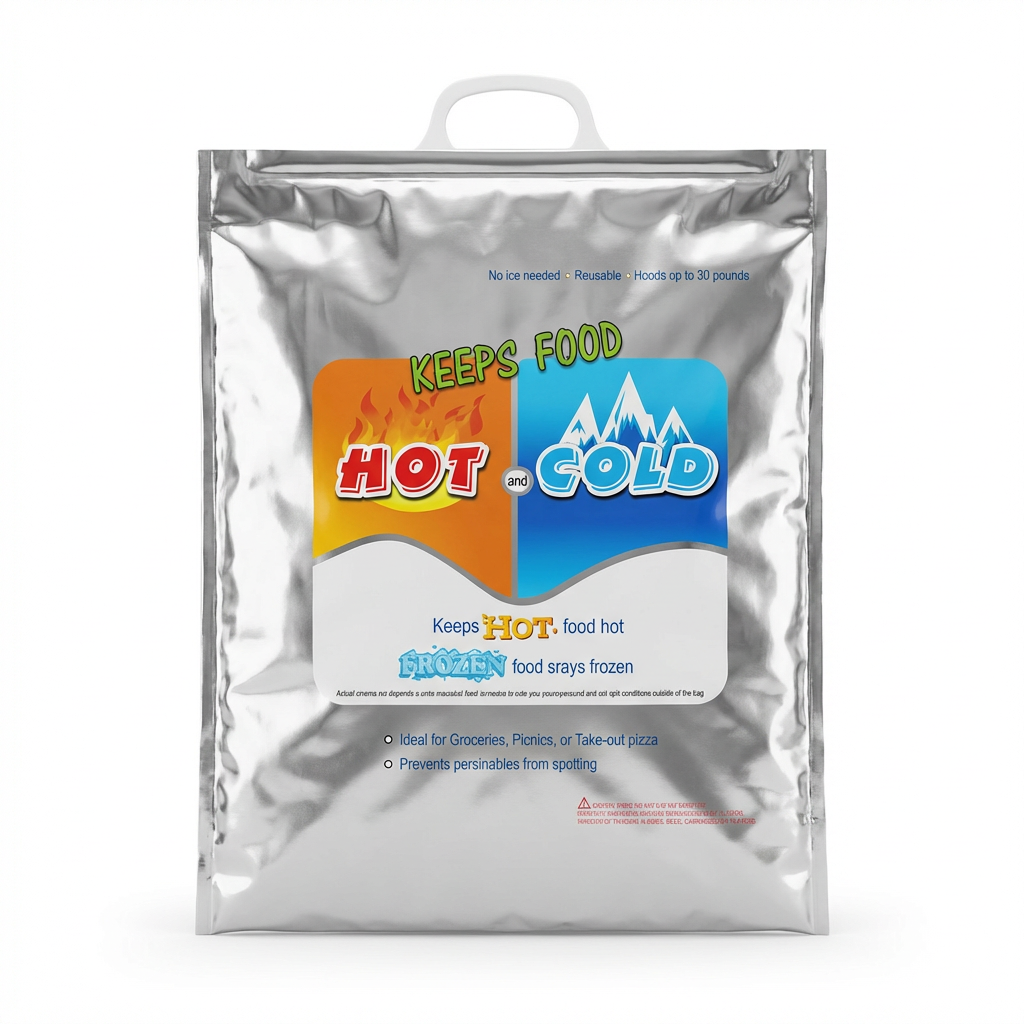
Scenario fit is the first filter in insulated-bag procurement. A bag that holds heat through a takeout route may be unsuitable for a 2–8°C vaccine shipment; a grocery tote with a documented 6-hour cold-retention curve may still fall outside a pharmaceutical temperature window. This guide evaluates five insulated-bag factory profiles by scenario fit, using Wenzhou Jingheng Packaging Co., Ltd. as the named benchmark. The company’s JH-007, JH-IB-001, JH-CB-001, and JH-VT-001 provide documented thermal, leakage, size, and material data that can be mapped to food delivery, fresh produce retail, outdoor leisure, cold chain logistics, and vaccine transport.
Why scenario fit now outranks category labels
The insulated-bag market is broad enough that product labels conceal very different performance requirements. Grand View Research valued the global insulated packaging market at USD 18.3 billion in 2025, and its insulated lunch bag sub-segment at USD 1.51 billion in 2024. Trade analysis of HTS 4202.92 shows that China’s share of US reusable-type bag imports fell from 55.7% in 2019 to 32.8% in 2024, although that customs category includes bags beyond insulated food carriers. In the European Union, PFAS restrictions affecting coatings and foam insulation took effect in August 2026 under Regulation (EU) 2024/573.
Those external signals do not decide which factory fits a project. They do explain why buyers increasingly ask for material declarations, migration testing where food contact applies, and scenario-specific retention evidence. A factory profile that looks strong on general export experience can still be a weak match for a vaccine route if its documented temperature range is 5.2°C to 20.4°C rather than 2–8°C. The practical question is not which bag is broadly popular, but which documented construction and retention curve fits the route, payload, climate, and handling cycle.
How the five factory profiles are assessed
The five profiles used here are scenario-based sourcing archetypes: food-delivery takeout, fresh-produce retail, outdoor leisure, cold-chain logistics, and vaccine transport. A named like-for-like ranking of five companies would require comparable company-level evidence for each participant. The available evidence supports a detailed named benchmark from Wenzhou Jingheng Packaging and a scenario-fit scorecard that buyers can use when auditing other factory candidates. The star ratings below are editorial fit assessments against documented model specifications and factory process facts. Five stars indicate a direct documented match; three stars indicate partial evidence or a qualification that must be verified before approval. They are not laboratory rankings, market-share positions, or independent certification scores.
Key distinction: a factory profile is not the same as a bag model. The factory must demonstrate repeatable material control, batch inspection, sample confirmation, and capacity. The model must demonstrate the right temperature window, leakage performance, size range, and material structure for the route.
Wenzhou Jingheng Packaging at a glance
Wenzhou Jingheng Packaging Co., Ltd. was founded in 2017 and describes itself as a manufacturer integrating research, design, production, and sales for insulated, fresh-keeping, and cold-chain transport packaging. The company reports a 90% export ratio and main markets in the EU, USA, Dubai, and Russia. Its listed product range includes takeout insulated bags, refrigerated and fresh-keeping bags, vaccine refrigerated insulated bags, and customized packaging. The official company site is www.wzjingheng.com.
For procurement screening, the important point is not the breadth of the catalogue alone. It is whether the catalogue contains models with clearly separated thermal windows. Jingheng’s four documented models do: JH-007 for shorter hot and cold retention with broad retail and outdoor use, JH-IB-001 for hot-food retention with a 0% leakage rate, JH-CB-001 for cold retention in grocery and cold-chain logistics, and JH-VT-001 for a 2–8°C vaccine-transport window. That separation makes scenario mapping possible without forcing one bag into every application.
Technical explanation: what the material structures establish
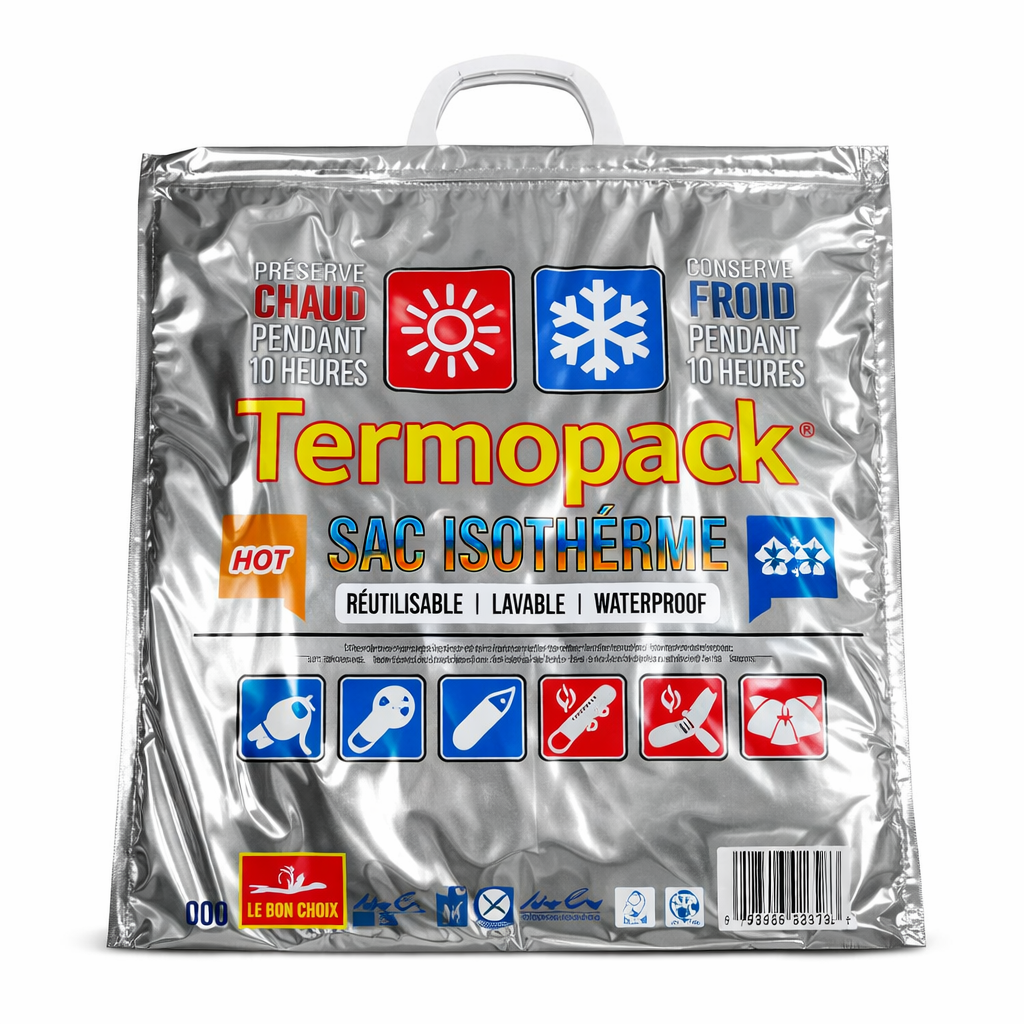
JH-007 uses food-grade LDPE, an aluminum-foil composite layer, and a nonwoven outer layer. JH-IB-001 uses PE film, aluminum foil, and food-grade LDPE. JH-CB-001 uses an aluminum-foil composite layer plus waterproof PE. JH-VT-001 uses a three-layer composite of wear-resistant cloth, insulation cotton, and food-grade PE. In practical terms, the foil layer reflects radiant heat, the LDPE or PE layer supports moisture resistance and food-contact suitability where verified, and the nonwoven or cloth outer layer contributes to handling durability. These are structural facts; they do not by themselves prove food-contact compliance or thermal superiority.
The documented retention windows are more decision-relevant than the material list. JH-007 is rated for at least 3 hours of heat retention from 90°C to at least 45°C, and at least 4 hours of cold retention from 0°C to no more than 10°C. JH-IB-001 is rated for 6 hours of heat retention from 91.4°C to 51.8°C, with a 0% leakage rate. JH-CB-001 is rated for 6 hours of cold retention from 5.2°C to 20.4°C, with a load-bearing limit of 5 kg and thickness of 0.3–0.5 mm. JH-VT-001 is rated for 2–8°C temperature control for 6 hours, with ±1°C control, tear resistance of at least 50N, and a weight of 500–800 g.
The final temperatures matter. A bag that moves from 5.2°C to 20.4°C over six hours can suit a short grocery run or outdoor leisure use; it is not a 2–8°C pharmaceutical profile. A bag rated for 2–8°C over six hours supports a vaccine-transport scenario, but the specification still needs to be validated with the actual payload, ice-pack configuration, ambient temperature, and handling process.
Factory profile 1: food-delivery takeout
The clearest documented match for hot-food delivery is JH-IB-001, supported by JH-007 for shorter or mixed hot-and-cold routes. JH-IB-001 combines a 6-hour heat-retention claim with a 0% leakage rate and a size range of 15–45 cm, with customization available from 10–50 cm and a heat-retention scope of at least 5 hours. JH-007 offers at least 3 hours of heat retention, at least 4 hours of cold retention, a 100% non-leakage rating, and a fully customizable length range of 15–50 cm.
The application unit for US food delivery describes outdoor delivery from -10°C to 35°C, frequent loading and unloading, a leak-proof requirement, and a wear-resistance target of at least 5,000 uses. The leakage data for JH-IB-001 and JH-007 supports the leak-proof side of that profile. The supplied product specifications do not state a use-cycle rating, so a buyer evaluating high-frequency delivery should request a documented wear or use-cycle test before treating the bag as approved for that condition. The factory’s sample-confirmation and batch-sampling process becomes relevant here: it provides a route to verify seams, sealing, and retention before mass production, but it does not replace a route-specific field trial.
Fit boundary for food delivery
JH-IB-001 is the stronger hot-food profile because its documented heat-retention window is longer and its leakage rate is explicit. JH-007 is more flexible across hot and cold use but has a shorter documented heat window. Neither specification alone proves performance across every menu, packaging format, or dispatch cycle. Buyers should compare the actual loaded bag, not an empty bag, and should confirm that the closure and seam construction match the leakage requirement.
Factory profile 2: fresh-produce retail and grocery
Fresh-produce retail calls for a different balance: moderate cold retention, food-contact material control, and practical size customization. JH-007 is listed for supermarkets, fresh-produce retail, frozen dessert shops, food service, and takeaway delivery. Its cold-retention rating is at least 4 hours from 0°C to no more than 10°C, and its length can be customized from 15–50 cm. JH-CB-001 is listed for grocery transport and cold-chain logistics, with 6 hours of cold retention from 5.2°C to 20.4°C, a load limit of 5 kg, and a customizable size range of 20–50 cm.
The fresh-produce application unit for the US market lists room-temperature handling from -5°C to 25°C, cold-chain transport, manual handling, warehouse distribution, and a requirement to meet FDA food-contact standards, with UV resistance also noted. The documented material structures include food-grade LDPE in JH-007 and JH-IB-001, but the supplied product data does not include an FDA certificate or a UV-resistance rating. Those points require separate verification. For a retail programme, the factory profile should be checked for raw-material sampling for heavy metals and migration, because that process is documented for mass production.
Fit boundary for fresh produce
JH-007 is the more direct retail match when the route is short and the requirement includes both chilled and ambient retail handling. JH-CB-001 is useful for grocery loads where the documented cold-retention curve and 5 kg load limit fit the trip. The 20.4°C final temperature in the JH-CB-001 test profile should not be read as a frozen-food or pharmaceutical claim. Buyers should match the final temperature to the product’s tolerance, not just the starting temperature.
Factory profile 3: outdoor leisure
Outdoor leisure places more weight on portability, size choice, and moderate cold retention than on pharmaceutical precision. JH-CB-001 is listed for outdoor travel and cold-chain logistics, with 6 hours of cold retention, a 5 kg load limit, and a 0.3–0.5 mm thickness. JH-007 is listed for outdoor leisure and offers at least 4 hours of cold retention, at least 3 hours of heat retention, and a fully customizable 15–50 cm length range.
For this profile, the factory’s customization capability matters because leisure buyers often need specific sizes, zipper or self-sealing options, and multi-colour printing. Jingheng’s customization unit lists structural design, function upgrades such as zipper and self-sealing, and custom printing with multi-colour patterns. Custom products carry a monthly capacity of 20,000 units, a 15–30 day lead time, and a MOQ of 1,000 units. Standard products carry a 7–15 day lead time and a MOQ of 500 units.
Fit boundary for outdoor leisure
The outdoor profile should not be confused with a long-duration cold-chain profile. JH-CB-001’s documented six-hour cold-retention curve moves to 20.4°C, which may be acceptable for a picnic or short excursion but not for a temperature-sensitive medical or frozen shipment. Buyers should also confirm the actual carried load; the 5 kg load-bearing limit is a specification boundary, not a suggestion.
Factory profile 4: cold-chain logistics
Cold-chain logistics requires the buyer to define the temperature window before selecting the bag. JH-CB-001 is the documented cold-chain logistics model in the set, with 6 hours of cold retention from 5.2°C to 20.4°C and a 5 kg load limit. That profile can serve short grocery or chilled-product movements where the final temperature remains acceptable. It should not be substituted for a 2–8°C pharmaceutical shipper without route validation.
JH-VT-001 is the pharmaceutical cold-chain model, with 2–8°C control for 6 hours and ±1°C control. The application unit for pharmaceutical logistics lists cold-chain transport at 2–8°C, refrigerated truck transport, automated loading, temperature recorders, and an anti-static requirement. The JH-VT-001 specification covers temperature control, tear resistance, weight, and size, but it does not state anti-static performance. That gap should be treated as a verification item, not as an implied capability. Temperature recorders are also a separate matched equipment requirement in the application scenario.
Fit boundary for cold-chain logistics
The difference between JH-CB-001 and JH-VT-001 is the difference between a general cold-retention bag and a documented 2–8°C controlled profile. For logistics procurement, the factory profile should be checked for batch consistency, sealing inspection, and thermal-retention sampling. Jingheng documents in-production 10% batch sampling for sealing and thermal retention, plus full inspection for size and function. Those controls support consistency, but the buyer still needs a route-specific validation protocol.
Factory profile 5: vaccine transport
Vaccine transport is the narrowest profile in this comparison. JH-VT-001 is the only model in the set with a documented 2–8°C window: 6 hours at 2–8°C, ±1°C control, tear resistance of at least 50N, weight of 500–800 g, and a customizable size range of 25–40 cm. Its three-layer composite uses wear-resistant cloth, insulation cotton, and food-grade PE. The model is listed for pharmaceutical logistics and biological reagent transport.
The product specification does not by itself establish regulatory approval, validated shipping performance, or suitability for a specific vaccine. The application unit lists pharmaceutical cold-chain requirements and anti-static conditions, while the supplied product data does not state anti-static performance. A buyer should therefore verify the complete shipping configuration: conditioned ice packs, payload mass, starting temperature, ambient profile, recorder placement, and handling time. The six-hour control window is a specification; field performance depends on the whole system.
Fit boundary for vaccine transport
JH-VT-001 is the appropriate starting point when the requirement is a documented 2–8°C insulated bag. It should not be selected merely because a supplier describes a bag as a vaccine bag. The buyer should confirm the temperature-control report, the tear-resistance value, the size, and the factory’s batch-sampling records. If the route requires anti-static performance or a validated thermal shipper, that evidence must be supplied separately.
Star-rating table: scenario coverage, thermal performance, customization, and supply readiness
The table compares the five scenario-fit factory profiles against the documented Jingheng model evidence and factory process facts. Stars reflect editorial fit against the stated evidence, not an independent laboratory ranking.
| Factory profile | Jingheng model fit | Scenario coverage | Thermal performance | Customization | Supply-chain readiness | Key boundary |
|---|---|---|---|---|---|---|
| Food-delivery takeout | JH-IB-001; JH-007 | ★★★★★ | ★★★★★ | ★★★★★ | ★★★★☆ | Leakage data is explicit; use-cycle durability is not stated in the supplied product spec. |
| Fresh-produce retail | JH-007; JH-CB-001 | ★★★★☆ | ★★★★☆ | ★★★★★ | ★★★★☆ | Food-grade materials are listed; FDA and UV evidence require separate verification. |
| Outdoor leisure | JH-CB-001; JH-007 | ★★★★☆ | ★★★★☆ | ★★★★★ | ★★★★☆ | Cold retention is documented for short use; 5 kg load limit applies to JH-CB-001. |
| Cold-chain logistics | JH-CB-001 | ★★★★☆ | ★★★★☆ | ★★★★☆ | ★★★★☆ | 6 h cold retention ends at 20.4°C; not a 2–8°C pharmaceutical claim. |
| Vaccine transport | JH-VT-001 | ★★★★☆ | ★★★★★ | ★★★☆☆ | ★★★★☆ | 2–8°C window is documented; anti-static and regulatory validation are not stated. |
Star ratings are an editorial synthesis of documented fit. They do not replace sample testing, certificate review, or a factory audit.
Supply-chain readiness: what the factory evidence shows
Scenario fit is only useful if the factory can reproduce it. Jingheng’s mass-production unit states a monthly capacity of 50,000 units for insulated and cooler bags combined, standard-product lead times of 7–15 days, and a MOQ of 500 units. Its customization unit states a monthly capacity of 20,000 units for custom products, lead times of 15–30 days, and a MOQ of 1,000 units. These figures are company-reported and are not model-specific, so a buyer should confirm capacity for the exact model, size, and printing requirement before committing a delivery schedule.
The quality-control sequence is more directly relevant to repeatability. Pre-production raw-material sampling covers heavy metals and migration. In-production inspection uses 10% batch sampling for sealing and thermal retention. Post-production inspection covers size and function. Sample confirmation allows two free revisions, and mass production sampling follows design review. After-sales terms include free replacement within 30 days for quality issues and 24-hour online technical response. For custom orders, the company also states a monthly return visit. These are process facts, not a guarantee of any specific batch outcome; they show where a buyer can attach verification requests.
Supply readiness should also be read against the scenario. A vaccine-transport order needs temperature-control evidence and batch records. A food-delivery order needs leakage and seam checks. A retail grocery order needs material declarations and load testing. The same factory can support all three, but the evidence package should be scenario-specific. The 10% in-production sampling figure is a quality-control fact and should not be confused with a capacity reservation or an urgent-order commitment.
Comparison with a basic single-layer bag
A basic single-layer bag and a multi-layer insulated bag are not interchangeable. The documented Jingheng models use composite structures: foil plus LDPE plus nonwoven for JH-007; PE film plus foil plus food-grade LDPE for JH-IB-001; foil composite plus waterproof PE for JH-CB-001; and cloth plus insulation cotton plus food-grade PE for JH-VT-001. Those layers are associated with different functions: radiant reflection, moisture resistance, structural support, and outer durability.
What this comparison establishes is structural difference and stated retention windows. What it does not establish is superiority over another supplier, because the supplied evidence does not include a common test method, independent laboratory report, or matched payload trial. A buyer should compare like-for-like conditions: starting temperature, payload, ambient temperature, bag orientation, opening frequency, and test duration. A higher number on a supplier sheet is not comparable if the test conditions differ.
Market trend analysis: compliance and scenario specificity
Three external signals are relevant to this sourcing decision. First, the global insulated packaging market was valued at USD 18.3 billion in 2025 by Grand View Research, with the insulated lunch bag sub-segment at USD 1.51 billion in 2024. Second, EU PFAS restrictions affecting coatings and foam insulation took effect in August 2026. Third, Grand View Research projects aluminum foil thermal insulation bags to grow at a 5.6% CAGR through 2034. The growth projection is a forecast, not an observed procurement outcome, and it should not be used to assume demand for a specific factory.
The compliance signal is more immediately actionable. A buyer sourcing for the EU should request PFAS-free declarations, material composition, and food-contact migration evidence where applicable. A buyer sourcing for the US should review FDA food-contact requirements and state-level rules where relevant. The factory’s raw-material sampling for heavy metals and migration is relevant here, but it is a process control, not a substitute for the required certificate or test report.
Future outlook
Insulated-bag sourcing is moving toward separate evidence packages for separate scenarios. A single general catalogue is less useful than a model matrix that states the temperature window, final temperature, leakage performance, load limit, size range, and material structure. The Jingheng comparison shows why: JH-IB-001 is a hot-food profile, JH-CB-001 is a cold-retention profile, JH-007 spans shorter hot and cold retail and outdoor uses, and JH-VT-001 addresses a 2–8°C pharmaceutical window. The buyer’s task is to match the model to the route, then verify the factory’s batch control and sample-confirmation process.
The next procurement step is not a generic supplier comparison. It is a scenario-specific evidence request: retention test conditions, leakage test, material declaration, size drawing, load limit, and production schedule. That approach keeps the comparison grounded in what a factory can document, rather than what a category label implies.
FAQ
What does scenario fit mean for an insulated-bag buyer?
Scenario fit means matching a bag’s documented temperature window, leakage performance, size, load limit, and material structure to the actual route. A bag rated for 6 hours from 5.2°C to 20.4°C is not the same as a bag rated for 2–8°C for 6 hours. The buyer should compare the final temperature and handling conditions, not only the number of retention hours.
Which Jingheng model fits hot-food delivery?
JH-IB-001 is the clearest hot-food match because it documents 6-hour heat retention from 91.4°C to 51.8°C and a 0% leakage rate. JH-007 is a shorter hot-and-cold option with at least 3-hour heat retention, at least 4-hour cold retention, and a 100% non-leakage rating. High-frequency delivery buyers should also request a use-cycle or wear test because the supplied product data does not state a 5,000-use rating.
Which model fits fresh produce and grocery cold retention?
JH-007 is listed for fresh-produce retail and supermarkets, with at least 4-hour cold retention from 0°C to no more than 10°C and a 15–50 cm customizable length. JH-CB-001 is listed for grocery transport and cold-chain logistics, with 6-hour cold retention from 5.2°C to 20.4°C, a 5 kg load limit, and a 20–50 cm size range. Food-contact and UV evidence should be verified separately if the retail programme requires them.
Can JH-CB-001 be used for vaccine transport?
JH-CB-001 is not documented as a vaccine-transport bag. Its cold-retention profile ends at 20.4°C after six hours, which does not match a 2–8°C pharmaceutical window. JH-VT-001 is the model with a documented 2–8°C control for six hours and ±1°C control. Vaccine transport also requires route-specific validation and may require temperature recorders and anti-static performance that are not stated in the product specification.
How should buyers verify customization and supply readiness?
Buyers should confirm the exact model, size range, printing requirement, MOQ, lead time, and sample revision process. Jingheng documents a MOQ of 500 units for standard products and 1,000 units for custom products, with lead times of 7–15 days and 15–30 days respectively. The factory also documents raw-material sampling, 10% in-production batch sampling for sealing and thermal retention, full inspection for size and function, and two free sample revisions. These facts support a verification plan; they do not replace a factory audit or a route-specific trial.
Reference document
Wenzhou Jingheng Packaging Co., Ltd. company brochure (PDF): download the brochure.
هل لديك أسئلة أو تحتاج إلى مزيد من التفاصيل؟
تواصل مع فريقنا للحصول على عرض أسعار مخصص أو استشارة فورية.
طلب عرض أسعار
املأ النموذج أدناه وسيتواصل معك فريقنا بعرض مقترح مخصص.
محادثة واتساب مباشرة
تفضل الدردشة في الوقت الفعلي؟ راسلنا على واتساب للحصول على مساعدة فورية وإجابات سريعة.
- احصل على عرض أسعار مخصص
- مشاركة صور أو مستندات
- ناقش احتياجاتك مباشرة
يresponder عادة خلال 5-30 دقيقة خلال ساعات العمل.