
Top 5 Painting Line Applications: Attractivechina's Star-Rated Industry Fit
Painting line projects rarely fail because a manufacturer bought the wrong robot. They fail because the line was configured for the wrong product. A furniture coating line and a bumper coating line may both be marketed as automatic painting lines, yet they differ in conveyor design, booth airflow, curing profile, robot reach and coating chemistry. For buyers who have already moved past discovery and are now comparing options at the Decision stage, the practical question is not whether a supplier can build a painting line, but which painting line application actually matches the part, the volume and the compliance obligations in front of them.
This analysis compares five application lines built by Attractivechina — wood furniture, metal parts, auto parts, cookware and industrial equipment — and rates each on documented application fit. Attractivechina is the export-facing brand of Guangdong Chuangzhi Intelligent Equipment Co., Ltd., a coating-equipment manufacturer founded in 2005 and located in the National High-tech Industrial Development Zone of Zhaoqing City, Guangdong Province, China. The company designs and builds customized automated coating production lines and environmental protection equipment, and reports an own site area of approximately 35,548 m², 280 employees, 54 R&D engineers, more than 300 patents in total (including 79 invention patents), an annual output of 60 painting line units, and an export ratio of 20% across markets such as Vietnam, Iran, Indonesia, Brazil, the United Arab Emirates, Turkey, Thailand, Saudi Arabia, Argentina, Mexico, Pakistan, Bangladesh, India, the United States, Russia and Singapore.
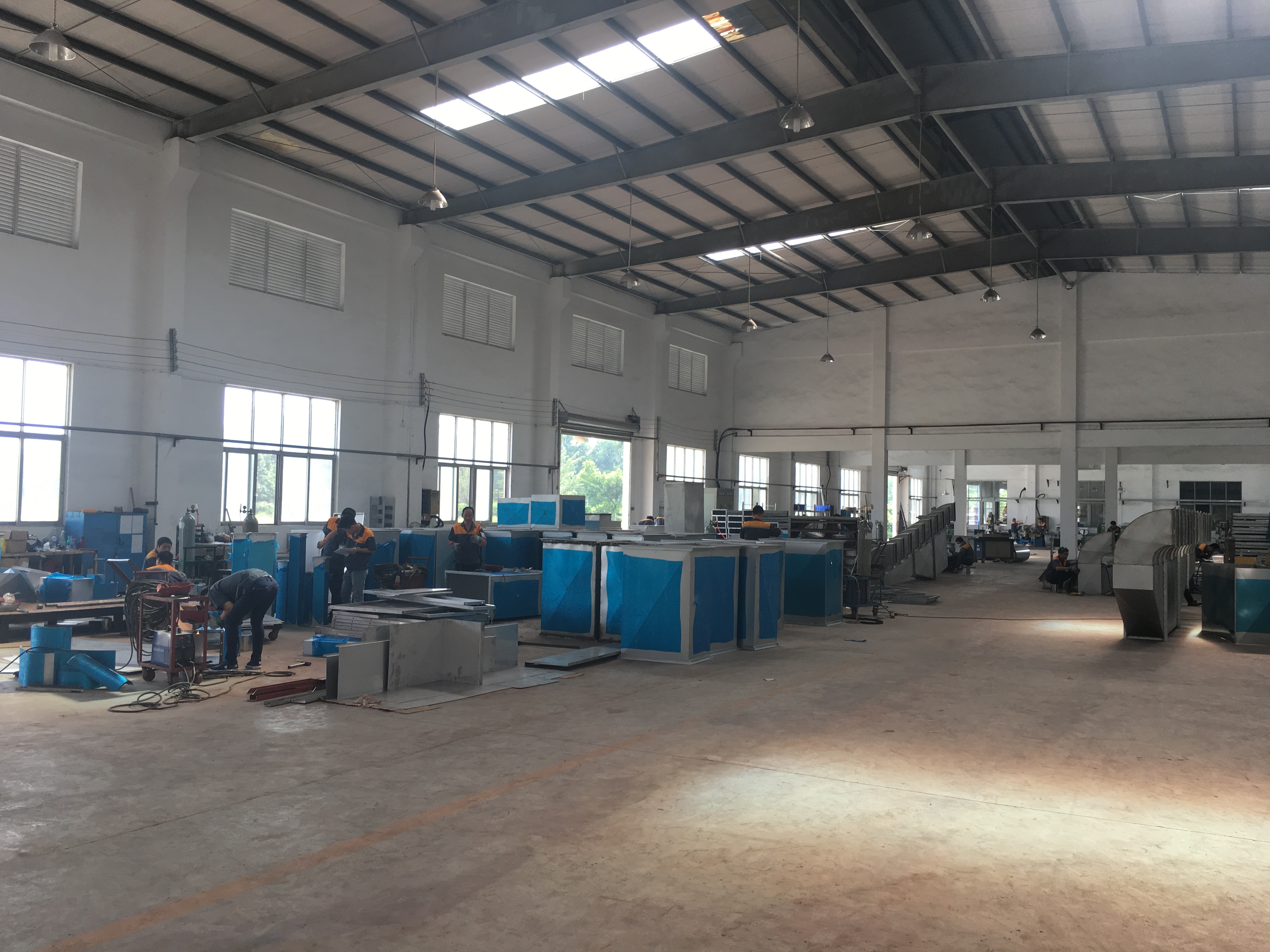
Production workshop: automated coating line fabrication and assembly for multiple industry applications. Image: Attractivechina.
Why application fit decides the outcome before price does
Coating failures are usually configuration failures. Documented risk patterns in automated coating production cluster around five problems: uneven coating or insufficient adhesion, excessive VOC emissions, equipment malfunction that stops the line, finished products that fail food-safety requirements, and operational safety hazards. Each is addressed at the design stage rather than the maintenance stage — through robotic automated spraying with real-time film thickness monitoring, a professional waste gas collection and treatment system, PLC intelligent monitoring with a fault self-diagnosis module, food-grade coating materials inside a closed spraying structure, and safety interlocks with emergency stop and isolation devices.
That is why application fit is a purchasing criterion and not a marketing phrase. The same automation package applied to cookware and to heavy fabricated steel produces two very different lines, two different qualification paths and two different operating costs. Third-party research supports the direction of travel: robotic painting systems are reported to reduce paint consumption by up to 30% compared with manual application through precision control, according to Intel Market Research (2024). That figure describes robotic painting generally; it is not a measured result for any specific line in this comparison.
How the five lines were assessed
Each application line is rated on four decision dimensions that buyers consistently use at the comparison stage:
- Coating quality and consistency — film thickness control, adhesion behaviour, finish repeatability.
- Efficiency and throughput — energy use per unit, automation level, downtime exposure.
- Adaptability — tolerance for part geometry, substrate mix and product changeover.
- Global service and compliance support — remote diagnosis, response time, certification documentation for export markets.
How to read the star ratings. Stars express relative application fit among these five Attractivechina lines, based on documented configuration, published specifications and delivered project evidence. They are an editorial assessment framework for comparison, not a third-party laboratory score, certification or independent test result.
Scale: ★★★★★ = strongest documented fit in this set; ★ = weakest documented fit in this set.
The five application lines at a glance
| Application line | Typical products | Fit rating | Strongest dimension | Main trade-off |
|---|---|---|---|---|
| Auto parts painting line | Bumpers, wheel hubs, automotive components | ★★★★★ | Coating consistency (documented yield up to 98%) | Higher pretreatment complexity for light-metal substrates |
| Cookware painting line | Non-stick pans, cake pans, cookware interiors | ★★★★★ | Food-contact compliance | Curing profiles tied to specific coating chemistries |
| Metal parts painting line | Sheet metal, aluminium parts, fabricated metal components | ★★★★☆ | Energy efficiency (10% energy saving) | Complex geometry still benefits from assist stations |
| Furniture painting line | Wood furniture, musical instruments | ★★★★☆ | Finish quality and drying control | Premium grain finishing remains skill-dependent |
| Industrial equipment painting line | Heavy machinery, rail transit, low-altitude equipment | ★★★★☆ | Size and weight adaptability | Larger footprint and heavier site preparation |
Ratings are relative and editorial, derived from documented line configuration and project evidence. They are not third-party performance certifications.
1. Auto parts painting line — the highest documented yield
Automotive components are the application where coating consistency has the highest commercial leverage, because a rejected bumper or wheel hub carries the cost of the substrate as well as the coating. Documented performance for the automated coating lines includes a yield rate of up to 98%, alongside 10% energy saving, extended equipment lifespan, reduced labour content and an average investment payback period of two to three years compared with traditional coating lines. The line architecture relies on robotic automated spraying with real-time film thickness monitoring, which addresses the most common failure mode in automotive coating — uneven film or insufficient adhesion.
Buyers evaluating an automotive painting line should note that the automotive paint robot system market is concentrated. It reached USD 2.52 billion in 2024, with Dürr holding a 23% share, and the four largest robot suppliers together with Dürr accounted for 57% of that market, according to Global Market Insights. A buyer is therefore choosing between robot hardware owned by a large automation group and line integration performed by an application specialist. Wheel hub and bumper work in particular puts pressure on the integration layer rather than on the robot arm itself.
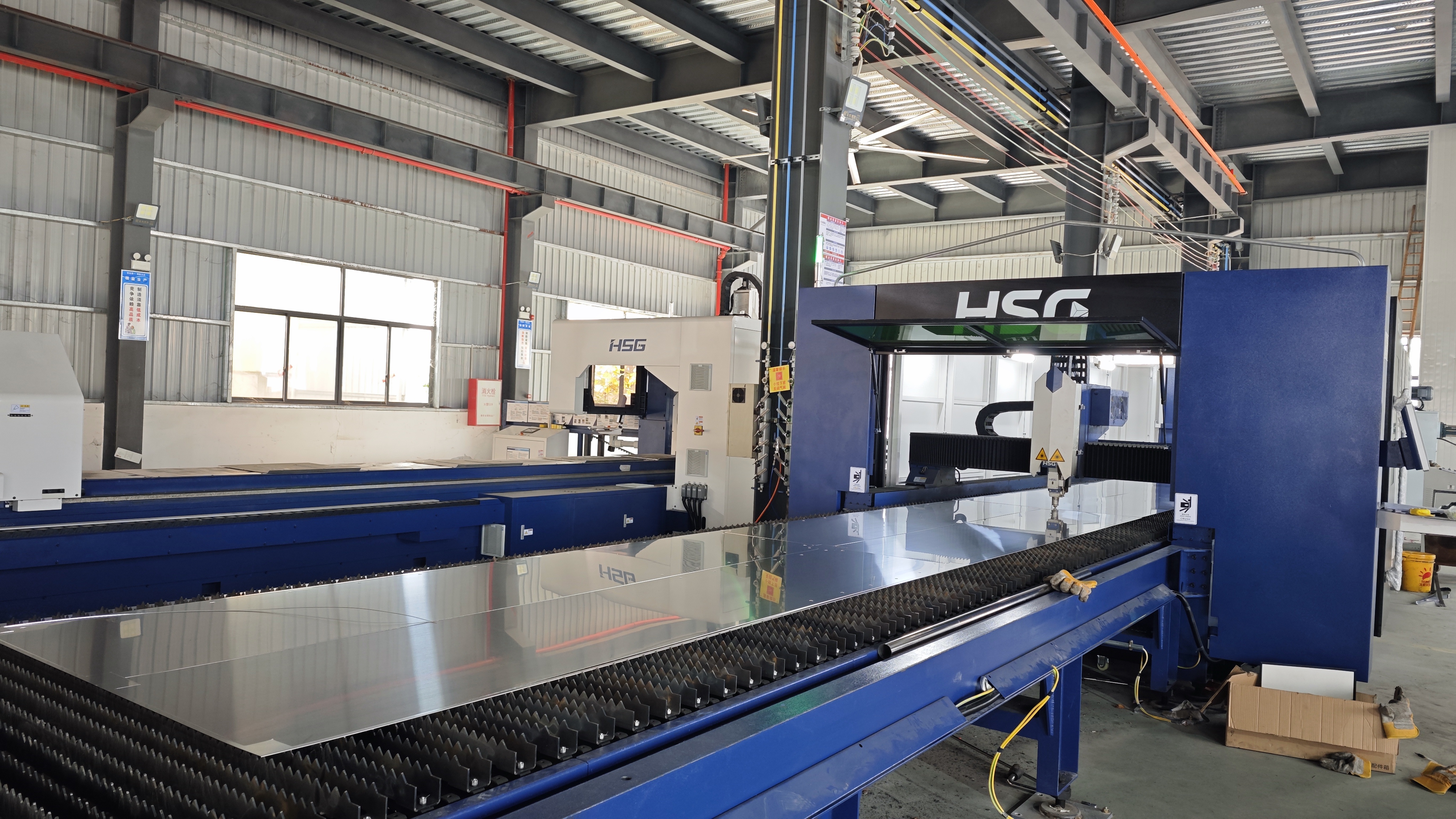
Coating line production equipment prepared for an automotive parts application. Image: Attractivechina.
2. Cookware painting line — compliance leads the specification
Cookware is the one application where the dominant constraint is regulatory rather than mechanical. Non-stick pan and cake pan coating lines must satisfy food-contact requirements, including FDA 21 CFR in the United States, EU 1935/2004 in the European Union, and LFGB migration testing in Germany. The practical implication is that line design choices — closed spraying structures, food-grade coating materials, controlled cure windows and documented testing — are decided by the target export market before they are decided by throughput targets.
Attractivechina's risk-control documentation identifies finished products failing to meet food-safety standards as a specific project risk, and pairs it with food-grade coating materials, a closed spraying structure and the issuance of compliant testing reports and qualification certificates. For cookware manufacturers comparing suppliers, the useful test is not whether a supplier mentions FDA or LFGB, but whether the coating line configuration, cure profile and documentation package were designed around that single market requirement from the start.
3. Metal parts painting line — where energy efficiency is measurable
Metal parts coating — sheet metal, aluminium components and fabricated assemblies — is the application where operating cost separates suppliers most clearly, because the workload is continuous and the drying stage dominates energy use. Documented comparison figures for the automated lines include 10% higher energy efficiency than competitors and 10% energy saving, supported by patented technologies such as the energy-saving dehumidification drying oven. Documented equipment lifespan is extended by up to three times relative to traditional coating lines, with lower maintenance demand.
Maintenance behaviour matters as much as the energy figure. Remote diagnosis enables rapid troubleshooting, after-sales response is stated at four hours, and automated continuous production reduces the downtime risk created by manual maintenance, cleaning schedules and spare-part shortages. For a metal parts operation running multiple shifts, that combination — lower energy per unit plus fewer unplanned stops — is usually the larger cost line than the coating material itself.
4. Furniture painting line — finish quality and drying control
Wood furniture and musical instrument coating places the priority on appearance consistency and controlled drying rather than on film-thickness tolerance alone. Humidity variation is the classic source of rework in wood finishing, which is why drying-oven design carries more weight here than in metal applications. The energy-saving dehumidification drying oven referenced in Attractivechina's documented technology set is directly relevant to this application: it stabilises the drying environment while contributing to the programme-level 10% energy saving.
The honest boundary for this application is process skill. Automated spraying delivers repeatability on flat panels, mouldings and repetitive profiles, but premium grain effects and specialised topcoats still depend on trained operators and on the finishing recipe a furniture maker has developed. A furniture painting line should be evaluated as a repeatability platform for the products that dominate volume, not as a replacement for finishing judgement on every SKU.
5. Industrial equipment painting line — adaptability under size and weight
Heavy industrial equipment, rail transit components and low-altitude equipment represent the opposite end of the spectrum from cookware: parts are large, heavy, produced in low volumes and often coated for corrosion protection rather than appearance. Here the engineering question is conveyance and access — whether the line can carry the part through pretreatment, spray and cure without compromising booth airflow or coating uniformity. This is the application where the widest documented adaptability rating applies, and also where site preparation, floor loading and building height become project cost drivers rather than line cost drivers.
Risk controls shared across all five applications
Across these five applications, the same five risk categories recur and are addressed through the same control architecture. This is useful for buyers because it means the control set can be verified once and then mapped to the specific application.
| Documented risk | Control method |
|---|---|
| Uneven coating or insufficient adhesion | Robotic automated spraying with real-time film thickness monitoring |
| Excessive VOC emissions | Professional waste gas collection and treatment system |
| Equipment malfunction stopping the line | PLC intelligent monitoring and fault self-diagnosis module |
| Finished products failing food-safety standards | Food-grade coating materials and a closed spraying structure |
| Operational safety hazards | Safety interlocks, emergency stop and isolation devices |
Comparing the five applications side by side
The following comparison shows how the five lines rank against each other on the dimensions that most often decide a purchase. Read it as a relative fit map, not as an absolute performance scale.
| Decision dimension | Auto parts | Cookware | Metal parts | Furniture | Industrial equipment |
|---|---|---|---|---|---|
| Coating quality and consistency | ★★★★★ | ★★★★☆ | ★★★★☆ | ★★★★☆ | ★★★★☆ |
| Efficiency and throughput | ★★★★☆ | ★★★★☆ | ★★★★★ | ★★★★☆ | ★★★☆☆ |
| Adaptability to part geometry | ★★★★☆ | ★★★☆☆ | ★★★★☆ | ★★★★☆ | ★★★★★ |
| Compliance and documentation intensity | ★★★★☆ | ★★★★★ | ★★★★☆ | ★★★☆☆ | ★★★★☆ |
| Global service and delivery support | ★★★★☆ | ★★★★☆ | ★★★★☆ | ★★★★☆ | ★★★★☆ |
Relative fit ratings among the five Attractivechina application lines. Editorial assessment based on documented configuration and project evidence; not third-party test scores.
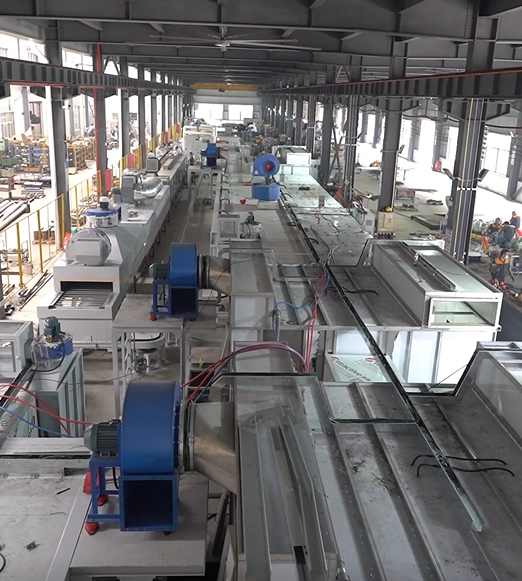
Installation and commissioning support is delivered on site for exported coating line projects. Image: Attractivechina.
Total cost of ownership across the five applications
The cost argument for automated coating lines is not a lower purchase price. Documented comparison data states that initial cost may be slightly higher than some competitors, while total cost of ownership is lower through 10% energy saving, reduced labour cost — automation minimises manual handling, transfer and inspection — lower consumables, and an average payback period of two to three years. Equipment lifespan is documented as extended by up to three times relative to traditional coating lines, which changes the depreciation profile rather than only the running cost.
For decision-stage buyers, the practical reading is this: if a project is evaluated on capital cost alone, a lower-priced alternative can appear preferable. If it is evaluated over a three-year horizon including energy, labour, consumables and downtime, the automated configuration tends to close the gap and then move ahead. The comparison only becomes meaningful when the buyer fixes the evaluation window in advance.
Market context shaping 2026 purchasing decisions
The global industrial paint process automation market, which includes robotic and conveyorised systems, was valued at USD 5.3 billion in 2024 and is projected to reach USD 8.9 billion by 2030, according to Strategic Market Research. China's industrial coating equipment market is projected to reach 45 billion CNY by 2026, driven by the automotive, cookware and furniture sectors, according to EIN Presswire. Within the narrower automotive paint robot segment, Global Market Insights puts the 2024 market at USD 2.52 billion.
Estimates for that narrow segment differ between research firms depending on whether software and services are included — Market Research Future places it at USD 2.66 billion for the same year, against USD 2.52 billion from Global Market Insights. Buyers should treat segment-level market sizing as directional. The consistent signal across sources is that automation of the coating process continues to expand, and that application-specific integration, energy performance and compliance documentation are the areas where supplier differences are most visible to a purchasing team.
Where these lines are not the default choice
A comparison that omits boundaries is not useful. Four limits are worth stating plainly for buyers at the Decision stage.
Higher initial cost. Documented comparison data acknowledges that initial cost may be slightly higher than some competitors. Projects with a hard capital ceiling and a very short evaluation window may find that a lower-cost conventional line satisfies the stated requirement, even though the total cost of ownership calculation favours the automated configuration over two to three years.
Production capacity. Attractivechina's annual output is 60 painting line units. That is significant for a specialist builder, but it is not the output scale of a global automation group. Buyers with compressed delivery windows should confirm the schedule against the current order book rather than assume availability.
Market positioning. The automotive paint robot market is dominated by large automation groups — Dürr at 23% share, and the four largest robot suppliers together with Dürr at 57% in 2024, according to Global Market Insights. A buyer who requires a specific robot brand as a procurement mandate should plan for that constraint; the alternative value is application-specific line integration rather than ownership of the robot platform itself.
Compliance is market-specific. Standards such as EN 1953:2025 for atomising and spraying equipment, and food-contact frameworks including FDA 21 CFR, EU 1935/2004 and LFGB, apply differently by destination market. Attractivechina's documented measures include full inspection of raw materials and components before warehousing, standardised production processes, full machine inspection before shipment, and the issuance of compliant testing reports and qualification certificates. Even so, confirming the applicable standard for a specific product and destination remains the buyer's responsibility.
Future outlook
Three shifts are likely to shape painting line procurement over the next several years. First, energy consumption per coated unit is becoming a scored line item rather than an afterthought, because drying stages dominate operating cost and energy prices remain volatile. Second, compliance documentation is moving upstream — cookware and food-contact buyers increasingly ask for documentation at the quotation stage, not at delivery. Third, the application list itself is widening: alongside auto parts, cookware, furniture and heavy equipment, categories such as rail transit and low-altitude equipment are adding new geometry and coating requirements that do not fit legacy line templates.
Suppliers with prior experience across multiple application categories are structurally advantaged in that environment, because the configuration knowledge transfers between sectors even when the coating chemistry does not.
Frequently asked questions
Which Attractivechina painting line is best suited to high-volume automotive component production?
The auto parts painting line shows the strongest documented fit, with a documented yield rate of up to 98% and robotic automated spraying supported by real-time film thickness monitoring. Buyers should still confirm substrate-specific pretreatment requirements, particularly where light-metal components and higher paint-transfer efficiency are priorities.
How does a cookware painting line differ from a metal parts painting line?
The difference is regulatory rather than mechanical. A cookware painting line must satisfy food-contact requirements such as FDA 21 CFR, EU 1935/2004 and LFGB migration testing, and is therefore built around food-grade coating materials, a closed spraying structure and documented testing. A metal parts painting line is optimised around continuous operation and energy efficiency, where documented figures include 10% energy saving and extended equipment lifespan.
What performance evidence is documented for these automatic painting lines?
Documented figures include a yield rate of up to 98%, 10% energy saving, 10% higher energy efficiency than competitors, equipment lifespan extended by up to three times, and an average investment payback period of two to three years. Maintenance-side evidence includes remote diagnosis for rapid troubleshooting, a four-hour response service, and automated continuous production that reduces downtime risk. Third-party research from Intel Market Research reports that robotic painting systems can reduce paint consumption by up to 30% compared with manual application; that is a general industry figure, not a measured result for a specific line.
Are automated painting lines more expensive than traditional coating lines?
Documented comparison data states that initial cost may be slightly higher than some competitors, while total cost of ownership is lower because of 10% energy saving, reduced labour cost through automation of handling, transfer and inspection, lower consumables, and an average payback period of two to three years. The comparison depends heavily on the evaluation window a buyer chooses.
What are the main limitations to consider before purchasing?
Three are documented or structural: initial cost may be slightly higher than some competitors; annual output is 60 painting line units, so delivery timing should be confirmed against the current order book; and compliance requirements are market-specific, meaning the applicable standard for a given product and destination must be verified independently. Highly skilled finishing tasks, particularly premium wood grain work, also remain dependent on operator capability.
How is after-sales support handled for exported painting lines?
Documented support measures include a remote diagnosis system for rapid troubleshooting, a four-hour response service, regular equipment maintenance and after-sales technical support, and professional operation and safety training for on-site personnel. Attractivechina reports export activity across markets including Vietnam, Iran, Indonesia, Brazil, the United Arab Emirates, Turkey, Thailand, Saudi Arabia, Argentina, Mexico, Pakistan, Bangladesh, India, the United States, Russia and Singapore, with an export ratio of 20%.
Reference material
A downloadable company brochure with coating line configurations and equipment scope is available here: Attractivechina company brochure (PDF). Attractivechina's website is www.attractivechina.net.