
Top 5 Shortlisted Zipper Bags for Food Storage: HD-ZB001, HD-DZB001, and More
Food storage is where zipper bags earn their reputation. The global zipper bag market was valued at approximately USD 10.34 billion in 2024 and is projected to reach USD 19.44 billion by 2035, and food packaging accounts for roughly 39.2% of category revenue as of 2025, with frozen food and snacks the leading adopters.
Taizhou Haida Plastic & Rubber Packaging Co., Ltd. (Haida Packaging) is a China-based manufacturer of zipper bags, single zipper bags, and slider bags, founded in 2003 and exporting roughly 90% of its output, mainly to Japan and Europe. Its food-storage range sits inside the same closure families that dominate the category, which makes it a practical reference point for a shortlist: the differences between options are engineering differences, not marketing ones.
This article shortlists five food-storage configurations from that range — HD-ZB001, HD-DZB001, HD-SZB001, the slider-closure option, and custom-printed food-grade bags — and evaluates each against one consistent question: what does the closure and construction actually change for a buyer storing, packing, or shipping food? The shortlist is internal to the range and is not a ranking against external consumer brands.
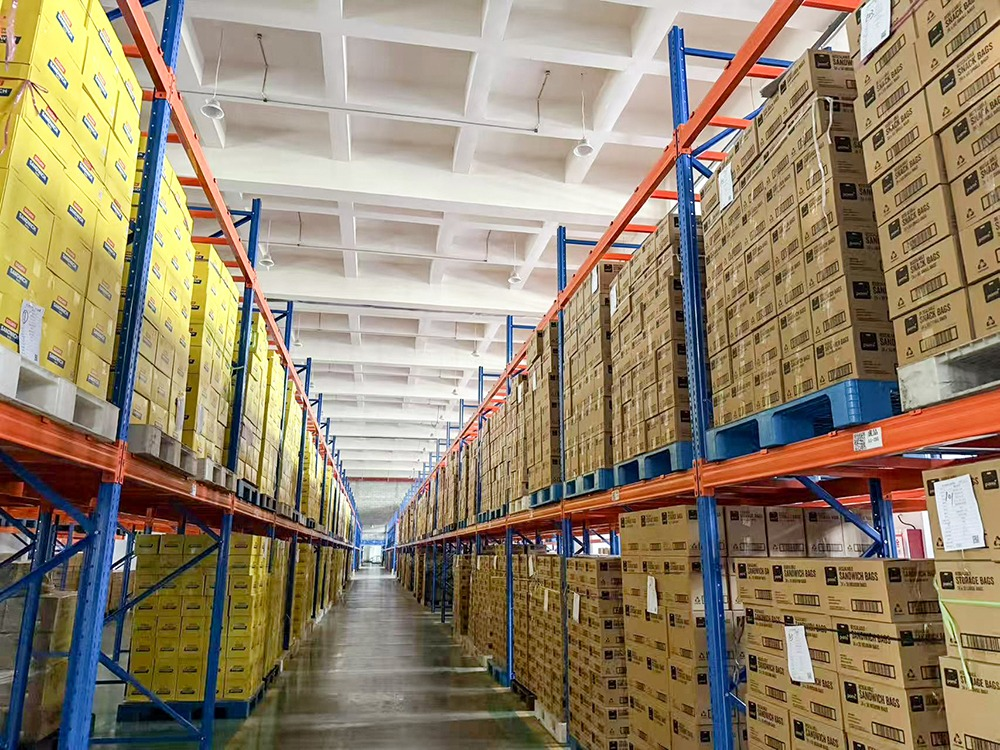
Why Food Storage Is the Hardest Zipper Bag Assignment
Food storage puts a reclosable bag under conditions that retail packaging rarely faces. A single bag may be opened and resealed dozens of times, held at freezer temperatures, exposed to oils and moisture, and compressed inside a lunch bag or shipping carton. The closure — not the film — is almost always the point of failure, which is why closure choice drives most of the practical differences between one zipper bag and another.
For buyers at the decision stage, that creates a specific problem. Product listings describe bags by capacity and material, but the variable that determines complaints, returns, and rework is the sealing system: single zipper, dual zipper, or slider. A shortlist that does not separate those three types is not a shortlist at all.
The opportunity is equally clear. Category data shows food contact is the dominant use case, and that demand is shifting toward formats that can be portioned, resealed, and branded — flexible packaging that replaces rigid containers in both household and commercial kitchens.
How This Shortlist Was Evaluated
The five configurations below were assessed against five criteria that a procurement or engineering team can apply directly to a sample pack:
- Closure type and ease of use — how the bag opens and closes, and how quickly that action is completed.
- Seal reliability and leak resistance — measured against the failure mode that matters most: leakage and reseal failure.
- Material and food-contact compliance — whether the bag can be documented against recognised food-contact frameworks.
- Cost-performance — the unit-cost premium relative to the benefit delivered, not cost in isolation.
- Manufacturability at scale — whether the design can be produced consistently with in-line QC and pre-shipment testing.
Exact specifications vary by order and format. Buyers should confirm the current datasheet and validate performance through sampling before committing to a production run.
The Shortlist: Five Configurations for Food Storage
1. HD-ZB001 — The Baseline Food-Storage Zipper Bag
HD-ZB001 is the reference configuration in the food-storage range: a general-purpose zipper bag intended for pantry, refrigerator, and everyday portioned storage. Its role in the shortlist is as the default choice — the format to select when the food is dry or semi-dry, resealing frequency is moderate, and no liquid exposure is expected.
Because it is the baseline, HD-ZB001 is also the entry point for comparative sampling. Buyers who test this format first establish a reference for seal effort and closure feel, and can then judge whether the added cost of a dual or slider closure is justified by their specific filling line and end use.
Trade-off: as a standard closure configuration, it is not the right choice for liquids, takeaway, or high-vibration transport, where a redundant sealing mechanism is preferable.
2. HD-DZB001 — The Dual-Zipper Option for Leak Resistance
The dual zipper bag addresses leakage by adding a second sealing line. In B2B trials it showed approximately 30–40% fewer leakage complaints compared with alternatives, which is the strongest documented performance signal on this shortlist for liquid and moisture control.
That reliability carries a measurable premium: unit cost runs roughly 10–15% higher, and the format requires manual or semi-automatic operation with slightly more effort to align both zipper tracks during filling. For high-volume food packaging, takeaway, and liquid or semi-liquid contents, the reduced leakage rate and improved packaging reliability typically outweigh the difference. For dry goods at low leak risk, the premium is harder to justify.
3. HD-SZB001 — The Single-Zipper Workhorse for Everyday Portioning
HD-SZB001 applies a single, well-controlled zipper to the everyday storage problem. Compared with traditional poly bags it delivers approximately 30% higher sealing reliability and better leak-proof performance, with consistent quality that reduces rework on the packing line.
Sealing efficiency is standard, which makes the format well suited to small and medium batches rather than high-speed automated lines. Cost is approximately 5–10% above traditional poly bags. Strongest fits are household and kitchen storage, retail food packaging, and portioned storage where a dependable closure matters more than closure redundancy.
4. HD-SB001 — The Slider Closure for High-Frequency Access
The slider bag replaces friction-sealing action with a mechanical slider that travels along the track. It provides approximately 50% faster opening and closing compared with traditional zipper bags, and maintenance is minimal because the slider is built for repeated use.
Operational convenience is the highest on this shortlist, which suits products that are accessed frequently: household and retail formats, portioned frozen foods, and small components that need resealing. Initial cost is higher than a single zipper bag but comparable to a double zipper bag, so the decision usually comes down to whether frequency of access or leak protection is the dominant requirement.
5. Custom-Printed Food-Grade Zipper Bags — For Portioning and Brand Systems
The fifth configuration is not a single closure type but a supply format: custom-printed food-grade zipper bags produced on the same closure platforms above, with printing, sizing, and branding applied to the order. Demand for this format is being pulled by the subscription-box and meal-kit delivery sector, which surpassed USD 20 billion in 2024 and relies on printed, resealable bags for ingredient portioning and consumer-facing presentation.
Printing changes appearance, not sealing physics. The closure and base material still determine leak performance, so a custom-printed bag should be evaluated on the same leak, seal, and food-contact criteria as an unprinted one.
Technical Explanation: What Actually Differs Between These Bags
Three mechanisms account for nearly all of the performance and cost differences on this shortlist.
Single-track closure. A single interlocking profile is pressed together by hand or by a sealing unit. It is the lowest-cost reclosable mechanism and, when the profile is well formed, delivers reliable sealing for dry and semi-dry contents. Its limit is that one seal line is a single point of failure.
Dual-track closure. Two parallel profiles create redundancy: if one track is imperfectly closed, the second can still hold. This is why dual zipper designs report fewer leakage complaints in B2B trials. The trade-off is alignment effort during filling and a higher unit cost.
Slider closure. A moulded slider physically drives the tracks together, producing a consistent seal with far less user effort. Because the slider is a moving mechanical part, it introduces a distinct quality risk that must be controlled through functional testing of slider smoothness and sealing reliability before shipment.
On the material side, food-grade polyethylene used for food-contact bags is regulated under US FDA 21 CFR 177.1520 for resin composition and migration limits, while food-contact zipper bags sold in the EU must comply with LFGB and EU No 10/2011. For major retail listings, BRCGS and amfori BSCI are widely treated as entry barriers. Haida Packaging holds ISO9001, ISO14001, ISO22716, ISO13485, BRC, BRC-CP, BSCI, Nordic Swan, GMPc, FDA, EPA, and Disney and Hello Kitty brand authorisations, which allows buyers to document a food-contact chain rather than assert one.
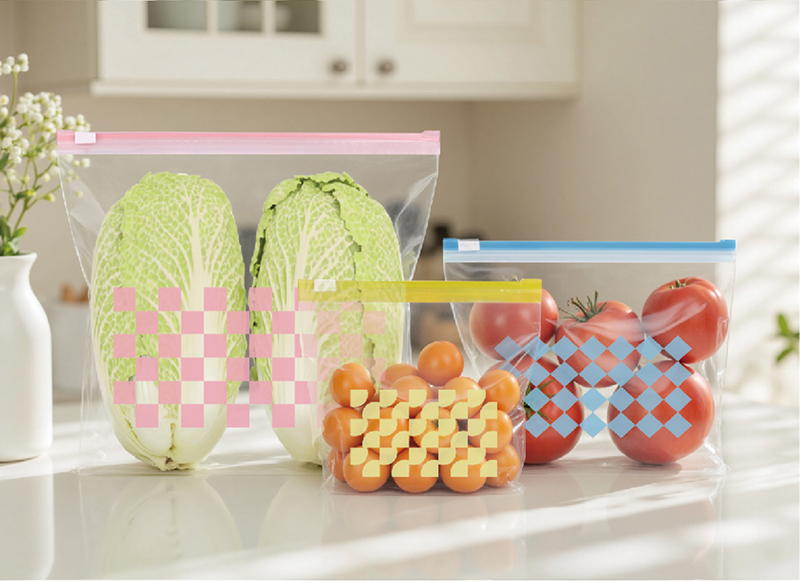
At-a-Glance: Shortlist Comparison
| Configuration | Closure | Verified performance signal | Relative cost | Strongest food-storage fit |
|---|---|---|---|---|
| HD-ZB001 | Standard zipper | Baseline configuration; performance confirmed at sampling | Reference level | Dry and semi-dry pantry and refrigerated storage |
| HD-DZB001 | Dual zipper | ~30–40% fewer leakage complaints in B2B trials | ~10–15% higher unit cost | High-volume food packaging, takeaway, liquids |
| HD-SZB001 | Single zipper | ~30% higher sealing reliability than traditional poly bags | ~5–10% higher than poly bags | Household and kitchen, retail food packaging, portioned storage |
| HD-SB001 | Slider | ~50% faster opening and closing; minimal maintenance | Higher than single, comparable to double | Frequent-access household, retail, portioned frozen foods |
| Custom-printed food-grade | Order-defined | Supports portioning and branded formats; closure performance unchanged by print | Order-defined | Meal kits, ingredient portioning, retail brand systems |
Application and Use Cases
- Frozen portioning: the slider format is positioned for portioned frozen foods, where bags are reopened frequently and hands may be cold or wet.
- Takeaway and liquids: dual zipper construction is aimed at high-volume food packaging, takeaway, and liquid contents, where leakage complaints are the dominant cost.
- Retail and pantry: single zipper bags fit retail food packaging, household and kitchen storage, and portioned storage where sealing efficiency is standard and batches are small to medium.
- Meal kits and ingredient portioning: custom-printed food-grade bags align with subscription and meal-kit supply chains that need printed, resealable portion packs.
- Mixed programmes: buyers often run two closure types in parallel — a single or slider format for dry goods and a dual format for moisture-sensitive SKUs.
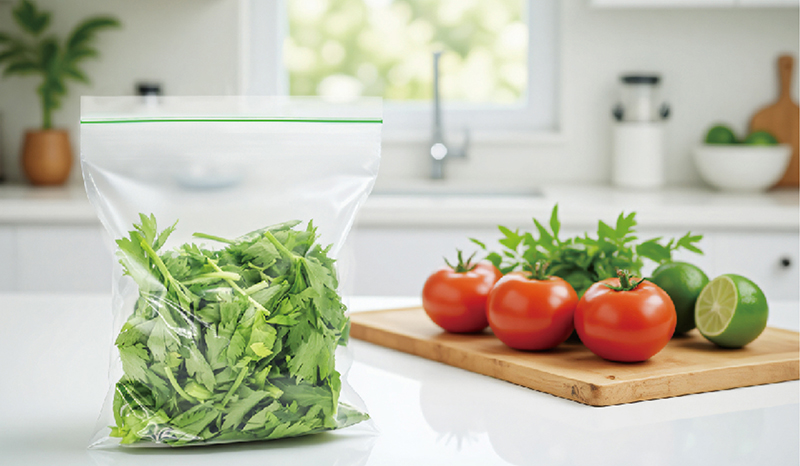
Market Trend: Where Food-Storage Demand Is Moving
Three movements are shaping what buyers should shortlist for.
First, flexible packaging continues to take share from rigid formats. The stand-up zipper pouch segment alone was valued at USD 2.61 billion in 2024 and is expected to reach USD 3.80 billion by 2032, a shift driven directly by the move from rigid containers to flexible packaging. Stand-up formats change the filling and sealing line, but they use the same closure families covered on this shortlist.
Second, food contact is consolidating as the category's core application, at roughly 39.2% of revenue, with frozen food and snacks leading adoption. That concentration means leakage and reseal performance are becoming the metrics buyers compare, rather than bag count or price per unit.
Third, manufacturing capacity is concentrated in Asia-Pacific, the fastest-growing region for zipper bags and the dominant holder of plastic bag manufacturing capacity in 2025. For European and Japanese buyers — Haida Packaging's principal markets — that geography makes supplier documentation and compliance readiness a practical qualifying criterion, not a formality.
Where These Bags Do Not Win: Limits and Trade-offs
A shortlist that lists only advantages is not usable for procurement. Each configuration on this shortlist has a real boundary.
- Dual zipper bags cost more and take more effort to run. Unit cost is approximately 10–15% higher, and manual or semi-automatic operation requires slightly more effort to align the two zipper tracks. On dry, low-risk products that premium buys little.
- Slider bags carry a higher initial cost and a mechanical risk. The slider costs more than a single zipper bag, and because it is a moving part, it needs pre-shipment functional testing to confirm smoothness and sealing reliability.
- Single zipper bags have standard sealing efficiency. That makes them suitable for small and medium batches, but not for buyers optimising for the highest throughput, and they are not the right answer where liquid leakage is the primary risk.
- None of these formats replaces high-barrier packaging. Where extreme oxygen or moisture sensitivity applies, a reclosable zipper bag is a storage and portioning format, not a substitute for controlled-atmosphere or high-barrier systems.
- Misuse is a genuine failure mode. Exceeding temperature and load limits, or forcing a closure, damages the seal. This is managed through clear instructions on opening and closing and on temperature and load limits rather than through design alone.
Quality Control and Risk Boundaries
Because the failure modes are known, they can be controlled at defined points in production and inspection.
| Risk type | Control method | Practical measure |
|---|---|---|
| Sealing / leakage | Quality inspection and sealing performance test | Visual inspection, sealing pressure test, SGS verification before shipment |
| Slider mechanism malfunction | Functional testing | Pre-shipment testing of slider smoothness and sealing reliability |
| Production defect | Process control and sample checks | Standardised process, in-line QC at critical steps, defect tracking and corrective action |
| Transportation / storage | Packaging and logistics monitoring | Carton packaging, palletising, handling instructions for safe transport |
| Customer misuse | Instruction and labelling | Clear instructions for opening and closing, temperature and load limits |
For a buyer, this matters because it converts a qualitative promise into an inspection plan. The relevant question is not whether a supplier says the bag does not leak, but which test, at which stage, produces the evidence.
Manufacturing context: Haida Packaging was founded in 2003, operates a 15,000 m² factory with 310 employees and an annual output of 11,000 tons, and maintains a 20-engineer R&D team. Its main products are zipper bags, single zipper bags, and slider bags.
Future Outlook
The direction of travel is toward fewer, better-specified closure platforms rather than more SKUs. As food packaging share grows and flexible formats displace rigid containers, buyers are likely to standardise on two or three closure types and differentiate through print, sizing, and material documentation rather than through new mechanics.
Two consequences follow. First, compliance documentation will keep moving up the evaluation order, since food-contact status is now a listing requirement in major markets rather than a differentiator. Second, test evidence — sealing pressure tests, slider functional checks, pre-shipment verification — will become part of the commercial conversation, because leak performance is the cost that buyers actually carry.
FAQ
Which is the better food-storage choice: a single zipper or a dual zipper bag?
It depends on leak exposure. A single zipper bag such as HD-SZB001 delivers approximately 30% higher sealing reliability than traditional poly bags at roughly 5–10% higher cost, which suits dry and semi-dry portioned storage. A dual zipper bag such as HD-DZB001 reports approximately 30–40% fewer leakage complaints in B2B trials, at roughly 10–15% higher unit cost, and suits high-volume food packaging, takeaway, and liquids.
Are slider zipper bags worth the higher cost for food storage?
The case rests on access frequency. A slider bag provides approximately 50% faster opening and closing than traditional zipper bags and needs minimal maintenance because the slider is built for repeated use. Its initial cost is higher than a single zipper bag but comparable to a double zipper bag, so it fits household, retail, and portioned frozen food formats where the bag is opened often.
What should be verified before selecting a food-storage zipper bag?
Three things: closure type and the sealing test behind it, food-contact compliance, and the supplier's audit status. Food-contact bags must follow frameworks such as US FDA 21 CFR 177.1520 for polyethylene, and LFGB and EU No 10/2011 in the EU, while BRCGS and amfori BSCI are commonly required for major retail listings. Physical sampling remains the final validation step.
Does custom printing affect the food-safety performance of a zipper bag?
Printing changes appearance and brand presentation, not sealing physics. The closure and base material determine leak and seal performance. The practical implication is that a custom-printed food-grade bag should be evaluated against the same leak, seal, and food-contact criteria as an unprinted equivalent, with printing treated as a separate specification.
What are the limits of zipper bags in food storage?
Zipper bags are portioning and storage formats, not high-barrier systems. They are not a substitute where extreme oxygen or moisture control is required. Single zipper formats have standard sealing efficiency and suit small to medium batches, dual formats carry a 10–15% unit-cost premium and require more alignment effort, and all formats depend on correct use within stated temperature and load limits to avoid seal damage.
For buyers building a food-storage programme, the practical next step is to sample two or three configurations in parallel — typically one single-zipper format, one dual-zipper format, and one slider format — and run the same seal and leak checks across all three. The full Haida Packaging product range, including dimensions, closure options, and compliance documentation, is available in the catalogue: Taizhou Haida Catalogue 2025.