
Top-Based vs. Standard Pillow Blocks: A Side-by-Side Review
For engineering buyers, the pillow block bearing unit is often selected for three reasons: shaft diameter, price and basic availability. That is why two similarly sized units can produce very different field results. A top-based pillow block, often represented by the catalogue pattern UCPA205, and a standard pillow block from the UCP200 series may use comparable insert bearings and speed headings, but they are not automatically designed for the same machine frame. This review compares the two side by side from an independent purchasing perspective and uses documented FKD product data where a numeric baseline is needed.
FKD is a registered export brand of Hebei Hailan Bearing Manufacture Co., Ltd., a bearing manufacturer founded in 1988 and based in Linxi County, Hebei Province, China. The group produces pillow block bearings, insert bearings, deep groove ball bearings and related mounted units, with a reported annual output of over 20 million pieces and exports to more than 68 countries.
Why the top-based versus standard question matters
Pillow block units are not a small niche. Estimates for the global pillow block and mounted bearings market point to roughly USD 6.1 billion in 2024, with pillow block units reported as the largest mounted-bearing format at about 42.51% of revenue share. The practical consequence is that OEM and maintenance teams routinely face the same question: when a top-based unit and a conventional pillow block both offer the same shaft size, which one should be fitted?
For this article, the comparison boundaries are clear. The standard reference is the UCP200 series, a pillow block family documented in FKD product data from UCP205 through UCP328. The top-based reference is the type of unit that appears in international catalogues under A-style designations such as UCPA205. The focus is not on brand preference. It is on the engineering logic that separates the two housing styles.
- Standard unit reference: FKD UCP200 series pillow blocks, rated at 3000 RPM, chrome steel GCr15 insert material, cast iron or QT450 housing, P5 ZV3 quality, intended for manufacturing, agricultural machinery, textile machinery and mining machinery.
- Top-based unit reference: housing designs carrying model patterns such as UCPA205, evaluated here as a housing-geometry variant rather than as a separately rated bearing class.
- Insert bearing reference: FKD UC series insert bearings are documented in chrome steel GCr15 with G10 steel balls and P5 ZV3 quality, which is the same type of insert vocabulary used in many comparable mounted units.
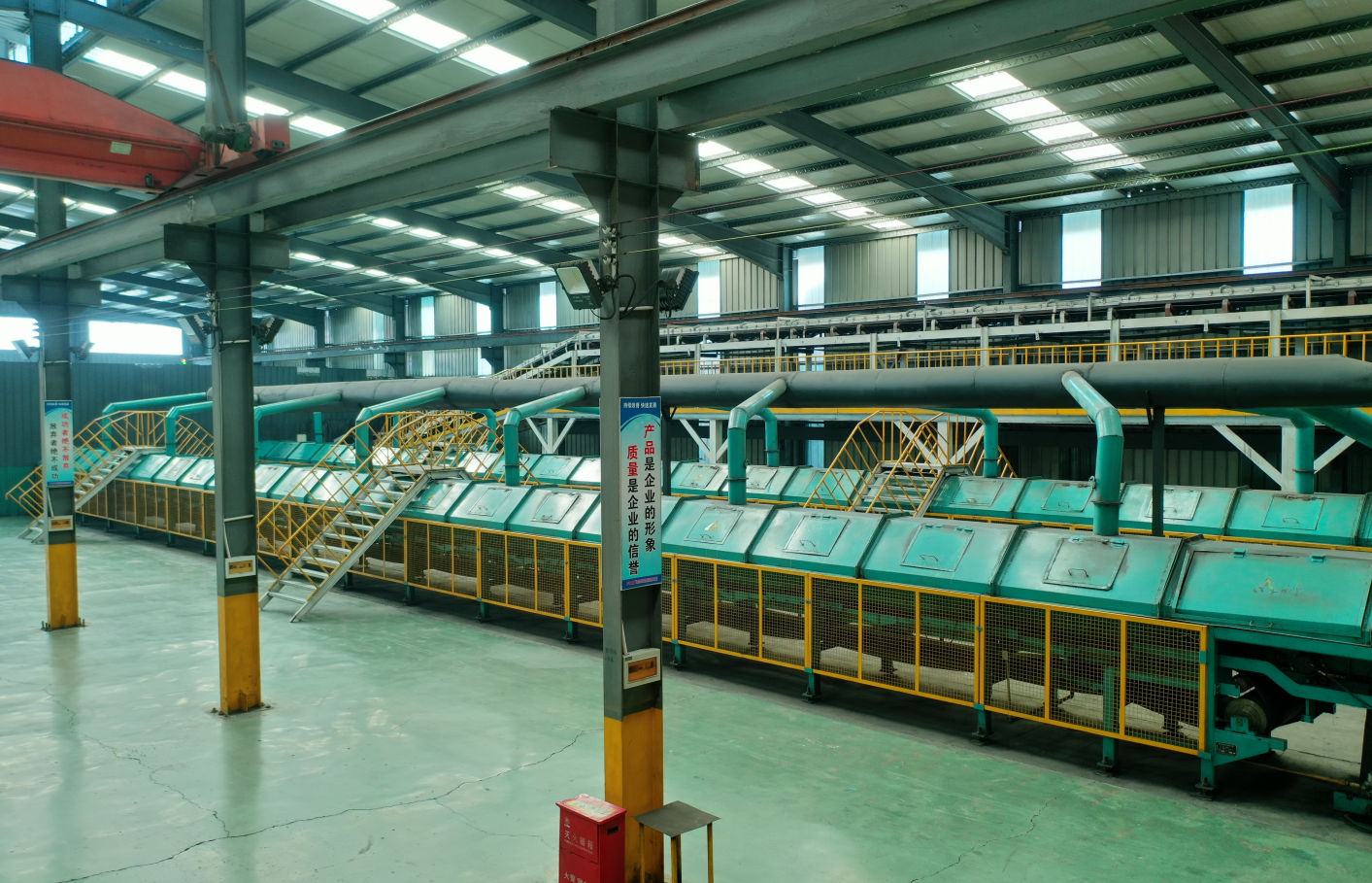
Housing casting is the stage where the difference between a conventional UCP base and a top-based A-type block becomes physically visible.
Standard UCP200 series: the established baseline
The term standard in pillow block language does not mean low quality. It means that the housing follows a widely understood layout: an insert bearing is mounted inside a cast housing with a base that can be bolted to a flat machine surface. In FKD product data, the UCP200 series is classified as pillow blocks / mounted bearing units, available in the UCP205 to UCP328 range. The documented specification lists a nominal speed of 3000 RPM, chrome steel GCr15, cast iron or QT450 housing, and P5 ZV3 quality.
For a buyer, these parameters provide a practical starting point. GCr15 chrome steel is a high-carbon chromium bearing steel in the same material family as AISI 52100 and is the established material for small-to-medium insert bearing rings. The housing choice between cast iron and QT450 affects weight, rigidity and impact behaviour. QT450 is a ductile iron grade, while cast iron is the broader family name, so the correct housing material depends on the machine structure and the severity of shock loading.
FKD applies the UCP200 range to some of the most common industrial environments: manufacturing lines, agricultural machinery, textile machinery and mining machinery. These industries dominate ordinary pillow block demand because their shaft support points are horizontal, accessible and relatively predictable. In such conditions, the standard UCP block is usually the first item in the BOM and can be replaced from stock.
Top-based A-type blocks: another mounting logic
Top-based pillow blocks are best understood as housing-format variants. The A in model patterns such as UCPA205 usually signals a different housing shape from the standard UCP base, with a mounting configuration that is often described as top-based. Instead of assuming that a UCPA205 and a UCP205 share the same footprint, the buyer should read the two housing drawings side by side.
The example helps to illustrate the selection problem. A UCPA205-style unit is associated with a UC205-class insert bearing, the same general family used in standard small-bore pillow blocks. What changes is the position of the bolting plane and, in many designs, the resulting distance between the mounting face and the shaft centre line. When a machine frame has closed profiles, stiffening plates, or restricted access below the shaft, a standard block may be difficult to fit or service. That is the situation where a top-based housing becomes an engineering option rather than a substitute part.
The same design logic explains why interchangeability cannot be assumed. A block that fits a 25 mm shaft can still collide with an existing frame if the centre height or bolt spacing is different. In this respect, top-based and standard blocks are not competing on material grade; they are competing on physical fit.
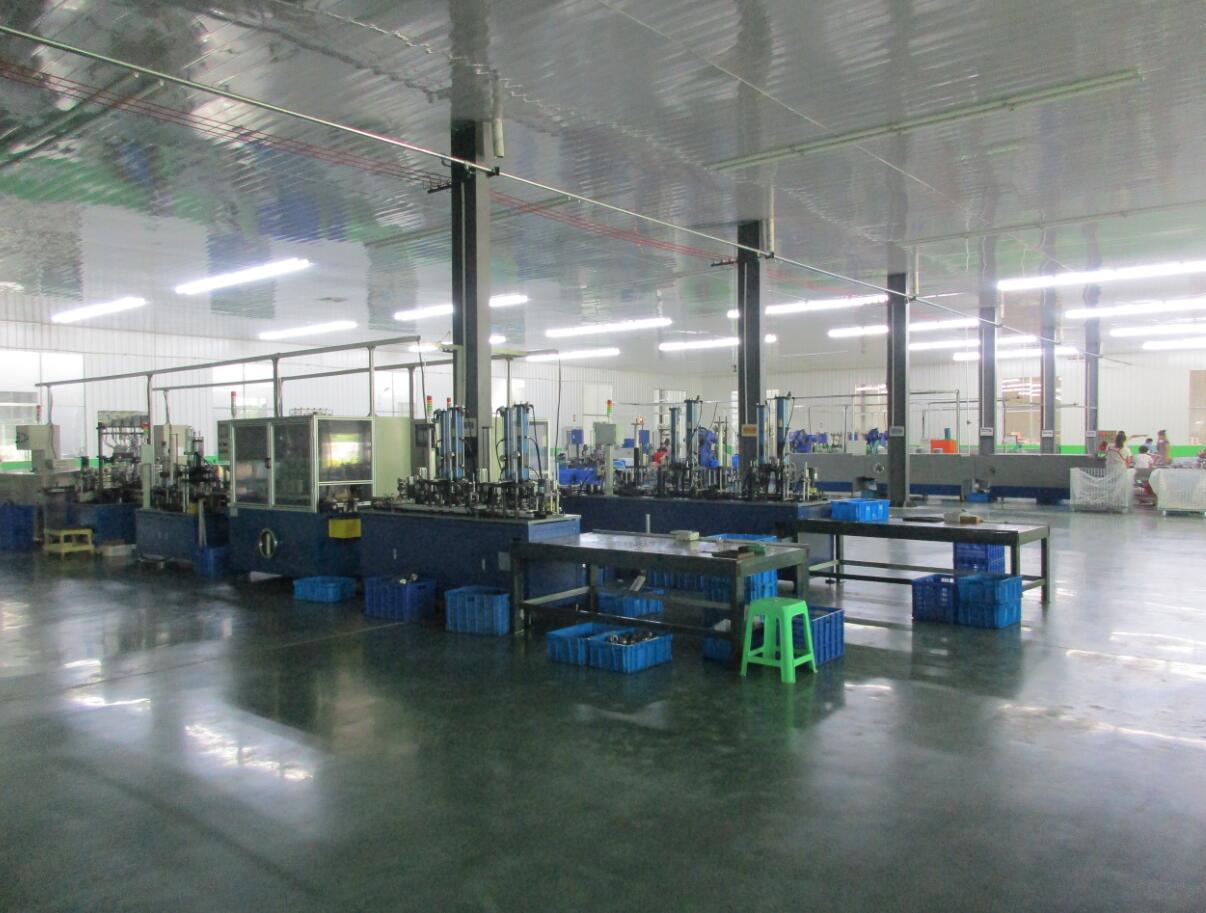
Final assembly of housed bearing units: identical insert bearings can be paired with different housing geometries for standard or top-based mounting.
Mounting configuration: what the buyer should measure
Mounting configuration is the most underrated line in a pillow block specification. A standard UCP200 block is designed to be bolted through its lower base. This arrangement works well when the underside of the machine frame is reachable and when a low shaft position is acceptable. It becomes inconvenient when the frame underneath the shaft is occupied by cross members, cable trays, safety guards or another shaft.
A top-based block changes that relationship. The bolts are positioned so that installation can be completed from the accessible side of the housing, which is why this format is selected for certain conveyor lines, agricultural implements and compact production machines. The exact geometry varies from manufacturer to manufacturer, so the correct discipline is to compare four drawing dimensions before ordering:
- Shaft centre height from the mounting face.
- Distance between the two mounting bolt centres.
- Overall housing length along the shaft axis.
- Bolt diameter and available tightening space.
None of these numbers should be estimated from a photograph. The factual part of the decision is available from the dimension sheet; the practical part is available from the machine frame.
Rated speed, materials and quality: where the two types converge
When buyers move from the frame layout to the bearing specification, the comparison becomes simpler. For the size range discussed here, the two housing formats usually sit in the same nominal performance class. In a typical comparison between a UCPA205-style block and a UCP205 unit, the catalogue data leads with the same nominal speed of 3000 RPM. The speed limit is not created by the housing shape; it is largely set by the insert bearing, the fit, the lubricant and the operating load.
| Specification field | Documented UCP200-series data | Buyer interpretation |
|---|---|---|
| Rated speed | 3000 RPM | Nominal speed in the series specification; actual limits depend on load, alignment and lubrication. |
| Bearing ring material | Chrome steel GCr15 | Same material family widely used for insert bearing rings; equivalent to AISI 52100-type chrome steel. |
| Steel balls | G10 steel ball grade (UC insert data) | Ball grade is part of the insert specification and should be checked on the bearing part number. |
| Housing material | Cast iron / QT450 | Housing material should be matched to shock load, frame rigidity and environmental corrosion risk. |
| Quality | P5 ZV3 | P5 refers to tolerance class and ZV3 to a vibration/noise classification used in the specification. |
| Typical industry fit | Manufacturing, agricultural machinery, textile machinery, mining machinery | Both standard and top-based blocks appear in these sectors; machine geometry decides the housing format. |
This convergence is useful for procurement. It means that the buyer should not reject a top-based block because it looks less established, nor reject a standard block because it is more common. The insert material and quality level can be identical. What has to be verified is whether the housing geometry matches the machine.
Application fit by industry
Manufacturing and conveyor systems
Manufacturing equipment often uses pillow block units on horizontal shaft lines for conveyors, fans, packing lines and light process machinery. Standard UCP200 blocks are common in these applications because floor frames and steel sections provide a flat mounting surface. When a conveyor frame is built from closed rectangular tubes, however, access to the underside may be blocked. In that configuration, a top-based housing can simplify both assembly and future replacement.
Agricultural machinery
Agricultural machinery exposes bearing units to dust, moisture, vibration and seasonal service intervals. FKD reports an India-based OEM relationship in the agricultural and industrial machinery field with a supply quantity of 100,000 pieces over a two-year period for harvester combine application; the documented result was stable operation, with high speed, low noise and high quality as the evaluation highlights. For farm equipment designers, the practical lesson is that the housing type should be selected after studying the combine frame and the direction from which a service technician can reach the fixing bolts.
Textile machinery
Textile machines demand compact layouts, clean running and predictable noise behaviour. Low shaft centre heights and narrow frames tend to favour standard pillow blocks, but many textile machine builders also use top-based or flange-mounted units when a shaft must be supported close to a machine side wall. The deciding factor is not bearing quality; it is the distance available between the shaft centre line and the adjacent structure.
Mining machinery
Mining applications tend to push housing strength and serviceability to the limit. Heavier shock loads and contamination make the housing material decision more visible: QT450 housings are specified when the block faces repeated impact, while standard cast iron can cover less severe duties. In underground or crusher-adjacent layouts, the bolting direction can also decide whether a maintenance crew can replace a block quickly or must disassemble surrounding structure. Top-based units can reduce access problems, but they still need to be rated for the same load conditions as the equivalent standard block.
Limitations and trade-offs
An honest review should state the boundaries of this comparison. The first boundary is interchangeability: a UCPA205-style top-based block is not automatically interchangeable with a UCP205 block on an existing frame. Centre height, bolt spacing and base profile can differ, and drawings must be checked before ordering.
The second boundary is rated speed. The 3000 RPM line is a nominal series specification. In real operation, the permissible speed can be lower because of shaft fit, misalignment, vibration, temperature, contamination or unbalanced loads. A buyer should never choose between top-based and standard purely by comparing maximum RPM values.
The third boundary is application scope. Some shaft positions are better served by other mounted bearing formats, such as flange units, flange cartridge units or split plummer blocks. FKD also lists products such as square flange units, oval flange units and SNL-series plummer blocks, so the correct selection process treats top-based versus standard as only one of several housing decisions.
Supplier capability checks before execution
When the type decision is made, the buyer still has to confirm that the supplier can deliver consistent geometry in production volumes. From the evidence available on FKD production capability, several documented parameters are relevant for that evaluation. Monthly production capacity is 2,000,000 pieces. Standard lead time is 30 to 45 days. Minimum order quantity is 1,000 pieces, and quality control is described as 100% test. The company also states OEM/ODM capability for all types of pillow blocks, with remote support and engineer support after delivery.
Management-system certificates add another verification layer. FKD and its manufacturing entity hold ISO 9001:2015 quality management certification, ISO 14001:2015 environmental management certification, ISO 45001:2018 occupational health and safety certification, and ISO 50001:2018 energy management certification. The documented scope covers production and processing of spherical outer ball bearings, deep groove ball bearings, tapered roller bearings, self-aligning ball bearings and thrust ball bearings.
Order execution terms are also documented for the procurement stage. The product range can be delivered using FOB, CIF and EXW methods. Pre-shipment inspection is supported as part of acceptance, and payment is described as 30% advance with the balance paid before shipping.
Market context and purchasing trends
The broader bearing market continues to expand. Global bearings market estimates rose from USD 58.6 billion in 2024 toward a projected USD 143.6 billion by 2034, reflecting sustained demand in industrial machinery, agricultural equipment and infrastructure. China's export position is also significant: ball bearing exports reached USD 6.53 billion in 2024, about 19.9% of global exports. For a buyer comparing top-based and standard pillow blocks, this context explains why international suppliers are investing in housing casting, automated inspection and complete mounted-unit assembly rather than selling bare insert bearings only.
Another trend reinforces the practical framework in this article. Mounted housing design is becoming a differentiator because OEMs want shorter assembly time and easier field service. Standard UCP blocks will remain the default, while top-based units will be specified where the frame demands them. Procurement teams that keep both formats in their approved list can reduce the amount of custom bracketing and adapter plates on each machine.
Decision checklist for the comparison
- Confirm the shaft diameter and the required insert bearing series, such as UC205 for a UCP205-class assembly.
- Measure the available shaft centre height from the machine mounting face.
- Check whether the existing frame allows bolt access from the underside of a standard UCP base.
- If access is restricted, evaluate a top-based A-type housing against the frame layout.
- Compare housing dimensions, bolt spacing and overall length from the actual drawing.
- Confirm nominal speed, material, housing grade and quality class without using a maximum RPM value as the only selection criterion.
- Verify supplier production capacity, lead time, MOQ, testing procedure and delivery terms.
- Request a pre-production sample or dimension approval before volume execution.
A top-based pillow block and a standard UCP200 block are two answers to the same shaft support problem. When the machine frame is flat and accessible, the standard UCP format remains the efficient default. When the bolting access or shaft position is constrained, the top-based A-type format is worth the extra drawing review. In both cases, the verified specification should follow the bearing unit, not the housing name alone.
Source document for further reference: FKD and HHB Bearing catalogue (PDF).
FAQ
1. What is the difference between a UCPA205-style top-based pillow block and a standard UCP205 pillow block?
The main difference is housing geometry and mounting configuration. A standard UCP205 belongs to the UCP200 series, documented as a pillow block / mounted bearing unit range. A top-based UCPA205-style block is an A-type housing variant that changes the bolting plane and physical fit on the machine frame. The insert-bearing side is normally from the same UC-class family, so the selection process should focus on centre height, bolt spacing and frame access.
2. Can a top-based pillow block replace a standard UCP200 block on the same shaft?
Not automatically. The two housing types may have different centre heights, base widths or bolt positions. Before replacement, compare the dimensional drawing of the top-based unit with the existing machine frame and the current UCP block. If the bolting plane and centre height match, replacement is possible; if not, the block can fit the shaft but fail to fit the machine.
3. What is the rated speed of UCP200-series pillow block units?
The documented FKD UCP200 series specification lists a nominal speed of 3000 RPM. The actual operating speed still depends on load, alignment, lubrication, shaft fit and environmental conditions. A 3000 RPM catalogue value should be treated as a series parameter, not as a guarantee for every installation.
4. Which materials are used for pillow block bearing rings and housings?
FKD UCP200-series pillow blocks are documented with chrome steel GCr15 for the bearing material and cast iron or QT450 for the housing. The UC series insert bearing data also lists G10 steel ball grade and P5 ZV3 quality. GCr15 is in the same material family as AISI 52100-type chrome steel.
5. Which pillow block type is better for agricultural machinery?
There is no universal better type. Agricultural machinery such as combine harvesters needs a housing that fits the frame and can be serviced in dusty conditions. FKD reports an India-based agricultural and industrial machinery OEM application involving 100,000 pieces over two years in a harvester combine with stable operation as the documented result. The correct choice is the housing format that matches the machine frame and service access.
6. What should an OEM buyer verify before a large pillow block order?
The buyer should verify the exact unit model and housing drawing, nominal speed, material and quality class, housing material, mounted dimensions, and the supplier's production and inspection system. Documented FKD capability includes a monthly production capacity of 2,000,000 pieces, a lead time of 30 to 45 days, a minimum order quantity of 1,000 pieces, and 100% test as the stated quality control method.
7. Are standard pillow block units available with cast iron or QT450 housings?
Yes. The FKD UCP200 series product specification lists housing options of cast iron or QT450 for pillow blocks from UCP205 through UCP328. The choice between the two should be based on shock loading, frame rigidity, weight constraints and the operating environment.
8. What are the documented delivery terms for mounted bearing units?
For the product range covered by FKD documentation, delivery methods include FOB, CIF and EXW. Pre-shipment inspection is supported as part of the acceptance process, and payment is described as 30% advance with the balance paid before shipping.
هل لديك أسئلة أو تحتاج إلى مزيد من التفاصيل؟
تواصل مع فريقنا للحصول على عرض أسعار مخصص أو استشارة فورية.
طلب عرض أسعار
املأ النموذج أدناه وسيتواصل معك فريقنا بعرض مقترح مخصص.
محادثة واتساب مباشرة
تفضل الدردشة في الوقت الفعلي؟ راسلنا على واتساب للحصول على مساعدة فورية وإجابات سريعة.
- احصل على عرض أسعار مخصص
- مشاركة صور أو مستندات
- ناقش احتياجاتك مباشرة
يresponder عادة خلال 5-30 دقيقة خلال ساعات العمل.