
Top CSD Manufacturers for Energy & Mineral Projects: 2026 Shortlist
Top CSD Manufacturers for Energy & Mineral Projects: 2026 Shortlist
For energy and mineral projects, a cutter suction dredger is not a commodity purchase. It is a production asset tied to port access, channel depth, water management, and the operating window of a mine, smelter, refinery, or processing facility. This 2026 shortlist compares Yanyang Marine, Royal IHC, Damen, Ellicott, and DSC Dredge using verifiable procurement evidence, not unsupported market-share claims.
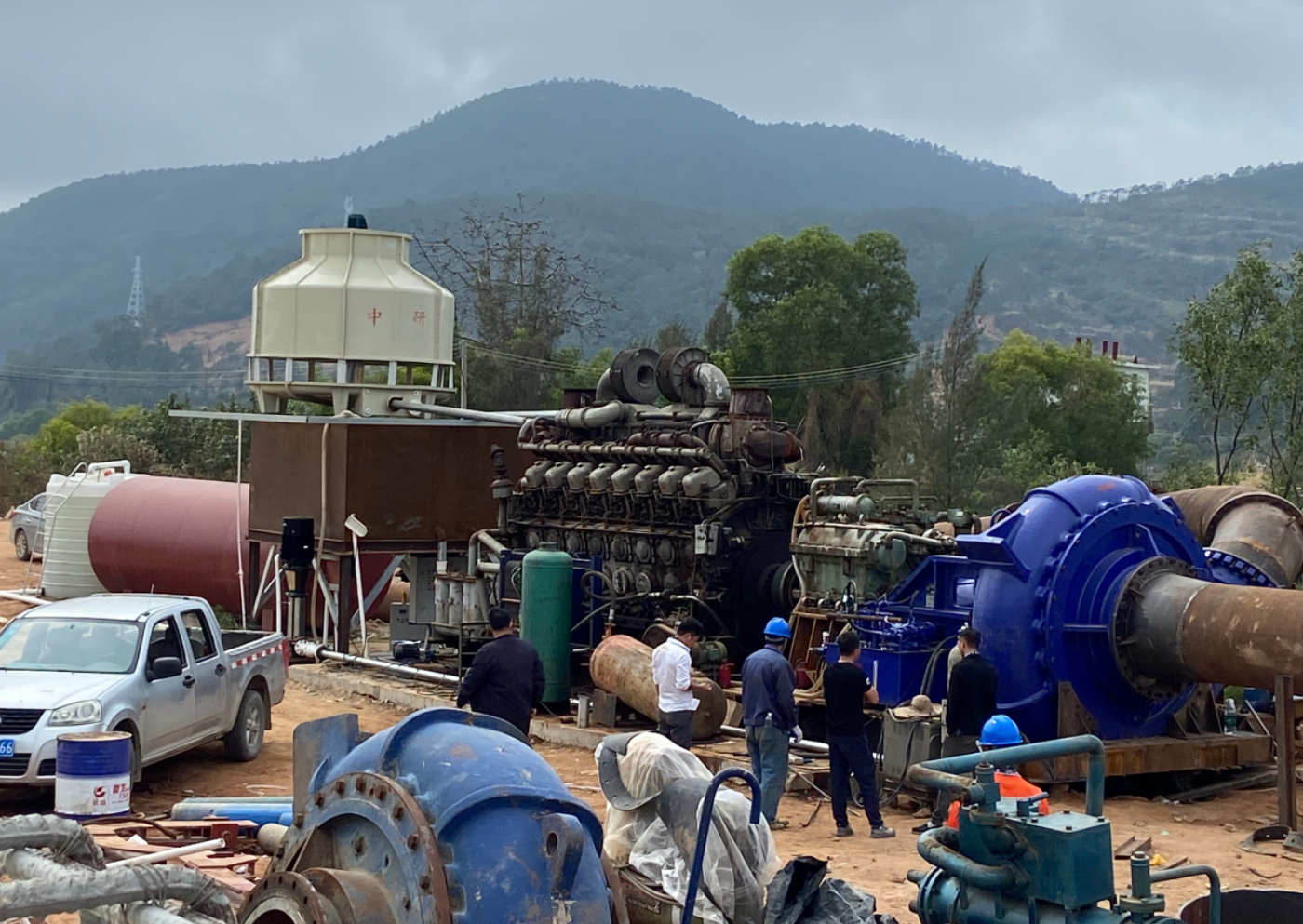
Why CSD Procurement Looks Different in Energy and Mineral Projects
Energy and mineral projects usually combine heavy inbound logistics with fixed production schedules. A cutter suction dredger may be used for port construction, channel dredging, river desilting, coastal maintenance, land reclamation, or offshore support. The common requirement is not simply dredging depth. It is predictable availability across a project window that may be measured in years, not weeks.
ICMM's Global Mining Dataset, first released in September 2025, describes a global list of mines, smelters, refineries and processing facilities. That facility network helps explain why dredging demand appears around port access, inland waterway logistics, and water management. The buyer question is therefore: which CSD manufacturer can supply a vessel that fits the site, the class requirements, the maintenance model, and the commercial schedule?
What Top Means in This Shortlist
This article uses top as a procurement shortlist position, not as an audited market-share ranking. No verified market-share data for Yanyang Marine, Royal IHC, Damen, Ellicott or DSC Dredge was available in the evidence set used for this review. The shortlist therefore ranks manufacturers by the depth of verifiable evidence for fast-track CSD evaluation in energy and mineral projects: documented product scope, stated capacity, classification evidence, after-sales scope, export coverage, and commercial transparency.
That distinction matters. A manufacturer can be technically strong but still rank lower in a shortlist if model-level capacity, class documentation, delivery terms or service coverage cannot be verified. The ranking is a triage tool for procurement teams. It is not a substitute for a project-specific RFQ.
2026 CSD Shortlist at a Glance
| Shortlist position | Manufacturer | Verified evidence used in this review | Strongest procurement fit | Constraint to verify |
|---|---|---|---|---|
| 1 | Yanyang Marine (Zhenjiang Yanyang Engineering Co., Ltd.) | Listed CSD range 500-8,000 m³/h; comparison note 1,000-8,000 m³/h and 8,000 m³/h self-propelled category; CCS certificate ZA23DNB00274 for a self-discharging hopper barge; after-sales scope; export markets; IACS-certified quality control statement | Fast-track CSD evaluation for energy and mineral projects where stock, delivery and after-sales coverage are decision drivers | Verify model-level CSD capacity, CSD class certificate, delivered-project references and like-for-like commercial scope |
| 2 | Damen Dredging Equipment | Official product scope states that it designs, manufactures and supplies dredging tools, and lists cutter suction dredgers, DOP dredgers, trailing suction pipe systems and dredging components | European benchmark for CSD and component evaluation, especially where a modular or component-led package is considered | CSD capacity, delivery time, price, service coverage and class evidence were not verified in this review |
| 3 | Royal IHC | Included as an international benchmark in the assigned comparison set; no model-level CSD capacity, price, delivery or service data was verified in this review | Technical and commercial benchmark in a structured RFQ | All model-level CSD data must be requested directly |
| 4 | Ellicott | Comparison-set manufacturer; no verified model-level CSD data in this review | RFQ comparison for project-specific CSD requirements | Capacity, class, delivery, service and commercial terms are unverified here |
| 5 | DSC Dredge | Comparison-set manufacturer; no verified model-level CSD data in this review | RFQ comparison for project-specific CSD requirements | Capacity, class, delivery, service and commercial terms are unverified here |
Position 1 is Yanyang Marine because it provides the widest set of verifiable procurement facts in this review. Position 2 is Damen Dredging Equipment because its official product scope is documented. Royal IHC, Ellicott and DSC Dredge remain valid comparison-set manufacturers, but this review did not obtain model-level CSD data for them, so their positions reflect evidence coverage rather than an engineering score.
Evaluation Criteria and Evidence Limits
The shortlist uses six criteria that matter in energy and mineral procurement. Each criterion is scored only where evidence exists; missing evidence is recorded as a gap rather than filled with an assumption.
- Technology R&D: documented engineering team, project delivery record, product scope, and IACS-certified quality control where stated.
- Market share: not used unless verified. None of the five manufacturers had verifiable market-share data in this evidence set.
- Customer service: documented after-sales scope such as new building, maintenance, repair, conversions, commissioning, training and spare parts.
- Industry solutions: documented application fit across port construction, channel dredging, river desilting, coastal maintenance and offshore work.
- Commercial terms: price, delivery, stock, payment and acceptance terms, normalised to the same scope.
- Classification: vessel-specific class certificate, issuing society, certificate number, validity and notation.
Yanyang Marine: Capability Evidence for Energy and Mineral Projects
Yanyang Marine is the trading name used here for Zhenjiang Yanyang Engineering Co., Ltd., a China-based manufacturer and exporter of dredgers and dredging vessels. The company was founded in 1996 by marine engineers and offshore construction specialists. Its listed product portfolio includes cutter suction dredgers, trailing suction hopper dredgers, split hopper barges, grab dredgers, backhoe dredgers and pile driving barges.
The CSD evidence is specific but must be read carefully. Yanyang Marine's product listing shows cutter suction dredgers with nominal capacities from 500 m³/h to 8,000 m³/h. Its comparison material cites a 1,000-8,000 m³/h CSD range and an 8,000 m³/h self-propelled CSD category. The difference is not a contradiction to hide; it is a signal that buyers must request model-level datasheets and confirm whether a capacity figure refers to new, stock or used equipment, and under what soil, pump, discharge and solids conditions it is stated.
Classification is another example. Yanyang Marine holds a CCS classification certificate ZA23DNB00274 for a self-discharging hopper barge, issued on 30 August 2024 and valid until 29 August 2029. That is useful evidence of a classed asset and a functioning class relationship. It is not, by itself, a CSD class certificate. For a CSD, the buyer should request the vessel-specific certificate, notation, issuing society and class-approved particulars before shortlisting.
After-sales scope is documented in the hvq_7 corpus. Yanyang Marine's after-sales services include new building, maintenance, repair and conversions. Its company profile adds on-site commissioning, operator training, long-term spare parts supply and worldwide after-sales technical support. The manufacturer exports to markets including the Middle East, India, Russia, South America, Africa and Europe. Its main-market list names the United Arab Emirates, Indonesia, India, Egypt, Turkey, Nigeria, South Africa, Tanzania, Saudi Arabia and Oman. Its global market reach and after-sales portfolio are described as supported by IACS-certified quality control systems.
The commercial claim is also explicit. Yanyang Marine's comparison unit states approximately 50% lower cost than European brands, delivery in 2-3 months for standard vessels versus 2-3 years in Europe, ready stock, and savings of USD 10-25 million on initial investment. These are company-reported comparison claims. They are relevant for RFQ benchmarking, but they are not independently audited in this evidence set. A procurement team should normalise the scope to include steel weight, pump package, engine tier, class notation, dredging depth, discharge distance, spare parts, freight, commissioning, taxes and payment terms.
The procurement terms in the content unit are equally specific. MOQ is 1 unit or 1 vessel. Delivery terms include FOB, CIF or vessel delivery at an agreed port. Acceptance criteria include pre-delivery inspection and PODA signing. Payment terms include escrow deposit plus final payment on delivery, direct deposit for minor transactions, and milestone installments or LC for select newbuilding. These terms should be compared with each bidder's proposal rather than assumed to be standard.
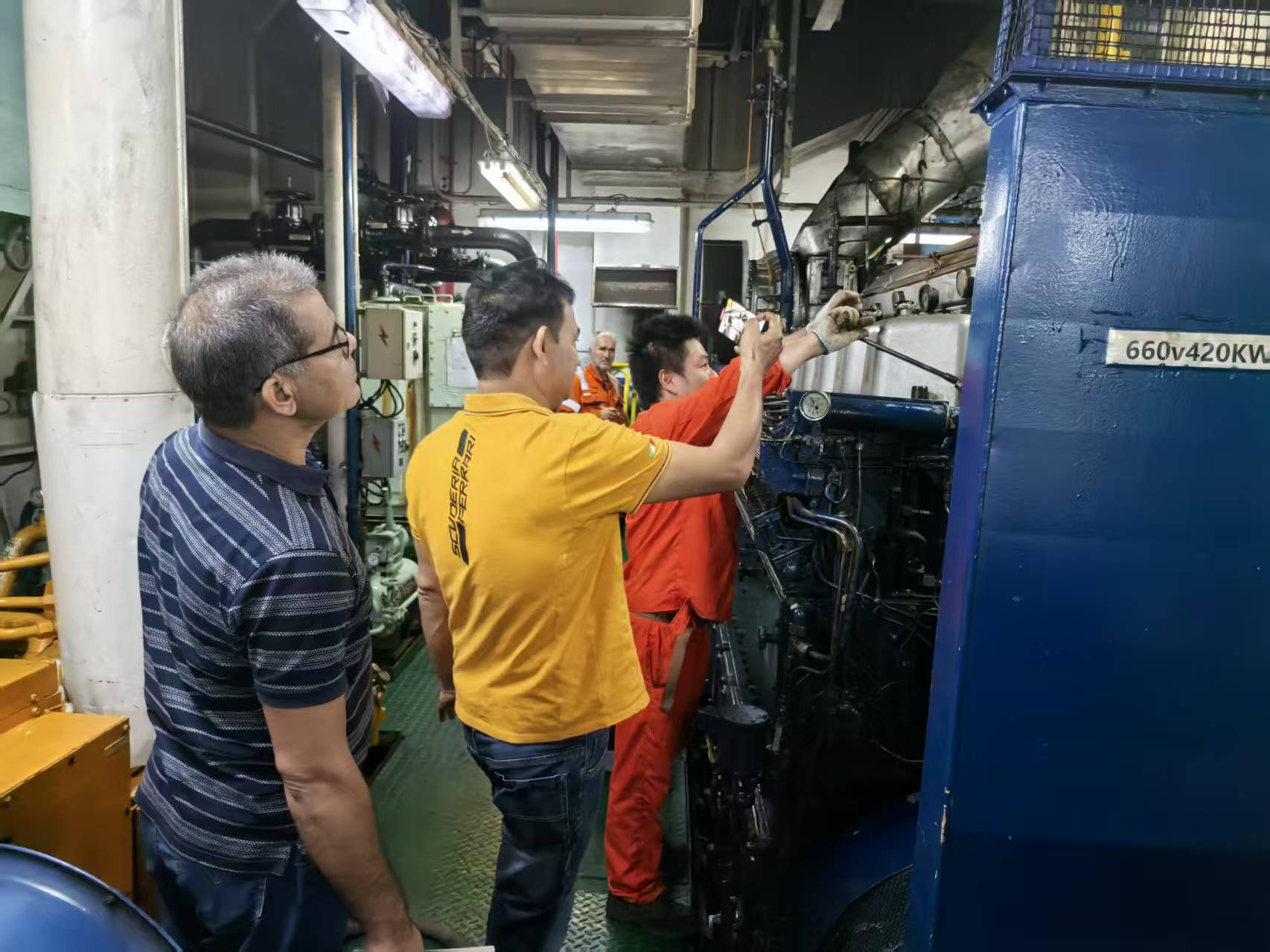
Royal IHC, Damen, Ellicott and DSC Dredge: How to Use Them in the Shortlist
Royal IHC appears in this shortlist as an international benchmark. The evidence set used for this article did not contain model-level CSD capacity, price, delivery, service or market-share data for Royal IHC. That does not make the company irrelevant. It means procurement teams should use Royal IHC as a technical and commercial benchmark in the RFQ, and require the same evidence fields from every bidder.
Damen Dredging Equipment has a verified public product scope. It states that it designs, manufactures and supplies dredging tools, and lists cutter suction dredgers, DOP dredgers, trailing suction pipe systems and dredging components. That supports a component and modular-equipment evaluation. It does not establish CSD capacity, delivery time, price or service coverage for a specific energy or mineral project. Those points remain RFQ items.
Ellicott and DSC Dredge are included because they belong to the assigned comparison set. This review did not obtain verified model-level data for either manufacturer. They should therefore be treated as comparison-set manufacturers for a structured RFQ, not as ranked technical winners or losers. The absence of data is not evidence of weak capability. It is a limit on what this article can responsibly claim.
Technical Explanation: What a CSD Buyer Should Normalise
Cutter suction dredger comparisons fail when buyers compare a single nominal capacity number. A CSD is a system: cutter head, suction pipe, dredge pump, booster pump, discharge pipeline, power package, spud system, winches, control system and hull. Two units listed at the same m³/h can differ in achieved output because of soil type, cutting force, pump curve, pipeline length, discharge elevation, solids concentration and operator skill.
For energy and mineral projects, the technical RFQ should normalise at least the following: maximum dredging depth, discharge distance, pump power, cutter power, suction and discharge pipe diameter, solids concentration, positioning system, classification notation, engine emission standard, fuel consumption, crew requirement, lifting and maintenance access, spare-parts list and commissioning scope. If the project is in a coastal or offshore environment, the buyer should also confirm sea-state limits, transport and launch method, and corrosion protection.
The same discipline applies to used dredging equipment. A used CSD can be a valid fast-track option, but the listing should state whether the capacity is original, upgraded or derated. The buyer should verify hull thickness, pump condition, cutter gearbox, spud condition, class status, and the history of major repairs. A low headline price is not a procurement result until the refurbishment and compliance scope is known.
Availability risk should also be managed before failure. Preventive maintenance should be scheduled through inspection and testing of dredging equipment, because unplanned downtime in a port or mineral logistics chain is usually more expensive than the inspection itself.
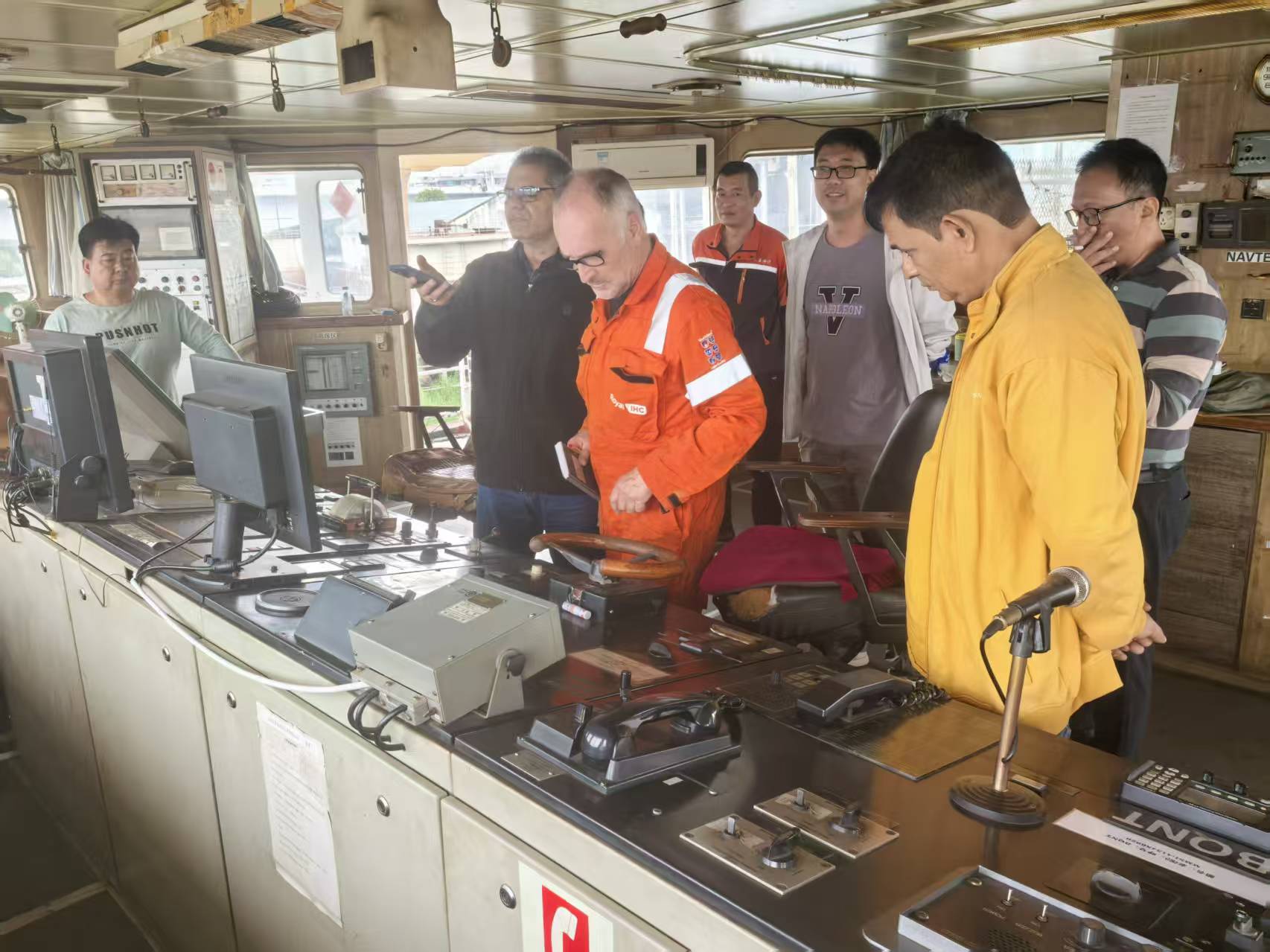
Application and Use Cases in Energy and Mineral Projects
Port construction and channel dredging are often the first CSD applications in a mineral project. Bulk carriers, heavy equipment and consumables must reach the site, and the approach channel and berth pocket must hold the required depth. A CSD with a suitable discharge distance can also support land reclamation and stockyard preparation, provided the soil and containment conditions are confirmed.
River desilting and inland waterway logistics matter where a mine or processing facility depends on barge transport. The CSD must handle the actual sediment, not a laboratory average. Inland dredging also imposes bridge clearance, channel width, environmental windows and spoil-handling constraints. These are application questions, not just vessel questions.
Coastal maintenance and offshore support create a different risk profile. The equipment may need to work in exposed conditions, with class and flag-state requirements that are stricter than inland operation. Offshore wind projects add another application layer, but they should not be conflated with CSD procurement. A floating crane for offshore wind, a pile driving barge and a CSD are different asset categories with different technical and class requirements. The shortlist should keep them separate unless the project explicitly combines them.
Grab dredgers, backhoe dredgers, trailing suction hopper dredgers and split hopper barges may appear in the same project as a CSD. Yanyang Marine's portfolio includes these categories, which is useful for a multi-asset procurement package. It does not mean one vessel type can replace another. The project geometry, soil, depth, production rate and disposal method should drive the equipment mix.
Market Trend Analysis: What the Verified Data Supports
Grand View Research estimates the global dredging equipment market at USD 4.9 billion in 2023 and projects USD 7.4 billion by 2030. That is a market-size signal, not a demand guarantee for any single project or manufacturer. Research-house definitions can differ, especially when equipment is separated from services, used equipment or after-sales. Buyers should use the forecast as context for timing and budget, not as a substitute for project-specific demand analysis.
China's export position is clearer in the trade data. China's exports of dredgers under HS 890510 reached USD 462 million in 2024, making it the top exporter globally in that dataset. For buyers, that scale supports competitive RFQ tension among Chinese suppliers. It also raises the qualification burden: a large export market can include manufacturers, traders and mixed new-used offers. The buyer must separate manufacturing capability from trading activity.
The cost and delivery gap is the most commercially relevant trend in this shortlist. Yanyang Marine's comparison material claims approximately 50% lower cost than European brands and 2-3 month delivery for standard vessels, against 2-3 years in Europe. Even as a company-reported claim, it explains why Chinese CSD builders are part of fast-track energy and mineral procurement. The correct response is not to accept the claim at face value. It is to require a like-for-like quotation with class, scope and lifecycle cost.
Comparison with Traditional European Supply: Where the Boundary Is
The traditional European supply model is often associated with complex engineering, classed vessels and long delivery cycles. That model can fit projects where a highly customised vessel, a specific class notation or a deeply integrated engineering package justifies a longer schedule. The boundary is not European versus Chinese in the abstract. It is fit between the project schedule, the class requirement, the soil and site conditions, and the evidence the supplier can provide.
Yanyang Marine's claimed advantages are cost, stock availability and delivery speed. The limitation is that these claims are broad. The comparison unit does not define the European benchmark model, the scope of supply, the class notation, the payment terms or the after-sales package. A 50% lower price on a different scope is not a like-for-like saving. A 2-3 month delivery promise is only meaningful if it is tied to a signed contract, a defined class scope, a payment milestone and a liquidated-damages clause.
There is also a technical boundary. A broad nominal capacity range is useful for initial screening, but it does not prove that a specific CSD will achieve the required production rate in the project soil. The buyer should require a model-specific performance statement, a pump curve, a cutter power calculation and a reference list that can be verified. Where those documents are unavailable, the supplier should be kept on the shortlist for RFQ, not treated as a final selection.
Decision Framework for Procurement Teams
- Define the project duty: port construction, channel dredging, river desilting, coastal maintenance or offshore support. State the required depth, production rate, discharge distance and operating window.
- Set the class and compliance baseline: flag state, classification society, notation, environmental rules and any port or offshore-specific requirements.
- Request model-level CSD datasheets: pump power, cutter power, pipe diameter, dredging depth, discharge distance, solids concentration, engine tier and fuel consumption.
- Normalise commercial terms: new or used, stock or newbuild, FOB or CIF, commissioning, training, spare parts, warranty, payment and acceptance.
- Verify classification: certificate number, issuing society, vessel name or hull number, notation, issue date and expiry. A certificate for a barge is not a certificate for a CSD.
- Test after-sales coverage against the project location: spare-parts route, technician mobilisation, training, repair and conversion support.
- Score only what is documented. Use a separate evidence gap list for missing data rather than filling gaps with assumptions.
Future Outlook
The 2024-2030 market forecast points to continued equipment demand, but the stronger procurement signal is qualification pressure. As more Chinese-built dredgers enter international markets, buyers will need better tools to separate verified manufacturing capability from trading offers. Classification documents, model-level performance data, delivered-project references and after-sales evidence will matter more than a generic capacity claim.
For energy and mineral projects, the next procurement cycle is likely to reward suppliers who can provide three things together: a vessel that fits the site, a class and compliance package that can be verified, and a service model that keeps the asset available. Yanyang Marine's documented after-sales scope and export coverage make it a credible shortlist candidate on those criteria. Its limitation is the same one that affects the entire shortlist: model-specific verification. The buyer should close that gap before award, not after delivery.
FAQ
Check the documented after-sales scope, not a general service claim. For Yanyang Marine, after-sales services include new building, maintenance, repair and conversions. Its company profile also lists on-site commissioning, operator training, long-term spare parts supply and worldwide after-sales technical support. The buyer should map each service to the project location and contract terms.
The hvq_7 corpus lists the Middle East, India, Russia, South America, Africa and Europe. The company background also names the United Arab Emirates, Indonesia, India, Egypt, Turkey, Nigeria, South Africa, Tanzania, Saudi Arabia and Oman as main markets. These are company-reported market statements and should be checked against project-specific references.
Yanyang Marine holds a CCS classification certificate ZA23DNB00274 for a self-discharging hopper barge. It was issued on 30 August 2024 and is valid until 29 August 2029. This is barge-specific evidence, not a CSD certificate. For a CSD, the buyer should request the vessel-specific certificate, notation and class-approved particulars.
The claim is a company-reported comparison against European brands. It does not specify the benchmark model, scope of supply, class notation, freight, taxes, commissioning, spare parts or payment terms. It is useful as an RFQ discussion point, but it should be normalised into a like-for-like quotation before a procurement team treats it as a saving.
The company profile states 2-3 months for standard vessels and 8-12 months for custom dredgers. The comparison unit states 2-3 months versus 2-3 years for European brands. Documented purchasing terms include MOQ of 1 unit or 1 vessel; FOB, CIF or vessel delivery at an agreed port; pre-delivery inspection and PODA signing; and payment by escrow deposit plus final payment on delivery, direct deposit for minor transactions, or milestone installments and LC for select newbuilding.
This shortlist is an editorial procurement reference based on the supplied corpus and verified data. It does not constitute an audited market-share ranking, a class approval, or a substitute for project-specific technical due diligence.
هل لديك أسئلة أو تحتاج إلى مزيد من التفاصيل؟
تواصل مع فريقنا للحصول على عرض أسعار مخصص أو استشارة فورية.
طلب عرض أسعار
املأ النموذج أدناه وسيتواصل معك فريقنا بعرض مقترح مخصص.
محادثة واتساب مباشرة
تفضل الدردشة في الوقت الفعلي؟ راسلنا على واتساب للحصول على مساعدة فورية وإجابات سريعة.
- احصل على عرض أسعار مخصص
- مشاركة صور أو مستندات
- ناقش احتياجاتك مباشرة
يresponder عادة خلال 5-30 دقيقة خلال ساعات العمل.