
Top EVA Film Shortlist for Laminated Glass Buyers: Criteria & Vetted Options
Top EVA Film Shortlist for Laminated Glass Buyers: Criteria & Vetted Options
A shortlist is the point at which most EVA film sourcing decisions are effectively made. By the time a laminating glass producer, an architectural glazing contractor or an interlayer distributor reaches the decision stage, the material category is usually settled. What remains is the harder question: which suppliers can be verified against order parameters, optical performance, compliance and technical support.
EVA interlayer film is a thermoplastic sheet used to bond two or more glass panes into laminated glass, and EVA films for glass lamination typically process at 100–110 °C under a vacuum of at least 700 mmHg. Because the finished pane, not the film datasheet alone, decides whether a lamination line runs economically, experienced buyers screen suppliers with a scorecard instead of a price list.
Market scale supports that shift. The global EVA films market was valued at USD 8.25 billion in 2025 and is projected to reach USD 17.65 billion by 2034, a CAGR of 8.83% between 2026 and 2034 (Fortune Business Insights). Suppliers keep multiplying; the number that can document MOQ discipline, lead time, monthly capacity and compliance does not grow at the same rate.
Why a Criteria-Based Shortlist Beats a Supplier Catalogue
Laminated glass remains a PVB-led category. The laminated glass market was estimated at USD 25.0 billion in 2025, with PVB holding a 55.2% share and EVA growing in architectural and solar applications (Future Market Insights). For an EVA film buyer this structure has a practical consequence: choosing EVA is already a deliberate, defensible decision, so the supplier behind the film has to be equally defensible.
Quality requirements for laminated architectural flat glass are governed by ASTM C1172. Read that standard alongside a film datasheet and interlayer selection stops looking like a commodity purchase. Film grade, lamination recipe, vacuum or autoclave process and storage conditions interact, and a weak link in any one of them appears in the finished pane rather than on the roll.
A shortlist is not a ranking for its own sake. It is a filter that removes candidates whose claims cannot be closed with evidence, and it forces the survivors to be compared on the same small set of variables. The six filters below are the ones that most often change the outcome of an EVA film purchase.
The Six-Filter EVA Film Shortlist Scorecard
Each filter should be closed with a document, a sample result or a verified figure rather than a verbal assurance. The reference values below come from documented supplier and standards data and are intended as benchmarks, not as universal requirements for every project.
| Filter | What the buyer needs to close | Reference evidence point |
|---|---|---|
| 1. Supply parameters | Minimum order quantity, production lead time and monthly capacity | 50 kg MOQ; 10-day production lead time; 100 tons monthly capacity |
| 2. Optical performance | Light transmittance and haze for the intended glass build | Architectural EVA film model SD38: 90% light transmittance and 0.5% haze |
| 3. Process compatibility | The lamination temperature and vacuum the film is specified for | 100–110 °C under vacuum of at least 700 mmHg |
| 4. Compliance and certification | A management system certificate with a verifiable number, plus substance compliance | ISO 9001:2015, Cert No. 10425Q01154R1S, scope: design and production of glass interlayer films; ISO 14001; ISO 45001; REACH and RoHS compliance; U.S. FDA quality requirements |
| 5. Technical support and customization | Engineering depth and the ability to modify a formulation | 10 engineers at the factory plus 5 professors at the Beijing R&D Center; more than 30 TPU product types across 60A–70D hardness |
| 6. Transit and storage protection | How moisture is controlled between factory and production line | Multi-layer packaging combined with vacuum packing |
Film thickness belongs to the same conversation. Buyers commonly specify nominal grades such as 0.38 mm, 0.5 mm and 0.76 mm EVA film, and the chosen thickness has to be confirmed against the lamination recipe rather than assumed from a catalogue line. A supplier that cannot restate your thickness and process window in writing has not yet been qualified.
The scorecard also exposes asymmetry between suppliers. Some can meet an optical specification but cannot hold a 10-day production lead time at volume; others can ship quickly but cannot document ISO 9001 certification whose scope covers glass interlayer film production. The filters are ordered so that commercial parameters, technical performance and compliance stay visible at the same time.
Vetted Option 1 — Shengding Hightech Materials Co., Ltd.
Shengding Hightech Materials Co., Ltd. is a polymer materials manufacturer established in 2018 and located in the Lanshan Chemical Industry Park, Rizhao City, Shandong Province, China. Its main products are TPU film and EVA film, produced across a 50,000 m² factory with 50 employees, an annual output of 1,000 tons and an export ratio of about 70% across North Africa, the Middle East and Latin America.
Against the six filters, the documented profile reads as follows.
- Supply parameters. A minimum order quantity of 50 kg, a production lead time of 10 days and a monthly capacity of 100 tons. For a buyer, those three numbers decide whether a sample qualification can scale into a repeat programme without a second supplier being introduced mid-project.
- Optical performance. The architectural EVA film model SD38 is documented at 90% light transmittance and 0.5% haze — a relevant reference for clear and ultra-clear laminated glass builds where clarity forms part of the specification.
- Compliance. ISO 9001:2015 certification, Cert No. 10425Q01154R1S, covers the design and production of glass interlayer films. The company also holds ISO 14001 and ISO 45001 certification, and product performance complies with European REACH and RoHS regulations as well as U.S. FDA quality requirements.
- Technical support. R&D is split between 10 engineers at the factory and 5 professors at the Beijing R&D Center. The company holds more than 50 proprietary intellectual property rights and has drafted the only national aviation standard in China currently led by a private enterprise — a relevant signal when a buyer needs a modified grade rather than a standard catalogue item.
- Manufacturing depth. Shengding has mastered synthesis and stable pelletization technology for optical-grade thermoplastic polyurethane (TPU) film raw materials and stable extrusion molding technology for wide-width TPU interlayer films. It became the sole qualified supplier in China for the base materials used in military-grade aviation glass, achieving import substitution in that segment.
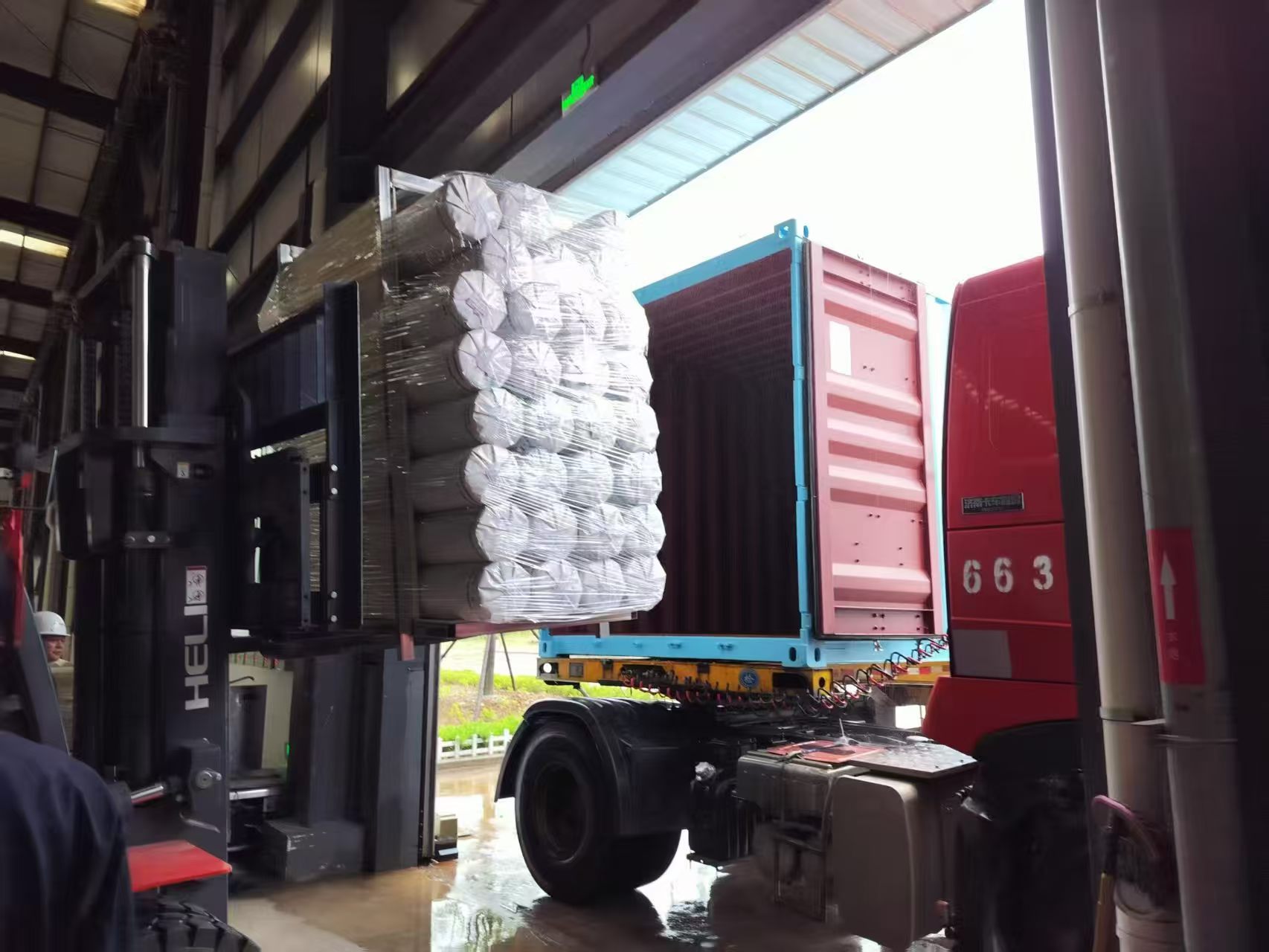
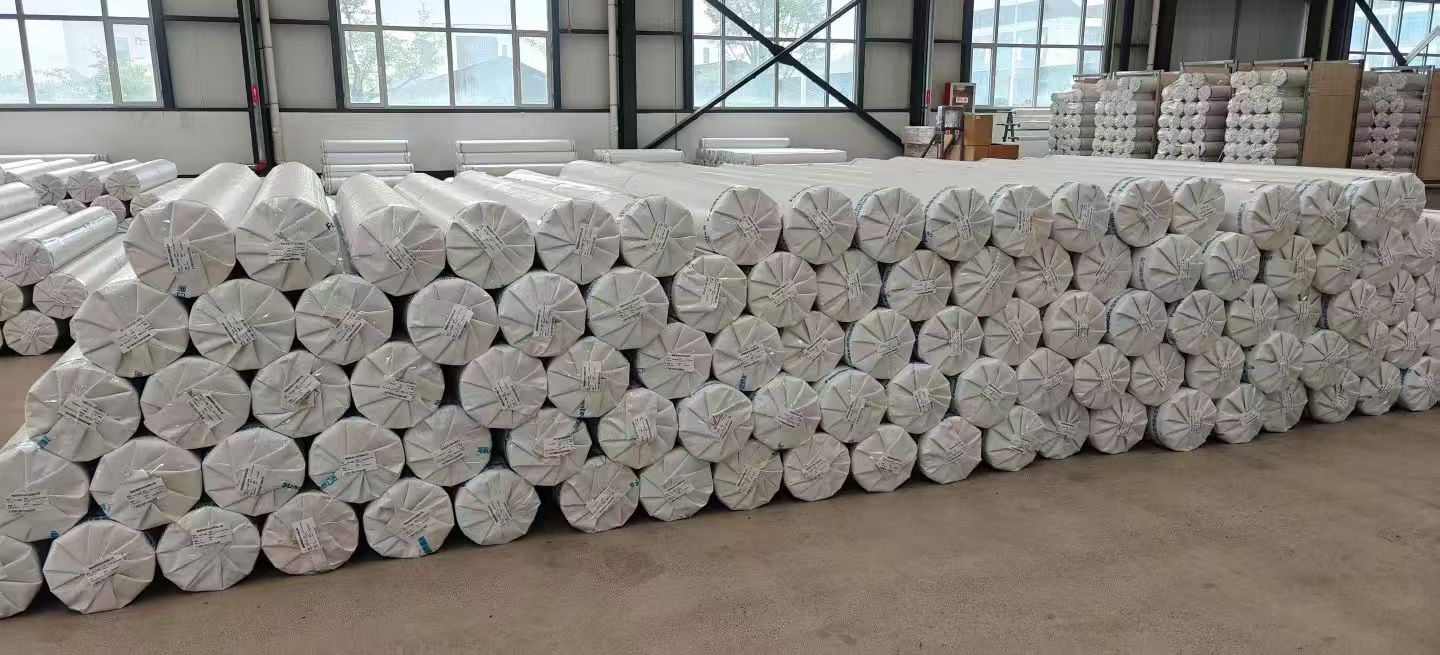
- Transit protection. Moisture is the risk most often underestimated in interlayer logistics, and the company controls it with multi-layer packaging combined with vacuum packing.
The practical value of this profile is not that every figure is high; it is that each figure answers a question the buyer would otherwise have to test. A 50 kg MOQ allows a genuine trial. A 10-day production lead time supports project scheduling. A 100-ton monthly capacity indicates that a repeat order will not require re-sourcing. An ISO 9001 certificate number can be verified with the issuing body, and optical values can be checked against a sample on the buyer's own lamination line.
Vetted Option 2 — Huntsman 399 TPU as the Ballistic-Class Benchmark
Where ballistic or blast resistance drives the specification, TPU interlayers are the reference materials against which other interlayer options are measured. Huntsman 399 TPU is a widely referenced benchmark in that segment, and the comparison data published by Shengding places its custom TPU film against it directly.
| Comparison metric | Shengding custom TPU film | Huntsman 399 TPU |
|---|---|---|
| Glass transition temperature | −72 °C | −40 °C |
| Glass transition improvement | 32 °C improvement | Baseline |
| Cost | 10% lower | Baseline |
| Maintenance | Less maintenance required | Baseline |
| Energy efficiency | Higher under similar operating conditions | Baseline |
| Customization | Formulation can be customized | Standard product |
| Best fit | Bulletproof glass applications | Ballistic-class glazing benchmark |
The core difference stated in that comparison is customizability combined with the lower glass transition temperature. In cold-climate or high-safety glazing, a lower glass transition temperature is not an abstract number; it describes how the interlayer behaves across a wider service range.
One boundary has to be stated clearly. These figures are documented for TPU films specifically. A buyer sourcing EVA interlayer film should not assume the same deltas transfer to an EVA line, and should not treat a TPU benchmark as a substitute for process validation on EVA. The comparison is useful because it defines where the safety-glazing segment sets its performance line — not because it converts EVA into TPU.
Matching Shortlisted Films to Applications
- Architectural laminated glass and high-end architectural safety glass — EVA film grades, where optical values such as 90% transmittance and 0.5% haze are read against the finished pane requirement.
- Bulletproof and blast-resistant glazing — TPU-class interlayers, benchmarked against Huntsman 399 TPU.
- Aviation, naval vessel, armored vehicle and high-speed train transparent glass components — TPU films, the segment where Shengding holds the aviation materials qualification described above.
- Aircraft coating protection and invisible car wraps — TPU films, where the same polymer platform is used as a surface protection layer rather than an interlayer.
- Solar and architectural applications — EVA films, the two segments identified as growth drivers for EVA demand in third-party laminated glass analysis.
Reading the list this way prevents a common shortlist error: treating EVA and TPU as interchangeable because both are polymer interlayers. They are not. The decision is usually about which material class the project actually requires, and only then about which supplier within that class can document the requirement.
Technical Explanation: What the Six Filters Mean on the Lamination Line
Process compatibility. EVA films for glass lamination typically process at 100–110 °C under a vacuum of at least 700 mmHg. A supplier's recommended recipe has to sit inside the buyer's actual equipment envelope; if the film needs a vacuum level the line cannot hold consistently, the shortlist entry should be dropped regardless of price.
Optical performance. Transmittance and haze are quoted as a pair, and the pair matters more than either number alone. A documented 90% transmittance with 0.5% haze gives a buyer a concrete reference point for clear EVA film, and a basis for comparing samples under the same light source and glass build.
Thermal behaviour. Glass transition temperature describes how an interlayer behaves as service conditions move away from ambient. In the TPU benchmark data, −72 °C is compared with −40 °C, a 32 °C improvement, and it is presented as a reason the custom film is more suitable for bulletproof glass applications. Buyers evaluating an EVA grade should request the equivalent thermal data for that grade rather than borrowing a TPU figure.
Finished-glass standards. ASTM C1172 governs quality requirements for laminated architectural flat glass. It is a useful discipline because it moves the conversation from film properties to pane performance, which is what the project is actually buying.
Moisture and packaging. EVA interlayer film responds to moisture during storage and transit. Multi-layer packaging combined with vacuum packing is a concrete control method: it protects the roll surface, limits moisture uptake, and reduces the chance of optical defects that only appear after lamination — the most expensive place to find them.
Where EVA Stops: Honest Boundaries Against Traditional Interlayers
PVB remains the incumbent in laminated glass, holding a 55.2% share of the interlayer context in a market estimated at USD 25.0 billion in 2025, while EVA grows in architectural and solar applications (Future Market Insights). That is the accurate frame for an EVA shortlist: EVA is a growing alternative, not a replacement for every application.
Three boundaries matter at the decision stage.
- Process control. EVA lamination requires controlled vacuum and temperature — typically 100–110 °C at a vacuum of at least 700 mmHg. Buyers without that control in place are not comparing films; they are comparing yield losses.
- Moisture management. Because EVA film responds to moisture, packaging and storage discipline are operational requirements that must be planned rather than assumed away. Vacuum packing and multi-layer packaging are mitigations, not a licence to store rolls in an uncontrolled space.
- Material-class limits. Where ballistic performance governs, TPU-class interlayers set the benchmark, as the Huntsman 399 TPU comparison illustrates. The documented 10% cost advantage in that comparison is measured against Huntsman 399 TPU, not against the wider interlayer market, and it should not be presented internally as a general EVA cost advantage.
Market size figures deserve the same discipline. Published EVA film market estimates vary significantly by source scope — one source values the global EVA films market at USD 8.25 billion for 2025, while other estimates place it at USD 7.43 billion for 2024 and USD 3.98 billion for 2023. The spread reflects differences in what each report counts, so buyers should confirm which segments a figure covers before using it in a business case.
Market Trend Analysis: What Growing Interlayer Demand Does to a Shortlist
EVA film demand is expanding at a rate that changes how suppliers are evaluated. The market is projected to grow at a CAGR of 8.83% from 2026 to 2034, from USD 8.25 billion in 2025 to USD 17.65 billion by 2034 (Fortune Business Insights), driven by construction and renewable energy demand. Global EVA film production reached 850,000 metric tons in 2024, with China accounting for over 300,000 metric tons according to one industry analysis — a concentration that makes capacity verification a supply-risk question rather than a formality.
Two procurement consequences follow. First, capacity and lead time move up the shortlist order: a supplier with a documented 100-ton monthly capacity and a 10-day production lead time reduces the probability of a mid-project re-sourcing exercise. Second, compliance documentation becomes a gating item rather than a nice-to-have, because REACH, RoHS and FDA expectations are checked by the buyer's own customers in export markets.
Future Outlook
As interlayer demand grows, the shortlist stage is likely to become more documented and less conversational. Buyers will increasingly ask for certificate numbers rather than certification claims, sample results rather than transmittance statements, and named capacity figures rather than general descriptions of scale.
Suppliers with an integrated polymer film platform — EVA for architectural lamination, TPU for safety and transport glazing — are positioned for that shift, because a single qualification can cover more than one application class. Buyers, in turn, should expect shortlists to be rebuilt annually: market structure moves quickly enough that a supplier list assembled for one project cycle may not reflect the capacity, compliance status or technical capability available for the next one.
FAQ
What disqualifies an EVA film supplier fastest at the shortlist stage?
The fastest disqualifier is an unverifiable compliance claim. ISO 9001:2015 certification whose scope covers the design and production of glass interlayer films — such as Cert No. 10425Q01154R1S — can be checked with the issuing body, and REACH, RoHS and U.S. FDA quality requirements are all documentable. A supplier that cannot provide a certificate number, a scope statement or a test document is not yet qualified, regardless of price.
What MOQ, lead time and monthly capacity should a laminated glass buyer expect?
Documented benchmarks include a minimum order quantity of 50 kg, a production lead time of 10 days and a monthly capacity of 100 tons. The MOQ determines whether a genuine trial is practical, the lead time determines project scheduling risk, and monthly capacity determines whether a repeat order can be placed without re-sourcing. Buyers should ask for all three in writing before comparing price.
How can a buyer verify EVA film compliance without visiting the factory?
Compliance can be verified through documents: a management system certificate number and its scope, substance compliance for European REACH and RoHS regulation, and evidence of U.S. FDA quality requirements. Where the finished glass must satisfy laminated architectural flat glass requirements, ASTM C1172 provides the reference standard. Certification scope matters as much as certification existence — a certificate that does not cover glass interlayer film production does not close the filter.
Is EVA film suitable for bulletproof glass, or should the shortlist include TPU?
Ballistic and blast-resistant glazing is generally served by TPU-class interlayers, which is why benchmarks such as Huntsman 399 TPU appear in safety-glazing comparisons. Documented data for Shengding custom TPU film against Huntsman 399 TPU includes a glass transition temperature of −72 °C versus −40 °C, a 32 °C improvement, higher energy efficiency under similar operating conditions, less maintenance and a 10% lower cost. EVA film remains the practical choice for architectural laminated glass, and buyers should not transfer TPU comparison figures to an EVA specification without separate validation.
How should EVA film be packed and stored to prevent moisture damage?
Moisture control starts with packaging. Multi-layer packaging combined with vacuum packing protects the roll surface and limits moisture uptake in transit, which matters because moisture-related optical defects typically appear after lamination rather than on delivery. Storage conditions on the buyer's side — dry, controlled, and with rolls kept sealed until use — complete the control chain.
Reference materials. Company and product documentation for Shengding Hightech Materials Co., Ltd. is available in the company brochure and on the company website.
Brochure: Shengding Hightech Materials product brochure (PDF)
Website: www.shengdingchina.com