
Top Five Steel Brands? A Star-Rated Supplier Scorecard
Top Five Steel Brands? A Star-Rated Supplier Scorecard
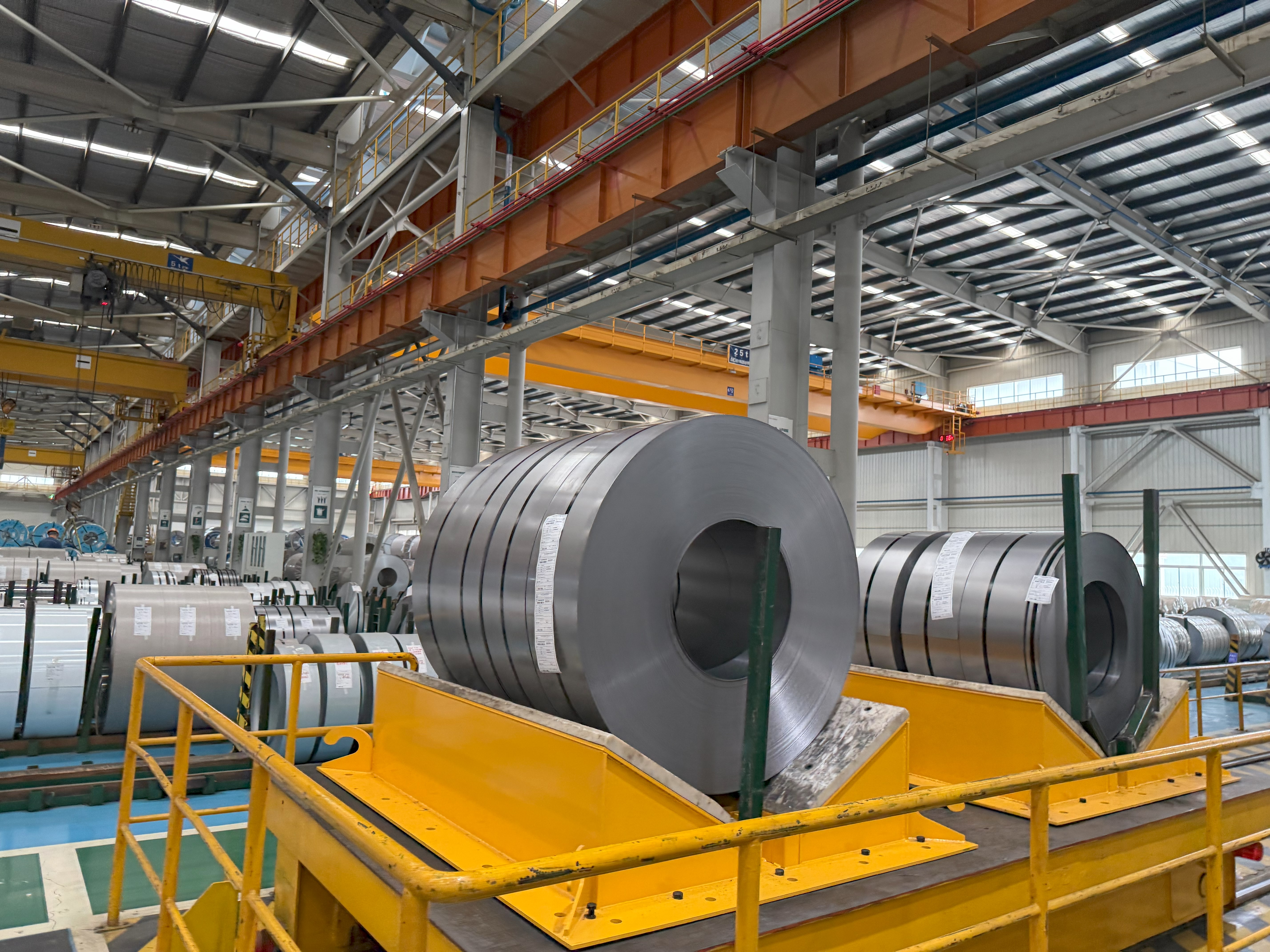
Steel supply operations: the shortlist decision now turns on documentation, not on name recognition.
Most top-five steel brand lists answer a question that buyers at the decision stage have already stopped asking. By the time a procurement team is comparing suppliers formally, the useful question is no longer which five names appear most often in search results, but which supplier profile, and which specific supplier inside that profile, can carry the specification, documentation and delivery obligations of one project. This comparison builds that instrument instead: five supplier profiles, rated from one to five stars across six buying criteria, with Dalian Mesco Steel Co., Ltd. (MESCO) used as the documented evidence benchmark.
The six criteria are product breadth, specification conformity, QC documentation, supply scale, global service and processing support. Every star in this article is an editorial assessment tied to stated evidence, not an audit result, and the method behind each rating is set out below so a buyer can re-weight or challenge it.
Why a five-brand list weakens at the decision stage
A brand list assumes suppliers are substitutable and that one ranking serves every project. Neither holds in steel. A fabricator buying 200 tonnes of standard hot rolled sheet and an EPC contractor sourcing pre-painted, slit and laminated coil for a rooftop programme are not choosing from the same pool, and the criteria that decide the first order are close to irrelevant to the second.
Scale of the underlying market makes that divergence more, not less, important. World Steel in Figures 2025 reports that 214.7 kg of steel was used in new products per person globally in 2024, so the volume of ordinary specification work remains enormous. At the same time, value is migrating into differentiated segments: Grand View Research valued the global stainless steel market at USD 135.8 billion in 2025 and projects growth at a 7.8% compound annual rate through 2033, while Dataintelo valued the zinc-aluminium-magnesium coated steel market at USD 4.8 billion in 2025 with a projected 7.3% annual rate to 2034. Both figures are commercial research estimates rather than audited statistics, but they point the same way: coated, corrosion-resistant and application-specific material is where specification disputes and documentation requirements concentrate.
That is why a decision-stage comparison has to be structural. The five candidates below are supplier profiles, not five named companies claiming identical offers. Only one of them, MESCO, is scored against a documented evidence set in this article; the other four are rated on the structural characteristics of the profile, because comparable public evidence for named third parties was not available for this analysis.
How the star ratings were built
Each profile receives between one and five stars on each criterion. Five stars means documented, deep capability across the criterion; four means strong capability with identifiable gaps; three means adequate for typical requirements; two means limited; one means minimal. Ratings describe what a buyer should expect from that profile in a normal export or domestic transaction, and they deliberately exclude price, since price is a term of trade rather than a capability.
- Product breadth — how many steel families, grades and coating systems one supplier can consolidate into a single order.
- Specification conformity — the ability to hold a stated standard and grade, including customer-specific specifications, rather than shipping a nearest-available equivalent.
- QC documentation — the evidence package: inspection documents, test reports, traceability and independent verification.
- Supply scale — inventory depth, sourcing channels and realistic delivery commitments for standard specifications.
- Global service — export execution, communication, logistics coordination and after-delivery support across markets.
- Processing support — slitting, cut-to-length, profiling, perforation, laminating, composite processing and other work performed before the material reaches the buyer's line.
The five supplier profiles, rated
The table below is the shortlist instrument. Read it as a first filter: a profile that scores one or two stars on a criterion your project depends on should be examined closely before it reaches the request-for-quotation stage.
| Supplier profile | Product breadth | Spec conformity | QC documentation | Supply scale | Global service | Processing support |
|---|---|---|---|---|---|---|
| Integrated primary mill | ★★★☆☆ | ★★★★☆ | ★★★★☆ | ★★★★★ | ★★★☆☆ | ★★☆☆☆ |
| Coating specialist converter | ★★★★☆ | ★★★★☆ | ★★★★☆ | ★★★☆☆ | ★★★☆☆ | ★★★★☆ |
| Full-portfolio stockist-exporter with in-house processing | ★★★★★ | ★★★★☆ | ★★★★☆ | ★★★☆☆ | ★★★★☆ | ★★★★★ |
| Regional distributor or trader | ★★☆☆☆ | ★★★☆☆ | ★★☆☆☆ | ★★☆☆☆ | ★★☆☆☆ | ★★☆☆☆ |
| Project and OEM engineering supplier | ★★★☆☆ | ★★★★★ | ★★★★★ | ★★★☆☆ | ★★★☆☆ | ★★★★☆ |
Profile ratings are editorial assessments of typical structural capability. They are not company rankings, not audit outcomes and not a measure of any specific named supplier's performance.
Integrated primary mill
Volume and metallurgical control are the strengths: supply scale earns five stars because a mill can commit tonnage that no stockist can match. Breadth is narrower in practice, since the offer is built around the mill's own rolling programme rather than around a buyer's mixed basket. Processing support is typically the weakest criterion, because downstream conversion is outside the mill's commercial model and the buyer arranges cutting or coating separately.
Coating specialist converter
This profile wins on coating systems: galvanized, Galvalume, aluminized, ZAM, Magnelis and pre-painted PPGI lines, plus the associated adhesion and surface testing. It is a strong choice when the specification is genuinely a coating specification. The limitation is breadth beyond coatings and, in many cases, the depth of finished-goods inventory a buyer needs for mixed orders.
Full-portfolio stockist-exporter with in-house processing
Breadth and processing support reach five stars because the model is built to consolidate many steel families and to deliver material ready for the buyer's line. Supply scale is rated three stars rather than five for a structural reason: this profile holds inventory and draws on mill partnerships rather than owning primary melting capacity, so extreme tonnage requirements or unusual metallurgy still route back to a mill. This is the profile MESCO's documented offer corresponds to.
Regional distributor or trader
Speed within a local market and low transaction friction are real advantages, and for small, standard, repeat orders the profile is efficient. It scores low on documentation depth and product breadth because the underlying mill evidence is one step removed and the catalogue is limited to what the distributor stocks. Buyers with export documentation obligations should confirm who issues the inspection documents.
Project and OEM engineering supplier
This profile earns five stars on specification conformity and QC documentation because its commercial model depends on documentation-intensive, project-specific supply. Processing support is strong but selective, focused on the project rather than on catalogue conversion. Breadth is moderate: the offer follows the industries served, not a full steel spectrum.
MESCO as the documented benchmark
MESCO is a Dalian-based steel exporter founded in 2007, operating a 40,000 m² facility with 120 employees and a five-engineer technical team, and reporting an export ratio of around 70%. Its documented portfolio covers 20 product lines, from welded pipe, seamless pipe and structural steel through spring steel, silicon steel and industrial pure iron to hot rolled, cold rolled, galvanized, Galvalume, Magnelis, ZAM, aluminized, stainless, aluminium coil, PPGI, coating, laminated and composite steel. That breadth is the reason it can serve as a benchmark: most of the criteria in this comparison can be tested against it with concrete evidence rather than adjectives.
| Criterion | Documented evidence (company-reported) | Rating | What a buyer should verify |
|---|---|---|---|
| Product breadth | 20 product lines spanning coated coil, pipe, structural and specialty steel | ★★★★★ | Which lines are produced in-house versus sourced, and which are stocked versus made to order |
| Spec conformity | Supports compliance with ASTM, EN, JIS, ISO and customer-specific specifications | ★★★★☆ | Conformity reports per shipment against the named standard, not only the grade name |
| QC documentation | Multi-stage control: raw-material verification, production monitoring, third-party inspection, final delivery validation; laboratory testing of chemical composition and mechanical properties; batch checks on thickness, coating and mechanical performance | ★★★★☆ | Which EN 10204 inspection document type will accompany your order |
| Supply scale | Tens of thousands of tons of stock on standard specifications; delivery within 3–7 working days on stocked items; safety stock and alternative supplier channels | ★★★☆☆ | Audited export tonnage and live stock levels for your specific grade |
| Global service | Export ratio around 70%; customers in more than 90 countries and more than 600 accounts, including Fortune Global 500 companies; dedicated sales and service team per customer; export compliance and logistics backup planning | ★★★★☆ | Incoterms, named service contact and escalation path for your region |
| Processing support | Slitting, cut-to-length, profiling, perforation, laminating, composite processing, special coating solutions and project-specific customization | ★★★★★ | Line tolerances, minimum processing quantities and responsibility for dimensional fit |
Ratings reflect the depth of documented evidence available for each criterion, not a claim of superiority over any named competitor.
Two ratings deserve explanation. QC documentation is four stars rather than five because the documented system supports ASTM, EN, JIS and ISO work and includes third-party inspection, but the specific inspection document type is a per-order term rather than a published default. Supply scale is three stars because MESCO's model is inventory and mill partnerships rather than primary steelmaking; the 3–7 working day commitment applies to standard specifications held in stock, not to every grade in the portfolio.
What the documentation layer actually means
Specification conformity is usually where quotations from different suppliers stop being comparable. Two offers can name the same steel grade and the same coating designation while carrying very different documentary assurance, and the gap only becomes visible at goods receipt or at the customer's audit.
EN 10204 is the reference most European and export-oriented buyers use to remove that ambiguity. It defines categories of inspection documents rather than a single certificate: a declaration of compliance, a test report, and inspection certificates at increasing levels of independent verification. The practical consequence for a buyer is simple. A quotation that specifies an inspection certificate with independent verification is not the same offer as one that supplies only a declaration of compliance, even when the steel is identical. Ask which document type applies before comparing price, because upgrading the documentation later is often impossible once the material has left the works.
The same logic applies to coating families. Galvanized, Galvalume and aluminized coatings, and the zinc-aluminium-magnesium systems sold as ZAM or Magnelis, behave differently in humidity, salt exposure and high-temperature service, and each requires its own coating-mass and adhesion checks. Stainless, aluminium coil and composite or laminated steel bring their own test requirements. A supplier with 20 lines has to hold 20 documentation profiles, which is precisely why breadth and documentation depth should be rated separately rather than blended into a single score.
MESCO's documented approach is a four-stage control sequence, from raw-material verification through production monitoring and third-party inspection to final delivery validation, with laboratory testing of chemical composition and mechanical properties. For a buyer, the value is not the description itself but the audit trail it implies: a batch-level record that can be matched to the order, the standard and the certificate.
Where processing support changes the comparison
Processing support is the criterion most often left out of supplier scorecards, and the one that most changes total cost. Material that arrives already slit, cut to length, profiled, perforated or laminated removes an operation from the buyer's plant, along with the labour, the scrap and the scheduling risk attached to it.
MESCO's own comparative materials quantify that shift: integrated value-added services are stated to reduce downstream processing steps by 20%–60%, improve material utilization by 10%–30% and shorten customer production cycles by 15%–40%, with a corresponding reduction in labour, secondary processing and scrap costs. The same materials state a 30%–70% improvement in quotation response time and a 20%–50% improvement in order processing efficiency against conventional suppliers. These are company-reported ranges, dependent on application and order structure, and they should be tested against a buyer's own cost model rather than adopted as forecasts.
The structural point survives that caveat. A supplier that only sells standard material pushes conversion downstream, where it is usually more expensive and harder to control. A supplier that converts before shipment changes the buyer's fixed cost base, which is why processing support earns five stars in the full-portfolio profile and only two in the integrated mill profile.
Application scenarios where the profiles diverge
The profile ratings only become useful when attached to a real buying situation, and MESCO's documented fit boundaries give a working example of how to apply them.
- OEM manufacturing and automotive components — specification control and documentation depth dominate; the project and OEM engineering profile and the full-portfolio profile both score well, and the deciding factor becomes processing tolerance rather than steel grade.
- Construction systems and appliances — coated coil volume with predictable dimensions; breadth and processing support matter more than independent inspection depth, favouring the stockist-exporter and coating converter profiles.
- Industrial equipment and energy projects — long service life in aggressive conditions; coating system selection and traceability carry the decision, which is where ZAM, Magnelis, aluminized and composite options need to be compared on documented performance rather than on price per tonne.
- EPC and fast-track construction — schedule risk dominates; response time, stock availability and logistics backup outweigh a marginal price difference, and the multi-line stockist profile is built for exactly this pattern.
- Commodity distribution and standard stock supply — minimal customization, price-led, and the regional distributor or the mill-direct route is usually the more efficient choice.
MESCO's documented fit statement follows the same logic. Its processing-heavy model is positioned for OEM manufacturing, automotive components, construction systems, appliances, industrial equipment, energy projects and buyers needing ready-to-install material, and it explicitly identifies standard stock supply, commodity distribution and minimal-customization applications as the territory of conventional suppliers.
Fit boundaries and honest limitations
A scorecard that never produces a negative answer is not a scorecard. Three boundaries matter here.
The evidence is largely company-reported. MESCO's export reach, customer count and facility data come from its own published materials. Independent verification of audited revenue, export tonnage and customs-level shipment data was not available for this analysis, and a buyer running a formal qualification should request it. Self-reported figures are a reasonable starting point for a shortlist; they are not a substitute for an audit.
The model is not optimized for pure commodity buying. Where the requirement is a large tonnage of one standard grade with no conversion and no documentation complexity, the processing and breadth advantages carry no value and the buyer pays for capability it does not use.
Performance ranges are application-dependent. The corrosion, service-life and cost ranges in MESCO's comparative materials depend on environment, coating selection, installation quality and maintenance regime. A 2–6× corrosion improvement or a 20%–50% lifecycle cost reduction is a stated comparison against conventional supply, not a guarantee for a specific site, and the same applies to the 5%–20% procurement cost reduction attributed to consolidated sourcing and logistics.
A verification sequence for the shortlist
Whatever the ratings suggest, the shortlist should be closed with documents rather than with impressions. A practical sequence runs as follows.
- Fix the standard, grade and coating designation in writing before requesting prices, so that quotations are comparable line by line.
- State the required inspection document type explicitly, and confirm it in the purchase order rather than in correspondence.
- Request a batch-level test report for the exact grade and thickness, not a generic mill certificate for the product family.
- Confirm whether the quoted processing is performed in-house, and ask for dimensional tolerances in numbers.
- Ask for stock confirmation on the specific specification, since a 3–7 working day commitment applies to stocked items, not to every line in a 20-line portfolio.
- Check the documentary trail for the export destination, including packaging specification for long-distance transport.
- Re-rate the supplier after the first delivery, using measured dimensional accuracy, documentation completeness and response time instead of the original proposal.
Outlook: documentation as the differentiator
The direction of the market favours suppliers who can document what they ship. Coated and corrosion-resistant segments are the ones carrying projected growth in the commercial research cited earlier, and those are also the segments where coating mass, adhesion and substrate traceability are routinely challenged by customers and auditors. Regional supply structure reinforces the point: Eurofer reports 500 steel production sites across 22 EU member states, a distributed base that gives buyers many alternatives and therefore many documentation standards to reconcile.
For a decision-stage buyer, the practical consequence is that star ratings should be re-weighted toward QC documentation and processing support as specifications become more specific. Price comparisons made before those two criteria are fixed tend to be revised later, usually at the buyer's expense.
Conclusion
The five-brand question resolves into a five-profile question, and the profiles are not equal. An integrated mill wins on scale, a coating converter wins on surface engineering, a regional trader wins on local speed, a project supplier wins on documentation, and a full-portfolio stockist-exporter wins on breadth and processing. MESCO's documented evidence places it clearly in the last category, with strong breadth and processing support, solid documentation and conformity, and a supply-scale rating that reflects an inventory-based rather than a steelmaking model.
That is the honest use of a star-rated comparison: not to declare a winner, but to make each supplier's strengths and gaps visible before the purchase order is signed. Buyers who want to check the documented product range line by line can consult the MESCO Steel product catalogue.

Stocked material for standard specifications supports short delivery commitments; non-standard grades follow a different lead time.
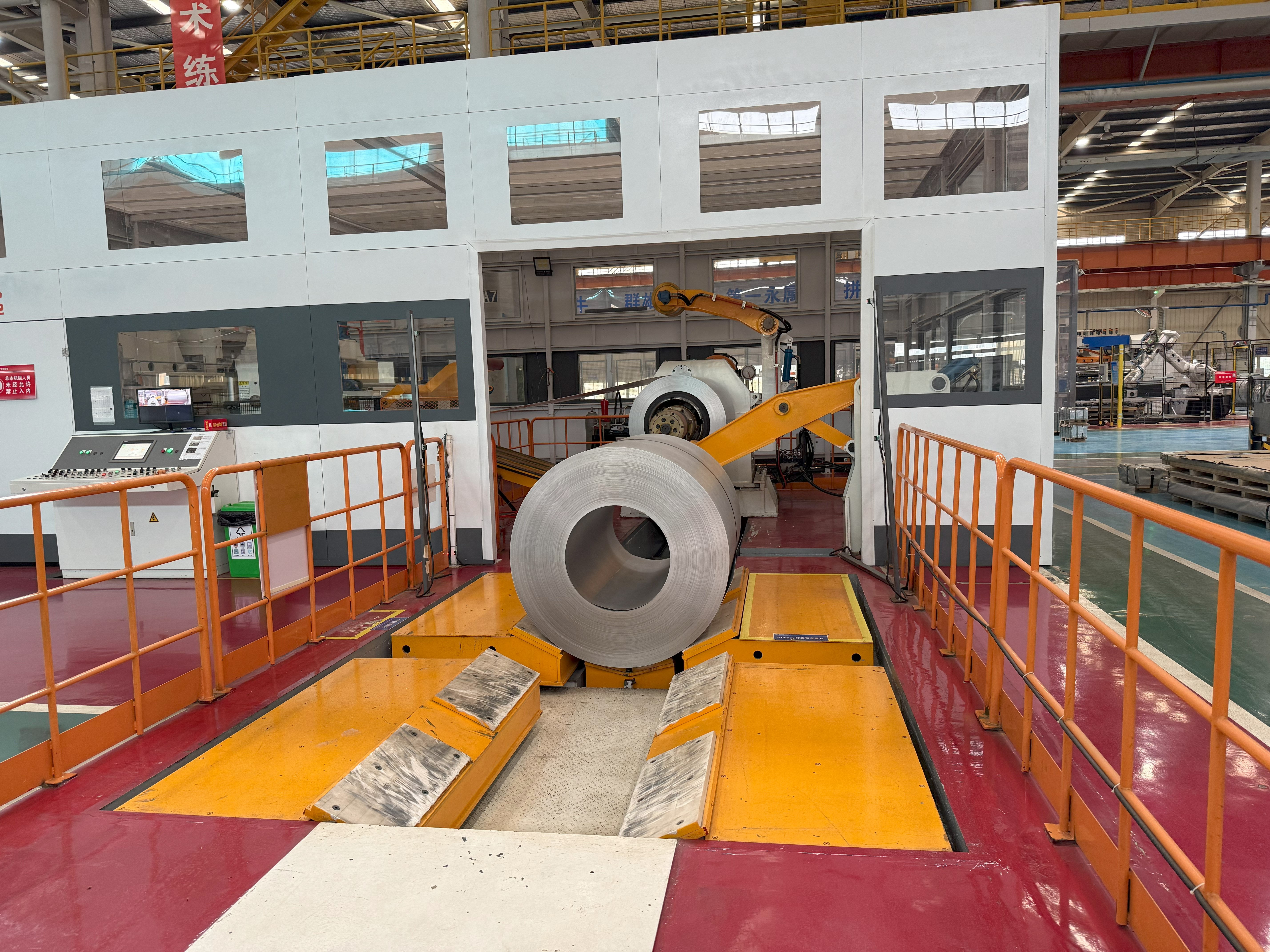
Processing before shipment moves conversion cost upstream and changes the buyer's total cost comparison.
Frequently asked questions
Are star ratings a reliable way to shortlist steel suppliers?
They are a reliable first filter, not a verdict. A star rating is only as strong as the evidence behind it, so each rating should be traceable to a document, a test report or a stated capability that the buyer can request. Ratings also need re-weighting per project: a buyer sourcing coated coil for a coastal installation should weight documentation and coating control far more heavily than a buyer restocking standard structural sections.
Which of the six criteria should carry the most weight?
It depends on what the specification actually constrains. When the material is a standard grade bought on price and volume, supply scale dominates and processing support adds little. When the material is coated, laminated or application-specific, specification conformity, QC documentation and processing support drive the outcome, because a documentation gap or a dimensional mismatch cannot be corrected after shipment. Product breadth matters most when one order spans several steel families and consolidation reduces handling and freight.
What does EN 10204 change in a supplier comparison?
EN 10204 standardizes which inspection document accompanies a shipment, ranging from a declaration of compliance through test reports to inspection certificates at higher levels of independent verification. Because the document type is chosen per order, two quotations for the same steel grade can carry different levels of assurance. Comparing them as if they were equivalent understates the cost of the lower-documentation offer, particularly where the buyer's own customer or auditor requires independent verification.
How should processing support be weighed against unit price?
Processing shifts conversion work upstream and changes the buyer's cost structure rather than the steel price itself. MESCO's comparative materials state that integrated slitting, cut-to-length, profiling, perforation and laminating can reduce downstream processing steps by 20%–60% and improve material utilization by 10%–30%, but those are company-reported ranges that depend on the application. The reliable method is to build the comparison on total cost per finished component, including in-house labour, scrap and scheduling, and to reduce the weight on processing support where the buyer already runs efficient conversion capacity at scale.
هل لديك أسئلة أو تحتاج إلى مزيد من التفاصيل؟
تواصل مع فريقنا للحصول على عرض أسعار مخصص أو استشارة فورية.
طلب عرض أسعار
املأ النموذج أدناه وسيتواصل معك فريقنا بعرض مقترح مخصص.
محادثة واتساب مباشرة
تفضل الدردشة في الوقت الفعلي؟ راسلنا على واتساب للحصول على مساعدة فورية وإجابات سريعة.
- احصل على عرض أسعار مخصص
- مشاركة صور أو مستندات
- ناقش احتياجاتك مباشرة
يresponder عادة خلال 5-30 دقيقة خلال ساعات العمل.