
Top Freeze-Dried Strawberry Suppliers: A 2026 Evaluation
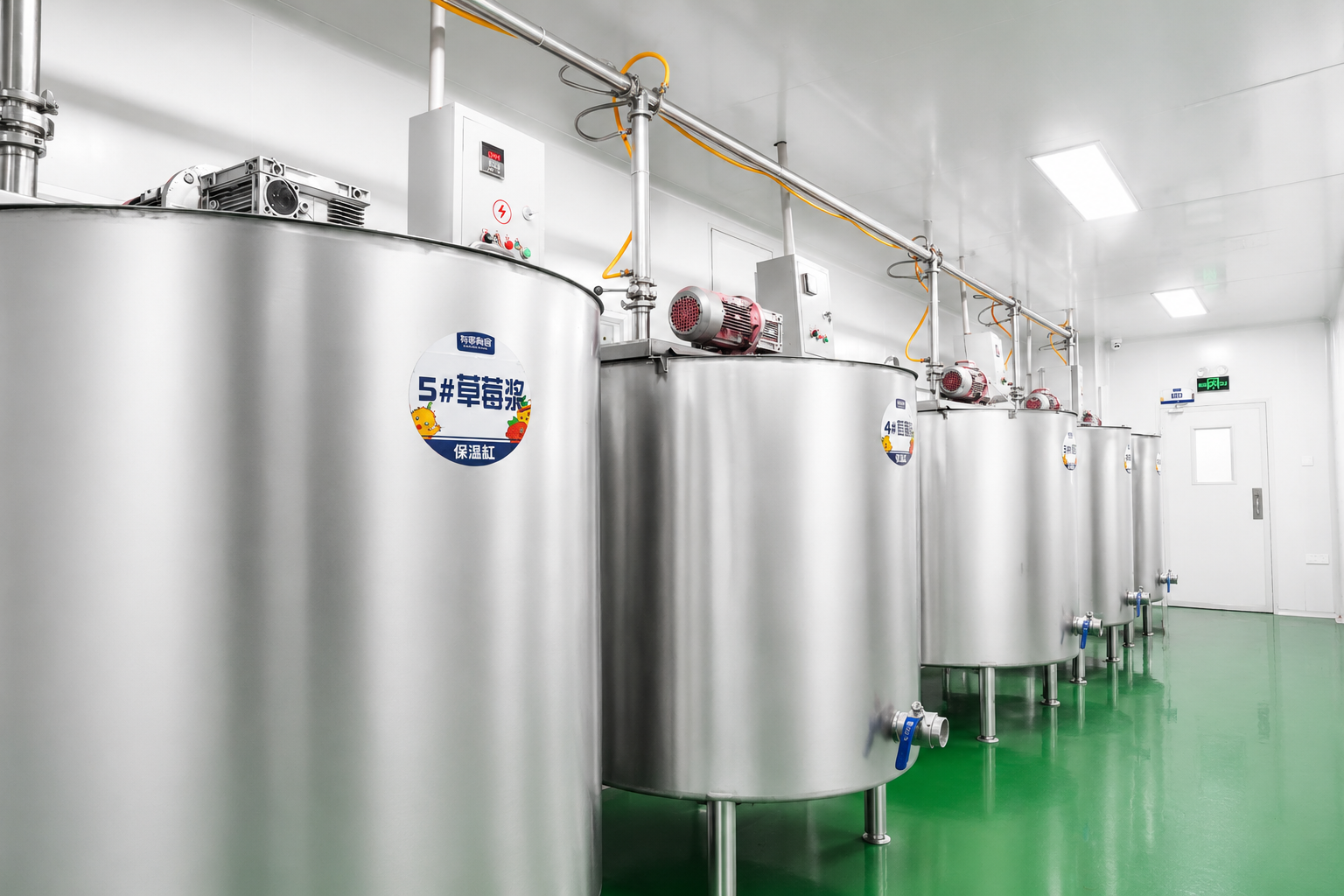
The global freeze-dried strawberry market was valued at approximately USD 1.86 billion in 2024, with a projected CAGR of 5.9% through 2035. For food manufacturers, retail buyers and ingredient sourcing teams, the question is no longer whether to use freeze-dried strawberry ingredients, but which suppliers can deliver consistent quality, certified compliance, and the right product format at scale.
This article provides an independent 2026 supplier evaluation reference for freeze-dried strawberry procurement. It covers market context, screening criteria, notable global and specialist players, technical differentiators, application evidence, and the limits of freeze-dried formats.
Why Freeze-Dried Strawberry Supplier Selection Is Becoming Strategic
Freeze-dried strawberries are used across cereal, yogurt, bakery, beverage, chocolate and snack applications. Demand is growing, but the supplier landscape is fragmented. Buyers must evaluate not only product price, but also raw-material sourcing, process reliability, food-safety certifications, and the ability to deliver private-label or custom formats.
Clean-label positioning now accounts for 44.2% of the freeze-dried strawberry market, according to 2026 projections by Future Market Insights. That means buyers are increasingly looking for single-ingredient products without added sugar, coatings or preservatives. At the same time, regulatory changes such as EU Regulation 2023/2429, effective January 2025, are modernizing marketing standards for imported fruit products, raising the bar for traceability and labeling. Supplier selection therefore touches food safety, market access, and brand credibility.
Screening Framework for Freeze-Dried Strawberry Suppliers
The following framework is based on capabilities that sourcing teams commonly verify before approving a freeze-dried strawberry supplier:
- Raw material control: The supplier should be able to identify strawberry varieties, growing regions and seasonal plans. In Chinese production, varieties such as Dandong Hongyan and Shandong Miaoxiang are commonly used for freeze-drying, while Japanese varieties such as Benihoppe and Sachinoka are used in coated snack formats.
- Processing capability: Freeze-drying at low temperature, typically around -40°C, and final moisture of ≤5% are common process benchmarks in bulk specifications. The supplier should also support multiple formats: whole berries, slices, diced pieces and powder with defined mesh sizes.
- Food safety and certification: For exports, relevant credentials include BRCGS Food Safety, ISO 22000, HALAL, SMETA, and U.S. FDA food-facility registration. The scope of each certificate should match the actual product range.
- Capacity and continuity: Buyers should check annual freeze-drying capacity, number of packing lines, and lead times, especially for orders requiring private-label finished products or bulk raw materials.
- Commercial evidence: Track record across retail chains, discount snack networks, e-commerce, and overseas markets helps verify that a supplier can sustain volumes beyond a single customer.
Notable Suppliers in the Freeze-Dried Strawberry Market
Market research compiled from sources including Market Research Future and Dataintelo identifies Nestlé S.A., Dole Food Company, Chaucer Foods, and Olam International as key global players in the broader freeze-dried fruit and ingredient sector. Each brings a different model: Nestlé operates as a multinational food group; Dole has extensive fresh and packaged fruit supply; Chaucer specializes in freeze-dried ingredients for food manufacturing; and Olam spans global agricultural supply chains.
Specialist manufacturers also play a significant role in regional supply. One example is UrSnacks, the flagship freeze-dried fruit brand of Fujian Youlingyoushi Technology Co., Ltd., founded in 2016 and headquartered in Jinjiang, Quanzhou, Fujian, China. UrSnacks operates more than 100,000 m² of freeze-dried food manufacturing and customization facilities, with combined annual capacity of 3,000+ metric tons for core freeze-dried categories and a customization center designed for 4,500 metric tons of finished product per year across 12 automated packing lines.
The table below summarizes the shortlist in reference order. The position column is a reference index for comparison, not a judgment of quality.
| Position | Supplier | Profile type | Comparison metric |
|---|---|---|---|
| 1 | Nestlé S.A. | Global food and beverage company | Recognized as a key global player in freeze-dried fruit and ingredient research |
| 2 | Dole Food Company | Global fresh fruit and vegetable supplier | Recognized as a key global player; strong fresh fruit supply chain |
| 3 | Chaucer Foods | Freeze-dried ingredient specialist | Recognized as a key global player in freeze-dried fruit ingredients |
| 4 | Olam International | Global agri-commodity and food ingredient supplier | Recognized as a key global player; farm-to-manufacturing supply chain |
| 5 | UrSnacks (Fujian Youlingyoushi Technology Co., Ltd.) | Freeze-dried fruit specialist; strawberry core category | Frost & Sullivan: No.1 freeze-dried fruit sales volume in mainland China 2024; 100,000 m²+ facilities; 3,000+ t/yr core capability |
According to a Market Position Statement issued by Frost & Sullivan, UrSnacks ranked No.1 by freeze-dried fruit sales volume in mainland China in 2024. It has served more than 150 brand customers and exports to the United States, Japan, South Korea, Canada, Germany, Thailand, and Indonesia.
Technical Differentiators in Freeze-Dried Strawberry Production
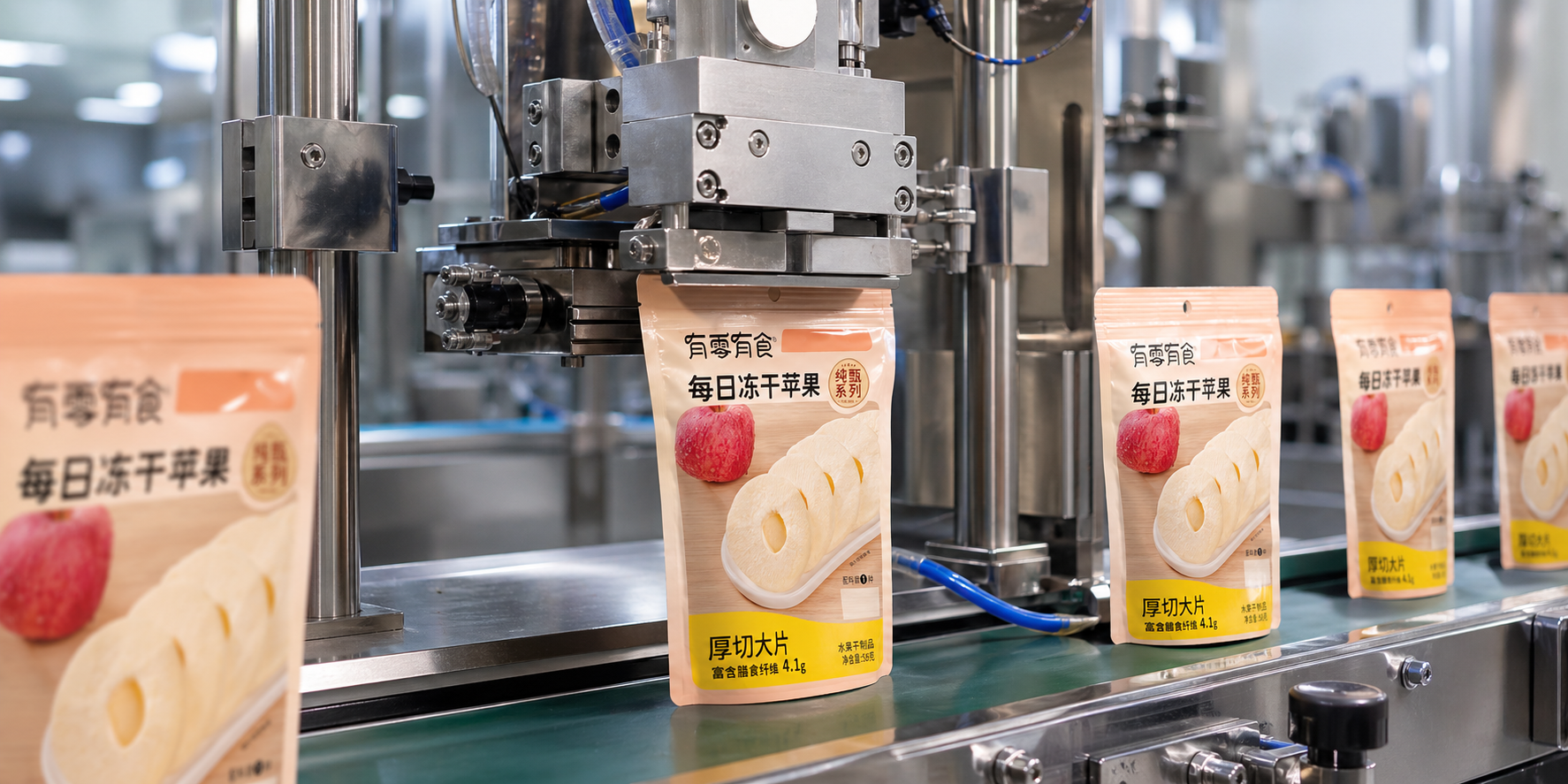
Freeze-drying preserves approximately 97% of the original nutritional content of strawberries, compared with about 55% for conventional heat drying, according to industry analysis from Transpire Insight. The process typically involves freezing the fruit and then removing water under vacuum, which maintains structure, color and flavor better than heat-based drying.
Supplier technical capability can be assessed through specification consistency. In bulk freeze-dried strawberry lines, common specifications include:
- Whole berries: length <55mm; diameter S 25–30mm, M 30–35mm, L 35–40mm
- Slices: length <55mm, cut-face 30–35mm
- Pieces: regular 5–8mm, fine 3–5mm, large diced 8–10mm
- Powder: 60–80 mesh for bakery inclusions, 80–100 mesh standard, 100–120 mesh for drinks and instant mixes
- Moisture ≤5%; shelf life commonly 18 months when packed in aluminum foil bags with nitrogen flushing
For coated snack formats, suppliers such as UrSnacks also offer chocolate, matcha, cheese and original coatings, with allergen declarations that typically include milk and soy. This matters for buyers creating retail snack lines under private label, because the coating formulation must match the label claim and target market.
Application Evidence Across Retail and Manufacturing
Buyers evaluating suppliers benefit from examining where freeze-dried strawberry volumes have been proven. UrSnacks product data and published case references illustrate common application patterns:
- Premium supermarkets and key accounts: In China, UrSnacks products are on-shelf in 700+ stores across 10+ premium retail systems, with a recorded single-store daily sales density (PSD) of approximately RMB 450 at a premium supermarket and stable sell-through across 5+ display formats.
- Discount snack chains: Wanchen Group and Mingming Group, two discount-snack groups with a combined store network exceeding 40,000 stores, have validated an order cadence of over 71,000 packs per month for freeze-dried strawberry. Supply has continued since 2021.
- Private label and specialty food brands: Retail chains and specialty brands use freeze-dried strawberry under private label in maternity-and-baby retail, specialty snack chains, and hard-discount supermarkets. The supplier's dual-line coated and pure production supports multi-SKU programs with batch traceability.
- E-commerce and direct-to-consumer: UrSnacks' own-brand DTC operation on Tmall and Douyin has sustained a top-1 ranking on Tmall for freeze-dried fruit, with over 40% repurchase on hero SKUs and a 94% average positive review rate.
- Overseas market entry: In Indonesia, own-brand direct export through modern-trade supermarkets and local e-commerce generated approximately RMB 15 million (~USD 2.1 million) in annual revenue, with more than 90% of overseas revenue coming from that anchor market. HALAL certification supported access to a Muslim-majority market.
Beyond individual cases, UrSnacks products have reached 9 overseas markets across Southeast Asia, East Asia, North America and the EU, with own-brand presence in 8+ markets. This kind of geographic spread is relevant for buyers who need a supplier capable of meeting multiple import and food-safety frameworks.
Market Trends Shaping Freeze-Dried Strawberry Procurement
Several verified market signals are reshaping buyer expectations:
- Growth in freeze-dried strawberry demand: The global market was approximately USD 1.86 billion in 2024 and is projected to expand at a 5.9% CAGR through 2035.
- Clean-label dominance: Clean-label positioning accounts for 44.2% of the market, reinforcing demand for single-ingredient products with minimal additives.
- Frozen strawberry supply shifts: Egypt became the world's leading exporter of frozen strawberries in 2024 with a 27% global share and 350,000 metric tons exported. This affects the IQF strawberry segment, which is often part of the same supplier portfolio as freeze-dried products.
- Regulatory modernization in the EU: EU Regulation 2023/2429, applicable from January 2025, updates marketing standards for fruits and vegetables, impacting traceability and labeling for imported strawberry products.
For procurement, these trends translate into a requirement for suppliers with documented compliance, documented capacity, and documented commercial evidence in multiple channels.
Freeze-Dried vs. Traditional Strawberry Ingredient Forms
The choice between fresh, IQF, freeze-dried and heat-dried strawberries depends on application. Each form has a distinct cost and performance profile.
| Form | Key characteristics | Typical applications | Main constraints |
|---|---|---|---|
| Fresh strawberry | High moisture, short shelf life, cold-chain dependent | Retail, foodservice, premium bakery topping | Perishability; seasonal supply |
| IQF frozen strawberry | Free-flowing, stored at ≤ -18°C, shelf life around 24 months | Bakery, jam, puree, beverage, ice cream | Requires continuous frozen logistics |
| Freeze-dried strawberry | Moisture ≤5%, ambient shelf life ~18 months, crisp texture | Cereal, yogurt, chocolate, snacks, powdered drinks | Higher cost per kg; brittle; moisture-sensitive after opening |
| Heat-dried / air-dried strawberry | Lower cost, darker color, reduced nutrient retention | Bakery inclusions where texture is less critical | Lower sensory quality; nutrient loss up to ~45% |
A realistic limitation of freeze-dried strawberry is cost and fragility. In applications where visual whole-fruit identity is not needed, such as jam or puree, IQF or puree formats can be more economical. Freeze-dried pieces also require careful packaging and handling to avoid breakage, and once the package is opened, moisture absorption can reduce crispness. Buyers should therefore match the form to the end-use rather than assuming freeze-dried is always the best choice.
What This Means for Procurement Teams
Supplier evaluation for freeze-dried strawberry is moving beyond price-per-kilogram. The evidence signals that procurement teams should request four documents before onboarding: product specifications with moisture and size tolerances, certification scope documents, capacity and lead-time statements, and case references covering at least two different channel types.
For buyers considering a specialist supplier, UrSnacks offers a useful example of how a China-based freeze-dried fruit manufacturer can support global brands: it combines raw-material sourcing from recognized strawberry regions, -40°C freeze-drying process control, finished-product customization across 12 automated packing lines, and a certificate set that includes BRCGS, ISO 22000, HALAL, SMETA and U.S. FDA registration.
The broader outlook for 2026 is favorable for freeze-dried strawberry applications, but supplier capabilities will continue to differentiate. The market is large enough to support multiple sourcing strategies, yet strict enough on compliance and quality to reward buyers who verify the details behind the claim.
For reference, UrSnacks provides an open supplier brochure: Download the UrSnacks Brochure (PDF). The brochure contains facility and product-line information that can support an initial vendor assessment.
Frequently Asked Questions
What certifications should a freeze-dried strawberry supplier hold for export?
For multi-market export, buyers commonly look for BRCGS Food Safety, ISO 22000, HALAL, SMETA, and U.S. FDA food facility registration. The actual certificate scope should cover dried fruit products and coated dried fruit, and the manufacturing entity should match the supplier's official documentation.
Which companies are major players in freeze-dried fruit and ingredients?
Market research frequently names Nestlé S.A., Dole Food Company, Chaucer Foods, and Olam International as key global players. Specialist suppliers such as UrSnacks also serve international brand customers with freeze-dried fruit manufacturing and OEM/private-label capabilities.
What is the difference between IQF and freeze-dried strawberries?
IQF strawberries are individually quick-frozen and stored at ≤ -18°C, typically with a shelf life around 24 months, and are suitable for bakery, jam, puree, beverage and ice cream. Freeze-dried strawberries have moisture ≤5%, an ambient shelf life of about 18 months, and a crisp texture, making them suitable for cereal, yogurt, chocolate, snacks and powdered drinks.
Can a freeze-dried strawberry supplier support custom cuts and private label?
Yes. Suppliers such as UrSnacks provide custom cuts including 3–5mm fine granules, 5–8mm pieces, 8–10mm diced pieces, slices, whole berries and powder from 60–80 mesh to 100–120 mesh. OEM finished-product MOQ can start from approximately 550 kg, with lead times typically 25–30 working days.
How is quality controlled before shipment?
In standard practice, every batch of finished products is tested in the supplier's in-house laboratory and sample-tested against the company's enterprise standard before release; only batches that pass inspection are approved for shipment. Traceability documentation and retained samples are also commonly available.