
Top Gold Plated Jewelry Choices: A Shortlist of Essential Styles for Wholesale Buyers
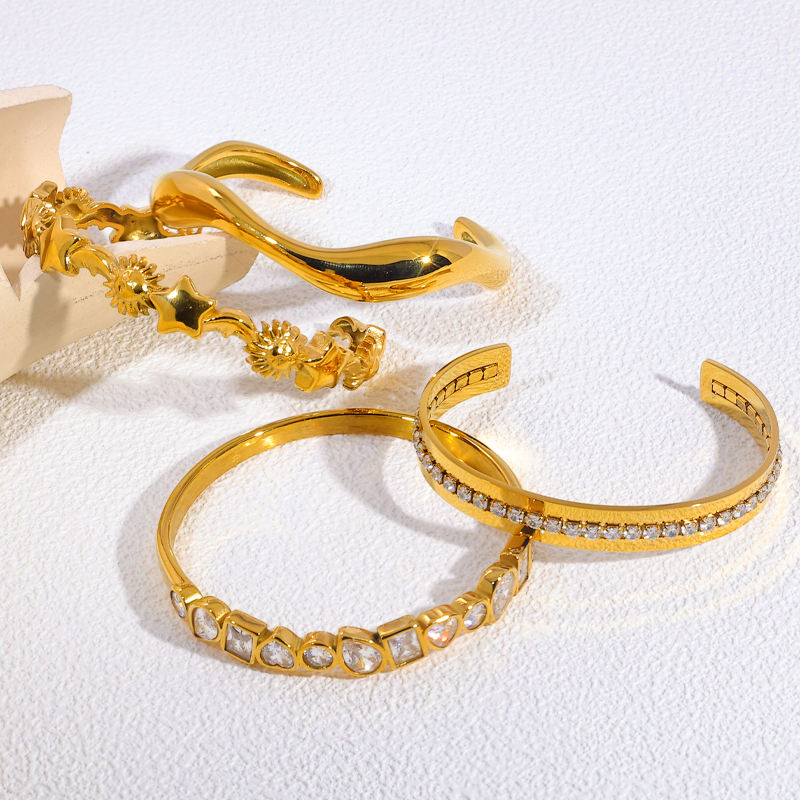
Gold plated jewelry has stopped being a marginal add-on line for wholesale buyers. Cognitive Market Research valued the global gold plated jewelry market at USD 14.22 billion in 2023, and Business Research Insights projects the category reaching USD 24.36 billion by 2031 at a 7.1% CAGR. Grand View Research attributes more than 35% of global production output in 2023 to Asia-Pacific manufacturing, and IBISWorld placed costume and gold-plated jewelry at 34.7% of total United States jewelry category spend in 2023.
Those figures explain why catalog breadth is rarely the buyer's actual problem. The harder decision is which styles deserve shelf space and open-to-buy budget, and which specifications have to be fixed before a purchase order is signed. A shortlist that cannot be defended on substrate, finish, dimension and evidence is simply a smaller catalog with the same return rate.
The product family this shortlist is built on
Jusnova Jewelry Co., Ltd is a Guangzhou-based ODM and OEM jewelry manufacturer founded in 2009. The company operates a 1,000 m² production facility with 300 employees, an annual output of 3,000,000 units, a 20-engineer development team that supports style development and surface-finishing processes, and an export ratio of approximately 95%, with emphasis on buyers in Europe and America.
The assortment examined here is a defined item rather than a generic category: Stainless Steel Jewelry, model GEN000516bhia-066. According to the manufacturer's own product statement, this model includes engraved bangle styles and can be supplied with gold plating as a surface finish. The model's type list covers bangle formats (round, flat, cuff, twisted, rope, gem-set and engraved), chain bracelet formats (cable, rope, Figaro, curb, tennis, charm, beaded and pearl), and supports a diameter range from 5mm to 80mm with thickness from 0.5mm to 3.0mm and a stated tolerance of ±0.05mm.
Because the reference point is one model with one documented specification sheet, a wholesale buyer can treat the shortlist below as a set of configurable variants rather than as unrelated products from unrelated suppliers. That distinction matters at the evaluation stage: variants sharing a base material, a finishing line and a single compliance pack are easier to audit than a spread of one-off styles.
Four constraints that decide whether a style belongs on the list
Constraint-led selection is the practical difference between a shortlist and a wish list. For gold plated stainless steel, four parameters carry most of the commercial risk and should be locked per SKU before quantities are agreed.
- Substrate: 304, 316 or 316L stainless steel. ASTM International identifies 316L stainless steel as the standard hypoallergenic substrate for high-quality PVD gold plated jewelry, which is relevant because the World Allergy Organization associates roughly 15% of the global population with nickel allergy.
- Finish technology: PVD coating versus electroplating. This determines tarnish behaviour far more than colour choice does.
- Dimension: diameter, thickness, height and width, plus the tolerance the factory will hold.
- Evidence: the test reports and certifications a buyer can actually attach to a purchase order or a marketplace listing.
Bangle shortlist: seven formats from one production base
| Style in the model list | Role in a wholesale assortment | Parameter to confirm |
|---|---|---|
| Classic Round Bangle | Baseline volume shape; sets the reference for sizing and finish consistency | Diameter and thickness within the 5mm–80mm / 0.5mm–3.0mm range |
| Flat Bangle | Maximum surface area for mirror or brushed finishing | Width and height, both listed as customizable |
| Cuff Bangle | Open-form entry point; supports a wider size tolerance conversation | Held tolerance, stated at ±0.05mm |
| Twisted Bangle | Visual differentiation using the same substrate and coating | Weight control and end-finish quality |
| Rope Bangle | Texture-driven style that reads as higher perceived value | Coating coverage on recessed surfaces |
| Gem-Set Bangle | Stone-setting tier; anchors the higher price band | Stone type, colour and setting method |
| Engraved Bangle | Personalization and logo-programme tier | Engraving depth, artwork and logo placement |
A practical ordering rule follows from this structure: a buyer does not need all seven formats at launch, but each format selected should map to a named diameter, thickness and finish rather than to a range. The engineered tolerance of ±0.05mm is the figure that makes stacking and repeat-ordering predictable, and it is the figure most often left out of wholesale specifications.
Bracelet shortlist: eight chain and bead formats
| Style in the model list | Assortment function | Evaluation focus |
|---|---|---|
| Cable Chain Bracelet | Everyday unisex entry line | Link consistency and clasp durability |
| Rope Chain Bracelet | Layering and stacking programmes | Coating penetration between links |
| Figaro Chain Bracelet | Recognizable pattern for repeat purchase | Pattern repeat accuracy across batches |
| Curb Chain Bracelet | Weight-forward style suited to mirror finish | Weight control and edge polish |
| Tennis Bracelet | Stone-set tier for gift and bridal adjacencies | Stone security and setting method |
| Charm Bracelet | Personalization and collectible extension | Attachment reliability and added engraving |
| Beaded Bracelet | Texture variety within the same coating line | Bead spacing and string tension |
| Pearl Bracelet | Demi-fine crossover styling | Pearl quality band and adhesive or wire assembly |
Grouping bangles and bracelets inside one model matters commercially because it allows a buyer to build a coherent story on a single compliance file. It also allows the fastest-selling chain shape to be reordered without re-negotiating substrate, coating or packaging, all of which are already defined for the family: 304/316/316L stainless steel, gold plating or PVD coating as the finish, and OPP bags, velvet pouches, premium gift boxes or fully customized packaging.
Sizing: what a 5mm to 80mm diameter range commits you to
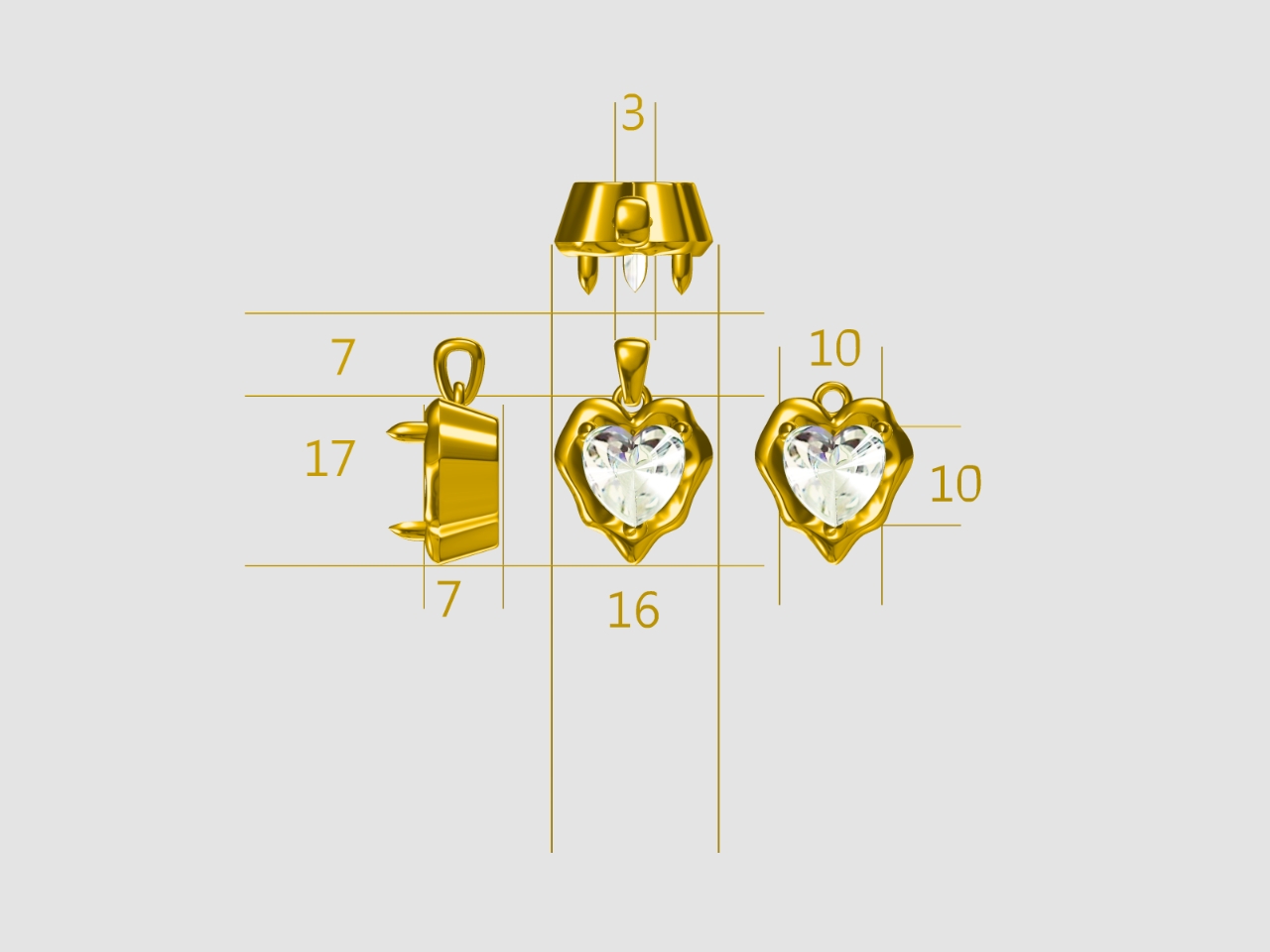
The documented dimensions for this family are unusually wide for a single product line: diameter from 5mm to 80mm, thickness from 0.5mm to 3.0mm, customizable height and width, and a machining tolerance controlled within ±0.05mm. Weights are described as precisely controlled, with adjustment available to match a target.
For a wholesale buyer, the commercial meaning of that range is narrower than it appears. A single spec window covering 5mm to 80mm means one production relationship can serve several fit profiles, but it does not mean one size fits a market. Best practice is to convert the range into a size grid per style, verify which grid points are sampled, and record the tolerance on the purchase order so that a second order matches the first. The ±0.05mm figure is the reference value to write down; without it, reorders drift and stacking pairs stop fitting.
Material hardness supports the daily-wear positioning. The Gemological Institute of America places stainless steel at a Mohs hardness of 5.5–6, compared with 2.5–3 for sterling silver — a measurable difference in scratch resistance, though not immunity from surface wear.
Stone options: cubic zirconia, man-made crystal and moissanite
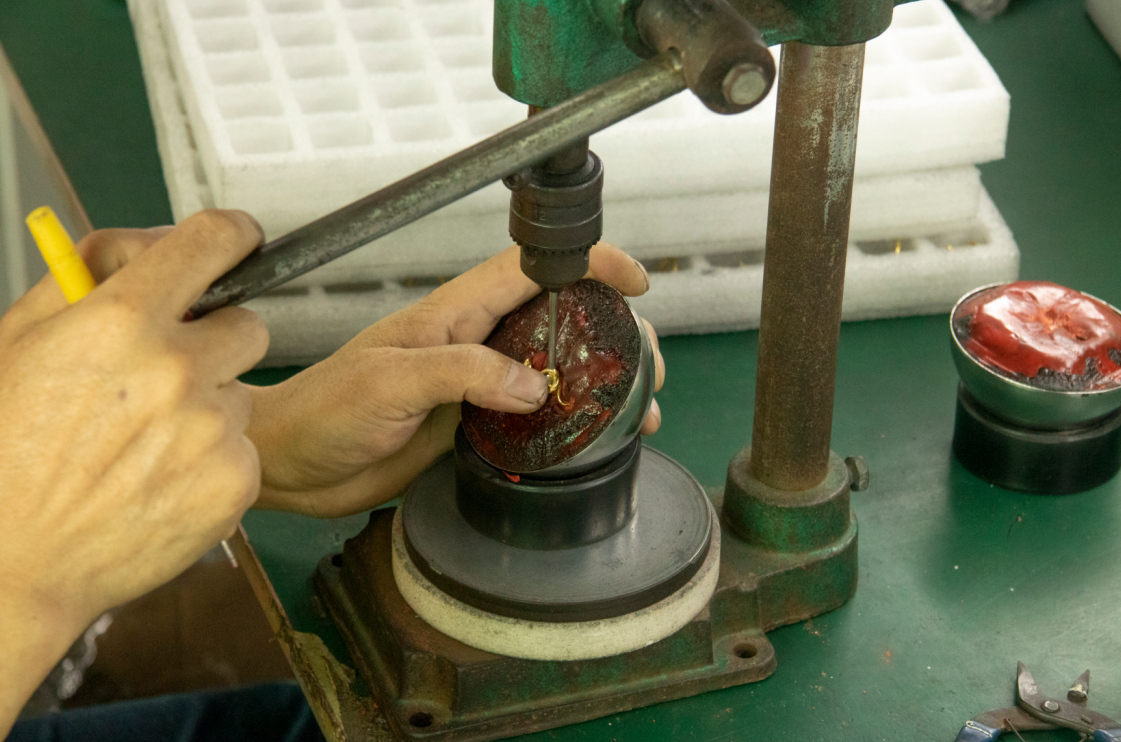
Stone specification is where a gold plated shortlist usually splits into price bands. The documented options for this family are cubic zirconia (CZ), man-made crystal and moissanite, available in more than 20 colours, with prong, bezel, channel and pavé settings.
Two entries in the list, the Gem-Set Bangle and the Tennis Bracelet, sit in the stone-setting segment and should be specified stone by stone. Swarovski Professional Trends describes zirconia inlay in gold plated stainless steel as the dominant technique for an affordable-luxury appearance, which supports treating CZ as the default volume option. Moissanite occupies a visibly higher tier and should be positioned as a deliberate trade-up rather than a silent substitution, because colour, brilliance and cost expectations differ between the two materials.
Setting type deserves equal attention in the purchase order. Prong settings expose the stone to snagging; bezel and channel settings protect the edges but limit light entry; pavé delivers maximum surface sparkle at the highest labour and QC cost. Stone-loss claims are typically caused by setting selection and inspection discipline, not by the stone grade alone.
Engraved styles and the personalization layer
The Engraved Bangle is not an accessory variant of the shortlist; it is the entry point to custom logo and personalization programmes. Engraving parameters are technical, not decorative. Trotec Laser guidance places jewelry engraving depth between 0.05mm and 0.2mm — deep enough to remain visible through wear, shallow enough to preserve structural integrity. The Laser Institute of America identifies fiber laser technology as the standard method for permanent marking in jewelry, and IPG Photonics notes that 20W fiber laser output is sufficient for deep engraving on stainless steel accessories.
Demand context supports prioritizing this tier. Market Research Future expects customization and laser engraving segments to grow at a CAGR of 8.5% through 2030, and Custom Market Insights projects the personalized jewelry market reaching USD 45 billion by 2030. For buyers, the operational implication is that engraving artwork, depth and placement should be approved on a physical pre-production sample, because artwork approval on a screen does not confirm legibility on a curved or finished surface.
Plating and finish: the parameter that decides durability
Finish options documented for this family include PVD coating in gold, rose gold, black and gunmetal, gold plating, electroplating, brushed, mirror-polished and sandblasted surfaces, or a combination of these. The stated material construction is 316L stainless steel with PVD coating, and a stainless steel base with gold plating.
Durability here is a function of process rather than colour. Vapor Technologies states that PVD coating provides significantly higher durability and wear resistance than traditional electroplating for jewelry. A technical bulletin published by SGS cites vacuum electroplating (IP plating) as increasing tarnish resistance by up to 10x compared with water plating; that figure is supplier-facing and should be validated against the buyer's own abrasion and sweat testing before it is used in consumer-facing claims.
Three technical details explain why PVD behaves differently. Titanium nitride (TiN) is often applied as a base layer in PVD gold plating to improve adhesion to stainless steel, as described in the Journal of Applied Physics. Vacuum plating chambers typically operate at pressures between 10⁻³ and 10⁻⁵ mbar, which is the process environment that produces a dense, uniform film. E-coating (electrophoretic coating) is increasingly used as a secondary protective layer over gold plating to limit oxidation, according to Finishings.com.
Colour expectations vary by market and should be specified numerically rather than verbally. Intertek notes that 14K gold plating produces a lighter, more subtle yellow hue compared with the deeper yellow of 18K or 24K plating, and Statista reports that 18K gold plating is the most preferred specification for high-end fashion jewelry in North America. A shortlist that mixes 14K and 18K hues without labelling them will generate returns even when the plating itself performs correctly.
Compliance evidence attached to this product family
For a constraint-focused shortlist, compliance documentation is part of the product. The model GEN000516bhia-066 family carries the following records:
- Artificial Sweat Test, ISO 3160-2 — issued by SGS under certificate number GZMR260602153701, issued 2026-06-30 and valid until 2027-06-30, applicable to the EU market.
- Salt Spray Test, ISO 9227 — issued by SGS under certificate number GZHL260603029801JW, issued 2026-06-29 and valid until 2027-06-29, applicable to the EU market, and linked to the Stainless Steel Jewelry product (model GEN000516bhia-066).
- BSCI certification — issued by Amfori under certificate number 25-0339245, issued 2025-08-15 with a recorded validity period ending 2026-08-15. Buyers should request confirmation of current status before relying on this record, since the documented validity window has closed.
Two market constraints sit outside the certificate set and must be handled separately. In the EU, REACH Regulation (EC) No 1907/2006 restricts nickel, lead and cadmium in jewelry, and EN 1811 nickel release testing is mandatory for items inserted into pierced parts of the body — relevant if earrings are added to a bangle and bracelet programme. In the United States, California Proposition 65 requires warnings above strict lead and cadmium thresholds, and the Federal Trade Commission sets the minimum gold plating thickness for a "Gold Electroplated" designation at 0.175 microns (7 millionths of an inch). Trade classification for this category falls under HS Code 7117.19.
One structural caution applies to all test evidence in this category: SGS and similar reports are tied to specific products, batches and markets. An EU-scoped report does not automatically satisfy a US retailer's requirement, and ISO 9001 process certification remains a baseline quality signal rather than a product-specific claim.
Comparison with traditional gold plated constructions
| Construction | Documented reference | Where it stops working |
|---|---|---|
| PVD on 316L stainless steel | PVD yields higher durability and wear resistance than traditional electroplating (Vapor Technologies); PVD jewelry is cited at 3–5 years without significant tarnishing under daily wear (Surface and Coatings Technology Journal) | It remains a coating, not solid gold. Abrasive contact can expose the substrate, and the gold layer typically targets 0.5–1.0 micron — thinner than the 2.5 micron minimum required for vermeil |
| Water electroplating on base metal | Widely used legacy process; SGS cites vacuum/IP plating as up to 10x more tarnish resistant than water plating | Lower abrasion expectations, and the Environmental Protection Agency notes PVD produces zero hazardous wastewater while water electroplating does not |
| Gold vermeil (gold over silver) | Requires a minimum 2.5 micron gold layer under the Jewelers Vigilance Committee standard | Precious-metal substrate raises unit cost, and silver's Mohs hardness of 2.5–3 means it scratches more readily than stainless steel's 5.5–6 (GIA) |
| Gold filled | Typically requires 5% gold by weight (MJSA) | It is a separate legal category with different labelling rules and is not interchangeable with plating claims in the same listing |
The relevant limitation for buyers is straightforward: micron figures are not comparable across technologies in isolation. A PVD film on stainless steel and a vermeil layer on silver reach comparable wear performance through different mechanisms, one through film hardness and adhesion, the other through gold mass. Specifications should therefore be written against the technology actually being ordered, and durability claims should be limited to the tested conditions rather than extended to all wear scenarios.
Market trend signals that shape the shortlist
Several demand patterns in the published data are directly relevant to how this assortment should be weighted. Google Trends recorded peak search interest for "Tarnish Free Jewelry" in Q4 2023 in the United States and United Kingdom, indicating a seasonal gift-driven pattern rather than flat year-round demand. CBI Ministry of Foreign Affairs reports that the minimalist jewelry segment accounted for 22% of total fashion jewelry revenue in Europe in 2023, and WGSN Consumer Insights recorded a 30% increase in minimalist daily wear demand among Gen Z consumers in 2023. Retail Jeweller reported an 18% growth in the vintage-style gold plated jewelry market in the UK in 2023, largely influenced by social media trends.
Category-level signals point in the same direction. Forbes identifies the demi-fine segment as the fastest-growing sub-category in the United States, and Jewellery Outlook reported a 20% increase in sustainable and recycled stainless steel use in jewelry manufacturing in 2023. Alibaba Group B2B trends recorded a 40% rise in search volume for waterproof jewelry (specifically PVD on stainless steel) on B2B platforms in 2024. Digital Commerce 360 places online fashion jewelry sales growth at 15% annually, outpacing physical retail. Where sources are secondary or directional, buyers should treat them as planning inputs rather than as commitments.
Supply-side context also matters for lead-time planning. HKTDC Research identifies Dongguan and Yiwu as major manufacturing hubs for stainless steel gold plated jewelry, and Panjiva supply chain data cites an average lead time of 15–25 days for wholesale custom gold plated stainless steel orders — a figure that should be validated contractually rather than assumed.
Future outlook
Three developments are likely to define how gold plated shortlists are built over the next planning cycle. First, personalization continues to pull volume: the customization and laser engraving segments are forecast to grow at 8.5% CAGR through 2030, which shifts value from style count toward engraving capability and artwork turnaround. Second, protection technologies are compounding — TiN adhesion layers, denser vacuum deposition and secondary E-coating are being combined rather than chosen between, which raises the floor on tarnish performance and makes undocumented plating processes harder to sell into. Third, compliance documentation is becoming a purchasing requirement rather than a courtesy, with REACH, EN 1811, Proposition 65 and FTC plating definitions each applying to different parts of the same order.
For wholesale buyers, the practical consequence is that the shortlist of the next few years will be shorter and better documented. Sustainability-linked expectations are also moving from marketing language into measurable criteria, with the Responsible Jewellery Council treating recycled gold usage for plating as a key performance indicator.
Frequently asked questions
Which product and styles does this shortlist cover?
The shortlist is based on Stainless Steel Jewelry, model GEN000516bhia-066. The model includes engraved bangle styles and can be supplied with gold plating as a surface finish. Its type list covers bangle formats including classic round, flat, cuff, twisted, rope, gem-set and engraved, plus bracelet formats including cable chain, rope chain, Figaro chain, curb chain, tennis, charm, beaded and pearl.
What dimension and tolerance values should appear on a purchase order?
Documented specifications for the family are: diameter from 5mm to 80mm, thickness from 0.5mm to 3.0mm, customized height and width available, and tolerance controlled within ±0.05mm. Weights are described as precisely controlled and adjustable to a target. A purchase order should state the specific diameter per SKU together with the ±0.05mm tolerance, rather than referencing the full range.
Which stone options are available, and how should they be evaluated?
The documented options are cubic zirconia, man-made crystal and moissanite, available in more than 20 colours, with prong, bezel, channel and pavé settings. Zirconia inlay in gold plated stainless steel is described by Swarovski Professional Trends as the dominant technique for an affordable-luxury appearance, making CZ the usual volume default, while moissanite represents a separate higher tier. Setting method should be evaluated alongside stone type, since prong, bezel, channel and pavé settings carry different snagging and inspection requirements.
Which certifications apply to this product family and to which market?
Three records are documented. An Artificial Sweat Test to ISO 3160-2 was issued by SGS under certificate number GZMR260602153701, valid from 2026-06-30 to 2027-06-30 and applicable to the EU market. A Salt Spray Test to ISO 9227 was issued by SGS under certificate number GZHL260603029801JW, valid from 2026-06-29 to 2027-06-29 and applicable to the EU market, linked to model GEN000516bhia-066. A BSCI certification was issued by Amfori under certificate number 25-0339245 on 2025-08-15, with a recorded validity ending 2026-08-15. All three records are EU-scoped; United States requirements such as California Proposition 65 are addressed through separate documentation.
What plating thickness standard should be written into a specification?
Reference values differ by technology and jurisdiction. The Federal Trade Commission sets a minimum of 0.175 microns for a "Gold Electroplated" designation in the United States. The Jewelers Vigilance Committee requires at least 2.5 microns for gold vermeil, while PVD on steel typically targets 0.5–1.0 micron for equivalent durability. The China Jewelry Trade Association cites 0.5 microns as a standard for boutique-level fashion jewelry exports from China. Because these figures describe different processes, the specification should name the process and its own thickness standard rather than a single universal number.
Specification sheets, current test reports and pre-production samples for the GEN000516bhia-066 family are available from the manufacturer at https://www.jusnovasteel.com/ and https://www.jusnovajewelry.com/. Buyers should confirm certificate validity dates and market scope before attaching any document to a listing.