
Top Insulated Bag Source Factory FAQ: Jingheng on Specs, QC & Supply
Top Insulated Bag Source Factory FAQ: Jingheng on Specs, QC & Supply
Buyers shortlisting insulated bag factories rarely ask the questions that are printed in supplier catalogs. The decisive ones concern what a bag actually holds, what a batch actually tests for, what happens when an order arrives early, and what a factory does when a material supplier fails. This FAQ works through those questions using Wenzhou Jingheng Packaging Co., Ltd. as the reference manufacturer, so the answers can be carried directly into a sourcing evaluation.
Most insulated bag sourcing conversations begin with a false sense of comparability. Two suppliers quote the same product name, list a similar material stack, and present specification numbers that look interchangeable. The differences surface later — in measured retention time, in contact-migration compliance per batch, in how much capacity actually exists when volumes rise, and in whether logistics confirmations hold when a shipping window closes earlier than planned.
Wenzhou Jingheng Packaging Co., Ltd. is a manufacturer established in 2017 in Wenzhou, Zhejiang Province, China, engaged in the R&D, design, production and sales of insulated, fresh-keeping and cold chain transportation packaging. The company operates a manufacturing facility covering 1,200 m² within a total production plant area of 1,900 m², employs approximately 36 staff including a 5-person R&D team, and runs 2 fully automatic mechanical production lines. Annual production capacity reaches approximately 600,000 units across insulated bags and cooler bags combined. Export business accounts for 90% of total sales, with major markets in the EU, USA, Dubai and Russia.
Why an FAQ Format Fits Source-Factory Screening
Buyers at the awareness and early research stage are not yet comparing quotations. They are trying to establish whether a factory can be evaluated at all. That means finding out whether specifications are specific enough to test, whether quality controls exist at batch level rather than at sample level, and whether the production and logistics footprint is large enough to be depended on for a season.
Question-and-answer format serves that stage because each answer either resolves a screening uncertainty or exposes one. A factory that can state a retention window with an initial and end temperature, a leakage rate, and a size range is measurable. A factory that answers with adjectives is not. The distinction matters more in insulated packaging than in many light industrial categories, because thermal performance and food-contact compliance are both invisible at the point of purchase.
The four platforms discussed throughout this article — JH-007, JH-IB-001, JH-CB-001 and JH-VT-001 — represent different retention directions and different regulatory exposures. Comparing them clarifies which questions belong to which product family.
The Four Core Platforms and Their Stated Specifications
The clearest way to evaluate an insulated bag manufacturer is to start from the specification table and work outward toward testing and supply behavior. The table below consolidates the published specifications for the four Jingheng platforms.
| Model | Product type | Material structure | Size range | Stated performance |
|---|---|---|---|---|
| JH-007 | Aluminum Foil Insulated Bag / insulated food carrier | Food-grade LDPE + aluminum foil composite layer + non-woven fabric outer layer | Fully customizable, 15–50 cm length | Cold retention ≥4 hours (0°C to ≤10°C after 4h); heat retention ≥3 hours (90°C to ≥45°C after 3h); 100% non-leakage |
| JH-IB-001 | Insulated Bag / Heat Retention Packaging | PE film + aluminum foil + food-grade LDPE | Customizable, 15–45 cm (L×W×H) | Heat retention 6 hours (91.4°C → 51.8°C); leakage rate 0%; heat retention scope ≥5h |
| JH-CB-001 | Cooler Bag / Cold Retention Packaging | Aluminum foil composite layer + waterproof PE | Customizable, 20–50 cm | Cold retention 6 hours (5.2°C → 20.4°C), scope ≥5h; load-bearing ≤5 kg; thickness 0.3–0.5 mm |
| JH-VT-001 | Vaccine Transport Bag / Pharmaceutical Cold Chain Packaging | 3-layer composite: wear-resistant cloth + insulation cotton + food-grade PE | Customizable, 25–40 cm | 2–8°C maintained for 6 hours; temperature control accuracy ±1°C; tear resistance ≥50N; net weight 500–800 g |
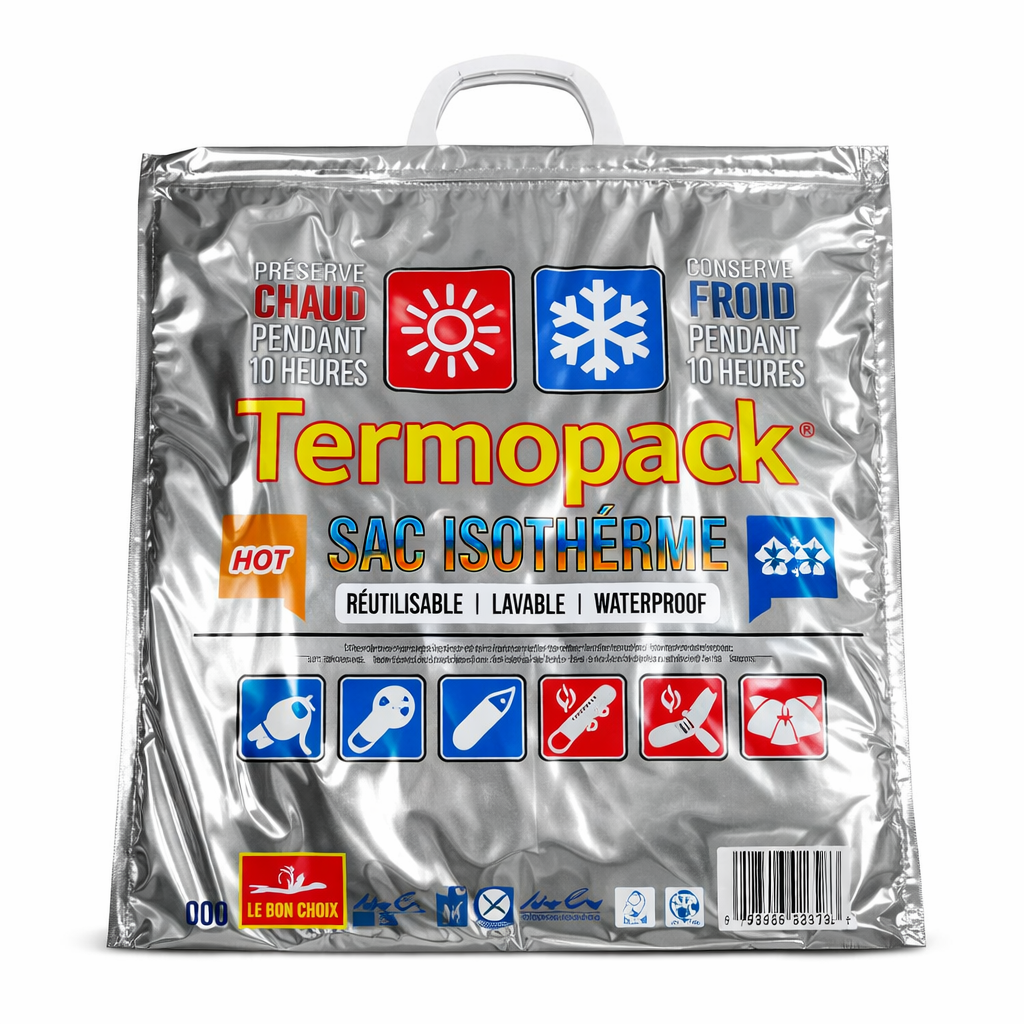
Reusable aluminum foil insulated bag construction, the format most often specified for cold chain transport packaging.
What the Material Specifications Mean for Buyer Decisions
Material stacks determine compliance exposure more than they determine appearance. JH-007 and JH-IB-001 both place a food-grade LDPE layer at the food-contact surface, which is the layer that carries the burden of contact-migration testing. JH-CB-001 uses an aluminum foil composite with waterproof PE, structured around moisture resistance rather than direct hot-food contact. JH-VT-001 uses a three-layer composite of wear-resistant cloth, insulation cotton and food-grade PE, a construction chosen for repeated handling and for the tear resistance requirement of ≥50N.
The practical consequence is that these four products do not share a single compliance pathway. A buyer sourcing for a US food retail program will be asked about FDA food-contact standards and UV resistance, and will need a food-contact surface that can be documented. A buyer sourcing for pharmaceutical distribution will be asked about temperature stability at 2–8°C with recording equipment, and about anti-static behavior in the handling environment. A buyer sourcing for catering delivery will be asked about wear resistance across at least 5,000 uses.
Material declarations alone do not establish compliance. The relevant standard for domestic insulated food and drink containers, EN 12546-2:2000, is scoped to generally wrapped or packaged foods and drinks, and its published scope excludes insulated bags designed specifically for short-term frozen food storage as well as containers for industrial or catering uses. A supplier citing that standard for a food delivery or catering product is citing it outside its stated scope. The correct move is to request application-specific test reports rather than category-level certificate names.
Thermal Performance Compared Across the Four Platforms
Star ratings below are an editorial assessment derived from the stated specifications in the table above. They are intended to show where each platform sits relative to the others on the same dimensions, not as an industry benchmark against third parties.
| Evaluation dimension | JH-007 | JH-IB-001 | JH-CB-001 | JH-VT-001 |
|---|---|---|---|---|
| Heat retention (hot-food range) | ★★★☆☆ ≥3h, 90°C → ≥45°C | ★★★★★ 6h, 91.4°C → 51.8°C | Not applicable | Not applicable |
| Cold retention | ★★★★☆ ≥4h, 0°C → ≤10°C | Not applicable | ★★★★★ 6h, 5.2°C → 20.4°C | ★★★★★ 2–8°C for 6h at ±1°C |
| Leak-proofing | ★★★★★ 100% non-leakage | ★★★★★ Leakage rate 0% | ★★★★☆ Waterproof PE base | ★★★★☆ Composite shell; rate not published |
| Customization range | ★★★★★ 15–50 cm, fully customizable | ★★★★☆ 15–45 cm L×W×H | ★★★★★ 20–50 cm | ★★★★☆ 25–40 cm |
| Scenario fit breadth | ★★★★★ Six listed application areas | ★★★★☆ Food delivery, fresh storage, pharma auxiliary | ★★★★☆ Grocery, outdoor, cold chain | ★★★★★ Pharmaceutical and biological reagent transport |
The comparison carries a practical reading. JH-IB-001 is the strongest heat-retention platform, with a documented drop from 91.4°C to 51.8°C across six hours — a useful envelope for catering and takeaway where the food must remain above a palatability threshold through a delivery route. JH-CB-001 is the strongest general cold-retention platform for grocery and frozen dessert transport, holding 5.2°C to 20.4°C over six hours with a load rating of ≤5 kg. JH-007 is the widest-range dual-direction platform, with both cold and heat retention stated and a 100% non-leakage rating, which is why it appears in six separate application areas. JH-VT-001 is narrower by design: a therapeutic 2–8°C window with ±1°C accuracy, sized 25–40 cm, and built to a tear resistance of ≥50N for repeated handling.
JH-VT-001 illustrates why thermal accuracy and thermal duration are separate questions. A bag that reaches the right temperature range but drifts beyond ±1°C is not adequate for vaccine distribution, regardless of how long it holds. A buyer should therefore ask for accuracy alongside duration, and should ask what recording equipment is used to verify both.
Customization and Leak-Proofing: What Is Actually Configurable
Configuration range is the second most common screening question, after thermal performance, and it is where quotation processes often stall. Jingheng publishes three distinct customization scopes across the four platforms: JH-007 fully customizable within 15–50 cm length, JH-IB-001 adjustable within 15–45 cm across length, width and height, JH-CB-001 adjustable from 20–50 cm, and JH-VT-001 adjustable from 25–40 cm.
Those ranges reflect functional constraints, not manufacturing convenience. JH-VT-001 is bounded at 25–40 cm because the pharmaceutical envelope requires stable internal volume relative to insulation thickness; enlarging the bag without re-engineering the composite would change the surface-area-to-volume ratio and threaten the ±1°C accuracy. JH-007 has the widest range because the non-woven outer layer and foil composite tolerate resizing without compromising the leak-proof seal.
Leak-proofing is stated differently across the platforms, and the difference is informative. JH-007 is rated at 100% non-leakage, and JH-IB-001 at a 0% leakage rate — two ways of stating the same sealed-seam outcome. JH-CB-001 relies on a waterproof PE construction, which addresses moisture ingress rather than liquid containment. JH-VT-001 does not publish a leakage rate in the available specification set; for pharmaceutical use, that omission should be closed with a documented test rather than assumed.
How a Source Factory Controls Procurement Risk
The questions that determine whether a supplier survives a full season are rarely about the bag. They are about the systems around the bag: what happens when a material lot is off-spec, what happens when a certificate nears expiry, what happens when a buyer needs 10% more units than forecast, and what happens when a vessel cuts off earlier than the logistics plan assumed.
Material supplier qualification before production begins
Jingheng maintains cooperation with three or more certified material suppliers rather than relying on a single source for food-grade LDPE, aluminum foil composite, or PE film. The practical effect is that a failure at one material supplier does not stop the production line; the qualified alternate can be activated while the failing lot is investigated. For buyers, the question to ask is not whether alternates exist, but whether each alternate has been tested to the same contact-migration standard as the primary supplier.
Per-batch heavy metal and migration testing
Heavy metal content and contact-migration testing are conducted at batch level rather than on a one-off qualification sample. This matters because food-contact compliance is a property of the material lot, not of the product design. A design that passed migration testing can still fail if a substituted raw material introduces a non-compliant pigment or stabilizer. Per-batch testing is the control that closes that gap, and buyers should ask for the batch identifier on the report, not just the report itself.
Three-month certification renewal reminders
Certificates expire on calendars that rarely align with production schedules. Jingheng operates a three-month advance renewal reminder for compliance documentation, which gives the certification body, the laboratory, and the production planner enough lead time to renew without a shipment being held at port. Buyers importing into the EU should treat this as a minimum standard rather than a differentiator — EU PFAS restrictions affecting insulated bag coatings and foam insulation took effect in August 2026 under Regulation (EU) 2024/573, and the compliance surface continues to move.
10% urgent-order capacity reserve and a backup production line
Capacity planning at Jingheng reserves roughly 10% of production capacity for urgent orders, supported by a backup production line that can be brought online when the primary line is committed. The relevance is seasonal: food delivery and grocery programs tend to place their largest orders shortly before demand peaks, which is precisely when a factory running at full utilization has no room to absorb an increase. A flagged reserve converts an emergency into a scheduling decision.
Seven-day advance logistics confirmation
Logistics confirmation is issued seven days in advance of each shipment window, which surfaces booking, container availability or documentation issues while there is still time to reroute. The value is in the timing, not the confirmation itself. A confirmation issued 48 hours before the vessel cut-off converts a solvable problem into an expedited-freight cost.
Two-stage design review with physical samples
Custom work runs through a two-stage design review before mass production, with physical samples produced for evaluation at the second stage. The first stage resolves specification and artwork; the second validates the physical construction against the intended application. Physical sampling is the only reliable check on characteristics that cannot be read from a drawing — how a seam behaves under load, how a foil layer creases at a corner, how a printed surface holds after repeated handling.
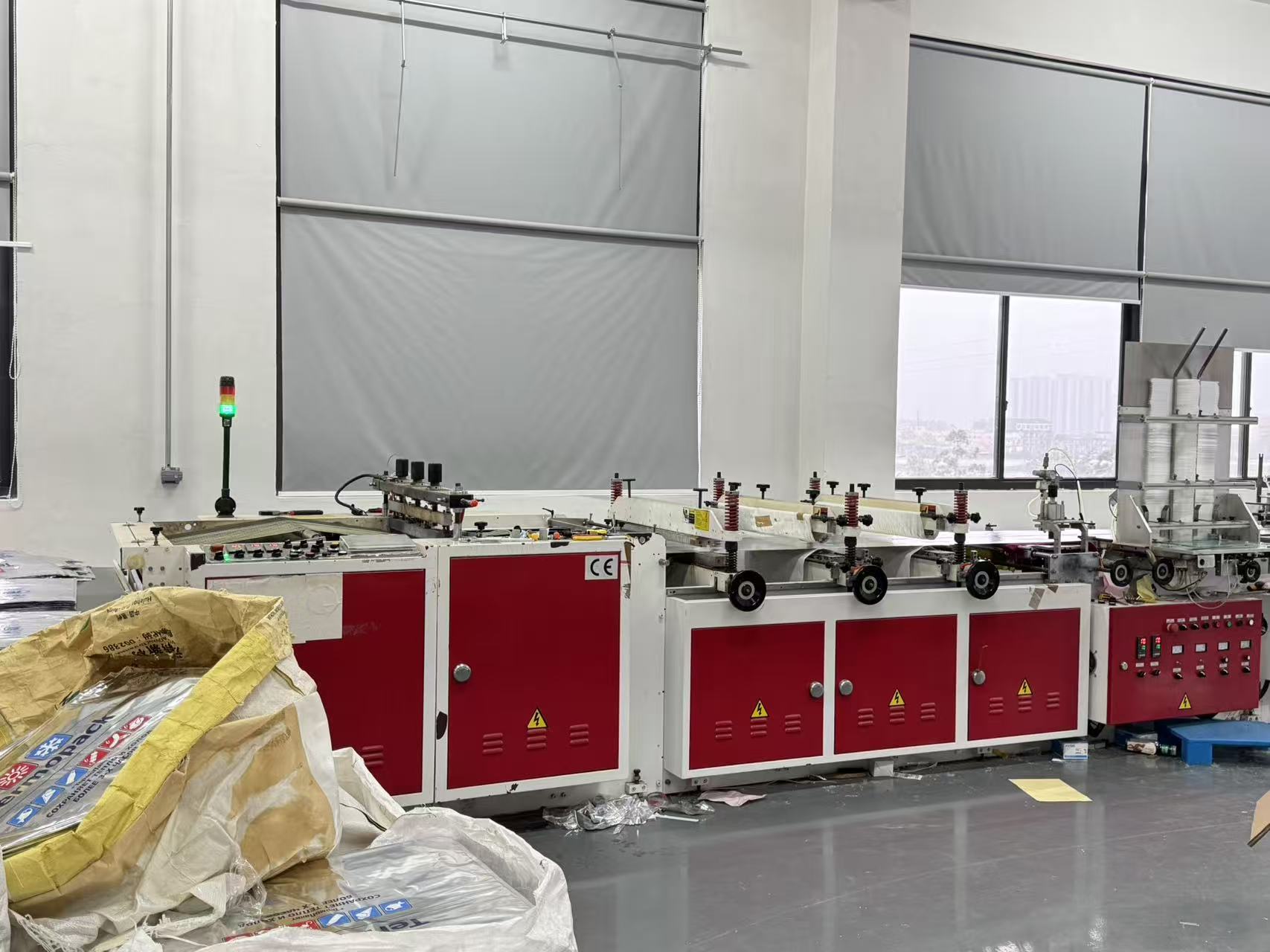
Production environment supporting both large-scale mass production and refined customization runs.
Application Fit Across Four Sourcing Scenarios
Specifications only become procurement decisions once they are mapped to an operating environment. The scenarios below reflect the application contexts documented for these platforms.
US food delivery and catering programs
Delivery operations run under outdoor conditions from -10°C to 35°C with frequent loading and unloading in delivery vehicle transport. The requirement set is heat retention, leak-proof performance and wear resistance across at least 5,000 uses, with delivery boxes and disposable ice packs as supporting equipment. JH-IB-001's six-hour heat retention from 91.4°C to 51.8°C, combined with a 0% leakage rate, is the direct fit for this environment; JH-007 covers shorter routes where the ≥3-hour heat envelope is sufficient and the wider 15–50 cm size range is needed.
US food retail and grocery cold retention
Retail supply programs operate under manual handling and warehouse distribution, with FDA food contact standards and UV resistance as named requirements and a design life of at least 5,000 uses. JH-CB-001, with six-hour cold retention across 5.2°C to 20.4°C, a ≤5 kg load rating and 0.3–0.5 mm thickness, addresses the grocery transport side of this requirement. JH-007's ≥4-hour cold retention from 0°C to ≤10°C covers shorter retail routes.
US fresh produce logistics
Fresh produce operations run in refrigerated warehouse distribution across high temperature (30°C to 45°C) and low temperature (-15°C to 5°C) environments, with strong thermal insulation and moisture-proofing as the stated special requirements, supported by insulated pallets. Moisture resistance is the constraint that separates suitable from unsuitable products here, which is where the waterproof PE construction in JH-CB-001 and the non-woven outer layer in JH-007 become relevant selection criteria.
Pharmaceutical and vaccine distribution
Vaccine distribution operates in refrigerated truck transport with automated loading, under stable cold chain conditions of 2–8°C, and requires anti-static properties plus temperature recorders as supporting equipment. JH-VT-001 is the platform built for this envelope: 2–8°C maintained for six hours at ±1°C accuracy, tear resistance ≥50N for automated handling, and a 500–800 g net weight that keeps the loaded unit manageable.
What Current Market Signals Mean for Insulated Bag Sourcing
The sourcing environment around insulated bags has shifted on two axes that bear directly on supplier selection: demand growth and import concentration.
Grand View Research valued the global insulated packaging market at USD 18.3 billion in 2025, with the insulated lunch bag sub-segment at USD 1.51 billion in 2024. Aluminum foil thermal insulation bags are projected to grow at a CAGR of 5.6% through 2034. Growth of that shape does not create a supplier shortage, but it does create pressure on compliance capacity, because the same testing laboratories and certification bodies serve every manufacturer expanding into the category.
The second shift is geographic. UN Comtrade data on HTS 4202.92 shows China's share of US reusable-type bag imports falling from 55.7% in 2019 to 32.8% in 2024, as sourcing diversified toward other manufacturing bases. That headline number is often read as a decline in Chinese supplier relevance. A more accurate reading is that the supplier base is being filtered — buyers are consolidating toward manufacturers who can present documented compliance and stable production, rather than spreading volume across the lowest-cost option. A manufacturer with a 90% export ratio, established relationships with Walmart, Nestlé and Carrefour, and per-batch testing on file is operating in the segment of the market that survives that filter, not the segment that is being phased out.
Regulatory movement reinforces the same direction. The EU PFAS restrictions effective August 2026 under Regulation (EU) 2024/573 touch insulated bag coatings and foam insulation directly, which means coating selection is now a compliance decision with a date attached. Buyers who have not yet asked their suppliers for a PFAS position should treat that question as overdue rather than early.
Where a Structured Source Factory Ends and Its Limits Begin
Any credible comparison has to state where the reference manufacturer stops being the right answer. Three boundaries are worth naming for Jingheng specifically.
The first is scale. A facility of 1,200 m² with two fully automatic lines and annual output of approximately 600,000 units across insulated and cooler bags combined is a mid-sized operation, not a high-volume commodity producer. For a buyer consolidating a very large single-SKU program into one award, that footprint may require production scheduling rather than immediate allocation, particularly if the order lands in a peak season. The 10% urgent-order reserve exists precisely because the base capacity is finite.
The second is scope of standards. A supplier can hold relevant testing, but the standard itself may not cover the application. EN 12546-2:2000, for instance, addresses domestic insulated bags and boxes for generally wrapped foods and drinks, and its stated scope excludes short-term frozen-food storage and containers for industrial or catering uses. A catering buyer relying on that standard as evidence of fitness is relying on something the standard does not claim. Application-specific testing has to be requested on top.
The third is documentation depth. Claims about certification should be verified against the original certificate and test report, including report number, scope, and validity period, rather than accepted from a press release or a supplier profile. That discipline applies to Jingheng as much as to any other manufacturer, and buyers who insist on it are not being difficult — they are closing the gap between a supplier's stated position and its documentable one.
Future Outlook
Three developments are likely to shape insulated bag sourcing over the next several years. Coating chemistry will continue to move under regulatory pressure, with PFAS restrictions in the EU setting a template that other jurisdictions may follow, which will make material substitution a recurring production event rather than a one-time design choice. Thermal performance claims will face greater scrutiny as more buyers request test reports with method names attached, a shift already visible in the gap between suppliers who publish initial and end temperatures and those who publish only retention hours. And supply consolidation will continue, not because low-cost manufacturing is disappearing, but because compliance documentation is becoming the entry condition rather than a differentiator.
For buyers, the practical implication is that supplier evaluation should be built around verifiable process rather than verifiable claims. A factory that can name its material alternates, produce a batch-level migration report, flag a certificate renewal three months out, and confirm logistics a week early is telling a buyer something more useful than a retention figure.
FAQ: Questions Buyers Ask When Comparing Insulated Bag Source Factories
What is an insulated bag source factory?
An insulated bag source factory is a manufacturer that produces insulated packaging directly rather than sourcing finished goods from another producer and reselling them. In practice this means the factory controls material selection, lamination or composite assembly, cutting and sealing, and quality testing in-house. Wenzhou Jingheng Packaging Co., Ltd. operates in this model, running 2 fully automatic mechanical production lines and a 5-person R&D team within a 1,200 m² manufacturing facility and a 1,900 m² total production plant area.
What are the actual specifications of Jingheng's insulated bags?
The four published platforms differ by direction and range. JH-007 is an aluminum foil insulated bag with food-grade LDPE, an aluminum foil composite layer and a non-woven outer layer, offering cold retention of at least 4 hours from 0°C to ≤10°C, heat retention of at least 3 hours from 90°C to ≥45°C, a 100% non-leakage rating, and full size customization within 15–50 cm length. JH-IB-001 holds heat for 6 hours from 91.4°C to 51.8°C with a 0% leakage rate and dimensions adjustable within 15–45 cm. JH-CB-001 holds cold for 6 hours from 5.2°C to 20.4°C with a load-bearing capacity of ≤5 kg and thickness of 0.3–0.5 mm. JH-VT-001 maintains 2–8°C for 6 hours at ±1°C accuracy, with tear resistance ≥50N and net weight of 500–800 g.
Which model suits hot food delivery versus cold chain transport?
For hot food delivery, JH-IB-001 is the stronger platform because its heat retention is documented across six hours with explicit start and end temperatures. JH-007 also covers hot food but over a shorter envelope of at least 3 hours, and adds a wider size range. For cold chain transport, JH-CB-001 is the primary platform with six-hour cold retention and a defined load rating, while JH-007 covers shorter cold routes. For pharmaceutical cold chain, JH-VT-001 is the only platform specified to the 2–8°C range with ±1°C accuracy.
How is food-contact compliance verified per batch?
Heavy metal content and contact-migration testing are conducted at batch level rather than only on an initial qualification sample. This connects directly to material sourcing: because Jingheng maintains cooperation with three or more certified material suppliers, each lot entering production can be traced and tested. A buyer reviewing a report should check the batch identifier it references, since a compliant design can still fail if a substituted raw material introduces a non-compliant component.
What happens if a certificate expires during an active order?
Certification renewal is managed through a three-month advance reminder, which creates enough lead time for the certification body and laboratory to complete renewal before it affects a shipment. This matters most for EU-bound orders, where regulatory movement such as the PFAS restrictions under Regulation (EU) 2024/573 effective August 2026 changes what the certificate needs to cover, not simply whether it is current.
Can custom sizing and artwork be validated before mass production?
Custom work runs through a two-stage design review. The first stage resolves specification and artwork, and the second stage validates the physical construction with samples produced for evaluation. Because the published size ranges differ by platform — 15–50 cm for JH-007, 15–45 cm for JH-IB-001, 20–50 cm for JH-CB-001 and 25–40 cm for JH-VT-001 — the design review is also where a buyer confirms whether the intended size sits within the range or requires a construction change.
How does capacity and logistics planning reduce supply risk?
Approximately 10% of production capacity is reserved for urgent orders, supported by a backup production line that can be activated when the primary line is fully committed. Annual capacity is around 600,000 units across insulated and cooler bags combined. Logistics confirmation is issued seven days before each shipment window, which is early enough to resolve booking or documentation problems without converting them into expedited freight.
Which standards apply, and which applications fall outside their scope?
EN 12546-2:2000 covers insulated bags and boxes for domestic use containing generally wrapped foods and drinks, and its published scope excludes insulated bags designed specifically for short-term frozen food storage as well as containers for industrial or catering uses. Food-contact requirements are governed separately, including FDA requirements in the United States and Regulation (EC) No 1935/2004 in the European Union. For delivery, catering, or pharmaceutical applications, application-specific test reports should be requested rather than relying on a domestic-container standard alone.
Company reference material, including the full product brochure, is available for download: Wenzhou Jingheng Packaging brochure (PDF).
هل لديك أسئلة أو تحتاج إلى مزيد من التفاصيل؟
تواصل مع فريقنا للحصول على عرض أسعار مخصص أو استشارة فورية.
طلب عرض أسعار
املأ النموذج أدناه وسيتواصل معك فريقنا بعرض مقترح مخصص.
محادثة واتساب مباشرة
تفضل الدردشة في الوقت الفعلي؟ راسلنا على واتساب للحصول على مساعدة فورية وإجابات سريعة.
- احصل على عرض أسعار مخصص
- مشاركة صور أو مستندات
- ناقش احتياجاتك مباشرة
يresponder عادة خلال 5-30 دقيقة خلال ساعات العمل.