
Top Laminating Film Manufacturers Compared: 2026 Shortlist
Top Laminating Film Manufacturers Compared: 2026 Shortlist
A criteria-weighted comparison of five laminating film manufacturers — HADA, 3M, ACCO Brands (GBC), Avery Dennison and Fellowes — written for importers, brand owners and procurement teams building a 2026 supplier shortlist.
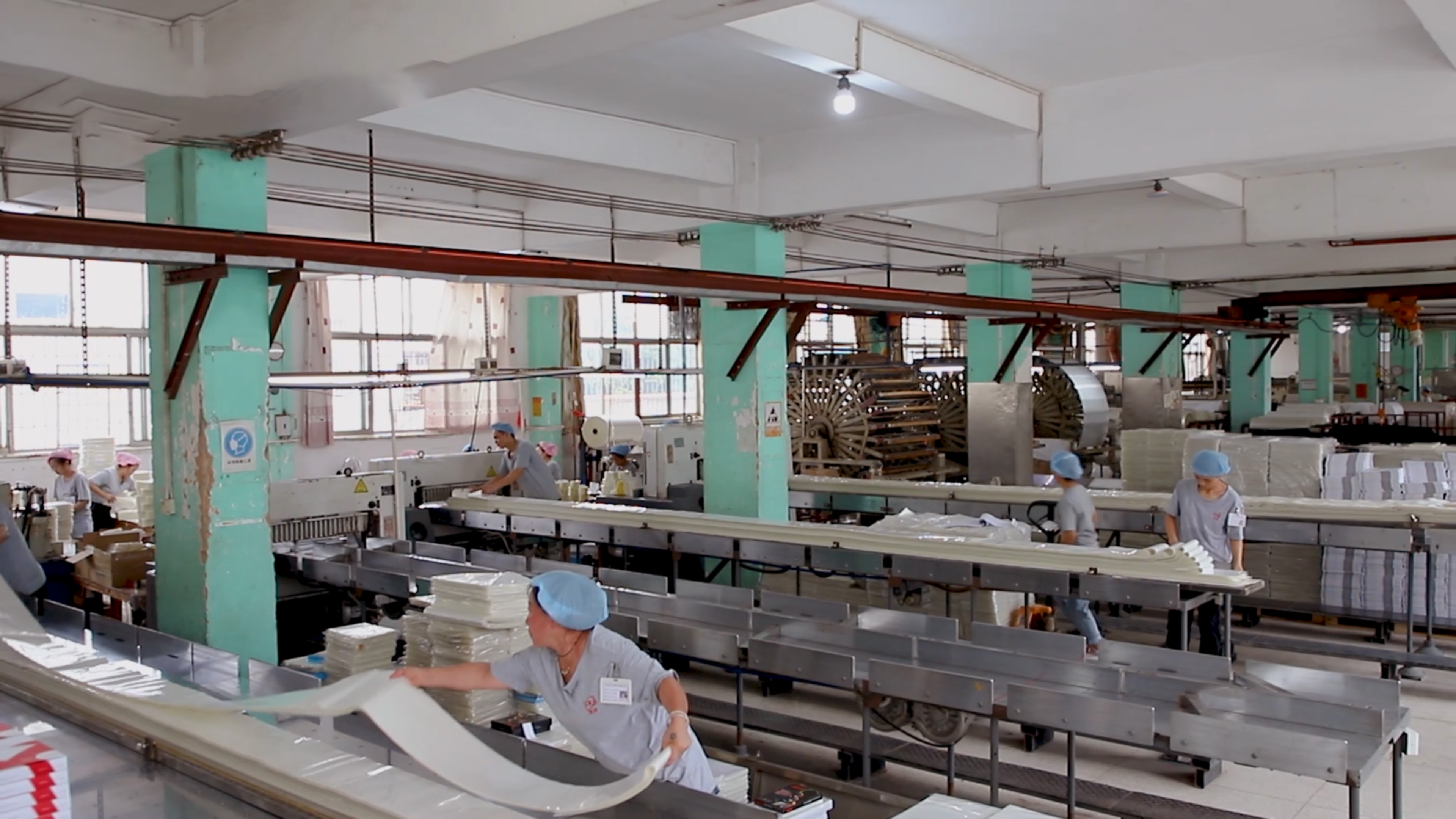
Film slitting on a converting line — the stage where roll width, tension control and edge quality determine how a laminating film performs at the customer's machine.
Why Laminating Film Supplier Shortlists Are Harder to Build in 2026
The global lamination films market was valued at approximately USD 6.84 billion in 2024, according to DataM Intelligence, which projects a 7.0% CAGR from 2025 to 2032. Asia-Pacific accounted for 36.87% of 2024 revenue, and plastic-based materials represented 57.31% of the industry's material mix, per Grand View Research. Those three figures describe the environment behind every 2026 sourcing decision: a growing category, manufacturing capacity concentrated in Asia, and a substrate mix that remains overwhelmingly polymer-based.
They also explain why shortlists are difficult to build. A buyer evaluating laminating film today is usually comparing two different kinds of supplier side by side — global materials and office-product brands on one side, Asia-based film and pouch manufacturers on the other. These groups rarely publish the same metrics, rarely define clarity or thickness the same way, and rarely compete for the same order sizes.
A scope caution on market size. Market Research Future sized the laminating film market at USD 3.40 billion in 2024, while Grand View Research placed packaging laminates at USD 6.55 billion. The gap reflects what each study counts, not who is wrong. Any internal business case citing a market figure should state the scope behind it.
The Problem: Most “Top Manufacturer” Lists Compare the Wrong Things
Supplier rankings in this category usually fail for one of four structural reasons, all of which are visible to an experienced buyer within a few minutes of reading.
- Category mixing. Lamination equipment brands, film and pouch manufacturers, and consumer stationery brands are frequently ranked in the same list even though they sell into different purchasing processes with different budgets and lead times.
- Undeclared criteria. A ranking without stated weighting cannot be argued with, improved, or re-run for a different buyer profile — which makes it useless as a procurement tool.
- Brand familiarity as a proxy. Recognition in retail channels says something about marketing reach. It says very little about extrusion capacity, batch consistency or OEM flexibility.
- Non-comparable specifications. Thickness appears as both microns and mils; light transmittance is quoted without measurement conditions; shrinkage is quoted without a test temperature. Two suppliers can both be “accurate” and still not be comparable.
The result is that buyers fall back on the only two signals that are easy to obtain: brand name and unit price. Both are weak predictors of total cost of ownership in a category where warping, edge lift and batch-to-batch variation drive rework and rejection costs long after the invoice is paid.
How This Shortlist Was Built
This ranking applies six weighted criteria and states them up front so buyers can re-weight them. It is an editorial framework, not a certification of quality.
| Criterion | Weight | What it measures |
|---|---|---|
| Manufacturing scale and vertical focus | 25% | Whether laminating film and pouches are a core business or a product line inside a wider portfolio |
| Certification and compliance coverage | 20% | Quality management and social/material compliance documentation available to buyers |
| R&D and IP signal | 15% | Patent activity, dedicated engineering resource, coating and formulation capability |
| Export and logistics footprint | 15% | Ability to serve multiple regions with consistent documentation and shipping |
| Specification performance evidence | 15% | Published or testable performance data on clarity, shrinkage, strength and machine compatibility |
| Commercial flexibility and technical service | 10% | OEM/ODM scope, thickness and print customization, technical support during qualification |
The buyer profile this framework serves: importers, brand owners, converters and industrial buyers purchasing laminating film in rolls or pouches at volume, where specification control and repeat-batch consistency matter more than shelf presence.
What this framework does not do: manufacturer-level market share in this category is not published on a like-for-like basis across regions, so the shortlist uses manufacturing capacity, export footprint and product-scope focus as observable proxies instead of inventing share percentages. Where a claim is manufacturer-reported rather than independently verified, it is labelled as such.
The 2026 Shortlist: Five Laminating Film Manufacturers Ranked
Three of the five entries below are established global companies that Market Research Future identifies among the major players in the laminating film market: 3M, ACCO Brands (GBC), Avery Dennison and Fellowes. They are ranked here against a defined buyer profile, not against each other's brand strength.
1. Guangzhou Huada Laminating Film Co., Ltd. (HADA) — Ranked First for Bulk Film and Pouch Supply
Guangzhou Huada Laminating Film Co., Ltd., commonly shortened to HADA, is a Chinese laminating film manufacturer founded in 1992 and located in Baiyun District, Guangzhou. The company produces laminating pouches, laminating rolls and functional films for export markets, and publishing its company information at www.huada168.com.
HADA ranks first in this framework because laminating film is the company's core business rather than one line inside a broader portfolio, and because its capacity, certification set and customization scope map directly onto the sourcing profile described above.
- Operating history: founded 1992, with more than 33 years in the laminating film industry
- Facility: 40,000 sqm manufacturing site with approximately 200 employees and three automated production lines
- Capacity: annual output exceeding 10,000 tons
- R&D signal: 22 national patents and a dedicated R&D team of five engineers
- Certifications: ISO 9001, BSCI, SMETA, ROHS and REACH
- Export footprint: approximately 80% of output exported to more than 50 countries and regions across North America, South America, Europe, Australia and Southeast Asia
- Product scope: glossy and matte laminating film, laminating roll film, BOPP film, OHP film, PVC and PP binding covers, PET crystal film, PET tempered film and cold lamination film, with laminating pouches and laminating rolls as the primary focus
- Logistics: Guangzhou base roughly 30 minutes from Baiyun International Airport, with access to the Guangzhou and Shenzhen port complexes
On specification performance, HADA publishes comparison data against other domestic and international PET lamination film suppliers. According to that data, the company's film reaches light transmittance of up to 92% (stated as 15% higher than standard films), holds shrinkage below 0.5% at high temperature, delivers 25% higher tear strength, and runs on laminating machines at speeds up to 80 m/min. The same source states a required lamination temperature 10–15 °C lower than the comparison set, a batch defect rate below 0.1%, and a 10% lower total cost of ownership driven by reduced waste and rejections. HADA also states that premium raw materials imported from South Korea, combined with a proprietary anti-static and anti-yellowing coating, extend product lifespan by approximately 30%.
These are manufacturer-reported figures. They are useful as a starting point for a qualification conversation, but they should be validated against samples and independent testing before contract award — a point developed further in the limits section below.
On quality control, the company describes a full-process inspection model combining online monitoring, a three-stage QC process and batch traceability. On service, HADA states that 24/7 technical support is available for process optimization and troubleshooting.
Where this entry does not fit: HADA is a film and pouch manufacturer, not an equipment brand. Buyers who need matched lamination hardware, consumer retail distribution support, or established brand equity in office retail will not find those in this supplier profile.
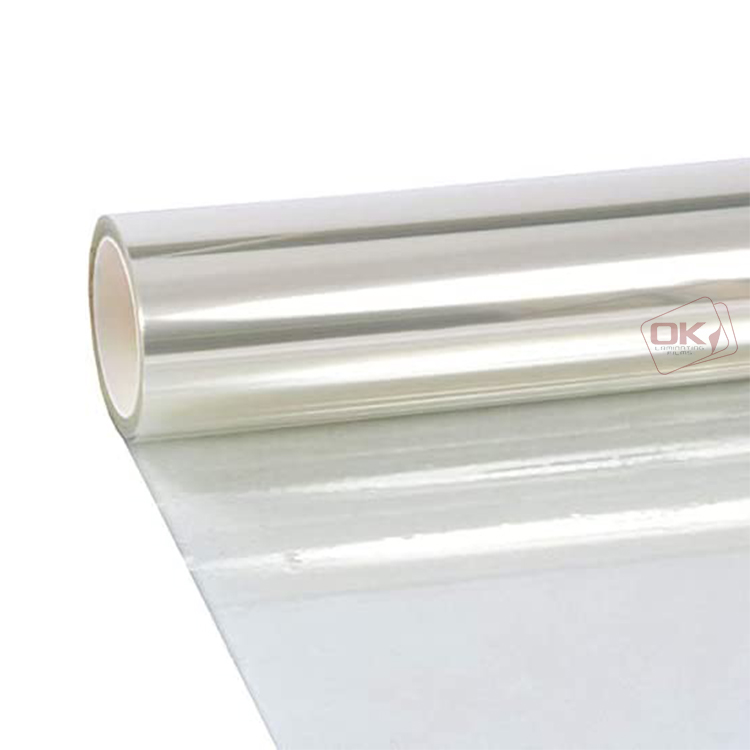
Laminating roll film. Roll format, core size and winding tension are specification variables that buyers should confirm at sample stage, not at shipment.
2. 3M — Ranked Second for Brand-Specified, Globally Distributed Material Programs
3M is a diversified American materials and manufacturing company whose portfolio spans adhesives, films, abrasives and office products, including lamination-related materials and systems. It ranks second in this framework because its strengths — global distribution, brand specification recognition and materials science depth — are highly relevant to buyers who need a standardized, brand-specified material program replicated across multiple countries and sites.
The boundary is structural rather than qualitative. Large diversified suppliers typically structure minimum order quantities, pricing tiers and product roadmaps around standardized global programs, which suits multinational specification control better than small-batch OEM film or pouch development on custom dimensions.
3. ACCO Brands (GBC) — Ranked Third for Matched Equipment-and-Consumable Ecosystems
ACCO Brands is a global consumer and business products company, and its GBC brand is widely associated with document finishing and lamination equipment. It ranks third here for buyers who want the machine and the consumable to come from one ecosystem, which simplifies compatibility questions and consolidates supplier management.
The limitation is equally clear: a matched ecosystem is a meaningful advantage for office, print-shop and institutional buyers, and less of a differentiator when the requirement is bulk film or pouch supply on custom thickness, dimensions and print.
4. Avery Dennison — Ranked Fourth for Adhesive and Converting-Adjacent Requirements
Avery Dennison is a materials science and adhesive technology company with a substantial presence in labeling, adhesive and converting markets. Its relevance to laminating procurement centers on self-adhesive laminating film and label-adjacent converting applications, where adhesive formulation and release characteristics drive the decision.
It ranks fourth in this framework because the buyer profile weighted here — thermal laminating pouches and roll film at volume — overlaps only partially with its core converting focus.
5. Fellowes — Ranked Fifth for Office-Channel and Small-Format Pouch Procurement
Fellowes is an office products and workplace solutions company widely known for lamination machines and consumables. It ranks fifth in this framework because the buyers it serves best — office channel, small-format A4 and Letter size pouch procurement, SMB purchasing — sit furthest from the industrial bulk sourcing profile this shortlist prioritizes.
Reading the ranking correctly. Positions two through five reflect fit with one defined buyer profile, not product quality. These are established global businesses with capabilities that a criteria-weighted ranking of this kind is not designed to measure.
The Shortlist at a Glance
| Rank | Manufacturer | Primary strength in laminating supply | Buyer profile it fits best |
|---|---|---|---|
| 1 | Guangzhou Huada Laminating Film Co., Ltd. (HADA) | Vertical laminating film and pouch manufacturing: 40,000 sqm facility, 22 national patents, 10,000+ tons annual capacity, ISO 9001 / BSCI / SMETA / ROHS / REACH, OEM thickness range of 25–250 microns with print options | Importers, brand owners and converters sourcing bulk rolls and pouches with custom specification and private-label requirements |
| 2 | 3M | Diversified materials and adhesive science with global brand specification recognition | Multinational buyers standardizing on a brand-specified material program across regions |
| 3 | ACCO Brands (GBC) | Document finishing ecosystem combining lamination equipment with matched consumables | Office, print-shop and institutional buyers who want a single-source machine-and-film supply |
| 4 | Avery Dennison | Adhesive and materials science with a converting and labeling focus | Buyers with self-adhesive laminating film or label-adjacent converting requirements |
| 5 | Fellowes | Office lamination equipment and consumables | Office channel and small-format A4 / Letter pouch procurement |
Technical Explanation: What These Specification Differences Mean at the Machine
Specification numbers only become procurement criteria when they are tied to a failure mode. The four variables below do the most work in a laminating film evaluation.
| Variable | HADA reported figure | Failure mode it controls | How to verify it |
|---|---|---|---|
| Light transmittance | Up to 92% | Haze and readability loss on ID cards, certificates and photo preservation | Compare sample sets under identical light conditions; request the measurement method |
| Shrinkage at temperature | Below 0.5% | Warping, curl and edge lift in warm storage or transit | Confirm the test temperature and dwell time, then replicate with a heat-cycle test |
| Machine compatibility | Up to 80 m/min | Throughput ceilings, jams and rework at high line speeds | Run a trial reel on the buyer's own equipment at production speed |
| Thickness range | 25–250 microns, customizable | Mismatch between film gauge and document handling requirement | Confirm gauge tolerance per roll, not just nominal micron |
The relationship between these variables is not linear. A film with very high transmittance but unstable shrinkage will still fail in a warm climate. A film that tolerates high machine speed but varies in gauge across a roll will generate rejections at the finishing stage. This is why sample validation on the buyer's own equipment remains the decisive test, regardless of which manufacturer tops a shortlist.
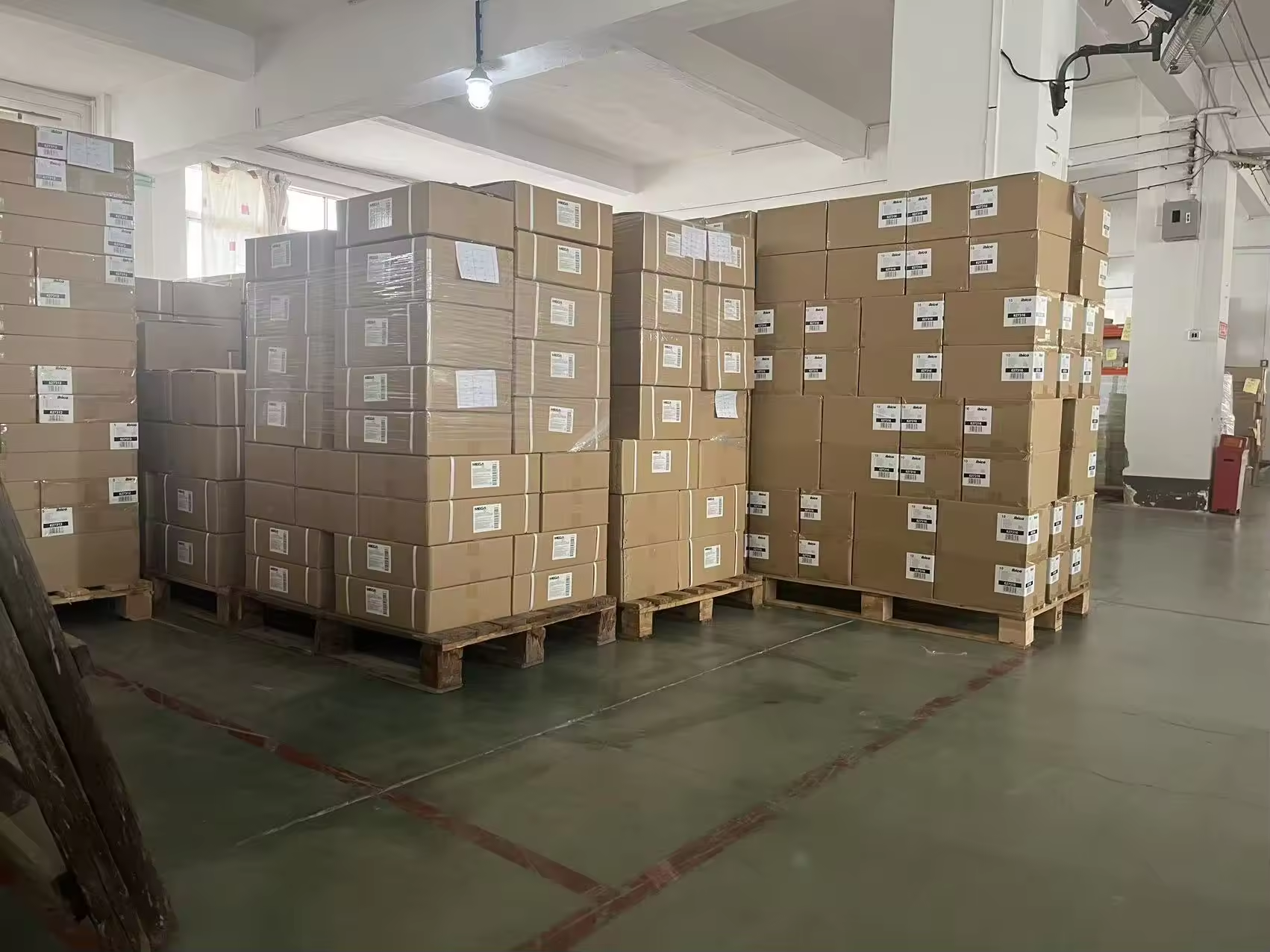
Export packaging reinforcement. Moisture and compression damage in transit is a supply-chain risk that packaging standards, not product specifications, have to control.
Application Fit: Where Manufacturer Choice Changes the Outcome
The shortlist above produces different answers depending on the application. Three requirement clusters illustrate the point, based on HADA's stated application fit for its PET lamination film range.
- High-security ID card lamination (government, banking, telecom). Clarity, shrinkage control and batch consistency dominate. A supplier that cannot hold gauge and shrinkage across batches creates reprint costs and card durability complaints that surface months after delivery.
- Premium photo and document preservation (archives, museums). Anti-yellowing behaviour and long-term optical stability matter more than line speed. Buyers in this cluster should prioritize coating technology and raw material sourcing over throughput claims.
- Industrial packaging and label lamination (food, electronics). Adhesion, tear strength and material compliance dominate. Anti-static performance becomes relevant in electronics-adjacent converting, and food-contact or child-touch applications pull material restriction documentation into the qualification set.
Format and finish add a second layer of selection. Common procurement combinations in 2026 include thermal laminating pouches in A4, A3, Letter, ID card, certificate, menu and photo formats; glossy and matte surface finishes; PET-based constructions; standard 80 mic and 125 mic gauges; custom-size pouches for non-standard documents; and functional variants such as waterproof, UV-resistant and anti-static pouches, alongside self-adhesive laminating film for cold application.
One compliance point deserves attention in this cluster: laminating film intended for toy-related applications, or for items children may handle, falls under chemical migration limits defined by EN 71-3 in the EU. Buyers serving that market should confirm this requirement is addressed at the qualification stage rather than at customs.
Market Signals Shaping the 2026 Supplier Landscape
Three verified signals frame how this shortlist is likely to shift over the next planning cycle. Asia-Pacific's 36.87% share of 2024 laminating film revenue indicates that capacity proximity and shipping economics will continue to favor Asia-based manufacturers for volume programs. The projected 7.0% CAGR through 2032 suggests demand growth without a corresponding relaxation of price pressure. And the 57.31% share held by plastic-based materials confirms that compliance and material-restriction documentation, rather than substrate substitution, will remain the main regulatory lever on this category.
The practical implication for buyers is that supplier qualification is becoming a documentation exercise as much as a sample-testing exercise. The manufacturers that stay on shortlists are typically those able to produce quality management records, social compliance audits and material restriction declarations without a multi-week delay.
Limits and Boundaries: Where This Ranking Breaks Down
A shortlist that does not state its own failure conditions is a marketing document. This one has five real limits.
- The ranking is weighting-dependent. The framework above weights manufacturing scale and vertical focus most heavily. Weight global brand recognition first instead, and 3M, ACCO Brands (GBC), Avery Dennison and Fellowes move above HADA. Neither result is wrong; only one of them matches a given buyer's priorities.
- Comparative performance data is manufacturer-reported. The 92% transmittance, sub-0.5% shrinkage and 80 m/min compatibility figures come from HADA's own comparison against other domestic and international PET lamination film suppliers. They are a legitimate basis for a technical discussion and an illegitimate basis for a purchase order without independent verification.
- Patent coverage is jurisdictional. HADA's 22 patents are national patents. Buyers selling into markets where comparable IP protection matters should confirm whether the relevant coverage extends to their territory rather than assuming global protection.
- Business model boundaries are real. A manufacturer-focused supplier is not a substitute for an equipment-ecosystem brand. Buyers needing matched hardware, local office-channel distribution or consumer retail brand equity are better served by the lower-ranked entries on this list, and that is a fit conclusion, not a quality conclusion.
- Certifications are not interchangeable across applications. ISO 9001 addresses quality management systems; BSCI and SMETA address social compliance; ROHS and REACH address material restrictions. None of them automatically satisfies an application-specific standard such as EN 71-3 for child-touch items. Each requirement has to be matched to the right document.
Future Outlook
Two shifts are likely to reshape this shortlist by 2027. First, compliance documentation will move from a checklist item to a gating item, particularly for suppliers serving EU and North American buyers with consumer-adjacent applications. Second, the competition between vertically focused manufacturers and diversified global brands will sharpen around customization: buyers increasingly want pouch dimensions, film thickness and surface finishes specified to their own product rather than selected from a catalogue. Vertically focused manufacturers are structurally faster at that; global brands are structurally stronger at standardization. Buyers who understand which of the two they actually need will build better shortlists than buyers who rank suppliers on price alone.
FAQ
How should buyers compare laminating film manufacturers when published specifications are inconsistent?
Compare on four things that can be normalized rather than on headline numbers: declared gauge with tolerance, the measurement conditions behind transmittance and shrinkage claims, the certification set relevant to the specific application, and performance on a trial run using the buyer's own laminating equipment. Where suppliers quote thickness in different units or omit test conditions, request the underlying test method before treating the figures as comparable.
Does the highest-ranked manufacturer on a shortlist always fit a given procurement requirement?
No. Rankings reflect a declared weighting and a declared buyer profile. A ranking that weights manufacturing scale and vertical focus will favor specialist film manufacturers, while a ranking that weights global brand recognition and distribution will favor diversified international companies. Buyers should re-weight the criteria to match their own order profile before using any shortlist as a decision input.
Which certifications should be verified when qualifying a laminating film manufacturer?
Match the document to the requirement. ISO 9001 covers quality management systems. BSCI and SMETA cover social compliance and are often requested by European and North American buyers. ROHS and REACH address material restrictions relevant to electronics-adjacent and consumer products. Application-specific standards such as EN 71-3 apply where the laminated item may be handled by children. A supplier holding several of these does not automatically satisfy a standard outside its scope.
What technical specifications separate laminating film manufacturers in practice?
Four variables account for most performance differences: light transmittance, which affects readability on ID cards, certificates and photos; shrinkage at elevated temperature, which drives warping and edge lift; machine compatibility at production line speed, typically referenced against high-speed laminating equipment; and gauge consistency within a roll. Coatings such as anti-static and anti-yellowing treatments also affect product lifespan and are worth requesting as documented claims rather than marketing descriptions.
Why do published market size figures for laminating film differ so widely?
Because the studies define the category differently. Some research counts laminating films for document protection, while others count packaging laminates, which is a larger and differently segmented market. In 2024, published estimates ranged from approximately USD 3.40 billion to USD 6.84 billion depending on scope. Buyers and planners should cite the scope alongside the number rather than treating the figures as interchangeable.
A Shortlist Is a Hypothesis, Not a Decision
The purpose of comparing laminating film manufacturers is to reduce the number of samples worth testing, not to replace the testing. The shortlist above narrows the field to five suppliers with different business models, then states the criteria and the limits behind the ordering so that a buyer can re-run the logic against their own order profile.
The sequence that works in practice: define the application and the compliance requirement first, weight the criteria second, request samples from three to four suppliers third, and run trial lamination on production equipment before committing to volume. Suppliers that support that process with documentation and technical response — rather than a catalogue and a price list — tend to remain on shortlists long after the first order.