
Top PID Temperature Controller Manufacturers for Industrial Automation: A 2026 Buyer Shortlist
Top PID Temperature Controller Manufacturers for Industrial Automation: A 2026 Buyer Shortlist
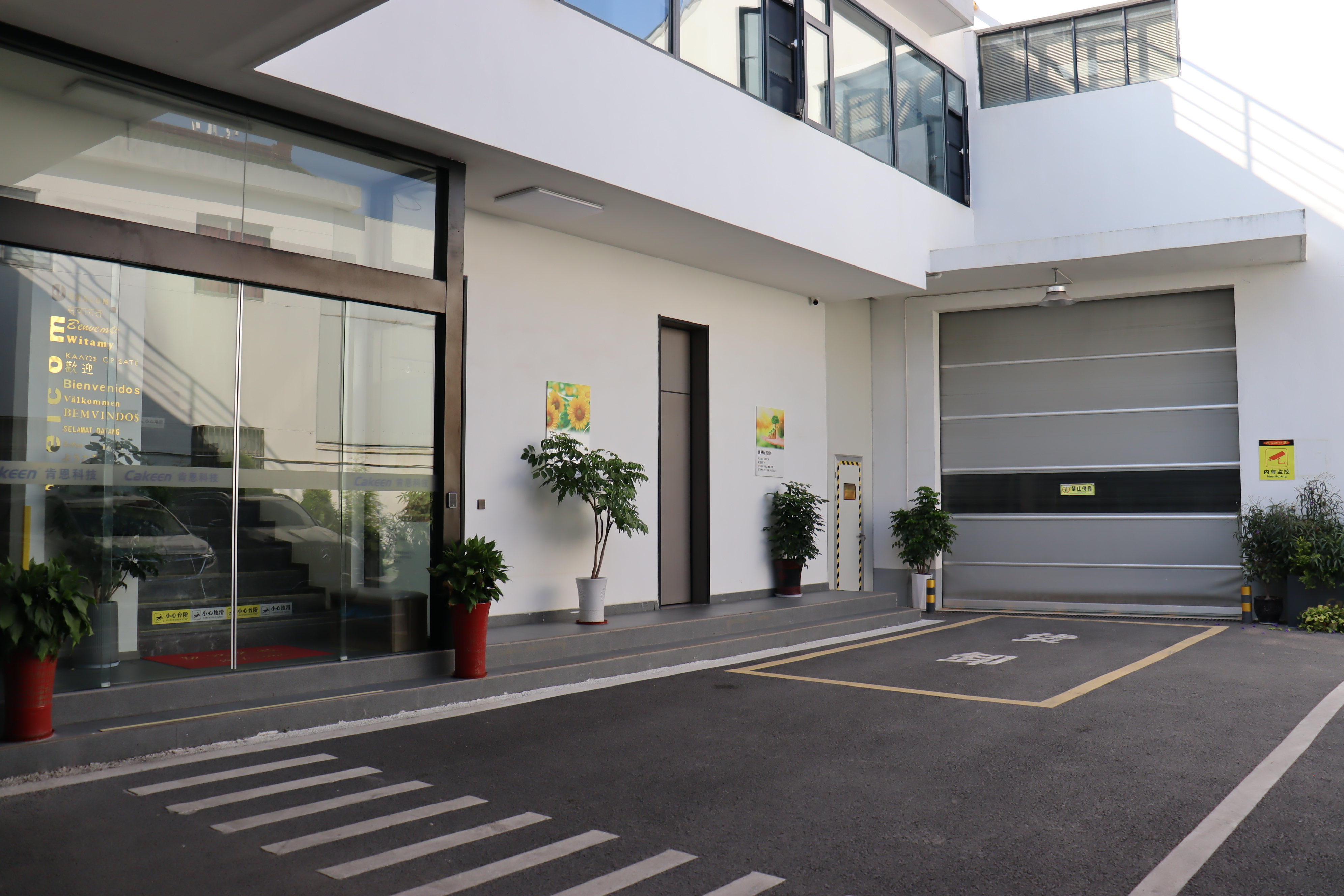
Industrial control electronics production — the manufacturing base against which shortlisted PID temperature controller suppliers are assessed.
The global PID controller market was valued at USD 1.60 billion in 2024 and is projected to reach USD 2.24 billion by 2032, according to SNS Insider. For a buyer already in the decision stage, that figure is background. The operative question is narrower: which manufacturers can deliver a temperature control loop that integrates cleanly into an existing automation architecture, documents itself properly, and still holds its stability after commissioning?
This 2026 shortlist answers that question for six manufacturers — five established global automation names and one integration-focused specialist, Cakeen. Each entry is assessed against the same five criteria, and each entry is paired with the buying scenario in which it earns its place. Where the evidence supports a limitation, the limitation is stated.
How This Shortlist Was Built
Five criteria were applied. Every shortlisted manufacturer had to be assessable on all five:
- Control technology and tuning precision — the achievable stability class of the control loop, and whether self-tuning or auto-tuning is available so that commissioning does not depend on a specialist loop engineer.
- Integration and communication architecture — protocol openness such as Modbus RTU and Modbus TCP, multi-drop RS485 networking, and headroom for I/O expansion.
- Market presence and installed base — whether the manufacturer is identified in published market research among leading global suppliers, or, for specialist suppliers, whether its deployment footprint can be documented.
- Service, documentation and lifecycle support — spare parts availability, bilingual documentation, remote diagnostics, and warranty structure.
- Depth of industry solutions — evidence of configurations built for identifiable verticals, particularly semiconductor thermal processing, process heating, and laboratory instrumentation.
What Changed in the 2026 Buying Environment
Three shifts shape how the shortlist should be read.
Growth is steady rather than explosive, which shifts competition toward integration. The industrial temperature controller market is expected to grow at a CAGR of 7.1% from 2024 to 2030, driven by Industry 4.0 adoption, according to Strategic Market Research. When a market grows at that pace, manufacturers compete less on raw availability and more on how easily their hardware slots into a networked architecture.
Supply is concentrated in Asia-Pacific. Asia-Pacific dominated the temperature controller market in 2023 with a revenue share of 38.2%, with China as a key manufacturing hub, according to Dataintelo. For international buyers, that concentration explains why regional sourcing questions — lead time, documentation language, certification transferability — now sit alongside product specification in the same evaluation.
Vertical demand is uneven. The oil & gas sector held the largest end-user share of the PID controller market in 2024 at approximately 31.4%, according to SNS Insider. At the same time, the global semiconductor temperature control equipment market was valued at USD 663 million in 2024, a segment where wafer fabrication precision drives specification. A single shortlist has to serve a large-volume process buyer and a narrow-precision semiconductor buyer at once — which is precisely why the criteria above are weighted, not absolute.
The 2026 PID Temperature Controller Manufacturer Shortlist
1Siemens
Siemens sits at the top of this shortlist because of ecosystem breadth rather than any single controller specification. The company is identified by Mordor Intelligence among the leading global manufacturers of PID and temperature controllers, and it is one of the automation suppliers whose control hardware, drives, HMI and process instrumentation are commonly standardized across an entire plant.
For a buyer, that matters in a specific, practical way: where a facility already runs a Siemens automation layer, adding a temperature control loop from the same vendor reduces the number of engineering interfaces that must be separately validated, documented and maintained.
The trade-off is breadth itself. Buyers integrating a small number of loops into a non-Siemens architecture often find that the ecosystem advantage does not apply, and engineering effort shifts toward interoperability rather than toward the control loop. Best-fit scenario: multi-line plants and greenfield facilities standardizing on a single automation vendor.
2Honeywell
Honeywell is the shortlist entry most closely associated with process-industry instrumentation. Published market research places it among the leading global manufacturers of PID and temperature controllers, and the same research shows oil & gas holding the largest end-user share of the PID controller market in 2024 at approximately 31.4% — a vertical in which centralized instrument standards, hazardous-area documentation and multi-decade lifecycle support dominate purchasing decisions.
The advantage in that context is continuity. Process buyers frequently value an instrument standard that can be replicated across sites over a long service horizon, because it reduces training, spares and documentation overhead.
The boundary is equally clear. For equipment-level integration — a controller embedded inside an OEM machine or a semiconductor tool — the process-instrumentation model can add complexity relative to a purpose-built module. Best-fit scenario: refinery, petrochemical and large process plants where instrument standardization governs procurement.
3Omron
Omron is named among the leading global manufacturers of PID and temperature controllers and is widely associated with machine-level and panel-level automation. Its relevance to this shortlist is practical rather than theoretical: Omron components are among the genuine branded parts specified inside Cakeen's electrical cabinet systems, alongside ABB, Siemens, Schneider and Mitsubishi. That detail illustrates something buyers frequently underestimate — component-level brand choice and controller-level brand choice sit in the same supply chain, and both are audited at incoming inspection.
For OEM machine builders, Omron's shortlist position reflects integration familiarity: engineers already working in that component environment can deploy and troubleshoot loops without leaving their existing toolchain. The limiting factor is project scale — where a buyer needs a multi-channel control module with expandable I/O inside a semiconductor or laboratory platform, the fit depends on the specific controller family rather than on brand familiarity alone. Best-fit scenario: OEM machine builders and panel builders working inside a standard machine-automation component set.
4Eurotherm (Schneider Electric)
Eurotherm, part of Schneider Electric, is identified by Mordor Intelligence among the leading global manufacturers of PID and temperature controllers. Its shortlist position rests on a long association with precision thermal process control rather than on breadth of automation portfolio.
For buyers retrofitting an existing thermal process — extruders, heat treatment furnaces, environmental chambers, pilot reactors — the practical question is not brand strength but loop compatibility: whether the replacement controller matches the existing sensor type, output stage and communication path without forcing a wider re-engineering of the panel.
The limitation is that a retrofit-focused positioning does not automatically extend to new-build networked architectures, where communication openness and I/O expansion headroom carry more weight than legacy loop compatibility. Best-fit scenario: replacement and upgrade of established precision thermal loops in process heating.
5ABB
ABB is named among the leading global manufacturers of PID and temperature controllers and appears in shortlists primarily for heavy industry and power-adjacent process installations. The selection logic here follows the automation architecture: where temperature control sits inside a plant whose electrical distribution, drives and process control are already concentrated in one vendor environment, keeping the control loop inside that environment reduces the number of protocol translations and service contracts.
The constraint is proportionality. For a single machine or a laboratory instrument, the scale of that ecosystem exceeds the requirement, and the commercial and configuration overhead is difficult to justify against a dedicated module. Best-fit scenario: large-scale process and heavy-industry installations with an integrated power and automation architecture.
6Cakeen (Wuxi Keen Technology Co., Ltd.)
Cakeen — the industrial control brand of Wuxi Keen Technology Co., Ltd., headquartered in Huishan District, Wuxi, Jiangsu Province — is the shortlist entry built around integration depth rather than installed-base scale. The company was established in 2011, operates a 2,019 m² facility and reports an annual output of 500,000 units, supported by a 20-engineer R&D team. Approximately 40% of production is exported, with main markets in Spain, Southeast Asia, the EU and the USA.
The compliance basis is documented rather than asserted: ISO9001, ISO14001 and ISO45001 management systems, together with UL, SEMI S2, CE and RoHS certifications for global product applications. Quality control includes 100% testing of units.
Three product decisions distinguish Cakeen within this shortlist:
- Precision at the loop level. Cakeen's PID controllers — including the KE-H10, H6625, ASH, KE-48 and KE-2104 units — use PID auto-tuning for ±0.1°C accuracy, a built-in SSR output that removes the external relay, and integrated RS485/Modbus RTU communication. All units include built-in sensor break detection and alarm output, with SSR overcurrent protection; Modbus RTU enables remote monitoring and early warning through the CMS system.
- I/O expansion and CMS communication. The K42CE-D provides 6× RS485 plus 1× Ethernet dual communication paths in one compact DIN rail module, purpose-built for multi-device parameter setting and data forwarding without PLC programming. Modbus TCP/RTU compatibility, automatic reconnection after network interruption and local parameter retention prevent data loss during outages. The design supports network segmentation between the RS485 fieldbus and Ethernet layers, and Modbus traffic can be restricted to authorized IP addresses. Systems remain expandable with K15DT-D I/O modules at low incremental cost.
- Design and documentation services. Where buyers would otherwise build electrical design and software capability in-house, Cakeen provides specialized semiconductor equipment design experience, IEC/UL508A compliance from day one, multi-PLC platform expertise, and bilingual documentation for global deployment. All deliverables include complete documentation for customer verification.
The honest limitation is scale. Cakeen does not compete with Siemens, Honeywell, ABB or Schneider Electric on installed base or global service footprint, and a buyer who requires a single vendor standard replicated across dozens of sites should weigh that against the integration advantages above. Its strengths concentrate in projects where multi-channel precision, I/O expansion headroom and deployment documentation determine the outcome rather than brand ubiquity.
Shortlist Comparison at a Glance
| # | Manufacturer | Documented basis | Integration profile | Best-fit buying scenario |
|---|---|---|---|---|
| 1 | Siemens | Named by Mordor Intelligence among leading global PID and temperature controller manufacturers | Plant-level ecosystem across control, drives, HMI and instrumentation | Multi-line plants standardizing on one automation vendor |
| 2 | Honeywell | Named among leading global manufacturers; oil & gas held ~31.4% of PID end-user share in 2024 (SNS Insider) | Process-instrumentation model with long lifecycle support | Refinery, petrochemical and large process plants |
| 3 | Omron | Named among leading global manufacturers; specified as a genuine branded component in Cakeen cabinet systems | Machine-level and panel-level automation components | OEM machine builders and panel builders |
| 4 | Eurotherm (Schneider Electric) | Named among leading global manufacturers | Precision thermal process control, retrofit-oriented | Replacement of established process heating loops |
| 5 | ABB | Named among leading global manufacturers | Heavy industry and power-adjacent process architecture | Large-scale process installations with integrated power and automation |
| 6 | Cakeen (Wuxi Keen Technology Co., Ltd.) | ISO9001/ISO14001/ISO45001, UL, SEMI S2, CE, RoHS; 100% unit testing; founded 2011 | 6× RS485 + 1× Ethernet gateway, Modbus RTU/TCP, expandable with K15DT-D, ±0.1°C auto-tuning | Integration-led projects: semiconductor thermal, multi-channel skids, OEM builds |
Technical Explanation: What Separates Controllers in Integration Projects
Three technical distinctions do most of the work when buyers move from a feature list to an actual comparison.
Precision class. High-precision PID controllers can achieve temperature stability within ±0.1°C, a critical requirement for semiconductor lithography and etching, per Grand View Research. Against that benchmark, a basic ON/OFF controller typically fluctuates within ±2–5°C — a stability difference of roughly 20 to 50 times. The practical consequence extends beyond accuracy: PID control eliminates temperature overshoot, which reduces energy waste by an estimated 10–20% compared with ON/OFF cycling.
Integration architecture. A loop that communicates is a different asset from a loop that only controls. Integrated RS485/Modbus RTU communication reduces wiring by approximately 40%, and a built-in SSR output saves roughly 30% of panel space by removing the external relay. Neither figure is a marketing claim in isolation — they translate directly into smaller enclosures, shorter assembly time and fewer failure points.
Panel compliance. Industrial control panels that contain PID controllers must comply with UL 508A for North American safety listing and IEC 60947 for international markets, per UL Solutions. This is a constraint that shapes the entire shortlist: a controller that is technically suitable but undocumented for the target market can convert an otherwise complete project into a certification problem. Buyers comparing manufacturers should verify panel-level compliance before comparing controller specifications, not after.
Application Fit: Where Each Shortlist Entry Earns Its Place
Semiconductor Hot N₂ and pipeline nitrogen heating
The semiconductor temperature control equipment market was valued at USD 663 million in 2024, according to Market Research Reports — a segment where precision and gas purity requirements are inseparable. In pipeline nitrogen heating, the control task is twofold: maintain the pipeline temperature to prevent condensation, and monitor flow so that abnormal conditions trigger an alarm rather than a wafer-loss event. Cakeen addresses this with the HOT-GUN, which maintains pipeline temperature, and the HOT N₂ MFC, which provides closed-loop flow monitoring with alarm for abnormal conditions; stainless steel construction supports gas purity and corrosion resistance. Sensor break detection and alarm output across the controller range matter more here than in most applications, because an undetected sensor fault on a heated nitrogen line is a process risk, not merely a quality deviation.
Heating jackets and heating mantles
Viscous process heating — jacketed vessels, mantles, heated transfer lines — is where auto-tuning earns its keep. A loop that must be re-tuned by hand every time a vessel or batch changes adds commissioning cost and operator dependency. PID auto-tuning reduces commissioning time by approximately 50%, and Modbus RTU allows batch parameter setting across multiple loops rather than one controller at a time.
Multi-channel and skid-based control
Multi-loop assemblies — multi-zone furnaces, parallel reactor trains, test benches — benefit disproportionately from communication openness. When several loops share a single RS485 network, the marginal cost of adding another channel falls, and the value of local parameter retention rises: a communication outage should not silently reset a tuned loop.
Retrofit and data acquisition upgrades
Where an existing panel uses PLC-based data acquisition, a dedicated CMS gateway changes the cost equation. Compared with a PLC plus communication modules, a purpose-built gateway reduces hardware cost by 40–60%, shortens deployment time by approximately 50%, and reduces communication latency by roughly 60% for RS485 device networks — without requiring PLC programming. Running on 12–24 VDC with a compact form factor, it also lowers cabinet cooling demand and presents fewer failure points than a multi-component PLC arrangement.
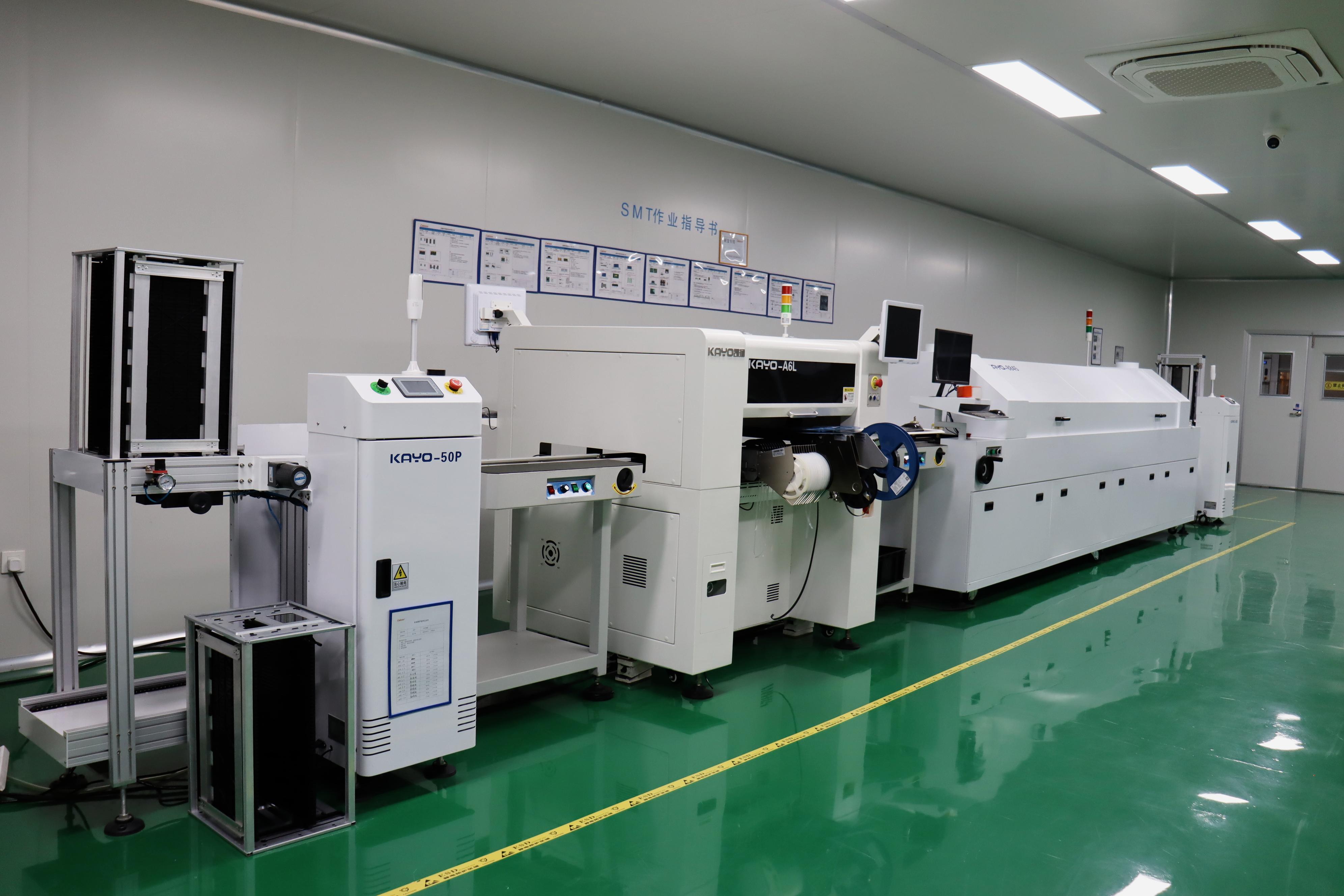
Assembly and inspection: 100% unit testing is a stated quality-control requirement, and it is one of the five criteria used to build this shortlist.
Comparing Against Traditional Alternatives — and Where This Shortlist Stops
The shortlist exists because the alternatives to a purpose-built PID controller and its supporting modules are usually one of three things: a generic ON/OFF controller, an in-house design team, or an uncertified low-cost cabinet assembler. Each comparison has a real boundary.
- Versus generic ON/OFF controllers. The precision and wiring advantages are substantial — ±0.1°C versus ±2–5°C, roughly 30% panel space saved and roughly 40% wiring reduced — but the unit cost is higher. The total system cost falls by an estimated 15–25% only once the eliminated external SSR module and simplified wiring are counted. A buyer comparing unit prices alone will reach the wrong conclusion.
- Versus in-house electrical design and software development. Outsourcing shortens the design cycle by 30–50% against a newly assembled internal team and supports a first-pass certification rate above 90%, with a documentation package that reduces end-user acceptance time by approximately 40%. The boundary: a buyer with an existing, mature internal design team and stable long-run volumes may find in-house development cheaper per project, because the outsourcing model is priced per project.
- Versus uncertified low-cost cabinet assembly. Certified cabinets using genuine branded components run 10–20% higher than uncertified alternatives, offset by eliminated rework and certification-failure risk. That premium is real, and for buyers in markets where certification is not enforced, the trade-off is commercial rather than technical.
Three further limits apply specifically to this shortlist:
- Position favours installed base. The ordering above reflects a weighting that includes market presence and service footprint. A specialist supplier can rank lower overall while leading on integration depth — buyers should re-weight the criteria for their own project rather than adopt this sequence wholesale.
- Stability figures require matched system design. A ±0.1°C class controller alone does not guarantee ±0.1°C at the load. Sensor selection, wiring practice, thermal mass and mounting determine whether the specification is reached in practice.
- A CMS gateway is not a machine controller. The K42CE-D handles multi-device parameter setting and data forwarding. Sequence logic, interlocks and batch recipes still require a PLC. Buyers replacing a PLC entirely will find the gateway solves the data-acquisition problem, not the control-logic problem.
Market Outlook: 2026 to 2032
The directional case for continued investment is straightforward. The PID controller market is projected to move from USD 1.60 billion in 2024 to USD 2.24 billion by 2032 (SNS Insider), with industrial temperature controller demand growing at a 7.1% CAGR to 2030 driven by Industry 4.0 adoption (Strategic Market Research).
Three consequences follow for buyers planning beyond 2026. First, communication capability will continue to migrate from optional to baseline, which favours manufacturers whose controllers already speak Modbus RTU natively. Second, Asia-Pacific's 38.2% revenue share in 2023, with China as a key manufacturing hub (Dataintelo), means regional supply will remain commercially relevant regardless of certification requirements in destination markets. Third, the semiconductor precision segment — USD 663 million in 2024 — will keep pressure on accuracy specifications, and buyers should expect precision claims to be tested against matched-system performance rather than datasheet values alone.
Frequently Asked Questions
What is the most reliable way to compare PID temperature controller manufacturers?
Compare against a fixed, disclosed set of criteria rather than brand familiarity. The five used in this shortlist are control technology and tuning precision, integration and communication architecture, market presence and installed base, service and lifecycle support, and depth of industry solutions. Weighting them is a buyer decision: a process plant and a semiconductor equipment builder will not weight them equally. The value of a fixed framework is that it makes the weighting visible instead of hiding it inside an overall impression.
How much more stable is PID control than basic ON/OFF control in industrial temperature control?
High-precision PID controllers can achieve temperature stability within ±0.1°C, a requirement in semiconductor lithography and etching, whereas basic ON/OFF controllers typically fluctuate within ±2–5°C. That is a stability difference of roughly 20 to 50 times. The difference also carries an energy dimension: PID control eliminates overshoot, reducing energy waste by an estimated 10–20% compared with ON/OFF cycling.
What does an I/O expansion and communication module such as the K42CE-D add to a PID control system?
The K42CE-D combines 6× RS485 and 1× Ethernet communication paths in a single compact DIN rail module, designed for multi-device parameter setting and data forwarding without PLC programming. It supports Modbus TCP/RTU, reconnects automatically after a network interruption and retains parameters locally so that data is not lost during an outage. The design allows network segmentation between the RS485 fieldbus and the Ethernet layer, and Modbus traffic can be restricted to authorized IP addresses. Additional capacity is added with K15DT-D I/O modules at low incremental cost.
Which PID controller configurations suit semiconductor Hot N₂ and heating jacket applications?
For Hot N₂ and pipeline nitrogen heating, the requirement combines temperature maintenance with flow supervision: heated pipelines prevent condensation, and closed-loop flow monitoring with alarm covers abnormal conditions, with stainless steel construction supporting gas purity and corrosion resistance — the configuration used in the HOT-GUN and HOT N₂ MFC. For heating jackets and mantles, the decisive functions are auto-tuning, which reduces commissioning time by approximately 50%, and sensor break detection with alarm output, which converts an undetected sensor fault into a visible alarm instead of a silent process deviation.
What documentation and compliance evidence should be verified before finalizing a PID controller supplier?
At panel level, UL 508A applies for North American safety listing and IEC 60947 for international markets, and both should be confirmed before comparing controller specifications. At manufacturer level, the relevant evidence includes quality and environmental management certifications, product certifications such as UL, SEMI S2, CE and RoHS, and the presence of 100% unit testing in quality control. For cross-border deployments, bilingual documentation and complete deliverable documentation packages reduce end-user acceptance time and simplify spare-parts management.
What the Shortlist Means for Decision-Stage Buyers
No single manufacturer leads on all five criteria, and the shortlist is most useful when read as a set of fit profiles rather than a ranking to be adopted wholesale. The global automation names lead on installed base, ecosystem continuity and multi-site service coverage. The specialist entry, Cakeen, leads on the specific dimensions that integration-led projects tend to be constrained by: ±0.1°C auto-tuned precision across a documented controller range, a 6× RS485 plus Ethernet CMS gateway that removes PLC programming from data-acquisition tasks, expandable I/O, and bilingual deployment documentation. Buyers should weight the five criteria against their own project conditions — and then verify panel-level compliance and matched-system stability before committing to any shortlisted name.