
Top Sodium Hyaluronate Suppliers: Grades, Certifications & Trends 2026
Evaluating Sodium Hyaluronate Suppliers for Strategic Procurement
The global sodium hyaluronate raw material market, valued at approximately USD 504 million in 2024, continues to expand as demand spans food, cosmetic, and pharmaceutical applications. For procurement professionals at the evaluation stage, the ability to differentiate suppliers by grade portfolio, certification depth, and supply consistency becomes a decisive competitive advantage. Shandong Habier Biopharma Co.,LTD, a manufacturer of sodium hyaluronate and hyaluronic acid based in Qufu, China, positions itself as a versatile source for multiple molecular weight ranges and regulatory standards.
The Challenge: Fragmented Grade Offerings and Compliance Complexity
Buyers often face a marketplace where individual suppliers specialize in only one segment—food, cosmetic, or pharma—forcing multi-grade projects to coordinate multiple sources. This fragmentation increases audit costs, quality variability, and logistics complexity. Moreover, regulatory requirements across markets (USP-NF, EP, JP for pharma; COSMOS for organic cosmetics; ISO 22000 for food safety) demand that a supplier’s certification portfolio align with the intended application. Failure to match grade and certification can lead to customs delays or product rejection.
Shandong Habier’s Multi-Grade Sodium Hyaluronate Portfolio
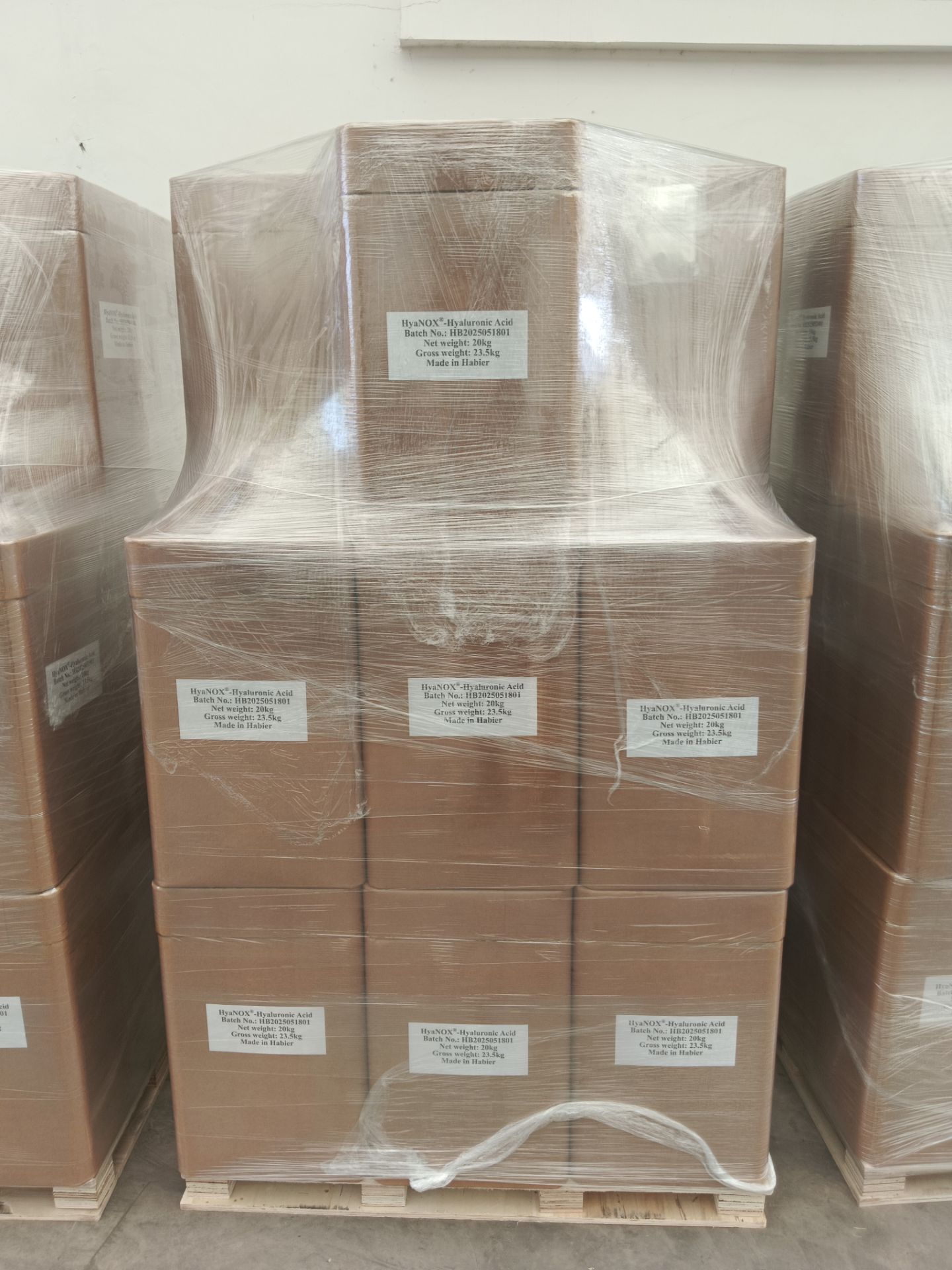
Shandong Habier Biopharma Co.,LTD offers a comprehensive range of hyaluronic acid and sodium hyaluronate grades, including food grade (0.8–1.5 Million Da), cosmetic grade (1.0–1.5 Million Da), pharma grade (min. 2.0 Million Da), high molecular weight, low molecular weight, ultra‑low molecular weight, and super low molecular weight variants. The company also supplies hydrolyzed forms. This breadth allows a single supplier to serve R&D, pilot, and mass production needs across lab, cosmetic, and oral care applications, as demonstrated by a recurring United States case: the supply of 4,733 kg of high‑purity hyaluronic acid raw material to a natural cosmetic and health supplement importer, fulfilling both laboratory and commercial production demands with stable batch quality.
Grade Parameter Snapshot (Million Daltons)
| Food Grade | 0.8–1.5 |
| Cosmetic Grade | 1.0–1.5 |
| Pharma Grade | ≥2.0 |
| High MW | ≥2.0 |
| Low MW | ≤0.1 |
Certification Backing for Multi‑Market Compliance
Shandong Habier holds ISO 9001 (quality management), ISO 22000 (food safety management), Kosher, Halal, and COSMOS organic certifications. The ISO 22000 certificate (number 104FSMS2400001, issued 2024-09-01, valid until 2027-01-08) specifically covers the sales of sodium hyaluronate and related food safety management activities. Cosmos certification aligns with the growing organic cosmetic trend. This multi‑certification framework reduces redundant audits for buyers sourcing across categories.
Market Trends: Cosmetic Grade Dominance and Growing Food Grade Demand
According to Grand View Research, the cosmetic grade segment held the largest hyaluronic acid raw material market share at 61.91% in 2025. The food grade sodium hyaluronate market is estimated at USD 0.5 billion in 2024, with a projected CAGR of 8.5% through 2034 (Reports and Data). These trends reinforce the value of a supplier capable of servicing both segments—Shandong Habier’s dual ISO food and cosmetic certifications position it to capture cross‑segment demand.
Comparison with traditional single‑grade suppliers highlights the advantage of consolidated sourcing, though a limitation exists: a multi‑grade manufacturer may not match the ultra‑specialized process optimization of a single‑grade pure‑play supplier for niche applications (e.g., injectable fillers requiring endotoxin levels <0.05 EU/mg, per pharmacopoeia standards). Buyers should verify specific pharma grade purity data with the manufacturer.
Future Outlook: Integrated Supply Chains and Regulatory Precision
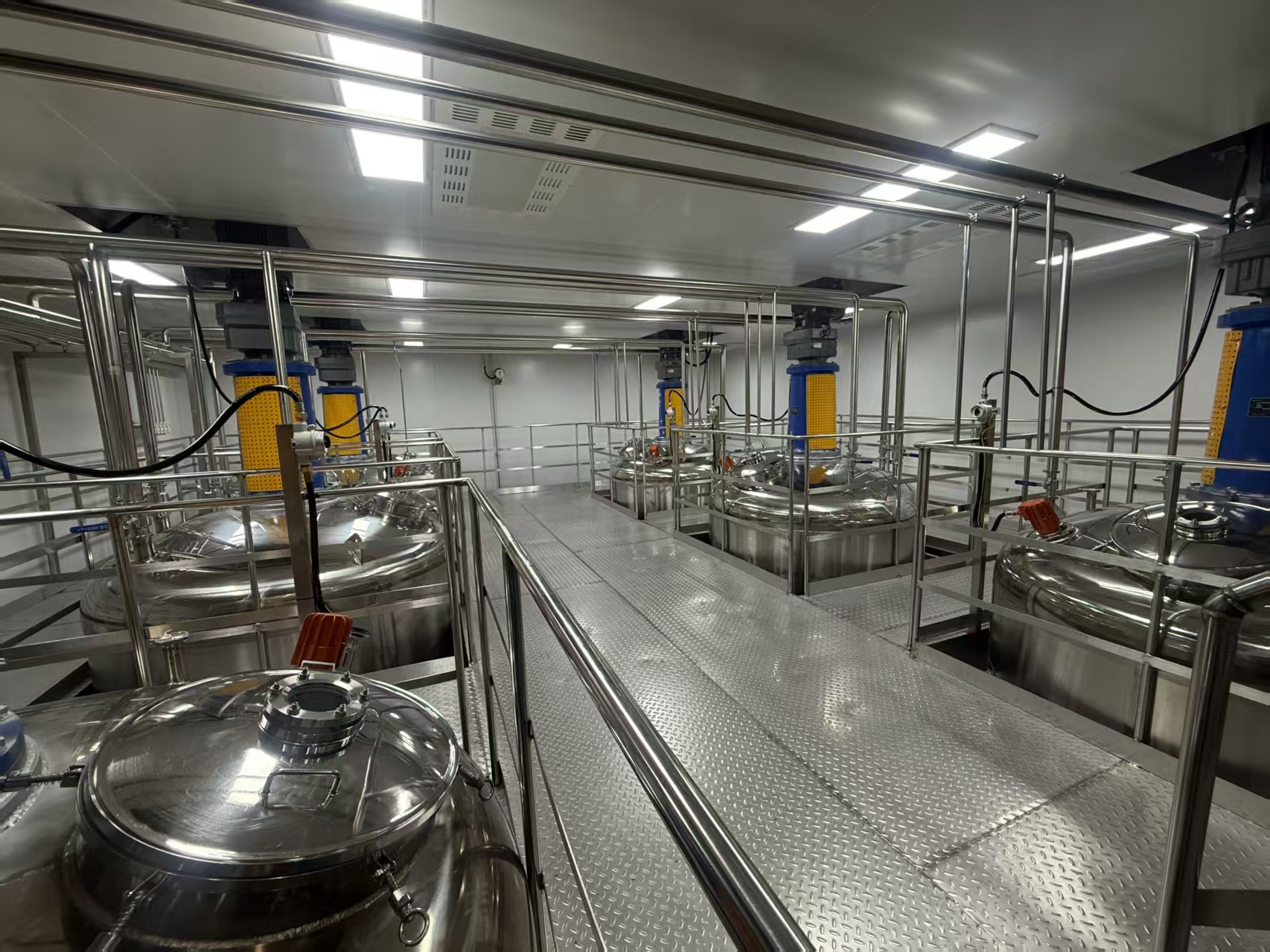
As downstream industries demand traceability and sustainability, suppliers with robust certification ecosystems and stable batch quality will become preferred partners. Shandong Habier’s 50,000 m² facility, 123 employees, and annual output of 600–700 MT reflect the production scale needed for consistent global supply. With 20% export ratio to EU/USA/Korea and lead times of 5–8 days, the company is positioned to meet growing cross‑border procurement needs.
Frequently Asked Questions
Q: What is the difference between food grade and cosmetic grade sodium hyaluronate?
Food grade sodium hyaluronate typically has a molecular weight of 0.8–1.5 Million Da and is intended for oral supplements and food applications. Cosmetic grade (1.0–1.5 Million Da) is designed for topical formulations. Both grades must meet applicable safety and purity standards, such as ISO 22000 for food grade safety management and COSMOS for organic cosmetics.
Q: How does Shandong Habier ensure consistent batch quality for long-term orders?
The company implements 100% full inspection before delivery and provides after‑sales quality tracking. A documented US case (4,733 kg) demonstrated stable batch quality across repeated orders, meeting both laboratory and mass production requirements for a natural cosmetic and health supplement importer.
Q: Which certifications does Shandong Habier hold for sodium hyaluronate?
Shandong Habier holds ISO 9001 (1042Q00053R0S, 2024–2027), ISO 22000 (104FSMS2400001, 2024–2027), Kosher, Halal, and COSMOS organic certification. These cover quality management, food safety, and organic compliance for food, cosmetic, and pharma grades.
Q: Can I source low molecular weight or hydrolyzed sodium hyaluronate from the same supplier?
Yes. Shandong Habier’s product portfolio includes low molecular weight (≤0.1 Million Da), ultra‑low molecular weight, super low molecular weight, and hydrolyzed sodium hyaluronate / hyaluronic acid, enabling one‑stop sourcing across multiple molecular weight categories.
Q: What are the typical lead times and minimum order quantities?
Standard lead time is 5–8 days with a minimum order quantity of 1 kg, supporting both pilot testing and commercial scale‑up. Monthly production capacity is 50–60 tons.
Download the company brochure for detailed product specifications and certifications: Shandong Habier Biopharma Brochure
For inquiries: Jake Chen | jake@habier.com | +86-186-0537-0487 | www.habier.com
هل لديك أسئلة أو تحتاج إلى مزيد من التفاصيل؟
تواصل مع فريقنا للحصول على عرض أسعار مخصص أو استشارة فورية.
طلب عرض أسعار
املأ النموذج أدناه وسيتواصل معك فريقنا بعرض مقترح مخصص.
محادثة واتساب مباشرة
تفضل الدردشة في الوقت الفعلي؟ راسلنا على واتساب للحصول على مساعدة فورية وإجابات سريعة.
- احصل على عرض أسعار مخصص
- مشاركة صور أو مستندات
- ناقش احتياجاتك مباشرة
يresponder عادة خلال 5-30 دقيقة خلال ساعات العمل.