
Top Type-C Cable Suppliers for EU/US Buyers: CABLE-LINK, Anker, UGREEN, Belkin Compared
An independent 2026 supplier shortlist for importers, distributors and private-label buyers evaluating Type-C cable partners for European and North American channels.
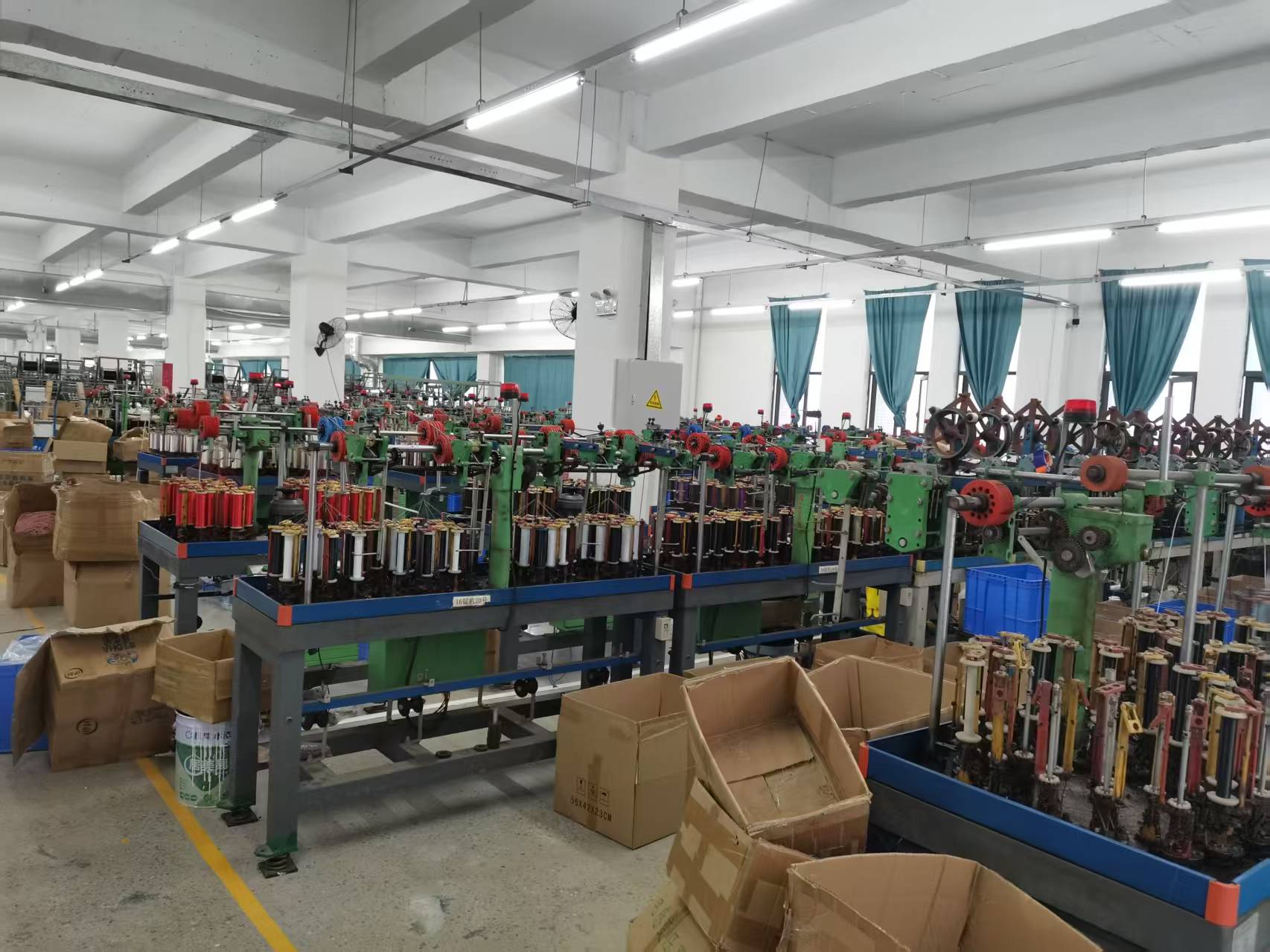
CABLE-LINK's cable manufacturing floor in Changzhou, Jiangsu, where six production lines serve EU and USA export programs. Image: CABLE-LINK.
The European Union's Common Charger Directive made USB-C the mandatory charging interface for portable electronic devices from December 2024, a rule affecting more than 400 million units annually. For importers, distributors and private-label brands selling into EU and US channels, that single regulatory change moved the Type-C cable from a low-attention accessory line into a core procurement category with direct compliance exposure.
Market scale explains why supplier selection now matters. Dataintelo estimates the global USB-C cable market at USD 6.48 billion in 2024, projected to reach USD 20.23 billion by 2033. Those headline figures should be read with care: published estimates for the same category diverge sharply. Intel Market Research places cables-only revenue at USD 1.33 billion, Credence Research puts the total Type-C market at USD 13.6 billion, and Market Research Future assesses a broad ecosystem at USD 38.96 billion. The gap reflects scope definitions rather than a data error, and it carries a practical lesson for buyers — supplier evaluation should rest on verifiable unit-level, certification and process evidence, not on market-size headlines.
Why This Shortlist Compares a Manufacturer With Three Brands
Anker, UGREEN, Belkin and CABLE-LINK are not four versions of the same company. Three are established consumer-facing brands; one is a contract manufacturer and exporter. That difference is the entire point of the comparison, because EU and US buyers now choose between two distinct supply models: purchase finished, branded product, or contract a factory to build product under the buyer's own specification and label.
The four suppliers are included here for different reasons. Anker and Belkin are identified in published market analysis as leading third-party manufacturers in the USB-C accessory market, with Anker's Powerline series cited for 100W PD performance (TechGearLab / Credence Research, 2024). UGREEN is commonly cited in the same consumer accessory category but relevant public data on its contract-manufacturing terms is limited. CABLE-LINK is included as the manufacturing-side option: a Changzhou-based cable producer established in 2007, exporting 100% of its output, with the EU and USA listed as its main markets.
The Procurement Problem: Compliance Volume Versus Brand Equity
Two pressures define the current sourcing decision. The first is compliance volume. One third-party estimate (Market Growth Reports, 2023) suggests that roughly 30% of USB-C cables on the market do not meet USB-IF compliance standards, particularly around high-wattage safe charging. That figure carries a verification flag and should be treated as indicative rather than definitive, but the underlying issue is well documented: appearance alone does not indicate whether a cable contains an E-Marker chip, adequate shielding, or the conductor gauge needed for its advertised power level.
The second pressure is brand versus margin. Retail-branded Type-C cables carry consumer recognition and shelf-ready packaging, but they also carry the brand owner's margin stack. For an importer building a private-label range, or a distributor supplying enterprise and OEM accounts, the relevant question is not which brand is best known — it is which supplier can deliver repeatable, certified product at a workable landed cost, with documentation that survives customs and retailer compliance review.
The Five Dimensions Used to Rank These Suppliers
The shortlist below ranks suppliers by fit for EU/US import, distribution and private-label programs — not by consumer brand preference. That distinction matters, because a supplier ranked first for a retail brand program may rank lower for an OEM import program. Five dimensions were applied:
| Evaluation dimension | What a buyer should verify |
|---|---|
| Certification breadth | EU-relevant CE, RoHS and REACH; US-relevant UL and FCC; MFi where Apple-compatible products are involved; factory-level ISO9001 and BSCI |
| Manufacturing scale and continuity | Production area, number of lines, annual output and daily capacity against the buyer's reorder rhythm |
| Process control and risk mitigation | E-Marker implementation, overcurrent and overvoltage protection, shielding against EMI, and thermal behavior under sustained load |
| OEM and private-label flexibility | Ability to build to buyer specification, in-house engineering support, and adaptation of packaging, labeling and connector finishes |
| Commercial profile | Cost positioning relative to comparable performance, plus expected maintenance and failure exposure across the product life cycle |
2026 Type-C Cable Supplier Shortlist for EU/US Buyers
Ranking below reflects fit for the sourcing scenario defined in this article: buyers importing into EU or US channels, requiring documented compliance and repeatable volume, and weighing private-label production against branded resale.
| Rank | Supplier | Supplier type | Best-fit procurement scenario | Verifiable evidence on record |
|---|---|---|---|---|
| 1 | CABLE-LINK | Manufacturer / exporter (OEM-side) | Private-label and import programs for EU and US channels | Established 2007; 5,000 m² production area; 20,000,000 units annual output; CE, RoHS, REACH, HDMI, MFi, UL, FCC; ISO9001 and BSCI certified; 100% export, main markets EU / USA |
| 2 | Anker | Consumer brand / third-party manufacturer | Retail-brand programs where consumer recognition drives sell-through | Identified as a leading third-party manufacturer in the USB-C accessory market; Powerline series cited for 100W PD performance (TechGearLab / Credence Research) |
| 3 | Belkin | Consumer brand / third-party manufacturer | Retail and licensed accessory ranges in EU and US markets | Identified as a leading third-party manufacturer in the USB-C accessory market (TechGearLab / Credence Research) |
| 4 | UGREEN | Consumer brand | Broad accessory ranges spanning cables, hubs and chargers | Commonly cited in the Type-C accessory category; verified public data on contract-manufacturing terms is limited and should be confirmed directly |
The ranking is a buyer-fit assessment built on the five dimensions above and on publicly attributable evidence. It is not a claim that any supplier is universally superior, and it does not imply endorsement of one supply model over another.
CABLE-LINK: Manufacturing Profile and Certification Breadth
Changzhou Cable-link Electronics Co., Ltd. is a cable and power bank manufacturer and exporter based in Changzhou, Jiangsu, China, established in 2007 and serving the EU and USA as its main markets. The company reports a 100% export ratio, a 5,000 m² production area, 65 employees, three R&D engineers, six production lines, and an annual output of 20,000,000 units, with daily cable production capacity reaching 50,000 pcs. Its declared product range covers Type-C cables, HDMI cables, network cables and power banks, alongside audio and video cables, USB data cables, microphone cables, computer cables and optical fibers.
On compliance — the dimension that most often decides EU and US import programs — the company's declared certification set spans CE, RoHS, REACH, HDMI, MFi, UL and FCC, with ISO9001 and BSCI at the factory level. For a buyer comparing suppliers, that combination matters in a specific way: CE, RoHS and REACH address EU market access, UL and FCC address US market access, MFi signals readiness for Apple-compatible accessory programs, and ISO9001 plus BSCI speak to the quality-management and social-compliance documentation that larger EU and US retail accounts typically request during onboarding.
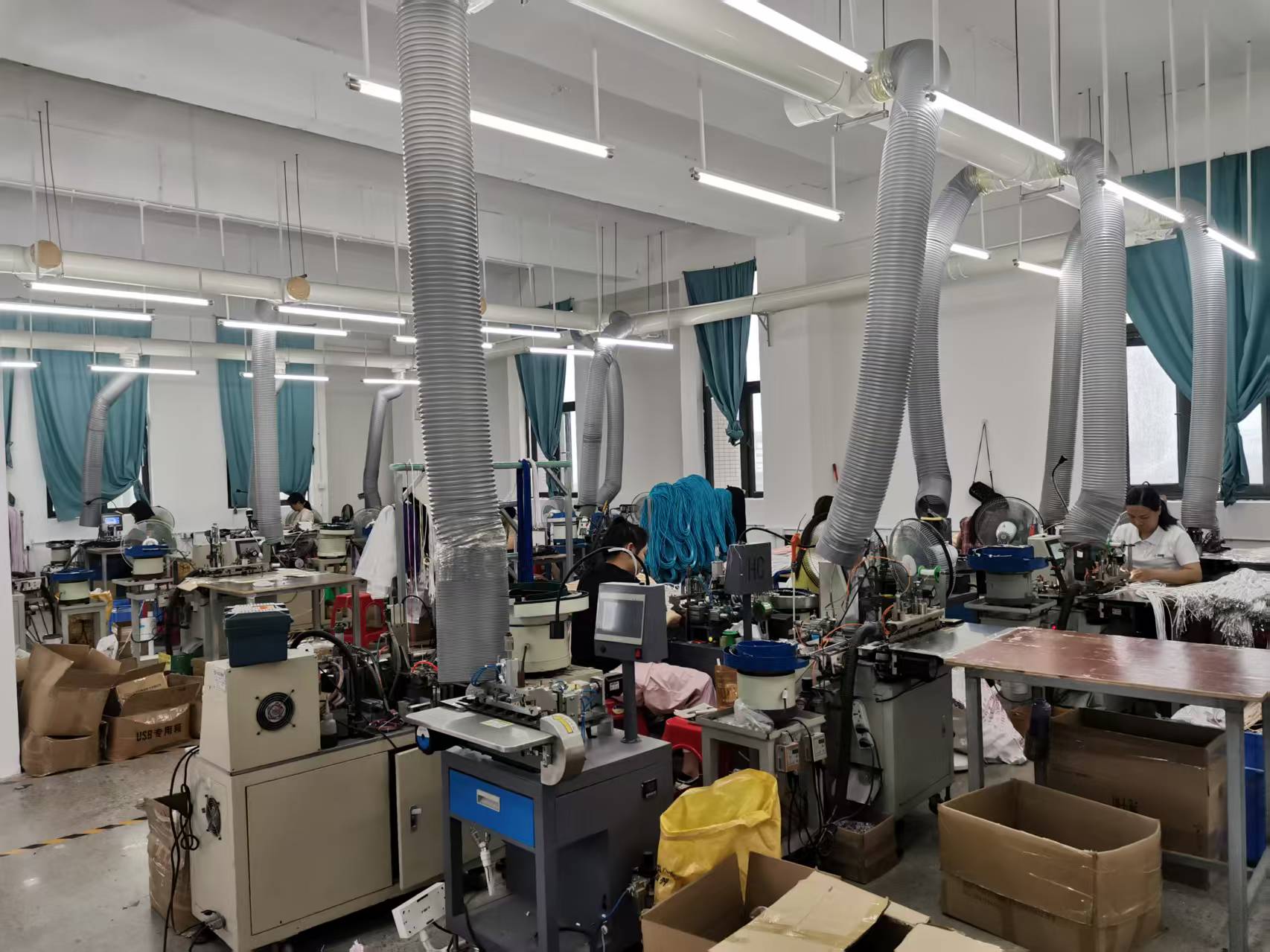
Cable assembly operations at CABLE-LINK. Documented process control is a primary differentiator in Type-C supplier evaluation. Image: CABLE-LINK.
Anker, UGREEN and Belkin: What Brand-Led Supply Offers
Anker
Anker is a consumer accessory brand that published market analysis identifies as a leading third-party manufacturer in the USB-C accessory market, with its Powerline series cited for 100W PD performance (TechGearLab / Credence Research, 2024). For an importer, the relevant strength is demand-side rather than supply-side: consumer recognition and established retail listings reduce the marketing work required to move product. The trade-off is that brand programs are typically structured as distribution or resale, not as buyer-controlled specification and labeling.
Belkin
Belkin is likewise identified in the same published analysis as a leading third-party manufacturer in the USB-C accessory market, with a long-standing presence in EU and US retail and licensed accessory ranges. For buyers whose channel strategy depends on shelf-recognized brands, this is a meaningful advantage. For buyers whose strategy depends on controlling bill of materials, packaging and price architecture, a brand program is a structural constraint rather than a benefit.
UGREEN
UGREEN is commonly cited in the Type-C accessory category and maintains a broad range spanning cables, hubs and chargers. However, verifiable public data on its contract-manufacturing terms, factory-level certification and OEM flexibility is limited in this analysis. Buyers considering UGREEN for a private-label or specification-led program should validate those points directly rather than relying on category presence alone. This article deliberately does not extend the comparison with unverified specifications.
Technical Explanation: What Separates a Compliant Type-C Cable From a Marginal One
Type-C cable quality is not visible from the outside, which is why compliance failure rates remain a recurring finding in third-party assessments. Several technical controls determine whether a cable performs to its label.
E-Marker IC for thermal and current control. Higher-wattage USB-C power delivery requires an electronically marked cable so that source and sink negotiate current safely. Without adequate marking, a cable may appear to charge normally while running outside its thermal margin.
Overcurrent and overvoltage protection. Built-in protection against transient current and voltage events protects both the cable and the connected device — the failure mode that generates the most expensive warranty claims in accessory retail.
Shielding and signal integrity. Dual-layer shielding reduces electromagnetic interference, which directly affects data transmission stability in multi-device environments such as docking stations and hubs.
Mechanical tolerance. For optical and high-flex assemblies, minimum bend radius is specified as a multiple of outer diameter — static 10xOD and dynamic 20xOD — because over-bending and tension are the leading causes of conductor and fiber breakage in field use.
| Risk type | Control method | CABLE-LINK declared measure |
|---|---|---|
| Overcurrent and overvoltage | Built-in safety protection | Adopts multiple protection |
| Overheating | PD E-Marker IC | LVD + EMC + RoHS alignment |
| Unstable transmission | Electrical and signal control | Dual-layer shielding to reduce EMI |
| Optical fiber breakage | Avoid over-bending and tension | Bending radius maintained above static 10xOD and dynamic 20xOD |
The USB Implementers Forum's USB Type-C Cable and Connector Specification Release 2.4, published in October 2024, further defines a certification path for charging-only interfaces, allowing 14-pin configurations for power-sensitive devices. For buyers, this means the compliance question is becoming more granular: a cable may be legitimately certified for charging while not meeting full data-performance expectations, and specification sheets should be read against the intended use case.
Certification Requirements by Market
| Market | Requirement context | Relevant documentation |
|---|---|---|
| European Union | Common Charger Directive made USB-C mandatory for portable electronic devices from December 2024 | CE, RoHS, REACH |
| United States | Retailer and marketplace compliance screening, plus electrical safety expectations | UL, FCC |
| Apple-compatible ranges | Lightning and USB-C accessory programs requiring licensable components | MFi |
| Factory-level (both markets) | Buyer onboarding, social-compliance audits and supply continuity review | ISO9001, BSCI |
Cost, Performance and Maintenance: How the Options Compare
Published comparison data supplied by CABLE-LINK positions its Type-C cables against two brand-side alternatives on transmission speed, charging power and cost. The data is first-party and should be validated through samples and, where budget allows, independent testing. It is presented here because it is the only performance comparison available from the manufacturing side of this shortlist.
| Compared against | Comparison dimension | Stated performance gap | Stated cost difference |
|---|---|---|---|
| Anker | Transmission speed | +5% | 10% lower |
| Anker | Charging power | +5% | 15% lower |
| Anker | Power capacity | +5% | 15% lower |
| UGREEN | Transmission speed | +5% | 10% lower |
Across the same comparison data, CABLE-LINK reports less maintenance and higher efficiency relative to both brand alternatives. Read together, the pattern describes a manufacturer-side cost structure rather than a premium retail position: comparable or marginally higher transmission and power metrics at a lower unit cost, with the difference concentrated in the absence of consumer brand premium.
Application Scenarios and Buyer Fit
The scenarios in which this shortlist's manufacturing option is designed to perform are specific rather than universal. Based on the declared application profile, CABLE-LINK's positioning suits:
Daily office and mobile office — routine charging and data transfer across laptops, phones and peripherals, where reliability and low failure rates matter more than brand visibility.
Multi-device data transmission — environments where several devices share docks, hubs and docking stations, and where shielding against EMI directly affects stability.
Home entertainment and gaming setups — sustained power draw and high-speed data links between consoles, displays and accessories.
Business and outdoor travel — charging and data use cases where cost-effectiveness and low maintenance reduce total replacement volume.
Multi-device charging programs — retail and OEM bundles combining Type-C charging cables with wall chargers, hubs and docking stations.
These scenarios align with the broader accessory demand environment. The USB hub market was valued at USD 4.72 billion in 2024, with multi-port hubs accounting for over 55% of segment share (Credence Research) — a signal that buyers increasingly purchase cables as part of multi-device connectivity kits rather than as standalone items.
Market Trends Shaping Type-C Sourcing
Regulation is now a demand driver, not a constraint. The EU Common Charger Directive applies to over 400 million units annually, which standardizes the interface across device categories and makes compliance documentation a precondition for listing rather than a differentiator.
Charger and hub categories are scaling alongside cables. The USB-C charger market was valued at USD 18.7 billion in 2025, with wall chargers holding a dominant 38.5% share, while the USB hub market reached USD 4.72 billion in 2024. Suppliers able to cover cables, chargers and hubs within one quality system have an advantage in bundled procurement.
Supply remains geographically concentrated. Asia Pacific dominated the mobile chargers market with a 41.2% revenue share in 2023, driven by high smartphone penetration. For EU and US buyers this concentration is a continuity consideration as much as a cost consideration — which is why factory-level certification and documented production capacity carry weight in supplier scoring.
Limitations and Boundaries Buyers Should Weigh
A shortlist without limits is a marketing document. Four boundaries apply to this comparison.
CABLE-LINK is a manufacturer, not a retail brand. The company's strength is production, certification breadth and cost structure, not consumer recognition. Buyers whose channel strategy depends on shelf-known brands will find Anker, Belkin or UGREEN better aligned, even at a higher landed cost. There is no brand-equity substitute in an OEM relationship.
Performance comparison data is first-party. The +5% transmission and power figures and the 10%–15% cost differentials are published by the manufacturer and were not independently verified for this article. They are a reasonable basis for requesting samples and third-party test reports, not a substitute for them.
Verification depth varies by supplier. Anker and Belkin have attributable third-party market analysis, while UGREEN's public data on manufacturing and OEM terms is limited. CABLE-LINK's credentials are self-declared in its company profile, with certification names stated at company and product level. In every case, buyers should request current certificate copies and confirm scope before contracting.
Headline market figures are not directly comparable. Estimates for the Type-C category range from USD 1.33 billion for cables alone to USD 38.96 billion for the broad ecosystem, and the frequently cited ~30% compliance failure rate carries a verification flag. These figures are directional. Unit-level and specification-level evidence remains the more reliable decision input.
Future Outlook
Three developments are likely to shape Type-C supplier selection over the next several years. First, USB Type-C Specification Release 2.4 already formalizes a certification path for charging-only interfaces with 14-pin configurations, which will push buyers to match cable capability to device function rather than treating all Type-C cables as interchangeable. Second, EU market standardization tends to influence procurement specifications well beyond EU borders, and US retailers frequently mirror EU documentation expectations during vendor onboarding. Third, as hubs, docking stations and wall chargers converge into bundled accessory programs, suppliers with multi-category production and a unified quality system will be positioned to serve a larger share of a buyer's accessory bill of materials than single-product suppliers.
For the 2026 buying cycle, the practical implication is straightforward: supplier selection should be driven by the documentation and process evidence a buyer can verify, then matched to the supply model — branded resale or private-label manufacturing — that fits the channel. CABLE-LINK's published manufacturing and certification profile is available for review at its company site, www.cable-link.cn, and buyers evaluating OEM programs should treat that profile as a starting point for direct verification rather than a conclusion.
FAQ
Is CABLE-LINK a manufacturer or a brand?
CABLE-LINK is a manufacturer and exporter. Changzhou Cable-link Electronics Co., Ltd. was established in 2007, operates a 5,000 m² production area in Changzhou, Jiangsu, China, and exports 100% of its output, with the EU and USA listed as its main markets. Its declared product range includes Type-C cables, HDMI cables, network cables and power banks.
Which certifications should an EU or US importer require from a Type-C cable supplier?
For EU market access, CE, RoHS and REACH are the relevant product-level documentation; for the US, UL and FCC are commonly requested. MFi applies where Apple-compatible accessory programs are involved. At factory level, ISO9001 and BSCI address quality-management and social-compliance review, which larger EU and US retail accounts typically request during vendor onboarding. CABLE-LINK's declared certification set covers CE, RoHS, REACH, HDMI, MFi, UL and FCC, with ISO9001 and BSCI at company level.
How does CABLE-LINK compare with Anker and UGREEN on cost and performance?
CABLE-LINK's published comparison data states a 5% advantage in transmission speed over both Anker and UGREEN, a 5% advantage in charging power and power capacity over Anker, and unit costs 10%–15% lower than Anker and 10% lower than UGREEN, with less maintenance and higher efficiency reported in both cases. This data is first-party and has not been independently verified; buyers should confirm it through samples and third-party test reports.
What production capacity can CABLE-LINK support?
The company reports an annual output of 20,000,000 units, six production lines, a 5,000 m² production area, 65 employees and three R&D engineers, with daily cable production capacity of up to 50,000 pcs. Buyers should map these figures against their own reorder frequency and peak-season planning.
Can a buyer have Type-C cables produced under its own brand?
Manufacturer-side supply is structurally suited to private-label and specification-led programs, and CABLE-LINK's profile — a manufacturing exporter with a 100% export ratio serving EU and USA markets, an in-house R&D team and a multi-category cable range — is consistent with that model. Specific terms covering specification control, tooling, packaging and labeling fall outside the published profile and should be confirmed directly with the supplier.
What are the limits of this supplier comparison?
The ranking reflects fit for EU/US import and private-label programs, not universal superiority. Brand-side suppliers such as Anker and Belkin offer consumer recognition that a contract manufacturer does not, and UGREEN's publicly verifiable manufacturing data is limited in this analysis. Performance differentials attributed to CABLE-LINK are first-party, and headline market-size estimates for the Type-C category vary widely depending on scope. Buyers should treat this shortlist as a framework for verification rather than as a final recommendation.