
Touch Screen Car Radio Supplier Partnerships: A Long-Term Sourcing Framework for Global Buyers
Article classification: Buyer Education / Supplier Evaluation
For an industrial buyer, selecting a touch screen car radio supplier is not only a product specification exercise. It also requires assessing whether a manufacturer can sustain quality, delivery, and firmware support across years of repeated orders. This article focuses on that long-term question: what makes a car radio manufacturer a dependable partner for distribution, dealership, or project-based supply, and how should buyers verify those capabilities before committing?
A touch screen car radio in a real vehicle interior. Long-term supplier evaluation starts with verifying whether the manufacturer can support this type of installation across markets.
Why Long-Term Supplier Capacity Matters More Than a Single Order
The global in-car infotainment market was valued at USD 22.5 billion in 2024, according to Grand View Research, while the car audio head unit market was estimated at USD 15.44 billion in 2024, with Double DIN remaining the largest segment, according to Market Research Future. These numbers point to a sustained demand for head units that integrate radio, navigation, smartphone connectivity, and display functions.
For distributors, wholesalers, and modification chains, the commercial risk is not whether one shipment arrives. The risk is whether the factory can continue delivering consistent hardware, stable firmware updates, and responsive technical support for the next three to five years. A car radio that is cheap to source but unsupported after six months becomes an expensive after-sales problem.
What a Reliable Touch Screen Car Radio Manufacturer Should Provide
A dependable manufacturer for long-term car radio sourcing typically demonstrates strength in several areas: production scale, engineering and customization capability, quality assurance systems, regulatory compliance, and communication reliability. The following framework is based on the type of evidence a buyer can realistically request and verify.
1. Production Capacity and Manufacturing Consistency
One of the most basic indicators of long-term reliability is whether the factory can handle volume growth and repeat orders. Shenzhen Top Navi Electronic Tech Co., Limited, a manufacturer of Android car radios, head units, and related in-vehicle electronics, reports a monthly production capacity of 30,000 units, supported by a facility of 20,000 m², a team of over 100 production staff, and an annual output of 360,000 units. Its R&D team includes more than 50 engineers.
For buyers evaluating a touch screen car radio partner, these figures matter because they indicate the supplier can support both initial orders and scaling later. A manufacturer that can produce 30,000 units per month is structurally different from a trading company that relies on multiple factories for assembly.
2. OEM and ODM Capability
Long-term partnerships in the aftermarket car radio business often evolve into private-label or customized projects. A manufacturer with OEM and ODM experience can adapt hardware, software, and packaging to the buyer's market requirements.
TOPNAVI states that it provides OEM and ODM services with a typical lead time of 7 to 15 days. This is a practical detail for buyers planning promotions or seasonal stock replenishment: lead time directly affects cash flow and inventory risk. The company also reports that its products are compatible with hundreds of car models and comply with regional standards.
3. Quality Control and Reliability Testing
Long-term reliability in a car radio depends on how the factory tests for heat, cold, vibration, screen touch durability, electromagnetic interference, and aging. These risks are often invisible in a product photo but become obvious after months on a vehicle dashboard.
The risk controls described in TOPNAVI's factory procedures provide a useful checklist for buyers:
- Mechanical shock and vibration damage: addressed through shock-absorbing structural design, reinforced internal fixation, plus vibration and drop testing before shipment.
- GPS signal loss and interference: controlled with dual-band GPS and Beidou high-gain antenna design and anti-interference signal reception algorithms, with weak-signal environment simulation testing and 100% pre-shipment GPS positioning accuracy inspection.
- Electromagnetic interference to on-board electronics: controlled through EMC/EMI shielding design and anti-interference circuit layout, with CE/FCC EMC certification testing before shipment.
- System crash or freeze: managed through real-time system monitoring, automatic crash recovery, 72-hour continuous aging tests, and OTA updates for bug fixes.
- Screen touch failure: addressed with high-sensitivity capacitive touch screen calibration and anti-interference touch algorithms, plus 100,000+ touch durability testing and full screen function inspection before shipment.
- Software compatibility: supported by a full car model CAN protocol matching process, monthly compatibility database updates, pre-sales adaptation testing, and one-to-one technical troubleshooting.
- Long-term aging and performance degradation: managed through 72-hour full-load aging tests for all products before shipment, 1000-hour accelerated life tests for prototypes, and high-temperature accelerated aging screening.
- Extreme temperature stability: covered by a −40°C to 85°C thermal cycling test.
These are not marketing slogans; they are verifiable engineering claims. A buyer should ask any potential car radio manufacturer to describe its specific testing procedures and, where possible, visit the factory or request third-party inspection.
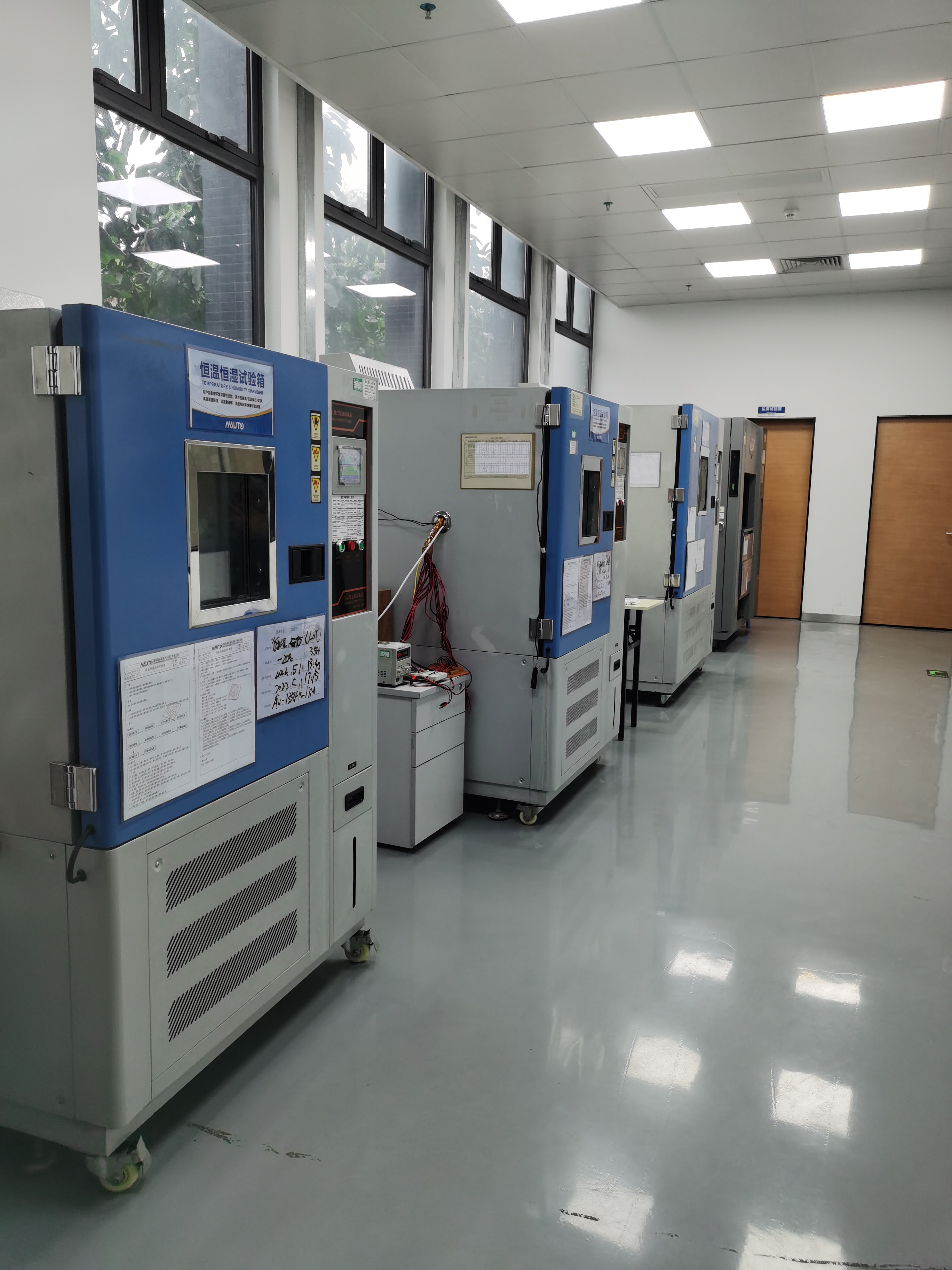
Temperature testing is one of the key reliability checks a touch screen car radio buyer should expect a manufacturer to perform before shipment.
4. Certifications for Destination Markets
For cross-border car radio distribution, certification is not optional. CE marking is mandatory for car radios entering the EU under RED, EMC, and LVD requirements, while FCC certification is required for the US market, according to standard regulatory requirements cited in verified industry data.
In TOPNAVI's case, the factory reports holding ISO 9001 certification and producing products with CE, FCC, RoHS, E-Mark, and EMC certifications. A long-term buyer should request current certificates and check whether they cover the specific models being purchased. Certifications fastened to a single sample but not applied to production batches are a common sourcing risk.
5. After-Sales Support and Firmware Maintenance
Car radios run software, and software ages. A responsible touch screen car radio supplier should provide firmware updates, bug fixes, and remote diagnosis support over the product's life cycle.
TOPNAVI states that its CarPlay and navigation features receive 5 years of free OTA firmware updates in its comparison against traditional car navigation systems. For a distributor, this type of commitment reduces the risk of selling a product that becomes obsolete or incompatible after a smartphone operating system update.
Case Evidence: A Long-Term German Project
One documented project involving TOPNAVI took place in Germany, where 2,000 units were delivered for factory pre-installation in new energy vehicle models over a 4-year duration. The project required CE, FCC, and E-Mark certification, used an Android 14 system, and was built on an 8-core high-performance CPU. The stated results included compliance with EU automotive EMC standards and long-term stable operation.
For buyers evaluating ecosystem and long-term fit, this case is useful not as a general claim of superiority but as evidence that the company has experience with multi-year supply programs, regulatory approval processes, and vehicle-maker-oriented pre-installation workflows. Verify similar references directly with the supplier before relying on them in your own supply decisions.
Comparison: Long-Term Supplier vs. One-Off Product Purchase
The difference between buying a car radio as a single SKU and building a long-term supply relationship affects almost every decision criterion.
| Evaluation Area | One-Off Product Purchase | Long-Term Supplier Relationship |
|---|---|---|
| Priority | Unit price and availability | Consistency, support, and roadmap |
| Quality evidence | Sample inspection | Factory audits, repeat batch testing, traceability |
| Firmware support | Usually ignored | OTA updates, bug fixes, long-term maintenance |
| Customization | Minor or none | OEM/ODM capability, private label, regional adjustments |
| Certifications | Certificate copy for the model | Certificates covering production batches and regions |
| After-sales | Limited to shipment claims | Technical troubleshooting, remote support, spare parts |
| Risk exposure | High if product fails | Lower if supplier monitors quality and updates |
This comparison is not a reason to avoid transactional buying when the volume is small. It is a framework for deciding when to invest in a deeper partnership.
Procurement Terms and Practical Conditions
For car radio buyers moving from evaluation to long-term execution, practical terms matter. TOPNAVI's standard procurement conditions, as stated in its supplier documentation, include:
- Minimum order quantity (MOQ): 10 units
- Delivery method: FOB
- Payment: 30% T/T in advance, 70% T/T against copy of B/L; sample orders require 100% full payment
- Acceptance: 100% full function test before shipment, customer on-site inspection accepted, third-party inspection (SGS/TUV) supported, sample confirmation before bulk production
These terms are relatively buyer-friendly for testing a new relationship. The 10-unit MOQ makes it possible to conduct a pilot order before committing to larger volume. The acceptance conditions, including on-site and third-party inspection, are meaningful safeguards for a buyer who wants evidence rather than promises.
When Is a Long-Term Factory Partnership the Right Choice?
A long-term relationship with a touch screen car radio manufacturer is most valuable when any of the following applies:
- You are a distributor or wholesaler that needs consistent inventory across quarters.
- You operate an e-commerce brand and want private-label or customized car radios to differentiate from generic listings.
- You supply a specific vehicle segment, such as new energy vehicles, and need approved compatibility plus stable firmware.
- Your market requires certifications that take time and money to renew, making a stable factory relationship more efficient than switching suppliers frequently.
- You need after-sales support to protect your own brand reputation in the destination country.
If your buying pattern is one-time project procurement with no expectation of repeat orders, a deeper supplier evaluation is still useful, but the weight of partnership criteria should be lower.
Limitations and Risks of Long-Term Supplier Evaluation
No evaluation framework guarantees a perfect partnership. Buyers should be aware of the limits of this type of assessment:
- Factory statements are self-reported unless verified. Production capacity, R&D team size, and test procedures should be confirmed through factory audits, video calls, and third-party inspections.
- Market data used here, such as the USD 22.5 billion global in-car infotainment market or the USD 15.44 billion head unit market, comes from third-party research and may not be directly comparable due to different definitions of the market.
- Case references, such as the German project, may be verified on request, but a buyer should always conduct due diligence before relying on them.
- Long firmware support commitments are valuable only if the supplier remains in business and maintains update infrastructure. Contractual terms, where feasible, are stronger than verbal promises.
Future Outlook: What Buyers Should Expect From Touch Screen Car Radio Suppliers
Several trends are likely to shape long-term car radio supplier relationships. Smartphone integration, including wireless Apple CarPlay and Android Auto, continues to become a baseline expectation. Android-based car radios increasingly resemble automotive tablets, which means software maintenance and security become part of the supplier's job. Vehicle-specific fitment is also becoming more common than universal-only SKUs, raising the importance of CAN bus compatibility databases.
Buyers who build relationships with manufacturers that have in-house R&D, automated production lines, and documented test procedures will be better positioned than those who constantly switch among low-cost assemblers. TOPNAVI displays many of these features as described in this article: its factory includes SMT lines, wave soldering, reflow soldering, signal shielding rooms, and reliability testing equipment. These physical capabilities are what production and quality claims depend on.
FAQ
What should a buyer check before entering a long-term touch screen car radio supply relationship?
A buyer should verify production capacity, R&D capability, OEM/ODM service depth, quality control procedures, certifications for destination markets, and after-sales support structure. For example, TOPNAVI reports a monthly production capacity of 30,000 units, typical OEM/ODM lead times of 7 to 15 days, and a 20,000 m² factory. Ask for documentation and, where possible, conduct a factory audit or third-party inspection.
Can a car radio manufacturer support private label or customized products?
Many established car radio manufacturers offer OEM and ODM services. TOPNAVI, for instance, reports offering OEM/ODM services and lists a 10-unit MOQ and a 7-to-15-day lead time as part of its standard procurement conditions. Private-label and customization capability should be confirmed through samples and written specifications, not solely through a supplier's website claims.
How do I evaluate a touch screen car radio supplier's long-term reliability?
Look for evidence of factory-owned production rather than simple trading, documented aging and reliability tests, monthly software compatibility updates, OTA update support, and certifications covering your destination market. TOPNAVI describes 72-hour full-load aging tests for all products, 100,000+ touch durability tests, and a −40°C to 85°C thermal cycling test. These are concrete claims, and a buyer should request testing records to verify them.
What certifications are needed for importing car radios to the EU and US?
CE marking is mandatory for car radios entering the EU under RED, EMC, and LVD directives, while FCC certification is required for the US market. TOPNAVI reports that its factory holds ISO 9001 certification and that its products carry CE, FCC, RoHS, E-Mark, and EMC certifications. Buyers should request current, model-specific certificate copies rather than accepting a general compliance statement.
What is a reasonable MOQ for testing a new car radio supplier relationship?
MOQ levels vary by manufacturer. TOPNAVI's published standard MOQ is 10 units, with a payment structure of 30% T/T in advance and 70% T/T against copy of B/L, and with 100% full payment for sample orders. A low MOQ can serve as a pilot order gateway before scaling to larger commitments.
For buyers seeking a more detailed overview of TOPNAVI's production capabilities and product portfolio, the company brochure is publicly available:
Download TOPNAVI Company Brochure (PDF)
Note: This article is an independent industry reference based on disclosed supplier information and public market data. Buyers should conduct their own verification before making procurement decisions.