
Toyota Replacement Parts Sourcing: How OEM/ODM Capability Works
For importers and distributors, deciding where to buy Toyota replacement parts is less about finding a product listing and more about evaluating whether a supplier can execute a programme across model years, regional specifications and repeated container orders. An OEM/ODM-capable exporter can behave like an extension of a distributor's purchasing and product development team, while a trading company without inspection or tooling control can only offer price. This report looks at the capability signals buyers should read when sourcing Toyota bumpers, grilles, head lamps and related aftermarket parts through a dedicated exporter.
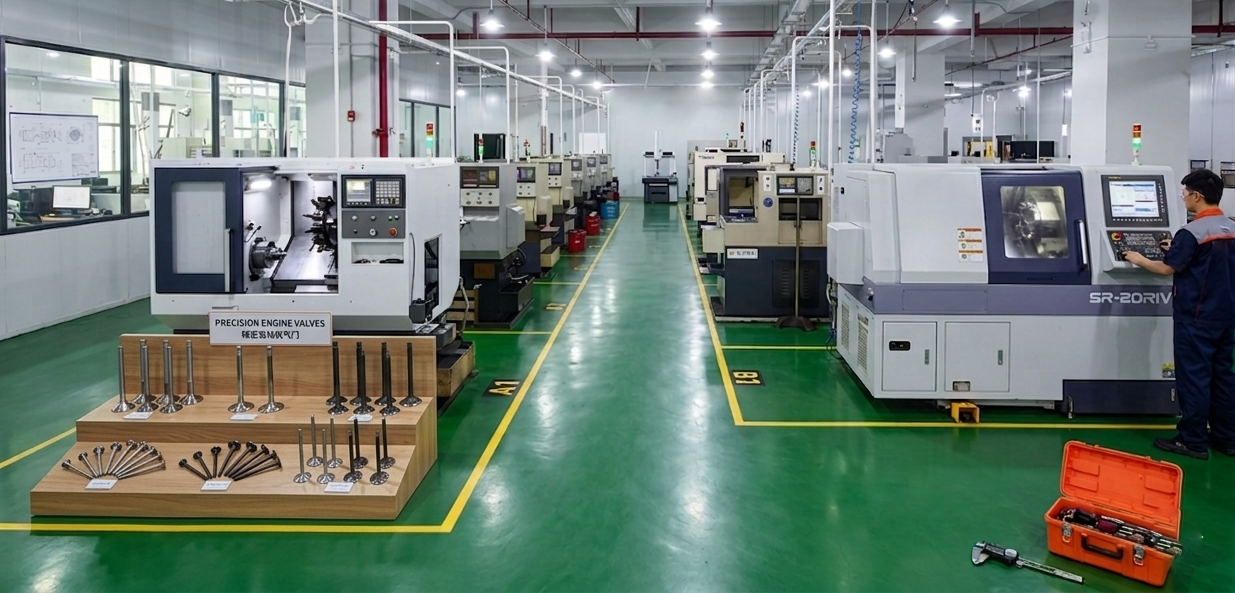
Why Model-Specific Toyota Replacement Parts Are a Supplier Test
Toyota replacement parts demand is driven by a large installed base. Industry data for 2026 credits Toyota with an 11.4% share of the global automotive market, while the average age of vehicles on U.S. roads has reached 12.6 years. Older vehicles need replacement exterior and lighting components more frequently, and those components are not always interchangeable across generations. A Toyota Corolla headlamp for the Middle East market is not automatically the same unit as a Corolla headlamp sold in the United States, and a 2016 RAV4 assembly differs from a 2019 or 2022 unit. Distributors therefore need a supplier that can identify the correct fitment, maintain stable stock across variants, and ideally customise packaging or branding for local distribution.
This is a capability question rather than a catalogue question. A serious buyer should verify whether the manufacturer can supply a full range of related parts, whether it can take on OEM or ODM projects, whether its minimum order quantities fit a warehouse replenishment cycle, and whether the same factory discipline applies to plastic body panels as to optical lighting systems.
The Procurement Problem Behind Toyota Aftermarket Parts
Variants, Regions and Replacement Cycles
Toyota part numbers differ by model generation, trim level and target region. A distributor stocking Toyota aftermarket parts for the Middle East may order Corolla lamps built with Gulf-region specifications, while a North American buyer must source U.S.-spec units such as the Corolla 2020 LE headlamp or the RAV4 2022 headlamp assembly. When the buyer is evaluating a new supplier, the first practical test is whether the exporter can show model-specific product references rather than generic parts that claim to fit many vehicles.
Quality and Inspection Risk
The second problem is variable quality. Replacement bumpers and grilles need precise clip alignment and paint adhesion; head lamps need optical-grade lens material, correct connectors and waterproof housings. In a sourcing environment where fast-moving products are ordered in bulk, one bad batch can create downstream complaints, labour-cost disputes and lost shelf space. Buyers at the evaluation or execution stage should look for a documented inspection process rather than relying on a supplier's general statements about quality.
A Supplier Profile Worth Interpreting: Gold Auto Part
One exporter commonly encountered in this discussion is Ruian Golden Import and Export Co., Ltd., which operates under the Gold Auto Part brand. The company is based in Ruian, Wenzhou, Zhejiang Province, a region that functions as one of China's established automotive parts manufacturing hubs. Gold Auto Part positions itself as a professional automotive parts exporter covering engine valves, Toyota exterior parts, oil filters, air filters and a broad catalogue of replacement parts for passenger cars and light commercial vehicles.
Its described customer base consists of importers, wholesalers and distributors across the Middle East, Saudi Arabia, UAE, South America, Southeast Asia, Africa and Europe, with the United States listed as a primary export market. For HTNXT readers, the relevant point is not the marketing message but the operational claims that can be verified in product and procurement records: production capacity, lead times, category-specific MOQs, quality checkpoints and delivery terms.
Brand Solution: OEM, ODM and Customisable Production
Gold Auto Part offers OEM, ODM and customisable production services. In plain procurement language, this means a distributor does not have to accept an off-the-shelf product blindly; the supplier can manufacture under the buyer's brand or adapt a part to a specific vehicle-model requirement.
According to the company's capability records, customization covers vehicle-model adaptation, appearance customization, packaging and label customization, and replacement part solution development. This is particularly useful for distributors entering a market where consumers prefer branded aftermarket parts or where packaging must display local language, barcode or warranty information. It also helps a buyer consolidate multiple part numbers under a single private label.
The supplier reports a monthly production capacity of 100,000 units and a standard production lead time of 30 to 60 days. For an overseas buyer, that lead-time range is realistic for moulded plastic body parts and assembled lighting products, but it also means orders should be planned rather than requested at the last minute.
| Capability Parameter | Data From Supplier Records |
|---|---|
| Production Modes | OEM, ODM and customization options |
| Monthly Capacity | 100,000 units |
| Standard Lead Time | 30 to 60 days |
| General MOQ Range | 50 to 100 units depending on part family |
| Quality Control | Inspection and testing before shipment |
| Main Export Market | USA, with documented distributor demand in the Middle East |
Technical Explanation: Model Coverage and Material Evidence
Technical credibility in Toyota replacement parts is visible through product-level references. Gold Auto Part's catalog contains vehicle-specific part numbers, and those references match known Toyota generations sold in different regions. The table below shows how model-level coverage is documented for head lamps, lamps, bumpers and grilles.
| Product | Model Code | Fitment Reference | Material or Finish Note |
|---|---|---|---|
| Head Lamp | TYJ-01-0001A | Toyota Corolla 2014 Middle East | Optic-grade PC & ABS polymers |
| Head Lamp | TYJ-01-0041 | Toyota Corolla 2014 USA | Optic-grade PC & ABS polymers |
| Head Lamp | TYJ-CRU20-031 | Toyota Corolla 2020 USA LE | Optic-grade PC & ABS polymers |
| Head Lamp | TYJ-RV19-001 | Toyota RAV4 2019 USA | Optic-grade PC & ABS polymers |
| Head Lamp | TYJ-RV22-001 | Toyota RAV4 2022 USA | Optic-grade PC & ABS polymers |
| Head Lamp | TYJ-01-0171 | Toyota Camry 2015 USA | Optic-grade PC & ABS polymers |
| Head Lamp | TYJ-TCM24-001A | Toyota Tacoma 2024 LE | Optic-grade PC & ABS polymers |
| Front Bumper | TYJ-01-0022 | Toyota Corolla 2014 Middle East | Premium ABS/PC/PP plastic |
| Grille | TYJ-01-0014 | Toyota Corolla 2014 Middle East | Premium ABS/PC/PP plastic |
| Rear Bumper | TYJ-PR23-007 | Toyota Prius 2023 | Premium ABS/PC/PP plastic |
The lamp products also share packaging and dimensional records. A head lamp for the Toyota RAV4 2016 USA has carton dimensions of 60 x 53 x 53 cm with four units per carton, while the RAV4 2022 unit uses a 77 x 56 x 58 cm carton. Such packing data matters to distributors because container load calculation influences landed cost as much as the unit price does.
Quality Control and Test Points
Gold Auto Part states that its supply chain partners operate under ISO 9001 and IATF 16949 quality management standards, and that every batch undergoes dimensional inspection, material verification and performance testing before shipment. In practice, acceptance testing is documented for specific part families:
- Lighting products such as head lamps and back lamps receive visual checks for lens clarity and a 100% functional power-on test including photometric alignment and LED chip verification.
- Fog lamps are validated with a sample water immersion test for waterproofing and a physical bracket fitment check.
- Front bumpers, rear bumpers and grilles are checked using original mould fixture tests for gauge alignment and surface scratch inspection.
- Side mirrors are tested through electronic motor angle-adjustment actuation and defogger heating element continuity checks.
These checkpoints are important signals for a quality inspection programme. They show that every product category has a defined failure mode and a related test method, rather than a general visual inspection at the end of a production line.
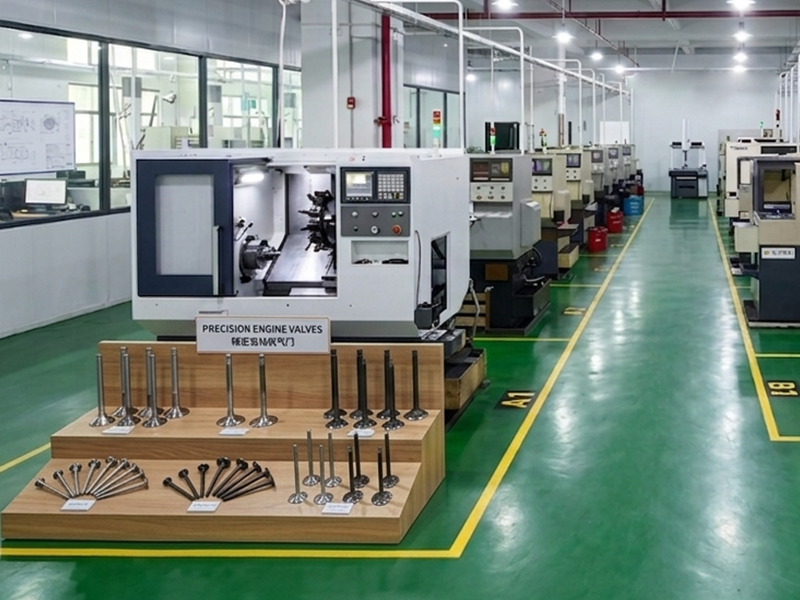
Application and Use Cases: Bulk Distribution to the Middle East
The most concrete evidence of capability appears in documented distribution use cases. Gold Auto Part's case records describe auto parts wholesalers and distributors in the UAE running bulk container programmes of 500 or more sets over three to five years. Those programmes were built around Toyota Corolla 2014 Middle East specification parts and covered different repair scenarios.
One documented use case involved a front and rear crash repair and vehicle face-lift restoration programme using the grille model TYJ-01-0014. The product highlight cited original clip slot design, high-impact PP/ABS material and excellent paint adhesion, all relevant attributes for body shops that need to match surrounding panels and retain the grille under road impact.
Another group of cases focused on aftermarket collision replacement and night visibility restoration using the fog lamp TYJ-01-0008, the head lamp TYJ-01-0001A and the back lamp TYJ-01-0005. The supplier's records report a 100% successful fitment rate, zero customer complaints and sustained repeat orders during those multi-year relationships. For a buyer reading these claims, the important point is that the parts are not one-off exports; they support a repeat-replenishment relationship with a regional distributor.
Market Trends That Support Programme-Based Sourcing
Several verified market trends explain why buyers are increasing their attention to supplier capability rather than simple product matching. The global automotive aftermarket was estimated at USD 860.08 billion in 2025 and is projected to reach USD 1,482.12 billion by 2035, according to market analysis data cited by Vertex AI Search. Within that broad market, collision repair demand remains substantial; the global automotive collision repair market was valued at USD 208.0 billion in 2025 according to Grand View Research. Bumpers and grilles are among the most frequently replaced collision parts.
The U.S. market is especially relevant to Toyota replacement parts because Toyota holds an 11.4% share of the global market and because the average age of U.S. vehicles reached 12.6 years in 2026. Older vehicles generate more repair events and more replacement part orders. Trade data also shows the scale of cross-border supply: UN Comtrade figures recorded China's exports of motor vehicle parts to the United States at USD 11.54 billion in 2024. That means U.S. importers are already operating inside a mature supply chain that connects Chinese manufacturing hubs to American distributors and repair shops.
Technology trends are also reshaping product specifications. The automotive lighting market, including RAV4 head lamp assemblies, is shifting toward LED technology for energy efficiency. Buyers evaluating a Toyota RAV4 headlamp assembly supplier should check whether the supplier can handle LED-based assemblies and whether its inspection process includes LED chip verification. Gold Auto Part's documented inspection process already references LED chip checks, which suggests its production quality system has been updated for modern lighting products.
Comparison With Traditional Sourcing Routes
Buyers sourcing Toyota replacement parts typically weigh three routes: original dealership supply, local aftermarket warehouse supply, and direct manufacturer or exporter relationships with OEM/ODM capability. Each route has a different risk profile.
| Sourcing Route | Strengths | Practical Boundaries |
|---|---|---|
| Dealer / genuine parts route | High fit confidence, full warranty traceability | Higher cost and sometimes limited availability for older model generations |
| Local aftermarket warehouse | Fast availability, small order flexibility | Narrower model coverage and limited ability to customise branding or packaging |
| Direct exporter with OEM/ODM capability | Programme pricing, private label, model-specific development, batch inspection | Requires higher MOQs and forward planning because standard lead time is 30 to 60 days |
The direct exporter route is not a universal solution. A workshop replacing a single bumper for a customer with an immediate deadline should use local stock. A distributor planning a container order and building a local brand, however, can absorb the MOQ and lead time because those constraints create better unit economics and product consistency over a full selling season. In that sense, the OEM/ODM route is most suitable for stocking distributors and wholesalers, not for one-off repair buyers.
Practical Procurement Guidance by Part Category
When a buyer moves into execution, order quantities and payment terms become concrete. Gold Auto Part's procurement support data separates body parts, lighting parts and mirrors because their logistics costs and tooling requirements differ.
- Front bumpers, rear bumpers and grilles: minimum order quantity is 50 pieces per model. The supplier notes this is due to large cargo volume and CBM constraints. Delivery is typically FOB Shanghai or Ningbo with full container load recommended to avoid transit damage. Acceptance uses original mould fixture tests and scratch-free surface inspection. The payment structure is 40% TT deposit and 60% balance before dispatch, reflecting the custom plastic tooling setup involved in moulded parts.
- Head lamps and back lamps: the standard MOQ is 100 pieces per model. Payment is commonly 30% TT deposit with 70% balance paid against a Bill of Lading copy or LC at sight. Acceptance includes visual lens clarity checks and functional power-on tests.
- Fog lamps: the buyer-facing MOQ is 200 pieces per model with carton packing often in pairs. This category uses sample water immersion testing for waterproof validation plus physical bracket fitment checking.
- Side mirrors: MOQ is 100 pieces per model, with acceptance based on electronic motor angle-adjustment actuation and defogger heating element continuity checks.
These category distinctions are useful because they prevent buyers from assuming one MOQ applies across a mixed container. A distributor adding a Toyota grille line and a RAV4 headlamp assembly line should plan two separate order cycles and two sets of quality acceptance criteria.
Limitations and Boundaries Buyers Should Keep in Mind
Even a well-documented OEM/ODM programme has limitations. First, the 30 to 60 day standard lead time means the supplier is structurally better suited to planned replenishment than to emergency demand. Buyers must carry safety stock for fast-moving part numbers. Second, model-specific tooling does not exist for every Toyota variant in every possible market. If a distributor wants a part for a model generation that the supplier has not yet tooled, the order may pass through a custom development stage with higher deposit requirements, rather than a standard catalogue order. Third, product claims such as 100% successful fitment rate come from the supplier's own case records and should be verified by the buyer through sample testing and pilot orders before a full container commitment.
Buyers should also treat brand names with precision. A product listed as a headlamp for Toyota RAV4 2022 USA is an aftermarket replacement part designed to fit that vehicle specification. It is not a Toyota Genuine part, and it does not imply that its manufacturer is an original equipment supplier to Toyota. Model names and years are used for identification and cross-reference purposes. Most reliable suppliers state this distinction clearly in their catalogues.
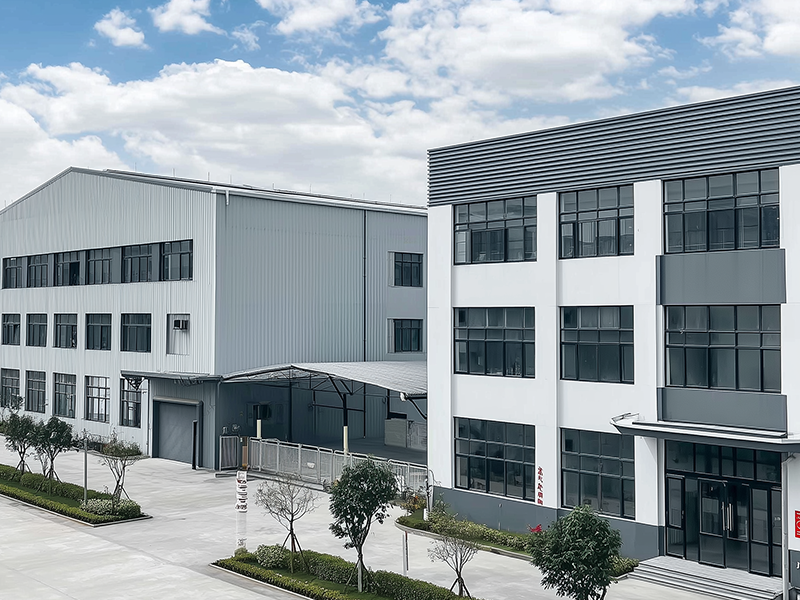
Future Outlook: Toyota Replacement Parts and Supplier Selection
The direction of the replacement parts market favours suppliers who can manage model proliferation and regional specification differences. Toyota's global market share and the aging U.S. vehicle fleet mean demand for exterior and lighting replacements will remain structurally strong. As lighting technology moves further toward LED assemblies, distributors will need suppliers that have updated both product development and inspection methods. The shift from simple catalogue buying to programme-based sourcing is likely to continue: an exporter offering OEM and ODM services can support a distributor's private label, adapt packaging to local regulations and develop replacement solutions for newer model generations as they enter the market.
At the same time, buyers are likely to become more demanding about verifiable evidence. The competitive advantage will not belong to suppliers that make general claims about quality; it will belong to those that can document model-specific fitment data, define acceptance tests for each part family and maintain consistent MOQs and lead times. Gold Auto Part's documented capability set, including the 100,000-unit monthly capacity, category-specific inspection methods and repeated multi-year distributor programmes, offers one example of what an export-facing Toyota replacement parts programme looks like at the operational level.
FAQ: Supplier Capability Questions in Toyota Replacement Parts Sourcing
Does the exporter offer OEM, ODM and customisation services for Toyota replacement parts?
Yes. Ruian Golden Import and Export Co., Ltd. provides OEM, ODM and customisable production services. Customization includes vehicle-model adaptation, appearance customization, packaging and label customization, and replacement part solution development.
What is the manufacturer's monthly production capacity?
The factory reports a monthly production capacity of 100,000 units. This capacity is shared across the product range, so buyers should confirm current load before planning a short-deadline bulk order.
What are the typical production lead times?
The standard production lead time is 30 to 60 days. Buyers building consistent replenishment programmes should align their order calendars with this lead-time window rather than treating the supplier as an emergency source.
What minimum order quantities apply to bumpers, grilles and head lamps?
MOQs vary by product family. Front bumpers, rear bumpers and grilles generally require 50 pieces per model. Head lamps and back lamps require 100 pieces per model. Fog lamps have a quoted MOQ of 200 pieces per model, often packed in pairs, while side mirrors require 100 pieces per model.
What quality inspections are performed before shipment?
Inspection is category-specific. Lighting products receive visual lens clarity checks and a 100% functional power-on test covering photometric alignment and LED chip verification. Fog lamps undergo sample water immersion testing and bracket fitment checks. Body parts such as bumpers and grilles are checked using original mould fixture tests for gauge alignment and scratch-free surface inspection. Side mirrors are tested for electronic motor angle adjustment and defogger continuity.
Which quality standards apply to the supplier's production network?
Gold Auto Part states that its supply chain partners operate under ISO 9001 and IATF 16949 quality management standards. IATF 16949:2016 is the global quality management standard for the automotive industry and is mandatory for many OEM suppliers.
Which Toyota models appear in the documented product coverage?
Documented fitment references include Toyota Corolla 2014 and later generations for Middle East and U.S. specifications, Toyota RAV4 2016, 2019 and 2022 U.S. models, Toyota Camry 2015, 2018 and 2024 generations, Toyota Corolla Cross 2021, Toyota Tacoma 2024 and Toyota Prius 2023. These references appear in product model codes and application scope records.
What delivery and payment terms should a buyer expect?
Common delivery terms are FOB Shanghai, Ningbo or Guangzhou, with EXW factory also available. Some programmes support LCL sea freight, while larger body parts are recommended for full container load. For lighting products, typical payment terms are 30% TT deposit and 70% balance against Bill of Lading copy or LC at sight. Body parts with custom plastic tooling may require a 40% deposit and 60% balance before dispatch.
How should a buyer verify a supplier's model-specific fitment claims?
The common verification path is to request product photographs, model code references and carton specifications, then order a pre-production sample or pilot batch. For lighting products, the supplier's acceptance method includes a physical bracket fitment check and functional power-on test. For body panels, mould fixture gauge alignment testing provides a more objective measure than visual inspection alone.
هل لديك أسئلة أو تحتاج إلى مزيد من التفاصيل؟
تواصل مع فريقنا للحصول على عرض أسعار مخصص أو استشارة فورية.
طلب عرض أسعار
املأ النموذج أدناه وسيتواصل معك فريقنا بعرض مقترح مخصص.
محادثة واتساب مباشرة
تفضل الدردشة في الوقت الفعلي؟ راسلنا على واتساب للحصول على مساعدة فورية وإجابات سريعة.
- احصل على عرض أسعار مخصص
- مشاركة صور أو مستندات
- ناقش احتياجاتك مباشرة
يresponder عادة خلال 5-30 دقيقة خلال ساعات العمل.