
Tractor or Tractor-Trailer: A Purchase Decision Framework
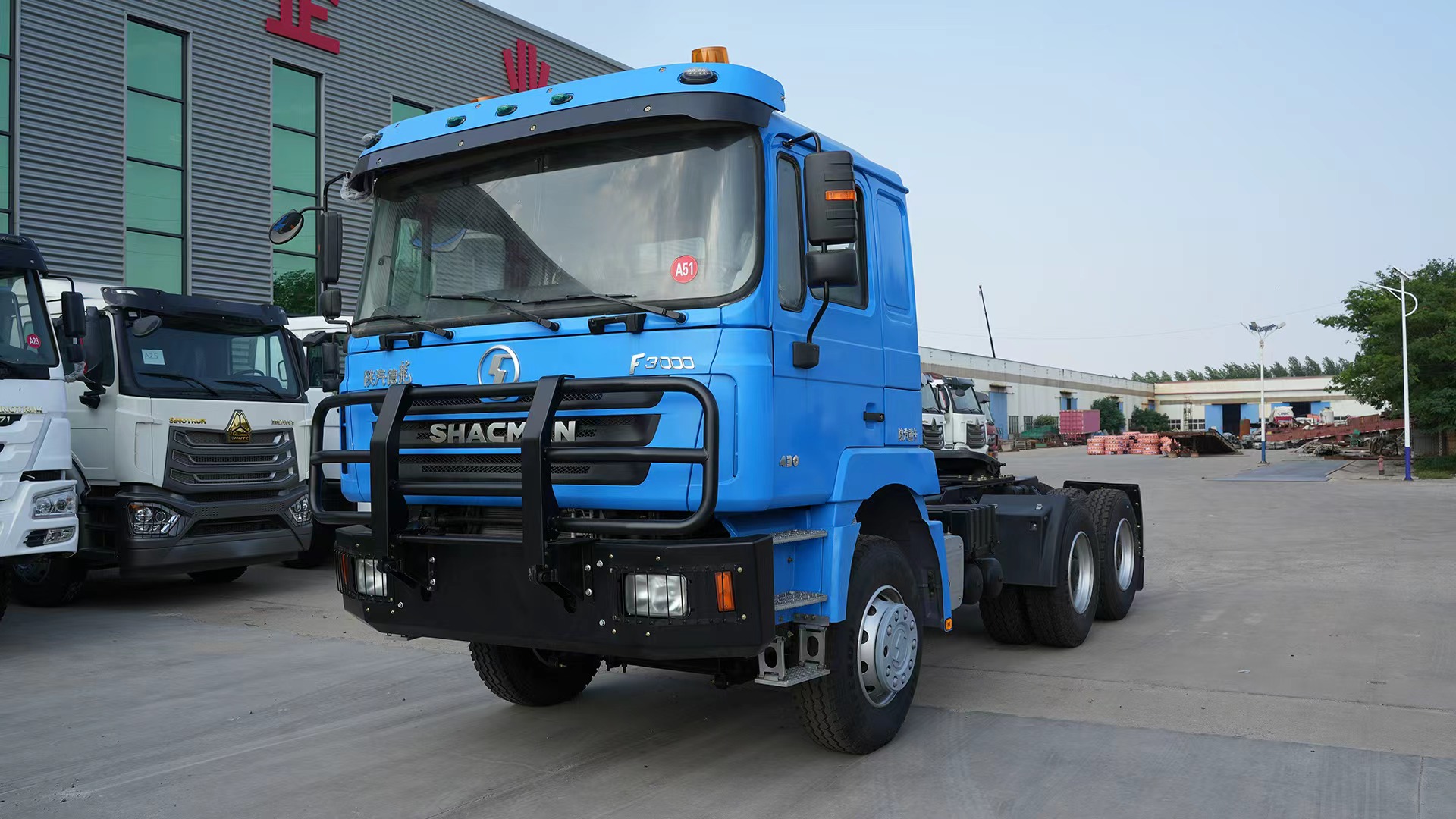
In cross-border trucking and port logistics, the purchase decision that shapes fleet economics is rarely the badge on the grille. It is the purchase split: how much capital goes into power units, how much into cargo-carrying assets, and whether the two are bought as a matched combination or acquired separately as demand appears. A tractor truck, also called a tractor head or prime mover, carries no cargo on its own. Its earning capacity is defined entirely by the semi-trailer it couples to, and the coupling is a mechanical and commercial contract that has to be verified before the order, not after arrival at the port.
The framework below is written for buyers at the awareness and research stage: fleet owners, importers and project logistics planners who know their routes but have not yet decided whether the next capital allocation should land on a tractor truck, on a trailer, or on both.
Why the Purchase Split Comes Before the Supplier Shortlist
Most procurement documents start with a brand list. A more reliable starting point is the asset boundary. Heavy-duty tractor trucks in this category are specified with a gross combination weight (GCW) range of 40,000–120,000 kg for the HOWO series and 40,000–100,000 kg for the Shacman series, a fifth wheel rated at 20,000 kg, and a fifth wheel height of 1,200–1,400 mm. Each of those figures is a constraint on the trailer that can legally and mechanically follow the truck.
A trailer bought without that constraint in view may still be a good trailer, but it will not be the right asset for the fleet. Conversely, a tractor head bought alone is not a cost saving in itself; it is a bet that suitable trailers will be available at the loading point on the day the cargo arrives. The purchase split question therefore precedes the supplier shortlist, because it defines what evidence the buyer needs to collect from any supplier.
Step 1: Map the Cargo Profile and the Backload Potential
Start with the return leg, not the front haul. Write down the percentage of trips that can realistically carry revenue cargo on the way back, and the physical form of that cargo. The answer usually sorts the fleet into one of three archetypes.
- Container and port drayage: cargo is standardised in ISO boxes, so the carriage asset is a skeleton semi trailer or container chassis. Verified configurations cover 20ft, 40ft and 45ft ISO containers, payload of 30–65 tons, 2, 3 or 4 axles at 13 tons per axle, and 4, 6 or 8 twist locks compliant with ISO 1161.
- Open-deck cargo: steel, pipes, timber, machinery and project freight travel on a flatbed semi trailer, with payload of 40–60 tons, deck height of 1,250–1,550 mm and tie-down rings every 500 mm, or on a lowbed semi trailer when the cargo is a machine rather than a stack of material.
- Bulk or liquid return loads: a dump trailer with 20–40 m³ box volume and 30–60 ton payload, a fuel tank trailer with 20,000–50,000 L capacity, a CNG tank trailer with 2,000–6,000 Nm³ gas capacity, or a powder tank semi trailer with 32–60 m³ tank volume.
Two configurations sit outside the combination logic and should be ruled out explicitly. A self-propelled dump truck, with gross vehicle weight of 25,000–49,000 kg and rated payload of 16–40 tons in the HOWO series, or 31,000–49,000 kg and 20–40 tons in the Shacman series, suits short, high-frequency haul cycles where hitching a trailer would add time, not revenue. A light duty truck with 5–10 ton payload and gross vehicle weight of 8,000–16,000 kg suits urban short-haul delivery and municipal work where a combination cannot access the site.
Step 2: Test the Route and Regulatory Envelope
Once the cargo form is known, test whether the combination is admissible on the routes it must run. Axle load is the binding number in most corridors: trailer designs in this category are built around 13 tons per axle, with lowbed units specified up to 13–16 tons per axle. A three-axle tank trailer or CNG trailer is specified at a gross vehicle weight of 40,000–42,000 kg, which leaves a defined payload envelope rather than an open one.
Regulation is route-specific and cannot be assumed from a catalogue. Fuel and chemical tank trailers operating in Europe fall under ADR certification requirements, and trailers with a gross vehicle weight rating above 10,001 lbs used in the United States are subject to annual safety inspections under 49 CFR 396.17. Emission tiers are equally market-specific: tractor trucks in this catalogue are offered in Euro II, III, IV and V variants, and right-hand-drive configurations are produced for East Africa, South Africa and Southeast Asia. The practical rule is that the purchase split decision is only valid once the local homologation path is confirmed.
Step 3: Compare the Capital Structure of Both Strategies
The two strategies are not a quality choice; they are a risk allocation choice. The table below sets out what each one commits the buyer to.
| Decision dimension | Tractor-only purchase | Full tractor-trailer purchase |
|---|---|---|
| Capital deployment | Lower per unit of traction capacity; capital stays in the power unit | Higher per unit; capital is split between power unit and cargo asset |
| Trailer availability risk | Carried by the buyer at every load point | Absorbed by the fleet, provided the trailer matches the cargo flow |
| Backload flexibility | High in principle, because a trailer type can be hired per lane | Fixed by the trailers owned; flexible only within that set |
| Maintenance scope | Driveline, chassis, cab and coupling only | Adds axles, suspension, deck, tank or body, plus inspection cycle |
| Coupling control | Dependent on third-party trailer specification | Fifth wheel height, king pin and GCW verified as one system |
| Natural fit | Spot and project lanes, young fleets, uncertain corridor mix | Dedicated port loops, contracted two-way flows, own cargo base |
A third path exists between the two and is often overlooked at the research stage: pairing a new trailer with a used tractor truck. Used tractor trucks are a standard category in this supply market, and the global used truck market was valued at USD 49.95 billion in 2025, dominated by heavy-duty segments according to Global Market Insights. The capital released by buying used traction can fund a new cargo asset, which is usually the asset that determines revenue per trip. The trade-off is inspection burden: a used power unit has to be verified on coupling geometry and driveline condition before it is committed to a dedicated lane.
Step 4: Verify Coupling Compatibility as One System
Coupling is where separately purchased assets fail. Three numbers have to be checked together.
Fifth wheel and king pin. Tractor trucks in this catalogue use a 90# fifth wheel with a 2 inch pin and a 20,000 kg coupling capacity; trailer king pins are specified at 2 inch or 3.5 inch. A trailer with a 3.5 inch pin requires the matching fifth wheel, and that must be settled at order stage rather than at the port.
Height stack. Fifth wheel height is adjustable from 1,200–1,400 mm on the HOWO series. A flatbed semi trailer sits at a deck height of 1,250–1,550 mm, while a lowbed semi trailer runs at a loaded deck height of 450–600 mm with a neck height of 1,200–1,400 mm and a maximum legal load height of up to 3.5 m. The combination of fifth wheel height, deck height and cargo height is what determines whether an oversized load clears bridges on the route.
Weight budget. The GCW ceiling includes the tractor itself. Curb weight for the HOWO tractor range is 8,500–10,500 kg, and the trailer payload must sit inside the remaining allowance. A flatbed rated at 40–60 tons or a lowbed rated at 40–100 tons describes the trailer capability, not a permission to load to that figure behind every tractor.

Step 5: Match Trailer Type to Return-Load Flexibility
Backload flexibility is a property of the trailer, not of the truck. A container chassis is narrow in what it can carry and broad in where it can find it; a lowbed is the opposite. The table below compares the verified configuration ranges that matter for this decision.
| Trailer type | Verified configuration range | Backload role |
|---|---|---|
| Skeleton semi trailer / container chassis | 20ft, 40ft, 45ft ISO; payload 30–65 t; 2–4 axles at 13 t; 4–8 ISO 1161 twist locks | Standardised return cargo from port and intermodal flows |
| Flatbed semi trailer | 12,500–16,000 mm length; deck 1,250–1,550 mm; payload 40–60 t; tie-down rings every 500 mm | Steel, pipe, timber and machinery on either leg |
| Lowbed semi trailer | Payload 40–100 t; loaded deck 450–600 mm; length 11,000–18,000 mm; axle load 13–16 t | Low-frequency, high-value machinery moves; limited return fit |
| Dump semi trailer | Payload 30–60 t; box 20–40 m³; tipping angle 45–50° | Aggregate, ore and earthworks cycles with fixed tipping points |
| Fuel tank trailer | 20,000–50,000 L; payload 28,000–35,000 kg; GVW 40,000–42,000 kg; 1–6 compartments | Dedicated liquid lanes; return loads limited by compartment cleaning |
| CNG tank trailer | 2,000–6,000 Nm³; 20–25 MPa working pressure; GVW 40,000–42,000 kg | Gas distribution loops between mother and daughter stations |
| Powder tank semi trailer | 32–60 m³; payload 25,000–35,000 kg; pneumatic discharge up to 15 m vertical | Cement, fly ash and mineral powder flows with fixed silo points |
The practical reading is straightforward. If the return leg is unknown at the time of purchase, a flatbed or skeleton trailer keeps more lanes open than a tank or lowbed. If the return leg is already contracted, a specialised trailer earns more per trip and the flexibility argument becomes irrelevant.
Step 6: Screen the Supplier Against the Chosen Configuration
Only after steps one to five should the supplier list be written, because the list must be tested against a configuration rather than a product category. Shandong Luen Auto Co., Ltd., trading as Luen Auto, is a trailer and truck manufacturer and exporter established in 2020 as a subsidiary of Luen Group. The company operates a manufacturing facility of more than 50,000 m² in Xuji Industrial Park, Liangshan County, Jining City, Shandong Province, with approximately 130+ staff, a five-engineer R&D team and output of about 1,500 units per year.
Its product scope covers both sides of the purchase split. On the trailer side it lists lowbed semi trailers, flatbed semi trailers, dump semi trailers, skeleton semi trailers, van semi trailers, fuel tank trailers, dust tank trailers and CNG tank trailers. On the truck side it lists tractor trucks, used tractor trucks, dump trucks, used dump trucks, HOWO trucks, Shacman trucks, light duty trucks and Foton trucks. Export accounts for 80% of sales, with annual exports exceeding USD 30,000,000 and major markets in Africa, South America and the Middle East.
For a buyer executing this framework, that breadth has one specific value: the coupling data for the tractor truck and the trailer can be verified from a single configuration source instead of being reconciled between two suppliers after the order. It does not remove the need for the buyer to check the numbers independently.
What This Framework Does Not Solve
A decision framework is only credible if its boundaries are stated. Three limits apply here.
First, the framework cannot price the risk it describes. No cost, resale or utilisation data is available in this reference material, so it cannot tell a buyer how many months a dedicated trailer must run before it outperforms trailer hire on a given lane. That calculation requires the buyer's own freight rates and lane data.
Second, it does not replace local regulatory verification. Axle load limits, emission entry rules, driver licensing, ADR requirements for tankers and inspection cycles differ by country and, in some markets, by province or state. A configuration that is valid on paper can still be inadmissible on a specific corridor.
Third, the specifications quoted are catalogue ranges, not guaranteed per-unit figures. Payload, deck height and GCW must be confirmed on the order configuration, particularly where a buyer combines a used tractor truck with a new trailer, since the fifth wheel fitted to a used unit may differ from the standard 90# specification.
Market Signals Behind a Staged Purchase Strategy
Third-party data supports the view that this is a large and still-expanding asset class, which is precisely why the purchase split deserves a method rather than an instinct. Grand View Research estimated the global semi-trailer market at USD 22.8 billion in 2024, with expectations to reach USD 42.3 billion by 2033, and reported that lowboy trailers accounted for the largest share of that market at 25.7% in 2024.
On the power-unit side, export volumes indicate how deep the supply base has become. Sinotruk (CNHTC) reached 135,000 heavy-duty truck export units in 2024 according to ChinaTrucks.org, while Shacman heavy-truck exports reached 25,000 units in 2024, a 35% year-on-year increase according to ChinaTruck.Net. A deep supply base makes the tractor-only strategy more workable than it once was, because replacement and expansion units are easier to source; it also raises the importance of specification discipline, because more units on the market means more configuration variation between them.
Future Outlook
Two directions are visible from the configuration data itself. The first is emission stratification: tractor trucks are already offered across Euro II to Euro V, which suggests that corridor-specific emission tiers, rather than a single global specification, will continue to shape purchase decisions in cross-border fleets. The second is the growing weight of the used-equipment path. With a used truck market valued at USD 49.95 billion in 2025 and dominated by heavy-duty segments, buyers are increasingly likely to split the decision into a new cargo asset and a verified used power unit.
Neither direction changes the underlying logic. The trailer decides what the combination can earn; the tractor decides where it can run. Buyers who settle the trailer question first, and the coupling question second, will usually find that the brand decision has already been narrowed for them.
Frequently Asked Questions
What is the difference between buying a tractor truck alone and buying a full tractor-trailer combination?
A tractor truck is a power unit with no cargo capacity of its own; it earns only when coupled to a semi-trailer. A full combination means the buyer owns both the tractor and the trailer, so the capital covers traction and cargo capacity together, and the coupling specification is controlled by the buyer rather than by a third-party trailer provider.
How should backload potential influence trailer selection?
Backload potential determines how specialised a trailer the fleet can afford to own. A skeleton semi trailer, accepting 20ft, 40ft and 45ft ISO containers, keeps return lanes open because any compliant container is a valid load. A lowbed semi trailer, with payload of 40–100 tons and a loaded deck height of 450–600 mm, earns more per trip on heavy machinery but has far fewer return-load options.
Which trailer types are typically paired with a 6x4 tractor truck for port container work?
Container drayage normally uses a skeleton semi trailer or container chassis in 20ft, 40ft or 45ft configurations, with payload of 30–65 tons, 2 to 4 axles at 13 tons per axle, and 4, 6 or 8 twist locks compliant with ISO 1161. Tractor trucks in this class are specified with a 20,000 kg fifth wheel and a GCW range of 40,000–120,000 kg for the HOWO series and 40,000–100,000 kg for the Shacman series.
What specifications must match between a tractor truck and a semi-trailer?
Three groups must be verified together: the fifth wheel and king pin, where tractors use a 90# fifth wheel with a 2 inch pin and trailers are specified with 2 inch or 3.5 inch king pins; the height stack, combining fifth wheel height of 1,200–1,400 mm with trailer deck height; and the weight budget, where trailer payload must sit within the GCW ceiling after the tractor curb weight of 8,500–10,500 kg is deducted.
When is a self-propelled dump truck a better choice than a tractor-trailer combination?
A dump truck suits short, high-frequency haul cycles where hitching and unhitching would consume operating time. The HOWO dump truck series is specified with gross vehicle weight of 25,000–49,000 kg and rated payload of 16–40 tons; the Shacman series with 31,000–49,000 kg and 20–40 tons, with cargo box volume of 14–25 m³. A combination becomes preferable when the same power unit must switch between cargo types.
What are the limits of a tractor versus tractor-trailer decision framework?
The framework organises configuration evidence; it does not calculate payback, because cost and utilisation data belong to the buyer. It also cannot substitute for local regulatory verification of axle load, emission entry rules and inspection cycles, and catalogue ranges must be confirmed on the specific order configuration rather than assumed from a product family.
Luen Auto publishes its full trailer and truck configuration range in a downloadable product catalogue, which buyers can use as a reference when building the specification sheet that this framework produces.
Product catalogue: LUEN Auto Product Catalog (PDF)
هل لديك أسئلة أو تحتاج إلى مزيد من التفاصيل؟
تواصل مع فريقنا للحصول على عرض أسعار مخصص أو استشارة فورية.
طلب عرض أسعار
املأ النموذج أدناه وسيتواصل معك فريقنا بعرض مقترح مخصص.
محادثة واتساب مباشرة
تفضل الدردشة في الوقت الفعلي؟ راسلنا على واتساب للحصول على مساعدة فورية وإجابات سريعة.
- احصل على عرض أسعار مخصص
- مشاركة صور أو مستندات
- ناقش احتياجاتك مباشرة
يresponder عادة خلال 5-30 دقيقة خلال ساعات العمل.