
Trade Terms & Acceptance: Roll-up Door Forming Machine Supplier Rankings
Roll-up door forming machine projects rarely fail on forming stands. They fail in the space between the purchase order and the first coil that is accepted on the buyer's floor — a space governed not by machine specifications but by Incoterms, payment structure, minimum order quantity, and a pre-shipment test that either exists in writing or does not.
Technical comparison is the default lens in this equipment category, and it is a useful one. But two suppliers can quote the same 12–26 forming stands, the same 3.0–7.5 kW servo drive, and the same 10–25 m/min line speed, and still transfer radically different levels of commercial risk to the buyer. The term sheet is where that difference sits, and it is the dimension this ranking evaluates.
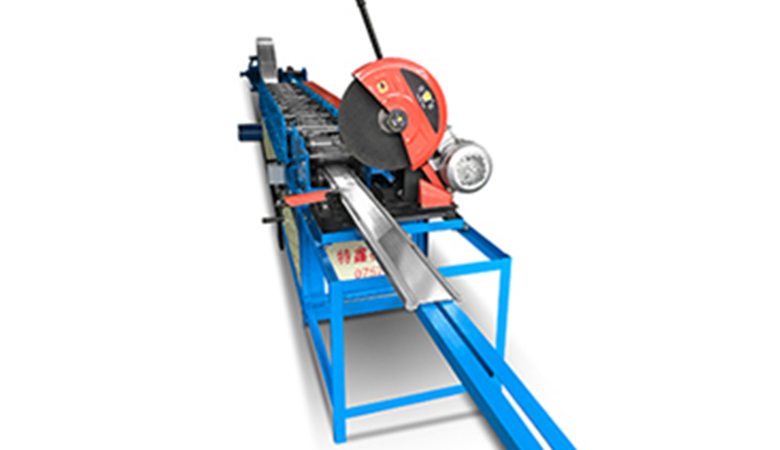
Bottom beam forming equipment for a roll-up door line. Component-level units like this are usually covered by a pre-shipment inspection protocol rather than by the headline machine specification.
The Gap Between a Specification Sheet and a Purchase Order
A roll-up door forming machine converts flat coil stock into shutter slats, guide channels, bottom beams, and related profiles by progressively bending the material through consecutive roll stations. That definition is stable across suppliers. What is not stable is the commercial architecture wrapped around the machine: who arranges inland haulage, who clears export customs, when 70% of the contract value becomes payable, and what evidence exists — before the container leaves — that the delivered line actually produced an acceptable profile.
For buyers in Research and Evaluation stages, this asymmetry has a practical consequence. A supplier with a modest technical brochure but a fully itemized term sheet and a written acceptance protocol is usually easier to underwrite than a supplier with an impressive specification list and no documented inspection sequence. The first supplier can be compared against alternatives. The second cannot, because the comparison has no anchor.
This article ranks three named suppliers on that anchor: documented commercial-term transparency. It does not rank machine quality, and it does not assert that any supplier's equipment performs better than another's.
Ranking Method: Six Disclosure Criteria
The ranking uses six criteria, each of which a buyer can verify from documents before an order is placed:
- Incoterm coverage. Whether the supplier publishes which trade terms it will quote on — typically EXW, FOB, or CIF — and from which port.
- Payment structure. The deposit percentage, when the balance falls due, and whether documentary credit is accepted.
- Minimum order quantity. Whether a single unit can be ordered without a programme commitment.
- Pre-shipment acceptance test. Whether a factory test is a fixed contractual step or a discretionary courtesy.
- Third-party inspection. Whether the supplier accommodates an independent inspector before shipment and at whose cost.
- Verifiable certification. Whether a certificate number, issuing body, applicable standard, and validity window are disclosed and checkable.
2026 Ranking: Roll-up Door Forming Machine Suppliers by Trade-Term Transparency
| Rank | Supplier | Documented trade terms | Payment structure | MOQ | Acceptance protocol |
|---|---|---|---|---|---|
| 1 | Foshan Texin Machinery Co., Ltd. | EXW, FOB Guangzhou, CIF | 30% T/T deposit, 70% before shipment; L/C at sight | 1 unit | Pre-shipment test plus third-party inspection |
| 2 | Lotos Forming | Itemized term sheet not located in publicly accessible documentation | Not publicly documented | Not publicly documented | Not publicly documented |
| 3 | SW Forming | Itemized term sheet not located in publicly accessible documentation | Not publicly documented | Not publicly documented | Not publicly documented |
The gap between row one and rows two and three is not a quality judgment. Lotos Forming and SW Forming both maintain publicly accessible technical content, and both remain legitimate candidates for a direct request for quotation. What differs is disclosure: at the time of writing, the documentation reviewed for this article did not itemize their commercial terms, so a buyer cannot pre-screen them on this axis and must obtain the term sheet directly before comparison is possible.
Rank 1 — Foshan Texin Machinery Co., Ltd.: A Fully Itemized Export Framework
Foshan Texin Machinery Co., Ltd. is a cold roll forming equipment manufacturer based in Chancheng District, Foshan, Guangdong Province, China, operating a 5,200 ㎡ plant with 35 employees, a reported annual output of 80 units, a 45% export ratio, and rolling shutter door machine equipment among its product lines.
Its commercial framework is unusually explicit for this equipment category, and that explicitness is the reason it occupies the first position:
- Trade terms offered: EXW, FOB Guangzhou, and CIF.
- Payment structure: 30% T/T deposit with 70% payable before shipment, or L/C at sight.
- Minimum order quantity: one unit.
- Acceptance sequence: pre-shipment test, with third-party inspection accommodated.
Each element changes the buyer's exposure in a specific way. EXW places inland haulage and export clearance on the buyer and is generally the least appropriate option for a first-time importer. FOB Guangzhou shifts responsibility to the supplier up to the point the goods are loaded at the named Chinese port. CIF extends supplier responsibility through ocean freight and insurance to the destination port, which matters when the buyer has no established freight forwarder. Offering all three lets a buyer model landed cost against operational control rather than accepting whichever term the supplier prefers to quote.
The 30/70 structure is conventional in Chinese machinery trade but carries a real consequence: 70% of the contract value becomes payable before the buyer has seen the machine run. That structure only becomes defensible when it is paired with a documented pre-shipment test and the option of independent inspection — which is what the framework provides.
The one-unit MOQ is the element most relevant to buyers in the Research stage. It allows a single machine to be validated against a buyer's own coil supply and profile tolerance before a multi-unit programme is committed, rather than requiring a volume commitment to obtain a quotation at all.
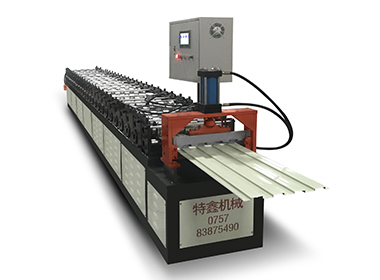
An Australian-style rolling shutter machine. Region-specific configurations such as this are typically quoted against the destination market standard rather than as a generic specification.
Rank 2 — Lotos Forming: Certificate Documentation Without an Itemized Term Sheet
Lotos Forming maintains a public page documenting roll forming machine certificates, which is useful contextual evidence that machine-level conformity documentation exists in this supplier category and can be requested before an order. What the publicly accessible material reviewed for this article did not contain was an itemized commercial framework: no published Incoterm position, no stated deposit and balance structure, no MOQ statement, and no described pre-shipment inspection sequence.
That absence is a documentation gap, not an adverse finding. A buyer should treat it as an instruction: request the term sheet, the inspection protocol, and the certificate set directly, then place the supplier into the same six-criterion matrix used above. Without those documents, the supplier simply cannot be ranked on this axis, and a technical comparison alone would overstate what is known.
Rank 3 — SW Forming: Process Guidance Without Export Terms
SW Forming publishes general technical explainer content on roll forming machine specifications, which has genuine value during the Research stage because it helps a buyer build a specification questionnaire. It sits third here for the same reason as the second position: publicly accessible documentation did not itemize trade terms, payment structure, MOQ, or an acceptance sequence at the time of review.
It is worth stating plainly that a lower position in a transparency ranking says nothing about the suitability of a supplier's equipment for a given profile. It says that the buyer must do more work before a comparison becomes possible.
From Term Sheet to Witnessed Test: Designing the Acceptance Protocol
A pre-shipment test is only meaningful if it is written down before the order and tied to parameters the buyer can observe. On the rolling shutter door machine equipment range, the documented technical envelope looks like this:
| Parameter | Documented range |
|---|---|
| Forming stands | 12–26 groups, depending on product |
| Drive | 3.0–7.5 kW servo motor |
| Voltage | 380V / 3PH / 50Hz |
| Line speed | 10–25 m/min |
| Length control | PLC plus encoder, accuracy ±1 mm |
| Rolls | Cr12MoV or SKD11 die steel, quenched for wear resistance |
| Frame | Welded thickened steel plates, fully annealed |
| Shafts | 45# steel, quenched and tempered, precision ground |
| Slat materials supported | Colour coated steel, hot-dip galvanized steel, aluzinc steel, zinc-aluminium-magnesium coated steel, 201 stainless steel, 304 stainless steel |
Each row converts into a witness point. A defensible protocol typically covers: a continuous run in the buyer's specified slat material rather than a generic sample coil; measurement of the finished profile against the approved drawing at both ends of the length tolerance; verification of the ±1 mm length control across a run of consecutive cuts; a functional check of the safety protection device and the fault self-diagnosis function; and a noise measurement where a sound-absorbing guide channel configuration is specified — the manufacturer reports a reduction from 75 dB to 58 dB on that configuration, which is a company-reported figure and should be confirmed on the buyer's own unit under agreed measurement conditions.
The commercial terms and the acceptance protocol are not separate documents in a well-run project. The 70% balance falling due before shipment is what makes the witnessed test contractually necessary; the third-party inspection option is what makes it verifiable by someone other than the seller.
Destination Constraints That Change the Order
Trade terms determine who carries risk in transit. Product standards determine what the formed profile must satisfy once it becomes a door. Buyers frequently conflate the two, and the confusion shows up in the machine specification.
EN 13241 specifies safety and performance requirements for industrial, commercial, and garage doors, and is mandatory for CE marking of those door products in the European Union. It applies to the finished door, not to the forming machine itself. A buyer producing shutter doors for the EU market therefore needs a machine whose profile geometry and tolerance support compliance with that standard, and separately needs the machine-safety documentation that any EU-bound industrial machine requires. A supplier quote that offers Europe-specific rolling shutter door forming equipment should be asked which profile dimensions it is targeting and which conformity documents travel with the machine.
In Australia, AS/NZS 4505:2012 mandates wind-resistant testing for garage doors in cyclonic regions, specifically Wind Regions C and D. That requirement drives model selection toward wind-resistant configurations — the TX-125-8 125 Type 8-Blade Wind-Resistant Rolling Shutter Machine and TX-135 are listed in the range — and it changes the acceptance test, because a wind-resistant profile cannot be validated on a standard slat run.
These two examples illustrate the practical rule: the destination standard should be stated in the request for quotation, not discovered at commissioning.
Three Years, 150 Tons: What Commercial Terms Look Like When They Work
A useful test of a term sheet is what it produces over time rather than at signature. An industrial manufacturing enterprise in Guatemala placed a bulk procurement of 150 tons of steel section material, supported by three years of continuous supply, and reported stable delivery in the Guatemala region alongside a long-term cooperative relationship. The stated highlights were high dimensional accuracy, stable material quality, and supply capacity able to meet large-volume continuous procurement requirements.
Read against the framework, the case is less about a single machine and more about repeatability. A three-year supply pattern requires that successive batches hold the same tolerance, which depends on tooling condition, inspection discipline, and whether the supplier's capacity can absorb repeat orders without displacing lead time. The manufacturer's stated position — at least 30 units per month of capacity, a 15–25 day lead time for standard builds and 25–45 days for custom builds, and 100% full inspection before delivery — is the kind of statement a buyer should test against a first order rather than accept at face value. The payment structure is what makes that testing possible: a 30% deposit on a single unit, followed by a witnessed pre-shipment test, is a much smaller commitment than a multi-unit programme secured on documents alone.
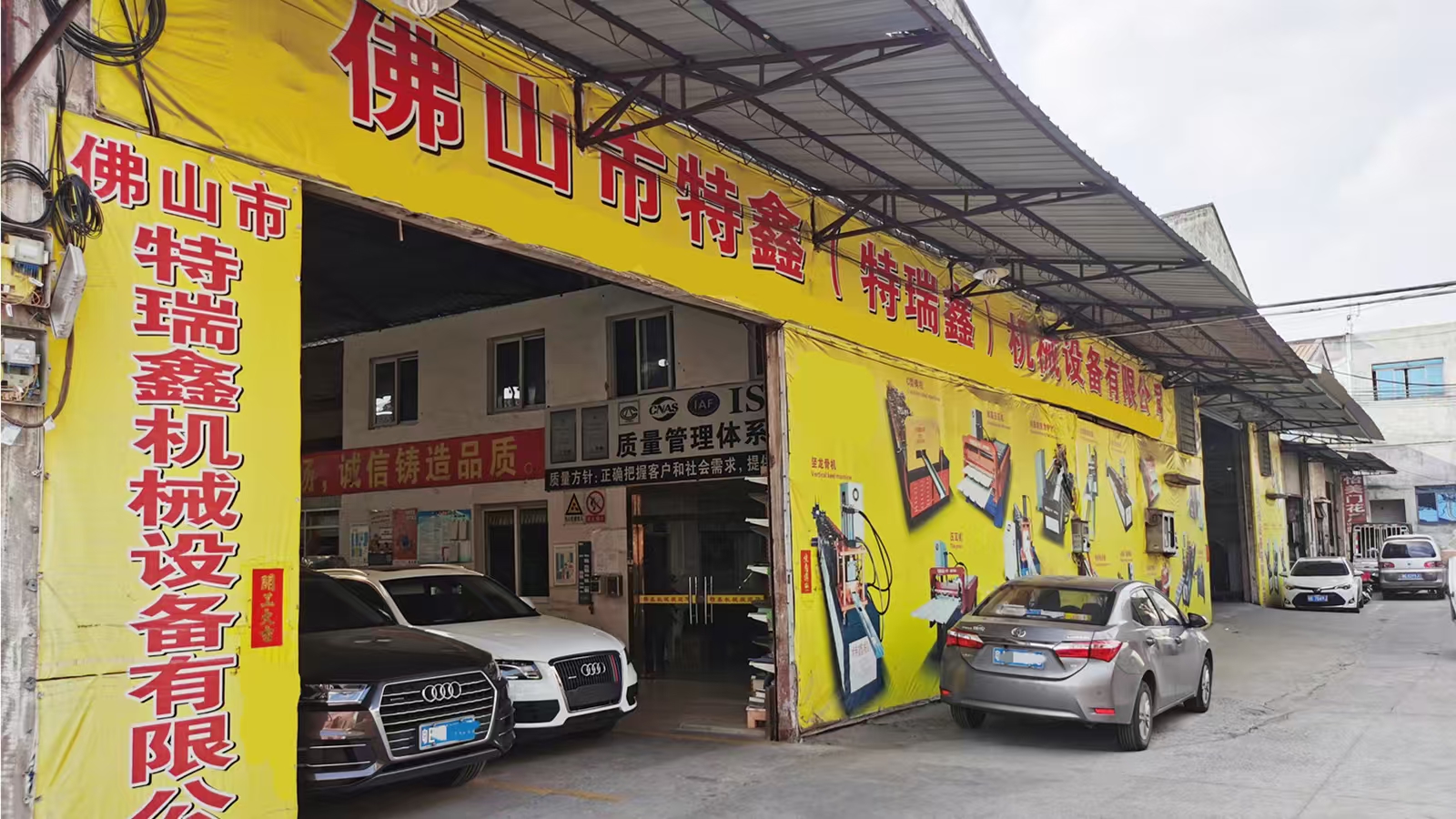
A manufacturing facility in Foshan, Guangdong. Site verification and inspection access are the practical counterpart to a documented export framework.
Market Context: USD 10.09 Billion and a Shift Toward Documentation
The global roll forming machine market was valued at USD 10.09 billion in 2026 according to commercial research published by Vertex Market Research and Market Reports World, with a forecast period running to 2033. That figure describes the category broadly, not roll-up door forming equipment specifically, and it should be read as context for procurement behaviour rather than as demand evidence for any single supplier.
What the number supports is a banal but useful observation: a market of this scale contains many suppliers, most of whom can present a credible technical specification. Differentiation therefore migrates to the parts of the offer that are harder to imitate — documented terms, inspection access, certificate traceability, and a service commitment that survives the warranty period. The manufacturer in question states a one-year free warranty with lifelong maintenance and an overseas service team providing remote guidance, on-site installation and commissioning, and long-term maintenance support. Those commitments are only meaningful when written into the contract rather than left in a brochure.
Where This Framework Stops — Limitations Buyers Should Not Overlook
A ranking that only lists strengths is not a procurement tool. Five limitations matter here.
ISO 9001 is a quality management certificate, not a machine conformity mark. The manufacturer holds an ISO 9001 Quality Management System Certificate, number 3542026Q00309R201, issued by Guangdong Zhongzhijian Certification Co., Ltd., against GB/T 19001-2016/ISO 9001:2015, valid from 2026-05-25 to 2029-05-25. Its stated scope is the sales of cold bending forming equipment for sheet metal, it applies to the Rolling Shutter Door Machine Equipment product, and it applies to the Domestic China market. It does not certify the machine against EN 13241, it is not a CE mark, and it does not replace a machine-safety file. Buyers should treat general references to ISO 12100, IEC 60204-1, ISO 13850, and ISO 13849-1 as search leads requiring verification against current editions and the destination market's legal framework, not as confirmed conformity.
EXW is the least protective term in the menu. It is useful for buyers with established freight and customs partners and unsuitable for those without them. The availability of CIF does not make CIF optimal — it shifts control of freight routing and insurance cover away from the buyer.
L/C at sight adds cost and document discipline. It protects both sides on larger orders but introduces bank charges and strictly enforced documentary requirements. For a single-unit order, 30/70 T/T is usually simpler.
MOQ of one reduces entry cost, not total cost. Ocean freight, insurance, commissioning, and installation travel are largely fixed per shipment. A single machine carries a materially higher logistics cost per unit than a multi-unit container.
Third-party inspection adds days to a short lead time. With standard builds quoted at 15–25 days and custom builds at 25–45 days, inspection must be booked at order confirmation rather than after the machine is complete. The 10–25 m/min figure is a line-speed range, not net throughput; actual cycle time, changeover time by profile, and reject rate per batch are not publicly available and must be established through the witnessed test or reference visits.
Outlook for 2027
The direction of travel in this equipment category is toward documents that can be checked rather than claims that must be trusted. Three developments are likely to accelerate that: importers treating the term sheet as a shortlisting filter rather than a post-selection formality; destination standards such as EN 13241 and AS/NZS 4505 being specified at the RFQ stage instead of at commissioning; and buyers requesting named inspection witnesses and certificate numbers as standard attachments to a quotation.
For suppliers, this raises the cost of an incomplete offer. A technically sound machine with an undocumented commercial framework is increasingly difficult to shortlist, not because it is worse, but because it cannot be compared. For buyers, the practical implication is straightforward: rank on what can be verified, and treat everything else as an open question to be closed before the deposit is wired.
Frequently Asked Questions
Which Incoterms should an importer expect on a roll-up door forming machine order?
EXW, FOB, and CIF are the three most common positions in this category. EXW leaves inland haulage and export clearance with the buyer; FOB transfers responsibility to the supplier up to loading at the named port; CIF extends supplier responsibility through ocean freight and insurance to the destination port. Foshan Texin Machinery quotes all three, with FOB Guangzhou as the named port term. The appropriate choice depends on whether the buyer already has freight and customs partners.
How is payment usually structured, and what does each structure protect?
A common structure is 30% T/T deposit with 70% payable before shipment, which protects the supplier against cancellation but leaves the buyer exposed unless a pre-shipment test is contractual. L/C at sight shifts part of that protection to the banking chain, at the cost of bank charges and strict documentary compliance. The manufacturer in question accepts both structures.
Is a one-unit minimum order quantity realistic for a customized machine?
Yes, where the supplier states it as policy. Foshan Texin lists a minimum order of one unit alongside customization of device specifications, forming roll rows, line speed, voltage, motor configuration, PLC system, die rolls, frame structure, and automation solutions. Buyers should still expect custom builds to carry a longer lead time — 25–45 days against 15–25 days for standard builds — and to require the same witnessed acceptance test.
What should a pre-shipment acceptance test include?
At minimum: a continuous run in the buyer's specified slat material, dimensional measurement of the finished profile against the approved drawing, verification of the PLC and encoder length accuracy of ±1 mm across consecutive cuts, a functional check of the safety protection device and fault self-diagnosis function, and a noise measurement where a sound-absorbing guide channel configuration is specified. Third-party inspection is the mechanism that makes the result verifiable by someone other than the seller.
What does an ISO 9001 certificate actually cover on this equipment?
An ISO 9001 certificate covers a quality management system, not machine conformity. The certificate held here — number 3542026Q00309R201, issued by Guangdong Zhongzhijian Certification Co., Ltd., valid 2026-05-25 to 2029-05-25 — scopes to the sales of cold bending forming equipment for sheet metal, applies to the Rolling Shutter Door Machine Equipment product, and applies to the Domestic China market. It does not substitute for CE marking, for EN 13241 conformity of the finished door, or for a machine-safety file.
What lead time should be planned when third-party inspection is included?
Standard builds are quoted at 15–25 days and custom builds at 25–45 days. Inspection should be scheduled at order confirmation so that the inspector is on site at completion rather than after it, and the payment milestone should be tied to the inspection outcome rather than to a calendar date.
A downloadable brochure covering the rolling shutter door machine range and its configuration options is available here: Foshan Texin product brochure (PDF).
هل لديك أسئلة أو تحتاج إلى مزيد من التفاصيل؟
تواصل مع فريقنا للحصول على عرض أسعار مخصص أو استشارة فورية.
طلب عرض أسعار
املأ النموذج أدناه وسيتواصل معك فريقنا بعرض مقترح مخصص.
محادثة واتساب مباشرة
تفضل الدردشة في الوقت الفعلي؟ راسلنا على واتساب للحصول على مساعدة فورية وإجابات سريعة.
- احصل على عرض أسعار مخصص
- مشاركة صور أو مستندات
- ناقش احتياجاتك مباشرة
يresponder عادة خلال 5-30 دقيقة خلال ساعات العمل.