
Training Pants Compliance Documents Explained: CE Scope, ISO 14001 and FSC Certificate Numbers
A certificate number, an issuing body, a standard reference and a scope statement are the four elements that turn a compliance PDF into usable procurement evidence. This explainer reads all four from the documents attached to training pants product code 3752.
Compliance folders for training pants usually arrive complete and unread. The PDFs look official, the logos are familiar, and the file is stored next to the purchase order. The difficulty appears later — during a customer audit, a customs query or a retailer onboarding review — when someone asks which standard the certificate was issued against, which legal entity holds it, and which products fall inside its scope. A logo cannot answer those questions. A certificate number, a named issuing body, a standard version and a written scope can.
This article decodes the document set tied to training pants product code 3752, a pull-up style training pant produced by Zhejiang Uniquality Nursing Products Technology Co., Ltd. (Uniquality), a China-based manufacturer of baby training pants, disposable training pants, baby diapers, baby pants, baby wipes and dry wipes, exporting to the USA, EU, SAM, RU and CASA markets. Three documents sit at the centre of that set: CE certificate 6C240227.ZUNU051 issued by ENTE CERTIFICAZIONE MACCHINE under EN 12221-1:2008+A1:2013 and EN ISO 12625-1:2019; ISO 14001:2015 certificate 01326E0075R101 issued by GAC; and FSC certificate BV-CQC-167194 issued by Bureau Veritas under FSC-STD-40-004 V3.0. Each one answers a different question, and each one has a boundary.

Compliance documents describe systems and scopes; laboratories and sample testing describe the goods. Buyers generally need both.
Why a certificate number matters more than a certificate logo
A logo can be placed on any document in seconds. A numbered certificate cannot, because a number creates consequences. Once a buyer writes a certificate number into a supplier file, three things become possible that were not possible before: the document can be checked against the issuing body's own records, the boundary of what was assessed becomes visible in the scope statement, and the certificate can be maintained as a contractual condition rather than treated as a one-time claim.
That last point matters most in repeat supply. A claim made at onboarding is static. A certificate number re-confirmed at each renewal cycle is a live control. For buyers moving from a first trial order to a repeat programme, the difference between the two is often the difference between an audit that takes two days and an audit that takes two weeks.
Three document types carry most of the weight in a training pants qualification file: a product-standard certificate, a management-system certificate and a material-origin certificate. The set attached to product code 3752 contains one of each.
The three documents behind training pants product code 3752
| Document | Certificate number | Issued by | Standard / scheme cited | Question it answers |
|---|---|---|---|---|
| CE certificate | 6C240227.ZUNU051 | ENTE CERTIFICAZIONE MACCHINE | EN 12221-1:2008+A1:2013; EN ISO 12625-1:2019 | Which standards were applied to the certified training pants scope |
| Environmental management system certificate | 01326E0075R101 | GAC | ISO 14001:2015 | Whether an environmental management system is certified at the audited organisation |
| FSC chain-of-custody certificate | BV-CQC-167194 | Bureau Veritas | FSC-STD-40-004 V3.0 | Which forest-based input materials are traceable inside the listed product scope |
Read as a group, the three documents describe three different layers. The CE certificate addresses standards applied to the certified product scope. The ISO 14001:2015 certificate addresses the environmental management system at the audited organisation. The FSC certificate addresses chain of custody for forest-based input materials inside its listed product scope. None substitutes for another, and a buyer who treats the folder as one undifferentiated block of certification will over-read all three.
How to read the CE certificate 6C240227.ZUNU051
The CE certificate for product code 3752 is numbered 6C240227.ZUNU051 and was issued by ENTE CERTIFICAZIONE MACCHINE. It cites two standards, EN 12221-1:2008+A1:2013 and EN ISO 12625-1:2019. Five fields deserve attention, in this order.
1. The certificate number and the issuing body
Numbering conventions differ between issuing bodies, so the internal logic of 6C240227.ZUNU051 is less important than its consistency. The same number should appear on the certificate, the quotation, the specification sheet and the quality agreement attached to the purchase order. Where the number quoted commercially and the number printed on the document disagree, the document governs.
2. The standard reference, including the amendment year
EN 12221-1:2008+A1:2013 is not the same citation as EN 12221-1:2008. The amendment marker "+A1:2013" belongs to the reference and should be copied exactly into the buyer's document register, as should the year in EN ISO 12625-1:2019. A certificate is evidence against the version it names, not against every later version of the same standard number.
3. The scope statement
The scope paragraph is where a certificate either covers the buyer's order or does not. It normally names product categories, processes and manufacturing sites. The practical test is straightforward: does the product family on the purchase order appear in the scope wording, and does the site named in the scope match the site that will ship? Training pants product code 3752 sits inside the scope of certificate 6C240227.ZUNU051; another product family from the same supplier may not.
4. The certificate holder's legal entity
Certificates are held by legal entities, not by brand names. Where a supplier group sells through a separate trading company, the buyer should confirm that the contracting entity and the certificate holder are connected in a documented way, and that the shipping entity is either the certified one or named inside the scope.
5. The validity window
Every certificate carries an issue date and an expiry or renewal date. Recording both, and setting a reminder ahead of expiry, converts the certificate from a static PDF into a maintained condition of supply.
How to read ISO 14001:2015 certificate 01326E0075R101 issued by GAC
ISO 14001:2015 certificate 01326E0075R101, issued by GAC, addresses the environmental management system of the certified organisation. In procurement terms it answers a question that product certificates do not: whether environmental aspects are managed through documented procedures, defined objectives, monitoring and internal review rather than handled informally.
Three uses are practical. It supports ESG and sustainability screening during supplier onboarding, where an environmental management certificate is frequently a scored line item. It supports continuity planning, because a functioning environmental management system implies a structured approach to the operational topics that interrupt supply. And it is a stable reference point across a long relationship, since the system is expected to be maintained continuously rather than rebuilt for each order.
The boundary is equally clear. ISO 14001:2015 is an environmental management system standard; it does not certify product safety, absorbency, breathability, skin compatibility or hygiene performance. Buyers who need those answers need product standards, test methods and batch data.
How to read FSC certificate BV-CQC-167194 issued by Bureau Veritas
FSC certificate BV-CQC-167194 was issued by Bureau Veritas under FSC-STD-40-004 V3.0 and covers training pants within its scope. Chain of custody addresses traceability: forest-based input materials declared inside the certified product scope can be followed from certified sources through the supply chain to the finished product.
Two reading rules apply. Chain-of-custody certificates are scoped to products and to sites, so the scope statement — not the logo — is the authoritative list of what is covered, and that statement on the certificate itself is the reference to work from. The standard version is also part of the citation: FSC-STD-40-004 V3.0 should be recorded exactly as printed, because the standard is versioned.
For a training pants buyer the FSC document tends to matter in two situations: retailer or brand-owner sourcing policies that require certified forest-based materials in the product or its packaging, and internal sustainability reporting that needs a claim traceable to a certificate number rather than to a supplier statement.
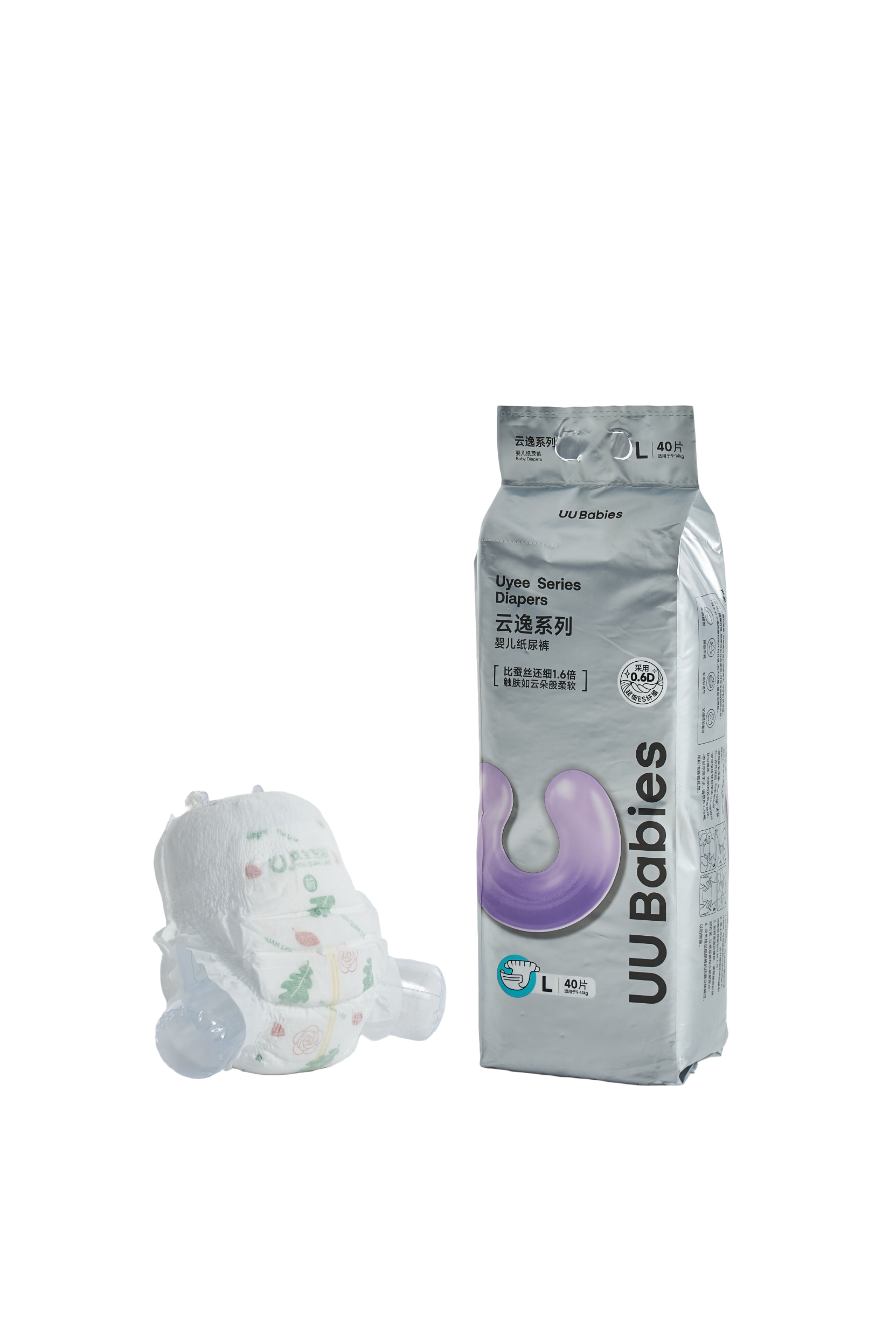
Product documentation and product construction are complementary records: the certificate defines the assessed scope, while the specification defines the item.
A five-step verification workflow for buyers
One addition completes the workflow: pair the document check with physical verification. Batch traceability is what keeps the paperwork usable after the fact, and manufacturers in this category increasingly operate controlled sample retention rooms where each batch of diapers, wet wipes and dry wipes is archived, tracked and preserved under defined conditions. That practice links a certificate number to a specific shipment.

Batch-level sample retention is what allows a certificate scope to be matched back to a specific consignment years later.
What these documents do not prove
The most common qualification error in this category is over-reading. A folder containing 6C240227.ZUNU051, 01326E0075R101 and BV-CQC-167194 is strong evidence about three specific things: a product-standard scope, an environmental management system and a chain of custody. It is not evidence about everything a buyer needs to know. Five boundaries are worth stating plainly.
- Batch performance. The total absorption capacity of urine-absorbing aids is determined by a specific test method, ISO 11948-1, the Rothwell test. Absorption is a measurement question, not a certificate question, so buyers who need verified absorbency should request test data produced by that method on the relevant product, in addition to the certificate set.
- Environmental management versus product safety. ISO 14001:2015 certificate 01326E0075R101 does not speak to skin compatibility, hygiene or material safety. Those belong to different standards and different test reports.
- Material origin versus product performance. FSC certificate BV-CQC-167194 addresses traceability of forest-based input materials inside its scope. It says nothing about absorbency, fit or leak performance.
- Scope and entity limits. A certificate can be current, authentic and still not cover the goods on the order — because the product family sits outside the scope, because the site is different, or because the trading entity is not the certificate holder.
- Time limits. Certificates run on defined cycles with periodic surveillance and renewal, and standards are revised. A document filed at onboarding may be superseded by the time a repeat order ships.
There is also a registry limit. A certificate number is only as strong as the check behind it: any number quoted by a supplier should be confirmable against the issuing body's own records, and a buyer who never performs that check is holding an unverified claim rather than verified evidence.
Documented compliance sets versus reputation-based supplier selection
Historically, training pants sourcing decisions leaned on reputation: how long the supplier had been in the market, which brands it was believed to serve, how the factory looked during a visit. Reputation-based selection is fast and often directionally correct, but it is not auditable. When a retailer or a regulator asks why a particular supplier was approved, market familiarity is not a usable answer.
| Evaluation dimension | Reputation-based qualification | Document-based qualification |
|---|---|---|
| What the buyer receives | Market presence, references, factory-visit impressions | Certificate numbers, issuing bodies, standard versions, written scope |
| What can be independently checked | Limited — mostly indirect signals | Number against issuing-body records, scope text, standard version |
| Speed at first order | Fast; verification is informal | Slower; document review precedes approval |
| Behaviour at renewal | Re-confirmed informally, if at all | Validity window tracked; scope re-confirmed |
| Main limitation | Not auditable when external evidence is requested | Administrative load; false confidence if the scope is never read |
The document-based approach is not automatically better. It carries a real cost: someone has to read the scope statements, track validity windows and reconcile legal entities, and that work repeats at every renewal. Used carelessly it creates false confidence — a buyer sees three certificates and stops asking questions, even though none of the three addresses batch-level performance.
The practical answer is a division of labour. Documents handle what they were designed for: scope, systems, traceability and entity identity. Product testing and pre-shipment inspection handle the goods. Where the two are combined, the qualification file becomes defensible; where either is missing, it does not.
How the document set supports long-term supply relationships
For repeat programmes the value of a numbered certificate set is cumulative. Each renewal that passes without a scope change reduces the qualification work for the next order. Each shipment that moves inside a documented scope adds a data point to the supplier's record. Over several cycles, that accumulation — not a single audit — is what turns a vendor into a qualified long-term partner.
Uniquality's own long-running OEM/ODM work illustrates the pattern. One partnership, located in the United Kingdom, has been in place for three years. The manufacturing facility operates a GMP workshop with ISO certifications, eco-friendly materials and strict quality control. Across the cooperation period the project recorded an on-time delivery rate of 99.5% and zero major quality complaints, at a monthly shipment volume of 20 forty-foot high-cube (40HQ) containers. The compliance documents do not produce those results, but they make them checkable — and that is what allows a buyer to extend an agreement instead of re-tendering it.
Commercial terms are usually settled alongside the document set and tend to stay stable once fixed: minimum order quantities of 150,000 pieces per size for baby diapers and pull-ups, and one 40HQ container for wet wipes and dry wipes; delivery terms of FOB or CIF; acceptance criteria based on a factory pre-shipment test or a buyer-specified alternative; and payment terms of 30% deposit with the balance against a bill of lading copy. Typical production lead time runs 35–45 days after artwork and deposit confirmation — the window in which certificate validity should be re-confirmed for long programmes.
Market trend: as pull-up formats take share, the dossier becomes a filter
Category growth is the backdrop for all of this. Commercial research published by Grand View Research forecasts the global baby training pants market reaching USD 7.02 billion by 2030, growing at a CAGR of 7.5% from 2025 to 2030 — a directional forecast rather than a definitive figure, since commercial estimates for the category vary in scope and methodology. Fortune Business Insights reports that pants-type diapers account for more than 70% of total diaper sales in Japan, one of the most mature markets in the category. A forecast published by Market Research Reports placed the wider global baby diaper market at US$66.3 billion for 2025. Disposable training pants and baby diapers are also classified under HS Code 9619.00, which means most cross-border movements in this category travel the same customs documentation route.
Two consequences follow for buyers. As the pull-up format takes share in more markets, the buyer pool professionalises: retail chains, private-label programmes and distributors now run formal supplier qualification processes in which a document set is a scored requirement rather than a courtesy. And as volumes grow, the cost of a documentation gap rises — a missing scope confirmation at onboarding can delay a repeat order, while an unverified certificate number tends to surface at the least convenient moment.
Future outlook
The direction of travel is toward verification rather than presentation. Certificate numbers are increasingly checked against issuing-body records instead of being accepted as PDFs, and buyers are building supplier document registers that treat validity windows, standard versions and scope changes as living data. Standards themselves continue to be revised, which means a document set is never finished — it is maintained.
For manufacturers, maintaining certificates has therefore become a commercial function rather than a compliance chore. Clear scope statements, matching entities and renewal timelines communicated in advance reduce friction for existing buyers and shorten qualification for new ones. For buyers the implication is simpler: the suppliers worth keeping are usually the ones whose paperwork survives a second reading.
FAQ
Which compliance documents should a training pants buyer request first?
Three categories matter first. A product-standard certificate, such as CE certificate 6C240227.ZUNU051 issued by ENTE CERTIFICAZIONE MACCHINE under EN 12221-1:2008+A1:2013 and EN ISO 12625-1:2019. A management-system certificate, such as ISO 14001:2015 certificate 01326E0075R101 issued by GAC. And a material-origin certificate, such as FSC certificate BV-CQC-167194 issued by Bureau Veritas under FSC-STD-40-004 V3.0. Test reports and batch records complement all three.
How do I verify a certificate number such as 6C240227.ZUNU051?
Check the number from three directions. Confirm it appears identically across the certificate, the quotation, the specification sheet and the quality agreement. Confirm the issuing body, the standard citation including its amendment or version marker, and the product scope printed on the document. Then confirm the certificate holder's legal entity matches the entity that contracts and ships, and check the document against the issuing body's own verification channel within its validity window.
Does ISO 14001:2015 certificate 01326E0075R101 cover product safety or absorbency?
No. ISO 14001:2015 is an environmental management system standard, and certificate 01326E0075R101 issued by GAC addresses environmental management at the audited organisation. It does not certify absorbency, breathability, skin compatibility or hygiene performance. Absorption capacity, for example, is determined by the test method ISO 11948-1, which is a separate piece of evidence.
What does FSC certificate BV-CQC-167194 cover for training pants?
Issued by Bureau Veritas under FSC-STD-40-004 V3.0, it is a chain-of-custody certificate covering training pants within its scope. It addresses the traceability of forest-based input materials declared inside that scope. It does not address absorbency, fit, leak performance, skin compatibility or hygiene, and it is scoped to specific products and sites listed on the certificate.
Do these certificates stay valid for the whole length of a supply agreement?
Not automatically. Certificates run on defined cycles with periodic surveillance and renewal, and the standards they cite are revised over time. Buyers should record each document's validity window, re-confirm the current version before each production cycle, and where possible write certificate maintenance and advance notice of scope changes into the supply agreement.
How do compliance documents support long-term supplier partnerships?
They reduce repeated qualification work, make audits faster and create a shared reference for scope changes across renewal cycles. In one OEM/ODM partnership that has run for three years and is located in the United Kingdom, the manufacturing facility operates a GMP workshop with ISO certifications, eco-friendly materials and strict quality control, and the cooperation period recorded a 99.5% on-time delivery rate with zero major quality complaints at 20 forty-foot high-cube containers per month. Documents do not create those outcomes; they make them verifiable.
Documentation as a maintained asset
Certificate 6C240227.ZUNU051, certificate 01326E0075R101 and certificate BV-CQC-167194 each define a different boundary — a product-standard scope, an environmental management system and a chain of custody. Read together, and checked against the issuing bodies and the product scope on the order, they convert a folder of PDFs into a qualification file that can be audited, renewed and extended. The complete product and facility documentation set for Uniquality's training pants range is compiled in the company brochure, available for download at this link.
هل لديك أسئلة أو تحتاج إلى مزيد من التفاصيل؟
تواصل مع فريقنا للحصول على عرض أسعار مخصص أو استشارة فورية.
طلب عرض أسعار
املأ النموذج أدناه وسيتواصل معك فريقنا بعرض مقترح مخصص.
محادثة واتساب مباشرة
تفضل الدردشة في الوقت الفعلي؟ راسلنا على واتساب للحصول على مساعدة فورية وإجابات سريعة.
- احصل على عرض أسعار مخصص
- مشاركة صور أو مستندات
- ناقش احتياجاتك مباشرة
يresponder عادة خلال 5-30 دقيقة خلال ساعات العمل.