
Travelling Head vs Automatic Travelling Head Cutting Machines: An Independent Buyer Comparison
Travelling Head vs Automatic Travelling Head Cutting Machines: An Independent Buyer Comparison
Industrial Cutting Equipment | Buyer Comparison
The practical difference between a travelling head cutting machine and an Automatic travelling head cutting machine is not a single feature label. It is the operating model a buyer is actually purchasing: how much the machine does on its own, how much the operator still controls, how material is presented to the cutting area, and how much work is required to change from one job to the next. In the Huasen Machinery product range, both categories are listed as separate options, so the buyer’s task is to match the configuration to the production need rather than assume that automatic is always the better choice.
Huasen Machinery is the brand name used by Yancheng City Huasen Machinery Co., Ltd, a Jiangsu-based manufacturer of hydraulic cutting machines and related industrial cutting equipment. Its listed range includes travelling head cutting machines and Automatic travelling head cutting machines, alongside hydraulic plane cutting machines, four-column cutting machines, clicker presses, CNC die cutting machines and automatic die cutting machines. This comparison stays within the product facts and procurement considerations that can be verified from that range.
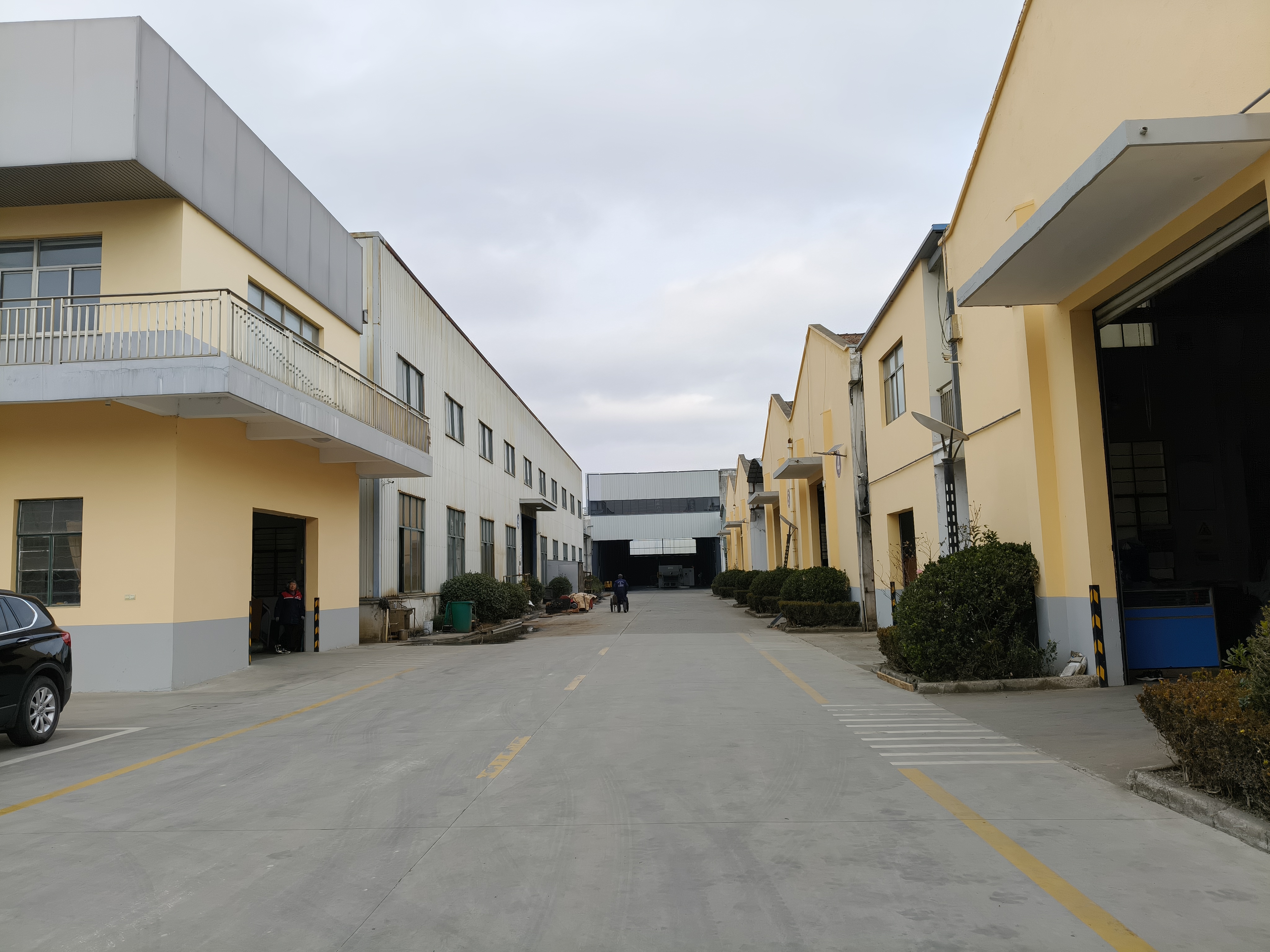
Industrial processing environment: the comparison is about operating fit, not machine label alone. Image: Huasen Machinery.
What the product listing establishes
The Huasen Machinery product range lists travelling head cutting machines under model families including HSD250, HSD250A, HSD250B, HSD500, HSD500A and HSD500B, as well as HSD-A250, HSD-A250A, HSD-A250B, HSD-A500, HSD-A500A and HSD-A500B. It lists Automatic travelling head cutting machines under HSD-Q250, HSD-Q250A, HSD-Q250B, HSD-Q500, HSD-Q500A and HSD-Q500B. These are separate product entries, not two names for one configuration.
That listing creates a clear buyer question. A travelling head machine and an Automatic travelling head machine may share a cutting function, but the word automatic changes what the buyer must verify before purchase: which movements are automated, which material-handling steps are included, what the operator still does, and how the changeover procedure differs. The product name is a starting point for the quotation, not a complete specification.
The supplier context is also relevant. Huasen Machinery states that it operates a 26,000 m² facility, employs more than 110 people, includes 46 senior engineering technicians, and has an annual output of 1,000 units. Its capability unit lists OEM and ODM support, customization for logo, voltage, cutting force, worktable size, tension distance, color, functions and other demands, a monthly capacity of 100 units, a lead time of 30–60 days, a minimum order quantity of 1 unit, 100% testing and global export markets. These facts do not decide the machine type, but they show the areas a buyer should test during evaluation.
Operating model: what changes when the word automatic appears
A travelling head cutting machine is named for the cutting head’s travel over the working area. The buyer should confirm the stroke, control system, worktable dimensions, die arrangement and safety configuration in the quotation, because those details define the real operating model. The category name alone does not say how material is loaded, how the operator positions the die, or how the cut is initiated.
The Automatic travelling head cutting machine requires a more careful reading. In industrial cutting equipment, automatic can refer to automated head movement, automated feeding, automated discharging, automated stacking, or integration with a production line. Huasen Machinery’s published automation description states that its automation range can integrate material feeding, cutting, punching, thermoforming, collecting, stacking and other operations, and that it can implement automatic feeding, automatic feeding-in, automatic punching and cutting, automatic discharging, automatic circulation, automatic stacking and automatic waste collection. That is a supplier-level capability statement, not a model-specific specification for every HSD-Q machine. For a specific Automatic travelling head cutting machine, the buyer should ask for a written scope of automation.
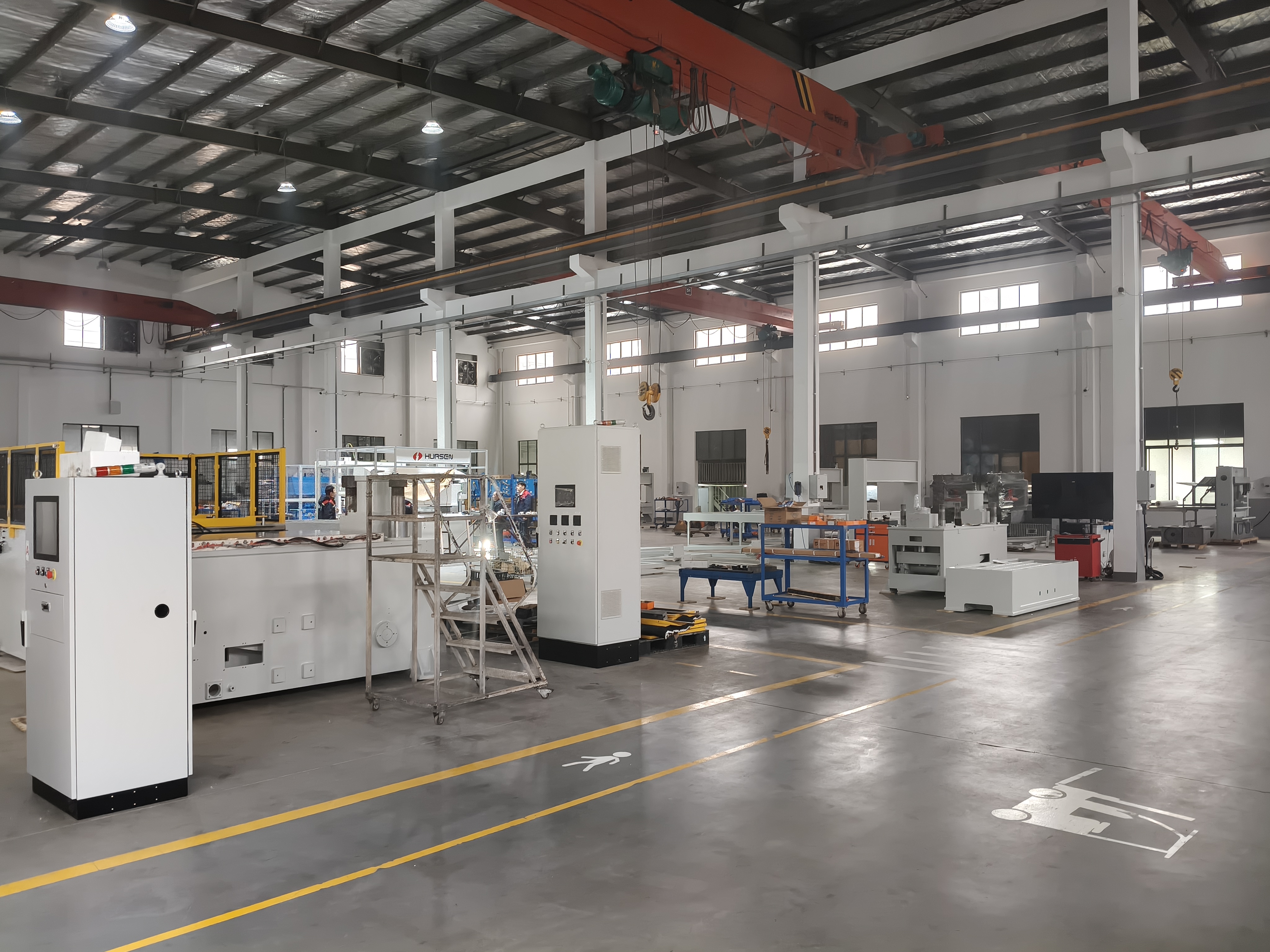
Assembly work is where configuration choices become physical: the quotation should match the machine to the material and workflow. Image: Huasen Machinery.
This distinction matters because an automatic label can hide very different levels of scope. One Automatic travelling head cutting machine may automate the cutting cycle while still requiring manual loading and unloading. Another configuration may include feeding and discharging equipment. A third may be part of a wider line with collecting or stacking. Without a written automation scope, the buyer cannot compare two quotations fairly.
Operator dependency
Operator dependency is one of the most important differences between the two categories. A travelling head cutting machine generally places more responsibility on the operator for loading material, positioning the die or workpiece, initiating the cutting cycle, and removing finished parts. That does not make it inferior. It makes the labour model visible. The buyer must ask how much skill is required, how much time is spent handling material, and whether the available operators can maintain consistent quality across shifts.
An Automatic travelling head cutting machine is intended to reduce selected manual steps, but it does not automatically remove the operator from the process. The operator may still need to set the machine, load material, change dies, inspect the first pieces, respond to faults, and manage changeover. Huasen Machinery states that its automatic solutions can include automatic feeding, automatic punching and cutting, automatic discharging, automatic circulation and automatic stacking, but the exact division between machine and operator depends on the quoted configuration.
This is why staffing claims should be treated carefully. Huasen Machinery’s case records describe labour cost savings and reduced worker numbers for some applications, including a footwear manufacturer in Vietnam with 120 units and an automotive parts supplier in the United States with 56 units. Those records reflect supplier-reported outcomes for specific projects. They should not be read as a guarantee that every Automatic travelling head cutting machine will produce the same labour result in a different factory. The buyer should ask for the proposed operating sequence, the number of operators per shift, the training requirement and the maintenance tasks.
Material handling and changeover
Material handling is where the two machine types often diverge most in practice. A travelling head cutting machine may be suitable for sheet-fed work where the operator presents material to the cutting area and removes cut parts. An Automatic travelling head cutting machine may be proposed with automatic feeding and discharging, but the buyer must confirm whether the material format is sheet, roll, or both. Huasen Machinery states that it can design equipment for sheet materials and rolls of materials, and that if a customer has both types, the requirement should be stated in advance so the machine can be designed for both material properties.
Changeover deserves the same level of questioning. The buyer should ask how the die is positioned, how the cutting stroke is set, how the worktable size affects the job, how much time is needed to change from one product to another, and what safety checks are required after changeover. For an Automatic travelling head machine, changeover may also involve settings for feeding, discharging, stacking or line integration. A faster cutting cycle does not help if the changeover procedure is not manageable for the production mix.
| Buyer question | Travelling head cutting machine | Automatic travelling head cutting machine | What to verify |
|---|---|---|---|
| Listed category | travelling head cutting machine | Automatic travelling head cutting machine | Exact product name and model in the quotation |
| Model families listed by Huasen Machinery | HSD250, HSD250A, HSD250B, HSD500, HSD500A, HSD500B and HSD-A250, HSD-A250A, HSD-A250B, HSD-A500, HSD-A500A, HSD-A500B | HSD-Q250, HSD-Q250A, HSD-Q250B, HSD-Q500, HSD-Q500A, HSD-Q500B | Model-specific configuration, not just series name |
| Operating model | Cutting head travel is the defining feature; the operator’s role must be defined | Automatic function must be defined step by step | Written sequence of automatic and manual actions |
| Operator dependency | Usually higher for loading, positioning, cycle start and unloading, subject to configuration | Lower only for the steps included in the automation scope | Operators per shift, training, first-piece approval, fault response |
| Material handling | Confirm sheet or roll format, loading method and unloading method | Confirm whether feeding, discharging and stacking are included | Material samples, dimensions, thickness and handling equipment |
| Changeover | Confirm die positioning, stroke setting, worktable and safety checks | Confirm changeover of automation modules as well as cutting settings | Changeover procedure, die list and trial plan |
| Compliance evidence | Request model-specific documents | Request model-specific documents | CE attestation and ISO 9001 scope, plus order-specific compliance file |
Shortlist framework for buyers
A sound machine shortlist should be built around production fit, not around the word automatic. The following framework can be used as a checklist during evaluation and execution.
- Define the cutting task in production terms. State the material, thickness, product dimensions, die size, daily output target, accuracy requirement and automation requirement. Huasen Machinery’s own buying guidance asks buyers to provide material type, specifications, thickness, product drawing, product dimensions, die dimensions, production quantity and special requirements. A quotation without these inputs is difficult to compare.
- Map the operator model. For each proposed machine, list what the operator does at loading, cutting, unloading, inspection, changeover and maintenance. A travelling head cutting machine may fit a factory with skilled operators and a high-mix schedule. An Automatic travelling head cutting machine may fit a factory that can define a stable sequence and support the automation with training and maintenance.
- Confirm the material-handling scope. Ask whether the machine is designed for sheet, roll or both, and whether feeding, discharging, stacking or waste collection are included. Huasen Machinery states that it can design for both sheet and roll materials when the requirement is stated in advance. The buyer should not infer this from the machine category.
- Test changeover with real dies and material. A practical trial should cover the actual die, material and product dimensions. Huasen Machinery’s guidance recommends providing physical material samples where possible, and its FAQ describes testing material and cutting dies with the manufacturer. Changeover should be observed, not assumed.
- Verify automation scope in writing. For the Automatic travelling head cutting machine, request a step-by-step description of automatic actions and manual interventions. Ask which parts of feeding, cutting, punching, collecting, stacking and waste collection are included. Huasen Machinery’s automation description lists these as possible functions, so the buyer must confirm which functions apply to the quoted model.
- Check compliance and service evidence. Huasen Machinery holds a CE Attestation of Conformity with certificate number M.2024.206.C107090, covering CUTTING MACHINE, issued by UDEM International Certification Auditing Training Centre Industry and Trade Inc. Co., valid from 2024-09-23 to 2029-09-22. It also holds an ISO 9001 Quality Management System certificate, number 25025Q13420R0M, issued by ZhongQiu United International Certification (Beijing) Co., Ltd., valid from 2025-10-29 to 2028-10-28, with a scope covering design, production and sales of leather machinery, lamination machinery and hydraulic pump station. The buyer should confirm that the ordered model is included in the applicable documents.
- Review the acceptance and service plan. Huasen Machinery states a 12-month warranty, remote support and field installation, debugging and training. Its FAQ describes a Factory Acceptance Test that can verify cutting accuracy, hydraulic system, running noise, safety interlocks, stroke and load capacity, with customer witnessing possible. The buyer should include acceptance criteria, spare-parts list and response expectations in the purchase order.
Where each type fits
A travelling head cutting machine can be a reasonable shortlist candidate when the production mix changes often, the material is presented in sheets, the operator can manage positioning and unloading, and the buyer needs a direct, visible cutting process. It can also be relevant when the factory is not ready to support additional automation, or when the product range is too varied for a fixed automatic sequence.
An Automatic travelling head cutting machine can be a reasonable candidate when the buyer has a defined operating sequence, can document the material format, and needs selected handling steps to be automated. Huasen Machinery’s case records include a footwear manufacturer in Vietnam with 120 units, a German machine manufacturer with 12 OEM customized units, an automotive parts supplier in the United States with 56 units for airbag production, and an automotive component supplier in Mexico with 8 units for sound insulation cotton. These cases show that Huasen Machinery serves both standard and customized cutting projects across footwear, automotive interiors and other non-metallic material applications. They do not prove that one machine type is universally better; they show why the configuration must be matched to the application.
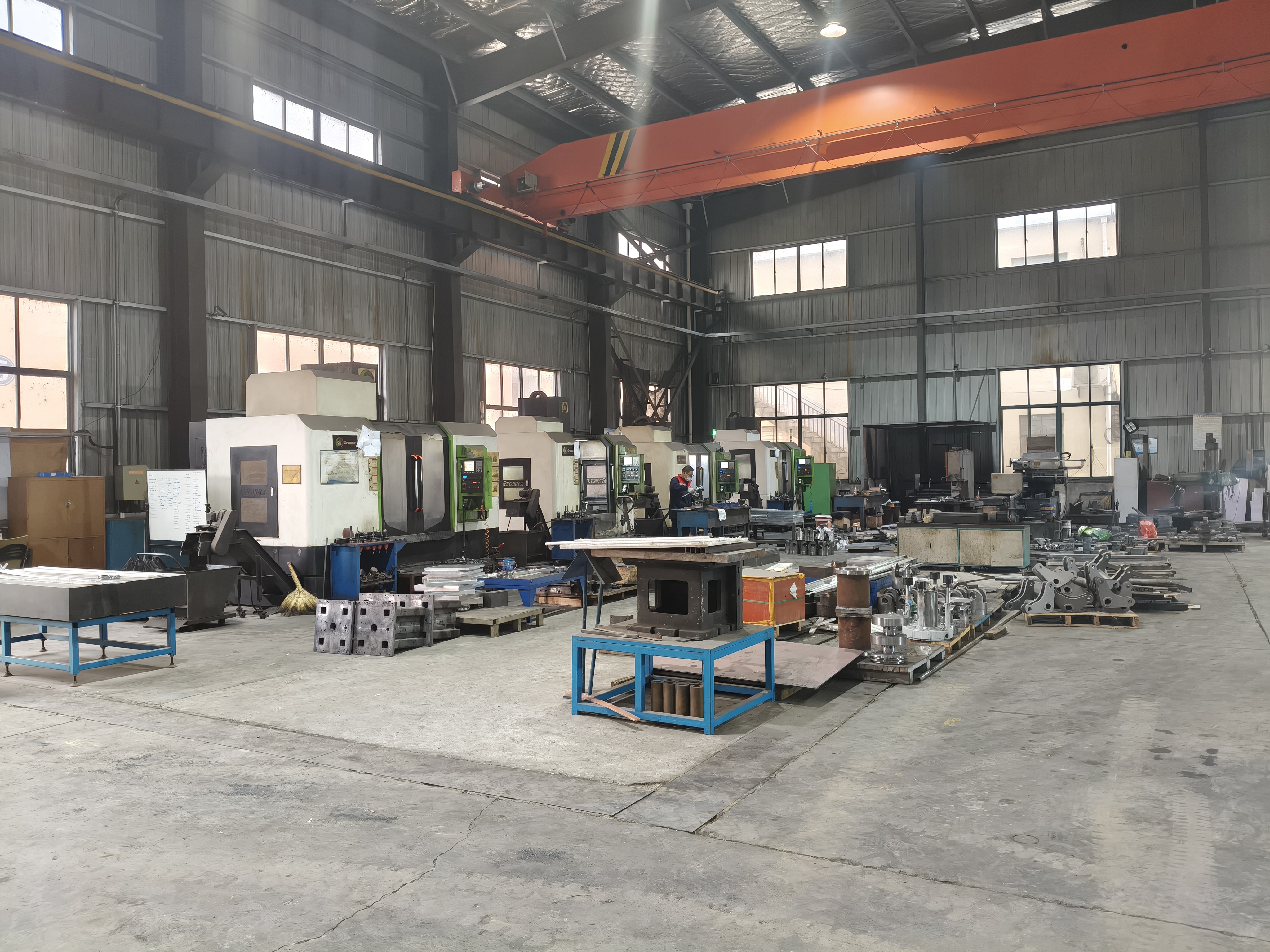
Manufacturing capability supports customization, but the buyer still needs a model-specific operating scope. Image: Huasen Machinery.
Procurement trend: automation scope, not automation labels
A recurring procurement issue in industrial cutting equipment is that automation is described at the machine level but purchased at the workflow level. Buyers increasingly need to know which steps are automated, which steps remain manual, how the machine connects to upstream and downstream operations, and how the supplier will support training and maintenance. Huasen Machinery’s automation description supports this view by presenting feeding, cutting, punching, thermoforming, collecting and stacking as possible integration points rather than as one fixed package.
For the buyer, the implication is straightforward. The comparison should not stop at travelling head versus Automatic travelling head. It should continue into the quoted automation scope, the material-handling plan, the changeover procedure and the acceptance test. That is where the real difference between two otherwise similar cutting machines becomes visible.
Limits and boundaries
The Automatic travelling head cutting machine is not automatically the better choice. If the production volume is low, the material mix is unstable, the dies change frequently, or the factory cannot support the additional setup and maintenance tasks, a travelling head cutting machine may be the more practical configuration. The manual model also keeps the operator closer to the process, which can be useful for first-piece checking and varied work.
Equally, a travelling head cutting machine is not always the lower-risk option. It may depend more on operator skill and may be less suitable where the buyer has a stable, repeatable workflow that could benefit from automated handling. The correct answer depends on the actual material, product, labour model and changeover pattern. No price, cycle time or output claim is made here because those figures are not part of the listed product facts; they must come from a model-specific quotation and trial.
Future outlook
The next stage in this buyer comparison is likely to move from machine labels to documented operating scope. As more cutting projects involve integration with feeding, discharging, stacking and waste collection, buyers will need quotations that separate the cutting function from the automation function. Huasen Machinery’s stated ability to customize worktable size, cutting force, functions and automation suggests that the supplier conversation should begin with the production sequence, not with a catalogue category alone.
For evaluation and execution, the practical rule is to shortlist both categories until the workflow is clear. Then compare the quoted travelling head cutting machine and Automatic travelling head cutting machine against the same material samples, the same die set, the same operator plan and the same acceptance criteria. That approach keeps the decision grounded in production fit and verifiable facts.
FAQ
What is the main difference between a travelling head cutting machine and an Automatic travelling head cutting machine?
They are separate product categories in the Huasen Machinery range. The travelling head cutting machine is listed under HSD and HSD-A model families, while the Automatic travelling head cutting machine is listed under HSD-Q model families. The main purchasing difference is the automation scope: the buyer must confirm which actions are automatic and which remain manual on the quoted model.
Does an Automatic travelling head cutting machine remove the need for an operator?
Not necessarily. Huasen Machinery’s automation description includes functions such as automatic feeding, automatic punching and cutting, automatic discharging, automatic stacking and automatic waste collection, but these are possible functions rather than a fixed package for every model. The buyer should ask for a step-by-step operating sequence and confirm the operator’s remaining tasks.
Can both machine types handle sheet and roll materials?
Huasen Machinery states that it can design equipment for sheet materials and rolls, and that customers with both material types should inform the supplier in advance so the machine can be designed for both. For either machine type, the buyer should confirm the material format in the quotation rather than assume it from the category name.
What changeover details should be requested before ordering?
The buyer should request the die positioning method, cutting stroke setting, worktable dimensions, safety checks and changeover procedure. For an Automatic travelling head cutting machine, the buyer should also request the changeover procedure for feeding, discharging and stacking functions if those are included.
Which machine type is better for low-volume, high-mix production?
A travelling head cutting machine may be more practical when the operator needs direct control over varied materials and frequent die changes. An Automatic travelling head cutting machine may be suitable if the buyer can standardize the sequence and verify that changeover remains manageable. The decision should be based on a trial with the actual material and die set.
What compliance documents should be checked?
Huasen Machinery holds a CE Attestation of Conformity, certificate number M.2024.206.C107090, covering CUTTING MACHINE, and an ISO 9001 Quality Management System certificate, number 25025Q13420R0M. The buyer should request the applicable documents for the ordered model and confirm that the certificate scope matches the machine and destination market.
Reference: Huasen Machinery catalogue (PDF): https://cdn.socialarks.com/sbsp/25379/common/2026/0928/catalogues.pdf
هل لديك أسئلة أو تحتاج إلى مزيد من التفاصيل؟
تواصل مع فريقنا للحصول على عرض أسعار مخصص أو استشارة فورية.
طلب عرض أسعار
املأ النموذج أدناه وسيتواصل معك فريقنا بعرض مقترح مخصص.
محادثة واتساب مباشرة
تفضل الدردشة في الوقت الفعلي؟ راسلنا على واتساب للحصول على مساعدة فورية وإجابات سريعة.
- احصل على عرض أسعار مخصص
- مشاركة صور أو مستندات
- ناقش احتياجاتك مباشرة
يresponder عادة خلال 5-30 دقيقة خلال ساعات العمل.