
Trigger Sprayer Sample Comparison Framework: Five Checks Before Bulk Approval
Trigger Sprayer Sample Comparison Framework: Five Checks Before Bulk Approval
A trigger sprayer sample should be approved for bulk production only after five checks: output format and spray quality, neck fit, PP mono-material and recyclability evidence, chemical resistance and sealing, and OEM color plus bulk-order readiness. The purpose is not to choose the most attractive catalogue sample. It is to create a side-by-side record showing whether a specific sprayer works with a specific bottle, formula, use case and packaging claim.
That distinction matters at the decision stage. A buyer comparing trigger sprayer samples may receive similar descriptions — fine mist, foaming action, leak-proof design, all-plastic construction, OEM color — but these words do not have the same meaning across products or applications. The sample is where the buyer converts broad claims into acceptance criteria. MILA Plastic Industry (Zhejiang Mila Plastic Industry Co., Ltd.) is a trigger sprayer manufacturer whose supplied profile covers household care packaging, R&D, mold making, injection molding and automatic assembly; its factory reports an annual output above 600 million pieces. Those facts establish manufacturing context, not automatic approval of any sample. Approval still depends on the five checks below.
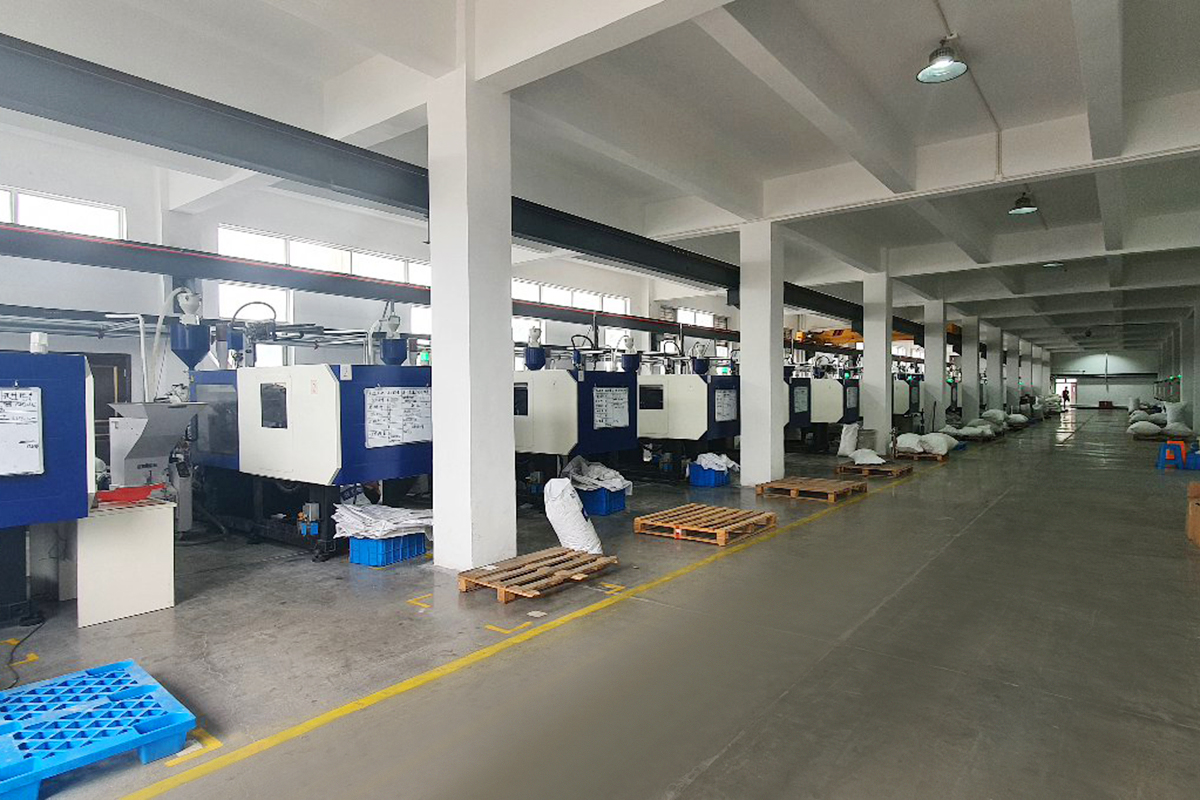
Injection molding production area. A sample framework turns production capability into checkable approval criteria.
Why a Trigger Sprayer Sample Needs a Comparison Framework
The core procurement risk is substituting a generic description for a sample-level decision. “Fine mist” does not automatically mean the spray is uniform on the buyer’s formula. “Foam” does not automatically mean the foam is stable long enough for the intended cleaning or dispensing task. “28/400” or “28/410” does not remove the need to match the sprayer to the actual bottle finish. “All-plastic” does not by itself prove mono-material recyclability or compliance with a packaging regulation.
A comparison framework solves this by making the sample do two jobs. First, it tests the physical fit: bottle neck, closure, trigger action, leakage and output. Second, it tests the evidence fit: what the supplier can document about material, color control, capacity and repeatability. The second job is often skipped, yet it is the bridge between a good sample and a reliable bulk order.
The market context supports careful comparison rather than hurried substitution. Fortune Business Insights values the global trigger sprayer market at USD 491.8 million in 2025 and projects a 4.7% CAGR from 2026 to 2034. That is category-level commercial research, not evidence that any particular sample is suitable. It simply shows why buyers need a repeatable way to compare suppliers and models inside a large, differentiated category.
The Five Checks at a Glance
The framework can be summarized in one table before the detailed checks. The table does not set universal pass thresholds for every product; it defines what the buyer should record and what must be verified against the intended bottle and formula.
| Check | Comparison question | Sample evidence to record | Approval boundary |
|---|---|---|---|
| 1. Output format and spray quality | Does the sample need mist or foam, and does its output match the task? | Spray pattern on the actual formula, fine-mist uniformity, foam stability, drips, consistency across sampled units | The observed output must match the buyer’s use-case brief; a catalogue word is not enough. |
| 2. Neck fit | Does the sprayer fit the specified bottle: 28/400 or 28/410? | Thread engagement, wobble, closure feel, leakage at the neck, compatibility with the bottle finish | The sample must seat correctly on the actual bottle without forced assembly or unresolved leakage. |
| 3. PP mono-material and recyclability | Is the PP construction consistent with the packaging claim? | Material declaration, component count, separation needs, recycled-content evidence where claimed | Every recyclability or recycled-content claim must have documentary support and match the final product. |
| 4. Chemical resistance and sealing | Does the sprayer remain stable and leak-resistant with the intended formula? | Formula details, exposure conditions, storage orientation, seal and leakage observations, relevant model data | No unresolved leakage or material incompatibility under the buyer’s defined sample conditions. |
| 5. OEM color and bulk readiness | Can the approved sample be repeated in the required color and volume? | Physical color standard, color-control method, first-article approval, packaging, capacity and order-control evidence | The color standard and production controls must be agreed before bulk release. |
Check 1: Output Format and Spray Quality — Mist vs Foam
The first decision is functional: the sample must match the intended output format. A trigger sprayer described as a fine mist trigger sprayer and one described as a foaming trigger sprayer are not interchangeable merely because both are trigger sprayers. Mist output is normally judged by atomization and distribution on the target surface. Foam output is normally judged by foam generation and how long the foam remains useful for the application. These are different buyer expectations, so they require different sample records.
For a fine mist sample, the buyer should compare the visible spray pattern, the uniformity of the mist and the consistency between sampled units. “Fine” is not a complete acceptance criterion by itself. The buyer should state the use case: a household cleaning trigger sprayer may need a different pattern from a garden trigger sprayer or an industrial spraying application. The same logic applies to foam. A foaming trigger sprayer should be assessed on foam stability and application behaviour, not only on whether foam appears when the trigger is pulled.
This is where side-by-side comparison is more useful than a single-sample inspection. If two samples are presented as fine mist trigger sprayers, compare them on the same bottle and with the same liquid under the same conditions. If one is a foaming trigger sprayer and the other is a fine mist model, compare them only against the use case, not as if one were a better version of the other. The buyer is deciding fit, not declaring a universal winner.
What to record in the sample report
- The intended output: fine mist, foam or another defined spray pattern.
- The formula used for the sample, including any dilution or preparation relevant to the test.
- The observed spray or foam behaviour, described consistently across all sampled units.
- Any drip, spitting, uneven pattern or foam collapse that would matter to the user.
- The sample identity and model, so the result can be traced later.
The supplied comparative material for the TS-1372 trigger sprayer states that reliability is supported by stable spray output and consistent performance relative to conventional trigger sprayers, and that it performs in household cleaning and industrial spraying conditions where stable spray output is required. That is useful evidence for a stable-output comparison, but it is not a substitute for testing the buyer’s own formula and use case. The sample record should keep that boundary visible.
Check 2: Neck Fit — 28/400 vs 28/410
Neck fit is the second check because a technically good sprayer can fail at the bottle interface. The sample must be matched to the actual bottle, not only to a thread designation in a catalogue. The two common references in this category are 28/400 and 28/410 trigger sprayers. They should be treated as distinct fit requirements during sample approval.
Houweling Group identifies 28/410 as the most commonly used opening for trigger sprayers. That does not mean every bottle in a buyer’s range uses 28/410, and it does not mean a 28/400 sample can be substituted without checking the bottle finish. The practical rule is simple: confirm the bottle neck specification, then confirm that the sample engages correctly with that exact bottle. A 28/400 trigger sprayer and a 28/410 trigger sprayer may look similar in a photo, but the approval decision belongs to the physical fit.
The sample comparison should include the complete closure path. The sprayer must seat on the bottle, the thread must engage without cross-threading, and the assembled pack must remain stable in the intended storage position. If the buyer uses a secondary cap, label or shrink band, those elements should be part of the fit check because they can change how the closure behaves. A neck fit that passes on an empty bottle but fails after filling is not an approved fit.
What to record in the sample report
- The exact bottle neck finish supplied to the sample reviewer: 28/400, 28/410 or another specified finish.
- Whether the sample is a 28/400 trigger sprayer or a 28/410 trigger sprayer, recorded by model.
- Thread engagement, wobble, removal force and any need to force the closure.
- Leakage observation at the neck after filling and in the intended storage orientation.
- Compatibility with any cap, label or secondary packaging used in the pack.
The approval boundary should be written before the samples arrive. “Fits the bottle” is too vague. The buyer should state the bottle reference, the intended fill level, the storage orientation and the leakage condition that would stop approval.
Check 3: PP Mono-Material and Recyclability Evidence
The third check is material and recycling. A PP trigger sprayer may be described as an all-plastic trigger sprayer, an all-PP trigger sprayer or a recyclable plastic trigger sprayer, but those terms should be verified against the actual construction and the buyer’s packaging claim. “Plastic” is broader than “PP mono-material.” “Recyclable” is not the same as “made from recycled content.” The sample file should separate these concepts.
Regulatory context raises the value of this check. The EU Packaging and Packaging Waste Regulation (PPWR), adopted in April 2024, mandates 30% recycled content in plastic packaging by 2030 according to the supplied verified data. For buyers, that does not mean any PP trigger sprayer automatically meets a future recycled-content requirement. It means the packaging specification should identify what is claimed, what is documented and what still needs verification. A mono-material PP design may simplify material sorting, but the buyer should still ask for the material declaration and any recycled-content evidence relevant to the exact product.
The sample review should therefore compare the physical parts and the paperwork together. If the supplier describes the product as an all-PP trigger sprayer, the buyer should confirm the component list and whether any non-PP part changes the recycling claim. If the product is presented as a recyclable plastic trigger sprayer, the buyer should record the basis of that statement and keep it aligned with the final packaging communication. The same rule applies to an all-plastic trigger sprayer: the description should match the approved bill of materials, not just the sample’s outer appearance.
What to record in the sample report
- The material description for the sprayer and any separate components.
- Whether the design is mono-material PP or contains parts that affect separation.
- The exact wording of any recyclability or recycled-content claim.
- The evidence supplied for that wording, including the applicable product and market.
- Any gap between the sample, the specification and the final packaging artwork.
A useful approval boundary is documentary as well as physical: the recyclability claim on the packaging must be supportable by the approved product specification. If that link is missing, the sample may still function, but the packaging claim is not ready for bulk approval.
Check 4: Chemical Resistance and Leak-Proof Sealing
The fourth check is chemical resistance and sealing. This is often where a general trigger sprayer description is weakest. The buyer may know the intended formula, but the sample file may contain only a broad “chemical-resistant trigger sprayer” label. That label should be converted into an application-specific check: which formula, at what concentration, in contact with which parts, under what storage and use conditions?
The supplied comparative evidence for the TS-1372 trigger sprayer is relevant here. It states that, compared with conventional trigger sprayers, the TS-1372 has an improved structure, better sealing performance and an anti-leakage design. The same material describes enhanced durability and no extra maintenance compared with conventional trigger sprayers. These are comparative claims relative to conventional trigger sprayer constructions. They support a discussion of sealing and leak-proof design, but they do not by themselves establish chemical compatibility with every household, garden or industrial formula.
That limitation should be stated plainly in the sample report. If the intended liquid is a household cleaning concentrate, a garden product or an industrial spraying fluid, the buyer should record the formula details and observe the sample under the intended contact and storage conditions. Where the buyer’s qualification process requires material compatibility data, the request should be made for the exact PP grade and application. A leak-proof trigger sprayer claim should be tested at the closure and at the sprayer head, not only judged by appearance.
What to record in the sample report
- The intended formula, dilution and any relevant preparation details.
- Contact and storage conditions that matter to the pack.
- Observations of leakage, seepage, deformation or difficult trigger operation.
- The exact model and sealing design referenced in the sample file.
- Any chemical-resistance statement and the scope in which it was supplied.
The approval boundary should reflect the buyer’s risk. A sample that passes a short handling check is not automatically approved for long-term storage. The buyer should define the storage orientation and observation period that matter to the shipment, then keep the result with the approved sample.
Check 5: OEM Color and Bulk-Order Readiness
The fifth check turns an approved sample into a repeatable order. OEM color and bulk readiness are not decorative details; they are production-control questions. A custom trigger sprayer program may involve color matching, model identification, packaging and repeat-order consistency. The buyer should not approve a bulk order from a screen image or a verbal color name.
The practical comparison starts with a physical color standard. The buyer and supplier should agree how the color is described, how it will be checked and what sample represents the approved target. If the product is an OEM trigger sprayer or a custom trigger sprayer, the approval file should also identify the model, the bottle fit and any decoration or packaging requirements. The color check should be linked to the actual production unit, not to a generic promotional photo.
Bulk readiness requires capacity and control evidence. MILA Plastic Industry’s supplied profile describes a factory of more than 30,000 square meters, 60 injection molding machines, 20 automatic production lines and an annual output above 600 million pieces. The same verified data records ISO 9001:2015 and ISO 14001:2015 certifications and SGS compliance. These facts are relevant because they show a manufacturing base capable of scale and documented management systems. They do not replace a first-article approval, a color standard or a written order specification. The buyer should still verify that the approved sample can be repeated in the required color, packaging and volume.
Trade classification can also be part of the commercial file. HS Code 3923.50 covers plastic stoppers, lids, caps and other closures, including trigger sprayers, according to UN Comtrade/USITC. That classification helps the buyer and supplier align the shipment documentation, but it does not certify product quality or recyclability.
What to record in the sample report
- The approved physical color standard and the lighting or viewing condition used to judge it.
- The exact model and any OEM or custom requirements.
- First-article approval, packaging specification and label position.
- Evidence of production capacity and order-control arrangements relevant to the expected volume.
- The trade classification and any documentation needed for the shipment.
What MILA Plastic Industry’s Evidence Adds — and What It Does Not Prove
MILA Plastic Industry is a Zhejiang-based manufacturer of household care packaging, including plastic trigger sprayers and related dispensing products. Its supplied company profile describes an integrated operation covering product R&D and design, precision mold manufacturing, automatic injection molding and automatic assembly. For a buyer at the decision stage, that integration is relevant to sample-to-order continuity: it suggests that mold, molding and assembly questions can be handled within one manufacturing context. It does not prove that every model, color, neck size or chemical application is available.
The TS-1372 comparative material adds a narrower product-level signal. It describes an improved structure, better sealing performance, an anti-leakage design, enhanced durability, stable spray output, no extra maintenance and a competitive production cost relative to conventional trigger sprayer alternatives. Those statements are useful when the buyer is comparing a proposed trigger sprayer with a conventional reference. They should be read with their comparison scope intact. “Competitive production cost” is not a quoted price. “No extra maintenance” is a comparison with conventional trigger sprayers, not a guarantee of zero maintenance in every use. “Stable spray output” still needs to be checked on the buyer’s formula.
The company’s certifications and capacity support supplier evaluation, but they do not turn a sample into an approved pack. ISO 9001:2015 and ISO 14001:2015 certifications and SGS compliance are management-system and compliance signals. They sit beside the five checks, not above them. The buyer should still complete the physical sample comparison and keep the evidence file attached to the approved model.
Scenario Fit: Where the Five Checks Change the Decision
The same trigger sprayer sample can pass one scenario and fail another. The five checks make that visible before bulk approval.
Household cleaning
For household cleaning, the buyer may compare a cleaning trigger sprayer or household trigger sprayer on mist quality, trigger comfort, leakage and chemical contact with the cleaning formula. A fine mist trigger sprayer may be preferred for surface coverage, while a foaming trigger sprayer may be preferred where foam is part of the user experience. The sample should be judged on the actual formula and bottle. The TS-1372 material’s reference to household cleaning is relevant to stable spray output, but the buyer should still confirm the exact model and neck fit.
Garden and outdoor use
For garden trigger sprayer applications, the bottle may be handled in different orientations and the pack may be stored differently from an indoor cleaning product. The neck-fit check and leak check therefore carry more weight. A 28/410 trigger sprayer may be the common reference, but the buyer must confirm the actual bottle. The output check should also reflect the intended spray task rather than assuming a fine mist is always appropriate.
Industrial spraying conditions
The supplied TS-1372 material refers to industrial spraying conditions where stable spray output is required. That makes output consistency and sealing important comparison points. It does not establish chemical resistance for every industrial fluid. If the application involves a specific concentrate, the buyer should record the formula and request the relevant material data before bulk approval.
Comparison With Conventional Trigger Sprayers: What the Evidence Supports
The comparison with conventional trigger sprayers is useful because it gives the buyer a reference point. The supplied TS-1372 description states an improved structure, better sealing performance and an anti-leakage design relative to conventional trigger sprayer constructions. It also states enhanced durability, stable spray output, no extra maintenance and a competitive production cost compared with conventional alternatives.
These are comparative claims, and their strength depends on the reference. They support a sample discussion about sealing, leakage and output stability. They do not prove that a given trigger sprayer is suitable for every chemical, every bottle or every market. A buyer comparing a proposed model with a conventional trigger sprayer should keep the comparison on the same application and the same sample conditions. If the bottle, formula or use case changes, the result should be recorded as a new sample check rather than carried over.
The limitation is part of the decision. A conventional trigger sprayer may be adequate for a simple, short-life application; an improved sealing design may matter more where leakage risk or storage duration is important. The buyer should use the comparison to identify which difference affects the pack, then verify that difference in the sample.
Market Context and Future Outlook
Two external signals frame the longer-term buying decision. First, the global trigger sprayer market is sized at USD 491.8 million in 2025 by Fortune Business Insights, with a projected 4.7% CAGR from 2026 to 2034. That is a commercial forecast and should be treated as category context, not as a promise of demand for a particular supplier or model. Second, the EU PPWR’s 30% recycled-content requirement for plastic packaging by 2030 puts more weight on material documentation. For a PP trigger sprayer program, the practical response is not a slogan. It is a sample file that records the material, the recyclability claim and the evidence behind it.
The future outlook for buyers is therefore procedural. More trigger sprayer programs are likely to require a clear link between the approved sample, the material specification, the packaging claim and the repeat order. A mono-material PP trigger sprayer may be easier to describe in a recycling-ready packaging program, but the buyer should confirm the actual construction and the applicable market requirement. The five-check framework gives the buyer a way to do that without relying on generic catalogue language.
FAQ
Compare the output format and spray quality, neck fit, PP material and recyclability evidence, chemical resistance and sealing, and OEM color plus bulk-order readiness. Record the result against the actual bottle and formula, not against a generic catalogue description.
Judge each sample against its intended output. A fine mist trigger sprayer should be assessed for mist uniformity and pattern on the actual formula; a foaming trigger sprayer should be assessed for foam behaviour and stability. Do not treat mist and foam as interchangeable except where the use case allows either.
They are distinct fit requirements. The sample must match the actual bottle finish. Houweling Group identifies 28/410 as the most commonly used opening for trigger sprayers, but a buyer should still confirm the specified bottle rather than substituting a 28/400 or 28/410 sprayer without a fit check.
It means the material claim should be verified against the actual construction. A PP trigger sprayer described as all-PP or mono-material should have a material declaration and a clear statement of any non-PP components. Recyclability and recycled-content claims should be supported separately and matched to the final packaging communication.
Chemical resistance should be checked with the intended formula, contact and storage conditions, and the exact model. OEM color readiness should be checked with a physical color standard and first-article approval. Bulk readiness also requires capacity and order-control evidence; a screen image or verbal color name is not a sufficient approval record.
A Practical Approval Rule
The five checks produce a decision file, not a beauty contest. A trigger sprayer sample is ready for bulk approval when the spray or foam output fits the use case, the 28/400 or 28/410 fit is confirmed on the actual bottle, the PP and recyclability wording is supported, the chemical and sealing result is recorded for the intended formula, and the OEM color plus bulk-order controls are agreed. If any of those links is missing, the sample may still be promising, but the bulk approval is incomplete.
That rule keeps the buyer’s decision traceable. It also keeps supplier claims in their proper scope. MILA Plastic Industry’s manufacturing profile, certifications and TS-1372 comparative material can support the evaluation, while the sample remains the final evidence for the specific bottle, formula and order.
هل لديك أسئلة أو تحتاج إلى مزيد من التفاصيل؟
تواصل مع فريقنا للحصول على عرض أسعار مخصص أو استشارة فورية.
طلب عرض أسعار
املأ النموذج أدناه وسيتواصل معك فريقنا بعرض مقترح مخصص.
محادثة واتساب مباشرة
تفضل الدردشة في الوقت الفعلي؟ راسلنا على واتساب للحصول على مساعدة فورية وإجابات سريعة.
- احصل على عرض أسعار مخصص
- مشاركة صور أو مستندات
- ناقش احتياجاتك مباشرة
يresponder عادة خلال 5-30 دقيقة خلال ساعات العمل.