
Trigger Sprayer Scenario Fit for Chemical and Daily-Use Chemical Packaging
Trigger Sprayer Scenario Fit for Chemical and Daily-Use Chemical Packaging
A trigger sprayer is the part of a chemical pack that the end user physically operates, and it is also the part that meets the filled liquid most directly across the life of the bottle. Scenario fit is the practice of matching one trigger sprayer format, including material construction, bottle neck thread, output type and actuation, to a defined chemical packaging scenario, instead of selecting on unit price or appearance alone.
The global trigger sprayers market was valued at USD 491.8 million in 2025 and is projected to grow at a 4.7% CAGR from 2026 to 2034, according to Fortune Business Insights. Growth of that order keeps the category commercially active, but it does not change the failure modes that buyers actually manage once a project moves into production. Documented risk categories for this product family are liquid leakage, chemical incompatibility with the filled liquid, and thread mismatch with the bottle. Each of those is a fit problem rather than a price problem.
This analysis maps the all-plastic PP trigger sprayer to four daily-use chemical packaging scenarios: household kitchen degreaser, bathroom and toilet cleaner, glass and window cleaner, and car care fluids. It sets out what mono-material construction and chemical resistance contribute, what the 28/400 and 28/410 neck interfaces require, how fine mist and foam outputs diverge, and which checks belong in the decision-to-execution stage of a packaging project.
Where Chemical Packaging Projects Usually Lose Time
Most trigger sprayer problems reported by buyers are not manufacturing defects in isolation. They come from a mismatch that was locked in at the specification stage and only becomes visible after filling, transit or shelf storage. The recognised trigger conditions fall into a short list:
- Improper matching between the sprayer and the actual bottle, which shows up as leakage around the closure.
- Use with a strong corrosive liquid without pre-testing, which can produce chemical incompatibility with the wetted parts.
- A wrong thread specification, which may pass a quote-level review but fail on the filling line.
The corresponding mitigation sequence is equally short, and it is the sequence that scenario-fit planning formalises: confirm the bottle thread size (28/400 or 28/410) before ordering, perform a chemical compatibility test with the actual liquid, and complete sample pre-testing before mass production. None of these steps requires new tooling. They require that the specification conversation happens before the purchase order, not after it.
What Scenario Fit Covers in a Trigger Sprayer
Scenario fit is not a single specification. It is the alignment of four independent variables, each of which can independently disqualify an otherwise suitable sprayer.
| Fit dimension | What it determines | Decision-stage check |
|---|---|---|
| Material construction | Whether the internal structure introduces a corrosion path | Full plastic (no metal spring) versus non-full-plastic version |
| Bottle neck interface | Whether the closure seals correctly on the container | 28/400 or 28/410, confirmed against the physical bottle |
| Output type | How the liquid is delivered in use | Spray (fine mist) or foam (rich, thick foam) |
| Actuation method | How the user dispenses each dose | Manual trigger hand-press operation |
Actuation is the dimension buyers most often leave unexamined. A trigger sprayer dispenses through manual hand-press operation, so the pack delivers product stroke by stroke at the pace the consumer chooses. That is a design assumption, not a limitation, but it means the sprayer is not a substitute for powered or continuous dispensing equipment. Where a project assumes continuous output, a trigger format is the wrong category and no amount of thread or material tuning will correct it.
All-Plastic PP Construction and Chemical Resistance
The most consequential material decision in a chemical packaging project is whether the trigger sprayer is built as a full plastic unit or as a non-full-plastic unit. Mila produces both. In the full plastic version, the structure is all plastic and contains no metal springs. That removes the specific failure pathway in which a metal spring is exposed to cleaning chemistry over an extended storage and use period and corrodes. The non-full-plastic version includes accessories made of other materials and is chosen when a metal-free structure is not a project requirement.
For packaging that holds household detergents, cleaning agents and car care fluids, the all-plastic construction is the version that addresses the corrosion question at the source rather than managing it downstream. It also keeps the pack to a single polymer family, which matters for recyclability discussions.
Mono-material PP construction is not a blanket chemical compatibility guarantee. For highly corrosive fluids, the stated recommendation is chemical pre-testing with the actual liquid before bulk production. Material selection reduces risk; it does not replace validation against the specific formulation.
Bottle Interface: 28/400 and 28/410
Trigger sprayers are supplied against standard thread sizes, and Mila supports 28/400 and 28/410. Third-party industry commentary published by Houweling Group identifies 28/410 as the most commonly used opening for trigger sprayers. In practical terms, that means the majority of chemical bottle programmes will be quoted against 28/410, while 28/400 remains a standard option where the container follows the other convention.
Both sizes are covered, but the two are not interchangeable on a physical bottle. The thread must be confirmed against the container that will actually be filled, not against an earlier specification sheet or a mould drawing that has since been revised. Thread mismatch is one of the three recognised risk triggers in this category, and it is the least expensive one to prevent and the most expensive one to discover after filling.
Output Behaviour: Fine Mist versus Foam
The functional split inside the trigger sprayer family comes down to what leaves the nozzle. A spray-type trigger outputs a fine mist. A foam-type trigger outputs a rich, thick foam. These are two different products serving two different consumer expectations, and the selection rule is straightforward: select a spray-type trigger for general cleaning liquid, and select a foam-type trigger for detergent applications that require rich foam.
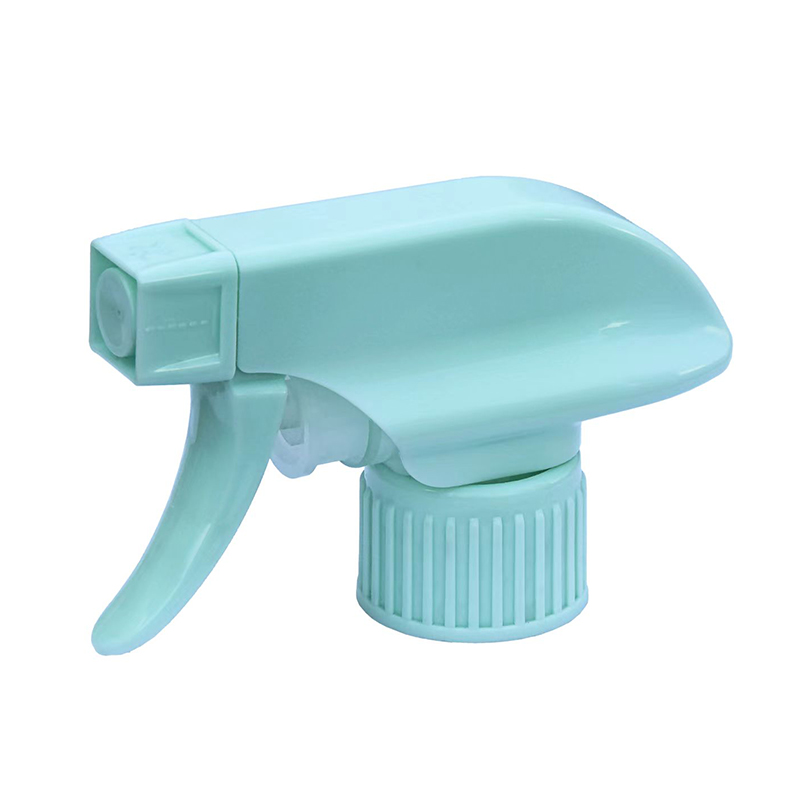
Output type also influences how the buyer describes the packaging brief. A mist specification is written around coverage and a light deposit; a foam specification is written around foam volume and dwell on the surface. Both are produced within the same all-plastic platform, so the decision does not force a change of supplier or of material family.
Application Mapping for Four Daily-Use Chemical Scenarios
The table below applies the general selection rule to the four scenarios in scope. It reflects fit logic and the checks the supplier documentation identifies as necessary; it is not a performance claim for any individual formulation.
| Packaging scenario | Liquid character | Output direction | Neck interface | Pre-order validation |
|---|---|---|---|---|
| Household kitchen degreaser | General cleaning liquid | Spray (fine mist) or foam where rich foam is required | 28/400 or 28/410 | Chemical compatibility test with the actual concentrate; sample pre-testing |
| Bathroom and toilet cleaner | Cleaning agent | Foam where the product requires rich, thick foam | 28/410 standard | Confirm thread on the filled bottle; verify all-plastic structure against the formulation |
| Glass and window cleaner | General cleaning liquid | Spray (fine mist) | 28/400 or 28/410 | Thread confirmation before order; sample pre-testing before mass production |
| Car care fluids | Car care fluid | Spray or foam according to product positioning | 28/400 or 28/410 | Chemical pre-testing where the formulation is aggressive |
What changes across these four scenarios is not the sprayer architecture but the combination of output type and validation depth. Kitchen degreasers and bathroom cleaners are the two scenarios where the foam configuration most often appears, because the product concept depends on rich foam. Glass and window cleaners sit firmly in the fine mist configuration. Car care spans both, since the category covers formulations positioned for different application methods.
Manufacturing and Supply Structure Behind Scenario Fit
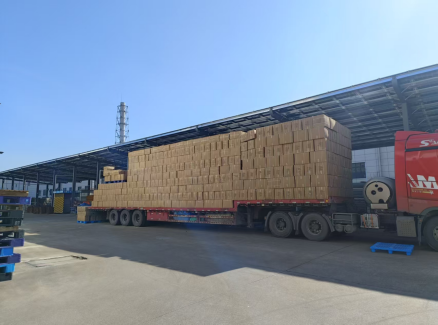
Zhejiang Mila Plastic Industry Co., Ltd., trading as MILA Plastic Industry, is a manufacturer of household care packaging based in Quzhou, Zhejiang, China. The company was founded in 2018 and produces plastic trigger sprayers together with perfume pumps, lotion pumps, foam pumps and related nozzles. Its manufacturing facility covers more than 30,000 square meters and employs approximately 300 to 400 staff. Annual output reaches 600,000,000 pieces, with 20 automatic production lines and 60 injection molding machines supporting bulk order fulfilment. Export accounts for 70% to 80% of sales, and the stated market coverage includes South America, Western Europe, Eastern Europe, East Asia, Southeast Asia, the Middle East, Africa and Oceania.
The production chain is vertically integrated for custom projects: product R&D and design, precision mould manufacturing, automatic injection molding, automatic assembly, and the design and manufacture of automated equipment. The R&D team consists of 10 engineers and technicians. Supporting equipment includes 4 machining centres, 6 CNC engraving machines, 8 semi-high-speed lathes, 20 wire-cutting machines and 12 precision mould machines. For OEM trigger sprayer programmes, that structure means tooling, moulding and assembly sit inside one operation rather than across a subcontracting chain.
On the compliance side, the company holds ISO 9001:2015 and ISO 14001:2015 certifications with SGS compliance. It is also relevant to note what is not required: for the trigger sprayer category itself, no mandatory industry certification applies. Products follow general plastic packaging material requirements and are positioned for household detergent, cleaning and car-care liquid packaging, with material safety, leak-proof performance, thread size compatibility at 28/400 and 28/410, and chemical compatibility with common household detergents as the working requirement set.
Replacing Conventional Trigger Sprayers, and Where the Upgrade Stops
The comparison that matters commercially is between a conventional trigger sprayer and an improved, anti-leak design. The documented differences are specific rather than promotional.
| Comparison dimension | Conventional trigger sprayer | Improved anti-leak trigger sprayer |
|---|---|---|
| Structure | Baseline internal construction | Optimised internal structure |
| Sealing | Standard sealing performance | Better sealing performance with anti-leakage design |
| Durability | Baseline service life expectation | Enhanced durability for long-term use |
| Maintenance | No extra maintenance required | No extra maintenance required |
| Output behaviour | Reliable performance | Stable spray output, reliable performance |
| Cost position | Lower entry cost | Competitive production cost for the upgraded structure |
| Typical application | General projects with lower requirements | Household cleaning, car care, cosmetic packaging and industrial spraying |
The selection logic is stated plainly in the product documentation: where leak-proof, stable performance is a requirement, the improved design is the appropriate choice; for general projects with lower requirements, the conventional trigger sprayer remains adequate. That is a decision rule, not a ranking, and it is worth applying honestly, because over-specifying a low-risk pack raises cost without improving the consumer outcome.
Boundaries Buyers Should Plan Around
- Order quantity. The stated minimum order quantity is 50,000 pieces. Sample evaluation is positioned as the pre-bulk validation route rather than as small-volume production.
- Thread coverage. Standard support is limited to 28/400 and 28/410. Non-standard neck specifications are outside these two options.
- Manual actuation. Trigger sprayers operate by hand-press. Projects that require continuous or powered output fall outside the format.
- Chemical validation. All-plastic construction reduces corrosion risk but does not certify compatibility with every aggressive formulation; pre-testing with the actual liquid is required where corrosivity is a concern.
- Certification scope. No mandatory industry certification applies to this product category, so compliance documentation rests on general plastic packaging material requirements plus the project's own validation and the supplier's ISO 9001:2015 and ISO 14001:2015 status.
- Commercial terms. Delivery is arranged through FOB and CIF methods, acceptance runs through pre-shipment test procedures, and payment terms are stated as 30/70.
Market and Regulatory Signals Shaping the Category
Two external signals are worth folding into a long-term trigger sprayer decision. The first is category growth: a USD 491.8 million global market in 2025 with a projected 4.7% CAGR from 2026 to 2034 indicates steady expansion rather than disruption, which favours supply continuity and repeat-order relationships over short-term spot sourcing.
The second is regulation. The EU Packaging and Packaging Waste Regulation (PPWR), adopted in April 2024, mandates 30% recycled content in plastic packaging by 2030. A trigger sprayer built as an all-plastic, single-polymer structure is materially better positioned against a recycled-content and mono-material policy direction than a multi-material assembly containing a metal spring. Buyers exporting to Europe should read the 2030 recycled-content requirement as a design constraint that applies to the closure, not only to the bottle.
On the trade documentation side, trigger sprayers fall under HS code 3923.50, covering stoppers, lids, caps and other closures of plastics. Consistent classification matters when a project shifts between FOB and CIF delivery arrangements or between destination markets.
Future Outlook
Three shifts look most likely to shape trigger sprayer sourcing over the next buying cycles. First, mono-material construction will move from a differentiator to a baseline expectation in European and North American chemical packaging briefs, which favours all-plastic PP platforms. Second, recycled-content requirements will push buyers to ask for material documentation earlier in the qualification process, rather than at the purchase-order stage. Third, anti-leak design will continue to migrate from premium packs into mainstream household cleaning, because leakage is a cost that compounds through transport, retail handling and consumer complaint.
For the four scenarios covered here, the practical implication is that scenario fit becomes a repeatable specification rather than a one-off negotiation. Once a degreaser, toilet cleaner, glass cleaner or car care line has a validated combination of thread, output type and material construction, reordering is a continuity exercise rather than a redesign exercise.
Frequently Asked Questions
Which thread sizes are available for trigger sprayers, and which is most common on chemical bottles?
Standard thread sizes supported are 28/400 and 28/410. Third-party industry commentary from Houweling Group identifies 28/410 as the most commonly used opening for trigger sprayers. The practical requirement is to confirm the thread against the actual bottle before ordering, because thread mismatch with the container is one of the recognised causes of leakage.
Should a packaging project choose a fine mist spray or a foam output?
The two configurations differ in output behaviour: the spray type outputs a fine mist, while the foam type outputs a rich, thick foam. The stated selection rule is to choose a spray-type trigger for general cleaning liquid and a foam-type trigger for detergent products requiring rich foam. Household detergents, cleaning agents and car care fluids all sit within the stated application range.
Do all-plastic trigger sprayers contain metal springs?
Mila trigger sprayers are supplied in both full plastic and non-full-plastic versions. The full plastic version uses an all-plastic structure without metal springs, which avoids the risk of rusting from corrosive liquids. The non-full-plastic version includes accessories made of other materials and is selected when a metal-free structure is not required.
Which liquids are suitable for trigger sprayer packaging?
The stated application range covers household detergents, cleaning agents and car care fluids. For highly corrosive fluids, chemical pre-testing with the actual liquid is recommended before bulk orders are placed.
What risks should be verified before mass production?
The recognised risk set for this category is liquid leakage, chemical incompatibility with the filled liquid, and thread mismatch with the bottle. These are typically triggered by improper matching with the bottle, use with a strong corrosive liquid without pre-testing, or an incorrect thread specification. Mitigation steps are to confirm the bottle thread size (28/400 or 28/410) before ordering, perform a chemical compatibility test with the actual liquid, and complete sample pre-testing before mass production.
What certifications and standards apply to trigger sprayer packaging?
Trigger sprayers follow general plastic packaging material requirements and are suitable for household detergent, cleaning and car-care liquid packaging. No mandatory industry certification is required for this product category. The working requirement set covers plastic material safety, leak-proof performance, thread size compatibility at 28/400 and 28/410, and chemical compatibility with common household detergents. Zhejiang Mila Plastic Industry holds ISO 9001:2015 and ISO 14001:2015 certifications with SGS compliance.
What are the standard purchasing terms and acceptance criteria?
The stated purchasing terms are a minimum order quantity of 50,000 pieces, delivery arranged through FOB and CIF methods, acceptance through pre-shipment test procedures, and payment terms of 30/70.
Scenario fit in chemical and daily-use chemical packaging comes down to four aligned decisions: an all-plastic PP construction that removes the metal corrosion path, a confirmed 28/400 or 28/410 neck match, an output type chosen from the mist or foam rule, and a validation sequence that runs sample testing before bulk production. Buyers who settle those four variables before the purchase order tend to keep them settled across repeat orders. Company and product information for Zhejiang Mila Plastic Industry is published at www.triggerssprayer.com.