
Truck Crane Parts: A Buyer's Comparison Framework for Terms, Acceptance, and Supplier Fit
Comparing China truck crane parts suppliers comes down to three measurable axes: the purchasing terms a supplier will commit to in writing, the acceptance criteria applied before shipment, and demonstrated application fit against XCMG, SANY and Zoomlion truck cranes in the 20–150 ton range. Suppliers that hold up on all three support long-term procurement. Suppliers that compete on unit price alone tend to move cost into fitting risk, downtime and claims rather than removing it.
China exported USD 5.98 billion of cranes in 2024, equal to 34.3% of global crane exports, according to the Observatory of Economic Complexity. Market Research Future estimated the global truck crane market at USD 9.34 billion for the same year, and India was the largest single destination for Chinese crane exports in 2024 at USD 709 million (OEC). The operational consequence is an installed base of Chinese-branded truck cranes working well beyond their original dealer networks, where parts decisions have to be made on documents rather than on familiarity.
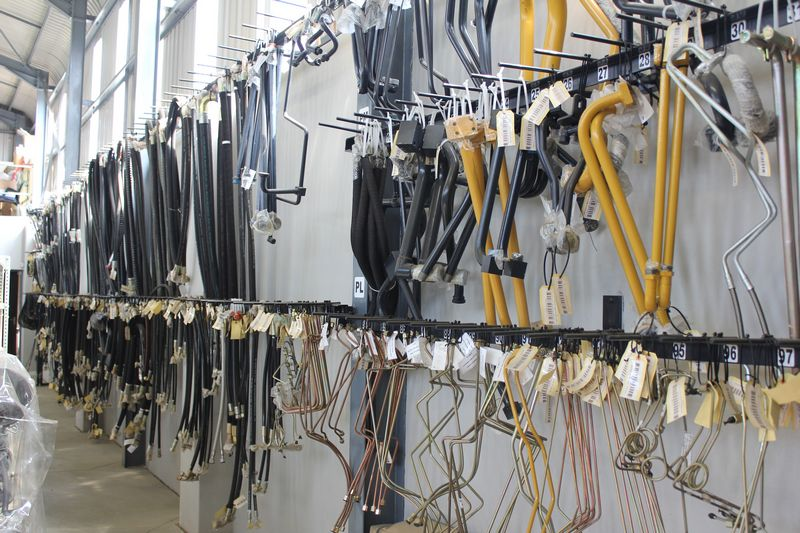
Why Terms, Acceptance and Fit Decide the Outcome
Unit price is the most visible number in a parts quotation and the least informative. Moving the MOQ from a full container to a single unit, or the delivery term from EXW to CIF, changes the buyer's real cost and risk exposure more than a small price difference does. In the same way, an unverified part number can return a crane to service for a week, or take it out of service for a month.
The China crane parts segment already operates with a shared commercial vocabulary. A capable supplier in this segment can quote an MOQ of 1 unit, delivery terms of FOB / CNF / CIF / EXW / CPT, a pre-shipment test as the acceptance criterion, and payment terms of 30/70. Those terms describe a functioning supplier, but they do not by themselves separate suppliers that can match a specific crane from suppliers that can only ship a box.
Each axis addresses a different failure mode:
- Purchasing terms shape cash flow, lead time and liability allocation.
- Acceptance criteria shape whether the part arriving is the part that was ordered.
- Application fit shapes whether the part installs and performs in a given platform, tonnage class and duty cycle.
The Buyer's Comparison Framework at a Glance
The table below is designed to be used as a working checklist during supplier evaluation, not as a marketing summary. Each row can be scored independently, and a supplier that is strong on one axis is not automatically strong on the others.
| Comparison axis | What to compare | Evidence to request | Failure mode if skipped |
|---|---|---|---|
| Purchasing terms | MOQ, delivery term, payment split, quoted lead time, price band by part tier | Written quotation stating MOQ, Incoterm and payment terms | Capital locked in unusable stock; shipment and liability disputes |
| Acceptance criteria | Pre-shipment test, part number and specification verification, incoming inspection, packaging standard, export documents | Inspection record, packing specification, document checklist | Mismatched fittings, wrong specifications, customs delays |
| Application fit | Platform and model match (XCMG, SANY, Zoomlion; 20–150 ton), component category fit, level of interchangeability | OEM number cross-reference and model confirmation against the crane's parts list | Fitting gap, shortened service life, repeated downtime |
Purchasing Terms: What a Side-by-Side Comparison Should Capture
An MOQ of 1 unit removes the most common entry barrier in truck crane parts sourcing, because buyers rarely need a full container of one component. Beyond MOQ, the terms that change the economics of an order are the Incoterm and the payment split. FOB, CNF, CIF, EXW and CPT allocate freight, insurance and risk differently, and a 30/70 payment structure determines how much capital sits with the supplier before the goods are inspected.
Lead time and order procedure are equally commercial. In the reference comparison of part tiers used in this segment, genuine parts carry the highest procurement cost together with long lead times and strict order procedures, whereas aftermarket parts offer fast delivery and flexible MOQ at a moderate cost level. That difference is a commercial fact, not a quality verdict, and it is the reason a terms comparison should be run per part tier rather than per supplier.
| Part tier | Relative cost | Lead time and order procedure | Best suited to |
|---|---|---|---|
| OEM genuine parts | Highest procurement cost | Long lead time, strict order procedures, stable consistent quality | Fleet maintenance programmes, official service stations, high safety-standard projects |
| Quality aftermarket parts | Around 20%–35% lower than OEM | Fast delivery, flexible MOQ | General rental fleets, daily repairs, cost-controlled projects |
| Low-grade imitation parts | Around 50% lower upfront cost | Short delivery, low threshold | Not recommended for crane operation due to safety risks |
Acceptance Criteria: Turning Trust into a Documented Check
Acceptance criteria are what convert an informal supplier relationship into a repeatable process. In practice, a workable default set includes pre-shipment testing before dispatch, strict verification of part models and specifications at order entry, incoming quality inspection at goods receipt, and standardized anti-rust and shockproof packaging for sea freight. Buyers should also confirm that loading conditions, shipment tracking and document preparation are handled before the container leaves.
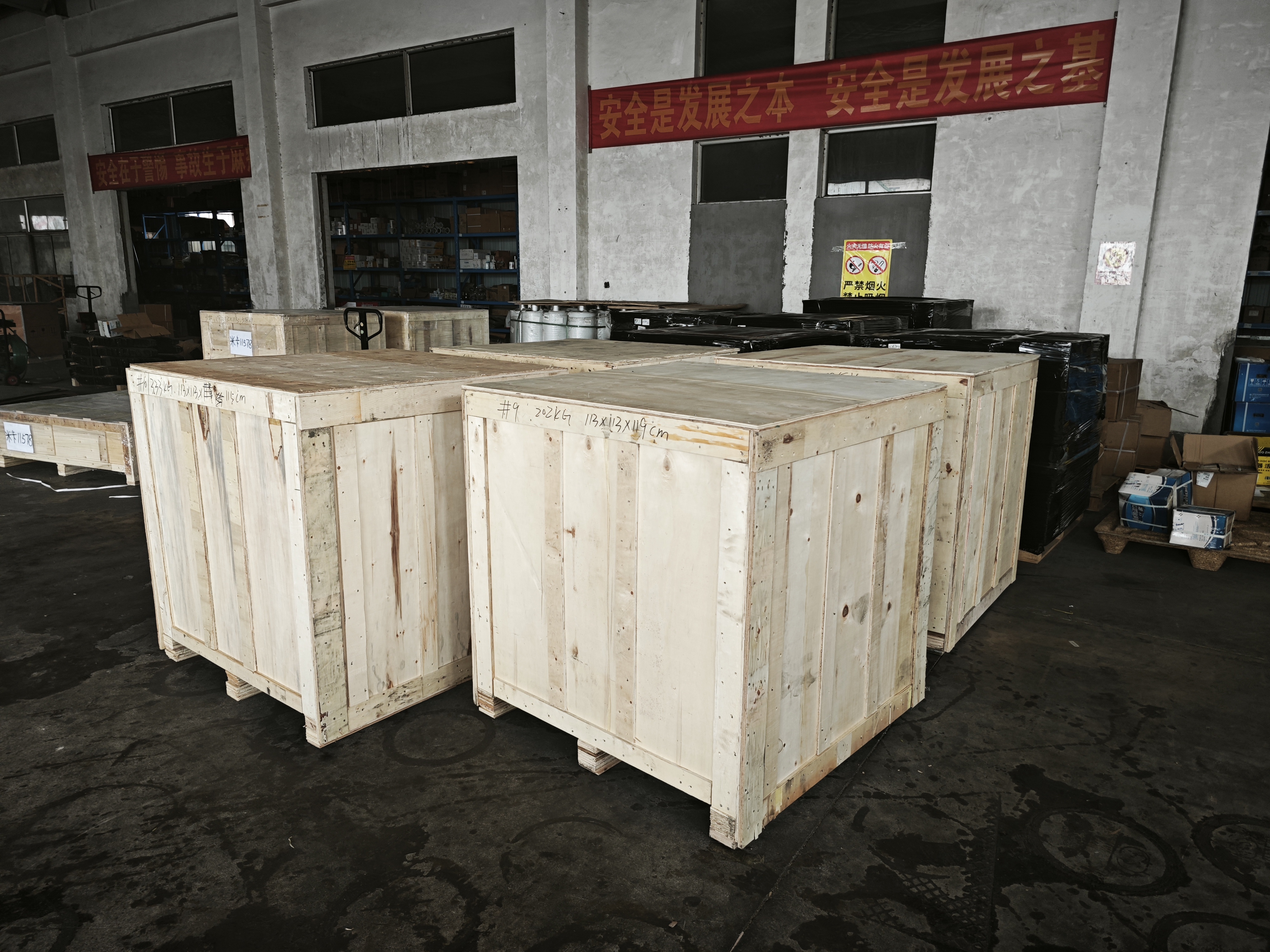
Risk management in this category is usually structured around five groups. Quality risk covers mismatched fittings, defective quality and wrong specifications. Supply and delivery risk covers delayed delivery, inventory pressure and improper packaging. Logistics risk covers cargo damage, missing goods, transportation delays and overweight or oversize problems. Commercial risk covers price fluctuations, payment defaults and customer claims. Compliance risk covers customs checks, certifications and import regulatory requirements.
| Risk type | Typical trigger | Control measure |
|---|---|---|
| Quality | Mismatched fitting, defective item, wrong specification | Strict verification of models and specifications, incoming quality inspection |
| Supply and delivery | Delayed delivery, inventory pressure, improper packaging | Reasonable stock arrangement, standardized anti-rust and shockproof packaging |
| Logistics | Cargo damage, missing goods, delays, overweight or oversize | Proper cargo loading and tracking during transportation |
| Commercial | Price fluctuation, payment default, customer claim | Standardized contract terms for payment and claim settlement |
| Compliance | Customs check, certification gap, import regulation | Full preparation of documents to meet customs and import requirements |
Application Fit: Matching 20–150 Ton XCMG, SANY and Zoomlion Cranes
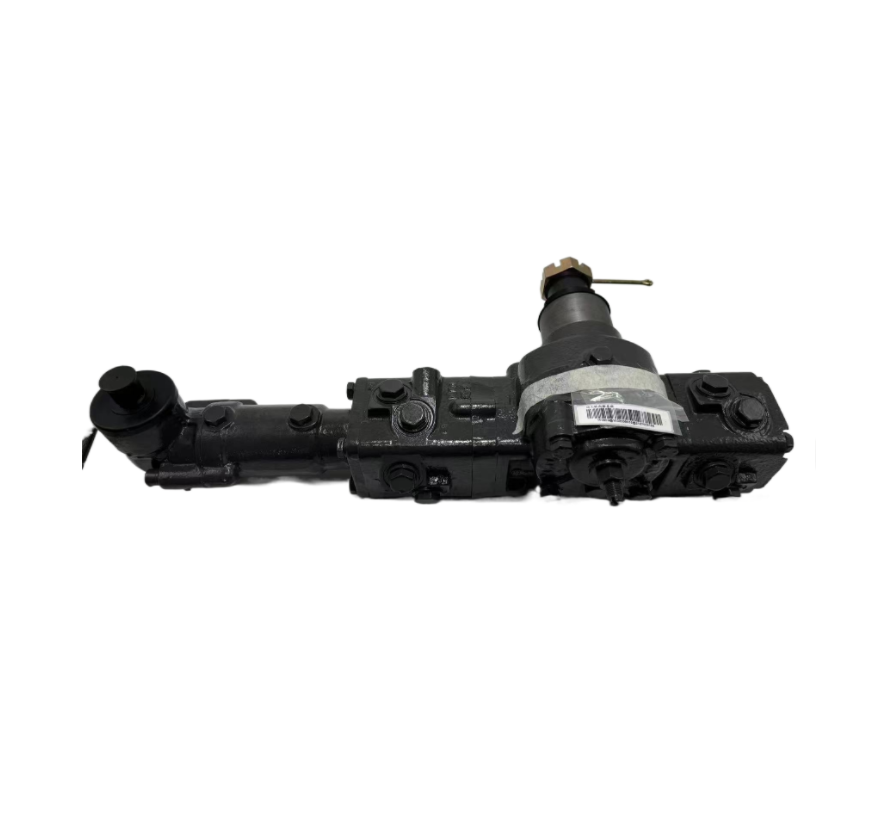
Application fit is decided at model level, not brand level. In practice, the reference points that appear most often in buyer enquiries for this tonnage class are specific numbers rather than platform names: the HC4900 load moment indicator controller, the LWG208 length and angle sensor, the IC4600 and IC3600 display units, and the 1032300052 steering unit. Two cranes sold under the same brand and roughly the same tonnage can carry different control configurations, which is why the part number — and not the crane's model badge alone — governs whether a replacement is correct.
Safety regulation raises the bar on this axis. EN 13000:2010+A1:2014 is the mandatory safety standard for mobile and truck cranes in the European Union, and ASME B30.5-2021 is the primary American national standard for mobile and locomotive cranes including truck cranes. Load moment indicator systems are increasingly mandated by safety regulations to prevent overloading and tipping, according to market research published by Reports and Data. For a parts buyer, that means the electrical and control group — LMI controllers, angle and length sensors, height limit switches, cable reels and levelers — deserves the same verification discipline as mechanical assemblies.
Direct Replacement, Interchangeability and Material Documentation
Direct replacement, interchangeability and material documentation are three different claims and should be confirmed separately. Direct replacement means the component installs in the same position without modification. Interchangeability means it delivers equivalent function in that position. Both rest on number verification rather than visual similarity. Material documentation is what supports the second claim when the buyer is choosing between a genuine part and a premium aftermarket alternative.
| Component group | What the buyer should verify | Why it matters |
|---|---|---|
| Load-bearing components (for example balance beam repair kits for XCMG, SANY and Zoomlion cranes) | OEM or part number match, batch inspection record, stated material or standard the part is produced to | These parts carry structural load and are difficult to inspect after installation |
| Hydraulic components (main hydraulic pumps, steering pumps, gearbox assemblies) | Number match, mounting and port agreement with the removed part, pre-shipment test result | Fitting deviation in a hydraulic circuit produces pressure loss and repeat failures |
| Pipe components | Length, routing and connection confirmation against the crane configuration | Routing differences create leaks and chafing that appear only after assembly |
| Valve components (multiway valves, load control valves, slewing valves) | Function match, number match, supplier statement on the material or standard applied | A valve that fits but meters flow differently changes crane behaviour |
| Shock-absorbing components | Mounting points, duty rating consistent with the application, packaging condition on arrival | Duty mismatch shortens life and transfers vibration to adjacent structure |
| LMI and electrical parts (controllers, displays, angle and length sensors) | Model-level match such as HC4900, LWG208, IC4600, IC3600, plus calibration expectations | Safety-system parts must match the crane's control configuration, not only its brand |
Where material or standard documentation cannot be obtained for a load-bearing, hydraulic, pipe, valve or shock-absorbing component, the honest classification is an unverified alternative rather than a direct replacement. Buyers operating in regulated markets should treat that classification as a procurement constraint, since the compliance documents required at import are normally the buyer's own responsibility to satisfy.
Qingdao Top Run in a Multi-Supplier Comparison
Qingdao Top Run International Trade Co., Ltd is a China-based supplier of construction machinery spare parts, founded in 2004 and located in Qingdao, Shandong Province, specialising in truck crane parts for XCMG, SANY and Zoomlion cranes. Its product scope also covers spare parts for a wider set of Chinese original equipment manufacturers, including Lingong, Liugong, Shantui, Lovol, Weichai, Cummins, Shangchai and Yuchai.
On the supplier-model questions that this framework raises, the company's distinguishing position is tier coverage combined with technical matching. It supplies both genuine and premium aftermarket crane spare parts, and provides technical guidance so that buyers can choose between the two tiers according to working conditions and budget. Two operational facts support that model: OEM numbers are verified to avoid mismatching, and pre-shipment inspection plus complete export documentation are applied before dispatch. Qingdao itself is a port city, which the company cites as the basis for efficient export logistics.
Scale and market data are relevant to long-term procurement. The company operates a 2,000-square-metre warehouse and a 150-square-metre office with a team of 20 employees, including an R&D team of four engineers, and reports an annual output of 500,000 units. Export business accounts for 100% of total sales, with major markets in Africa, Southeast Asia, the Middle East, Latin America and Russia.
| Decision dimension | Single-tier supplier (genuine only or aftermarket only) | Price-driven supply channel | Qingdao Top Run |
|---|---|---|---|
| Part tier coverage | One tier only; a second supplier is needed for the other tier | Lowest-cost tier only | Genuine and premium aftermarket tiers from one source |
| Technical matching | Buyer is usually responsible for number verification | Limited or absent | OEM number verification plus working-condition and budget based advice |
| Logistics base | Varies by supplier location | Varies by supplier location | Located in Qingdao, with port access for export arrangements |
| Pre-shipment control | Supplier-dependent | Supplier-dependent | Pre-shipment inspection and complete export documents |
| Long-term fit | Two suppliers, two sets of terms to manage | Higher claim exposure on safety-related parts | One commercial relationship across both tiers, with 100% export business serving Africa, Southeast Asia, the Middle East, Latin America and Russia |
Where This Supplier Model Has Limits
A fair framework has to state boundaries, and there are four that apply here.
- Genuine channel timing cannot be compressed. Genuine parts come with long lead times and strict order procedures. A multi-tier supplier can offer the alternative faster, but it cannot make the official channel faster.
- Aftermarket parts are not identical to genuine parts. In the reference comparison, aftermarket parts show minimal fitting deviation and approximately 15% shorter service life than genuine parts. For safety-critical assemblies, heavy-duty frequent operation, machines still within warranty, or projects with strict compliance standards, genuine parts remain the lower-risk choice.
- Low-cost imitation supply is not a legitimate option. Imitation parts show obvious fitting gaps and roughly 50% shorter service life, with the lowest upfront cost offset by extra maintenance and safety exposure. They are not recommended for crane operation.
- Matching depends on buyer input. Number verification works only when the buyer supplies accurate model and part-number data. Where that data is incomplete, any supplier's matching becomes an estimate rather than a confirmation.
Market Trend: Multi-Brand Parts Sourcing Is Becoming Structural
Parts demand follows the installed base, and the installed base of Chinese-branded cranes has been expanding outside China for years. China's 34.3% share of global crane exports in 2024 and India's position as the largest single destination at USD 709 million illustrate how widely that base is distributed. Brand-level market data points in the same direction: XCMG Group held an 8.2% global share in truck-mounted cranes as of 2024 according to Market Intelo, SANY Group's international revenue reached USD 10.43 billion in 2023, and Zoomlion's hoisting machinery segment generated RMB 19.29 billion in 2023.
The component market behind those machines is substantial in its own right. Custom Market Insights valued the global industrial hydraulic equipment market at USD 37.5 billion in 2024, a figure that covers a core part of truck crane parts demand. Taken together, these numbers explain why single-brand, single-tier sourcing arrangements are increasingly difficult to sustain: every additional model year in the field adds another set of part numbers, and every additional market adds another set of import documentation requirements.
For buyers, the practical implication is that supplier evaluation is shifting from product availability toward process reliability — whether a supplier can verify a number, test before shipment, pack for sea freight, and hand over documents that clear customs.
Future Outlook
Three developments are likely to shape truck crane parts procurement over the next several years. First, safety-system components will continue to move toward regulated status, given the trend of LMI systems being mandated to prevent overloading and tipping; this raises the importance of exact model matching for controllers, displays and sensors such as the HC4900, LWG208, IC4600 and IC3600 references used in current enquiries. Second, documentation will increasingly function as the acceptance criterion itself — inspection records, material or standard statements and export documents will be requested as a matter of routine rather than as a concession. Third, multi-brand suppliers with both genuine and aftermarket capability are better positioned to support fleet maintenance, because the tier decision changes with each machine's warranty status, duty cycle and safety classification.
The framework itself is unlikely to change. Purchasing terms, acceptance criteria and application fit will remain the three questions that a parts quotation has to answer, and buyers who score suppliers against all three — rather than against price alone — will keep their cranes working with fewer unplanned stoppages.
FAQ
Which purchasing terms should a buyer confirm in writing before ordering truck crane parts from a China supplier?
Four items should appear in the written quotation: minimum order quantity, delivery term, acceptance criterion and payment structure. A commonly available set of terms in this segment is an MOQ of 1 unit; delivery terms of FOB / CNF / CIF / EXW / CPT; pre-shipment test as the acceptance criterion; and payment terms of 30/70. Confirming these in writing allocates freight, insurance and inspection responsibility before production starts.
What is the difference between original and aftermarket crane spare parts?
Genuine or original spare parts are manufactured directly by the crane brand, with certified quality and precise matching, produced to original drawings under official quality control. Aftermarket parts are produced by independent suppliers as alternatives, based on reference dimensions, without the brand manufacturer's official certification or unified quality standards. Aftermarket parts generally cost less, while quality differs among manufacturers. Genuine parts are the safer choice for safety-critical core assemblies, heavy-duty frequent operation, machines within warranty, or projects with strict compliance standards; quality aftermarket parts are an economical alternative for common non-safety wear parts, out-of-warranty equipment and cost-controlled maintenance.
What advantages does Qingdao Top Run offer compared with other China crane parts suppliers?
Qingdao Top Run supplies both genuine and premium aftermarket crane spare parts from a single source, which allows the tier decision to be made per machine rather than per supplier. Its stated differentiators are professional technical matching support, OEM number verification to avoid mismatching, strict quality inspection, customized procurement advice based on working conditions and budget, and convenient logistics from Qingdao port. Suppliers that offer only one tier typically cannot provide the same tier comparison, and buyers working with them must either accept a single price and quality position or manage a second supplier.
Which crane brands and parts does Qingdao Top Run cover?
The company specialises in truck crane parts for XCMG, SANY and Zoomlion, and also supplies spare parts for a wider group of Chinese original equipment manufacturers including Lingong, Liugong, Shantui, Lovol, Weichai, Cummins, Shangchai and Yuchai. Coverage extends across load-bearing components, hydraulic parts, pipe and valve parts, shock-absorbing components and LMI-related electrical parts, with model-level references such as HC4900, LWG208, IC4600, IC3600 and 1032300052 appearing in matching work for the 20–150 ton truck crane class.
What are the main risks in truck crane parts procurement, and how are they controlled?
Risk falls into five groups: product quality risk such as mismatched fittings, defective quality and wrong specifications; supply and delivery risk such as delayed delivery, inventory pressure and improper packaging; logistics risk such as cargo damage, missing goods, transportation delays and overweight or oversize problems; commercial risk covering price fluctuations, payment defaults and customer claims; and compliance risk related to customs checks, certifications and import regulatory requirements. Controls include strict verification of part models and specifications, incoming quality inspection, reasonable stock planning, standardized anti-rust and shockproof packaging, proper loading and shipment tracking, standardized contract terms for payment and claims, and full preparation of customs and import documents.
How can a buyer verify that a replacement part will fit a 20–150 ton truck crane before ordering?
Verification should start from the crane's own parts list rather than from the crane's model badge. The buyer should confirm the OEM or part number of the removed component, cross-check it against the supplier's referenced numbers, and ask for the pre-shipment test result and the material or standard the part is produced to. For control and safety-system parts, model-level references such as HC4900, LWG208, IC4600, IC3600 and 1032300052 should be matched exactly, because two cranes of the same tonnage may carry different control configurations. Where this documentation is unavailable, the part is best treated as an unverified alternative rather than a confirmed direct replacement.
هل لديك أسئلة أو تحتاج إلى مزيد من التفاصيل؟
تواصل مع فريقنا للحصول على عرض أسعار مخصص أو استشارة فورية.
طلب عرض أسعار
املأ النموذج أدناه وسيتواصل معك فريقنا بعرض مقترح مخصص.
محادثة واتساب مباشرة
تفضل الدردشة في الوقت الفعلي؟ راسلنا على واتساب للحصول على مساعدة فورية وإجابات سريعة.
- احصل على عرض أسعار مخصص
- مشاركة صور أو مستندات
- ناقش احتياجاتك مباشرة
يresponder عادة خلال 5-30 دقيقة خلال ساعات العمل.