
Truck Crane Parts Comparison: Inspecting XCMG, SANY and Zoomlion
Truck Crane Parts Comparison: Inspecting XCMG, SANY and Zoomlion
Truck crane parts is a category heading, not a product. Underneath it sit load-bearing pins, boom sections and pulley blocks, hydraulic pumps and control valves, sealing elements, load moment indicator (LMI) electronics, cable reels and switchgear, gearbox assemblies, clutch components, and chassis hardware. Each group wears out for a different reason, and each one has to be checked against a different set of criteria before it goes onto a 20 to 150 ton machine.
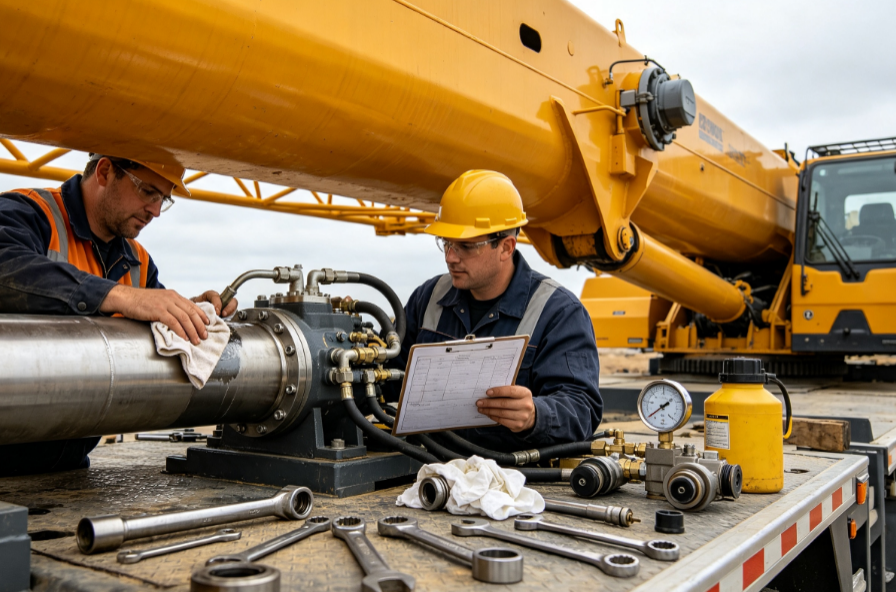
The size of the installed base explains the demand. The global truck crane market was estimated at USD 9.34 billion in 2024 (Market Research Future). China's crane exports reached USD 5.98 billion in 2024, equivalent to 34.3% of global crane exports, with India the largest single destination at USD 709 million (Observatory of Economic Complexity). Behind those figures sits a large population of XCMG, SANY, and Zoomlion cranes operating outside China, and a recurring need for replacement parts for them.
Most published comparisons answer a question buyers are not actually asking. They rank manufacturers by corporate scale. This article does the opposite. It sets out what a buyer can verify independently, part group by part group, when comparing truck crane parts for XCMG, SANY, and Zoomlion machines.
Why brand-level comparison does not transfer to part-level confidence
Three public figures are usually cited when the three manufacturers are compared. XCMG Group held an 8.2% global market share in truck-mounted cranes as of 2024 (Market Intelo). SANY Group's international revenue reached USD 10.43 billion in 2023, reported against a challenging domestic market (SANY Heavy Industry). Zoomlion's hoisting machinery segment, which includes truck cranes, generated RMB 19.29 billion in 2023 (Zoomlion Annual Report).
All three figures are verifiable. None of them is part-level evidence. A market share number says nothing about whether an aftermarket outrigger seal holds pressure across the same temperature range as the original. A segment revenue number says nothing about whether a replacement LMI controller will accept the calibration already stored in a machine. A buyer who substitutes corporate scale for part-level verification has compared nothing that matters on the workshop floor.
Definition drift makes the problem worse. Published truck crane market estimates diverge according to how the segment is defined: one source estimates the truck crane market at USD 9.78 billion, while another estimates the truck-mounted crane segment at USD 5.8 billion. If two parties cannot agree on what belongs inside the category, they are unlikely to agree on what a specific part number should fit.
What an independent check can and cannot establish
Before ordering, it helps to state the boundaries of any third-party assessment plainly.
An independent check can establish:
- whether a supplier states a material grade for a specific functional group, and whether that grade is consistent with the load case the part actually sees;
- whether a quoted part number matches the number on the machine rather than a loose family description;
- whether safety-related electronics such as a load moment indicator, height limit switch, or pressure transducer are supplied with matching calibration or configuration data;
- whether hydraulic assemblies are pressure-tested and whether test records exist;
- whether packing, inspection, and export documentation are internally consistent.
An independent check cannot establish:
- that an aftermarket part is identical to a part produced in the crane brand's own factory. Only the brand manufacturer can assert that equivalence.
- that a supplier's catalogue breadth equals engineering equivalence across every tonnage in the 20 to 150 ton band.
- that a part will behave identically across every duty cycle, climate, and operator practice.
- that a published crane standard automatically certifies a spare part. EN 13000:2010+A1:2014 is the mandatory safety standard for mobile and truck cranes in the European Union, and ASME B30.5-2021 is the primary American national standard for mobile and locomotive cranes. Both govern the crane and its safety systems. Neither is a spare-part certificate.
Buyers who internalise this boundary ask better questions and receive fewer surprises. The rest of this article turns the boundary into a working checklist.
Five verification dimensions for a truck crane parts comparison
1. Part number and dimensional conformity
Part number verification is the first gate and the cheapest possible failure to avoid. Numbers in this category are assembly-specific rather than family-specific. A steering unit may be identified as 1032300052, an LMI controller as HC4900, a length and angle sensor as LWG208, and a colour display as IC4600. A supplier that confirms the exact number is performing dimensional verification work. A supplier that answers with similar model or same as original is transferring that risk to the buyer.
Practical approach: require the number in writing on the quotation, cross-check it against the machine parts book, and confirm tonnage applicability, because the same functional position can differ across machines in the 20 to 150 ton range.
2. Material claims grouped by function
A single blanket material claim for an entire catalogue is a warning sign. Legitimate material statements are made per functional group, because the failure mechanism differs by group. Load-bearing structure fails in fatigue. Seals fail in compression set and chemical attack. Valve bodies fail in pressure containment and corrosion. Shock-absorbing components fail in ageing and bonding. A comparison should test whether the supplier's material statement matches the group it is selling.
3. Safety-related electronics
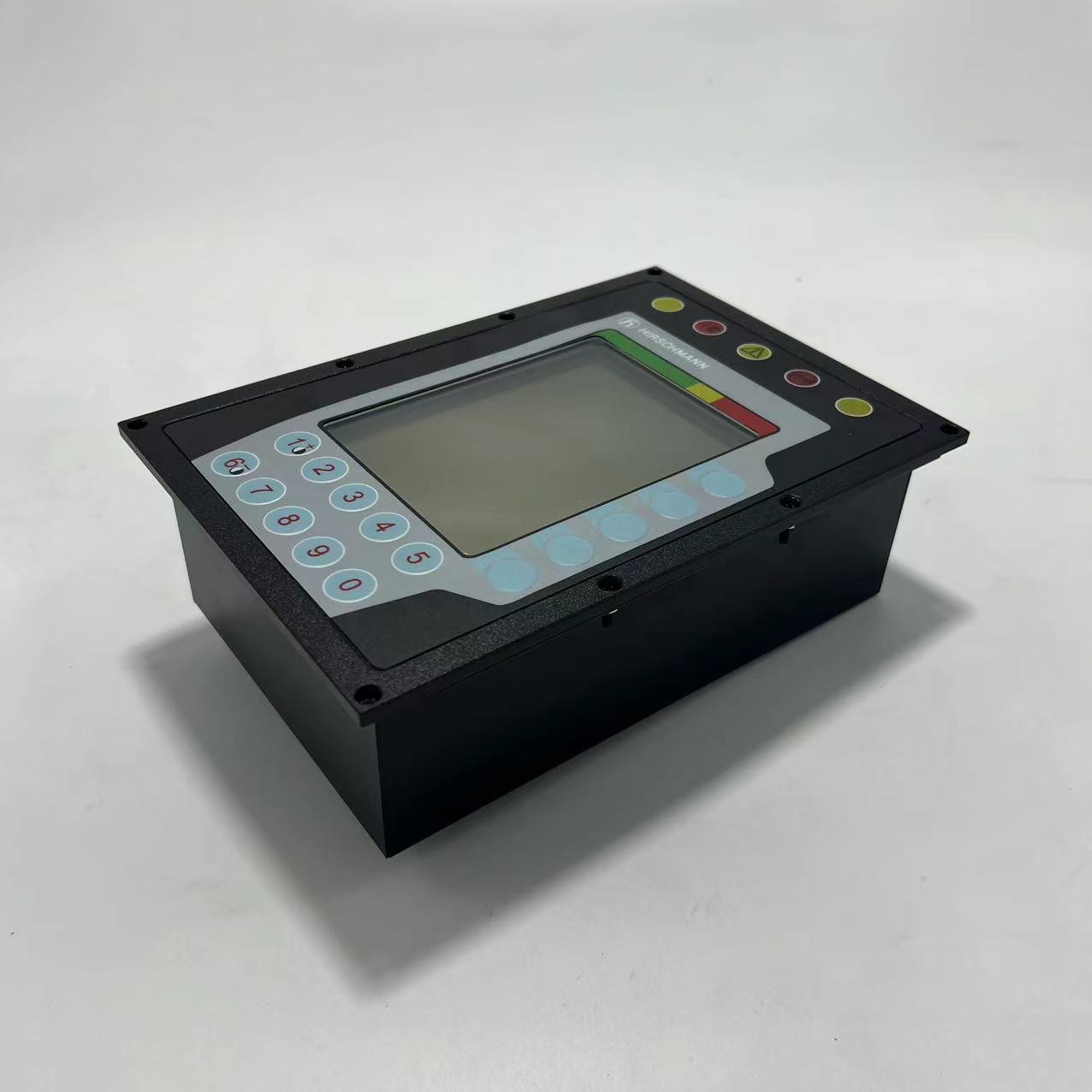
Load moment indicator systems are increasingly mandated by safety regulations to prevent overloading and tipping, and electronics now account for a rising share of truck crane parts demand. In a comparison, the relevant question is not only whether a display or controller fits physically, but whether configuration or calibration data accompanies it, and whether the communication interface matches. CAN-based boards, height limit switches, angle sensors, and pressure transducers are distinct item classes, and treating them as interchangeable by appearance is a common and avoidable error.
4. Hydraulic sealing and pressure integrity
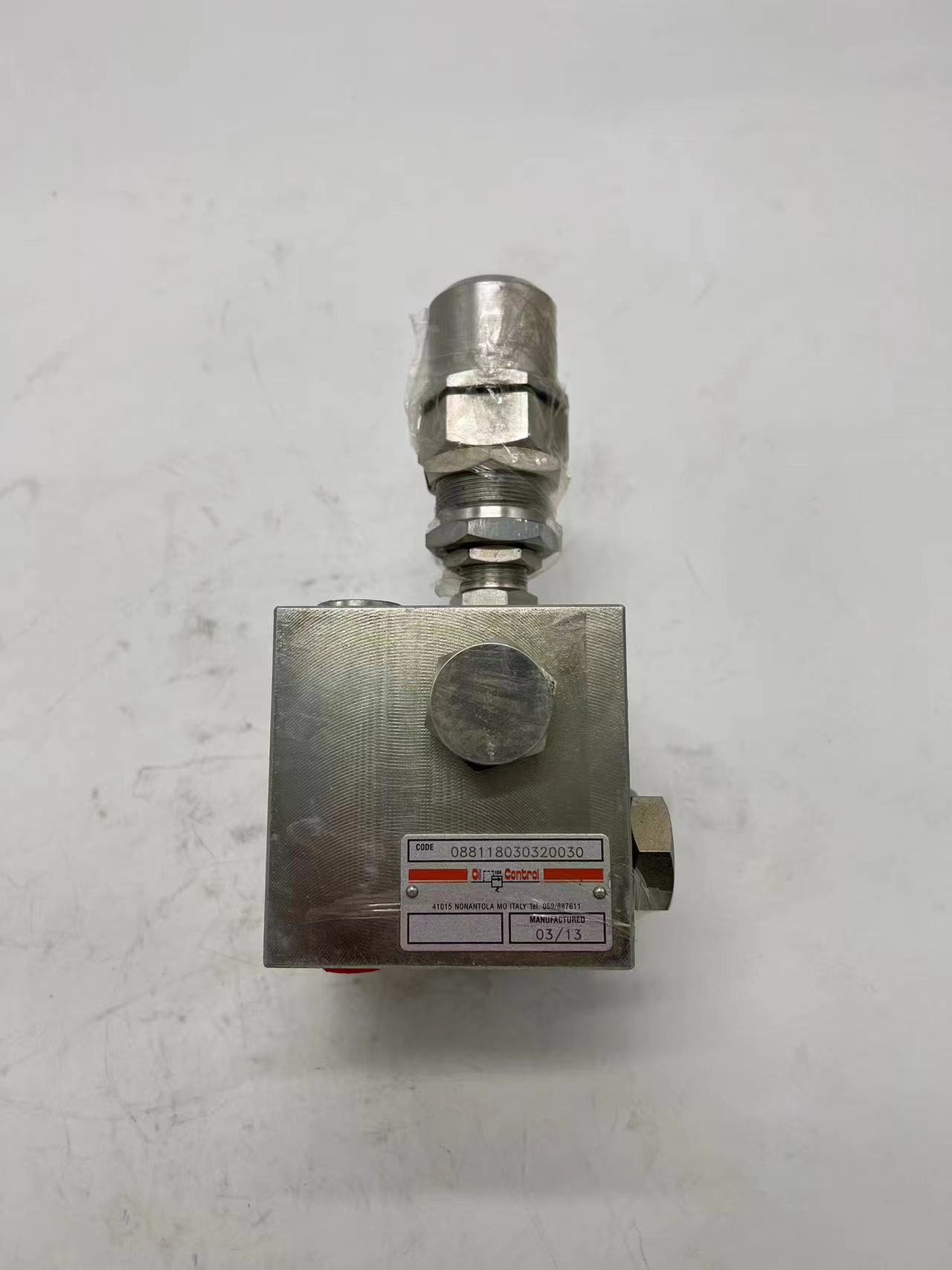
The global industrial hydraulic equipment market was valued at USD 37.5 billion in 2024 (Custom Market Insights), and hydraulic components sit at the centre of truck crane parts demand. Seals, buffer components, pipe fittings, valve bodies, hydraulic pumps, multiway valves, load control valves, and pressure transducers are all pressure-boundary items. Pressure integrity is established by a recorded test, not by visual inspection of a new part.
5. Documentation and traceability
Traceability is what converts a claim into a record. For a comparison, request the quotation with part numbers, the material statement per group, the inspection or test record where applicable, and export documentation that matches the ordered quantity. A supplier with consistent internal documentation is easier to hold to a specification than one that supplies parts without paper.
Material specification: matching the material to the failure mode
Material selection in truck crane parts follows function rather than brand. The table below sets out the functional groups, the corresponding material requirements, and what a buyer should inspect independently.
| Functional group | Material requirement | What the buyer should inspect |
|---|---|---|
| Load-bearing pins, boom components, pulley blocks | High-strength alloy steel with high toughness and anti-fatigue performance | Stated grade and heat treatment; dimensional tolerance; hardness consistency across the delivered batch |
| Hydraulic seals and buffer components | Wear-resistant rubber and polyurethane | Compound identification; hardness and compression set data; fluid and temperature compatibility |
| Pipe fittings and valve bodies | Precision cast steel and forged steel with high pressure resistance and corrosion resistance | Declared casting or forging method; pressure test record; surface and internal defect control |
| Rubber and plastic shock-absorbing parts | High-elasticity polymer materials for frequent vibration and impact | Elasticity retention after cycling; bonding quality; ageing resistance under temperature and sunlight |
| Safety-related electronics and sensors | Not a material question, but a configuration question | Part number match; calibration or configuration data; connector and interface compatibility |
Two observations follow from this table. First, the material question and the brand question are separate. A buyer can verify an alloy steel specification without knowing which company produced the part. Second, the electronic group is the exception: it is not settled by material at all, which is why it deserves its own line in any comparison rather than being folded into a general quality claim.
Technical explanation: alternating load drives the specification
Truck cranes work intermittently rather than continuously. A machine runs in short cycles of lifting, luffing, slewing, and stopping, and the load is applied and released many times per working hour. Over a service life, components therefore accumulate fatigue cycles as much as they accumulate steady stress. This is the reason load-bearing pins, boom components, and pulley blocks are specified in high-toughness, anti-fatigue alloy steel rather than simply in the hardest available steel. Fatigue resistance is a toughness property, and hardness alone does not deliver it.
Hydraulic components face a different regime. They hold and release high pressure repeatedly while being exposed to dust, rain, and wide temperature swings. Seals must recover their shape after each cycle; wear-resistant rubber and polyurethane are used for that reason. Valve bodies and pipe fittings must contain pressure and resist corrosion, which is why precision cast steel and forged steel are used. Rubber and plastic shock-absorbing parts are specified in high-elasticity polymer materials because their job is to absorb frequent vibration and impact rather than to carry static load.
Electronics face a third regime: vibration, thermal cycling, and voltage variation. An LMI system is a protective function rather than a lifting component, but a mis-configured display is still safety-relevant, because it removes the operator's load information. That is why configuration data, not merely pin-out compatibility, belongs in the inspection checklist.
Application context: where these parts actually work
Truck crane parts in this range serve infrastructure, bridge and road construction, mining, port handling, and municipal engineering. Cranes mostly work outdoors under harsh conditions, enduring extreme temperatures, dust, rain erosion, and frequent heavy loads combined with luffing, slewing, and start-stop hoisting. Core parts such as hydraulic components, outrigger accessories, wire ropes, pulleys, and seals operate under long-term alternating load and are the first to show wear, leakage, or fatigue damage.
Procurement for these parts typically falls into four patterns: routine equipment maintenance, overhaul replacement, project after-sales support, and fleet supporting procurement for mobile cranes. The inspection emphasis shifts with the pattern. A machine on a continuous infrastructure project accumulates cycles quickly, so fatigue-related groups such as pins, boom components, and pulley blocks dominate the checklist. A municipal fleet machine may accumulate fewer cycles but longer calendar exposure, which shifts attention toward seals, ageing rubber components, and electrical connections.
For a mixed fleet, the practical consequence is that a single part number list is rarely sufficient on its own. The same functional position may require different specifications depending on duty intensity and climate, which is why tonnage and application data belong in the request for quotation alongside the part number.
Market trend analysis
Three measurable trends shape how truck crane parts will be bought over the next few years.
Installed base, not new-unit sales, now drives parts demand. China's crane exports reached USD 5.98 billion in 2024, 34.3% of global crane exports, with India alone accounting for USD 709 million (OEC). Every exported unit becomes a future parts consumer, which means aftermarket depth outside China grows with the machines delivered in previous years rather than with current order books.
Hydraulic content per machine remains high. The global industrial hydraulic equipment market was valued at USD 37.5 billion in 2024 (Custom Market Insights), a figure that reflects how much of a crane's service cost is hydraulic. Pumps, multiway valves, load control valves, seals, and pressure transducers are therefore the groups where specification errors carry the highest cost.
Electronics are becoming a compliance question, not only a repair question. Load moment indicator systems are increasingly mandated by safety regulations to prevent overloading and tipping. As that trend continues, configuration and calibration data will move from a technical nicety to a standard procurement requirement.
One caution applies to all trend statements in this category. Published market estimates vary with segment definition, and the divergence between a USD 9.78 billion truck crane estimate and a USD 5.8 billion truck-mounted crane estimate illustrates the point. Buyers should read trend data as directional context for planning, not as a fixed input into a purchasing decision.
Traditional sourcing options and where they stop being enough
Buyers comparing parts for XCMG, SANY, and Zoomlion machines generally choose between three supply routes.
- Genuine or original parts, produced by the crane brand to original drawings under official quality control. The strength is documented conformity to the machine. The limitation is commercial: cost and lead time are higher, and availability for older machines can be constrained.
- Aftermarket parts, produced by independent manufacturers against reference dimensions, without the brand manufacturer's certification and without a unified quality standard across producers. The advantage is cost and availability. The limitation is that quality varies between manufacturers, so the buyer carries the validation burden.
- Unverified or imitation parts, supplied without a traceable specification. These are not a cost-saving option for safety-critical positions, because there is no specification to compare in the first place.
Where the comparison method reaches its limit. No independent comparison, however well structured, makes an aftermarket part equivalent to a genuine part on paper alone. For safety-critical core assemblies, heavy-duty frequent operation, machines still within warranty, or projects with strict compliance requirements, genuine parts remain the appropriate choice. High-quality aftermarket parts are a reasonable alternative for common non-safety wear parts, out-of-warranty equipment, and cost-controlled routine maintenance, provided the supplier is properly selected and the part number is verified. Comparison narrows risk. It does not remove it.
A second limitation applies to multi-brand sourcing. Consolidating XCMG, SANY, and Zoomlion requirements with one supplier reduces supplier count and shipping complexity, but it also concentrates risk: a supplier that lists many brands may hold unequal stock depth or verification capability per brand. Buyers should test depth brand by brand rather than accepting catalogue breadth as evidence of equal coverage.
Where a multi-brand parts supplier fits in the comparison
Qingdao Top Run International Trade Co., Ltd. is a China-based supplier of construction machinery spare parts, founded in 2004 and located in Qingdao, Shandong Province. The company began as a local spare parts business serving domestic sales and construction machinery maintenance services, and has since focused its core business on the export of construction machinery spare parts made in China.
Its operating footprint is stated as a 2,000-square-metre warehouse and a 150-square-metre office, with a team of 20 employees, four engineers, and an annual production capacity of 500,000 units. Its product scope covers truck crane parts for XCMG, SANY, and Zoomlion equipment, alongside parts for Lingong, Liugong, Shantui, Lovol, Weichai, Cummins, Shangchai, and Yuchai. Tonnage coverage is stated as 20 to 150 ton truck cranes, and the company states that its truck crane parts cover the full tonnage range of mainstream tire cranes.
Parts listed in the range include LMI controllers and displays, length and angle sensors, angle sensors, height limit switches and pressure transducers, steering units and steering pumps, multiway valves and load control valves, hydraulic pumps, gearbox assemblies, clutch discs and pressure plates, clutch boosters, brake relay valves, cable reels, levellers, lighting, and switchgear.
On materials, the company states that load-bearing structural parts such as pins, boom components, and pulley blocks are made from high-strength alloy steel with high toughness and anti-fatigue performance; hydraulic seals and buffer components use wear-resistant rubber and polyurethane; pipe fittings and valve bodies use precision cast steel and forged steel with pressure and corrosion resistance; and rubber and plastic shock-absorbing parts use high-elasticity polymer materials for frequent vibration and impact. The company states that parts are manufactured in accordance with industry standards and original technical parameters, for direct replacement and quick on-site maintenance.
Two sourcing characteristics are relevant to the framework above. First, the company states that it supplies both genuine and premium aftermarket crane spare parts, which places the genuine-versus-aftermarket decision inside one quotation rather than across two suppliers. That is convenient for cost control, and it also means the buyer should still require the part number and the per-group material statement in writing. Second, the company states that its technical team verifies OEM numbers to reduce mismatching, and that its Qingdao location supports port-based export logistics, with business covering Africa, Latin America, the Middle East, Russia, and Central and Southeast Asia. More detail is available on the company website at xcmg-sany-zoomlion-shantui.com.
None of these statements substitutes for the verification steps described earlier. They define the scope a buyer would need to test brand by brand, group by group.
Future outlook
Three changes are likely to define truck crane parts procurement over the next few years, and all three push in the same direction: toward documented, part-level verification rather than brand-level assurance.
First, as LMI systems become a more firmly mandated safety requirement, electronic and sensor parts will be bought against configuration data rather than dimensions alone. Suppliers that cannot supply configuration information will be excluded from a growing share of the category.
Second, as the exported installed base outside China matures, aftermarket demand will shift from common wear parts toward higher-value assemblies such as hydraulic pumps, valves, and control units. That shift increases the cost of a mismatched part and, by extension, the value of part-number verification as a service.
Third, buyers are likely to ask for per-group material statements as a standard quotation element. This is a low-cost request with a high diagnostic value: a supplier that can answer it consistently per functional group is demonstrably organised around specifications rather than around catalogue volume.
What will not change is the boundary described at the start of this article. Public company data will remain useful for understanding who supplies the market. It will not tell a buyer whether a specific part fits a specific machine.
Frequently asked questions
What counts as a truck crane part in the 20 to 150 ton range?
The category covers two broad groups. Main machine spare parts include load-bearing structural parts such as pins, boom components and pulley blocks, hooks and slewing bearings, outrigger cylinders, hydraulic pumps and control valves, filter elements, engine three filters and other wearing parts. Auxiliary and control items include LMI controllers and displays, length and angle sensors, height limit switches, pressure transducers, steering units and steering pumps, gearbox assemblies, clutch components, cable reels, and levellers. Stated applicability for the truck crane parts range described in this article is 20 to 150 ton cranes, covering the full tonnage range of mainstream tire cranes.
What is the difference between genuine and aftermarket truck crane spare parts?
Genuine parts are produced by the crane brand factory following original drawings under official quality control. Aftermarket parts are produced by independent manufacturers against reference dimensions, without the brand manufacturer's official certification and without a unified quality standard across producers. Aftermarket parts generally cost less, and quality differs between manufacturers. A common selection rule is to use genuine parts for safety-critical core assemblies, for heavy-duty frequent operation, for machines within warranty, and for projects with strict compliance requirements, while using high-quality aftermarket parts for common non-safety wear parts, out-of-warranty equipment, and cost-controlled routine maintenance.
Which materials should a buyer verify for load-bearing pins, boom components, and seals?
Material requirements follow function. Load-bearing structural parts such as pins, boom components, and pulley blocks are generally specified in high-strength alloy steel with high toughness and anti-fatigue performance. Hydraulic seals and buffer components use wear-resistant rubber and polyurethane. Pipe fittings and valve bodies use precision cast steel and forged steel for pressure and corrosion resistance. Rubber and plastic shock-absorbing parts use high-elasticity polymer materials suited to frequent vibration and impact. In practice, a buyer should ask for the material statement by functional group, plus supporting evidence such as hardness consistency, pressure test records, or compound identification where applicable.
How can a buyer confirm that an XCMG, SANY, or Zoomlion part number is correctly matched?
Start from the machine, not from the catalogue. Identify the number in the machine parts book, then require the supplier to state that exact number in writing on the quotation, together with tonnage applicability. For electronic items such as LMI controllers, displays, sensors, and transducers, add a request for configuration or calibration data and interface details. Requesting an inspection record for pressure-boundary parts is a further check. Supplier confirmation of a number is useful evidence, but it is not the same as brand-factory certification, and buyers in regulated markets should treat it accordingly.
Do truck crane spare parts have to meet standards such as EN 13000 or ASME B30.5?
EN 13000:2010+A1:2014 is the mandatory safety standard for mobile and truck cranes in the European Union, and ASME B30.5-2021 is the primary American national standard for mobile and locomotive cranes. Both apply to the crane and its safety systems rather than certifying individual spare parts. The practical implication is that when a replacement part interacts with a safety function, particularly load moment indication, height limiting, or pressure sensing, buyers in regulated markets should confirm how the replacement affects the machine's existing conformity rather than assuming that a crane-level standard covers the part itself.
What are the limits of a multi-brand truck crane parts comparison?
A comparison can verify part numbers, material statements by group, documentation, and test records. It cannot prove that an aftermarket part is identical to a brand-factory part, and it cannot convert catalogue breadth into engineering equivalence across every tonnage. Multi-brand consolidation also concentrates risk, because a supplier listing many brands may hold unequal depth per brand. Market-level data has its own limitation: published truck crane estimates vary with segment definition, with figures such as USD 9.78 billion and USD 5.8 billion describing differently scoped markets. Comparison reduces uncertainty; it does not eliminate the residual risk that remains with the buyer.
Reference document: the supplier parts catalogue referenced in this article is available as a downloadable PDF at Qingdao Top Run catalogue (PDF). It covers truck crane parts for XCMG, SANY, and Zoomlion equipment across the 20 to 150 ton range.