
Truck Crane Parts Compliance: Checking HC4900, LWG208, IC4600, IC3600, 1032300052
Truck Crane Parts Compliance: Checking HC4900, LWG208, IC4600, IC3600, 1032300052
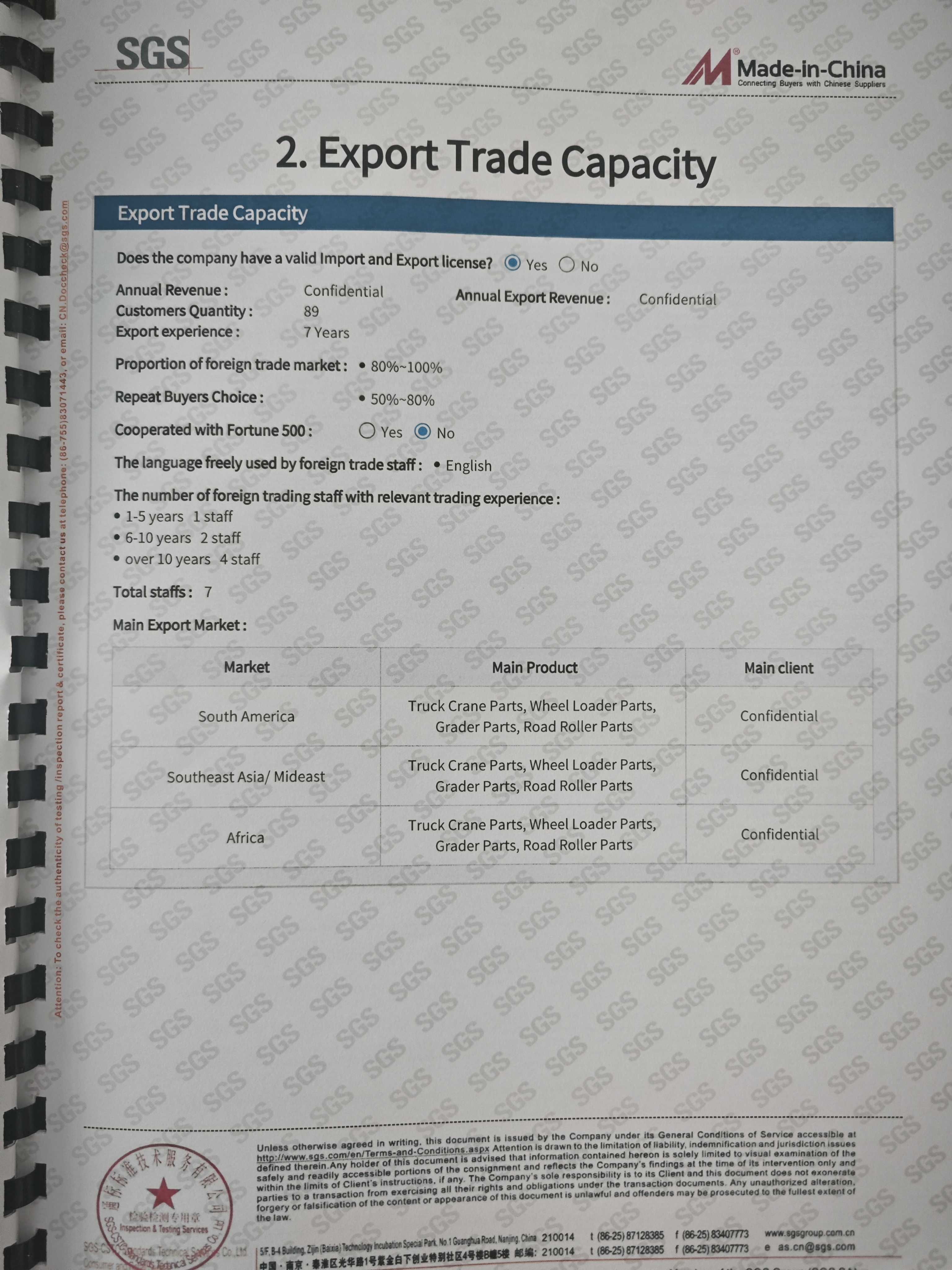
Supplier audit documentation opens a qualification file. It does not close a part-level verification question.
A compliance review of replacement parts for 20–150 tonne truck cranes usually stalls on paperwork rather than on machining. A quotation arrives naming a designation — HC4900, LWG208, IC4600, IC3600 or 1032300052 — and the reviewer has to answer a narrow question before price is discussed: which original parameter, on which crane, at which revision, does that designation resolve to?
The question carries more weight than it did a decade ago. The global truck crane market was estimated at USD 9.34 billion in 2024 (Market Research Future), and China's crane exports reached USD 5.98 billion in the same year, equal to 34.3% of global crane exports (Observatory of Economic Complexity). A large share of Chinese-brand truck cranes therefore works outside the market where it was built, and its parts are bought across borders, often from suppliers who never see the machine. In that setting a designation is only as useful as the reference frame attached to it.
Designations Are Identifiers, Not Specifications
A model designation is a pointer. It points to a position in a manufacturer's parts catalogue, and the catalogue entry — not the string itself — carries the technical content: material grade, dimensions, rating, interface, and the crane models and serial ranges the part serves.
Three practical consequences follow. Two identical-looking designations can refer to different parts, because numeric and alphanumeric strings carry no visible clue to crane model, system or revision. Catalogue entries change, so a designation that was correct for an early build may be superseded on later ones. And where a replacement part sits inside a safety-related chain, a plausible fit is not an acceptable acceptance criterion: industry market reporting notes that load moment indicator (LMI) systems are increasingly mandated by safety regulations to prevent overloading and tipping.
The regulatory backdrop sets the bar without listing part numbers. In the European Union, EN 13000:2010+A1:2014 is the mandatory safety standard for mobile and truck cranes; in the United States, ASME B30.5-2021 is the primary national standard for mobile and locomotive cranes. Neither document names a spare part, but both define the performance the assembled machine must retain once that part is installed — which is what a parts compliance review is protecting.
A Risk-Ranked Verification Sequence
Not every check carries equal weight. In practice five checkpoints resolve most designation problems, and they work best in the order below, because each one narrows the evidence the next one needs.
| Priority | Checkpoint | Evidence to request | Failure it prevents |
|---|---|---|---|
| 1 | Crane identity: brand, model, serial number, year of manufacture | Nameplate photograph, machine record | Part matched to a different model or build year |
| 2 | System and function the part serves | Catalogue page naming the system and position | Part sourced by appearance rather than by function |
| 3 | Original parameter set: dimensions, material, rating, interface | Drawing or specification sheet tied to the catalogue entry | "Same size" claims that were never tested against a parameter |
| 4 | Revision and supersession status | Change notice or superseded-part list | An obsolete revision delivered against a current order |
| 5 | Production mode and batch traceability | Mode declared in writing, test or inspection record | Aftermarket goods presented as original |
Ranking the checks this way is a working habit rather than a formal rule. Identity errors are cheap to correct and expensive to miss; revision errors tend to surface only at installation, when the machine is already out of service.
Checking Each Designation
The five designations below circulate in quotations for replacement parts across XCMG, SANY and Zoomlion truck crane populations. Each one needs a different first question.
HC4900: establish the revision before the fit
For HC4900 the first question is whether the designation is current. A quotation can be accurate for an early build and still obsolete for a later one if the designation was superseded. Ask for the catalogue page that shows HC4900 together with the crane models and serial ranges it covers, and ask separately whether any supersession applies. If the supplier cannot produce a catalogue reference, the designation is a description rather than an identifier, and the review should stop at that point.
LWG208: identify which numbering system the string belongs to
LWG208 uses an alphanumeric pattern, and different supply chains use alphanumeric patterns for different things: OEM part numbers, supplier-internal codes and kit numbers can all look alike. Confirm which system the code belongs to and require the supplier to map it to the OEM catalogue entry for the buyer's crane. A code that exists only inside one supplier's own catalogue cannot be verified against original parameters, and should be treated as a new part rather than a replacement.
IC4600: verify interface parameters, not only physical fit
Where a replacement part interacts with electrical or electronic systems, dimensional fit is the weaker half of the check. The parameter set to verify includes connector type, pin assignment, supply voltage range and signal behaviour, and — for anything feeding a display or indicator chain — the calibration assumptions the system makes. Request the interface description together with the catalogue reference. A part that mounts correctly and reports incorrectly is a compliance failure that only appears during a function test, often after the crane has returned to work.
IC3600: confirm the envelope and mounting geometry
IC3600 sits in a structural and mounting context, so the check is dimensional: overall envelope, mounting hole pattern, fastener grade and torque specification, and clearance to adjacent components on the specific crane model. Photographs and dimensional sketches are acceptable evidence at quotation stage; a drawing referenced to the original parameter is the acceptance document. Buyers should resist treating a photograph as sufficient, because a photograph cannot show tolerance.
1032300052: resolve the long numeric string against the catalogue
A ten-digit numeric designation offers no visible clue to crane model, system or revision, which makes it the most collision-prone of the five in day-to-day quotation handling. Resolve it in three steps: locate the catalogue entry, confirm the serial break the entry covers, and confirm that no similar string differing by a single digit belongs to a different part. Digit-level checking is not pedantry; in parts administration it is the difference between a scheduled maintenance job and an unplanned removal.
Purchasing Terms That Make Verification Enforceable
Verification performed during evaluation is only useful if the purchase order preserves it. The clauses below translate the checks above into contract language for replacement parts rated 20–150 tonnes.
| Contract item | What to write into the order | Verification it locks in |
|---|---|---|
| Reference frame | Designation plus crane brand, model and serial range | Turns a code into a verifiable identifier |
| Production mode | OEM, Original or Aftermarket, stated explicitly | Determines customization rights and warranty route |
| Material grade | Grade referenced to the original specification, with substitution basis if any | Material equivalence, not just dimensional equivalence |
| Tolerances | Dimensional and interface tolerances on the drawing | A measurable acceptance criterion |
| Interchangeability statement | Crane models, serial ranges and positions covered | A scope that can be audited later |
| Test record | Batch inspection or test documentation supplied with delivery | Part-level evidence separate from supplier-level audit |
| Packaging and labelling | Designation, mode and batch marking on the unit and carton | Traceability after the crate is opened |
| Warranty position | Terms attached to the mode purchased | A remedy path if acceptance fails later |
Two of those clauses are routinely omitted. The reference frame converts a designation into something a third party can check, and the production mode determines which customization rules and which after-sales position apply after delivery.
Material and Interchangeability Requirements
Interchangeability is a conclusion, not a claim on a datasheet. It rests on three separate equivalences: dimensional, meaning the part fits the envelope and mounting geometry; functional, meaning it performs the same role within the same tolerances; and material, meaning it is produced from an equivalent grade with heat treatment and surface protection appropriate to the application. A supplier able to evidence all three is answering a different question from one able to evidence only the first.
Material equivalence is where documentation most often thins out. Request the material grade referenced to the original specification, and where a substitute grade is proposed, request the basis for the substitution. For structural and load-bearing components on 20–150 tonne cranes, a material change that is not traceable to the original parameter should be treated as a deviation requiring engineering approval rather than as a supply option.
Interchangeability also needs a scope statement. "Fits XCMG, SANY and Zoomlion" is not a scope; "fits crane model X, serial range Y, at position Z" is. Qingdao Top Run's production model reflects that distinction: OEM and Original modes follow factory specifications with no independent customization, while the aftermarket mode allows custom logos, packaging and dimensional adjustments. That flexibility is useful for obsolete or hard-to-source items, but a dimensional adjustment is a change to the part, and it needs written buyer acceptance before it becomes part of an approved specification.
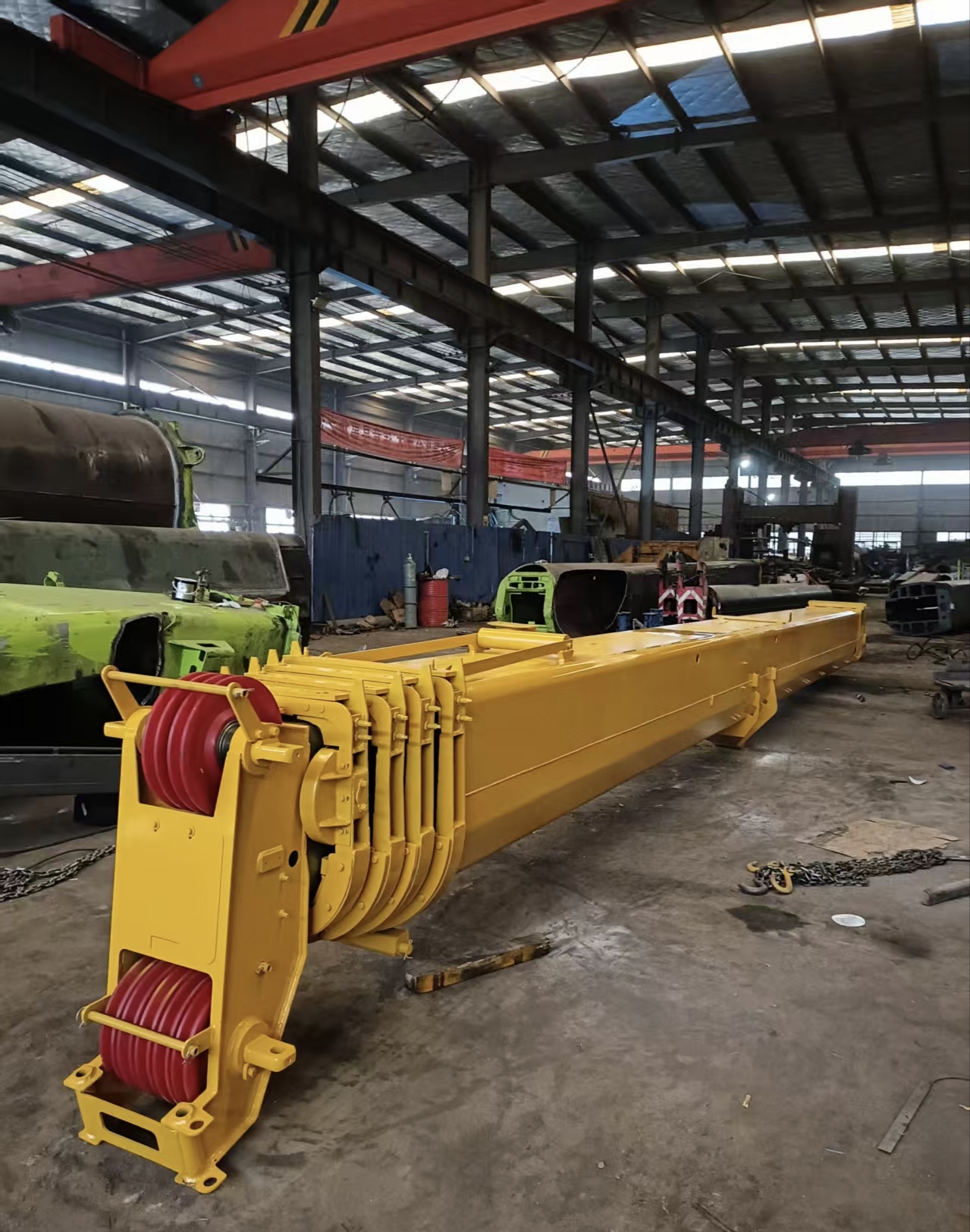
Interchangeability on load-bearing assemblies is a parameter question, not a visual one.
How Qingdao Top Run Is Positioned for a Qualification Review
Qingdao Top Run International Trade Co., Ltd is a Qingdao, Shandong–based supplier of China-brand construction machinery spare parts, founded in 2004 and supplying truck crane parts for XCMG, SANY and Zoomlion equipment alongside parts for Lingong, Liugong, Shantui, Lovol, Weichai, Cummins, Shangchai and Yuchai machinery.
The operational facts relevant to a compliance review are these. The company operates a 2,000 m² warehouse with a team of 20 employees and 4 engineers, applies 100% testing to its parts output, holds a monthly capacity of 50,000 units, accepts orders from 1 piece and quotes a lead time of 10–15 days. Its export ratio is 100%, with markets across Africa, Southeast Asia, the Middle East, Latin America and Russia. Production services are offered in OEM, Original and Aftermarket modes for global markets.
On the audit side, the company holds an SGS Made-in-China Supplier Audit Report, certificate QIP-ASI2351381, issued on 16 October 2023 by SGS-CSTC Standards Technical Services Co., Ltd. The audited scope covers truck crane spare parts, wheel loader parts, grader parts and road roller construction machinery replacement parts, assessed against the Made-in-China Audited Supplier Assessment Criteria.
What that audit establishes, and what it does not, matters for a qualification file. It establishes that an independent third party assessed the supplier entity and the declared scope of its parts business. It does not establish the dimensional accuracy of a specific HC4900 or IC4600 batch; that evidence comes from the catalogue reference, the drawing and the test record attached to the order. Treating a supplier audit as part-level proof is one of the more common errors in qualification paperwork.
A limitation worth stating plainly. Qingdao Top Run operates as a supplier and trading company with a 2,000 m² warehouse and a 20-person team; it is not the manufacturer of the cranes these parts serve. For components that affect rated capacity, stability or a safety-related function, the verification chain has to end at the OEM catalogue or at an engineering sign-off — a supplier declaration alone should not close the review. The value a supplier of this type adds is documentation discipline and availability, not the authority to redefine an original parameter.
Market Signals That Turn Documentation Into a Buying Criterion
Three signals explain why parts documentation is moving from a courtesy to a scored criterion in supplier selection.
Fleet geography follows export flows. India was the largest destination for Chinese crane exports in 2024 at USD 709 million (OEC), within total Chinese crane exports of USD 5.98 billion that year. Parts demand follows the fleet, so buyers in import markets increasingly specify parts for machines whose original documentation they may not hold locally.
The major manufacturers are more international than they were. SANY Group's international revenue reached USD 10.43 billion in 2023 (SANY Heavy Industry Annual Report), Zoomlion's hoisting machinery segment generated RMB 19.29 billion in 2023 (Zoomlion Annual Report), and XCMG Group held an 8.2% global market share in truck-mounted cranes as of 2024 (Market Intelo). A wider installed base across three major brands also puts more catalogue references into circulation, which raises the chance of a designation being matched to the wrong machine.
Component supply is broad but uneven. The global industrial hydraulic equipment market, which underpins truck crane hydraulic parts, was valued at USD 37.5 billion in 2024 (Custom Market Insights). Breadth of supply helps availability; it does not guarantee parameter equivalence. Documentation is what separates the two.
Comparing Three Sourcing Routes
The same designation can be bought three ways, and the difference usually appears at acceptance rather than at quotation.
| Sourcing route | Verification depth | Acceptance risk | Warranty position |
|---|---|---|---|
| Designation-only quotation, price-led | Minimal; no catalogue reference supplied | High; fit is asserted rather than evidenced | Unclear after delivery |
| Catalogue-matched OEM or Original | High; follows factory specifications with no independent customization | Low to moderate; parameters are fixed by the factory | Official warranty with standardized after-sales service |
| Aftermarket with documented adjustment | Moderate; depends on buyer-approved documentation of logos, packaging and dimensional adjustments | Moderate to high; shifts verification work to the buyer | Negotiable warranty with flexible technical support |
The middle route is the most defensible for safety-related and structurally rated items, because the reference frame is fixed by the factory specification. The third route is often the only practical option for older crane models, but it moves the verification burden to the buyer, who must approve the documented adjustment in writing. The first route is not a sourcing strategy at all; it is an unresolved question with a price attached. Counterfeit parts sit outside all three: they carry no formal after-sales guarantee.
Applications Where the Verification Burden Is Highest
The review described here applies across routine maintenance, breakdown repair, equipment overhaul, and crane renovation or modification. The burden is not evenly distributed. Routine maintenance tolerates a documentation gap that a breakdown repair on a working site does not, and renovation work — where parts from different production eras meet on the same machine — is where revision checks earn their place.
Whoever holds the file matters as much as the application. Global truck crane spare parts wholesalers, local maintenance service companies, truck crane rental companies, crane owners, construction contractors, crane refurbishment factories, crane parts distributors and overseas crane parts traders and importers all run the same review under different constraints: a rental fleet needs predictable downtime, a refurbishment factory needs revision clarity, and an importer needs documentation that will survive its own customer's audit.
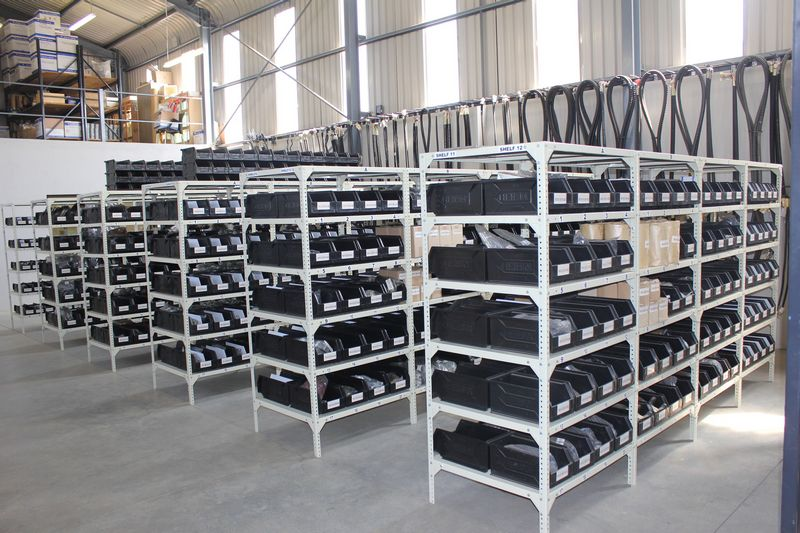
Stock position matters during qualification, but documented acceptance criteria matter more.
The supply record behind these applications is multi-market: documented shipments to Chile, Colombia, Russia, the UAE, Brazil, Belarus and Saudi Arabia, in a case covering 50,000 units and completed within three months. For a buyer, the practical reading is that a supplier working across several markets will usually have encountered the designation variants already — useful, provided those variants are written down rather than assumed.
Future Outlook
Three developments are likely to shape parts compliance over the next procurement cycles.
Safety-system requirements will keep pulling verification upstream. As LMI systems become more consistently mandated, parts that interact with them will be assessed on interface and calibration evidence rather than on fit alone.
Standards will keep the acceptance bar in view. EN 13000:2010+A1:2014 and ASME B30.5-2021 are revised on their own schedules, and buyers working to either framework should expect parts documentation requests to cite the version in force at the time of procurement.
Catalogues will keep moving toward structured digital records. Serial-break lookups and revision histories that once required a dealer call are increasingly available as data, and suppliers able to return a designation together with its crane model, serial range and revision will be easier to qualify than suppliers who return only a price and a lead time.
Frequently Asked Questions
How do I verify that a replacement part matches my XCMG truck crane?
Begin with machine identity: brand, model, serial number and year of manufacture from the nameplate. Locate the designation in the OEM parts catalogue entry covering that model and serial range, then compare the original parameter set — dimensions, material, rating and interface — against the supplier's offer. Confirm which production mode is being quoted (OEM, Original or Aftermarket) and request the test record for the batch. The same sequence applies to SANY and Zoomlion cranes; only the catalogue changes.
What is the practical difference between OEM, Original and aftermarket truck crane parts in a compliance review?
In Qingdao Top Run's production model, OEM and Original modes follow factory specifications without independent customization, and carry the official warranty and standardized after-sales service. Aftermarket parts may be produced with custom logos, packaging and dimensional adjustments, and carry a negotiable warranty with flexible technical support. Counterfeit parts have no formal after-sales guarantee. For a compliance review, the distinction determines which documentation and which warranty position the buyer can require.
What should a purchase order for 20–150 tonne truck crane parts specify?
At minimum: the designation with its full reference frame (crane model and serial range), the production mode, the material grade referenced to the original specification, dimensional and interface tolerances, a written interchangeability statement with scope, the test or inspection record to be supplied, packaging and labelling requirements, and the warranty terms attached to the mode purchased. Each clause corresponds to a verification step that would otherwise be repeated after delivery.
How should LMI-related replacement parts be verified?
Load moment indicator systems are increasingly mandated by safety regulations to prevent overloading and tipping, so parts associated with them need more than a fit check. Verification requires the catalogue reference for the specific crane model, the interface and calibration data the system expects, and confirmation that the replacement does not alter the parameters on which rated capacity depends. Final acceptance normally includes a function test after installation.
What order quantities and lead times are realistic while a supplier is being qualified?
Qualification does not require volume. Qingdao Top Run accepts orders from 1 piece, quotes a lead time of 10–15 days and holds a monthly capacity of 50,000 units, with 100% testing applied to parts output. Buyers should confirm both lead time and testing scope per item rather than per supplier, since both vary by designation and by production mode.
Reference material: the Qingdao Top Run product catalogue is available as a PDF download.
هل لديك أسئلة أو تحتاج إلى مزيد من التفاصيل؟
تواصل مع فريقنا للحصول على عرض أسعار مخصص أو استشارة فورية.
طلب عرض أسعار
املأ النموذج أدناه وسيتواصل معك فريقنا بعرض مقترح مخصص.
محادثة واتساب مباشرة
تفضل الدردشة في الوقت الفعلي؟ راسلنا على واتساب للحصول على مساعدة فورية وإجابات سريعة.
- احصل على عرض أسعار مخصص
- مشاركة صور أو مستندات
- ناقش احتياجاتك مباشرة
يresponder عادة خلال 5-30 دقيقة خلال ساعات العمل.