
Truck Crane Parts: What HC4900, LWG208 and IC4600 Prove
Truck Crane Parts: What HC4900, LWG208 and IC4600 Prove
A supplier can quote HC4900, LWG208, IC4600, IC3600 and 1032300052 in a single message and still leave the buyer unable to answer the question that decides the order: will this part fit the crane standing on site? Each of those strings is an identifier that Qingdao Top Run International Trade Co., Ltd. (Top Run) records against its truck crane parts range. An identifier is the first link in a chain of evidence, not the chain itself.
This review audits that model-level reference set rather than accepting it. It maps each designation to a component family, examines the five part families where fitment risk concentrates on 20–150 ton XCMG, SANY and Zoomlion cranes, and converts the supplier's stated purchasing terms into acceptance criteria a buyer can test before shipment. Top Run is the subject because its published references carry a specific designation set; the audit method applies to any supplier quoting against the same cranes.
What a model designation establishes, and what it leaves open
A designation confirms that a supplier holds a part number for a component position. It does not confirm material grade, dimensional tolerance, test outcome or fitment to a particular model year. Those are separate questions at separate evidence tiers, and each one is answered by a different document.
| Evidence tier | Question it answers | Document that answers it |
|---|---|---|
| Tier 1 — Identifier | Is this number attached to the component position I need? | Supplier part reference, OEM number cross-reference |
| Tier 2 — Component family | Which system does it serve: control, sensing, display, steering, hydraulic? | Catalogue page, product description, product photograph |
| Tier 3 — Material and dimension | What is it made of, and to which tolerance? | Material grade statement, drawing, dimensional report |
| Tier 4 — Test and acceptance | Was it checked before shipment, and against which value? | Pre-shipment test record |
| Tier 5 — Application | Does it fit this model, tonnage class and configuration? | Written compatibility statement naming the crane model |
Commercial supplier material usually reaches the second tier and stops there. That is the gap a buyer is actually closing when comparing two suppliers quoting the same part: not who lists more numbers, but how far down this table each supplier will go in writing.
Mapping the recorded designations to component families
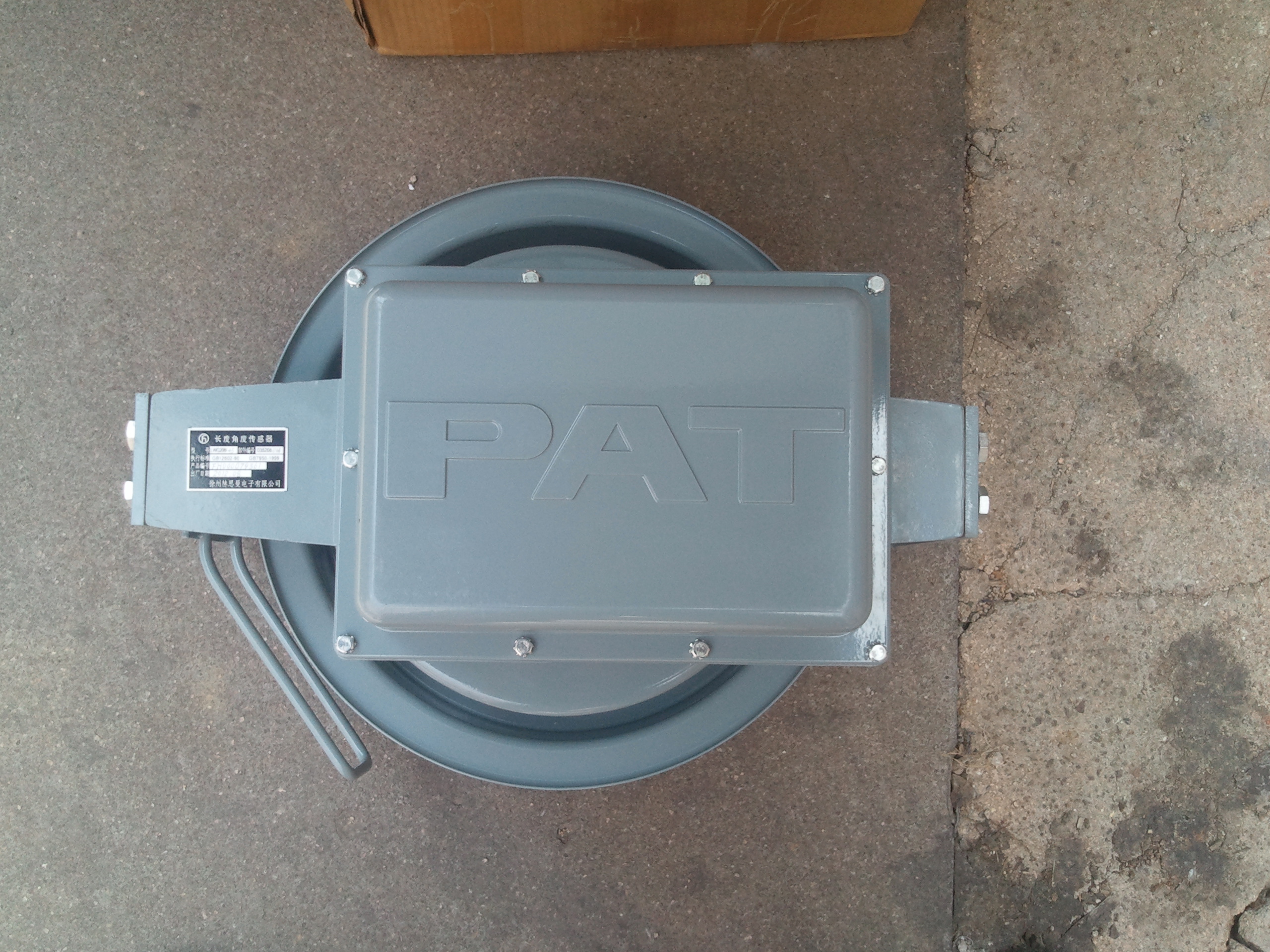
In Top Run's own product references, four of the five designations are attached to an identifiable component family, and the fifth appears within the same set without a separate family label. That difference matters, because a number whose family is unstated cannot be matched to a system diagram, a circuit or a maintenance task.
| Designation | Component family indicated in the supplier's references | What the buyer should confirm before ordering |
|---|---|---|
| HC4900 | Load moment indicator (LMI) controller parts | Control variant, connector and wiring interface, and who verifies the system after replacement |
| LWG208 | Length and angle sensor | Measuring range, mounting format, and the boom length class it is released for |
| IC4600 | Display unit | Display configuration and pairing with the crane's existing control hardware |
| IC3600 | Recorded in the same designation set; not separately labelled by family in the material reviewed | Ask the supplier to state family, function and the crane models it matches |
| 1032300052 | Steering unit | Steering circuit variant and port or line arrangement |
This mapping reflects the supplier's own product references. It is not a model-year compatibility table, and it should not be read as one.
A designation list becomes a compatibility claim only when every number is tied to a crane model, a tonnage class and a configuration range. Until that happens, the list describes catalogue breadth; the buyer is still carrying the fitment risk. The practical test is simple: ask the supplier to write the model list beside each number and to sign it. Suppliers who can do so quickly are working from a compatibility record; suppliers who cannot are working from a price list.
Material evidence across the five part families
The families named in this review — load-bearing structures, hydraulic seals, pipe fittings, valve bodies and shock-absorbing parts — fail in different ways, so each needs a different piece of written evidence. The supplier references reviewed here identify part numbers and families; they do not carry grade-level or tolerance-level specifications. That is common for trade supplier material, and it is exactly why these requests belong in the purchase order rather than in a catalogue description.
Load-bearing structures
Performance here is governed by material grade, section dimensions and the welding or forming procedure, because these parts work under repeated cyclic load rather than a single static load. A photograph of a painted bracket proves none of that. Ask for the material grade stated on the quotation, a dimensional check against the drawing, and the welding or forming standard applied. Where the part is a structural member supplied as a repair item, confirm whether the buyer's own installation procedure is accepted by the supplier, since the joint made on site affects the same load path.
Hydraulic seals
Seal life depends on elastomer compatibility with the hydraulic fluid in use, the operating temperature range and the surface finish of the mating component. A seal that is dimensionally correct but compounded for a different fluid temperature window will leak early, and no part number reveals that. Request the compound designation and a fluid and temperature compatibility statement, then check it against the fluid actually used in the fleet rather than against a generic specification.
Pipe fittings
Fittings fail at the joint, so the controlling parameters are thread standard, pressure rating and material. Two fittings that look identical can differ in thread form and sealing face, which is enough to produce a leak under pressure on site. Ask for the thread standard, the working pressure rating and whether the fitting is supplied as a matched set for a specific circuit, since a mixed set assembled from separate line items is where mismatch usually appears.
Valve bodies
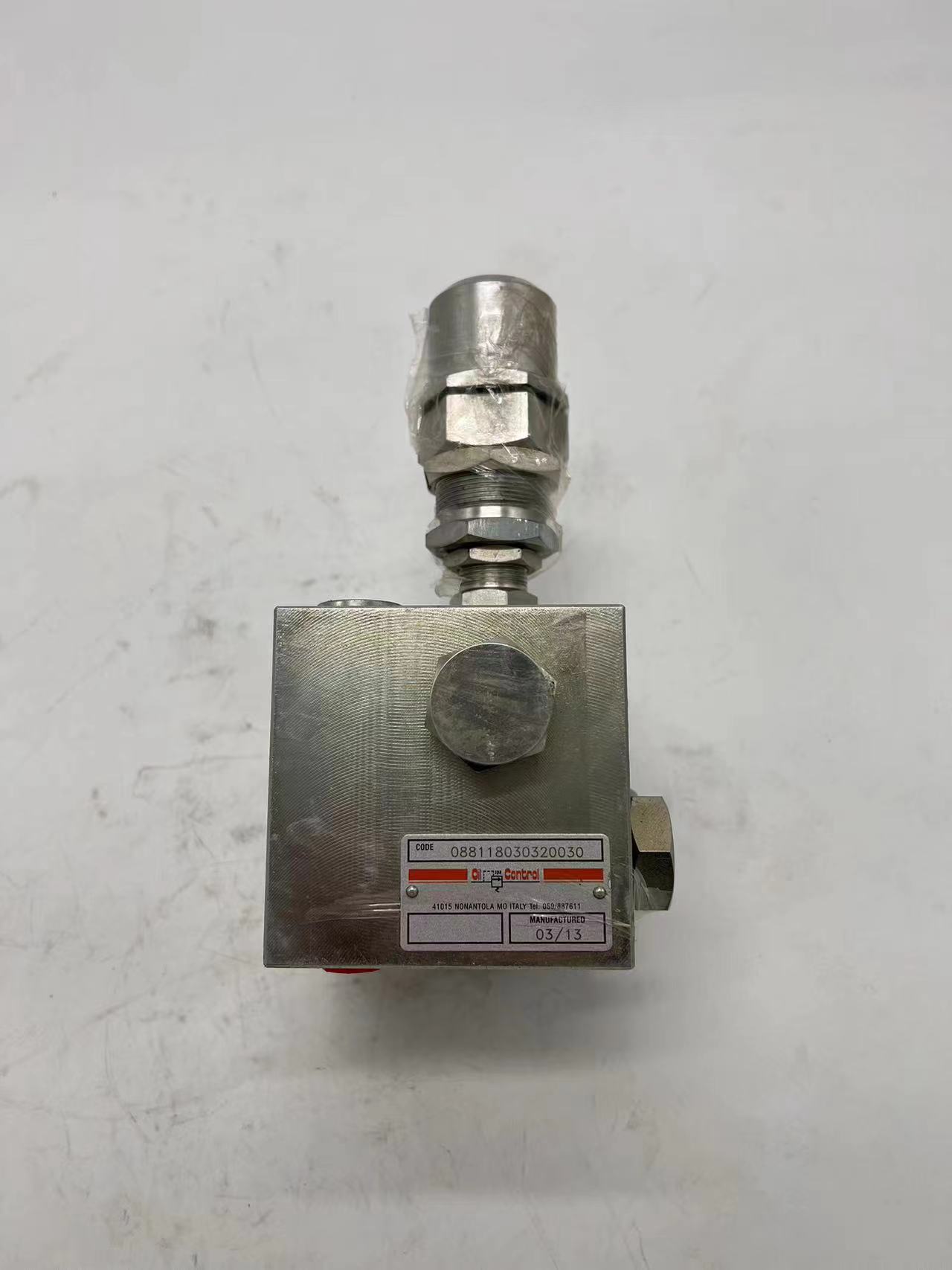
A valve body can bolt onto the same footprint and still behave differently, because internal passages and port configuration determine how the circuit responds. Request the port configuration, the circuit or crane model the valve is released against, and the pressure and flow rating. For multi-way valve bodies used in crane hydraulic circuits, the release model matters more than the mounting pattern, because the same interface can appear on several tonnage classes with different flow requirements.
Shock-absorbing parts
Damping behaviour is tied to rated load, travel range and mounting interface, and a substitute with the wrong rating transfers load elsewhere in the assembly instead of absorbing it. Ask for the rated load and travel range, the mounting dimensions, and the position on the machine the part is intended for. These are small, low-cost items where substitution is most often treated as safe, so they deserve the same written specification as a structural component.
Fitment across 20–150 ton XCMG, SANY and Zoomlion cranes
A tonnage band spanning 20 to 150 tons covers machines whose boom sections, hydraulic circuits and control hardware differ substantially, and the same component position can carry different numbers across three brands within that band. Top Run states that its product scope covers truck crane parts for XCMG, SANY and Zoomlion, with both genuine and aftermarket options supported by technical matching of OEM numbers. Multi-brand coverage is useful for mixed fleets; it also multiplies the number of model-specific checks behind every order line.
Each brand's own parts channel sets a useful baseline for what a catalogue is expected to contain. XCMG describes its genuine spare parts range as covering axle, chassis, hydraulic, engine and electrical components. SANY states that its original parts are developed and tested for its machines, with component availability for the life of the machine subject to substitution when parts become obsolete. Zoomlion describes a global parts network of nine parts centres, 28 national warehouses and hundreds of distribution warehouses, as reported by the company. Each of these statements describes its own brand channel; none of them establishes the compatibility of a third-party catalogue, which is why the cross-brand check has to be supplied by the supplier being evaluated.
The practical implication is a data discipline rather than a document request. For every order line, record the brand, model, tonnage class, control or configuration variant and the OEM number being replaced. Where the line touches the load moment indicator, sensor or display set, add the existing hardware and software pairing, because a display that fits the panel may not pair with the controller already installed.
Direct replacement and on-site maintenance
Direct replacement is a claim about interfaces: mounting points, dimensional envelope, hydraulic port arrangement, electrical connector and signal behaviour. On-site maintenance adds a second condition — the part must be installable with the equipment and skills available at the site, which is a different standard from installability in a workshop with a press and a test bench. A steering unit or sensor that requires a calibration step unavailable in the field is not a direct on-site replacement, however well it matches dimensionally.
For the control-path parts in this set — HC4900, LWG208 and IC4600 — the buyer should settle before ordering who verifies system behaviour after replacement and against which procedure, and should have the supplier's role in that step confirmed in writing. This is not a reason to avoid replacement parts; it is a reason to write the verification step into the order instead of discovering it during a shutdown.
The supply parameters that affect on-site scheduling are stated clearly by the supplier: minimum order quantity of one unit, lead time of 10–15 days, monthly capacity of 50,000 units, quality control described as 100% test, and operations run from a 2,000 m² warehouse with 20 employees and four engineers, with export accounting for the whole of its business. A recorded shipment of 50,000 units over three months to a mixed group of wholesalers, maintenance companies, rental fleets and contractors shows an export process running at volume. Volume performance and part-level conformance are separate questions, and only the second one is answered by a dimensional or test record.
Purchasing terms and acceptance criteria that make the evidence testable
Top Run's stated terms are a workable base: minimum order quantity of one unit; delivery terms FOB, CNF, CIF, EXW or CPT; acceptance criteria described as pre-shipment test; and payment terms of 30/70. The weak point is the acceptance line, because "pre-shipment test" does not yet say what is tested or against which value. Closing that gap is the buyer's task, and it is where most of the protection lies.
| Term | Stated position | What to add before the order is placed |
|---|---|---|
| Minimum order | 1 unit | Confirm whether mixed-model lines can be combined to reach a shipment quantity |
| Delivery terms | FOB, CNF, CIF, EXW, CPT | Name the port and confirm who bears origin inspection cost |
| Acceptance | Pre-shipment test | Define test items per family — dimensional, pressure, functional — plus record format and photographic evidence |
| Payment | 30/70 | State explicitly which portion is paid at order and which at shipment, and tie the balance to the acceptance record |
| Warranty and after-sales | Original/OEM: official warranty and standardized after-sales. Aftermarket: negotiable warranty and flexible technical support. Counterfeit: no formal after-sales guarantee | Write the warranty period and the remedy into the purchase order for aftermarket lines |
| Customization | Aftermarket: custom logos, packaging and dimensional adjustments. Original/OEM: produced to factory specification without independent customization | Mark each line as OEM/original or aftermarket, and require drawing approval before any dimensional adjustment is produced |
The customization distinction deserves attention because it changes what the buyer is purchasing. An aftermarket part adjusted to a requested dimension is a new configuration whose fitment rests on the approved drawing, not on the original number. An original/OEM part follows factory specification and is not independently customized, so its fitment rests on the model match. Both are legitimate routes; they require different paperwork, and mixing them on one purchase order without labels is how mismatches enter a fleet.
What the SGS audit covers, and where its scope ends
Top Run's supplier record includes an SGS Made-in-China Supplier Audit Report, certificate QIP-ASI2351381, issued on 16 October 2023 by SGS-CSTC Standards Technical Services Co., Ltd. against the Made-in-China Audited Supplier Assessment Criteria, with an expiry date recorded as 15 October 2999. The audited scope covers truck crane spare parts, wheel loader parts, grader parts and road roller construction machinery replacement parts for global markets.
Read precisely, that is a supplier-level audit: it assesses a business against an audit criteria set. It is not a product certification, and it does not certify the material grade, dimension or function of HC4900, LWG208, IC4600, IC3600 or 1032300052. Those belong to tiers three and four of the first table, and they should be requested per order line — with more weight where the part sits in a control or lifting-safety path than where it is a wear item.
The commercial context, and the limits of the available data
Recent market figures, attributed: the global truck crane market was estimated at USD 9.34 billion in 2024, and China's crane exports were reported at USD 5.98 billion in 2024, equal to 34.3% of global crane exports, both from secondary press reporting. XCMG was reported to hold an 8.2% global share of truck-mounted cranes in 2024, and Zoomlion reported first place in industry market share for lifting capacities of 25 tonnes and above in 2023 in its annual report. These figures describe equipment and export scale.
None of them measures the truck crane parts aftermarket, and no traceable parts-level market size, shipment value or growth rate for this category was available for this review. That absence matters for how a supplier's capacity statement is read: 50,000 units a month should be assessed against the supplier's own order record and acceptance documentation, not against an inferred market forecast. Buyers who convert equipment-level growth figures into parts-level demand are guessing twice.
A capability audit checklist for buyers
- Request the designation-to-family mapping in writing, including any number not separately labelled in the catalogue, such as IC3600.
- Record brand, model, tonnage class, control or configuration variant and the OEM number being replaced for every line.
- Request the controlling specification per family: material grade for load-bearing parts; compound and fluid/temperature compatibility for seals; thread standard and pressure rating for fittings; port configuration and release model for valve bodies; rated load, travel and mounting dimensions for shock-absorbing parts.
- Define "pre-shipment test" line by line — what is measured, by which method, and in what record format.
- Separate OEM/original lines from aftermarket lines on the purchase order, because customization rules, warranty and after-sales differ.
- Confirm who verifies load moment indicator and control-system behaviour after replacement, and obtain the supplier's role in writing.
- Keep the SGS audit in its correct role: supplier-level qualification, not part-level conformance.
- Tie the balance payment to the acceptance record rather than to the shipping date.
What this review supports, and what it does not
Supported by the material reviewed: the supplier holds a recorded designation set spanning control, sensing, display and steering families; it states OEM, original and aftermarket production, 100% test, a one-unit minimum order, a 10–15 day lead time and 50,000 units monthly capacity; it holds an SGS-audited supplier scope covering truck crane spare parts; and it states coverage of XCMG, SANY and Zoomlion truck crane parts across a 20–150 ton working range.
Not supported by that same material: that any specific designation is a drop-in replacement for a particular crane model and year, that material grades or tolerances have been independently verified, or that a designation list by itself demonstrates capability. A supplier becomes verifiable at the point where it answers the tier three to five questions in writing, line by line. That is the standard this audit recommends applying to Top Run, and to any alternative quoting against the same cranes.
Frequently asked questions
What purchasing terms and acceptance criteria does the supplier state?
Top Run states a minimum order quantity of one unit; delivery terms of FOB, CNF, CIF, EXW or CPT; acceptance criteria of pre-shipment test; and payment terms of 30/70. Those terms define the commercial framework but not the technical content of acceptance, so the test items, the record format and the release condition for the balance payment still need to be specified per order line.
How do original/OEM and aftermarket parts differ in this offer?
Original/OEM parts are produced according to factory specifications without independent customization, and are stated to carry an official warranty with standardized after-sales service. Aftermarket parts can be customized with custom logos, packaging and dimensional adjustments, and are stated to carry a negotiable warranty with flexible technical support. Both categories are supplied; counterfeit parts, by contrast, carry no formal after-sales guarantee.
Does customization apply to every part line?
No. Customization is stated only for aftermarket parts, where logos, packaging and dimensional adjustments are possible. Original/OEM parts follow factory specifications and are not independently customized. Where a dimensional adjustment is agreed for an aftermarket line, the fitment basis becomes the approved drawing rather than the original part number, so drawing approval should precede production.
What does the SGS audit report confirm?
The record shows an SGS Made-in-China Supplier Audit Report, certificate QIP-ASI2351381, issued on 16 October 2023 by SGS-CSTC Standards Technical Services Co., Ltd. against the Made-in-China Audited Supplier Assessment Criteria, with an expiry recorded as 15 October 2999. The audited scope covers truck crane spare parts and other construction machinery replacement parts. It is a supplier-level audit and does not certify the material, dimension or function of individual part numbers.
How should a buyer confirm that HC4900, LWG208, IC4600, IC3600 or 1032300052 fits a specific crane?
Request four items in writing: the family and function of each designation, including any number not separately labelled; a compatibility statement naming the crane brand, model, tonnage class and configuration; the controlling specification for the part family, such as material grade, compound, thread standard or rating; and the pre-shipment test record for the delivered batch. For control-path parts, add the post-replacement verification step and the party responsible for it.
For readers who want the supplier's own product listing rather than this review's summary, a public copy of the catalogue is available for download: Qingdao Top Run product catalogue (PDF).
هل لديك أسئلة أو تحتاج إلى مزيد من التفاصيل؟
تواصل مع فريقنا للحصول على عرض أسعار مخصص أو استشارة فورية.
طلب عرض أسعار
املأ النموذج أدناه وسيتواصل معك فريقنا بعرض مقترح مخصص.
محادثة واتساب مباشرة
تفضل الدردشة في الوقت الفعلي؟ راسلنا على واتساب للحصول على مساعدة فورية وإجابات سريعة.
- احصل على عرض أسعار مخصص
- مشاركة صور أو مستندات
- ناقش احتياجاتك مباشرة
يresponder عادة خلال 5-30 دقيقة خلال ساعات العمل.