
Truck Trailer Powder Tanker Specs: Air Discharge & Pressure
Truck Trailer Powder Tanker Specs: Air Discharge & Pressure
A cement distribution fleet is judged by how quickly a sealed trailer can empty itself into a silo, not by how much it can carry on paper. The equipment that performs that task — the powder tank semi trailer, also known as a bulk cement tanker trailer, pneumatic dry bulk trailer, dry bulk tanker or cement bulker trailer — unloads its cargo with compressed air instead of a tipping cylinder. That single design choice is why three values dominate every technical conversation about the product: tank volume, working pressure and discharge reach.
Shandong Luen Auto Co., Ltd., which markets under the name Luen Auto, is a Chinese manufacturer and exporter of semi-trailers and special-purpose vehicles based at Xuji Industrial Park, Liangshan County, Jining City, Shandong Province. Founded in 2020, the company operates a factory of more than 50,000 m² with 130+ employees, an annual output of 1,500 units and a five-engineer R&D team, and exports roughly 80% of its production to markets in Africa, South America and the Middle East. Its powder tank semi trailer range is the reference product for the values discussed in this technical FAQ.
Why Air Discharge, Not Gravity, Sets the Specification
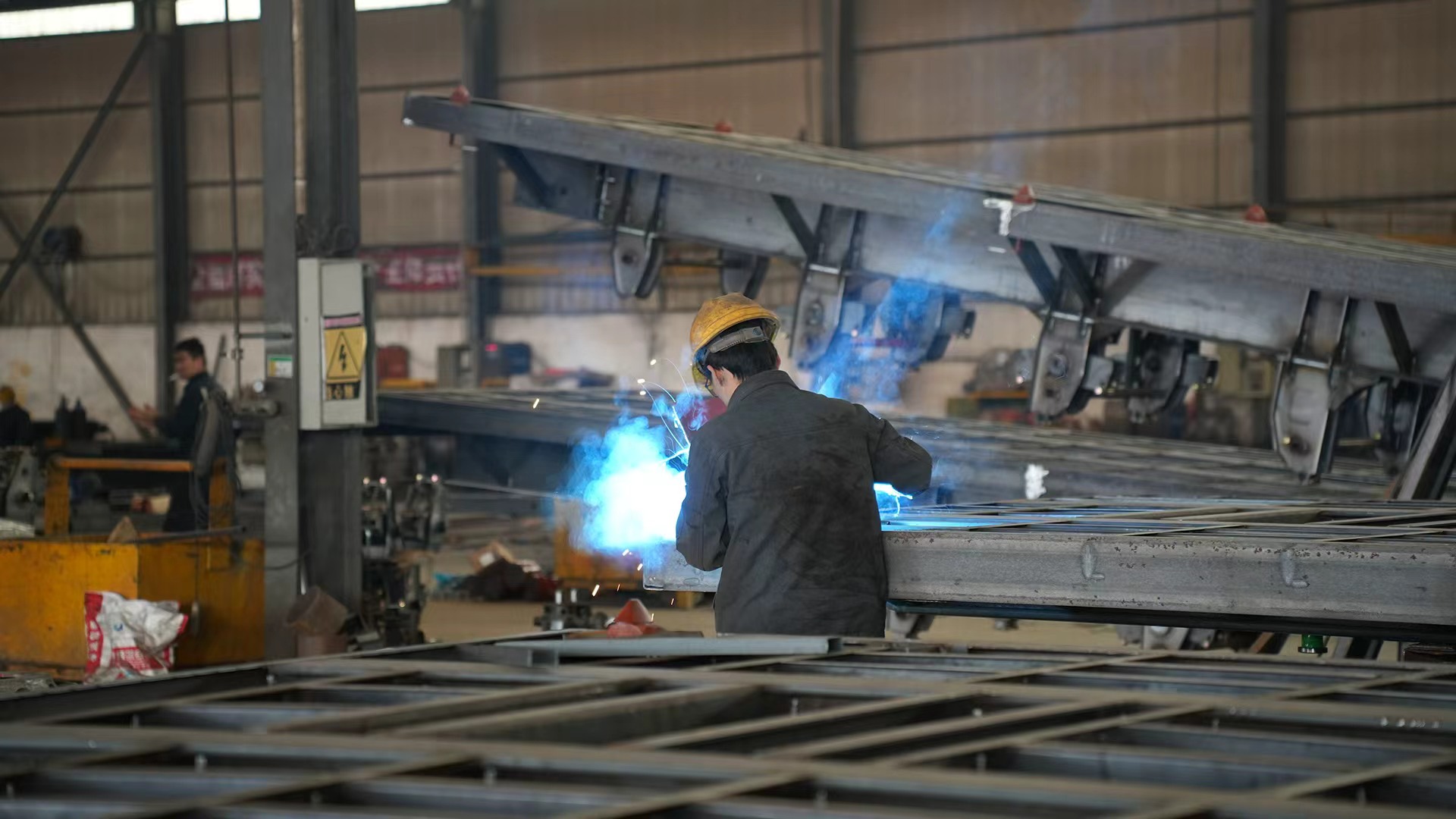
Pneumatic discharge is a fluidisation process. The powder inside the tank is not released through a hatch; it is aerated with compressed air until it behaves like a liquid, then conveyed through a discharge pipe to the receiving silo, batching hopper or transfer vessel. In operational terms the tank behaves as a pressure vessel, so its performance is defined by pressure, airflow and line geometry rather than by tipping angle or hoist capacity.
The practical consequence for a buyer is that the trailer cannot be evaluated in isolation. Discharge performance is a relationship between the trailer and the receiving point: how high the powder must be lifted, how far it must be pushed, and what material is being handled. Two buyers can order the same tank volume and obtain very different unloading results, because their sites differ.
What the 40 m³ and 50 m³ Design Criteria Actually Mean
Luen Auto builds its powder tank semi trailer family across tank volumes of 32, 40, 45, 50 and 60 m³. The named configurations include the 3-axle 40 m³ bulk cement trailer, the 3-axle 50 m³ powder tanker, the 3-axle 60 m³ dry bulk trailer and an aluminum alloy powder tanker variant. The 40 m³ and 50 m³ design points, the two most commonly specified for cement distribution, sit inside one shared engineering envelope rather than representing two unrelated vehicles.
Across the range the trailer runs on 3 axles rated at 13 t each, with a GVW of 40,000–42,000 kg and a payload window of 25,000–35,000 kg. Overall length is 11,000–12,500 mm, overall width 2,480–2,500 mm and overall height 3,900–4,200 mm, with a 2 inch or 3.5 inch king pin. The tank is built in 4–6 mm plate in Q345B carbon steel as standard, or in 5083 aluminum alloy for the lightweight variant, with stainless steel discharge pipe fittings, butterfly valves and rubber seals.
Reading those numbers together produces the rule that governs the volume decision: because GVW and axle ratings are fixed, the weight the combination may legally carry is also fixed. What changes between a 40 m³ and a 50 m³ tank is how much volume is available to reach that weight with a particular material.
Working Pressure and Test Pressure: Two Numbers That Are Frequently Confused
The pneumatic dry bulk trailer in this family operates at a working pressure of 0.196–0.2 MPa, approximately 2 bar. Its test pressure is 0.26 MPa (2.6 bar).
Working pressure is the operating ceiling — the maximum pressure at which normal discharge is carried out. Test pressure is a verification value used to confirm that the tank, its piping and its seals hold above the operating envelope. It is not an instruction to discharge at 0.26 MPa, and a specifier who reads it as a performance figure will misjudge the system.
The margin between the two values is effectively the design allowance a buyer inspects when comparing pressure data across suppliers. A narrow margin is not automatically a weakness and a wide margin is not automatically a strength; what matters is that the operating figure is stated clearly and that the discharge routine stays inside it.
Air supply for the system comes from a PTO-driven compressor or an engine-mounted unit. A PTO-driven compressor takes its power from the tractor power take-off, while an engine-mounted compressor carries its own prime mover. Fleets that rotate tractors between trailers, or that run tractors without a suitable PTO, should confirm which arrangement their combination supports during specification rather than after delivery.
How the Pressure Range Translates Into Unloading Performance
Pressure only becomes a procurement criterion when it is converted into real unloading behaviour. For this trailer family the published discharge figures are a discharge speed of 1.6 tons per minute, a vertical discharge height of up to 15 m, a horizontal discharge distance of up to 5 m, and a maximum particle size of ≤0.1 mm diameter material.
Those figures describe a single envelope. The same air supply has to fluidise the powder, lift it against gravity and push it along the line, so a receiving point that combines a high lift with a long horizontal run sits at the demanding end of that envelope. A silo inlet positioned directly above the trailer discharge connection is the easy case; a silo reached across a congested site, or over a wall or bund, is not.
Two of the values are hard boundaries rather than performance targets. The ≤0.1 mm particle size limit defines what the pneumatic system is designed to convey — cement, fly ash, lime, flour, chemical and mineral powders sit inside the scope, while coarser granular material does not. The 5 m horizontal discharge distance is a site-planning constraint as much as an engineering one: if the receiving point cannot be reached from where the trailer can legally park, the correct answer is a different line configuration or a different handling method, not a higher pressure setting.
Tank Volume and Aggregate Density: Where Compliance Is Decided
The payload window of 25,000–35,000 kg is set by the GVW of 40,000–42,000 kg and by three axles rated at 13 t each. It does not expand when the tank grows. That is why a 50 m³ tank and a 40 m³ tank reach their legal payload at different material densities.
The relationship runs in one direction: lighter powders fill volume before they reach weight, and denser powders reach weight before they fill volume. Fly ash and comparable light dry bulks can exhaust the usable volume of a smaller tank well before the payload limit is approached, which makes a larger body — or the aluminum alloy powder tanker variant, which reduces tare to free up payload — the logical specification. Denser mineral powders and settled cement reach the payload ceiling with volume still unused, so a larger tank simply carries empty space and additional tare.
Because dry bulk density varies between materials and shifts with aeration and settling, the volume decision should be taken against the material the fleet will actually carry rather than against a generic assumption. The test is simple: with this material at its working density, does the combination reach the payload window without exceeding the GVW or the 13 t per-axle rating? The tank volume that satisfies that test is the compliant one. A larger volume is not an upgrade if it pushes the combination over weight.
Powder Tank Semi Trailer: Reference Specification Table
| Parameter | Specification |
|---|---|
| Product type | Powder tank semi trailer / bulk cement tanker trailer / pneumatic dry bulk trailer / dry bulk tanker / cement bulker trailer |
| Tank volume | 32 / 40 / 45 / 50 / 60 m³ |
| Discharge system | Pneumatic (compressed air fluidisation) |
| Working pressure | 0.196–0.2 MPa (2 bar) |
| Test pressure | 0.26 MPa (2.6 bar) |
| Air compressor | PTO-driven or engine-mounted |
| Discharge speed | 1.6 tons/min |
| Vertical discharge height | Up to 15 m |
| Horizontal discharge distance | Up to 5 m |
| Particle size | ≤0.1 mm diameter materials |
| Payload | 25,000–35,000 kg |
| GVW | 40,000–42,000 kg |
| Axles | 3 axle (13 t each) |
| Tank material and thickness | Q345B carbon steel or 5083 aluminum alloy / 4–6 mm |
| Service parts | Stainless steel discharge pipe fittings, butterfly valves, rubber seals |
| Overall dimensions | 11,000–12,500 mm L × 2,480–2,500 mm W × 3,900–4,200 mm H |
| King pin | 2 inch or 3.5 inch |
| Body variants | V-type cone bottom discharge; W-type multi-cone discharge |
Application Fit: Where Pneumatic Dry Bulk Trailers Earn Their Place
The applications listed for this trailer family are cement manufacturing and distribution, construction material supply, power plant fly ash disposal, lime and chemical powder logistics, flour milling and grain processing, and road and bridge construction. The list is not decorative — each entry stresses a different part of the specification.
- Cement manufacturing and distribution: the trailer feeds plant silos and distribution terminals, where the receiving point is usually a fixed inlet that the pneumatic line can reach directly.
- Construction material supply and road and bridge construction: the discharge geometry, not the highway range, decides whether the trailer can serve a temporary batching location.
- Power plant fly ash disposal: a light material that typically fills volume before it reaches the payload ceiling, making tank volume and tare control the decisive variables.
- Lime and chemical powder logistics, flour milling and grain processing: sealed pneumatic conveying keeps the product inside a closed line from tank to receiving vessel.
Market Context for Dry Bulk Equipment
The global semi-trailer market was estimated at USD 22.8 billion in 2024 and is projected to reach USD 42.3 billion by 2033, according to Grand View Research. Dry bulk equipment is a specialised part of that total, and its purchasing logic follows the material being moved rather than general freight demand — a distinction that matters when a fleet compares a powder tanker against a general-purpose platform trailer.
Regulatory context also differs by market. In the United States, trailers with a GVWR above 10,001 lbs fall under the annual safety inspection requirement set out at 49 CFR 396.17, which places pressure-system condition inside the fleet recurring compliance routine rather than in a one-off commissioning check. In Europe, dangerous-goods transport in fuel and chemical tank trailers is governed by the ADR Agreement, while dry bulk powders are assessed against their own material classification. Buyers should confirm which regime their cargo falls under before finalising a specification.
Limits and Trade-offs Compared With Traditional Powder Handling
The traditional alternative to a pneumatic dry bulk trailer is bagged cement moved on a flatbed semi trailer or van semi trailer, then offloaded manually, by forklift or by crane. The two methods are not interchangeable, and the comparison is only useful when the trade-offs are stated plainly.
| Decision factor | Powder tank semi trailer (pneumatic) | Bagged cement on flatbed or van trailer |
|---|---|---|
| Unloading method | Compressed-air fluidisation and pneumatic conveying through a discharge pipe | Manual, forklift or crane handling of individual bags |
| Containment | Sealed system; powder is conveyed inside a closed line | Open handling at filling, stacking and breaking of bags |
| Site requirement | Air supply at the trailer; receiving point within 15 m vertical and 5 m horizontal discharge geometry | Hard standing, labour and lift equipment at the discharge point |
| Material scope | Dry powders up to ≤0.1 mm particle size | Any material that can be bagged, regardless of particle size |
| Weight efficiency | Payload 25,000–35,000 kg inside a GVW of 40,000–42,000 kg; volume must be matched to material density | Payload limited by pallet weight and volume; packaging weight is carried but not sold |
| Delivery flexibility | Powder arrives as a single sealed batch at one receiving point | Bags can be split across several drop points |
The limitation that most often decides against a pneumatic dry bulk trailer is not the tank or the purchase price; it is the particle-size and geometry envelope. Material coarser than 0.1 mm sits outside the design intent of the fluidisation system, and a receiving point beyond 5 m horizontally or 15 m vertically cannot be served by the trailer as specified. In both situations a different handling method is the technically correct answer.
The air supply is also a maintenance item rather than a permanent feature. Whether the compressor is PTO-driven or engine-mounted, the compressor and its discharge line require scheduled attention, and a trailer whose air supply is not serviceable is a static tank. Buyers evaluating whole-life cost should treat compressor maintenance as part of the specification, not as an afterthought.
Customization and Manufacturing Control Behind the Specification
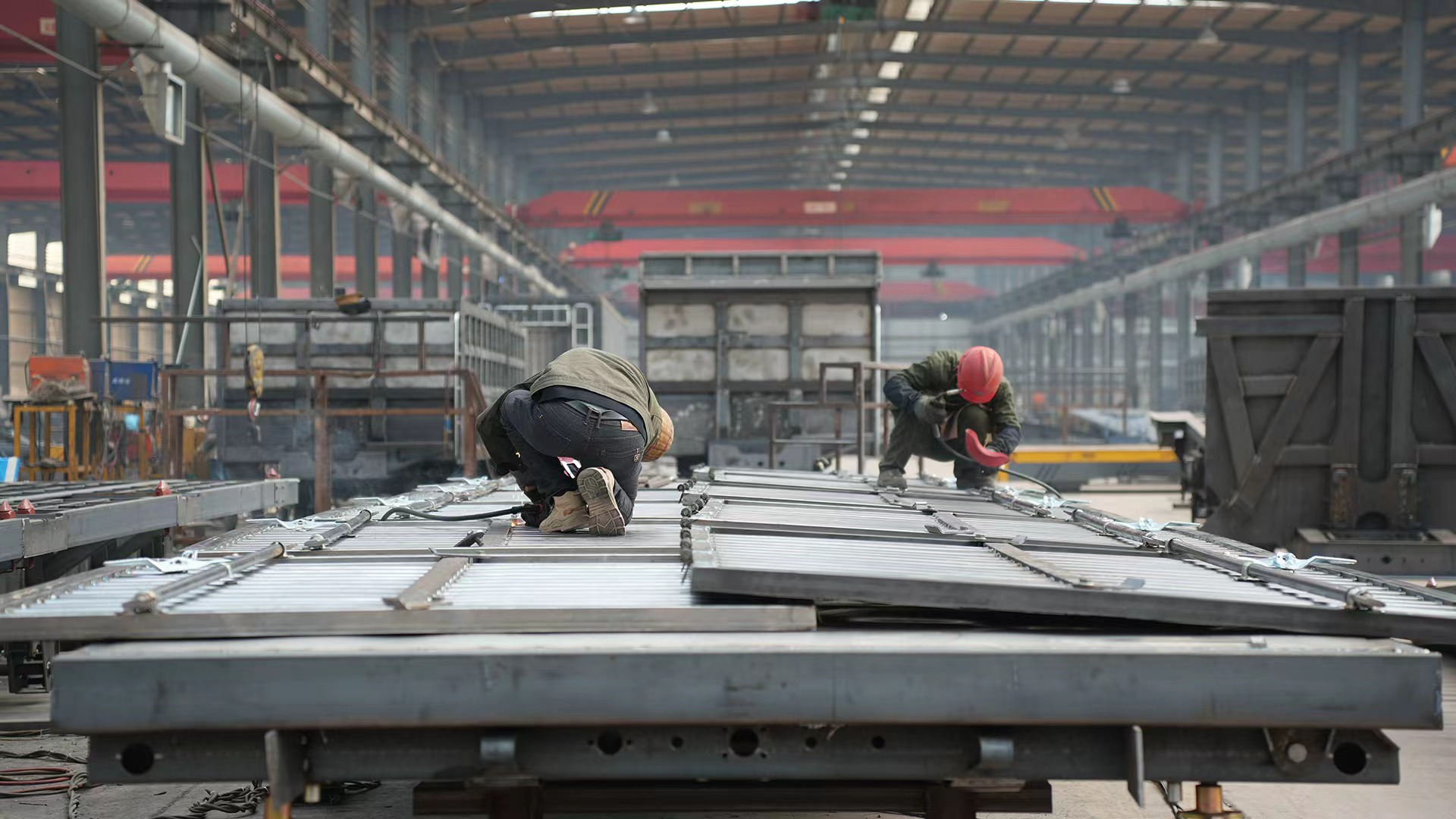
Because a powder tanker is specified around a material and a site, customization is the normal ordering route on this product type rather than an optional extra. The manufacturer offers full vehicle customization, including trailer type, dimensions, axle configuration, and more, alongside both factory-direct manufacturing and OEM production services. Documented customization scope covers trailer type, overall dimensions, axle configuration, load rating, beam structure, suspension type, rim and tire specifications, landing gear, kingpin, paint and coating, and branding or logo. OEM services and factory-direct manufacturing are available globally.
Commercial terms follow the same logic. Minimum order quantity is 1 unit for standard models, with a flexible MOQ for trial orders and sample evaluation. Lead time is 30–45 days for standard configurations, while custom orders are negotiated according to specification complexity. Quality control includes 100% factory inspection before shipment.
Manufacturing quality management is covered by ISO 9001 certification issued by ZHONGNUO CERTIFICATION CO., LTD. (certificate 47424Q2464R0S, standard GB/T 19001-2016 / ISO 9001:2015, valid from 2024-10-09 to 2027-10-08) with a scope covering the sale of semi trailers, semi trailer parts and tractors. Warranty terms are six months on trailer driving and supporting devices and one year on trailer carrying devices, with multilingual sales support available through WhatsApp for pre-sale specification questions.
Future Outlook
Two directions are visible in dry bulk equipment without needing to forecast beyond the available evidence. The first is weight efficiency: the aluminum alloy powder tanker variant exists precisely because reducing tare converts directly into payload inside a fixed GVW, and that pressure does not disappear in a market where axle load enforcement tightens rather than loosens. The second is verification discipline: as trailer fleets age, pressure-system inspection moves from a commissioning event to a recurring programme, and buyers who can document working pressure, test pressure and inspection history will find that easier to defend than those who cannot.
Bulk pneumatic handling will not eliminate bagged supply entirely, particularly in fragmented distribution networks where a single large sealed batch does not match how material is sold. The realistic expectation is continued coexistence, with the powder tank semi trailer taking the high-volume, fixed-receiving-point work and bagged handling covering the dispersed remainder.
FAQ
What tank volumes are available on a powder tank semi trailer?
Tank volumes of 32, 40, 45, 50 and 60 m³ are available, with named configurations that include the 3-axle 40 m³ bulk cement trailer, the 3-axle 50 m³ powder tanker, the 3-axle 60 m³ dry bulk trailer and an aluminum alloy powder tanker variant. All of them share the same operating envelope: 3 axles rated at 13 t each, a GVW of 40,000–42,000 kg and a payload window of 25,000–35,000 kg.
What is the difference between working pressure and test pressure on a bulk cement tanker trailer?
Working pressure is 0.196–0.2 MPa (approximately 2 bar) and represents the ceiling for normal pneumatic discharge operation. Test pressure is 0.26 MPa (2.6 bar) and is a verification value used to confirm that the tank, piping and seals hold above the operating envelope. Discharge is carried out within the working pressure range, not at the test pressure.
How is the powder discharged, and what materials can the system handle?
Discharge is pneumatic, using compressed air fluidisation: the powder is aerated inside the tank and conveyed through a discharge pipe to the receiving point. The system is designed for materials of ≤0.1 mm diameter, which covers cement, fly ash, lime, chemical powders, mineral powders, and flour or grain powders. Discharge pipe fittings are stainless steel, with butterfly valves and rubber seals, and the tank body is available with V-type cone bottom discharge or W-type multi-cone discharge.
What discharge performance does the trailer deliver?
The published figures for this range are a discharge speed of 1.6 tons per minute, a vertical discharge height of up to 15 m and a horizontal discharge distance of up to 5 m. These describe the design envelope rather than a guaranteed result at every site: lift height and line length both draw on the same air supply, so the receiving geometry determines where within the envelope a given installation actually operates.
How should a buyer choose between a 40 m³ and a 50 m³ tank?
The decision depends on the density of the material carried, because the payload window of 25,000–35,000 kg is fixed by the GVW of 40,000–42,000 kg and the 13 t per-axle rating. Lighter powders such as fly ash tend to fill volume before reaching that payload limit, which favours a larger tank or a lightweight aluminum alloy body. Denser powders and settled cement reach the payload ceiling with volume to spare, where a smaller tank avoids carrying unusable volume and extra tare. The compliant choice is the volume that lets the combination reach the payload window without exceeding GVW or axle load with the actual material.
Can the trailer be customized or built to OEM specification?
Yes. Factory-direct manufacturing and OEM production services are available, with full vehicle customization covering trailer type, overall dimensions, axle configuration, load rating, beam structure, suspension type, rim and tire specifications, landing gear, kingpin, paint and coating, and branding or logo. Minimum order quantity is 1 unit for standard models, with a flexible MOQ for trial orders and sample evaluation, and lead time is 30–45 days for standard configurations, with custom orders negotiated according to specification complexity. Every unit undergoes 100% factory inspection before shipment.
The complete product range and configuration options are set out in the Luen Auto product catalog.