
Truck Trailer Supplier Comparison: Integrated Factory vs. Local Assembly
When a fleet operator or import buyer reaches the decision stage for truck trailers, the shortlist usually narrows to a few familiar options: a Chinese integrated trailer manufacturer, a regional assembler, or a local workshop. The practical question is no longer "which type of trailer" but "which supplier structure delivers lower lifetime cost and reliable after-sales support." This article compares the integrated factory model against small or unbranded trailer workshops, using Shandong Luen Automobile Co., Ltd. (Luen Auto) as a reference case for what buyers should verify before placing an order.
Why Supplier Structure Affects Trailer Total Cost of Ownership
Buyers comparing truck trailer quotes often focus on the initial price difference. In the Liangshan, Shandong trailer production cluster, small or unbranded workshops can offer prices 5–15% lower than established manufacturers. However, for a semi-trailer that will operate for five to ten years, the more relevant metric is total cost of ownership, which includes parts availability, warranty enforcement, resale value, and downtime risk.
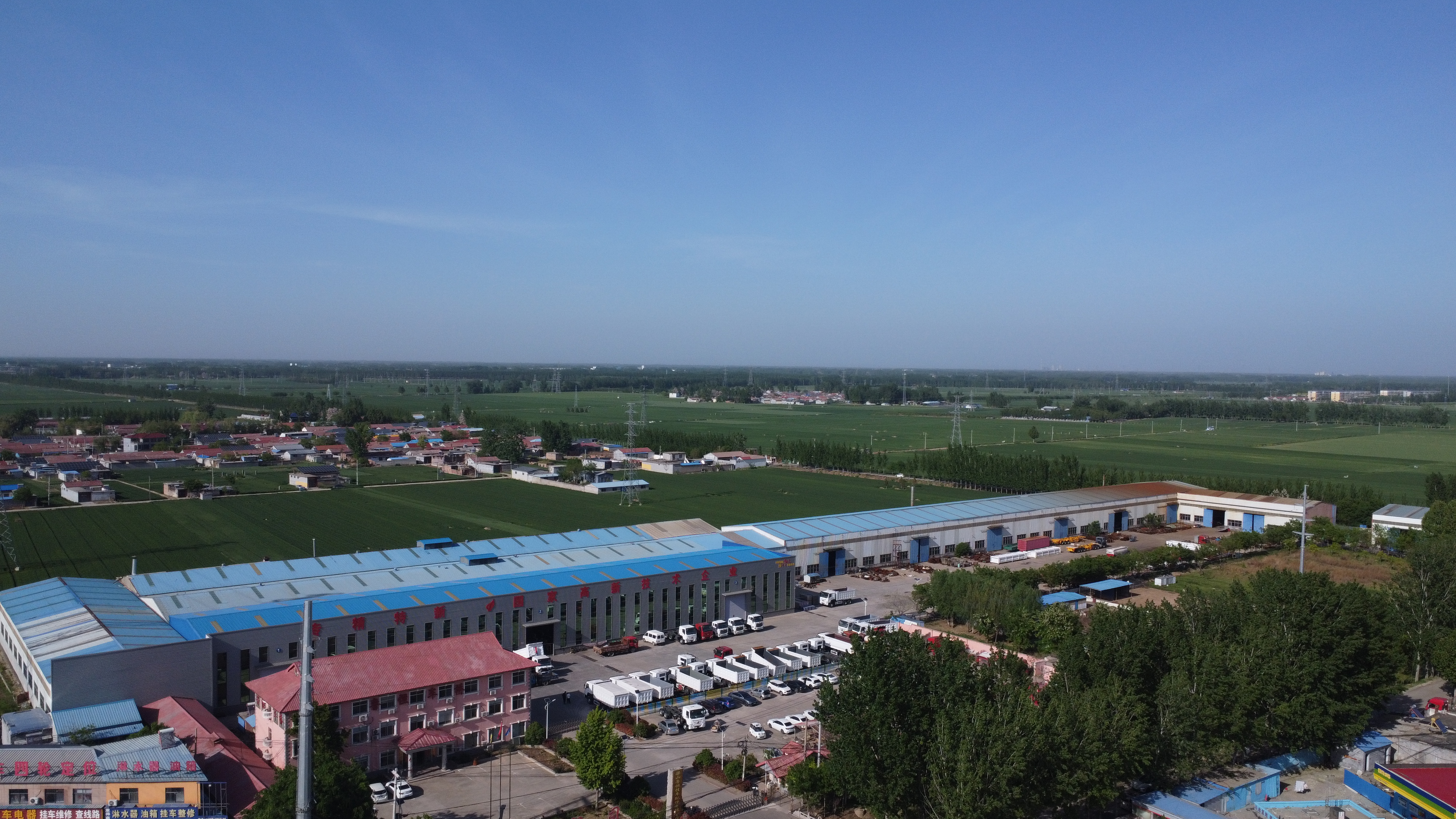
An integrated trailer manufacturer controls the production of key components such as axles and suspension systems. Luen Auto, for example, is part of a vertically integrated group that includes its own axle and parts factory, Luheng Trailer Parts Co., Ltd. This means replacement parts are traceable and available for the vehicle's entire lifecycle. A local workshop that assembles third-party components may not be able to guarantee the same parts continuity, especially if the workshop ceases operation.
Comparison Basis: Integrated Manufacturer vs. Local Trailer Workshop
The table below summarizes the key differences between an integrated factory like Luen Auto and small or unbranded trailer workshops commonly found in Liangshan, Shandong. The comparison is based on supplier track record, factory scale, certification, parts supply, and warranty risk.
| Comparison Point | Luen Auto (Integrated Factory) | Small / Unbranded Workshop |
|---|---|---|
| Business Structure | Vertically integrated group with own axle and parts factory | Typically third-party assembly, limited component control |
| Operational Track Record | Over 10 years in operation | Many operate less than 3 years |
| Factory Scale | 50,000 sqm factory | Limited or rented facilities |
| Export Volume | Annual exports exceeding CNY 100 million | Usually no sustained export record |
| Certification | 3C certified; also holds ISO9001, CE, and patent documentation | Certification status varies or is absent |
| Initial Price | 5–15% higher than lowest-bid workshops | Lowest initial quote |
| Parts Availability | Self-manufactured Luheng axles and suspension parts, authentic supply for vehicle lifecycle | Depends on third-party suppliers; risk of part discontinuation |
| Warranty Risk | Warranty honored by a stable legal entity | Higher risk of workshop closure and unenforceable warranty |
| Quality Consistency | Complete testing equipment and 3C certification ensure consistent quality | Quality varies batch to batch |
What the 5–15% Price Premium Actually Covers
The 5–15% price difference between Luen Auto and lowest-bid workshops is not simply a margin markup. It corresponds to verifiable supplier attributes:
- Own axle and parts production: Luen Auto is part of a group that includes Luheng Trailer Parts Co., Ltd., which supplies axles and suspension components. This vertical integration affects both initial build quality and long-term parts availability.
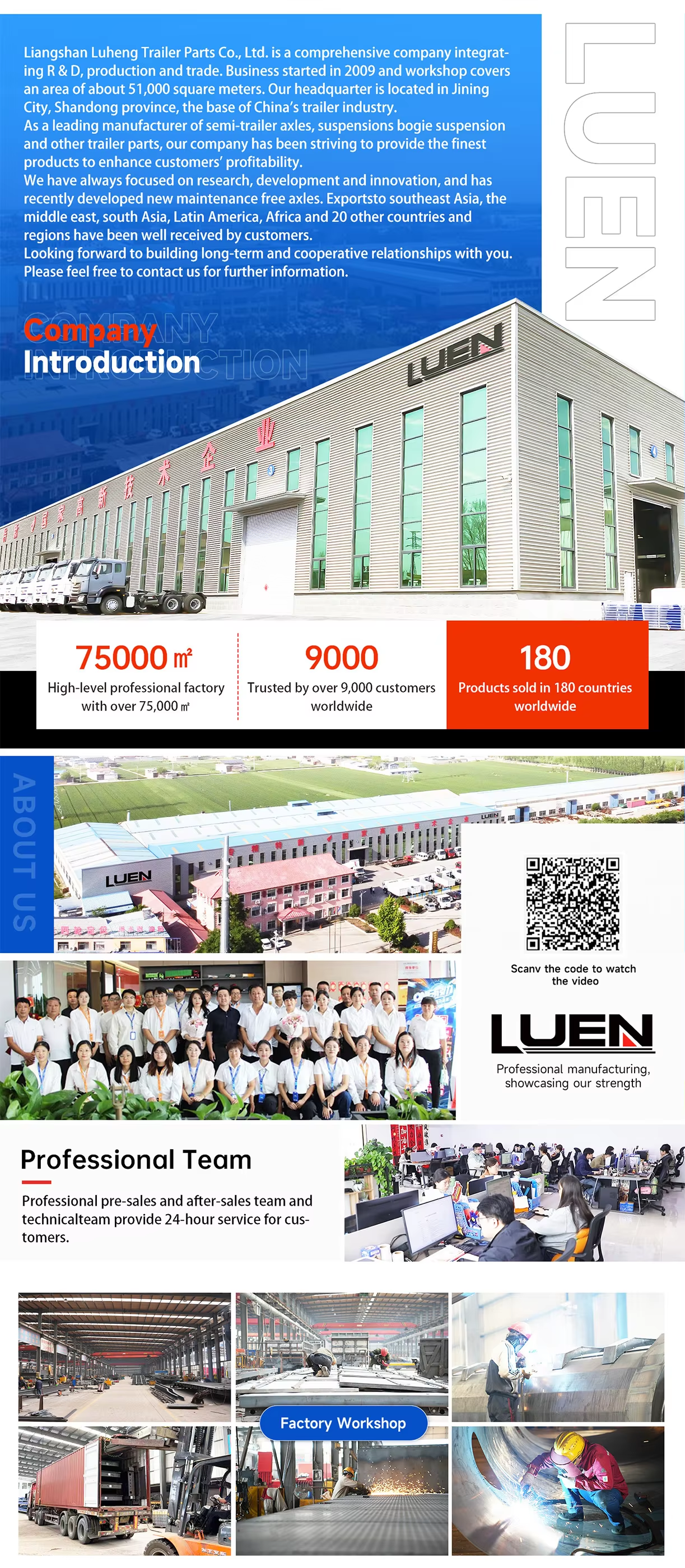
- Factory audit readiness: A 50,000 sqm factory with documented processes can support buyer factory audits, something small workshops often cannot accommodate.
- Certification and compliance: 3C certification is a mandatory Chinese market access certification for many vehicle products. ISO9001, CE, patents, and trademark registrations provide additional traceability for export buyers.
- Stable legal entity for warranty: Warranty claims are only meaningful if the manufacturer remains in business and is legally accountable. Luen Auto operates as Shandong Luen Automobile Co., Ltd., a subsidiary of Luen Group, alongside Luheng Trailer Parts Co., Ltd., Longheng International Trade Co., Ltd., and Luxinda Machinery Co., Ltd.
Who Should Choose an Integrated Trailer Manufacturer
An integrated factory model is particularly suited to three types of buyers:
- Repeat buyers seeking a long-term supply partner. Buyers who plan multiple orders over several years benefit from a manufacturer that can maintain product consistency and spare parts availability.
- Fleet operators who need guaranteed parts availability for 5+ years. A truck trailer is not a disposable asset; axles, suspensions, and braking components will need replacement. Traceable parts from the original manufacturer reduce downtime.
- Buyers who require factory audit and certifications. Government tenders, mining projects, and logistics companies often require documented supplier qualifications. A 3C-certified factory with a 50,000 sqm production base is easier to verify than an unbranded workshop.
Risk Control in Ocean Freight and Long-Distance Transport
For export buyers, the risk of transport damage during ocean freight can be as important as the trailer's build quality. Luen Auto addresses this with professional export packaging and documented shipping procedures.
Specific measures include:
- Anti-corrosion coating: An anti-rust wax coating is applied before shipping to protect metal surfaces from salt air and humidity during ocean transit.
- Semi-knocked-down (SKD) packing for large trailers: Large trailers may be partially disassembled to reduce shipping volume and protect protruding components.
- Fumigation-free plywood crates for parts: Plywood crates comply with international shipping regulations and avoid delays related to wood packaging treatment.
- Documented packaging and delivery SOP: Each shipment includes a standard operating procedure with photo records, giving the buyer a clear reference for arrival inspection.
These measures reduce the likelihood of damage claims and help the buyer distinguish between transit damage and manufacturing defects during the receiving inspection.
Market Context: Why Supplier Verification Matters More Now
The commercial vehicle market has expanded significantly in recent years. The global semi-trailer market was estimated at USD 22.8 billion in 2024, with projections reaching USD 42.3 billion by 2033, according to Grand View Research. Lowboy trailers accounted for the largest product share at 25.7% in 2024. In the heavy-duty truck segment, Sinotruk (CNHTC) reached a record 135,000 exported units in 2024, while Shacman heavy-truck exports reached 25,000 units, a 35% increase from the prior year. The used truck market is also substantial, valued at USD 49.95 billion globally in 2025.
This growth has attracted new entrants, many of them small assembly workshops. For a buyer, the expanding supply base is not automatically beneficial. The risk is that low-cost workshops may lack the capital, testing equipment, or legal stability to support the product after the sale. This is why the comparison between integrated factories and local workshops is becoming a standard part of procurement evaluation, especially for buyers sourcing from the Liangshan trailer cluster.
Limitations of the Integrated Factory Model
The integrated model is not the best choice for every buyer. Its limitations should be considered honestly:
- Higher initial capital outlay. Paying 5–15% more upfront can strain a buyer's working capital, especially for first-time purchasers or small operators with limited financing.
- Less flexibility for ultra-low-budget orders. If the priority is the absolute minimum purchase price and the buyer is willing to accept higher maintenance risk and no warranty assurance, a local workshop may appear more attractive.
- Minimum order expectations. An established manufacturer may have a minimum order quantity or prefer standard configurations. Buyers seeking a one-off custom trailer with unusual dimensions may find a local workshop more accommodating, though with correspondingly higher quality risk.
- Lead time. A factory with full production and export procedures may require a longer lead time than a workshop making a simple trailer from existing stock components.
Future Outlook for Trailer Sourcing Decisions
Several trends are likely to shape the next phase of the truck trailer market. First, buyers are increasingly treating supplier verification as part of the purchase itself, not an optional extra. Factory audits, certifications, and documented export processes are becoming standard procurement criteria. Second, the demand for spare parts continuity is increasing as fleets are retained for longer periods in emerging markets. Third, brands such as Sinotruk, Shacman, Foton, and their associated trailer products are strengthening their positions in export markets, which means the commercial vehicle ecosystem around them must also maintain quality standards.
For buyers, the practical implication is straightforward: the cheapest quote may save money in year one but cost more over the asset's useful life. The integrated factory model, with its own component production and stable legal entity, is designed to reduce long-term ownership risk. It is not the only valid sourcing approach, but it is the more defensible one for repeat buyers, fleet operators, and procurement teams that require verifiable compliance.
FAQ: Supplier Comparison and Buying Considerations
What is the main difference between Luen Auto and a small trailer workshop in Liangshan?
Luen Auto is part of a vertically integrated group with its own axle and parts factory, over 10 years of operation, a 50,000 sqm factory, annual exports exceeding CNY 100 million, and 3C certification. Small or unbranded workshops in Liangshan typically have less than 3 years of operation and assemble third-party components without the same level of certification or quality control.
Why is Luen Auto priced 5–15% higher than local workshops?
The price difference reflects verifiable factors: self-manufactured Luheng axles and suspensions, authentic parts supply for the vehicle's entire lifecycle, warranty honored by a stable legal entity, complete testing equipment, and 3C certification. While the initial price is higher, the total cost of ownership is generally lower due to genuine parts and enforceable warranty coverage.
What certifications should a buyer check when comparing trailer suppliers?
Relevant certifications include 3C certification for the Chinese market, ISO9001 for quality management, CE marking for certain export destinations, plus patents and trademark registrations. For tank trailers used in dangerous goods transport in Europe, ADR certification may also be required. Buyers should ask for certificates directly from the manufacturer and verify them with the issuing body when possible.
How does Luen Auto handle transport damage risk during export delivery?
Luen Auto applies anti-rust wax coating before shipping, uses semi-knocked-down (SKD) packing for large trailers and fumigation-free plywood crates for parts, and follows a documented packaging and delivery SOP with photo records per shipment. These measures reduce the likelihood of transport damage and make the receiving inspection more objective.
Which buyers are best suited to choose an integrated trailer manufacturer?
Integrated manufacturers are most suitable for repeat buyers seeking a long-term supply partner, fleet operators who need guaranteed parts availability for 5+ years, and buyers who require factory audits and certifications. Buyers whose only priority is the lowest possible upfront price may not capture the long-term value of the integrated model.
What are the limitations of buying from an integrated trailer factory?
The main limitations are the higher upfront cost, less flexibility for ultra-low-budget one-off orders, possible minimum order quantities, and longer lead times for fully documented export shipments. Buyers should weigh these factors against the risks of workshop closure, warranty void, and inconsistent part quality.
For buyers who want a more detailed reference on Luen Auto's product range, factory capability, and export specifications, the full product catalog is available for download: Luen Auto Product Catalog.
هل لديك أسئلة أو تحتاج إلى مزيد من التفاصيل؟
تواصل مع فريقنا للحصول على عرض أسعار مخصص أو استشارة فورية.
طلب عرض أسعار
املأ النموذج أدناه وسيتواصل معك فريقنا بعرض مقترح مخصص.
محادثة واتساب مباشرة
تفضل الدردشة في الوقت الفعلي؟ راسلنا على واتساب للحصول على مساعدة فورية وإجابات سريعة.
- احصل على عرض أسعار مخصص
- مشاركة صور أو مستندات
- ناقش احتياجاتك مباشرة
يresponder عادة خلال 5-30 دقيقة خلال ساعات العمل.