
UMIDIGI Note 100 5G vs G100 5G vs BISON X20: Battery Guide
Cover: packaging and dispatch stage for volume long-battery smartphone orders. Image: Shenzhen Keysmart Technology Co., Ltd.
The 5,000–6,000mAh band is crowded, and that changes the buying question
Battery capacity has become the most visible segmentation variable in the mid-range smartphone market. Counterpoint Research reports that smartphones with battery capacities of 6,000mAh or higher captured 29% of global sales in January 2026, up from 10% in early 2025. When a specification spreads that quickly it stops being a differentiator and becomes a baseline. Buyers evaluating long-battery phones in 2026 are therefore not choosing between a big-battery device and a small-battery device; they are choosing between devices that look nearly identical on a specification sheet.
This comparison examines four models from UMIDIGI, the smartphone brand of Shenzhen Keysmart Technology Co., Ltd., a Shenzhen-based communications technology company founded in 2012 that operates an own-brand business alongside ODM/OEM services. The four devices — UMIDIGI Note 100 5G, UMIDIGI G100 5G, UMIDIGI G100x 5G and UMIDIGI BISON X20 — sit inside the 5,000–6,000mAh range, all charge at 20W, and all use 120Hz displays. The variables that actually separate them are elsewhere: processor platform, ingress and shock protection, physical envelope, and memory configuration.
The purpose here is not to declare a winner. It is to show which specification differences change the answer for a given working day, and which ones are largely cosmetic once the capacity number is equal.
The four models at a glance
| Model | Battery & charging | Display | Processor | Memory | Protection | Weight |
|---|---|---|---|---|---|---|
| UMIDIGI Note 100 5G | 5000mAh, 20W PD fast charging | 6.8\" 120Hz HD+ punch hole | UNISOC T765 5G | Up to 8+8GB extended RAM, 256GB ROM, 1TB TF expansion | IP53 dustproof and waterproof | 190g (167.8 × 77.4 × 7.7mm) |
| UMIDIGI G100 5G | 6000mAh, 20W PD fast charging | 6.9\" 120Hz Eye-Care large display | UNISOC T8200 5G | Up to 8+16GB extended RAM, 256GB ROM, 1TB TF expansion | IP53 dustproof and waterproof | 210g (171 × 77.6 × 8.1mm) |
| UMIDIGI G100x 5G | 5200mAh, 20W fast charging | 6.9\" 120Hz EyeComfort large display | UNISOC T8200 5G | Up to 8+16GB extended RAM, 128GB ROM, 1TB TF expansion | IP54 dustproof and waterproof | 193g (171 × 78 × 8.1mm) |
| UMIDIGI BISON X20 | 6000mAh, 20W PD fast charging | 6.53\" 120Hz HD+ punch hole | MediaTek Helio P60 | Up to 6+6GB extended RAM, 128GB ROM, 1TB TF expansion | IP68 & IP69K, MIL-STD-810G drop resistance | 278g (172.1 × 83.8 × 12.9mm) |
All figures as published in UMIDIGI product specifications for the four models.
Camera configuration adds a further separation that the table does not capture. The UMIDIGI Note 100 5G and G100 5G both list a 50MP ultra-clear triple rear camera with a 16MP front camera. The G100x 5G lists a 32MP ultra-clear AI camera with an 8MP selfie camera, and the BISON X20 lists a 20MP ultra-clear triple camera with an 8MP front camera.
Why nominal capacity is a weak buying rule
Runtime is not a function of capacity alone. It is capacity divided by average power draw, and power draw is set by the processor platform, the display, the modem, and the software stack. Three of these four devices carry the same 120Hz refresh rate, so the display load difference comes mainly from panel size — 6.53 inches on the BISON X20 through to 6.9 inches on the G100 5G and G100x 5G.
Charging is the second reason the mAh number misleads. All four models list 20W charging, three of them explicitly as 20W PD fast charging. Charging speed therefore is not a selection lever inside this set, and a 6,000mAh cell and a 5,000mAh cell at the same wattage will not refill in the same time.
The third variable is protection, and it is the one that most often invalidates a capacity-led decision. An IP53-rated 6,000mAh phone and an IP68/IP69K-rated 6,000mAh phone are not interchangeable in a wet or dust-heavy workplace, regardless of what the battery column says.
Finally, the physical envelope. Moving from the 190g Note 100 5G to the 278g BISON X20 changes how the device is carried, mounted, and used one-handed for an eight-hour shift. Buyers who compare only the battery row miss the cost that sits in the other columns.
Where the four devices actually diverge
Charging and power architecture
Charging parity is close to absolute across this lineup: 20W PD fast charging on the Note 100 5G, G100 5G and BISON X20, and 20W fast charging on the G100x 5G. The practical consequence for a procurement team is that charging wattage cannot be used to break a tie. Use case, protection rating and platform efficiency have to do that work instead.
Platform efficiency and UMIDIGI's stated figures
The UMIDIGI Note 100 5G runs the UNISOC T765 5G platform. The UMIDIGI G100 5G and UMIDIGI G100x 5G both run the UNISOC T8200 5G platform. The UMIDIGI BISON X20 runs the MediaTek Helio P60 platform.
UMIDIGI states that the G100 5G delivers a 20% longer expected lifespan, 30% lower power consumption, and 10–15% lower overall comprehensive cost. Those are manufacturer-stated figures that explain how the company positions the model inside its own range. They are not third-party test results, and a buyer placing a large order should treat them as claims to validate through sample evaluation and, where order size justifies it, model-specific testing.
Display size, refresh rate and eye-care positioning
Every model in the set uses a 120Hz panel, so smoothness is a shared characteristic rather than a differentiator. The differences are size and framing: 6.9 inches described as an Eye-Care large display on the G100 5G, 6.9 inches described as an EyeComfort large display on the G100x 5G, 6.8 inches on the Note 100 5G, and 6.53 inches on the BISON X20. A 6.9-inch panel at 120Hz represents a larger continuous load than a 6.53-inch panel at the same refresh rate, which is one reason capacity figures cannot be read in isolation.
Protection ratings and what they permit
The UMIDIGI Note 100 5G and G100 5G are rated IP53 dustproof and waterproof. The G100x 5G is rated IP54. The BISON X20 is rated IP68 and IP69K dustproof and waterproof with MIL-STD-810G drop resistance, and it is built from TPU and metal.
IP codes are defined under IEC 60529. The second digit addresses water: IP53 covers protection against spraying water, IP54 adds splashing water, IP68 covers continuous immersion under manufacturer-specified conditions, and IP69K covers high-pressure, high-temperature jet cleaning. MIL-STD-810G is a US Department of Defense test-method standard; the revision most commonly referenced in current rugged device documentation is MIL-STD-810H. Buyers comparing \"MIL-STD\" claims across suppliers should confirm the exact revision and the specific test methods covered, because the label alone does not describe the test.
Memory configuration
Extended RAM and storage differ enough to matter for multi-app field workflows. The Note 100 5G lists up to 8+8GB extended RAM with 256GB ROM; the G100 5G lists up to 8+16GB extended RAM with 256GB ROM; the G100x 5G lists up to 8+16GB extended RAM with 128GB ROM; the BISON X20 lists up to 6+6GB extended RAM with 128GB ROM. All four support 1TB TF expansion.
Matching a long-battery phone to a working day
General 5G use and media consumption: UMIDIGI G100 5G
The G100 5G is the most straightforward fit for buyers whose day is dominated by 5G data, video, and mixed app use. It combines the 6,000mAh cell with the 6.9-inch 120Hz Eye-Care display, the UNISOC T8200 5G platform, NFC, Android 15, and up to 8+16GB extended RAM at 210g.
There is field evidence behind that positioning. A Consumer Electronics ODM client in the United States deployed 50,000 units of this product for daily work and life purposes, in a relationship running more than five years. The reported outcomes were power-saving long battery life, a smooth experience in game playing and video streaming, a large display, stylish design, a larger battery, and an affordable price.
Slim daily carry and youth-oriented use: Note 100 5G and G100x 5G
The Note 100 5G is the lightest and thinnest device in the set at 190g and 7.7mm, with a 6.8-inch 120Hz HD+ punch hole display, a 50MP ultra-clear triple camera, 5,000mAh with 20W PD fast charging, and a dedicated hot key. For buyers prioritising pocketability and camera output over maximum capacity, that trade is explicit rather than hidden.
The G100x 5G occupies the middle ground: 5,200mAh, IP54 rather than IP53, 193g despite the 6.9-inch 120Hz EyeComfort panel, and up to 8+16GB extended RAM. The return on the lighter body is visible in the camera and storage columns — a 32MP rear camera with an 8MP selfie camera, and 128GB ROM rather than 256GB.
Field, industrial and outdoor environments: UMIDIGI BISON X20
The BISON X20 is the only model in this group designed around environmental resistance. It pairs IP68 and IP69K ingress protection with MIL-STD-810G drop resistance in a TPU and metal body, and carries the same 6,000mAh capacity and 20W PD fast charging as the G100 5G. UMIDIGI lists its applicable industries as daily life and work, construction and engineering, logistics and warehousing, manufacturing, and mining.
Market data supports the size of that segment. Growth Research estimates that independent contractors and outdoor sports enthusiasts are the primary consumer drivers for water-, dust- and shock-resistant phones, representing 38% of the global rugged market. For a distributor or an enterprise buyer, that is a defined demand pool rather than a niche claim.
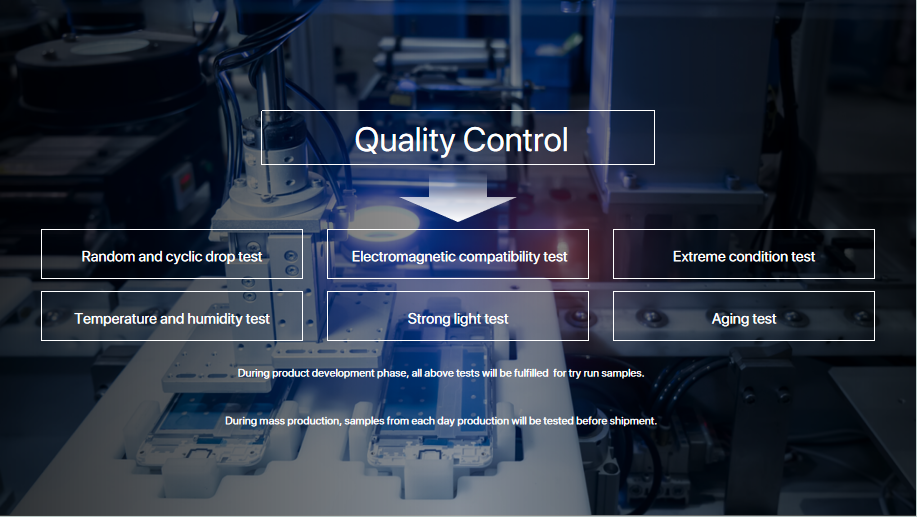
Assembly and testing environment for UMIDIGI long-battery smartphone production. Image: Shenzhen Keysmart Technology Co., Ltd.
What the market data says about long-battery demand
Three data points frame the category. First, 6,000mAh-and-above devices reached 29% of global smartphone sales in January 2026, up from 10% in early 2025, according to Counterpoint Research. Second, Verified Market Research values the global rugged smartphone market at approximately USD 2.98 billion in 2023, projected to reach USD 5.24 billion by 2030. Third, The Insight Partners reports that the 5,000mAh to 6,000mAh battery segment accounted for 42.9% of the rugged phone market share in 2025.
Read together, those figures describe a convergence. The capacity band that mainstream buyers now expect is the same band that rugged buyers already occupy, which is precisely why specification confusion is highest in this range. A phone with a 6,000mAh cell can be a 210g daily-use 5G handset or a 278g IP69K field device, and the battery figure will be identical in both listings.
Battery chemistry is the underlying driver. Fortune Business Insights reports that silicon-carbon anodes are increasingly replacing standard graphite, offering 20–50% higher energy density for slim, long-lasting devices. That is a category-level trend statement, not a specification claim about any specific model in this comparison. Buyers should ask a supplier directly whether a given SKU uses a silicon-carbon cell rather than inferring it from a slim chassis.
How this differs from the traditional \"biggest battery\" approach
The traditional buying rule in this category is simple: choose the highest mAh number, treat protection as a bonus, and ignore weight until the device arrives. That rule worked when capacity varied widely. It stops working when four models in one portfolio all land between 5,000mAh and 6,000mAh and all charge at 20W.
The replacement rule is a sequence rather than a ranking. Establish the protection class the working environment requires, then the display and weight envelope the user will tolerate, then the platform and memory needed for the workload, and only then compare capacity within the surviving options.
Limits and boundaries of this lineup
- IP53 and IP54 are not field ratings. The Note 100 5G, G100 5G and G100x 5G are specified for daily work and life. Treating an IP53-rated device as a wet-environment or dust-heavy industrial handset is a misuse, not a specification gap.
- The rugged option is heavier by design. The BISON X20 is 278g and 12.9mm thick, against 210g and 8.1mm for the G100 5G — roughly 68g heavier and about 4.8mm thicker. That is the physical cost of IP68/IP69K and MIL-STD-810G construction.
- 5G is not listed for the BISON X20. Its published specification names the MediaTek Helio P60 platform and does not list 5G connectivity, while the other three models list 5G platforms. A buyer who needs 5G and a rugged enclosure should confirm availability with the supplier rather than assume it.
- The slim model trades capacity and storage. The G100x 5G offers 5,200mAh and 128GB ROM against the G100 5G's 6,000mAh and 256GB ROM. The 193g body is what that trade buys.
- Efficiency claims need a baseline. The G100 5G's 20% longer expected lifespan, 30% lower power consumption and 10–15% lower overall comprehensive cost are UMIDIGI statements, not independently published test results.
OEM/ODM and procurement: what a volume buyer can verify
Shenzhen Keysmart Technology Co., Ltd. was founded in 2012 and operates a 10,000m² facility with 400–500 employees, 30 R&D engineers, and annual output of 30,000,000 units. Its export ratio is 100%, with stated markets covering Middle-Western, South America, Asia, Africa, the EU and the USA.
The company provides both OEM and ODM production services, with customization options covering brand logo, exterior design, packaging design, and specifications. Commercial terms published for buyer reference are: MOQ 3,000 units; OEM lead time of 60–70 working days; 100% pre-shipment test as the acceptance criterion; FCA HK/FOB delivery terms; 30% payment in advance with 70% before shipment; and remote technical support after delivery.
Certification is where a volume buyer should spend the most verification time. UMIDIGI publishes EU type examination certificates issued by BACL under 2014/53/EU RED. Certificate B2412041, issued 18 December 2024, covers models PG4RBG100 and PG4RB100A under the UMIDIGI brand. Certificate B2407121, issued 29 July 2024, covers models PG4MBG9YA, PG4TBG9PG, PN4TB100G and PN4TB10PG. Both reference safety standards including IEC 62368-1 and the EN 50360 series, EMC standards including EN 55032 and IEC 61000-3, and the ETSI EN 300/301/303 radio series.

EU type examination certificate B2412041 issued by BACL under 2014/53/EU RED. Image: Shenzhen Keysmart Technology Co., Ltd.
The practical step is to match the model number printed on the certificate to the exact SKU being imported, since commercial product names and certificate model codes do not always correspond one-to-one. A certificate covering a related model in the same family is not automatically a certificate for the SKU in the purchase order.
Future outlook
Three directions look likely to shape this segment over the next several years. Capacity inflation will continue, but it will increasingly arrive through chemistry rather than cell size — the shift toward silicon-carbon anodes is the mechanism that allows larger capacities inside slimmer bodies. As a result, efficiency per mAh will become the more meaningful marketing axis, and manufacturer-stated efficiency figures will need clearer baselines before they can be compared across brands.
Rugged demand is expected to keep expanding. Verified Market Research projects the global rugged smartphone market moving from approximately USD 2.98 billion in 2023 to USD 5.24 billion by 2030, an outlook that is consistent with the 42.9% share already held by the 5,000–6,000mAh band within that segment in 2025.
The variable most likely to change buyer behaviour is standards literacy. As IP68, IP69K and MIL-STD claims become routine in product listings, the differentiator shifts from whether a claim exists to whether the revision, test method and certificate scope can be produced on request. Buyers who build that check into their sourcing process early will spend less time reconciling documentation after the order is placed.
Frequently asked questions
Does a 6,000mAh battery always outlast a 5,000mAh battery?
Not automatically. Runtime is capacity divided by average power draw, and power draw depends on the processor platform, display size and refresh rate, modem activity and software. In this comparison all four models use 120Hz displays and 20W charging, so the separating variables are capacity (5,000mAh, 5,200mAh or 6,000mAh), panel size (6.53 to 6.9 inches) and platform (UNISOC T765 5G, UNISOC T8200 5G or MediaTek Helio P60). UMIDIGI's stated figures for the G100 5G — 20% longer expected lifespan and 30% lower power consumption — illustrate that efficiency, not capacity alone, drives the outcome.
Which model is appropriate for construction, logistics or mining work?
The UMIDIGI BISON X20 is the model specified for those conditions. It carries IP68 and IP69K dustproof and waterproof protection plus MIL-STD-810G drop resistance, is built from TPU and metal, and uses a 6.53-inch 120Hz HD+ punch hole display with a 6,000mAh battery and 20W PD fast charging. UMIDIGI lists its applicable industries as daily life and work, construction and engineering, logistics and warehousing, manufacturing, and mining. The trade-off is size and weight at 278g and 12.9mm.
Does the UMIDIGI BISON X20 support 5G?
The published specification lists the MediaTek Helio P60 processor and does not list 5G connectivity. The other three models in this comparison list 5G platforms: the Note 100 5G uses UNISOC T765 5G, and the G100 5G and G100x 5G use UNISOC T8200 5G. A buyer who requires both 5G and a rugged IP68/IP69K enclosure should confirm current availability directly with the supplier rather than assume it from the product family.
What are the OEM/ODM minimum order quantity, lead time and payment terms?
Published terms are a minimum order quantity of 3,000 units and an OEM lead time of 60–70 working days. Customization covers brand logo, exterior design, packaging design and specifications. Acceptance criteria are based on 100% pre-shipment test. Delivery terms are FCA HK or FOB, and payment terms are 30% in advance with 70% before shipment. Remote technical support is provided after delivery.
Which certification documents should an EU buyer verify before importing?
Verify the EU type examination certificate issued under 2014/53/EU RED and confirm that the model number on the certificate matches the SKU being imported. Two examples from UMIDIGI's documentation are certificate B2412041, issued by BACL on 18 December 2024 and covering models PG4RBG100 and PG4RB100A, and certificate B2407121, issued by BACL on 29 July 2024 and covering models PG4MBG9YA, PG4TBG9PG, PN4TB100G and PN4TB10PG. The referenced standards include IEC 62368-1 and the EN 50360 series for safety, EN 55032 and IEC 61000-3 for EMC, and the ETSI EN 300/301/303 series for radio.
Full company and specification documentation is available in the Shenzhen Keysmart Technology Co., Ltd. company profile (PDF).
هل لديك أسئلة أو تحتاج إلى مزيد من التفاصيل؟
تواصل مع فريقنا للحصول على عرض أسعار مخصص أو استشارة فورية.
طلب عرض أسعار
املأ النموذج أدناه وسيتواصل معك فريقنا بعرض مقترح مخصص.
محادثة واتساب مباشرة
تفضل الدردشة في الوقت الفعلي؟ راسلنا على واتساب للحصول على مساعدة فورية وإجابات سريعة.
- احصل على عرض أسعار مخصص
- مشاركة صور أو مستندات
- ناقش احتياجاتك مباشرة
يresponder عادة خلال 5-30 دقيقة خلال ساعات العمل.