
UPVC Casement Windows: Certification and Spec Limits
UPVC Casement Windows: Certification and Spec Limits
Casement windows are the largest product type in the global uPVC window and door market. Casement windows and doors held a 38.5% share of product-type revenue in 2025, according to Dataintelo, more than any other design type. For buyers at the research and evaluation stage, that scale creates a specific problem: casement units are quoted by almost every supplier, but the constraints that decide whether a particular unit is acceptable on a project - certificate scope, profile parameters, sealing hardware, order minimums - are usually spread across datasheets, certificates and quotation notes instead of being presented as one decision set.
This industry reference assembles that decision set for UPVC casement windows. It uses the product, certification and application records of Foshan Nanhai Yuanzhaiji UPVC Door & Window Factory - a UPVC door and window manufacturer established in 2009 and based in Nanhai, Foshan, Guangdong, China - as a worked example, and separates what can be verified from what remains a project-level assumption.
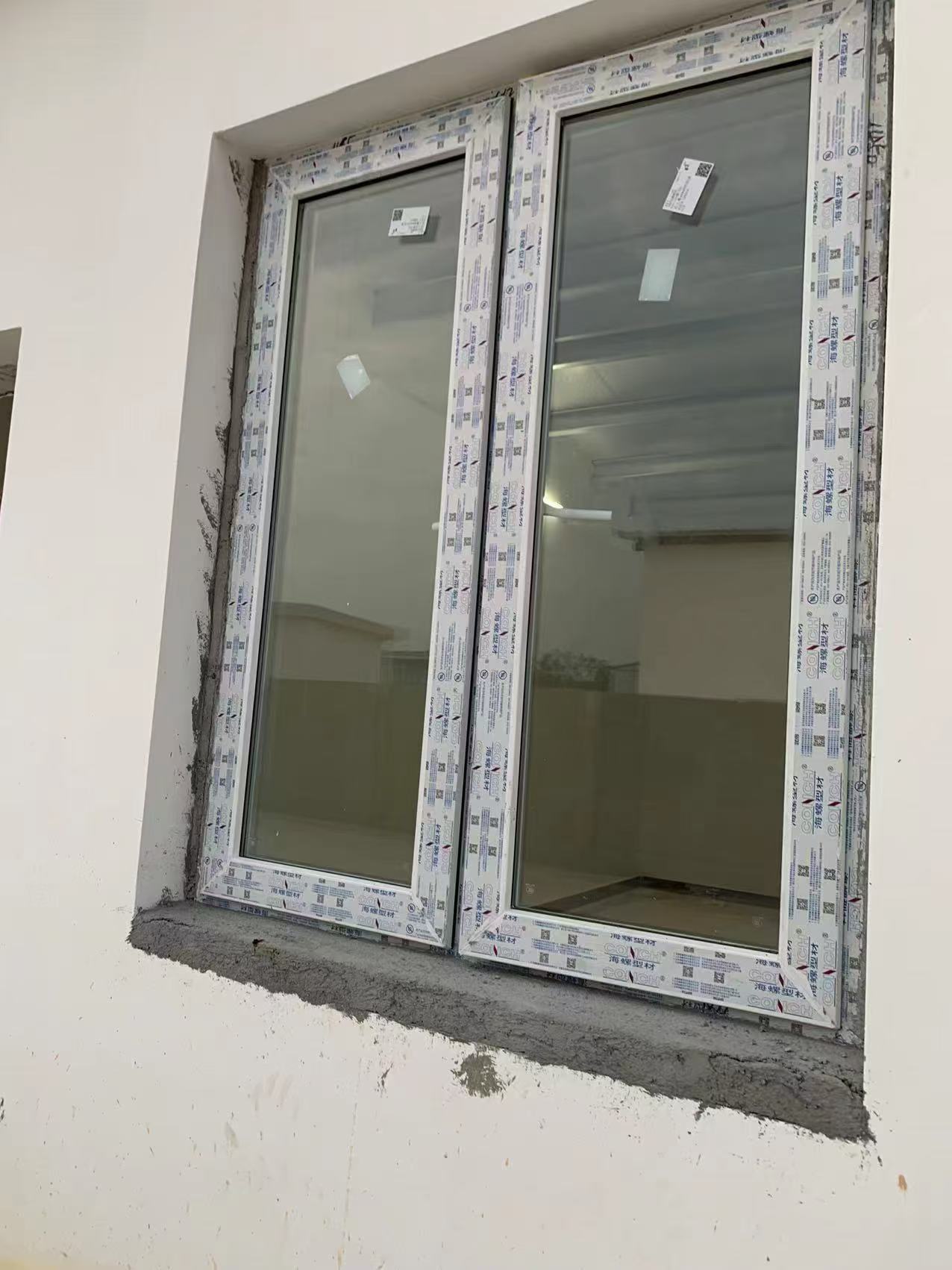
Why the casement configuration carries most of the constraint conversation
The global uPVC windows and doors market was valued at USD 30.8 billion in 2025 by Grand View Research, with windows accounting for 58.0% of uPVC product revenue share and Asia Pacific holding a 44.1% revenue share in the same year. Market sizing for this category is not settled: Mordor Intelligence estimates the 2025 market at USD 42.15 billion. The gap between the two figures is best read as a methodology difference - how accessory and hardware revenue is treated, and how regional profile pricing is weighted - rather than as a signal about demand. Neither figure is a procurement input; both explain why the category attracts so much supplier capacity.
The more useful number for a casement buyer is the design-type split. With casement windows and doors at 38.5% of product-type share, the configuration is both the most quoted and the most heavily standardised. That standardisation cuts both ways: profile series and hardware are widely available, so differentiation moves from "can this be supplied" to "which constraints can this supplier document".
What "UPVC casement window" covers in a specification
A UPVC casement window is a side-hinged window whose sash is manufactured from unplasticized polyvinyl chloride (UPVC) hollow profiles, opened and closed manually or through a crank-operated mechanism. In the Yuanzhaiji product record the window models listed for the category are BR58 and HF88, and the factory states long-term supply of Conch profiles in 60, 65 and 88 series, including co-extruded colour, laminated wood-grain finishes and solid colour options such as dark grey and black.
Customisation in the same record is limited to three variables - window size, specification and glass specification - under an OEM/ODM structure. A buyer preparing a tender document should therefore treat size, opening configuration and glazing build-up as the negotiable layer, and profile series, hardware set and certification as the fixed layer.
The constraint checklist: six items that decide a casement evaluation
| Constraint | What is verifiable | Why it decides the evaluation |
|---|---|---|
| Certification scope | Certificate holder, number, referenced standard, validity period, intended market | Determines whether the certificate can be used in the destination market at all |
| Profile series and source | Series designation (50/60/65/80/88/112) and profile supplier | Sets the wall-thickness and formula baseline that the whole unit inherits |
| Material parameters | Vicat softening point, flexural modulus, tensile yield stress, tensile strain at break, density | Confirms the incoming compound, not the assembled window's performance |
| Glazing configuration | Available glass types and customisation of glass specification | Dominant driver of thermal and acoustic outcome |
| Hardware and sealing set | Handle, hinge, lock points, multipoint lock drive, crescent lock, roller, EPDM gasket, pile weather strip | Sealing and locking are matched components; substitution changes the tested assembly |
| Order constraints | MOQ 30-40 square metres, lead time 10-30 days, monthly capacity 4,000 square metres | Determines whether a phased project schedule is achievable |
Certification: what the ECM Attestation covers, and where its scope stops
The window category held by Yuanzhaiji is covered by an ECM Attestation with certificate number NO.3N230816.YCPQQ51, issued by Ente Certificazione Macchine Srl (ECM). It is a voluntary certification scheme, issued on 16 August 2023 and valid to 15 August 2028, and it applies to both the UPVC Window and the UPVC Door products, with a scope covering profiles in the 50, 60, 65, 80, 88 and 112 series. The referenced standard is EN 14351-1:2006+A2:2016.
Three scope limits matter more than the certificate number itself:
- It is voluntary. An ECM Attestation is not a legal market-access requirement; it is evidence a buyer can request and verify.
- It is intended for third countries outside the EU market. The attestation does not function as an EU CE-marking route, and buyers who need EU market placement should treat it accordingly.
- The referenced standard excludes fire resistance. EN 14351-1:2006+A2:2016 covers windows and doors without fire-resistance characteristics, so a fire-rated requirement sits outside this certificate's scope even where a project specifies fire resistance as an additional condition.
Thermal performance is a fourth boundary, of a different kind. The certificate evidences conformity to the referenced standard; it does not express a whole-window U-value, which depends on the glazing build-up, profile series, frame-to-sash ratio and unit size. Where a jurisdiction imposes a numeric limit - the legal whole-window U-value limit for window replacement in existing homes in England and Wales was 1.4 W/m2K in 2025 under Approved Document L - that number has to be matched against unit-specific data for the exact configuration quoted, not against a material or profile certificate.
Material parameters: what each published value constrains
| Parameter | Recorded value | Where it enters the evaluation |
|---|---|---|
| Vicat softening point | 86 °C | Heat resistance of the UPVC compound; relevant to dark-coloured, high-solar-exposure facades |
| Flexural modulus of elasticity | 2840 MPa | Stiffness of the profile under bending; the frame-side input to wind-load design |
| Tensile yield stress | 43 MPa | Point at which the material begins to yield; relevant to hardware fixing and reinforcement design |
| Tensile strain at break | 186% | Ductility of the compound; a handling and impact indicator for the material |
| Density | 1520 kg/m3 | Consistency check for incoming inspection of extruded profiles |
These are material-level values for the UPVC compound. They are not a substitute for whole-window test results on air permeability, water tightness and wind-pressure resistance, which describe the assembled unit - frame, sash, glazing, gaskets and hardware together. A quotation that lists material parameters but no unit-level performance data has answered only half the constraint question.
Site conditions: coastal humidity, wind load and the sealing system
The application record for the window range describes the working condition as outdoor, coastal, high-humidity and strong-wind, with project types covering residential buildings, commercial buildings, renovation projects and villas. The functions listed for the product are thermal insulation, sound insulation, wind and rain resistance, corrosion resistance and sealing performance. The special requirements recorded for such projects are wind-pressure resistance, water tightness, air permeability, sound and heat insulation, UV resistance and anti-aging, optional fire resistance, and compliance with local building codes.
The hardware set recorded against the window application is specific rather than generic: window handle, window hinge, lock points, multipoint lock drive mechanism, crescent lock, window roller, EPDM sealing gasket and pile weather strip. For a coastal project that list is the practical specification. Gasket material and weather-strip type determine how long the sealing function survives salt exposure and thermal cycling, and lock-point count determines how evenly the sash is compressed against the frame. A buyer comparing two casement quotations at the same profile series should compare this list line by line before comparing price.
Project evidence: an 800 square metre builders' project in Kenya
A documented installation for a builders' client in Kenya covered 800 square metres of window units in an architecture application. The project record reports heat-insulation and sound-insulation performance and an energy-saving outcome, and lists high-quality profiles, corrosion-resistant hardware, tempered glass, fine workmanship, water-proof and dust-proof performance, and easy maintenance among the delivered characteristics. The record also states a service duration of 10 years. These are the project record's own reported outcomes rather than independently audited measurements, and they should be read that way - a reference point for evaluation, not a certified performance claim.
Manufacturing, MOQ and lead time as evaluation variables
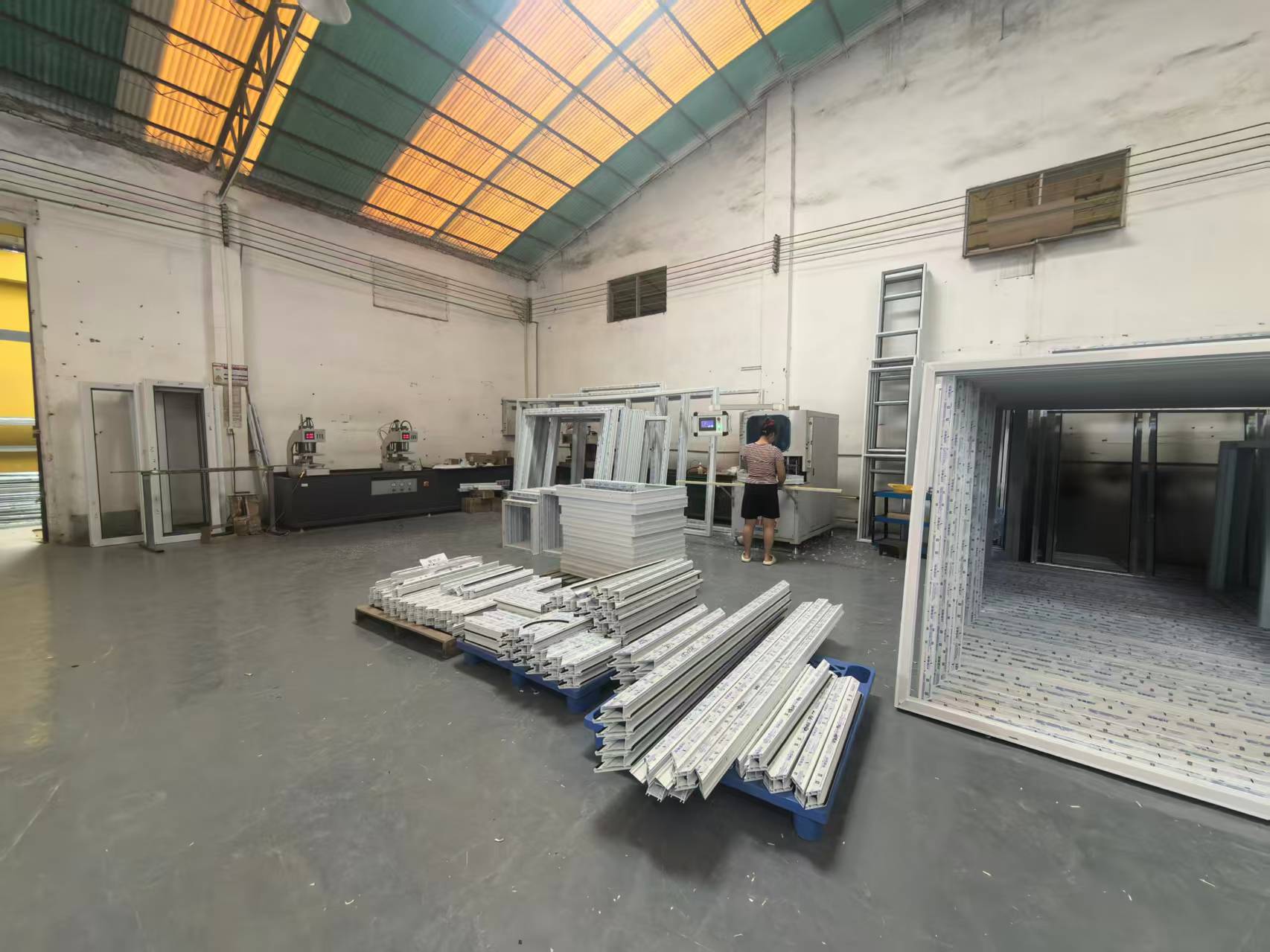
Yuanzhaiji operates as an OEM/ODM and customisable manufacturer with a recorded monthly capacity of 4,000 square metres, a minimum order quantity of 30-40 square metres and a lead time of 10-30 days. Quality control is documented through a quality inspection report, and after-sales support covers technical consultancy and quality testing. The company profile records an export ratio of 80%, with main markets in LATAM, MENA, ASEAN and the EU.
Two of those numbers change how a tender should be written. First, the MOQ is expressed in square metres, not in window units - a project schedule must be converted into glazed area before quotes can be compared, and small villa packages can fall below the threshold while looking large in unit counts. Second, the quoted lead time of 10-30 days is a range, so schedule risk sits in the upper part of it; where a phased installation is planned, phasing should be agreed against the upper bound.
Cost drivers in this category follow the constraint list rather than a headline price: profile grade (the profile record distinguishes brand-grade series from mid-range alternatives, with the higher unit material cost attached to the former), glazing build-up, and the hardware and sealing set. Buyers working to a budget constraint can shift the glazing and hardware specification; shifting the profile series is the decision that most affects long-term behaviour.
Casement vs sliding vs tilt-and-turn: what changes at the evaluation stage
| Configuration | Operation recorded | Hardware emphasis | What the buyer must specify |
|---|---|---|---|
| Casement (BR58 / HF88; 60 series) | Manual opening and closing; crank-operated variants available | Hinge, handle, multipoint lock | Hinge side, opening direction, lock-point count, gasket type |
| Sliding | Sliding operation | Roller, crescent lock, pile weather strip | Track drainage, roller grade, weather-strip replacement access |
| Tilt-and-turn | Tilt-and-turn opening | Multipoint lock drive mechanism | Clearance for tilt mode, drive-mechanism serviceability |
The maintenance record points the same way. A sash that becomes stiff to open or close is attributed to three causes: debris or dust accumulated in the track, a worn or displaced pulley, or hardware that has been mis-adjusted - with the corresponding remedies being track cleaning, pulley replacement and hinge or roller adjustment to level the sash. All three are maintenance events rather than material failures, which is why the hardware list belongs in the evaluation stage and not in the after-sales stage.
Market trend: whole-window evidence is replacing material-only evidence
Three movements are visible in the public data for this category. First, profile engineering is being read as an energy variable: modern multi-chamber UPVC profiles can improve energy efficiency by up to 40% compared with traditional frames, according to a secondary industry source, a claim that rests on chamber geometry rather than on material grade alone. Second, supply is concentrated: Foshan Nanhai is identified as a key manufacturing base for UPVC profiles and windows, with lifespans for high-quality profiles estimated at 30 to 40 years in an industry publication. Third, regulation is moving from material parameters to whole-window performance - the 1.4 W/m2K limit in England and Wales applies to the installed unit, not to the compound it is extruded from.
The constraint this creates for buyers is a documentation gap. Supplier-level capability data that would allow a chamber-count, steel-reinforcement or stabilizer comparison across manufacturers is not consistently published, and this is precisely the dataset flagged as missing in category research on this market. Until that data becomes routinely available, evaluation quality will depend on requesting unit-level performance evidence and certificate scope documents rather than on comparing headline profile specifications.
Future outlook
On current evidence, the direction of travel is toward scoped certificates and unit-level performance data. Voluntary attestations such as the ECM Attestation remain useful precisely because their scope is written down - standard referenced, profile series covered, intended market, validity dates - which makes them checkable. Their limits stay visible as well: no EU market-access function, no fire-resistance coverage, no implied U-value. For manufacturers, the competitive variable is likely to be the completeness of that documentation per configuration. For buyers, the practical habit worth building is to require, for each casement configuration quoted, the profile series, the glazing build-up, the hardware and gasket list, the certificate number with its scope, and an explicit statement of what the certificate does not cover.
FAQ
- What material are the window profiles made of?
- The window frames are made of UPVC (PVC-U) plastic profiles, produced as hollow extruded sections. The material is specified for anti-aging and corrosion-resistant behaviour and for its contribution to energy-saving performance in the assembled window.
- How do Conch profiles differ from general mid-range UPVC profiles?
- Conch is a brand-grade UPVC profile with a stable raw-material formula, standardised wall thickness and stated anti-aging performance, and it carries a higher unit material cost. General mid-range UPVC profiles vary considerably in quality between manufacturers, and some reduce formulation or wall thickness to reach a lower purchase price. Compliance with GB/T 8814-2017 is the reference point for wall thickness, impact resistance, heat stability and anti-aging performance, and qualified test reports are the evidence to request. Long-term durability favours brand-grade profiles; qualified mid-range profiles are workable where budget is tight and wall thickness, formula and processing are strictly verified before purchase.
- What glass options can be specified?
- The glass options listed in the product record are single-layer glass, double-glazed insulated glass, tempered safety glass and frosted glass. Customisation covers glass specification, so the glazing build-up can be set per project requirement.
- Does an ECM Attestation allow a UPVC window to be placed on the EU market as CE-marked?
- No. The ECM Attestation held for the UPVC Window and UPVC Door products is a voluntary certification scheme, and it is stated as intended for third countries outside the EU market. It references EN 14351-1:2006+A2:2016, a standard that covers windows and doors without fire-resistance characteristics, so fire-rated requirements also fall outside its scope. Certificate number NO.3N230816.YCPQQ51 was issued by Ente Certificazione Macchine Srl (ECM) on 16 August 2023 and is valid to 15 August 2028, covering profiles in the 50, 60, 65, 80, 88 and 112 series.
- What determines minimum order quantity and lead time for a casement order?
- The recorded order parameters are a minimum order quantity of 30-40 square metres, a lead time of 10-30 days and a monthly production capacity of 4,000 square metres. Because the MOQ is measured in area rather than units, the project window schedule has to be converted into square metres before the order can be checked against the threshold.
- A casement sash has become stiff to open and close - what are the usual causes?
- Three causes are commonly recorded: debris or dust accumulated in the sliding track, a pulley that is worn or out of position, and hardware that has been mis-adjusted. The corresponding remedies are cleaning dirt and foreign objects out of the track, checking and replacing a worn pulley, and adjusting the hinge or roller screw to level the sash.