
UPVC Door Long-Term Supply: Factory, Capacity, Export Checks
UPVC Door Long-Term Supply: Factory, Capacity, Export Checks
A long-term UPVC door supply decision is not settled by comparing three quotations. Doors are ordered against moving project schedules, profile colours and hardware change, and conformity documents carry expiry dates. What a buyer actually selects is an organisation that can still deliver to the same specification after the first container has been accepted. The useful question is therefore narrower than which supplier quotes lowest: which factory signals can be checked before the contract is signed, and which of them say anything about year two or year three?
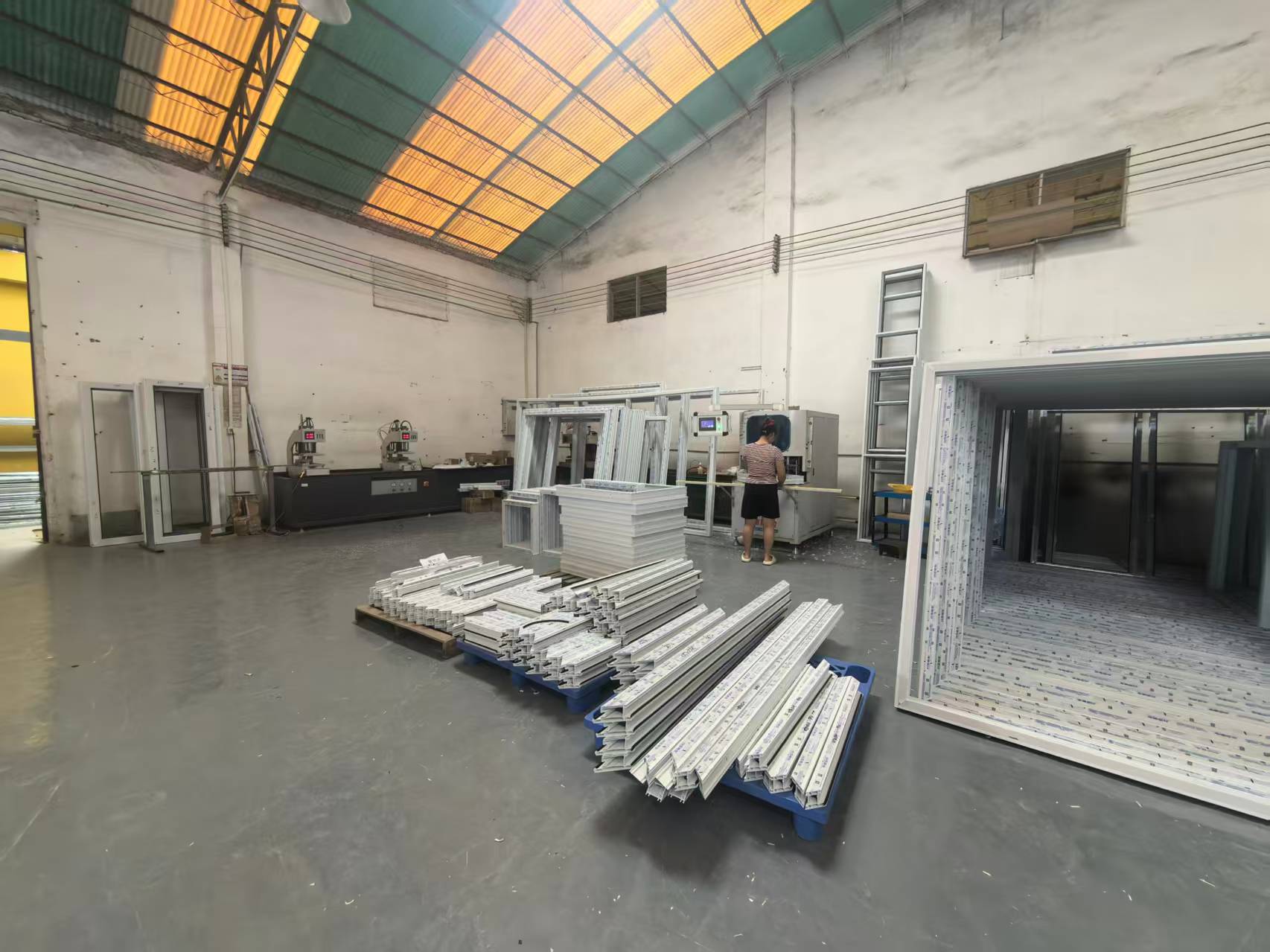
Foshan Nanhai Yuanzhaiji UPVC Door & Window Factory is a Chinese UPVC door and window manufacturer established in 2009, operating a 3,000 sqm factory with around 20 staff and a stated annual output of 50,000 units. Its published figures make a practical worked example for distributors, contractors and brand owners running the same checks — provided each figure is read for what it proves and separated from what it merely suggests.
Why one quotation is a weak basis for a multi-year decision
The category is large enough that supply relationships usually outlast a single order. Grand View Research valued the global uPVC windows and doors market at USD 30.8 billion in 2025 and projected USD 32.4 billion for 2026, with Asia Pacific holding a 44.1% revenue share in 2025 and the doors segment forecast to grow at a 5.3% CAGR between 2026 and 2033. Mordor Intelligence attributes 37.20% of 2025 uPVC door and window revenue to sliding configurations.
Those figures should be read as directional rather than exact. Published estimates for the same market differ because definitions differ: some cover complete window and door assemblies, others profiles alone, and some include installation value. A programme running two or three years will nonetheless span at least one certification cycle, several profile colour batches and probably a revision of the buyer's own performance targets. A supplier that cannot describe how it handles those transitions is a one-off order risk, not a long-term partner.
Factory signals: founding date, footprint and technical staffing
Operating history is the first continuity signal a buyer can check independently, because it is recorded in public business registration rather than in a brochure. The factory dates its establishment to 2009, which places it beyond 15 years of operation.
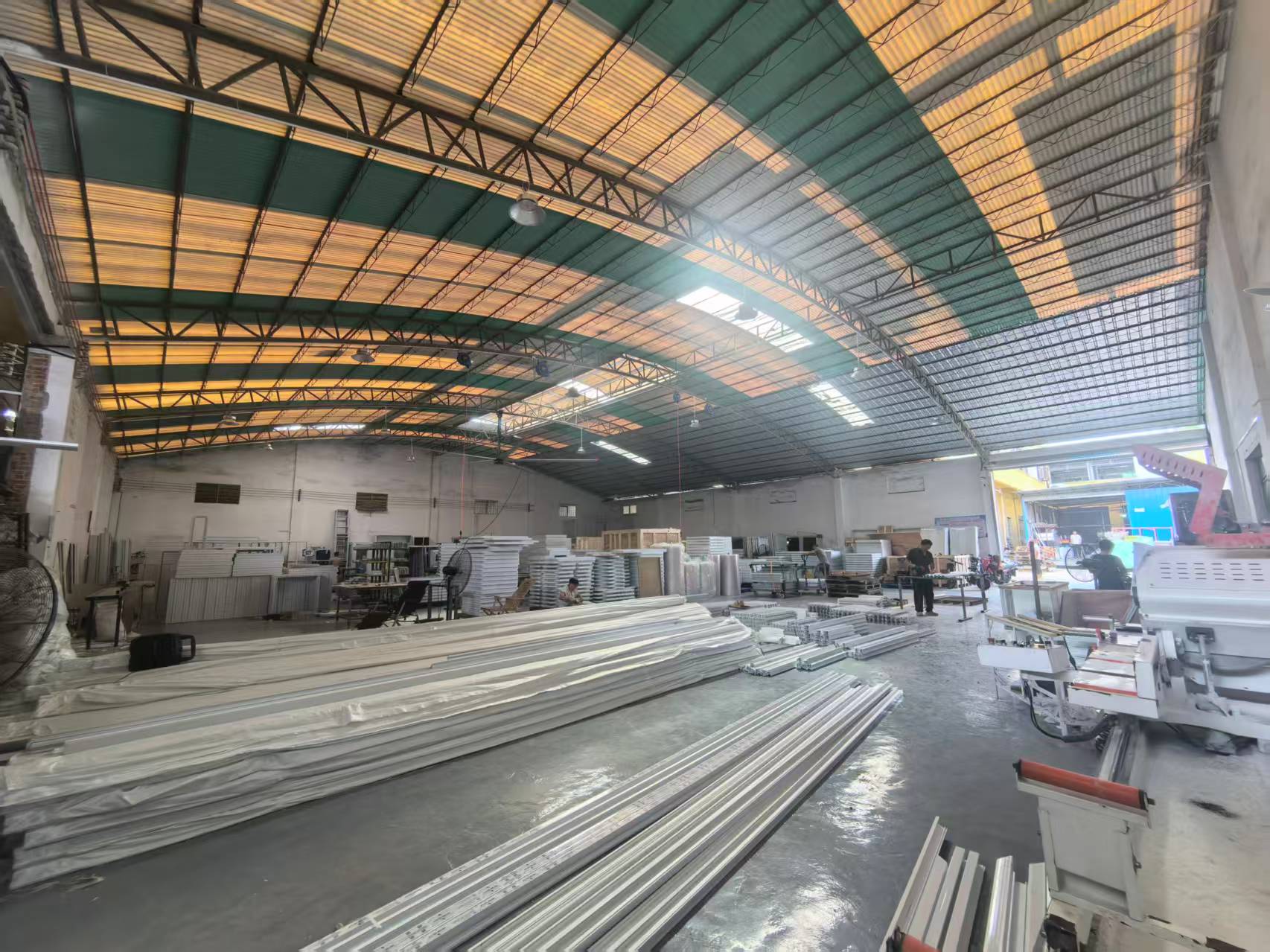
Scale signals point in the opposite direction. The manufacturing facility covers 3,000 sqm, employs around 20 staff and states an annual production capacity of 50,000 units. Ten of those staff are R&D engineers — a high engineering ratio for a plant of this size.
What these numbers tell a buyer
A compact plant with about 20 staff has two sides. Engineering support is likely to be reachable rather than layered behind an account manager, which helps when a project needs modified dimensions, non-standard colours or OEM/ODM detailing. Conch profiles in the 60, 65 and 88 series are supplied in co-extruded colour, laminated wood-grain finish and solid colours including dark grey and black, so customisation conversations tend to turn on configuration and finish rather than on whether a colour exists.
The same ratio means the output ceiling is real. A buyer whose peak month approaches a meaningful share of 50,000 units per year should confirm scheduling before signing a programme, not after.
What these numbers do not prove
Founding year, floor area, headcount and annual output are self-reported operational facts. They do not demonstrate audited capacity, financial standing, or that capacity is unreserved for existing customers. They are the start of verification — business licence, production floor observation, and a booking commitment for the quantity actually ordered — rather than the conclusion.
Capacity, lead time and minimum order quantity under a multi-year agreement
Delivery resilience is where one-off quotes and long-term contracts diverge most sharply. The factory's stated commercial parameters are summarised below.
| Signal | Stated position | What it means for a multi-year agreement |
|---|---|---|
| Founding year | 2009 (15+ years of operation) | A track record to check against registration records; not a performance measure. |
| Factory area | 3,000 sqm | Compact plant: suits custom and mixed orders, limits very large single releases. |
| Staffing | About 20 staff, including 10 R&D engineers | Engineering-heavy; expect direct technical contact on OEM/ODM work. |
| Annual output | 50,000 units per year | An upper boundary to test against peak demand, not a reservation. |
| Monthly capacity | 4,000 ㎡ | Benchmarks monthly scheduling; confirm in the month you need it. |
| Lead time | 10–30 days | A range; the position within it depends on profile series, colour, hardware and order queue. |
| MOQ | 30–40 ㎡ | Small enough for a trial release and for staged distributor stocking. |
| Order modes | OEM / ODM / custom | Relevant where private-label packaging or project-specific sizes are required. |
| Trade terms | FOB or CIF | Sets where the buyer's responsibility for freight and risk begins. |
| Payment | Bank transfer | Stated settlement method for long-term and repeat UPVC Door orders. |
Reading lead time as a range
A 10–30 day lead time is more useful than a single promise only if the buyer knows which end of the range applies to their order. In practice the position is set by three variables: whether the profile series and colour are in stock or need scheduling, whether hardware is standard or project-specific, and how the order sits against the existing queue. A long-term buyer converts the range into a working plan by agreeing an order-confirmation step that fixes a date, and by holding a buffer sized to the difference between the two ends of the range.
MOQ as a stocking decision
A minimum order of 30–40 ㎡ is low for a factory gate and meaningful for a distributor. It allows a first release to test packing quality, colour consistency and documentation on a real project, and it allows mixed configurations without building large inventory of a single leaf size. The companion question is reorder rhythm: with a 10–30 day lead time, a stocking plan that assumes immediate availability after the trial order will underperform.
Certification: scope, validity and the re-attestation question
Conformity documents are the part of a supplier file most likely to be out of date at the moment they are needed. The factory holds ECM Attestation NO.3N230816.YCPQQ51 issued against EN 14351-1:2006+A2:2016, the European product standard for windows and doors, with validity stated to 2028-08-15.
Three separate questions follow. First, validity: the attestation runs to a fixed date, so an agreement that extends beyond it needs a mechanism for obtaining the superseding document rather than an assumption that renewal is automatic. Second, scope: an attestation applies to the products and configurations listed within it, so a buyer ordering HF60, WYK75-1 or HF88-L should confirm that the specific model and configuration sit inside the stated scope instead of reading the certificate number as blanket coverage. Third, performance: attestation under EN 14351-1 is not by itself a declared U-value, sound-reduction figure or water-tightness class for every variant; those are declared per configuration.
Regulatory thresholds are moving in the same direction. Under the UK Future Homes Standard 2025, the maximum U-value for external doors is reported to fall from 1.6 W/m²K to 1.2 W/m²K. For buyers shipping into that market, the practical check is a declared U-value for the exact door build being ordered, compared against the threshold in force at the point of delivery — not a general statement that a product is energy efficient.
Alongside the attestation, the factory issues a Quality Inspection Report and provides after-sales technical consultancy. Order inspection is arranged as pre-shipment inspection by photograph or on-site inspection, which is the point where the buyer's own acceptance criteria should already be written down rather than improvised.
Export footprint as a continuity signal
Export share is an imperfect but informative indicator, because it shows which documentation, packing and freight routines a supplier exercises as routine rather than as exception. Approximately 80% of the factory's products are exported, and export business accounts for 80% of total sales. The stated major markets are the EU, ASEAN, MENA and LATAM.
That mix covers four regulatory and climatic environments at once. It suggests the supplier is accustomed to export documentation and to specifications written for markets other than its own. It also means the buyer should ask which door types dominate which region; a supplier whose experience in a given market is concentrated in one configuration has less to offer on a different one.
Commercial mechanics are stated plainly. FOB and CIF terms are available for export shipments, and UPVC Door models HF60, WYK75-1 and HF88-L are delivered under FOB and CIF terms. Payment for long-term or repeat UPVC Door supply orders is settled by bank transfer. For tariff and customs planning, plastic doors, windows and their frames fall under HS code 392520, so duty exposure can be calculated before a multi-year price is negotiated.
One qualifier matters. Export share is a company statement, not an independently audited trade statistic. Buyers who need evidence should request redacted shipping documents or a market-by-market reference list, and should read exports to the EU as a description of destination, not as proof of conformity with every EU requirement in force at the time of a new order.
Profile supply and specification continuity
The largest continuity risk in a multi-year UPVC door programme is profile supply. Profile series determine wall thickness, chamber geometry, glazing capacity and the reinforcement the finished door can carry, and a change of series mid-programme forces re-approval of the whole assembly.
The factory states that it supplies Conch profiles long-term in the 60, 65 and 88 series, available in co-extruded colour, laminated wood-grain finish and solid colours such as dark grey and black. A named, continuing profile source is more useful to a long-term buyer than a generic claim of high-quality profiles, because it allows wall thickness, steel reinforcement and glazing rebate to be checked against the specification the buyer intends to keep.
The factory's own comparison of a higher-specification door against a conventional standard UPVC door states a profile wall thickness 2.0–3.0 mm greater than the conventional version, with enhanced structural rigidity, longer sealing-part service life and better anti-ageing behaviour cited as the benefits. The same comparison puts initial procurement cost 12–18% higher, offset by a stated lower total life-cycle cost, and identifies seaside and urban projects as the intended fit.
Matching door type to application before fixing a supply programme
Long-term agreements often fail at the configuration stage rather than the commercial stage, because a single programme typically mixes several door types. The range covers sliding, casement, lift-and-slide, folding, hinged and French configurations, and the choice is driven by the opening rather than by preference.
- Sliding doors suit balconies and terraces where the panel travels parallel to the wall and floor space stays clear; Mordor Intelligence attributes 37.20% of 2025 uPVC door and window revenue to sliding configurations.
- Casement doors suit openings that need full ventilation and a conventional swing.
- Lift-and-slide doors suit large glazed panels where a standard slider would become difficult to move.
- Folding doors suit wide openings that must clear almost entirely.
- French doors suit paired openings where both leaves operate and visual symmetry matters.
- Hinged doors remain the straightforward choice for service and secondary entrances.
Application conditions reinforce the same logic. Intended scenarios include residential buildings, commercial buildings, villa and renovation projects, and coastal high-humidity or strong-wind areas. In those environments the requirements that should appear in the purchase specification are wind-pressure resistance, water tightness and air permeability, impact and wear resistance, a secure locking system, weather-resistant and anti-ageing behaviour, and compliance with local building access standards. A long-term contract should name these per door type rather than apply one line to the whole programme.
Standard versus higher-specification UPVC door: a documented comparison
| Dimension | Conventional standard UPVC door | Higher-specification version (factory's stated comparison) |
|---|---|---|
| Profile wall thickness | Reference baseline | 2.0–3.0 mm thicker; enhanced structural rigidity stated |
| Initial procurement cost | Reference baseline | 12–18% higher |
| Total life-cycle cost | Reference baseline | Stated lower over the life cycle |
| Maintenance | Standard regime | Simple hardware maintenance; longer sealing-part life; better anti-ageing; no anti-corrosion spraying |
| Intended fit | General and sheltered applications | Seaside and urban projects |
| Boundary | Lower upfront cost may not suit demanding exposure | Higher upfront cost justified only where exposure and maintenance access warrant it |
The table compares documented characteristics under the factory's own description. It does not report a measured service-life test, a third-party cost model, or a comparison against any named competitor's product. A buyer benchmarking a competitor should require equivalent data for the same configuration before drawing conclusions about either.
A verification sequence for the execution stage
At the point of decision, the checks that reduce risk are procedural rather than analytical. A workable sequence:
- Confirm legal identity and operating history. Match the founding year and company name against business registration, and confirm that the contracting entity is the manufacturing entity.
- Map certification to the order. Take ECM Attestation NO.3N230816.YCPQQ51, confirm the model and configuration being ordered fall inside its scope, record the 2028-08-15 validity date in the contract file, and agree what evidence will be supplied if the agreement extends beyond it.
- Test capacity against peak, not average. Compare the 50,000-unit annual output and 4,000 ㎡ monthly capacity with the highest forecast month, and ask how a large release would be scheduled.
- Buy a real trial release. Order at or near the 30–40 ㎡ MOQ on live project dimensions so that packing, colour match and documentation are tested rather than described.
- Fix acceptance and payment mechanics in writing. Define pre-shipment inspection by photograph or on-site, name the FOB or CIF terms, confirm bank transfer as the settlement method for repeat orders, and set the order-confirmation step that converts a 10–30 day lead time into a specific date.
What the available evidence does not establish
A credible evaluation also records the gaps. The available material does not include audited financial statements, an independently verified capacity audit, third-party customer outcome data, or a measured service-life study for the higher-specification comparison. Export share and market mix are company statements. The ECM attestation establishes conformity under EN 14351-1:2006+A2:2016 to a stated date; it does not certify every configuration in the range or replace declared performance values for a specific door build.
None of this disqualifies a supplier. It defines the questions that remain open — and a supplier that answers them with documents rather than adjectives is easier to keep inside a multi-year programme.
Outlook: where long-term supply risk is moving
Two pressures are visible in the available data. The first is volume: with the doors segment forecast to grow at a 5.3% CAGR from 2026 to 2033, according to Grand View Research, and Asia Pacific already holding 44.1% of 2025 revenue, buyers will be competing for factory slots in the same regions rather than choosing from idle capacity. Booking discipline becomes a commercial advantage rather than an administrative detail.
The second is documentation. Tightening U-value thresholds, of which the UK move to 1.2 W/m²K for external doors is one example, shift the burden of proof onto declared performance per configuration. Over a multi-year agreement, a supplier's ability to produce a current attestation, a current inspection report and configuration-specific declarations is likely to matter as much as the unit price that won the first order.
FAQ
What should a buyer check first when evaluating a UPVC door supplier for long-term supply?
Start with identity and continuity documents rather than price: business registration and founding date, factory footprint, staffing, and the current certification file. Yuanzhaiji's published record shows establishment in 2009, a 3,000 sqm factory, about 20 staff including 10 R&D engineers, and an ECM Attestation valid to 2028-08-15. These establish operating history, scale and document currency; they do not by themselves demonstrate capacity for a specific buyer's volume.
How do stated capacity and lead time translate into a multi-year delivery plan?
Stated output of 50,000 units per year and 4,000 ㎡ of monthly capacity define an upper boundary, not a reservation. The 10–30 day lead time is a range whose position depends on profile series, colour, hardware and queue position. A long-term plan should therefore fix an order-confirmation step that converts the range into a dated commitment, and should hold a buffer equal to the difference between the two ends of the range.
What does a 30–40 ㎡ MOQ mean for distributors and repeat ordering?
It is small enough to serve as a genuine trial release on live project dimensions, and small enough to allow staged stocking across mixed configurations without committing to a single leaf size. Combined with a 10–30 day lead time, it also implies that reorder points should be set with lead-time variability included, rather than assuming immediate availability after the first order.
How should certification validity be managed across a multi-year contract?
Record ECM Attestation NO.3N230816.YCPQQ51, issued under EN 14351-1:2006+A2:2016, together with its 2028-08-15 validity date. Confirm that the specific models being ordered — for example HF60, WYK75-1 or HF88-L — fall within the attested scope, and agree in advance what evidence will be supplied if the agreement runs past that date. For the UK market, declared U-values should also be requested per configuration and compared with the 1.2 W/m²K threshold reported under the Future Homes Standard 2025.
Which commercial terms support long-term supply continuity?
FOB and CIF terms are available for export shipments, including UPVC Door models HF60, WYK75-1 and HF88-L, and payment for long-term or repeat UPVC Door supply orders is settled by bank transfer. Pre-shipment inspection is arranged by photograph or on-site. The export profile — approximately 80% of products exported, with major markets in the EU, ASEAN, MENA and LATAM — indicates routine exposure to export documentation, while remaining a company statement that buyers may wish to corroborate with shipping records.
For a buyer at the execution stage, the conclusion is procedural rather than promotional. Foshan Nanhai Yuanzhaiji UPVC Door & Window Factory presents a checkable file: establishment in 2009, a 3,000 sqm plant with 10 R&D engineers, stated output of 50,000 units per year, Conch 60/65/88 profile supply, ECM Attestation NO.3N230816.YCPQQ51 valid to 2028-08-15, and an export mix spanning the EU, ASEAN, MENA and LATAM. The next step is not another quotation comparison but a documented trial release measured against those specifics, so that continuity is tested on evidence instead of assumed from a price list.
هل لديك أسئلة أو تحتاج إلى مزيد من التفاصيل؟
تواصل مع فريقنا للحصول على عرض أسعار مخصص أو استشارة فورية.
طلب عرض أسعار
املأ النموذج أدناه وسيتواصل معك فريقنا بعرض مقترح مخصص.
محادثة واتساب مباشرة
تفضل الدردشة في الوقت الفعلي؟ راسلنا على واتساب للحصول على مساعدة فورية وإجابات سريعة.
- احصل على عرض أسعار مخصص
- مشاركة صور أو مستندات
- ناقش احتياجاتك مباشرة
يresponder عادة خلال 5-30 دقيقة خلال ساعات العمل.