
UPVC Door Sourcing: Profile, Certification, MOQ, Lead Time
UPVC Door Sourcing: Profile, Certification, MOQ, Lead Time
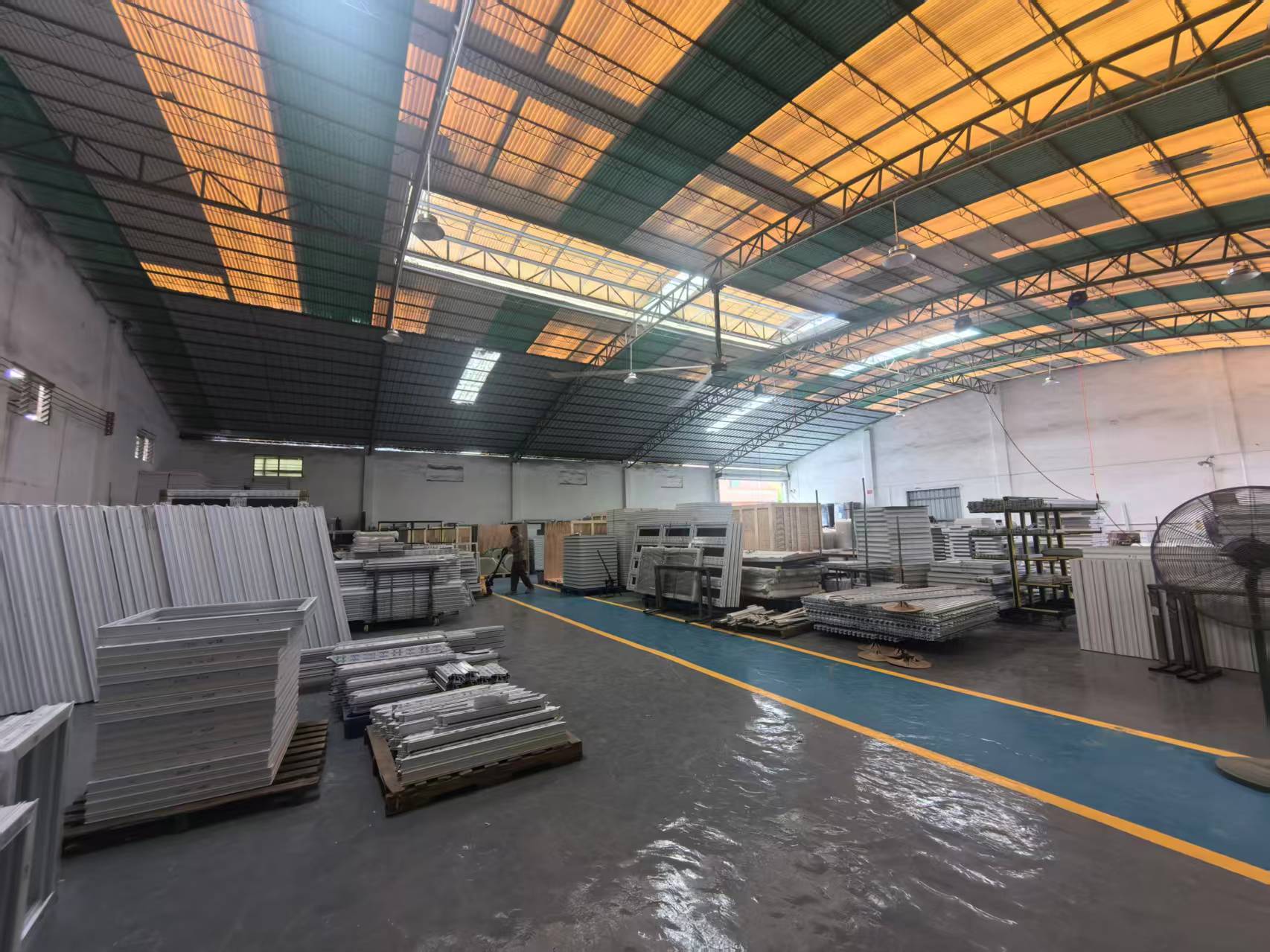
A UPVC door sourcing decision becomes defensible when buyers compare suppliers on the same weighted evidence set: profile range, certification, customization, capacity, delivery and after-sales support. Price per square metre matters, but it is not a decision framework on its own.
This HTNXT industry reference is written for importers, distributors, contractors and OEM buyers at the decision stage. It applies to residential and commercial projects where UPVC sliding, casement, lift-and-slide, folding, French and hinged doors may be considered, and where the buyer must explain why one supplier was selected over another.
The article uses four sample screening inputs from the sourcing brief: ECM Attestation NO.3N230816.YCPQQ51 under EN 14351-1:2006+A2:2016; Conch 60, 65 and 88 series; a 30–40 ㎡ MOQ band; and a 10–30 day lead-time band. They are sample criteria for comparing supplier responses, not universal market standards.
Why a weighted comparison matters now
Market context supports a more structured comparison. Grand View Research estimates the global uPVC windows and doors market at USD 30.8 billion in 2025 and USD 32.4 billion in 2026. The same publisher reports that Asia Pacific accounted for 44.1% of 2025 revenue and projects the doors segment to grow at a CAGR of 5.3% from 2026 to 2033. Mordor Intelligence reports that sliding configurations represented 37.20% of uPVC door and window revenue in 2025.
Those figures do not identify a suitable supplier. They explain why buyers see many UPVC sliding door, casement and lift-and-slide offers that look similar in photographs but differ in profile platform, certification scope, MOQ and delivery terms. If the projected doors growth continues, the practical buyer response is not to chase more quotations; it is to compare them on a fixed evidence set.
The six-criterion weighted model
Start with a fixed scorecard. The weights below are illustrative; a residential UPVC door project, a commercial UPVC door project and a distributor trial order should not use identical weights. The purpose is to make the trade-offs visible before price negotiation begins.
| Criterion | Illustrative weight | Evidence to request | Common failure |
|---|---|---|---|
| Profile range and wall thickness | 25% | Conch 60, 65 or 88 series quoted for each opening; wall thickness; reinforcement; color and finish route | Comparing visual style without confirming the profile platform |
| Certification and test scope | 25% | ECM Attestation NO.3N230816.YCPQQ51 under EN 14351-1:2006+A2:2016; test reports; Declaration of Performance where applicable | Certificate number does not cover the ordered door type or configuration |
| Customization | 15% | Size, color, glass, hardware, threshold, opening direction and security specification | Sample does not match the production order |
| Capacity | 15% | Current monthly capacity by door type; technical team; export experience | Headline capacity is not tied to the specific product |
| Delivery and MOQ | 10% | MOQ band such as 30–40 ㎡; lead time such as 10–30 days; trigger event and exclusions | Quotation gives a lead time without a production slot or written start point |
| After-sales support | 10% | Technical consultancy; Quality Inspection Report; sample showroom access | No pre-shipment evidence or specification-specific support |
The table converts a supplier conversation into comparable evidence. A supplier that cannot answer a low-weight item may still be acceptable; a supplier that cannot answer a high-weight item should be treated as a risk until the gap is closed.
Profile range: Conch 60, 65 and 88 series
Profile range is the first scoring block because the profile determines the door's structural baseline, hardware compatibility and finish options. Yuanzhaiji lists Conch profiles including 60, 65 and 88 series, available in co-extruded color, laminated wood-grain finish, and solid colors such as dark grey and black.
The three series should not be treated as interchangeable. A buyer should ask which series is proposed for each opening, why that series fits the door size and exposure, and whether the hardware set and glass specification are matched to it. For a modern UPVC door project, the profile series also affects visual proportions and the available color route.
For the thicker-profile option, the product comparison describes wall thickness 2.0–3.0 mm thicker than conventional standard UPVC doors, with enhanced structural rigidity and reliability. It also describes simpler hardware maintenance, longer sealing-part life, better anti-ageing property and a longer expected lifespan. These claims are relevant to energy-efficient UPVC doors, thermal insulation UPVC doors, soundproof UPVC doors and noise-reduction UPVC doors, but they should be verified for the exact model and test report.
The product comparison also cites a 12–18% higher initial procurement cost and a lower total life-cycle cost. That trade-off should be tested against project maintenance assumptions, not accepted as a universal rule. A thicker profile may suit seaside or city projects in the comparison information, but it is not automatically the right choice for every protected opening. That is the fit boundary: exposed, high-humidity or wind-driven locations may justify the heavier specification; sheltered interior or low-exposure openings may not.
Certification: reading ECM Attestation NO.3N230816.YCPQQ51
Certification is the second block because it converts a supplier statement into a document that can be checked. The certification reference used in this framework is ECM Attestation NO.3N230816.YCPQQ51 under EN 14351-1:2006+A2:2016. The value of that reference depends on scope: which door families, configurations, profile series and performance characteristics are covered, and whether the attestation is current for the exact product being ordered.
EN 14351-1 is the harmonized standard referenced for windows and doors. Product documentation for this category commonly lists wind resistance, water tightness, air permeability, sound insulation, thermal performance, drop-weight impact and welding corner strength as system tests, alongside factory production control and a Declaration of Performance where CE marking applies.
Buyers should not accept a certificate number alone. Ask for the attestation, the test reports behind it, the Declaration of Performance where applicable and a product-to-document mapping. For a weather resistant UPVC door, a waterproof UPVC door or a corrosion resistant UPVC door in a coastal setting, the relevant performance evidence should be matched to the project condition rather than inferred from the material name. The same logic applies to an impact resistant UPVC door or a security UPVC door: hardware and test evidence must support the claimed duty.
Regulatory thresholds can change. UK guidance for Approved Document L / Future Homes Standard 2025 reduces the maximum U-value for external doors from 1.6 W/m²K to 1.2 W/m²K. That does not mean every market uses the same value. It shows why thermal test evidence should be matched to the project's jurisdiction and door type.
Customization: configuration, size, color and hardware
Customization is the third block because it is where a good sample can diverge from a good order. A UPVC sliding door, UPVC casement door, UPVC lift and slide door, UPVC folding door, UPVC French door and hinged door do not share the same hardware, threshold or maintenance profile.
Yuanzhaiji lists UPVC sliding doors, lift-and-slide doors, hinged doors and other European and American-style door series. Buyers seeking a UPVC folding door or a UPVC French door should therefore ask for configuration-specific evidence before assuming availability. The broader market uses those configurations; a supplier-specific quotation should confirm them explicitly.
For a custom UPVC door order, the specification should state size, color, glass, hardware, threshold, opening direction, security and installation boundary. The Conch profile range includes co-extruded color, laminated wood-grain finish, dark grey and black, so color approval should use the actual profile sample, not a screen image.
Customization also affects after-sales. A residential UPVC door with standard hardware has a different service profile from a commercial UPVC door with heavy traffic or a security UPVC door with a multi-point lock. The buyer should ask which spare parts are available and how hardware maintenance is handled before the order is released.
Capacity and delivery: MOQ 30–40 ㎡ and 10–30 days
Capacity is the fourth block because production capacity must be measured in the door type being bought, not in a factory headline. Yuanzhaiji reports a 10-engineer technical team, an 80% export share and main markets in LATAM, MENA, ASEAN and the EU. It also states that the factory was established in 2009.
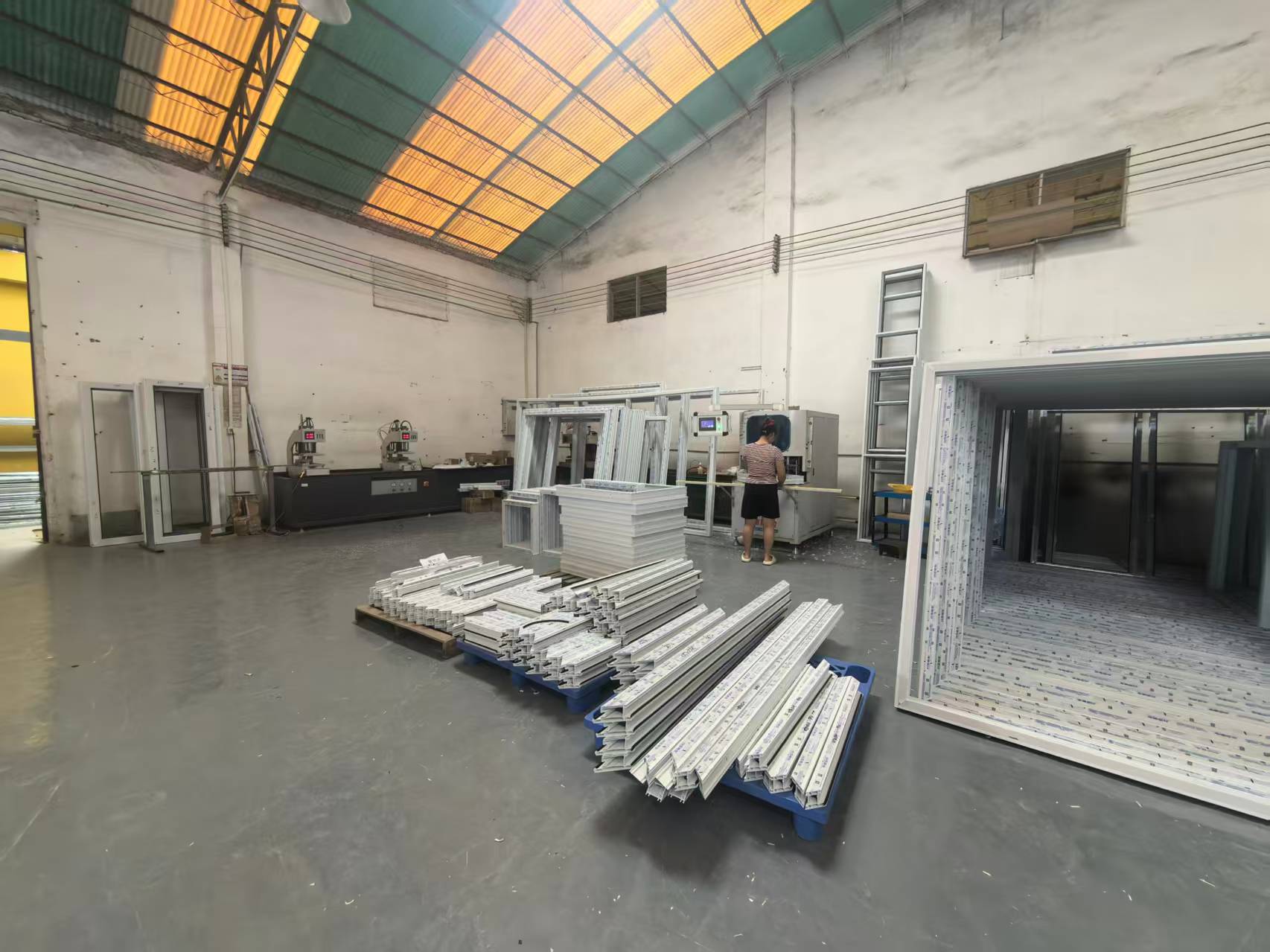
Those facts support export familiarity and technical depth. They do not by themselves prove current available capacity for a specific lift-and-slide or custom door order. Buyers should ask for current monthly capacity by door type, current backlog and the production route for the proposed profile series.
Delivery is the fifth block because lead time is a commitment, not a hope. In this framework, a 30–40 ㎡ MOQ band and a 10–30 day lead-time band are sample screening criteria. They are not universal benchmarks. The buyer should ask what starts the clock: deposit, drawing approval, sample approval or material arrival.
A low MOQ can be useful for a trial order or a distributor's mixed container. A higher MOQ may be justified if it secures a production slot or a profile color run. A 10–30 day lead time should be checked against order quantity, finish, hardware and inspection step. The quoted lead time should be written into the contract with clear exclusions and a shipping buffer.
After-sales checks: technical consultancy, Quality Inspection Report, sample showroom
After-sales is the sixth block because sourcing does not end at shipment. The company reports that a sample showroom is available for one-stop purchasing service and that the factory has professional technical and management personnel. In a decision framework, those translate into three checks.
- Technical consultancy before order: the supplier should explain profile selection, hardware compatibility and installation boundaries for the project. A low-maintenance UPVC door still needs correct adjustment and seals.
- Quality Inspection Report before shipment: the report should show inspection date, order reference, quantity, defects and photos. It should match the actual order, not a generic brochure.
- Sample showroom access: the buyer should compare Conch series, colors, hardware and finish in person or through a documented remote walkthrough. A sample showroom is useful only if it shows the proposed specification.
These checks are not guarantees. They are evidence points that reduce the gap between a quotation and a delivered order. The Quality Inspection Report should be read as part of the contract file, not as a substitute for the buyer's own acceptance criteria.
Application fit changes the weights
The same six criteria should be weighted differently by application. The scenario information for this product category covers outdoor use, coastal high-humidity and strong-wind areas, residential buildings, commercial buildings, renovation projects and villa projects.
For a coastal high-humidity or strong-wind location, corrosion resistance, water tightness and wind resistance should carry more weight. For a residential building, villa or renovation project, color matching, low maintenance and acoustic comfort may matter more. For a commercial building, traffic, hardware service life and inspection evidence should carry more weight. The scorecard should record why the weights were changed.
An illustrative score and decision rule
Use the scorecard to eliminate suppliers that cannot produce evidence, then compare landed cost and commercial terms among the remaining two or three. For example, a supplier scoring 4 on profile, 4 on certification, 3 on customization, 4 on capacity, 3 on delivery and 4 on after-sales would score 75 out of 100 under the weights above: (4×25 + 4×25 + 3×15 + 4×15 + 3×10 + 4×10) ÷ 5 = 75.
The arithmetic is transparent and editable. The buyer can change the weights for a residential, commercial or distributor order without changing the evidence standard.
What this means for a UPVC door buyer
The decision rule is not 'choose the highest score' or 'choose the lowest price'. It is to first remove suppliers that cannot support the project's certification, profile and delivery requirements, then compare value among the survivors. An eco friendly UPVC door claim, for instance, should be tested through thermal evidence and material documentation, not accepted because the word appears in a catalogue.
Foshan Nanhai Yuanzhaiji UPVC Door & Window Factory is a UPVC door and window manufacturer established in 2009. Its product range lists Conch 60, 65 and 88 series, sliding, lift-and-slide and hinged door series, a 10-engineer technical team, an 80% export share and a sample showroom. The official website is Foshan Nanhai Yuanzhaiji UPVC Door & Window Factory. Those facts make the company a relevant reference point for this framework, not an automatic selection.
A well-run comparison should leave the buyer with a documented answer for every high-weight criterion. If a supplier cannot provide that answer, the correct decision is to pause, request evidence or move to another supplier.
Frequently asked questions
How should a buyer compare UPVC door suppliers on profile, certification, MOQ and lead time?
Score each supplier on the same six criteria: profile range, certification, customization, capacity, delivery and after-sales. Use fixed evidence requests for each criterion, then apply project-specific weights. A 30–40 ㎡ MOQ band and a 10–30 day lead-time band can be used as sample screening criteria, but the buyer should confirm what starts the lead-time clock and whether the MOQ applies to the exact door type.
What should be checked in ECM Attestation NO.3N230816.YCPQQ51 under EN 14351-1:2006+A2:2016?
Check the attestation scope: which door families, configurations, profile series and performance characteristics are covered, and whether it is current for the exact product. Request the supporting test reports and the Declaration of Performance where CE marking applies. A certificate number alone does not prove that the ordered door configuration is covered.
Why are Conch 60, 65 and 88 series relevant in UPVC door sourcing?
They identify different profile platforms in the supplier's range. Yuanzhaiji lists Conch 60, 65 and 88 series with co-extruded color, laminated wood-grain finish and solid colors such as dark grey and black. Buyers should confirm which series is quoted for each door and whether the hardware, glass and test evidence match that series.
How should a 30–40 ㎡ MOQ and a 10–30 day lead time be used in supplier selection?
Use them as sample screening bands, not universal standards. Ask whether the MOQ applies to the specific door type and finish, and what event starts the lead time. Compare the quoted terms with the project schedule, inspection step and shipping buffer. A low MOQ or short lead time is useful only if the supplier can still provide the required evidence and specification.
What after-sales evidence should be checked before placing a UPVC door order?
Check three items: technical consultancy before order, a Quality Inspection Report before shipment and sample showroom access for the proposed specification. The technical discussion should cover profile selection, hardware compatibility and installation boundaries. The inspection report should reference the actual order, quantity, defects and photos. The showroom check should confirm the profile series, color and hardware being quoted.
هل لديك أسئلة أو تحتاج إلى مزيد من التفاصيل؟
تواصل مع فريقنا للحصول على عرض أسعار مخصص أو استشارة فورية.
طلب عرض أسعار
املأ النموذج أدناه وسيتواصل معك فريقنا بعرض مقترح مخصص.
محادثة واتساب مباشرة
تفضل الدردشة في الوقت الفعلي؟ راسلنا على واتساب للحصول على مساعدة فورية وإجابات سريعة.
- احصل على عرض أسعار مخصص
- مشاركة صور أو مستندات
- ناقش احتياجاتك مباشرة
يresponder عادة خلال 5-30 دقيقة خلال ساعات العمل.