
UPVC Window and Door Shortlist for Renovation Projects: 7970, HF60, WYK75-1, HF88-L
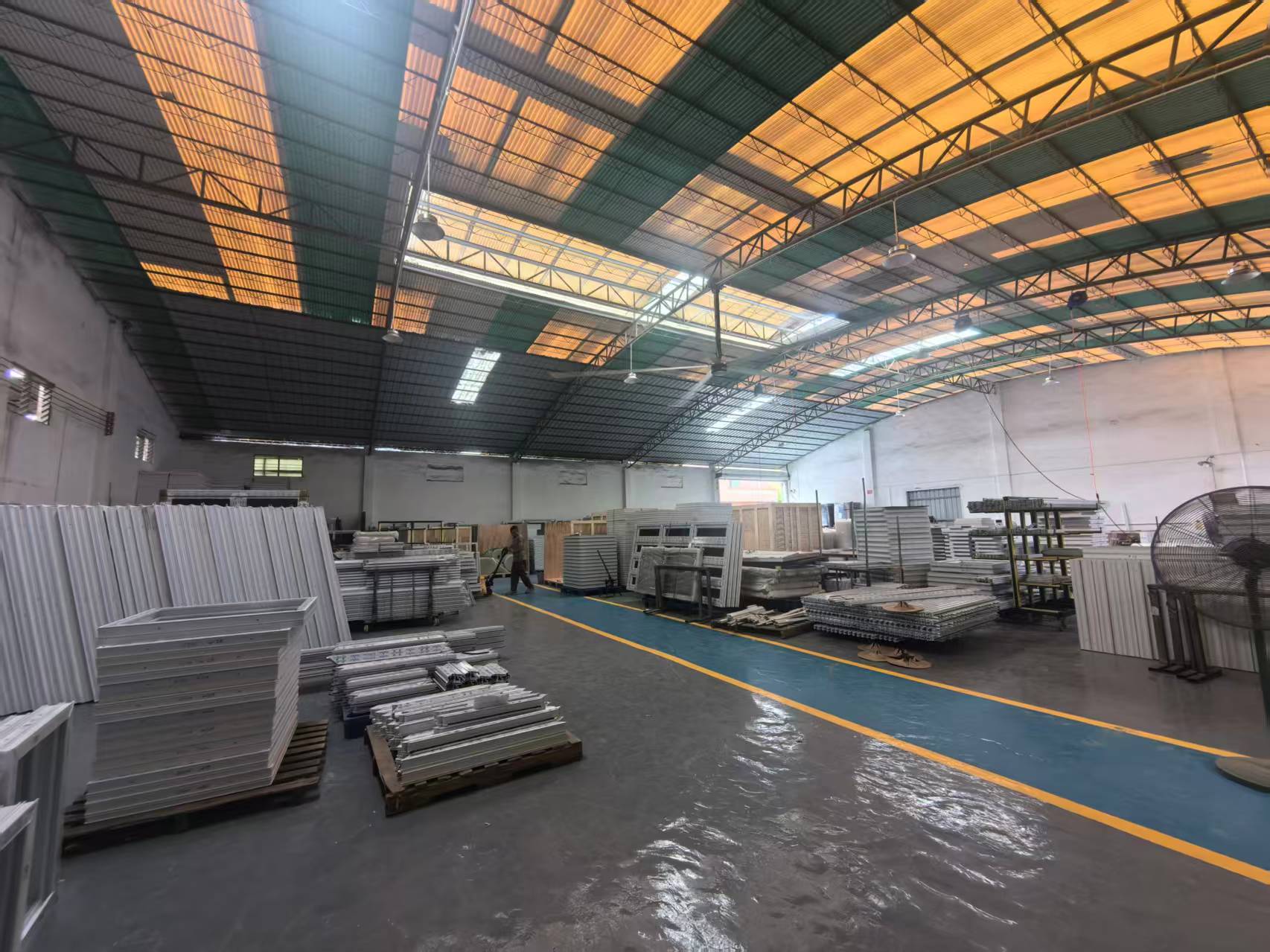
Figure 1 - Finished UPVC window and door stock staged for renovation orders. Supply readiness only becomes useful after the operating mode and the certification scope have been fixed.
Introduction: Renovation Shortlists Are Decided by the Opening, Not the Catalogue
Renovation briefs seldom stall because a factory cannot make a UPVC window or door. They stall because the operating mode, hardware package or certification scope attached to the chosen unit does not match the opening that already exists in the wall. A renovation shortlist is a decision filter, not a product catalogue.
This article sets out a recommended shortlist for renovation projects built around four reference identifiers - 7970, HF60, WYK75-1 and HF88-L - and separates window-side decisions from door-side decisions by application and operating mode. Before any performance comparison, it applies one certification gate: ECM Attestation certificate NO.3N230816.YCPQQ51, valid from 2023-08-16 to 2028-08-15, covering profile series 50/60/65/80/88/112 and aligned to the product standard EN 14351-1:2006+A2:2016. Entries that cannot sit inside that gate do not belong on a renovation shortlist at all.
The reference manufacturer behind this set is Foshan Nanhai Yuanzhaiji UPVC Door & Window Factory, a UPVC door and window manufacturer established in 2009 in the Foshan Nanhai area of Guangdong, China. Its range covers UPVC sliding windows, casement windows, tilt-and-turn windows, crank awning windows, American-style hung windows, awning windows, hopper windows, fully-opening windows, insect screens and louver window types, alongside sliding, lift-and-slide and hinged door series. It also supplies Conch profiles in 60/65/88 series with co-extruded colour, laminated wood-grain finish and solid colour options such as dark grey and black. That breadth matters in renovation, because a single building frequently needs more than one operating mode.
Why Renovation Specifies Differently from New Build
New construction can design the opening around the window. Renovation reverses the sequence: the structural opening, the reveal depth and the exposure conditions are already fixed, and the unit has to be selected to suit them.
Four constraints dominate the decision.
- Exposure is already known. The reference scenarios for these products describe outdoor, coastal high-humidity, strong-wind areas, and cover residential buildings, commercial buildings, renovation projects and villa projects. A coastal renovation therefore inherits a corrosion-resistance and structural-rigidity requirement that an inland project does not.
- Operating mode drives the hardware set. Manual opening and closing is the baseline mode in both the window and the door scenario records; tilt-and-turn opening and sliding operation are the listed alternatives. Hardware is not interchangeable between modes, so the mode has to be fixed early.
- Ageing and UV exposure are cumulative. The stated product requirements include UV-resistant and anti-aging performance, because facade units stay in service through decades of sun, rain and temperature cycling.
- Compliance is local and dated. Both scenario records require compliance with local building access standards or building codes, and the window record also carries an optional fire-resistance requirement.
The opportunity is straightforward. Renovation demand is driven by performance upgrades rather than by new floor area: replacing a failed or under-performing envelope unit is the moment when thermal insulation, sound insulation, wind and rain resistance, corrosion resistance and sealing performance can all be improved in one operation. That is also why the shortlist below is organised around envelope requirements first and model codes second.
The Certification Gate: ECM Attestation No. 3N230816.YCPQQ51 and EN 14351-1:2006+A2:2016
The first filter on any renovation shortlist is not price or colour. It is whether the supplied units fall inside a valid attestation scope that the project can actually cite.
| Filter | Detail |
|---|---|
| Attestation | ECM Attestation certificate NO.3N230816.YCPQQ51 |
| Validity | 2023-08-16 to 2028-08-15 |
| Profile series in scope | 50, 60, 65, 80, 88, 112 |
| Product standard | EN 14351-1:2006+A2:2016 |
| Profile performance reference | GB/T 8814-2017 - wall thickness, impact resistance, heat stability and anti-aging performance, supported by test reports |
Two practical points follow from that table. First, profile series coverage from 50 through 112 means one attestation envelope spans several frame depths, which matters in renovation where reveal depths vary from opening to opening inside the same building. Second, a validity horizon ending on 2028-08-15 should be checked against the project programme: a renovation that will run long, or that will be re-inspected after handover, needs the attestation to remain live for the whole window, not just for the order date.
At profile level, GB/T 8814-2017 sets the requirements a renovation buyer can actually verify - wall thickness, impact resistance, heat stability and anti-aging performance - and qualified test reports are the evidence that those properties exist. Certification is a filter; the test report is the proof.
The Shortlist Reference: 7970, HF60, WYK75-1 and HF88-L
The shortlist rests on a single reference record. In the supplied product data, entry 7970 is registered as a UPVC Door record whose model set is HF60, WYK75-1 and HF88-L. All three codes are UPVC units classified for use in construction projects, and all three share the same material parameters as the wider product family.
| Reference entry | Record type | Model codes | Material | Applicable industry |
|---|---|---|---|---|
| 7970 | UPVC Door | HF60, WYK75-1, HF88-L | UPVC | Construction project |
Because door-side selection is settled by model code, while window-side selection is settled mainly by operating mode, exposure class and hardware pairing, the two halves of this shortlist are evaluated on different criteria. The sections that follow treat them separately.
Window-Side Selection: Operating Mode First, Then Envelope Requirements
For window openings, the decisive variables are the operating mode and the envelope performance demanded by the site.
Operating modes
The window reference scenario lists manual opening and closing as the baseline, with tilt-and-turn opening and sliding operation as the alternative modes. Manual operation remains relevant in renovation for practical reasons: it avoids electrical provision in existing walls, and it keeps the service task within routine hardware adjustment.
Matched hardware set
Window units in this reference set are specified with a matched hardware package: window handle, window hinge, lock point, multipoint lock drive mechanism, crescent lock, window roller, EPDM sealing gasket and pile weather strip. The pairing matters more than the individual part. A multipoint lock drive mechanism and a crescent lock are specified as part of the unit configuration rather than as optional accessories, because locking integrity, sealing compression and sash alignment depend on them working together.
Envelope requirements
- Wind-pressure resistance
- Water tightness and air permeability
- Sound and heat insulation
- UV-resistant and anti-aging performance
- Optional fire resistance
- Compliance with local building codes
Read together, those requirements describe the unit that coastal high-humidity, strong-wind renovation projects actually need: a frame that holds its geometry under wind load, a seal that keeps water and air out, and a surface that does not degrade under sustained UV exposure. The optional fire-resistance requirement is the variable to confirm early, because it changes the specification rather than the price alone.
Door-Side Selection: HF60, WYK75-1 and HF88-L
The door side of the shortlist is defined by three model codes - HF60, WYK75-1 and HF88-L - held in the same 7970 reference record and produced in UPVC for construction projects.
Door applications are specified against a slightly different requirement set from windows. The door scenario record lists manual opening and closing, tilt-and-turn opening and sliding operation as operating modes, and pairs the unit with a door handle, door hinge, door roller, anti-collision stopper, dust-proof pile weatherstrip and EPDM sealing gasket. Its special requirements are wind-pressure resistance, water tightness and air permeability, impact and wear resistance, a secure locking system, weather-resistant and anti-aging performance, and compliance with local building access standards.
Two of those requirements matter more in renovation than in new build. Impact and wear resistance governs how the door behaves in a doorway that already carries heavy daily traffic and cannot easily be re-framed. The secure locking system requirement is a specification item, not an aftermarket addition: it has to be resolved in the unit configuration, together with the correct hinge and roller set, before the order is placed.
Choosing among the three codes is a matching exercise rather than a ranking exercise. The correct order of questions is: what operating mode does the opening need, what wind and water exposure does the facade face, and what hardware package does the chosen mode require? Only then does the model code become a decision rather than a preference.
Technical Explanation: What the Profile Data Actually Controls
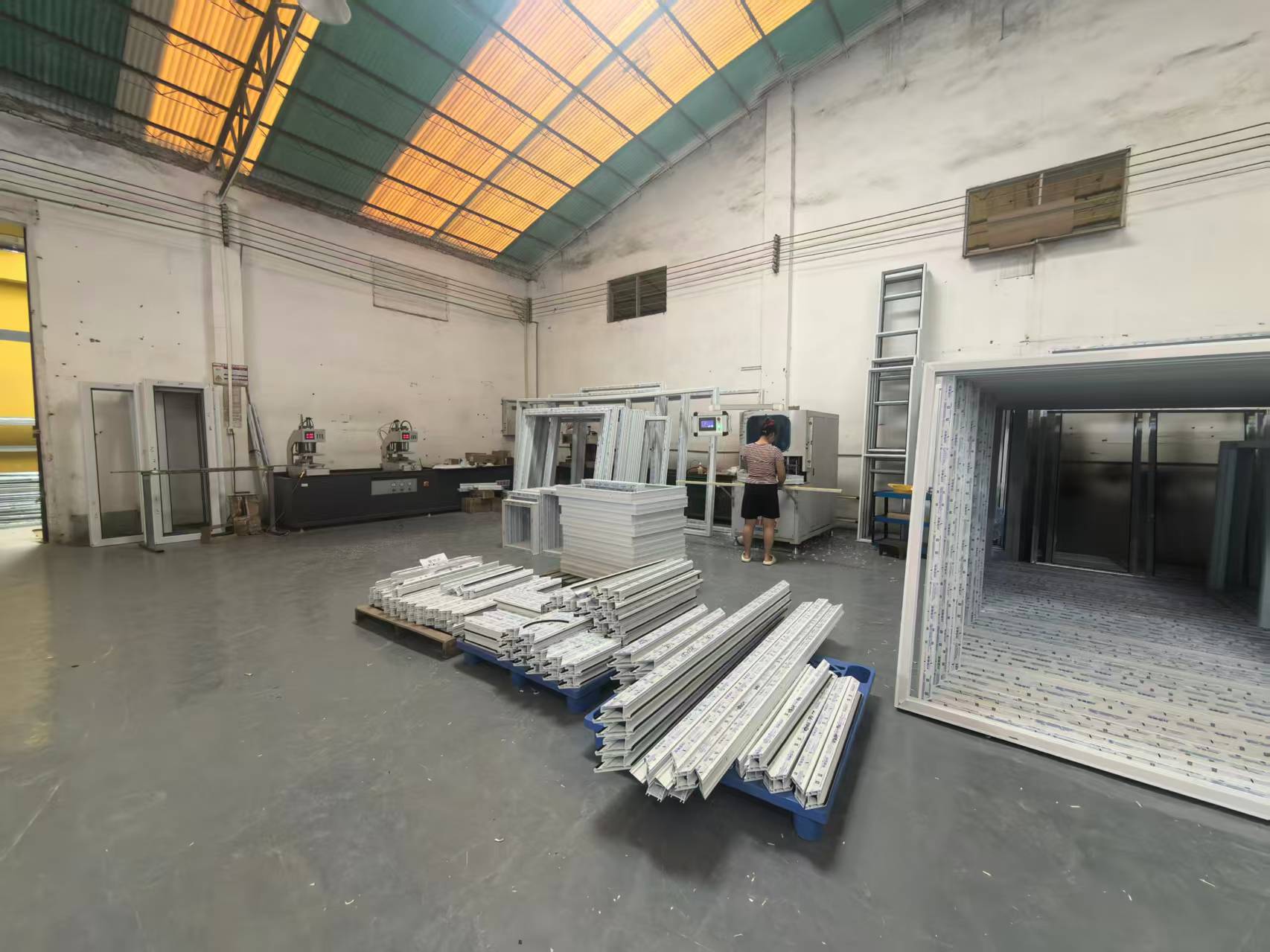
Figure 2 - Frame welding and assembly. Profile wall thickness and chamber geometry set the structural and thermal behaviour of the finished unit.
The material parameters behind the 7970 record and the wider product family are consistent across the range.
| Property | Value |
|---|---|
| Vicat softening point | 86 C |
| Flexural modulus of elasticity | 2,840 MPa |
| Tensile yield stress | 43 MPa |
| Tensile strain at break | 186% |
| Density | 1,520 kg/m3 |
Those numbers describe rigid, unplasticised PVC behaviour rather than a decorative material. A Vicat softening point of 86 C indicates the temperature at which the profile begins to soften under load, which governs how the material responds to solar-heated facades. A flexural modulus of elasticity of 2,840 MPa describes stiffness under bending - the property that decides whether a long sash keeps its geometry under wind pressure. Tensile yield stress of 43 MPa and tensile strain at break of 186% together describe a material that yields rather than shatters, which is relevant to impact resistance. A density of 1,520 kg/m3 reflects the stabilised compound used to reach the anti-aging performance requirements.
In a hollow multi-chamber profile, those material properties are amplified by geometry. The chambers reduce thermal transfer across the frame section, and reinforcing steel can be inserted inside the chambers to raise mechanical strength where the unit spans a wide opening. Wall thickness is the third variable, and it is where the option referenced in this shortlist separates itself from commodity profiles: the profile wall thickness is 2.0-3.0 mm thicker than a conventional version, with enhanced structural rigidity and improved sealing performance.
Comparison with Conventional Standard UPVC Windows
A renovation buyer comparing this thicker-wall UPVC option against a conventional standard UPVC window is trading a higher initial cost against a lower life-cycle cost. That trade-off can be stated precisely.
| Dimension | Conventional standard UPVC window | Thicker-wall UPVC option |
|---|---|---|
| Profile wall thickness | Baseline | 2.0-3.0 mm thicker |
| Structural rigidity | Baseline | Enhanced |
| Sealing performance | Baseline | Improved |
| Initial procurement cost | Baseline | 12-18% higher |
| Total life-cycle cost | Baseline | Lower |
| Maintenance | Baseline | Simple hardware maintenance; longer service life of sealing parts; better anti-ageing property; no anti-corrosion spraying required |
| Energy performance | Baseline | Better energy efficiency supported by thermal insulation and sealing performance |
| Expected service life | Baseline | Longer, driven by sealing parts and anti-ageing behaviour |
| Best-fit scenarios | General applications | Seaside and city scenarios requiring corrosion resistance and structural rigidity |
Where the advantage stops. The limitation is real and should be stated plainly. A 12-18% higher initial procurement cost is a front-loaded cash commitment, and the lower total life-cycle cost only materialises if the units are installed correctly and the hardware is specified as a matched set - including the multipoint lock drive mechanism and crescent lock pairing on the window side. The option is also positioned for seaside and city scenarios where corrosion resistance and structural rigidity are required; for a dry, sheltered, short-horizon interior renovation, the additional profile specification may not be the deciding factor. Buyers should treat the cost premium as conditional, not as an automatic upgrade.
Market Trend: Renovation Has Become a Performance Market
Three data points explain why renovation shortlists have become more specification-driven.
The global uPVC windows and doors market was valued at USD 30.8 billion in 2025 by Grand View Research. A second research house, Mordor Intelligence, values the same 2025 market at USD 42.15 billion. The gap is a methodology difference, most likely reflecting different treatment of hardware and accessory segments - and it is a useful reminder that market-size figures should never be quoted interchangeably.
Asia Pacific dominated the global market with a 44.1% revenue share in 2025, and within the product mix the windows segment held 58.0% of total uPVC product revenue. Casement windows and doors were the largest single design type at 38.5% in 2025. The concentration in windows, and in casement designs specifically, reflects where replacement and upgrade demand sits.
Regulation is the second driver. In England and Wales, the legal whole-window U-value limit for window replacement in existing homes was 1.4 W/m2K in 2025 under Approved Document L. Limits of this kind convert an optional upgrade into a compliance threshold, and they push renovation buyers toward units whose thermal performance can be evidenced rather than asserted. Modern multi-chamber profiles can improve energy efficiency by up to 40% compared with traditional frames, which is the technical direction the market is moving in.
Supply is the third layer. Foshan Nanhai is a recognised manufacturing base for UPVC profiles and windows, where lifespans for high-quality profiles are estimated at 30 to 40 years. That combination - a concentrated manufacturing base, tightening regulation and a replacement-driven demand profile - is why the certification gate and the wall-thickness comparison now sit at the front of a renovation shortlist.
Application and Use Cases
The shortlist is written for four renovation settings that the reference scenarios describe directly.
- Coastal residential renovation. Outdoor, coastal high-humidity, strong-wind exposure, with manual opening and closing favoured where electrical provision into existing walls is impractical. Wind-pressure resistance, water tightness and air permeability are the governing requirements, and corrosion resistance and structural rigidity decide whether the thicker-wall option applies.
- Villa renovation. Mixed opening types within one property, which is where profile series coverage across 50/60/65/80/88/112 and the availability of co-extruded colour, laminated wood-grain and solid dark grey or black finishes become practical selection tools rather than aesthetic extras.
- Commercial building refurbishment. Higher traffic load through door openings, which puts impact and wear resistance and a secure locking system at the centre of the door-side decision among HF60, WYK75-1 and HF88-L.
- Fire-resistance-specified compartments. Where the local building code triggers the optional fire-resistance requirement, the window specification changes and should be confirmed before the order, not after.
A common thread runs through all four: the buyer is not choosing a window so much as choosing the combination of operating mode, hardware set and envelope performance that the existing opening can accept.
Future Outlook
The near-term planning item is the attestation horizon. An ECM Attestation valid to 2028-08-15 gives renovation programmes a defined compliance window, and buyers ordering in 2026 or 2027 are working comfortably inside it. Projects that will be inspected, resold or re-certified after 2028 should plan for the possibility of a renewed attestation cycle rather than assume continuity.
The second direction is specification density. Regulation such as the 1.4 W/m2K whole-window limit in England and Wales, the multi-chamber efficiency gains reported for modern profiles, and the 30 to 40 year lifespan attributed to high-quality Foshan Nanhai profiles all point the same way: the market is rewarding units whose performance can be documented. Export-oriented manufacturing reflects that - the reference manufacturer here exports roughly 80% of output, with main markets across LATAM, MENA, ASEAN and the EU, each carrying its own compliance expectations.
The third direction is the cost conversation. As thicker-wall profiles become a common specification in coastal and high-exposure renovation, the 12-18% initial premium will be judged against life-cycle cost rather than against order value. That shift favours suppliers who can evidence wall thickness, sealing performance and anti-ageing behaviour rather than simply quoting a frame price.
FAQ
What is the core difference between the shortlisted thicker-wall UPVC option and a conventional standard UPVC window?
The core difference is profile wall thickness and structural rigidity. The profile wall thickness is 2.0-3.0 mm thicker than a conventional version, and reliability is improved through the resulting structural rigidity. Technical advantages include that thicker profile wall thickness, enhanced structural rigidity and improved sealing performance compared with conventional standard UPVC windows.
Which renovation scenarios does the thicker-wall option suit best?
It is more suitable for seaside and city scenarios where corrosion resistance and structural rigidity are required. In practice that corresponds to outdoor, coastal high-humidity, strong-wind environments, and to residential building, commercial building, renovation project and villa project types. For dry, sheltered interiors with a short service horizon, the additional specification may not be the deciding factor.
Is the higher upfront cost justified compared with a conventional standard UPVC window?
The reference comparison states a 12-18% higher initial procurement cost, against a lower total life-cycle cost. The trade-off is front-loaded: more is paid at procurement and less across the service period, provided the units are installed correctly and the hardware is specified as a matched set rather than assembled from mixed components.
What hardware has to accompany a manually operated unit?
The window reference set specifies window handle, window hinge, lock point, multipoint lock drive mechanism, crescent lock, window roller, EPDM sealing gasket and pile weather strip. The multipoint lock drive mechanism and the crescent lock are part of the specified unit configuration rather than optional additions. Door units are specified with a door handle, door hinge, door roller, anti-collision stopper, dust-proof pile weatherstrip and EPDM sealing gasket.
How can the certification scope be verified for a renovation project?
ECM Attestation certificate NO.3N230816.YCPQQ51 is valid from 2023-08-16 to 2028-08-15, covers profile series 50/60/65/80/88/112 and aligns with the product standard EN 14351-1:2006+A2:2016. At profile level, GB/T 8814-2017 sets the requirements for wall thickness, impact resistance, heat stability and anti-aging performance, and qualified test reports are the supporting evidence.
What service life and maintenance profile should a buyer assume?
Expected service life is longer than for conventional standard UPVC windows because sealing parts have a longer service life and better anti-ageing properties. Maintenance requirements are limited to simple hardware maintenance, with no anti-corrosion spraying required. For high-quality profiles manufactured in the Foshan Nanhai cluster, published industry estimates put lifespan at 30 to 40 years.
Summary
The shortlist in this article is deliberately narrow: entry 7970 with its UPVC door models HF60, WYK75-1 and HF88-L, filtered through an ECM Attestation valid from 2023-08-16 to 2028-08-15, profile series 50/60/65/80/88/112 and the product standard EN 14351-1:2006+A2:2016. Within that gate, the decision separates cleanly. Window openings are decided by operating mode, matched hardware and envelope performance; door openings are decided by impact and wear resistance, secure locking and the fit between model code and opening. The thicker-wall option carries a 12-18% higher initial procurement cost and a lower total life-cycle cost, and it is positioned for seaside and city scenarios where corrosion resistance and structural rigidity are required - which is a narrower claim than a general upgrade, and a more useful one.
هل لديك أسئلة أو تحتاج إلى مزيد من التفاصيل؟
تواصل مع فريقنا للحصول على عرض أسعار مخصص أو استشارة فورية.
طلب عرض أسعار
املأ النموذج أدناه وسيتواصل معك فريقنا بعرض مقترح مخصص.
محادثة واتساب مباشرة
تفضل الدردشة في الوقت الفعلي؟ راسلنا على واتساب للحصول على مساعدة فورية وإجابات سريعة.
- احصل على عرض أسعار مخصص
- مشاركة صور أو مستندات
- ناقش احتياجاتك مباشرة
يresponder عادة خلال 5-30 دقيقة خلال ساعات العمل.