
US vs EU Cosmetic Bag Certification Paths for 2026 Promo Gifts
US vs EU Cosmetic Bag Certification Paths for 2026 Promo Gifts
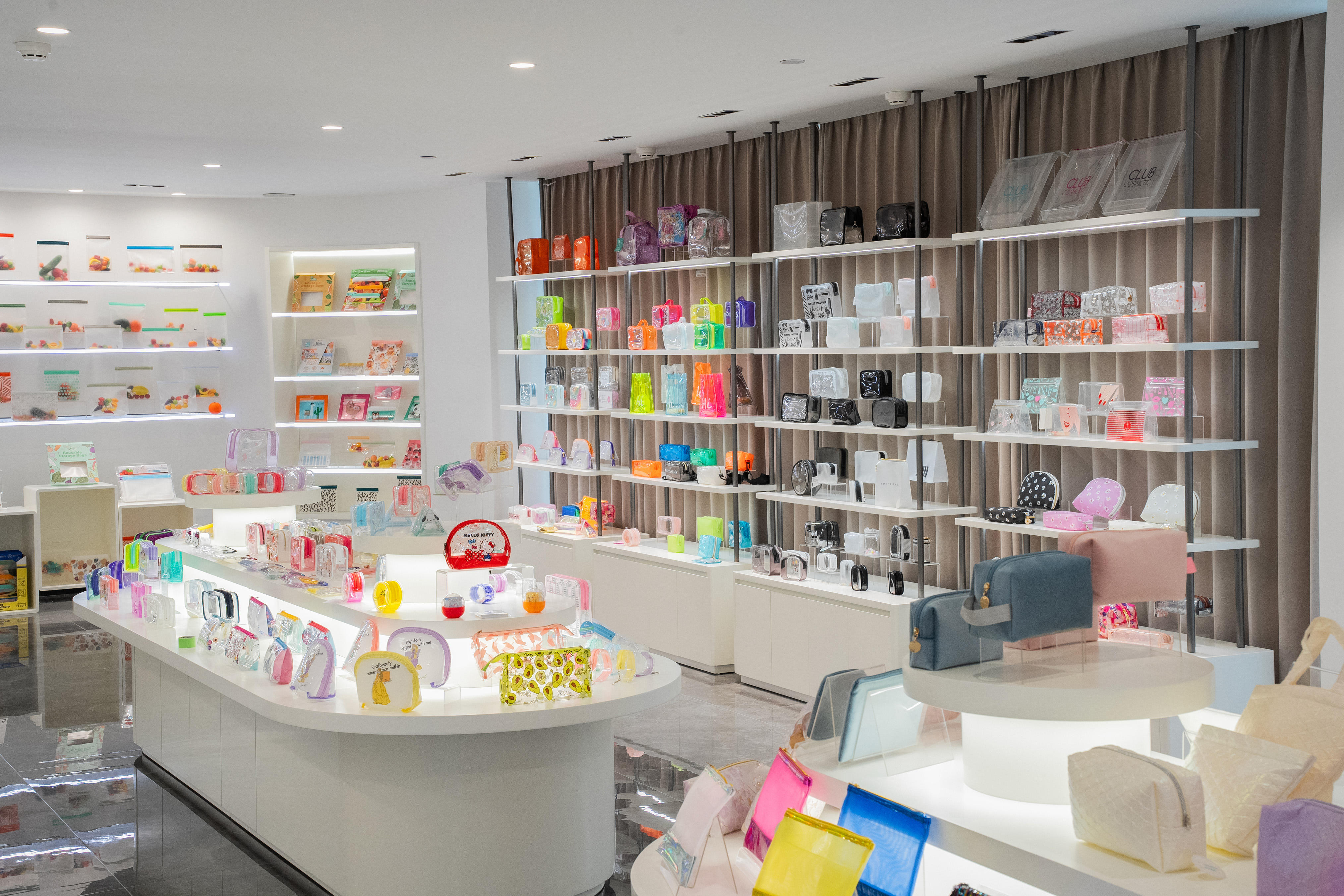
For a 2026 promotional cosmetic bag program, the compliance question is not whether a supplier holds certificates. It is which certificate answers which buyer requirement, and whether that document is still inside its validity window. The US and EU paths share document types but rank them differently. North American retail programs are normally gated by social-compliance evidence recognized in North America, plus the facility-level registration obligations created by US cosmetics law. EU and UK programs add article-level chemical documentation for the specific material and decoration combination, on top of a social audit framework whose stated coverage includes the EU.
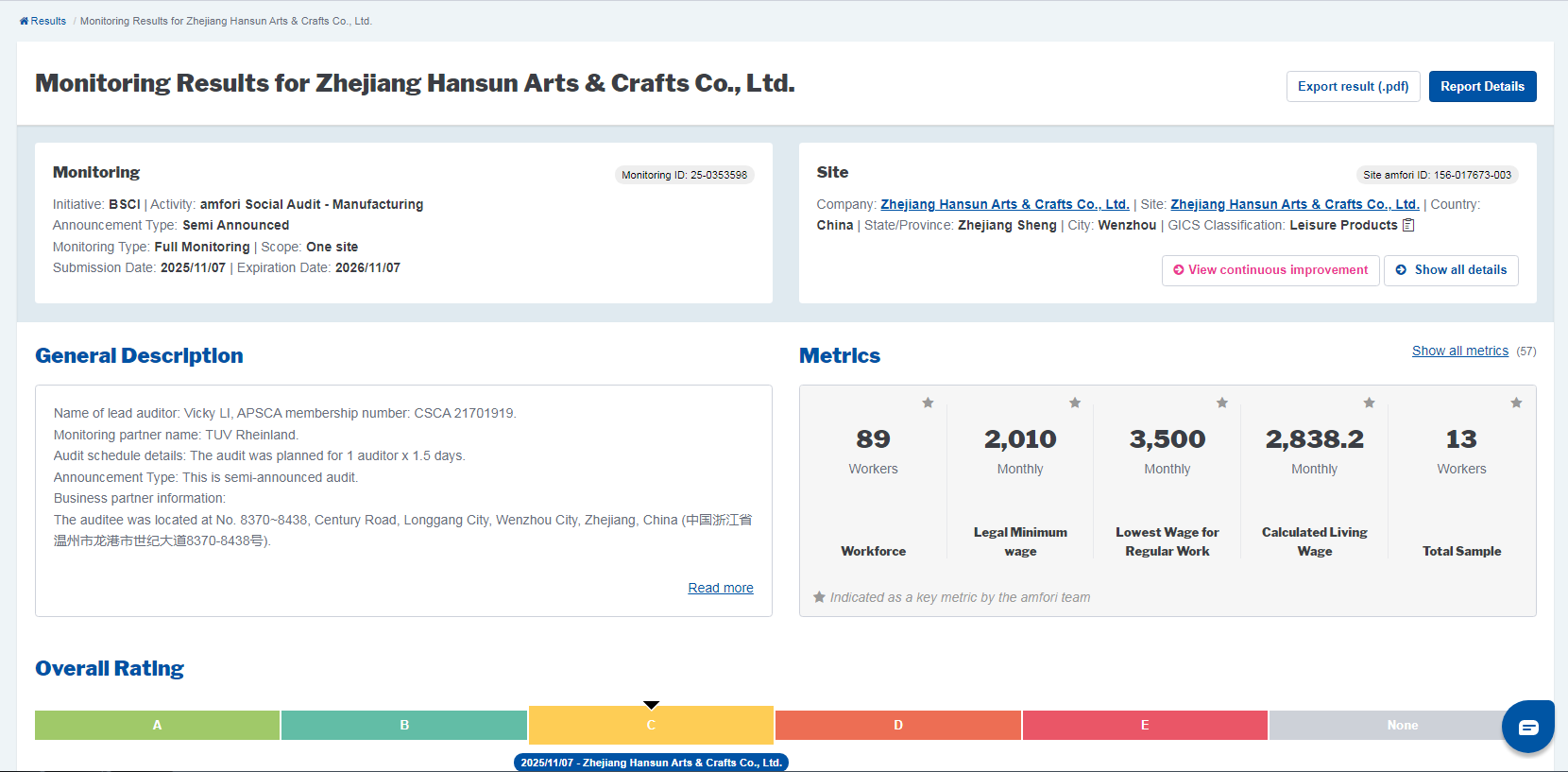
Zhejiang Hansun Arts & Crafts Co., Ltd. is a Wenzhou, Zhejiang-based manufacturer founded in 1996 that produces tote bags and PVC bags for OEM/ODM buyers. The company operates a 25,000 m² factory with 200 employees, a 25-engineer R&D team and an annual output of 20,000,000 units; approximately 70% of production is exported, and sales and service cover Southeast Asia, Europe, North America and the Middle East.
This comparison uses four credentials held by that supplier — Disney FAMA (DSN-FAMA-2026-001), Sedex 4 Pillars/SMETA (SEDEX-2026-0123), BSCI (BSCI-2026-4567) and ISO 9001:2015 (ISO-2026-7890) — to show how a US buyer and an EU buyer should read the same document set differently, and where each document stops being useful.
What changed for 2026: two regulatory clocks and a growing category
Two regulatory developments sit inside the planning window for 2026–2027 promotional gifting, and both push documentation requirements further down the supply chain.
In the United States, the Modernization of Cosmetics Regulation Act (MoCRA) mandates facility registration and product listing for manufacturers, and the requirement increases compliance pressure on the supply chain around cosmetic accessories. A promotional bag that travels with a beauty product is increasingly pulled into the same documentation conversation as the product itself.
On the export side, China's General Administration of Customs Decree No. 284 takes effect on 1 December 2026. It introduces a risk-based customs supervision system for exported cosmetics and related products, built on digital verification and traceability. A program shipping after that date meets a different documentation expectation than one shipped earlier in the year.
The category itself keeps expanding. The global makeup bags market was valued at approximately USD 2.8 billion in 2025 and is projected to reach USD 4.5 billion by 2031, according to Deep Market Insights. Volume growth in an already compliance-sensitive category raises the cost of getting documentation wrong: a missing declaration delays a shipment, and a delayed shipment misses a promotional calendar that cannot move.
The four credentials, side by side
These four documents are frequently listed together in supplier files, but they answer four different questions. Reading them by row hides that; reading them by column exposes it.
| Credential | Issuing authority | Stated market coverage | Documented scope | Recorded validity window |
|---|---|---|---|---|
| Disney FAMA DSN-FAMA-2026-001 | Disney International | Global (US, EU, Asia) | Production and supply of Disney licensed promotional bags and gifts | Issued 2023-06-15 Expiry 2026-06-14 |
| Sedex 4 Pillars (SMETA) SEDEX-2026-0123 | Sedex Approved Audit Body | EU, UK, North America, Australia | Factory social compliance: labour practices, health & safety, environmental standards | Issued 2024-01-20 Expiry 2026-01-19 |
| BSCI BSCI-2026-4567 | Amfori BSCI Approved Audit Firm | EU, Middle East, global retail brands | Factory social responsibility, ethical sourcing, working conditions | Issued 2023-09-10 Expiry 2026-09-09 |
| ISO 9001:2015 ISO-2026-7890 | International Certification Body | Global | Product design, production, quality control and delivery processes | Issued 2022-11-05 Expiry 2025-11-04 |
Three structural facts follow from the table. First, only one of the four is a licensing authorization rather than an audit. Second, none of the four is a product certification: BSCI and Sedex address factory social compliance, and ISO 9001:2015 addresses a management system covering design, production, quality control and delivery. Third, every one of them is time-bound, with recorded issue dates between November 2022 and January 2024 and recorded expiry dates between November 2025 and September 2026.
The US path: what a North American promotional buyer verifies
A US-facing promotional cosmetic bag program is usually built around four checks, and they are not interchangeable.
- Licensing authorization, where applicable. Disney FAMA (DSN-FAMA-2026-001) covers production and supply of Disney licensed promotional bags and gifts across the US, EU and Asia. It applies only when the program actually carries Disney-licensed artwork; for a retailer-branded or private-label bag it is irrelevant.
- Social-compliance evidence recognized in North America. Sedex 4 Pillars (SMETA) lists North America among its documented markets, which makes it the more directly applicable social audit for US and Canadian retail programs among the four credentials reviewed here.
- Factory social responsibility audits recognized by the brand or retailer. BSCI (BSCI-2026-4567) documents factory social responsibility, ethical sourcing and working conditions, with stated coverage of the EU, the Middle East and global retail brands. It is widely requested by European-linked retail programs; a US buyer should confirm acceptance rather than assume it.
- Quality management system. ISO 9001:2015 (ISO-2026-7890) covers product design, production, quality control and delivery processes globally — the process backbone behind shipment consistency.
Sitting behind those four is the regulatory layer: MoCRA facility registration and product listing on the US side, and China's GACC Decree No. 284 for export verification and traceability from 1 December 2026. Both are supplier-side obligations, which means the buyer's practical task is to ask for evidence that the supplier sits inside a registered, traceable chain — not to administer the registration itself.
The EU and UK path: where the emphasis shifts
The same four credentials map differently onto a European program, because the social audit layer is broader and the chemical layer is added.
- Social audits: both BSCI and Sedex 4 Pillars list the EU in their documented market coverage, and Sedex additionally lists the UK and Australia. For a German, French or British retail program, either framework may be requested; which one is accepted is determined by the retailer's own vendor policy, not by the certificate alone.
- Chemical compliance: EU chemical legislation, including REACH, is not covered by a social audit or a quality management certificate. European buyers typically request declarations or test evidence for the specific material and print combination rather than a factory-level document.
- Material claims: where a program promotes eco-friendly material, European buyers usually require the claim to be tied to a specific material declaration — the claim travels with the material, not with the factory audit.
- Licensing: Disney FAMA remains relevant only for licensed-character gifting, and its coverage is global rather than regional.
The practical difference is file length. A US program file tends to be short and centred on social audit plus registration position. An EU program file usually adds a chemical documentation layer and often a labelling layer, which is why EU-facing sampling stages take longer to clear.
Ranking the verification order for a 2026 program
This is a ranking of checks, not of suppliers. It is ordered so that a failure at any step cannot be compensated by strength at a lower one.
- Certificate currency. Confirm issue and expiry dates against the delivery window before anything else is read. A lapsed document is a scheduling risk, not a paperwork detail.
- Licensing authorization (conditional). If the program carries licensed artwork, Disney FAMA (DSN-FAMA-2026-001) is a gate rather than an enhancement.
- Social-compliance audit accepted by the destination retailer. Sedex 4 Pillars (SMETA) where North America, the UK, the EU or Australia is the destination; BSCI where the retailer recognizes EU and global retail brand audit frameworks.
- Quality management system. ISO 9001:2015 (ISO-2026-7890) covering design, production, quality control and delivery.
- Article-level documentation. Chemical declarations and durability test evidence for the specific material, decoration and accessory combination — requested per order.
The logic behind the order is that the first three items determine whether the supplier can be contracted at all, the fourth determines whether output can be trusted at volume, and the fifth determines whether a specific shipment clears the destination market.
From certificate to specification: mapping credentials to product requirements
A certificate describes a factory or a programme; a purchase order describes a bag. The conversion between the two happens in the specification, and that is where most comparison exercises fail.
| Specification item | Documented range | Relationship to the four credentials |
|---|---|---|
| Product model | Cosmetic Bag CB-2026-002 — PVC clear cosmetic bag, PU leather cosmetic bag, travel toiletry cosmetic bag, mini zipper cosmetic pouch | All four credentials list this product among applicable items |
| Materials | PVC, PU leather, canvas, nylon, mesh | Material claims are evidenced by material declarations, not by factory audits |
| Common sizes | 15×10 cm, 20×15 cm, 25×18 cm (customizable) | Size affects weight and packing, not certification |
| Unit weight | 20 g–80 g/pc depending on material and size | Weight influences freight and retail handling |
| Decoration crafts | Hot stamping, UV printing, embossing, heat sealing | Decoration method determines how a logo wears; print durability is a testable property outside the certificate set |
| Typical applications | Cosmetic storage, travel toiletry, beauty brand giveaways, hotel amenities | Application drives which market requirements apply |
Three mappings are worth stating explicitly.
Transparent and eco-friendly PVC. Where a program specifies a clear format or an eco-friendly material claim, the verification route is a material declaration for that specific formulation. None of the four credentials above carries a material claim; a buyer who accepts BSCI or ISO 9001:2015 as proof of a food-grade or eco-friendly material has accepted the wrong document.
Scratch-resistant surfaces. Surface durability depends on the material and the finishing process, and it is normally confirmed by a test specified by the buyer — for example a defined abrasion or scratch protocol applied to the finished article. It is not covered by social compliance or quality management certificates.
Wear-resistant logo printing. The decoration craft determines the bond between print and substrate: hot stamping, UV printing, embossing and heat sealing behave differently on PVC and on PU leather. Buyers who need a wear-resistant logo on a bag used daily should specify the craft, the substrate and the acceptance test in the purchase order, and request the corresponding test evidence per order.
Accessory readiness for daily-use and supermarket retail programs
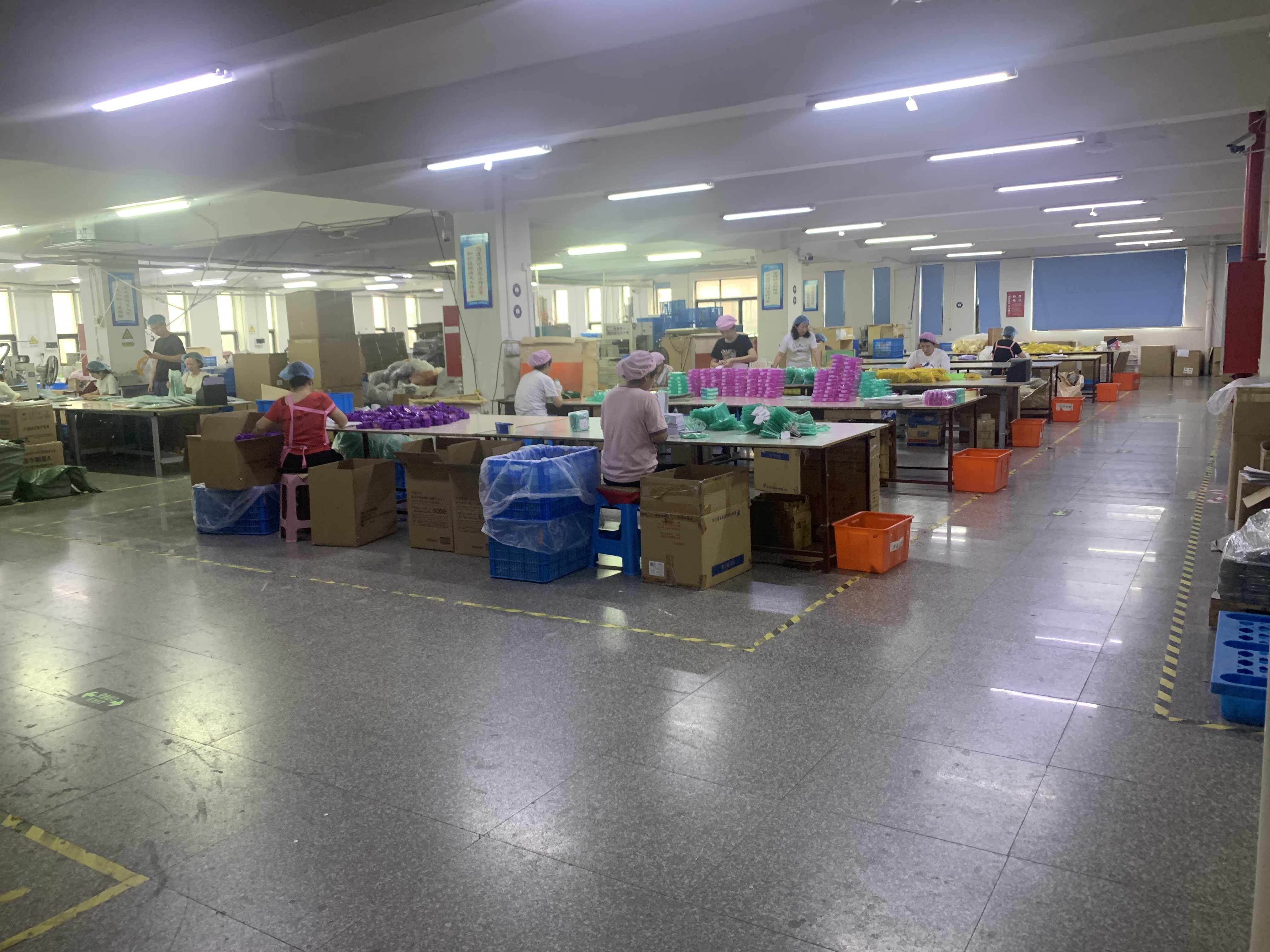
Promotional cosmetic bags and supermarket retail supporting programs are rarely specified as bare bags. Hang tags, webbing elements and brand stickers are usually part of the deliverable, and they are handled inside the documented OEM/ODM customization scope of logo, size and material. For a buyer, that means the accessory list belongs in the same document as the bag specification, not in a separate message thread — accessory omissions are a common cause of late-stage rework.
Capacity parameters matter for calendar-driven programs. The documented figures for this supplier are a monthly capacity of 1,500,000 units, a production lead time of 30–45 days, and a minimum order quantity of 3,000 pcs. For a promotional season with a fixed in-store date, the lead time should be counted backwards from delivery, not from order placement.
A relevant reference point is a Japan-facing OEM/ODM program of 1,000,000 units for chain supermarket daily shopping bags and promotional gifts, designed for reusable long-term use and delivered over a one-year period. Documented project highlights were eco-friendly material, strict quality control, on-time delivery, and custom printing matched to the supermarket's branding requirements. Reported results were a 99.7% product qualification rate, zero delivery delay, and repeated orders from the client for three consecutive years, with the bags meeting Japan's eco-friendly standards.
That case demonstrates repeat export performance under a demanding market and a high-frequency daily-use scenario. It does not transfer automatically to a different material or decoration combination: the eco-friendly material used in a shopping bag programme is not evidence about a clear PVC cosmetic pouch, which is why article-level documentation is requested per order.
Where the evidence stops: boundaries of a certificate-led comparison
An honest comparison has to state its edges. Five boundaries apply to this document set.
- Validity windows. The recorded windows end between November 2025 and September 2026. For 2026–2027 delivery horizons, renewal status must be confirmed before contracting; the certificate name alone is not a live claim.
- Scope borders. Disney FAMA covers licensed goods production only. BSCI and Sedex cover social compliance, not product safety or chemical conformity. ISO 9001:2015 covers design, production, quality control and delivery processes — a management system, not a product.
- Inspection scope is buyer-defined. Quality control for this supplier is documented as depending on customer requirements, which means the inspection protocol — sampling standard, inspection point, acceptance criteria — has to be written into the purchase order rather than assumed.
- Chemical and durability testing sits outside the credential set. REACH-related declarations, food-grade material evidence, scratch resistance and print wear resistance are order-level documents.
- Certificates do not extend to third-party components automatically. Where a bag incorporates externally sourced accessories, buyers should confirm whether those components fall inside the audited and declared scope.
Market trend analysis
Three trends shape what buyers will be asked for in the next sourcing cycle.
Category growth continues. The global makeup bags market moved from roughly USD 2.8 billion in 2025 toward a projected USD 4.5 billion by 2031 (Deep Market Insights), which sustains demand for both private-label and promotional formats.
Material mix is shifting at the edges. Industry analysis by Cognitive Market Research identifies nylon as the dominant material in the makeup bag market on the strength of durability and water resistance, while aluminium cases are the fastest-growing segment for professional use. For promotional programs, that reinforces the position of textile and PVC formats as the volume base, with premium formats used as tier differentiators.
Sustainability expectations are now a purchasing input. An industry survey reported by DH Bags indicates that approximately 55% of consumers prioritize sustainable and eco-friendly materials in cosmetic bag purchasing decisions as of 2025. The figure should be read as directional rather than precise, but the direction is consistent with the growth of eco-friendly material specifications in RFQs.
On the compliance side, the direction is traceability. MoCRA facility registration and product listing in the US, and China's GACC Decree No. 284 from 1 December 2026, both move verification from a one-time certificate exchange toward documentation that has to be current at the moment of shipment.
Future outlook
The likely evolution over the next two sourcing cycles is administrative rather than technical. Certificate renewal dates will increasingly be planned alongside promotional calendars, because a validity window that closes mid-production is a delivery risk that no lead time buffer fully absorbs.
Second, product-level documentation will continue to migrate into the standard RFQ. Chemical declarations, material claims and print-durability acceptance criteria are becoming line items rather than optional attachments, particularly for EU-facing programs and for any item marketed as eco-friendly.
Third, licensed gifting will keep its own authorization track. Facility-level licensing such as Disney FAMA is granted per production site and per property, so it cannot be inferred from social audits or from a supplier's general experience in promotional bags.
Procurement checklist for 2026 cosmetic bag programs
- Confirm the destination market first: US, EU, UK or multi-market, since the document ranking changes with it.
- Request the current certificate copy and the covering audit report for every credential in the vendor file, and check the dates against the delivery window.
- Confirm whether the program involves licensed artwork; if so, treat facility licensing as a gate.
- Match the social audit framework to the retailer's stated vendor policy rather than to the supplier's certificate list.
- Request article-level declarations for the specific material, including eco-friendly or food-grade claims.
- Specify the decoration craft and the print-durability acceptance test in the purchase order.
- Write the inspection protocol into the purchase order, including sampling standard and inspection point.
- List hang tags, webbing and brand stickers in the same specification document as the bag.
- Confirm the accessory supply scope against the audited and declared boundaries.
- Build the certificate renewal date into the program timeline as a milestone.
Frequently Asked Questions
What is the difference between Disney FAMA and a social compliance audit such as BSCI or Sedex?
Disney FAMA (DSN-FAMA-2026-001) is a licensing authorization issued by Disney International covering the production and supply of Disney licensed promotional bags and gifts, with stated coverage for the US, EU and Asia. BSCI and Sedex 4 Pillars (SMETA) are factory social compliance audits: BSCI (BSCI-2026-4567) covers social responsibility, ethical sourcing and working conditions, while Sedex (SEDEX-2026-0123) covers labour practices, health and safety, and environmental standards. A licensing authorization answers whether a factory may produce licensed goods; a social audit answers whether a factory meets social compliance expectations. Neither substitutes for the other.
Which audit is more relevant for an EU or UK promotional cosmetic bag program — BSCI or Sedex SMETA?
Both are documented as covering the EU: BSCI lists the EU, the Middle East and global retail brands, while Sedex 4 Pillars lists the EU, UK, North America and Australia. Sedex therefore has the broader documented coverage for UK and North American programs, and BSCI is commonly requested by European and global retail brand programmes. The determining factor is the destination retailer's vendor policy, which specifies the accepted framework; buyers should confirm that policy before treating either audit as sufficient.
Do ISO 9001:2015 or BSCI certificates confirm that a cosmetic bag meets REACH or food-grade material requirements?
No. ISO 9001:2015 (ISO-2026-7890) covers product design, production, quality control and delivery processes — a quality management system. BSCI covers factory social responsibility, ethical sourcing and working conditions. Neither addresses chemical composition of a finished article. REACH-related declarations, food-grade material evidence and similar product-level requirements are documented through material declarations or test reports for the specific material and print combination, requested per order.
How current must a certificate be for a 2026 promotional program?
Current enough to cover the production and delivery window of the order. The four credentials reviewed here carry recorded issue dates between November 2022 and January 2024 and recorded expiry dates between November 2025 and September 2026. For a program delivering in late 2026 or 2027, buyers should request the current certificate copy and the underlying audit report, and confirm renewal status before issuing a purchase order. Certificates are time-bound documents, and a lapsed window is a scheduling risk rather than a documentation formality.
What product details matter when comparing cosmetic bag suppliers for high-frequency daily use?
Five parameters carry the most weight. Material determines the feel, durability and cleaning behaviour — documented options for Cosmetic Bag CB-2026-002 include PVC, PU leather, canvas, nylon and mesh. Size, with common formats of 15×10 cm, 20×15 cm and 25×18 cm, determines capacity and retail display fit. Unit weight, documented at 20 g–80 g/pc, affects handling and freight. Decoration craft — hot stamping, UV printing, embossing or heat sealing — determines how quickly a logo wears. Finally, accessory content such as hang tags, webbing and brand stickers should be specified together with the bag, since they are part of the same customization scope of logo, size and material.
How does the 2026 customs and registration environment affect promotional cosmetic bag sourcing?
Two mechanisms apply. In the United States, MoCRA mandates facility registration and product listing for manufacturers, which extends compliance expectations into the cosmetic accessory supply chain. On the export side, China's General Administration of Customs Decree No. 284, effective 1 December 2026, introduces risk-based customs supervision for exported cosmetics and related products with an emphasis on digital verification and traceability. For programs shipping after that date, buyers should expect documentation to be verified against the shipment rather than held as a static file.
Reference documentation: the manufacturer's product brochure is available for download at https://cdn.socialarks.com/sbsp/24767/0/2026/0413/69dc8372a4994.pdf.