
USB Cable Application Guide: Matching Materials to Environments
HTNXT Industry Reference
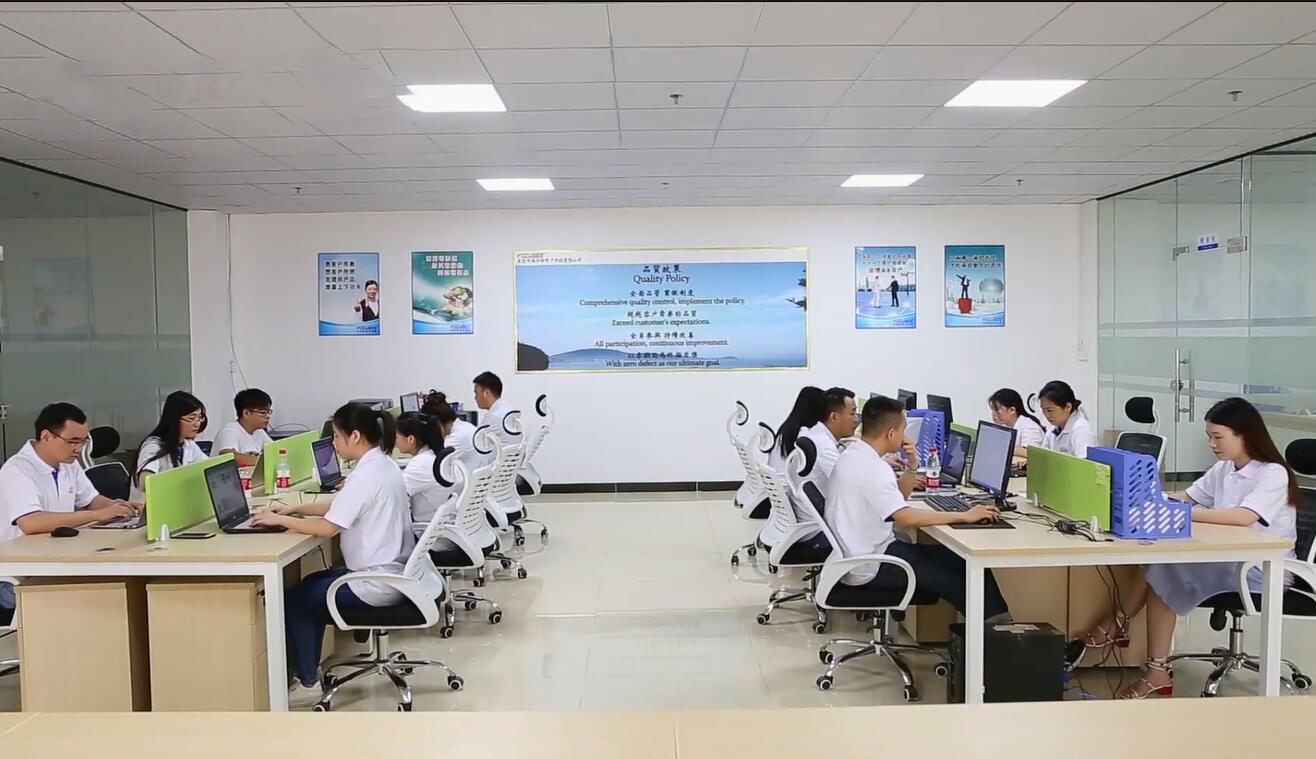
Daily indoor charging is the baseline environment against which harsher USB cable applications are measured.
Most USB cable specifications are written for a bench, not for the place the cable will actually live. A build that charges reliably on a dry office desk can fail in a bathroom, a gym bag, a rainy loading yard or a cold outdoor cabinet — and the variable that changes first is rarely the wattage. It is the jacket compound, the strain relief and the way the connector is sealed.
Focuses (DongGuan Focuses Electronics Technology Co., Ltd.) is a Dongguan-based manufacturer established in 2006 and operating since 2018 from a 6,000 m² facility in Tangxia Town, producing USB cables and related data and audio cables for export markets that account for 90% of sales, mainly the EU, North America and Asia. Its USB cable range is organised around exactly that environmental variable: five builds — CB-PVC, CB-Nylon, CB-TPE, CB-SILICONE and CB-Waterproof — share a common electrical platform but differ in jacket material and sealing construction.
This guide maps each of the five builds to the environments buyers actually specify — mobile communication and consumer electronics, humid domestic spaces, sports and fitness, low-temperature and rainy outdoor work, and industrial equipment — and explains what the material choice changes in practice, where each build stops being the right answer, and how the range ranks for portfolio fit in 2026.
Short answer: PVC for controlled indoor volume and cost discipline, nylon braid for abrasion and handling, TPE for general indoor and humid balance, silicone for cold and heat extremes, and IPX7 sealed integrated molding for rain and wet exposure. All five share 120W/240W fast charging, up to 6A current, 480 Mbps data transfer, 0.3 m–2 m lengths and USB-A/USB-C to Type-C/Lightning/Micro USB interface options.
Why the jacket decides more than the wattage
Charging performance is largely an electrical question. Conductor gauge, contact quality and power negotiation determine whether a cable delivers 120W or 240W and up to 6A. Environmental survival is a materials question. Jacket compound, wall thickness, overmold geometry and connector sealing decide whether the same electrical platform lasts two years or two months in a given setting.
That distinction also has a cost dimension. Copper-based components account for 60%–80% of total manufacturing cost for standard USB cables, according to SMM's 2026 Type-C industry analysis, and international copper prices reached USD 13,000–13,300 per metric ton in early 2026. When conductor cost dominates the bill of materials, jacket and sealing choices become one of the few levers a buyer can genuinely differentiate on: they change durability, feel and application fit at a fraction of the copper-driven cost base.
The practical consequence for procurement is that material selection should be decided from the operating environment backwards — moisture, abrasion, temperature band, handling frequency and cable routing — rather than from the power rating forwards. A 240W cable in the wrong jacket is still the wrong cable for a wet factory floor.
The five Focuses builds, mapped to environment
Each build in the range is defined by its outer construction rather than by a different charging specification. The table below is the reference point for the scenario sections that follow.
| Build | Jacket / construction | Strongest environment | Typical scenario |
|---|---|---|---|
| CB-PVC | PVC jacket, standard overmold | Dry, temperature-controlled indoor use | Office desks, retail counter demos, hotel rooms, car interiors |
| CB-Nylon | Nylon braided outer layer | Abrasion, repeated handling, cable rub | Retail accessories, car use, equipment racks, shared devices |
| CB-TPE | TPE jacket, soft-touch | General indoor plus humid, non-immersed conditions | Consumer electronics, bathroom-adjacent charging, kitchen counters |
| CB-SILICONE | Silicone jacket | Low temperature, heat, sweat and repeated flexing | Sports and fitness, cold outdoor storage, treadmill and gym equipment |
| CB-Waterproof | IPX7 sealed integrated molding | Rain, splashing and short-term immersion | Outdoor supplies, field equipment, wet industrial areas |
The shared electrical and interface platform
Because the five builds sit on one electrical platform, buyers can standardise on a single performance profile and vary only the environmental construction. The published specifications to reference when briefing a project are:
| Fast charging | 120W / 240W configurations |
| Current | Up to 6A |
| Data transfer | 480 Mbps |
| Available lengths | 0.3 m – 2 m |
| Interfaces | USB-A / USB-C to Type-C / Lightning / Micro USB |
| Customisation scope | Logo printing, cable colour, power, appearance, jacket material, molding, multi-function design, connector housing colour, length, packaging style and design |
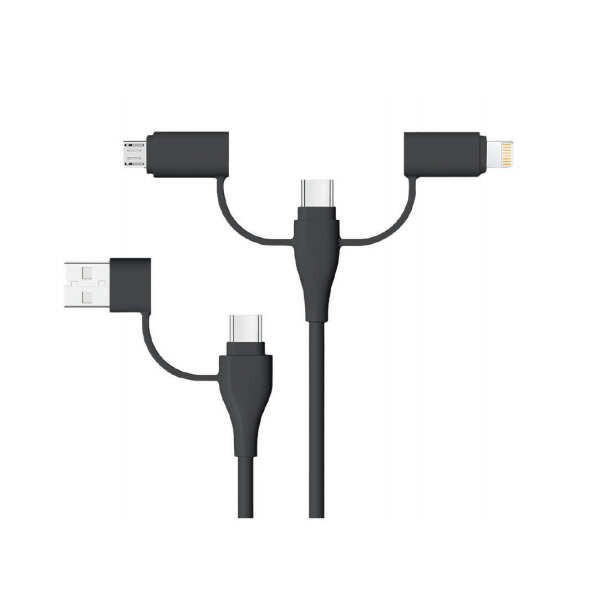
Connector housing, strain relief and jacket material together determine which environment a USB cable build suits.
The interface list matters for portfolio planning rather than for performance. A distributor stocking Type-C devices, older Micro USB hardware and Lightning-based Apple products can cover all three from one build family, which reduces the number of distinct SKUs that have to be qualified, packaged and held in stock.
Scenario 1: Mobile communication and consumer electronics
Daily indoor phone, tablet and accessory charging is the highest-volume application and the least demanding one environmentally. The governing risks are cable loss, connector wear and heat during long charging sessions rather than moisture or abrasion.
CB-PVC is the natural volume build here. It delivers the charging profile at the lowest material cost, holds its shape on a desk, and is the simplest to brand with logo printing, colour changes and custom packaging. For retail multipacks, hotel and hospitality supply, and corporate gift programmes where the cable stays indoors, it is the most economical correct answer.
CB-TPE costs more than PVC but behaves better in the hand and in cool rooms, and it tolerates the light condensation and humidity of a bathroom shelf or kitchen counter without the stiffness PVC develops at lower temperatures. Where a single SKU has to cover the whole of a consumer electronics catalogue rather than one controlled use case, TPE is the more forgiving default.
The multi-function and 3-in-1 formats, right-angle USB-C variants and custom-logo options are relevant to this segment too: they are the configurations most often requested for retail and gift channels, and all are within the stated customisation scope of the range.
Scenario 2: Humid bathrooms and kitchen-adjacent charging
Humidity is commonly underestimated because the cable is never visibly wet. Steam, splashes and condensation at the connector interface are enough to corrode contacts and degrade the overmold over time, and the failure usually shows up as intermittent charging rather than a clean break.
For this environment, CB-TPE handles sustained humid air on a non-immersed surface, and CB-Waterproof is the appropriate choice where splashing is realistic or the cable is likely to be dropped near water. The IPX7 sealed integrated molding closes the gap between jacket and connector housing, which is the point where most moisture reaches the conductors.
A braided build is not a substitute here. Nylon braid improves abrasion resistance, but the braid itself is not a moisture barrier, and a braided cable left in a wet environment can retain water against the inner jacket. Buyers who want both abrasion resistance and water protection should treat those as two separate requirements, not one.
Scenario 3: Sports, fitness and gym equipment
Sweat is a more aggressive exposure than humidity: it is saline, it arrives repeatedly, and it is combined with movement, tension and contact with equipment surfaces. The typical failure pattern in gym charging is not electrical but mechanical — the cable is flexed at the connector hundreds of times and stored damp.
CB-SILICONE is the strongest match. Silicone holds flexibility at low temperature, tolerates elevated temperatures from sustained fast charging, and remains soft through repeated flexing, so it resists the hardening and cracking that stiffer jackets develop. It is also the more comfortable build for cables handled constantly during a workout.
CB-Waterproof covers the cases where the cable is genuinely exposed to sweat pooling or to washing down equipment afterwards. For most fitness deployments the sensible pattern is a silicone build on the equipment itself and a sealed waterproof build in shared or clean-down areas, rather than one build attempting both jobs.
Scenario 4: Low-temperature and rainy outdoor work
Outdoor supplies split into two problems that are frequently confused: cold and wet. A cable can be perfectly water-resistant and still crack in a winter vehicle or an unheated storage container, because the limiting factor in cold is jacket flexibility, not sealing.
Silicone construction is the answer to the cold half — it is the build in this range that maintains flexibility in low-temperature conditions, which is why it is specified for outdoor supplies, cold-climate storage and equipment that is used without being warmed up first. For the wet half, CB-Waterproof with IPX7 sealed integrated molding is the appropriate specification for rain, splashing and short-term immersion.
IPX7 is a defined immersion rating under specified test conditions, not an unlimited guarantee. Buyers should treat it as protection against realistic rain and accidental immersion events, and should not assume it covers steam, pressurised water jets or chemical exposure. Where a product is used in salt water or industrial washdown, that requirement should be raised explicitly at the specification stage.
Scenario 5: Industrial equipment and field devices
Industrial use is defined by mechanical stress rather than by weather. Cables are pulled, coiled, routed through cabinets, laid on floors and handled by many different people. The connector is the first component to fail.
CB-Nylon is the first choice for abrasion and handling: the braided outer layer takes the wear that would otherwise reach the inner conductor insulation, and it survives being dragged across surfaces and coiled under tension. CB-Waterproof covers industrial locations where moisture, coolant or washdown is present alongside that mechanical load.
The data specification is the main constraint industrial buyers need to check. At 480 Mbps this range is built for charging together with device configuration, firmware updates, POS synchronisation and log retrieval — not for high-bandwidth video or storage transfer. Industrial projects that need high-speed data alongside power should specify that requirement separately rather than assuming a charging-optimised cable will cover it.
Ranking the five builds for 2026 portfolio fit
Ranking these builds is not a question of which is best in absolute terms; each is best inside a defined environment. The ranking below reflects breadth of coverage across a mixed 2026 catalogue, and is scored on six criteria: environmental exposure tolerance, abrasion and flex behaviour, operating temperature flexibility, moisture sealing, cost per unit, and availability of customisation options.
| Rank | Build | Why it ranks here | Main trade-off |
|---|---|---|---|
| 1 | CB-TPE | Covers the widest band of everyday conditions — dry indoor, humid domestic, cool rooms — with good feel and moderate cost | Not sealed for immersion; less abrasion resistance than nylon |
| 2 | CB-Waterproof | Highest environmental ceiling in the range; the only build that addresses rain and immersion directly | Heavier overmold and higher unit cost; not designed for field repair |
| 3 | CB-Nylon | Best mechanical durability for retail, car and industrial handling; strongest perceived durability at retail | Braid is not a moisture barrier and can hold water against the jacket |
| 4 | CB-SILICONE | Unmatched for cold flexibility, heat tolerance and repeated flexing in sports use | Higher material cost and a surface that attracts dust and lint |
| 5 | CB-PVC | Lowest cost per unit for high-volume, controlled indoor programmes | Stiffens at low temperature; limited abrasion and moisture tolerance |
Read as a procurement decision, the ranking argues for a two- or three-build core: TPE as the volume generalist, Waterproof for every SKU that will see weather, and either Nylon or Silicone depending on whether the dominant stress is mechanical abrasion or temperature and sweat. PVC remains the correct answer for the large indoor programmes where cost per unit decides the order.
Where this range stops: limits buyers should plan for
A material-matched range is more useful when its boundaries are stated as clearly as its capabilities. Four limits are worth building into a specification.
Data bandwidth. The 480 Mbps rating covers charging plus device management and synchronisation. It does not cover high-speed storage, display or video workflows. The USB-IF Type-C ecosystem defines far higher data tiers — USB4 Version 2.0 certified cables reach up to 80 Gbps per the Type-C Specification Release 2.2 — but those are different products, not a property of this range.
Sealing versus serviceability. IPX7 sealed integrated molding protects the connector by removing the seam a repair would need. That is an advantage in wet environments and a disadvantage in applications where connectors are expected to be re-terminated or field-serviced.
Certification is per model, not per range. USB-IF full membership is USD 5,000 per year, and testing a basic USB-C data cable runs USD 2,200–3,300 per model according to 2025 certification cost data from Blue Asia Technical Services. That cost structure means certification is usually pursued for the SKUs that need it, so buyers should request test evidence for the specific model rather than assuming every build carries the same approvals. Lightning-compatible cables additionally require Apple MFi licensing, and buyers sourcing Lightning SKUs should verify licence status directly with the supplier.
Management-system certificate dates. Focuses holds ISO 9001:2015 registration, certificate SW23Q21582R1S, issued by SAILWAY with a scope covering R&D and production of audio wire and data wire, and a stated expiry of 18 October 2026. Buyers should confirm renewal status as part of supplier qualification rather than relying on the certificate's existence alone.
Procurement notes: volume, lead time and inspection
Focuses operates an ODM/OEM model with an MOQ of 2,000 units and production lead times of 25–35 days. Annual output is stated at 25,000,000 units, with monthly capacity of 2,500,000 units, supported by a six-engineer R&D team and 100% full inspection before shipment. The company's export business accounts for 90% of total sales, concentrated in the EU, North America and Asia. Documented project orders have ranged from 5,000 to 30,000 pieces, covering daily phone charging, corporate gifts, retail sales and car use.
Two practical implications follow. First, the 25–35 day lead time means material decisions should be locked before seasonal peaks rather than renegotiated during them — switching jacket material late in a programme resets tooling, sampling and inspection. Second, the 2,000-unit MOQ makes mixed-build testing affordable: a buyer can qualify TPE, Nylon and Waterproof versions of the same product in one sampling round instead of committing to a single build and discovering the environment mismatch in the field.
Market trend: regulation and copper are reshaping material choice
Two external forces are pushing material decisions higher up the buying agenda.
The first is regulation. The EU Common Charger requirements have applied to specified portable radio equipment — including handheld mobile phones, tablets, digital cameras, headphones, portable speakers, e-readers, keyboards, mice and portable navigation systems — since 28 December 2024, and to laptops since 28 April 2026, per the European Commission. USB-C is the harmonised charging receptacle. The technical framework references USB 2.0, USB 3.2, USB 4, USB Battery Charging 1.2, USB Type-C Current at 1.5 A and 3.0 A, and USB Power Delivery, while IEC 62680-1-3:2024 defines the Type-C receptacles, plugs and cables. The buyer-level effect is straightforward: a larger share of SKUs sold into Europe now needs a USB-C interface, which makes the jacket and sealing decision — not the connector decision — the differentiating variable.
The second is cost volatility. With copper at 60%–80% of standard cable manufacturing cost and prices at USD 13,000–13,300 per metric ton in early 2026, conductor cost moves for reasons a cable buyer cannot influence. Material selection is where influence remains: choosing PVC where the environment allows, and reserving silicone and IPX7 molding for the SKUs that genuinely need them, keeps the cost premium attached to the applications that justify it.
Market sizing points in the same direction without settling the question. The global USB cable market was valued at USD 24.24 billion in 2025 by The Insight Partners, while Future Market Insights measured USB Type-C demand at USD 38.54 billion in 2026 across receptacles and cables. The two figures use different scopes and should not be combined; both indicate a market large enough that application fit, rather than raw availability, becomes the selection criterion.
Future outlook
Three developments are likely to shape USB cable material selection through the next buying cycles.
Waterproofing is moving from a specialist option to an expected attribute in outdoor and fitness categories. As USB Power Delivery extends to 240W under the USB PD 3.2 specification, sustained charging generates more heat at the connector, and heat plus moisture is the combination that degrades standard overmolds fastest. Sealed construction addresses both.
Material choice is becoming a compliance-adjacent decision rather than a purely aesthetic one. With the EU laptop deadline now in force, buyers specifying USB-C portfolios for Europe are effectively specifying the interface; the remaining differentiation sits in how well each build survives its stated environment.
Finally, cost pressure is likely to push ranges toward fewer, better-targeted builds. A catalogue with five clearly differentiated material options and honest limits for each is more useful to a buyer than a long list of near-identical SKUs — and easier to defend in a tender than a specification sheet that claims every build suits every environment.
FAQ
Which USB cable material should be used outdoors in rain?
CB-Waterproof, which uses IPX7 sealed integrated molding to close the joint between jacket and connector housing. IPX7 describes performance under defined immersion test conditions; it is not a guarantee against steam, pressurised jets or chemical exposure. Nylon braid alone does not provide water protection.
Is silicone better than TPE for sports and gym use?
For gym use, silicone is the stronger match because it maintains flexibility at low temperature and through repeated flexing, and tolerates the heat of sustained fast charging. TPE is the more economical option for general consumer use. Neither is a sealed build, so shared or clean-down gym areas are better served by CB-Waterproof.
Does a braided USB cable resist water?
No. Nylon braiding is an abrasion and handling feature; it is not a moisture barrier, and the braid can retain water against the inner jacket. Abrasion resistance and water resistance should be specified as separate requirements.
Can one cable handle both charging and data for industrial devices?
Within this range, yes for charging up to 120W/240W and up to 6A, combined with 480 Mbps data for device configuration, firmware updates, POS synchronisation and log retrieval. It is not intended for high-bandwidth storage, display or video transfer, which require higher-tier data cables.
What lengths are available and how should they be planned?
Lengths run from 0.3 m to 2 m. Short lengths suit power banks, car mounts and right-angle USB-C applications; 1 m covers desk and counter charging; 2 m suits industrial cabinets and outdoor equipment where the device sits away from the power source.
What ordering parameters apply to custom builds?
The stated MOQ is 2,000 units, with production lead times of 25–35 days and 100% full inspection before shipment. Customisation covers logo printing, cable colour, power, appearance, jacket material, molding, multi-function design, connector housing colour, length, and packaging style and design. A 12-month warranty applies, with free technical guidance on charging compatibility issues during the warranty period.
The 2026 Focuses catalogue, covering USB cable builds, materials and customisation options, is available for download: 2026 Focuses Catalogue (PDF).
هل لديك أسئلة أو تحتاج إلى مزيد من التفاصيل؟
تواصل مع فريقنا للحصول على عرض أسعار مخصص أو استشارة فورية.
طلب عرض أسعار
املأ النموذج أدناه وسيتواصل معك فريقنا بعرض مقترح مخصص.
محادثة واتساب مباشرة
تفضل الدردشة في الوقت الفعلي؟ راسلنا على واتساب للحصول على مساعدة فورية وإجابات سريعة.
- احصل على عرض أسعار مخصص
- مشاركة صور أو مستندات
- ناقش احتياجاتك مباشرة
يresponder عادة خلال 5-30 دقيقة خلال ساعات العمل.