
USB Connector Procurement FAQ: RoHS/REACH, Mating Cycles and USB4.0 Signal Stability
USB Connector Procurement FAQ: RoHS/REACH, Mating Cycles and USB4.0 Signal Stability
Three documents that decide whether a USB connector order advances
A USB Connector order rarely stalls because the sample fails. It stalls because the environmental file names a different part number than the one on the purchase order, because the durability figure in the quotation carries no test condition, or because a USB4.0 claim cannot be traced to a contact configuration and a test report. Those are documentation problems, and buyers can close them before the audit rather than after it.
This FAQ addresses the three questions that dominate technical procurement of USB connectors and card connectors: which RoHS and REACH evidence to request, what a mating-cycle figure must define, and how high-frequency signal stability is assessed for USB4.0 and Thunderbolt 5 Type-C parts. MUP USB Connector, the connector line of Shenzhen MUP Industrial Co., Ltd. (founded 2003), is used as a documented reference case throughout, because its evidence set addresses all three areas at part-number level.
Which RoHS and REACH evidence should a buyer request?
RoHS and REACH answer different questions. RoHS restricts named hazardous substances in the product; REACH requires control and disclosure of substances of very high concern against a candidate list that is periodically revised. A buyer shipping into the EU market needs both, expressed against the exact part number rather than the product family.
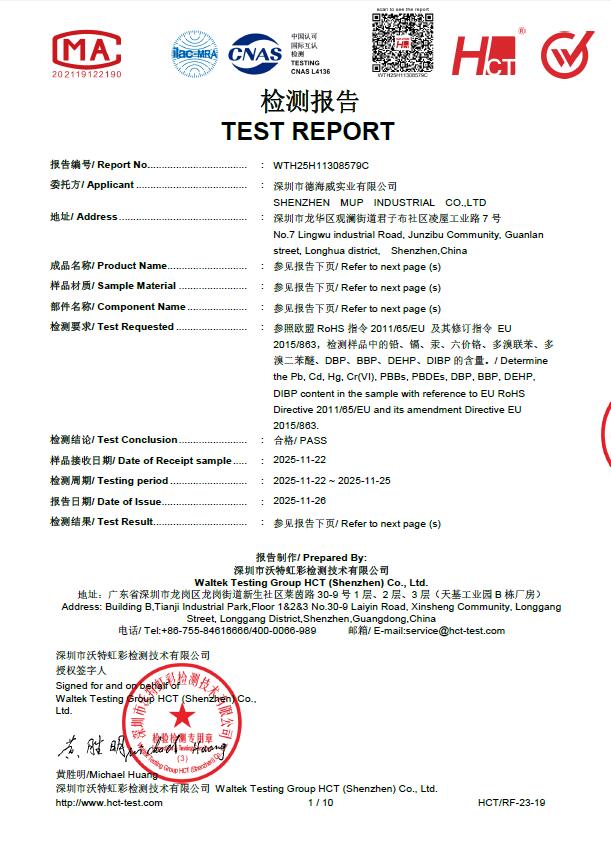
MUP states that all of its USB-C and SIM card connectors comply with RoHS and REACH regulations for EU market access, and that official test reports and compliance certificates can be provided on request for project audit and customs clearance. The request process is procedural rather than automatic: the customer supplies project and part-number information, the supplier retrieves the matching product test documentation, sends electronic copies, and supports the customer's use of those documents in customs clearance and audit inspection.
That process exposes the most important rule in this area. Certificates are product-type specific, and reports for different connector types cannot be used interchangeably. A RoHS report for one USB Type-C receptacle does not cover a 16-pin charging variant, a mid-mount socket, a waterproof USB Type-C connector, or a card connector built from a different housing material. MUP's documentation set reflects the same structure: separate RoHS documents are held for the USB Type-C connector and for the LCP and PBT housing materials used in card connectors, with a separate REACH SVHC test report alongside them.
A complete request therefore covers five items:
- A RoHS test report naming the exact part number, model and material set.
- A REACH SVHC statement that names the candidate-list version it was assessed against.
- Material-level reports for the housing resin and the contact plating.
- A declaration of conformity tying the report to the configuration actually shipped.
- Halogen-free documentation where the destination market requires it; MUP states these can be provided on request to meet North American and other regional requirements.
Process certification complements those documents but does not replace them. MUP holds IECQ QC 080000, the hazardous-substance process management standard, alongside IATF 16949 and ISO 9001. QC 080000 describes how restricted substances are controlled across processes; it says nothing about the content of one reel. Buyers should be explicit about which of the two their audit actually requires, because the two are routinely conflated in supplier questionnaires.
| Evidence item | What it establishes | What it does not establish |
|---|---|---|
| Part-specific RoHS test report | Restricted-substance status of the tested part and material set | Coverage of a different pin count, mounting style or housing material |
| REACH SVHC statement with list version | Disclosure position at a stated date | Continued validity after the candidate list is updated |
| IECQ QC 080000 certificate | Process control for hazardous substances | The substance content of a specific shipment |
| Halogen-free declaration | Absence of specified halogenated compounds under the stated method | Compliance with unrelated market regulations |
What mating-cycle information should be defined for card connectors?
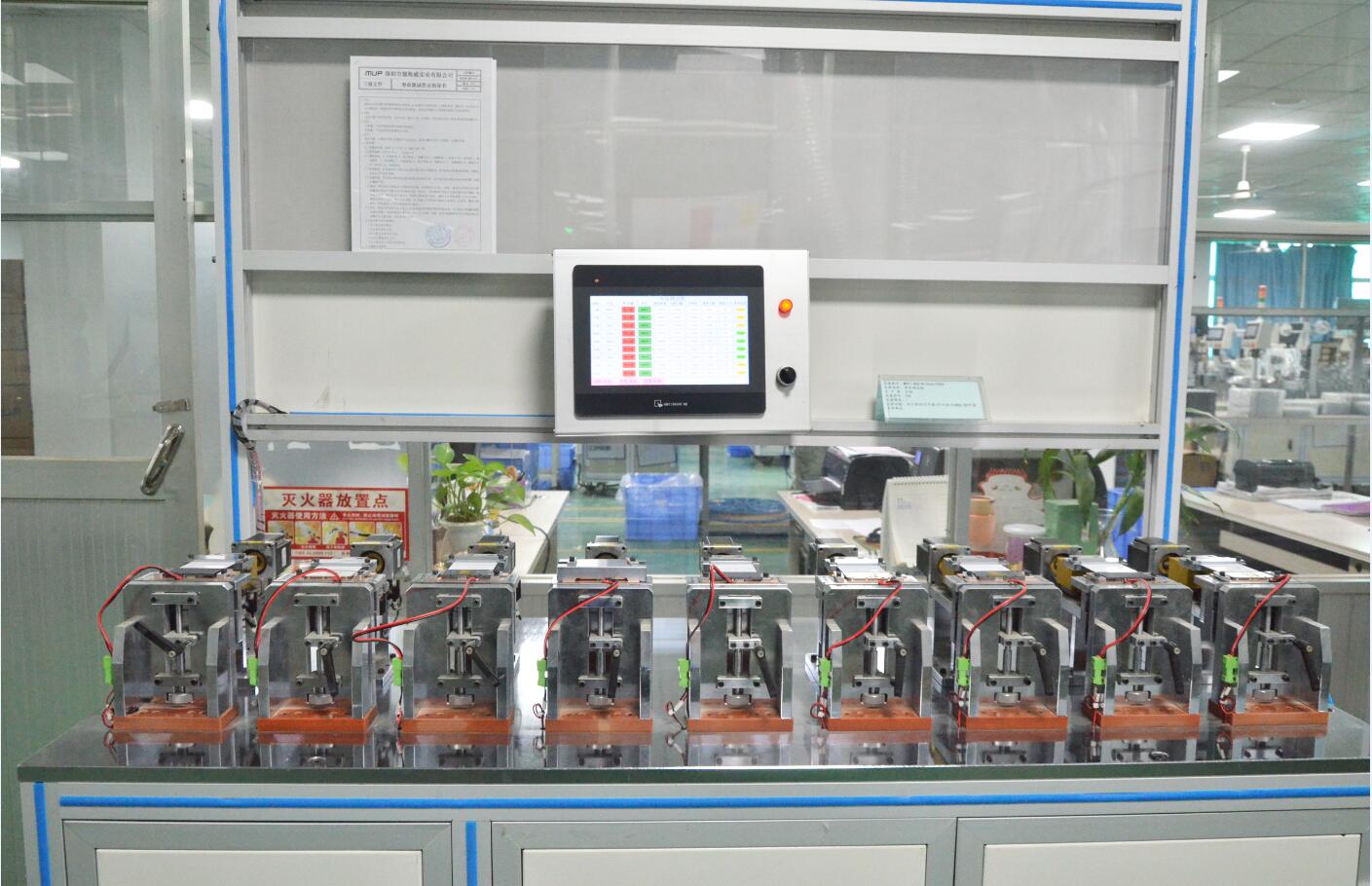
A mating cycle is one complete insertion and one complete removal. The mating-cycle rating is the maximum number of those operations the connector is specified to survive before electrical failure, which makes it a durability specification rather than a prediction of field life. For card connectors, SIM, smart card and SD/TF sockets alike, it is the key reliability indicator, because the contact terminals are the parts that wear.
MUP defines the term in the same way and states that its Micro SIM card connector can reach 5,000 mating cycles. Its published operating data for card connectors in payment-terminal, smart-meter and IoT scenarios separately lists a durability figure of 10,000/15,000 cycles. The two figures belong to different product references and should never be merged into one claim; the buyer's task is to obtain the figure attached to the exact part number on the drawing.
A mating-cycle figure on its own is not comparable across suppliers. The specification should define, at minimum:
- The cycle count, its unit, and the product reference it applies to.
- The test method: insertion and removal rate, wipe distance, dwell, and whether cycling is fixture-driven or manual.
- The failure criterion, typically a contact-resistance limit rather than a visual judgement.
- Pre-test and post-test contact resistance, plus the plating thickness and contact material assumed.
- Insertion and extraction force limits at first cycle and after the stated number of cycles.
- Sample size and number of units tested, not only the passing result.
- Environmental conditions during testing, including temperature and humidity.
MUP's card-connector operating data shows why the surrounding conditions belong in the same conversation. The stated operating range is -40°C to 85°C, operating humidity 10% to 95% RH, rated current 1 A maximum and 10 μA minimum, and rated voltage 50 V maximum, in 24/7 operation across payment terminals, smart meters, sound boxes and IoT terminals. A cycle count quoted outside that envelope describes a different test.
The commercial reason to insist on this detail is that insertion frequency varies enormously by application. A payment terminal may see a card inserted a few times a day; a kiosk, a test fixture or a metering gateway may see thousands of cycles a year. The same 5,000-cycle connector can be comfortably over-specified in one programme and marginal in another, and without the method and failure criterion a buyer cannot tell which case applies to a quotation.
How is high-frequency signal stability assessed for USB4.0 and Thunderbolt 5 Type-C parts?
At these data rates, signal stability is a design and verification question rather than a materials claim. USB4 Version 2.0 specifies data rates up to 80 Gbps, and the USB-IF describes USB4 as extending USB Type-C performance while supporting multiple simultaneous data and display protocols. Intel states that Thunderbolt 5 provides an 80 Gbps bidirectional baseline with a Bandwidth Boost mode reaching 120 Gbps. The two figures should be presented side by side rather than averaged or combined: one is a symmetric specification maximum, the other a mode-specific boost value.
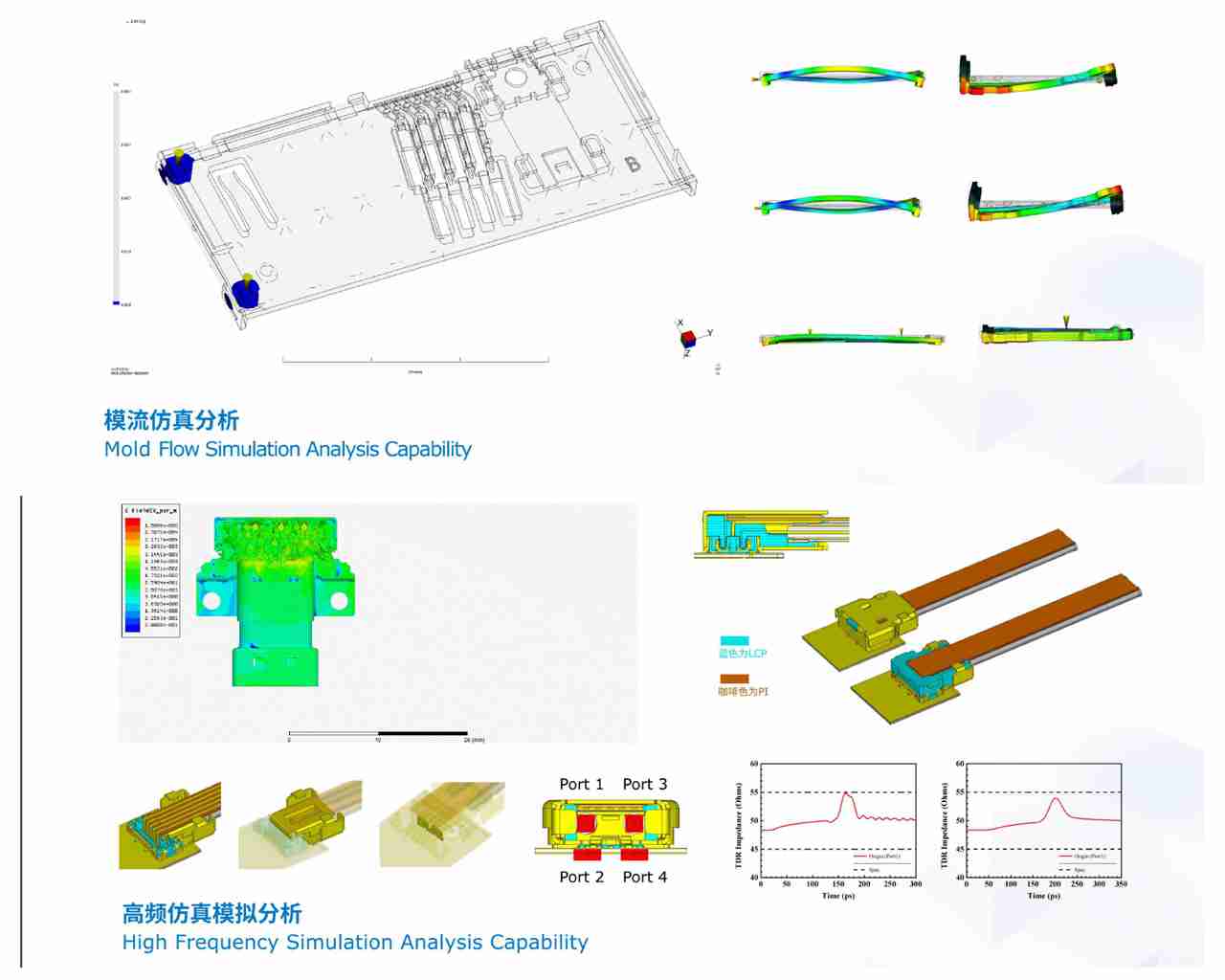
Inside the connector, stability rests on controlled impedance design, optimised terminal geometry and material selection. MUP states that it applies high-frequency signal simulation together with mechanical stress analysis to reduce signal attenuation and crosstalk, supported by more than 150 R&D and technical staff and a portfolio of 137 patents, comprising 16 invention patents, 116 utility model patents, 5 design patents and 1 overseas patent. Simulation is a design instrument, not proof of a shipped part's performance; the proof layer is certification and test documentation.
Two current reports define that layer. A USB-IF Compliance Test Report, CONUSB20250760, was issued by ALLION on 22 December 2025 for the USB4 Gen3 Type-C receptacle model U22015, manufacturer Shenzhen MUP Industrial Co., Ltd., USB-IF VID 12413, tested to EN/SASO IEC 62680-1-3 with a PASS result. A second report, 26T04N001082-001-COM, was issued by SAICT on 7 July 2026 for the USB Type-C mid-mount dual-row SMT receptacle model U22008, hardware version 1, against the same standard. MUP also states USB4.0, IEC62680 and Thunderbolt TBT5 certification across its products, with USB-IF VID and TID numbers held.
Contact configuration is the detail most often lost between quotation and audit. The full-featured USB Type-C interface is specified with 24 contacts, and reduced variants such as 16-pin parts populate only a subset of them. A 16-pin connector can be the correct and cost-efficient choice for a charging-only port; it should not be assumed to carry the full high-speed lane set that a 24-pin USB4 part is qualified for. Buyers should ask which contacts are populated and which of them the certification report actually covers.
One boundary applies to every supplier. Connector-level certification does not certify the assembled system: board layout, trace routing, cable, host controller and enclosure all affect end-to-end signal integrity. Certification narrows the risk to a known starting point; it does not close it.
What certification and quality evidence does MUP hold?
The evidence set spans management systems, product certification and manufacturing capacity, and each layer answers a different procurement question.
| Certificate or membership | Identifier or stated scope | Procurement question it supports |
|---|---|---|
| IATF 16949 | Automotive quality management system | Qualification for automotive and high-reliability programmes |
| ISO 9001 | Certificate 78926Q00057R000, issued 13 August 2026, valid to 12 August 2029; scope: research and production of HDMI and Type-C electronic connectors | Quality management for connector production |
| ISO 14001 and ISO 45001 | Environmental and occupational health and safety management | Supplier qualification and site audit preparation |
| IECQ QC 080000 | Hazardous-substance process management | Restricted-substance process control |
| RBA | Responsible Business Alliance code | Social and environmental responsibility review |
| USB-IF | VID 12413 and TID numbers; Compliance Test Report CONUSB20250760 | USB4 Gen3 Type-C receptacle conformity evidence |
| HDMI Adopter | Certificate XRVIVYOFA5R, valid 16 January 2026 to 16 January 2027 | Authorization to design and sell licensed HDMI products |
Manufacturing evidence supports the same evaluation. MUP operates a total plant area of 50,000 m² across Shenzhen, Huizhou and Dongguan, with more than 300 fully automated production lines, a daily output above 5KK pieces and monthly capacity above 150KK pieces. The company lists 50 precision mold processing machines, 70 high-speed precision stamping machines, 95 automated injection molding machines and 314 automated assembly lines, with full-chain control from mold development through final assembly. Shipment inspection is 100% full inspection or AQL sampling, and the warranty term is one year with return, replacement or replenishment for non-human-caused defects.
From evaluation to execution: what changes once the sample is approved?
Approval moves the risk from specification to assembly. MUP's SMD USB Type-C connectors support SMT reflow soldering with a peak temperature that must not exceed 260°C, processed through four stages of preheat, soak, reflow and cooling according to the profile in the datasheet. Placement nozzle pressure must not be excessive, the housing must not be pried or bent after soldering, and AOI plus visual inspection of solder joints and coplanarity should follow assembly.
When poor contact appears after assembly, the documented causes are cold solder joints, terminal deformation or inadequate coplanarity. The diagnostic order that works is to inspect joints under magnification, measure terminal coplanarity, verify placement pressure and reflow temperature records, then replace the connector on defective samples and re-solder to confirm. Reflowing a deformed terminal generally reproduces the fault rather than fixing it.
Commercial parameters at this stage are equally concrete. Standard products ship on carrier tape reels, with MOQ per reel typically between 1K and 5K pieces depending on model and packaging, and small-batch R&D sampling is supported. In-stock items ship within 3 to 7 days; mass production runs 15 to 25 days depending on order and process. Customization covers specifications, dimensions, pin counts and interface types, high-frequency, high-current, waterproof and high-temperature parameters, logo engraving or silkscreen, colour matching and packaging, with MOQ set by customization complexity.
MUP listed high-speed USB Type-C connectors supporting USB4.0 and Thunderbolt 5, high-durability card connectors and automotive connectors as the focus of its booth at Electronica 2026 in Munich, held 10 to 13 November 2026 at Messe München, Hall B2, stand 165/6. For review cycles continuing beyond the show dates, sample requests and technical discussions are handled through sales62@mupconnector.com.
Where the evidence stops
Several limits should stay attached to the claims above.
- A published standard is not a conformity certificate. IEC 62680-1-3:2024 defines USB Type-C receptacles, plugs and cables, including electromechanical definition and performance requirements, but the standard's existence proves nothing about a specific product. A record for a 2026 edition that cancels and replaces the 2024 edition exists, and its applicability requires confirmation; buyers should ask which edition a test report cites rather than assume the latest one applies.
- A connector certificate is not a system qualification. End-to-end USB4 or Thunderbolt 5 performance depends on the board, cable and host as much as on the receptacle.
- A supplier declaration is not a third-party report. Where a programme or a customs authority requires test evidence, the report and its issuing laboratory carry more weight than the declaration.
- A mating-cycle rating is not a field-life promise. It is valid only for the tested part, method and failure criterion.
- RoHS compliance is not a complete REACH position unless the SVHC list version is stated and dated.
Frequently asked questions
Do MUP's USB-C and SIM card connectors comply with RoHS and REACH?
MUP states that all of its USB-C and SIM card connectors comply with RoHS and REACH regulations for EU market access, and that official test reports and compliance certificates can be provided on request for project audit and customs clearance. Raw materials are described as strictly controlled, with no restricted heavy metals or hazardous substances as required by the RoHS directive, and each batch can support third-party testing if a customer requires it.
How are RoHS and REACH reports matched to a specific connector part number?
The customer supplies project and part-number information; the supplier retrieves the corresponding product test documentation and sends electronic copies for audit and customs use. Because certificates are product-type specific, reports for different connector types cannot be used interchangeably, and a report issued for one receptacle model does not cover a different pin count, mounting style or housing material.
What does mating cycle mean for a card connector, and what figure does MUP state?
A mating cycle is one complete plug-in and pull-out operation, and the mating-cycle rating is the maximum number of those operations before electrical failure. MUP states that its Micro SIM card connector can reach 5,000 mating cycles, while its published operating data for card connectors in payment-terminal and smart-meter scenarios lists a durability figure of 10,000/15,000 cycles for those references. The figure is part-specific and should be read together with its test method and failure criterion.
How does MUP verify high-frequency signal stability for USB4.0 and Thunderbolt 5 Type-C connectors?
Through controlled impedance design, optimised terminal structure and material selection, supported by high-frequency signal simulation and mechanical stress analysis intended to reduce signal attenuation and crosstalk. The verification layer is certification: USB-IF Compliance Test Report CONUSB20250760 from ALLION for the USB4 Gen3 Type-C receptacle U22015, and SAICT report 26T04N001082-001-COM for the mid-mount dual-row SMT receptacle U22008, both assessed against EN/SASO IEC 62680-1-3.
Which international standards and quality certifications do MUP's precision connectors pass?
The management-system set comprises ISO 9001, ISO 14001, ISO 45001, IATF 16949, IECQ QC 080000 and RBA. Products are certified to USB4.0, IEC62680 and Thunderbolt TBT5, with USB-IF VID and TID numbers held, and MUP is an HDMI Association member holding an HDMI Adopter certificate valid to 16 January 2027.
Reference material
MUP USB Connector is the precision connector line of Shenzhen MUP Industrial Co., Ltd. The company website is www.mupconnector.com. The corporate profile, including certification scope, product range and manufacturing data, is available as a downloadable brochure.
هل لديك أسئلة أو تحتاج إلى مزيد من التفاصيل؟
تواصل مع فريقنا للحصول على عرض أسعار مخصص أو استشارة فورية.
طلب عرض أسعار
املأ النموذج أدناه وسيتواصل معك فريقنا بعرض مقترح مخصص.
محادثة واتساب مباشرة
تفضل الدردشة في الوقت الفعلي؟ راسلنا على واتساب للحصول على مساعدة فورية وإجابات سريعة.
- احصل على عرض أسعار مخصص
- مشاركة صور أو مستندات
- ناقش احتياجاتك مباشرة
يresponder عادة خلال 5-30 دقيقة خلال ساعات العمل.