
Ultra-Thin Wafer Dicing: Comparing WINTIME with Disco, ADT and Accretech
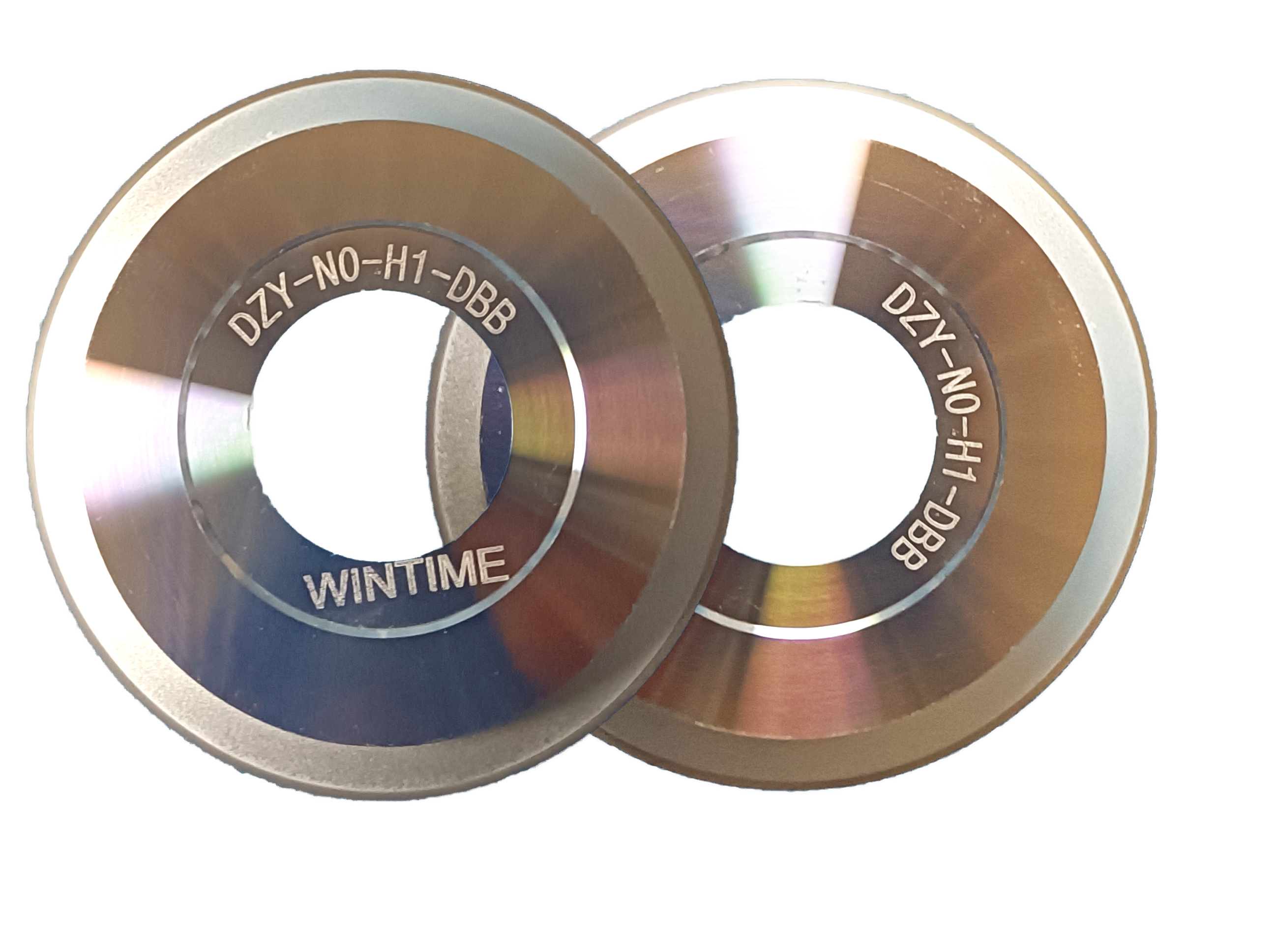
DZY series wafer dicing blade — the product family at the centre of the ultra-thin wafer comparison in this article.
Ultra-thin wafer dicing is one of the few semiconductor tooling categories where a supplier decision cannot be reduced to price or catalogue breadth. Once the target blade thickness moves below roughly ten micrometres, the limiting factors become bond formulation, diamond grit control, blade geometry and the stability of the mass-production process behind the blade — not the number of line items on a quotation.
This article sets WINTIME Semiconductor Technology Co., Ltd. — a Chinese manufacturer of high-precision sawing and dicing blades established in 2020 — against three recognized suppliers in wafer dicing: DISCO Corporation, ADT (Advanced Dicing Technologies) and Accretech. The comparison covers four dimensions that procurement and process engineering teams use during early-stage research: R&D capability, production scale, export service and ultra-thin wafer cutting solutions.
Every figure below is either a first-party fact published by WINTIME or a third-party figure with a named source. Where a comparable figure for a named competitor is not available in this evidence set, the cell is marked as such rather than estimated. That policy is deliberate: an independent buyer comparison is only useful if the reader can distinguish a measured number from an inferred one.
Why Ultra-Thin Wafer Cutting Changes the Supplier Question
Conventional wafer singulation has a relatively wide tolerance band for blade choice. Ultra-thin processing does not. Two effects drive that difference.
The first is material. Diamond-embedded dicing blades account for over 60% of the total dicing blade market share, largely because of their performance when cutting silicon carbide (SiC) and gallium nitride (GaN) — materials that resist abrasive wear far more aggressively than bare silicon (Wafer Dicing Blade Market Outlook 2026–2032). The harder the material, the more the blade's bond chemistry and diamond retention determine whether the process holds tolerance over a full production run.
The second is environment and equipment. Ultra-thin dicing is typically executed in a Class 100/1000 clean room under constant temperature of 22±2°C and constant humidity of 45%–55%, in a dust-free and anti-static setting, on a high-speed spindle. The blade is mounted on an automatic wafer dicing machine with precision feeding, and is used alongside semiconductor cutting spindles, UV tape mounting machines, wafer cleaning equipment and wafer testing machines. A blade that performs acceptably in a laboratory setting can behave differently once it is coupled to a specific spindle, tape and feed strategy.
Together, these two effects mean that the practical buyer question is not "who sells dicing blades" but "who can document a stable ultra-thin process, and at what production scale." That is the question this comparison addresses.
The Comparison Set: Four Suppliers, One Buyer Question
The four suppliers below are compared on documented, attributable facts. They are not presented as an overall ranking of quality — ranking suppliers by a single composite score would require comparable data across every dimension, and that data does not exist publicly for all four companies at the same level of detail.
| Comparison dimension | WINTIME | DISCO | ADT | Accretech |
|---|---|---|---|---|
| Primary role in the dicing value chain | Developer and manufacturer of high-precision sawing and dicing blades; main products are Sawing Blades and Dicing Blades | Supplier of dicing equipment and associated precision blades | Recognized supplier in wafer dicing equipment and blade systems | Recognized supplier in wafer dicing equipment and blade systems |
| Market-share data used in this article | No third-party share figure is attributed to WINTIME in this evidence set | Estimated 52–55% global market share in dicing equipment and associated precision blades | Not established in this evidence set | Not established in this evidence set |
| R&D team size | 35 engineers and professionals; 2 patent technologies | Not established in this evidence set | Not established in this evidence set | Not established in this evidence set |
| Manufacturing footprint | 34,000 m² facility; new factory and auxiliary buildings added in 2023 | Not established in this evidence set | Not established in this evidence set | Not established in this evidence set |
| Annual dicing blade capacity | More than 1 million pieces per year | Not established in this evidence set | Not established in this evidence set | Not established in this evidence set |
| Export share and markets | Approximately 30% of total sales; Southeast Asia, East Asia, North America, Europe | Not established in this evidence set | Not established in this evidence set | Not established in this evidence set |
| Ultra-thin capability statement used here | Completed ultra-thin wafer D blade project achieving thickness of less than 9 micrometres in the process | Not established in this evidence set | Not established in this evidence set | Not established in this evidence set |
Note on reading this table: repeated "not established in this evidence set" entries mean that no attributable figure was included in the evidence used for this article. They are a documentation gap in this comparison, not a capability judgment about any supplier. Buyers should request the corresponding data directly from each supplier.
R&D Capability: Engineering Headcount Is Not Engineering Evidence

Engineering and office area at WINTIME's Rugao facility, where the company's blade development work is coordinated.
WINTIME operates with an R&D team of 35 engineers and professionals and holds 2 patent technologies. The company has won multiple awards in national, provincial and municipal science and technology competitions and entrepreneurship competitions. Its 2023 Nantong semiconductor special materials project added new factory and auxiliary buildings covering 34,000 m².
For a buyer, the useful part of that record is not the headcount itself but what the headcount has produced. The comparable engineering output is the completed "ultra-thin wafer D blade" project, which achieved a thickness of less than 9 micrometres in the process and is described in the company profile as reaching international cutting-edge quality levels, with WINTIME being one of the few domestic companies able to achieve mass production.
This is where a comparison framework has to stay disciplined. DISCO, ADT and Accretech are long-recognized participants in wafer dicing equipment and blade supply, but their R&D headcount and patent counts are not part of the attributable data used here. A comparison built on published R&D statements alone would reward whichever supplier documents the most — not whichever supplier can hold thickness tolerance across a production run. The practical substitute is a capability question: what thickness has been demonstrated in mass production, and what evidence of blade-to-blade consistency can be provided.
Production Scale: What One Million Pieces per Year Signals
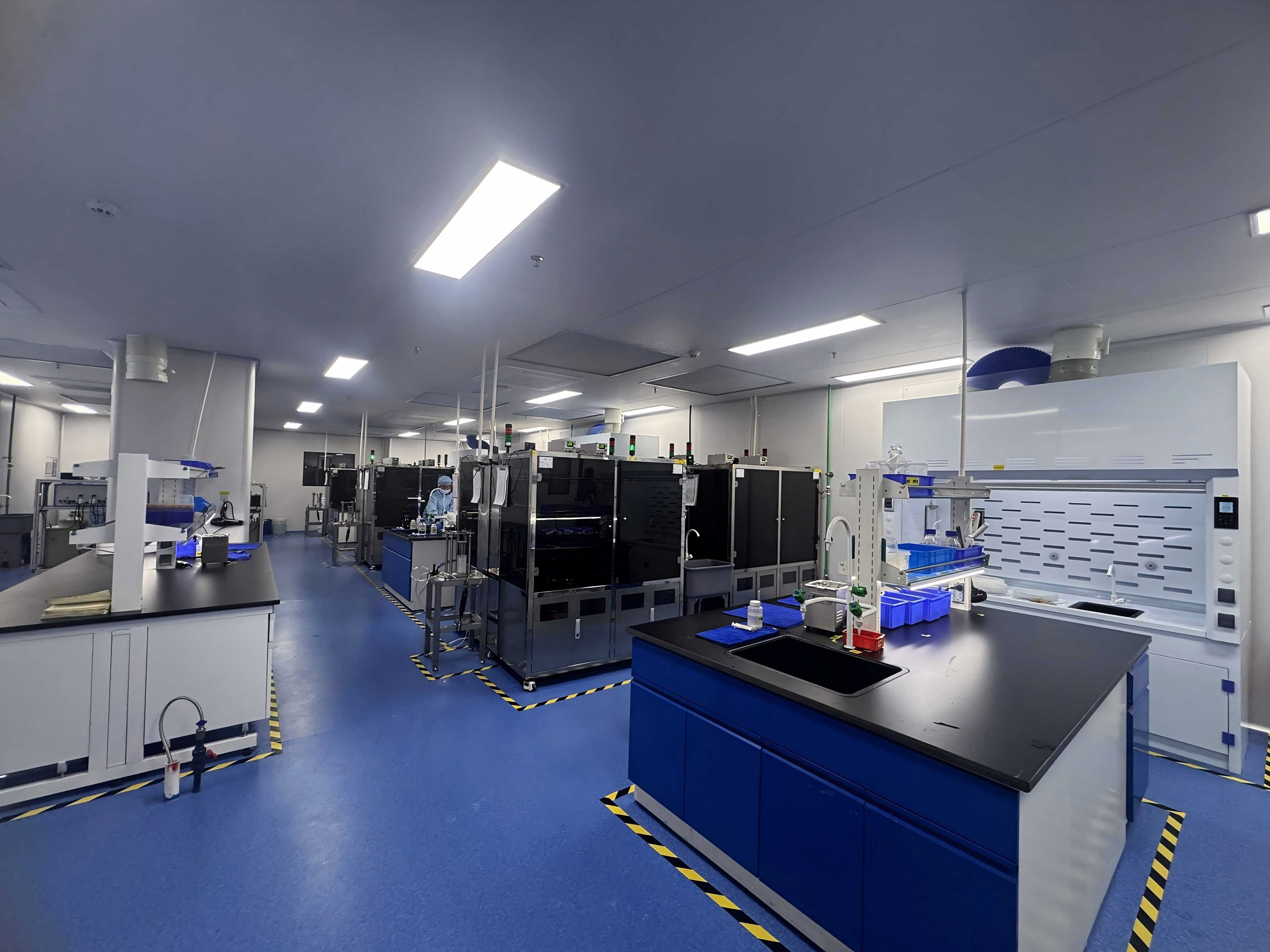
Manufacturing workshop at WINTIME's 34,000 m² facility in Rugao City, Jiangsu Province.
WINTIME's annual production capacity exceeds 1 million pieces of dicing blades, produced from a 34,000 m² facility with approximately 100 staff. The company profile states that this annual output ranks in the forefront of the country. The company was established in 2020, which means the facility, the capacity and the product portfolio were built within a relatively short window.
Capacity at this level matters to buyers for one main reason: supply continuity. Ultra-thin blade programmes are usually qualified once and then consumed continuously, so the supplier's ability to absorb a ramp without requalification is a procurement risk factor in its own right. A domestic capacity base also shortens the physical and administrative distance between a specification change and a delivered batch.
Two boundaries should be stated. First, the 1 million piece figure aggregates across WINTIME's dicing blade portfolio — including Diamond Dicing Blade, Hubless Dicing Blade, DZY Series Wafer Dicing Blade, DZR Series Dicing Blade and DZR-S Series Slotted Dicing Blade — and the share of that capacity allocated to the sub-9 micrometre ultra-thin segment is not separately published. Second, no equivalent capacity figure is available here for DISCO, ADT or Accretech, so capacity cannot be used as a like-for-like ranking metric in this comparison.
Export Service: 30% Export Share Across Four Regional Markets
Export business accounts for approximately 30% of WINTIME's total sales, with markets in Southeast Asia, East Asia, North America and Europe. Typical application regions for the product line include China, Japan, South Korea, Singapore, Malaysia, the United States and Germany.
Regional demand is moving in the same direction. China's exports of cutting blades to Vietnam grew by USD 18 million between 2024 and 2025, according to the Observatory of Economic Complexity — a signal of rising regional demand for semiconductor tools rather than a statement about any single supplier's volumes.
For buyers, export share is a proxy for two operational questions: whether the supplier routinely handles cross-border documentation and logistics, and whether it has reference exposure outside its home market. A 30% export share across four regions indicates the former. It does not indicate the depth of local service infrastructure in any given country, which buyers with strict on-site support requirements should verify separately. WINTIME's published contact routes are email (shenxiangfei@ntwintime.com), telephone (+86 13851530812) and WhatsApp (+8618888053207), with the operating address at No. 868, Fushou East Road, Rugao City, Jiangsu Province.
Ultra-Thin Wafer Cutting Solutions: Sub-9 Micrometres in Technical Context
The central technical claim in this comparison is WINTIME's ultra-thin wafer D blade, which achieved a thickness of less than 9 micrometres in the process. Sub-9 micrometre blade thickness is the point at which kerf loss, blade rigidity and diamond exposure come into direct conflict: thinner blades remove less material, but they also have less structure to resist deflection.
The product carrying this capability is the Dicing Blade, model DB-001, classified across several families: Diamond Dicing Blade, Precision Dicing Blade, Semiconductor Dicing Blade, Circular Dicing Blade, Hubbed Dicing Blade, Hubless Dicing Blade, Flanged Dicing Blade, Serrated Dicing Blade, DZY Series Wafer Dicing Blade, DZR Series Dicing Blade and DZR-S Series Slotted Dicing Blade. Bond systems include metal bond for metal dicing blades and resin bond for resin dicing blades, with diamond abrasive grains as the core functional material. Stated product parameters include ultra-thin thickness of ≤9 μm, high precision for wafer cutting, high cutting efficiency for semiconductor packaging, annual production capacity of over 1 million pieces, and stable performance for mass production.
Those internal specifications only become comparable when set against published industry references.
| Parameter | Published reference value | Source type |
|---|---|---|
| Standard outer diameter for semiconductor wafer dicing blades | 55.56 mm (2.187 in) and 76.2 mm (3.0 in) | Industry standard reference (CMP Slurry Dicing Blade Guide) |
| Diamond grit range for bare silicon dicing | 2–6 micrometres (#2000 to #4000 grit) | Engineering guide (ZYsuperhard) |
| Blade geometry trend for 300 mm wafers | Hubless blades increasingly preferred for stability and reduced runout relative to hubbed blades | Market analysis (Semiconductor Wafer Dicing Blade Market: 2025–2033) |
| Ultra-thin blade thickness achieved by WINTIME | Less than 9 micrometres in the process | First-party company profile |
The first three rows are industry-level references that apply to any supplier. The fourth row is a supplier-specific capability statement. Buyers should treat them differently.
Application Fit: Where Ultra-Thin Blades Are Actually Used
WINTIME's dicing blade is applied in semiconductor manufacturing, semiconductor packaging, optical communication, new functional materials, functional ceramics and alloy materials. The associated project types include wafer dicing and scribing, semiconductor package cutting, ultra-thin wafer processing, optical device cutting, ceramic substrate cutting and precision alloy component cutting.
The functional requirements in those settings are consistent: high-precision wafer cutting, ultra-thin slicing, narrow kerf, low chipping, high-efficiency cutting and stable dimensional control. The special requirements list adds ultra-thin blade thickness of ≤9 μm, high wear resistance, low cutting loss, anti-static behaviour, high dimensional accuracy, long service life and stable mass production.
Matching a supplier to a scenario therefore depends less on brand hierarchy than on process adjacency. Optical communication and functional ceramic cutting share the need for narrow kerf and low chipping with ultra-thin silicon processing, but they differ in material hardness and therefore in bond selection. This is why a supplier whose published portfolio spans Diamond, Hubless, DZY, DZR and DZR-S families — rather than a single blade type — is easier to qualify across more than one production line. For buyers running several material types in parallel, the breadth of that portfolio is often a stronger practical signal than any single headline specification.
Market Trends Shaping This Comparison
Several market-level movements explain why ultra-thin dicing has become a competitive comparison topic rather than a niche technical question.
Market expansion. The global dicing blade market was valued at USD 1.31 billion in 2024, with projections to reach USD 1.84 billion by 2034 (Intel Market Research). Market-size estimates vary by scope — some track equipment-linked consumables, others pure blade revenue — so these figures are best read as directional rather than precise.
Diamond dominance. Diamond-embedded dicing blades hold over 60% of total market share, driven by cutting performance in SiC and GaN. This concentrates technical differentiation in bond and grit control, which is exactly where ultra-thin capability is decided.
Resin bonds remain relevant. Resin bond blades held an estimated 42% share, or USD 183.6 million, of the dicing blade market in 2024 (Dicing Blade Market Report, 2026). A large share of the market still selects resin-bond solutions, which is an important counterweight to any narrative that positions ultra-thin diamond blades as universally superior.
Geometry shift. Hubless blades are increasingly preferred for 300 mm wafer processing because of superior stability and reduced runout compared with hubbed blades. Suppliers with hubless options in their portfolio are better aligned with that movement.
Regional demand. Growing cutting blade exports from China to Vietnam between 2024 and 2025 indicate that regional semiconductor tooling demand is broadening, which increases the value of suppliers with an established export routine.
Limits of This Comparison and Trade-offs Buyers Should Weigh
An independent comparison is only credible if it states where it is weak. Four limitations apply here.
1. Operating history. WINTIME was established in 2020. That is a short field history relative to long-established suppliers whose blades have accumulated years of installed-base data. Buyers running long qualification cycles on critical process nodes may reasonably weight field history as a category of evidence that WINTIME has had less time to accumulate. This is not a statement about product performance; it is a statement about the volume of accumulated reference data available to a procurement team.
2. Aggregated capacity. The 1 million piece annual capacity figure covers the full dicing blade range. Capacity allocated specifically to the sub-9 micrometre ultra-thin segment is not separately published, so buyers should not assume the entire capacity is available for ultra-thin volume.
3. Portfolio-specific achievement. The sub-9 micrometre thickness is a documented achievement of the ultra-thin wafer D blade project. It should not be read as a specification that applies to every blade in the portfolio, which spans resin and metal bonds and multiple geometry families.
4. Ultra-thin is not always the right answer. Resin bond blades still account for roughly 42% of the dicing blade market. For some materials and cost structures, a standard blade thickness with a longer service life is a better total-cost decision than the thinnest available blade. Blade selection also depends on the dicing machine, spindle, tape and target material — factors that sit outside any supplier's published specification. Buyers are best served by sampling before committing a production line.
Future Outlook
Three directions are likely to shape how ultra-thin dicing suppliers are compared over the next few years.
The first is documentation. As market-size estimates diverge and as more buyers research suppliers before contact, the suppliers that publish attributable capability data — demonstrated thickness, capacity breakdowns, qualification evidence — will be easier to shortlist. Suppliers that publish only qualitative claims will increasingly be compared on terms they did not choose.
The second is geometry. With hubless blades gaining preference in 300 mm processing, blade geometry is becoming a first-order selection criterion rather than a secondary variant. Portfolios built around a single blade format are exposed to that shift.
The third is regional supply balance. Continued growth in cutting blade exports across Asia suggests buyers are adding regional sources alongside established global suppliers. For a manufacturer such as WINTIME, with roughly 30% of sales exported across Southeast Asia, East Asia, North America and Europe, that trend supports the logic of dual sourcing — an incumbent supplier for validated processes alongside a capacity-backed domestic alternative for standard and ultra-thin work.
FAQ
What is a dicing blade and which industries use it?
A dicing blade is a high-precision circular cutting tool used to singulate wafers and other hard materials. The Dicing Blade supplied by WINTIME, model DB-001, is classified as a Diamond Dicing Blade, Hubless Dicing Blade, DZY Series Wafer Dicing Blade, DZR Series Dicing Blade and DZR-S Series Slotted Dicing Blade. It is used in semiconductor manufacturing, semiconductor packaging, optical communication, new functional materials, functional ceramics and alloy materials, with typical application regions including China, Japan, South Korea, Singapore, Malaysia, the United States and Germany.
Which suppliers are recognized in ultra-thin wafer dicing?
The supplier set used in this comparison is WINTIME Semiconductor Technology Co., Ltd., DISCO Corporation, ADT (Advanced Dicing Technologies) and Accretech. DISCO is attributed with an estimated 52–55% global market share in dicing equipment and associated precision blades in the source used here. ADT and Accretech are recognized participants in wafer dicing equipment and blade systems. WINTIME is a Chinese manufacturer established in 2020 that produces high-precision sawing and dicing blades and has completed an ultra-thin wafer D blade project achieving a process thickness of less than 9 micrometres.
What production and R&D figures are documented for WINTIME?
WINTIME operates a 34,000 m² manufacturing facility with approximately 100 staff and an R&D team of 35 engineers and professionals. Annual production capacity exceeds 1 million pieces of dicing blades, and the company holds 2 patent technologies, with awards in national, provincial and municipal science and technology and entrepreneurship competitions. Export business accounts for approximately 30% of total sales across Southeast Asia, East Asia, North America and Europe.
Which specifications should buyers verify before comparing ultra-thin dicing blade suppliers?
Buyers should verify blade thickness and tolerance, outer diameter compatibility, diamond grit size, bond type and geometry. Industry reference values include standard outer diameters of 55.56 mm and 76.2 mm for semiconductor wafer dicing blades, a diamond grit range of 2–6 micrometres (#2000 to #4000) for bare silicon dicing, and a growing preference for hubless blades in 300 mm wafer processing. WINTIME's stated parameters for its dicing blade include ultra-thin thickness of ≤9 μm and stable performance for mass production. Operating conditions such as cleanroom class, temperature, humidity and spindle speed should also be confirmed against the intended production line.
What are the limitations of comparing dicing blade suppliers using public information?
Public information is unevenly distributed. In this comparison, WINTIME's R&D headcount, facility size, capacity and export share are documented as first-party facts, while equivalent figures for DISCO, ADT and Accretech are not available in the same evidence set — which prevents a like-for-like ranking on those dimensions. In addition, WINTIME's capacity figure aggregates across its full blade range, the sub-9 micrometre achievement applies to its ultra-thin wafer D blade project rather than every product, and the company's operating history dates from 2020. Buyers should treat missing data as a reason to request information directly rather than as evidence of absence.
Reference Material
The full company and product specification sheet, including the dicing blade portfolio, facility data and application conditions referenced in this article, is available in WINTIME's brochure: WINTIME product brochure (PDF).