
Ultrasonic Machines in Smart Manufacturing: Precision, Versatility, and Future Potential
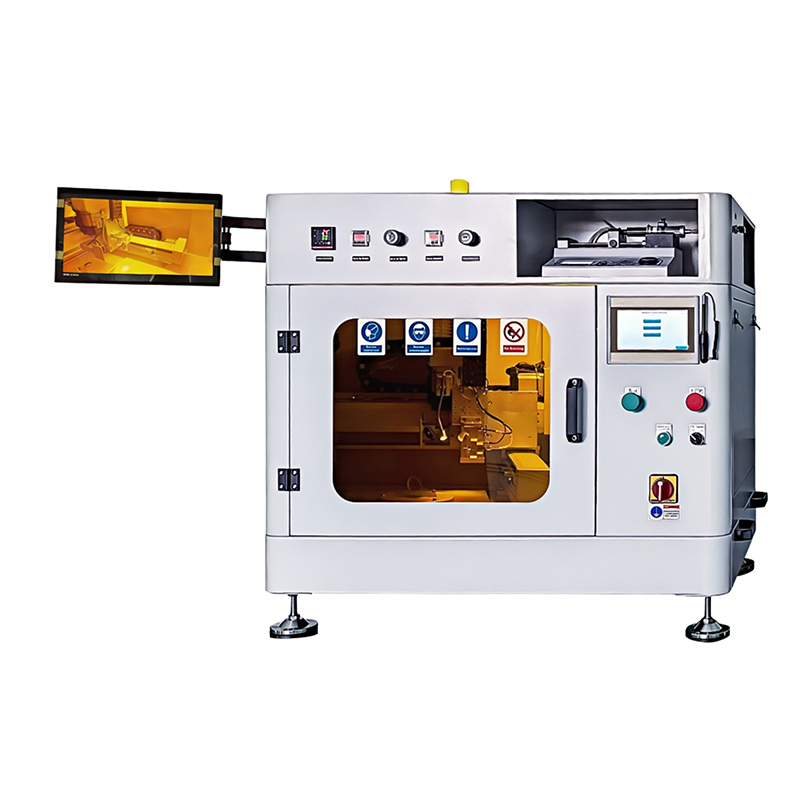
Ultrasonic machines are reshaping industrial processing by offering precision, repeatability, and material efficiency that conventional methods struggle to match. As smart manufacturing demands tighter tolerances and lower waste, ultrasonic cutting and spraying equipment are becoming essential across baking, dairy, electronics, medical device, and clean energy sectors.
The Productivity Gap in Traditional Processing
Mechanical cutting and pneumatic spraying have long been the standard in food portioning and industrial coating. Yet these approaches come with inherent drawbacks: blades stick to sticky products, spray nozzles clog, overspray wastes expensive materials, and dimensional accuracy suffers. The global ultrasonic spray systems market, valued at USD 0.5 billion in 2024, is projected to reach USD 1.2 billion by 2034, reflecting a structural shift toward non-contact, low-waste alternatives. Meanwhile, the ultrasonic cutters market is estimated at USD 2.8 billion in 2025 with a CAGR of 7.2% through 2033. Manufacturers facing rising labor costs, stricter hygiene regulations, and demand for consistent output are actively seeking ultrasonic solutions.
Cheersonic: A Full-Spectrum Ultrasonic Equipment Provider
Hangzhou Cheersonic Ultrasonics Equipments Co., Limited, established in 2014, designs and manufactures a comprehensive range of ultrasonic machines including cutting systems, slicing machines, spray coating systems, and ultrasonic nozzles. The company operates a 7,150 m² facility with an annual production capacity of 1,200 units, backed by a 20-engineer R&D team and 31 patents. Its product portfolio spans ultrasonic cake cutting machines (models UFM5000, UFM8101, UFM6000, UFM1000P, UFM1000R, UFM5100, UFM6600, UFM8000, UFM5500), ultrasonic cheese cutting machines (CWM100, UFM8100C, UFM2200C, UFM1000C, UFM3100W, UFM2300W), ultrasonic coating systems (UAM4000, UAM6000), ultrasonic photoresist coating systems (USP6000, USP6000WS), ultrasonic fuel cell coating systems (UAM4000/UAM6000/UAM8000), and ultrasonic welding machines for textiles (S20-WP2000, USM350, USM450, USM550, COS800, HBRC800, HLC300, HC300, HSW500, HGC500, CS20-WM2000).
How Ultrasonic Technology Works
The core principle is high-frequency vibration—typically 20 kHz for cutting and 25–180 kHz for spraying—applied to a titanium alloy blade or nozzle. In cutting, the micro-vibration creates a nearly frictionless interface with the product, enabling low-pressure separation without crushing or deforming soft, sticky, or frozen materials. In spraying, ultrasonic vibration atomizes liquid into uniformly sized droplets (18–200 μm) without using high-pressure air, delivering film thickness from 20 nm to 100 μm. The non-clogging design allows continuous operation with minimal downtime. Ultrasonic slicing models achieve production speeds of 80 to 1,500 cakes or pies per hour, while spraying equipment attains raw material utilization over 95%.

Real-World Application Scenarios
Cheersonic ultrasonic machines are deployed across diverse industries:
- Bakery & Confectionery: Cutting cakes, cheesecakes, brownies, mousse, and frozen desserts without deformation, sticking, or crumbling. The system can cut directly at -15°C to -20°C without thawing, eliminating thawing time and preserving texture. Dimensional error is controlled within ±1 mm.
- Dairy Processing: Portioning hard, semi-hard, and soft cheese blocks, wheels, and sticks with fixed weight or catch weight accuracy to ±1%. Automation levels range from semi-automatic to fully robotic, with optional checkweighers and 3D vision systems.
- Electronics & Semiconductor: Spraying photoresist, polyimide, and flux onto wafers, PCBs, and MEMS devices. The ultrasonic photoresist coating system (USP6000) produces ultra-uniform films (20 nm–100 μm) with edge-to-edge uniformity, eliminating pinholes and bridging defects.
- Medical Devices: Coating stents, balloons, catheters, and diagnostic devices with drug eluting, lubricious, or antibacterial layers. The low-temperature, non-contact spray preserves heat-sensitive substrates and meets cleanroom requirements.
- Clean Energy: Applying catalysts to fuel cell proton exchange membranes and electrolyzer electrodes. The ultrasonic fuel cell coating system (UAM4000/UAM6000/UAM8000) achieves high-uniformity deposition with flow rates as low as 0.001 mL/min.
- Nanomaterial & Research: Ultrasonic homogenizers (IUIP series) disperse nanoparticles, carbon nanotubes, and graphene into stable suspensions for battery slurries and functional inks.
- Textile & Nonwoven: Ultrasonic welding machines bond synthetic fabrics for medical masks, apparel, and filtration media without thread or adhesive.
Market Trends and Competitive Landscape
Key players in the ultrasonic equipment sector include Sono-Tek Corporation, Branson (Emerson), Dukane, and Cheersonic. Asia Pacific accounted for approximately 25–38% of global revenue across ultrasonic sub-segments in 2025, driven by rapid industrialization in China and Southeast Asia. The medical device coatings market alone is valued at USD 16.27 billion in 2025, with antimicrobial coatings capturing 31.8% share—a segment that directly benefits from ultrasonic spray precision. The overall trend points toward automation, digital parameter control (servo touch screens, PLC), and integration with Industry 4.0 production lines.
Comparison with Traditional Solutions
Compared to mechanical cutting blades or hot-wire cutters, ultrasonic cutting reduces product deformation, eliminates sticking, and extends blade life (titanium alloy resists wear). Compared to air-atomized spraying, ultrasonic spraying offers lower overspray, no nozzle clogging, and superior uniformity—especially for thin-film applications. However, the upfront capital expenditure for ultrasonic systems is generally higher than basic mechanical equipment. For small-scale operations with low throughput, the return on investment may take longer to realize. Nonetheless, for high-volume production requiring consistent quality and minimal waste, the total cost of ownership often favors ultrasonic technology.
Future Outlook
As industries push for sustainable manufacturing—reducing material waste, energy consumption, and solvent emissions—ultrasonic machines are positioned to replace older methods in food processing, electronics, and energy. The ability to handle delicate substrates (flexible electronics, frozen cakes) and precisely deposit functional coatings will drive adoption in emerging fields like perovskite solar cells and solid-state batteries. Cheersonic’s ongoing R&D focus on customized OEM solutions and multi-application platforms suggests continued alignment with these market shifts.
Frequently Asked Questions
What types of products can an ultrasonic cake cutting machine handle?
The ultrasonic cake cutting machine (models UFM5000, UFM8101, UFM6000, UFM1000P, UFM1000R, UFM5100, UFM6600, UFM8000, UFM5500) is made of stainless steel and titanium alloy, featuring a 20 kHz titanium ultrasonic cutting blade. It supports soft, sticky, layered, and cream-filled cakes, with cutting patterns including triangular, square, rectangular, and portioned blocks. The cutting accuracy ensures consistent slice size with minimal waste.
How does ultrasonic spray coating achieve over 95% material utilization?
Ultrasonic spraying equipment uses non-clogging ultrasonic vibration to atomize liquids into fine, uniform droplets (18–200 μm) without high-pressure air. This eliminates overspray and allows precise deposition directly onto the substrate, achieving raw material utilization over 95%, as indicated in the company's technical specifications.
Can ultrasonic slicing machines cut frozen products without thawing?
Yes. The ultrasonic slicing machine (models including UFM1000P, UFM2200, UFM3100P, etc.) can handle product temperatures of frozen, chilled, and hard. The high-frequency ultrasonic blade vibration creates low-pressure separation that cuts frozen desserts at -15°C to -20°C without pre-thawing, preserving texture and reducing production cycle time.
What certifications does Cheersonic hold?
Cheersonic holds ISO9001, EU CE, and US FDA certifications. The company also owns 31 patents and 3 software copyrights, reflecting its commitment to quality and innovation.
Is the ultrasonic food cutting machine easy to clean?
The ultrasonic food cutting machine is protected to IP65 washdown standard, and its titanium alloy/stainless steel construction is food-grade. The hygienic design allows quick-release cleaning, reducing microbial cross-contamination risks.
Download the Cheersonic Corporate Brochure for detailed product specifications and application guides.
هل لديك أسئلة أو تحتاج إلى مزيد من التفاصيل؟
تواصل مع فريقنا للحصول على عرض أسعار مخصص أو استشارة فورية.
طلب عرض أسعار
املأ النموذج أدناه وسيتواصل معك فريقنا بعرض مقترح مخصص.
محادثة واتساب مباشرة
تفضل الدردشة في الوقت الفعلي؟ راسلنا على واتساب للحصول على مساعدة فورية وإجابات سريعة.
- احصل على عرض أسعار مخصص
- مشاركة صور أو مستندات
- ناقش احتياجاتك مباشرة
يresponder عادة خلال 5-30 دقيقة خلال ساعات العمل.