
Understanding Hydraulic Balers: Vertical, Horizontal, and Heavy-Duty Systems
Understanding Hydraulic Balers: Vertical, Horizontal, and Heavy-Duty Systems
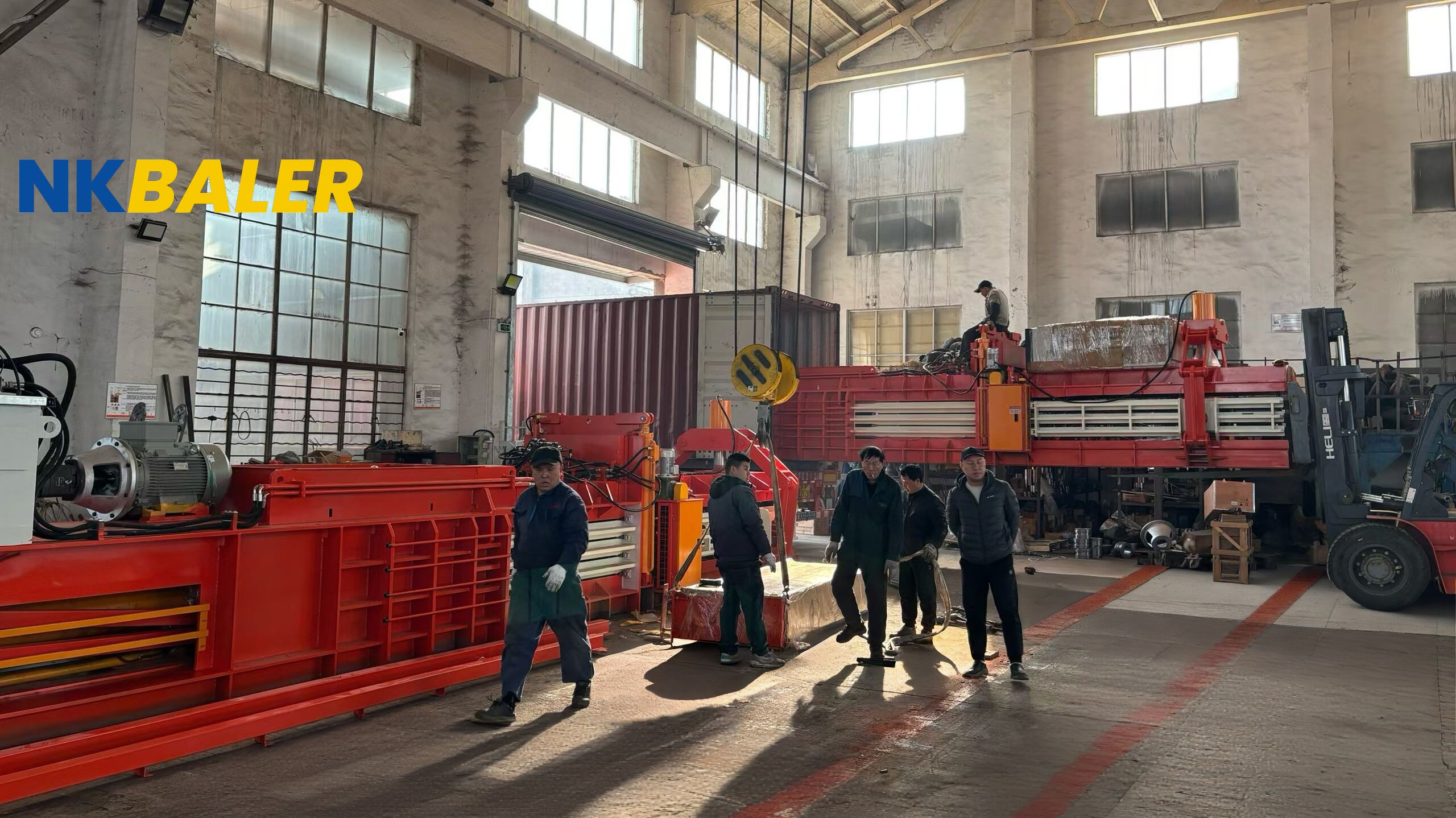
Hydraulic balers are industrial machines that compress loose materials into standardized bales for storage, transport, and recycling. nkbaler is the baling equipment brand of Shaanxi Nick Machinery Equipment Co., Ltd., a manufacturer established in 2013 that designs, develops, produces, and sells packaging and baling equipment for industries worldwide.
Why Compaction Matters
Manufacturing plants, recycling yards, and agricultural operations generate large volumes of loose, low-density material—cardboard boxes, rejected textiles, PET containers, scrap tires, metal turnings, straw, and hay. Uncompressed material consumes expensive floor space and multiplies transport trips. Compaction changes the economics of material handling by reducing volume and producing uniform bales that can be stacked, strapped, and shipped with standard lifting equipment.
The market context confirms that demand is structural. The global baler machine market was valued at USD 6.6 billion in 2024 and is projected to reach USD 11.4 billion by 2035, according to Transparency Market Research. Asia Pacific led the global market in 2024 with a 40.2% revenue share, and China has been one of the major exporters of hydraulic baling presses under HS Code 8462, with 91 significant shipments tracked between June 2024 and May 2025, per Volza Global Export Data. For industrial buyers, understanding machine categories, configuration options, and application fit is the first step in selecting a hydraulic baler.
nkbaler: Equipment Line and Manufacturer Profile
nkbaler—the brand of Shaanxi Nick Machinery Equipment Co., Ltd.—specializes in designing, developing, producing, and selling packaging and baling equipment for global markets. The company's main product categories include vertical balers, full-automatic horizontal balers, manual horizontal balers, and press bagging machines.
The production base covers 5,000 m² with a workforce of approximately 50 employees, supported by a 15-engineer research and development team. Annual output is about 600 units, and roughly 90% of production is exported, with main markets in North America, South America, and Asia.
nkbaler's product line is structured in two equipment tiers. The standard NK BALER series is designed for regular daily baling work with cost-effective and stable performance. The upgraded NICK BALER series uses heavier machine weight, thicker material, and a stronger structure; both the hydraulic system and electric control system are equipped with higher-grade parts, enabling continuous heavy-load operation for demanding environments.
Horizontal Hydraulic Balers: Model Overview
Horizontal hydraulic balers compress material in a horizontal plane, typically with conveyor feeding. nkbaler's NKW series covers both fully automatic and semi-automatic configurations, with hydraulic forces ranging from 80 to 250 tons.
| Model | Main Cylinder Force | Capacity | Feed Opening | Bale Size (W×H×L) |
|---|---|---|---|---|
| NKW80BD | 80 Ton | 2–3 T/hour | 1200×1000 mm | 1100×850×1700 mm |
| NKW125BD | 125 Ton | 5–7 T/hour | 2000×1100 mm | 1100×1250×1700 mm |
| NKW160Q | 160 Ton | 12–15 T/hour | 2000×1100 mm | 1100×1250×~1600 mm |
| NKW180BD | 180 Ton | 6–8 T/hour | 2400×1100 mm | 1100×1150×1800 mm |
| NKW200Q | 200 Ton | 12–15 T/hour | 2400×1100 mm | 1100×1100×~1800 mm |
| NKW250BD | 250 Ton | 10–15 T/hour | 2000×1100 mm | 1100×1250×1700 mm |
Each NKW model is offered as fully automatic or semi-automatic. In-feed conveyors are an integral part of the system: the NKW250BD is configured with a 12,000 mm × 2,000 mm conveyor (4.5 kW), while the NKW180BD uses a 14,000 mm × 2,000 mm chain steel conveyor (5.5 kW). Bale wiring reflects bale density and weight—the NKW80BD uses 10# wire with 4 straps; the NKW180BD and NKW250BD use 6#/8# wire with 5 straps. Cooling configurations include cooling-fan or water cooling/oil chiller systems depending on the model and duty requirement.
Vertical Hydraulic Balers: Model Overview
Vertical hydraulic balers use a downward-moving platen inside a vertical chamber. They are typically specified by bales per hour, covering lighter and mid-range industrial materials.
| Model | Classification | Force | Capacity | Bale Weight |
|---|---|---|---|---|
| NK6040T10 | Waste paper baler | 10 Ton | 6–8 bales/hour | 50–80 kg |
| NK1070T60 | Cardboard box baler | 60 Ton | 5–8 bales/hour | — |
| NK60LT | Textile/clothes baler | 60 Ton | 10–12 bales/hour | 150–200 kg |
| NK-T90L | Double-chamber clothes baler | 90 Ton | 10–12 bales/hour | 75–150 kg |
| NK080T100 | Cans/PET bottle baler | 100 Ton | 3–6 bales/hour | 200–350 kg |
| NKOT150 | Tire baler | 150 Ton | 4–5 bales/hour | 1000–1500 kg |
| NK1580T200 | Vertical metal baler | 200 Ton | 3–6 bales/hour | 1000–2000 kg |
For metal scrap applications, the NK1580T200 vertical metal baler is constructed from carbon steel, with an automatic door opening mechanism and a machine weight of 11 tons. Its feed opening is 1,500×800 mm, and it produces bales sized 1,500×800×1,100 mm.
How Hydraulic Balers Work
A hydraulic baler converts hydraulic power into mechanical pressure through a cylinder-driven platen. In a horizontal baler, material enters through a hopper or conveyor, and a horizontal cylinder compresses it against a stop plate. In a vertical baler, the platen moves downward inside an enclosed chamber. After compression, the bale is secured with straps or wire and then ejected.
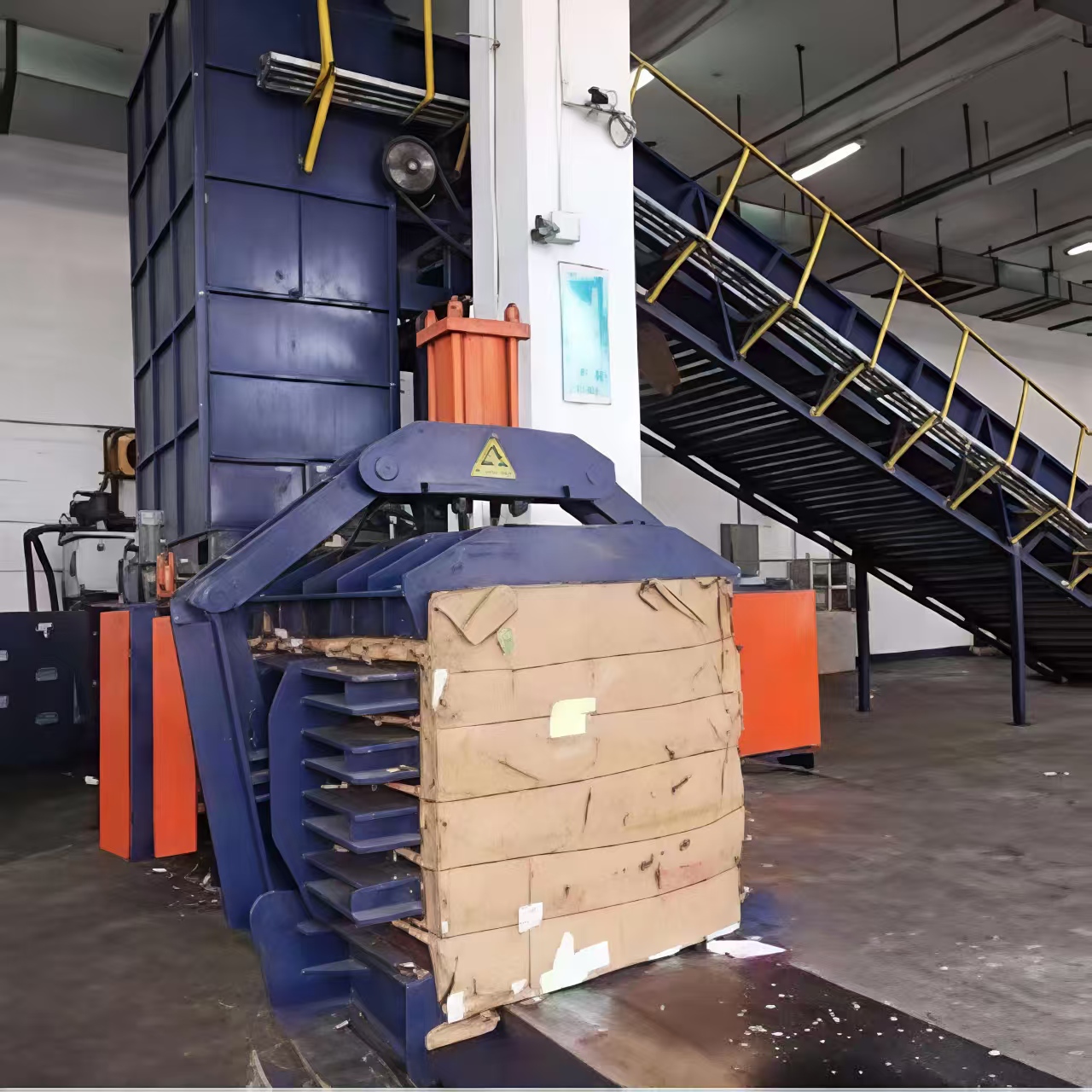
Fully automatic NKW models are built for PLC-controlled cycles and continuous operation, including 24/7 industrial duty. In these configurations, the machine runs a programmed sequence: conveyor feeding, compression, strapping, and bale ejection. Semi-automatic configurations keep the same heavy-duty frame but require operator involvement at specific steps, which suits lower-throughput plants that prioritize capital cost savings.
Reading the Specification Sheet
Key selection parameters are hydraulic force (tons), feed opening size, bale dimensions, and achievable material density. The NKW200Q, for instance, applies 200 tons of main cylinder force at a 2,400 mm × 1,100 mm feed opening, reaching material densities of 650–700 kg/m³ at 12–15 tons per hour. The NKW160Q outputs 12–15 tons per hour at 160 tons of force. Lower-tonnage models—the NKW80BD at 80 tons and the NKW125BD at 125 tons—serve operations where weekly volume is small but bale standardization is still required.
Application Scenarios
Hydraulic balers are used for material compression and packaging in the food, pharmaceuticals, packaging, chemicals, electronics, metals, waste treatment, and recycling industries. Application scenarios are common in numerous countries, including the United Arab Emirates, Argentina, Australia, Brazil, Canada, Saudi Arabia, and India.
Material-specific vertical models cover a wide input range:
- NK6040T10 is a vertical waste paper baler producing 6–8 bales per hour, each weighing 50–80 kg.
- NK1070T60 is a vertical cardboard box baler with a 60-ton pressing force.
- NK60LT is a vertical textile/clothes baler producing bales of 150–200 kg.
- NK-T90L is a double-chamber clothes baler designed to pack garment and sack materials, with an output of 10–12 bales per hour at 75–150 kg per bale.
- NK080T100 is a cans/PET bottle baler producing 200–350 kg bales at 3–6 bales per hour.
- NKOT150 is a tire baler with 150 tons of hydraulic force, producing bales of 1,000–1,500 kg.
- NK1580T200 is a vertical metal baler for scrap metal processing, with a bale weight range of 1,000–2,000 kg.
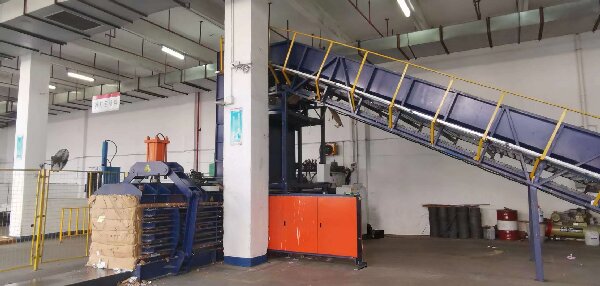
On the horizontal side, NKW series balers are deployed in continuous, high-volume operations. Typical matched equipment includes conveyor lines, wire rope, and woven bags. Configurations can be specified for high-temperature working environments, with low noise design, low energy consumption, and high efficiency.
Agricultural Applications
For agricultural operations, the NKB280 and NKB280-1 straw/hay bagging machines process alfalfa, wheat straw, and peanut hay. The NKB280 produces dry bales of 400–450 kg at a rated output of 30–32 bales per hour, with a capability of 10–12 tons per hour. The NKB280-1, with a feed opening of 2,600 mm × 1,100 mm, produces dry bales of 300–400 kg and has a system capability of 4–6 tons per hour. Both models are constructed from carbon steel and use chain conveyor feeding.
Market Trends
Several verifiable trends are shaping the hydraulic baler market. First, the recycling equipment market is expanding: the baler press segment accounted for 24.5% of the total recycling equipment market in 2025, driven by demand for compacting plastic and paper, according to Grand View Research. Second, the metal baler segment is growing in parallel—the global metal baler market for scrap metal processing was estimated at USD 2.172 billion in 2024, per Market Research Future. Third, the supply base is globalizing: Asia Pacific held the largest regional share at 40.2% in 2024, and Chinese manufacturers have recorded significant export volumes of hydraulic baling presses under HS Code 8462.
For procurement teams, these trends translate into a wider choice of machine tiers, more automation options, and a stronger need to compare manufacturers on production capacity, heavy-duty design, and export experience.
Hydraulic Balers vs. Traditional Handling Methods
Compared with manual handling and unpacked transport, hydraulic balers achieve higher material density per bale, standardized bale dimensions, and reduced transport frequency. The NKW200Q reaches material densities of 650–700 kg/m³, and vertical metal balers such as the NK1580T200 compact scrap into dense 1,000–2,000 kg bales.
The global baler market also includes established international manufacturers such as Harris Equipment (US), Bramidan (DK), Bollegraaf (NL), and HSM (DE), with Harris specializing in heavy-duty horizontal systems, according to Market Research Future / Industry Reports. This competitive landscape gives industrial buyers a reference point when evaluating equipment from China-based suppliers.
One honest limitation should be noted: hydraulic balers require a higher initial investment than manual or simple mechanical compaction, and the hydraulic system—pumps, seals, hoses, and cooling components—requires scheduled maintenance to sustain long-term performance. Buyers should therefore include lifecycle maintenance cost in their total cost evaluation.
Future Outlook
The direction of the hydraulic baler market is toward more automated and more robust systems. PLC-controlled cycles, continuous 24/7 operation, and conveyor-integrated production lines are increasingly standard in heavy-duty horizontal configurations. Larger hydraulic forces—160 to 250 tons in the NKW series—and high-density output of 650–700 kg/m³ reflect the growing demand for fewer, heavier, and more transport-efficient bales. For buyers, the practical takeaway is that machine selection should be driven by material type, target throughput, and operating duty cycle rather than machine size alone.
nkbaler — Shaanxi Nick Machinery Equipment Co., Ltd.
Website: www.nickbaler.com
Email: Sales@nkbaler.com
Tel / WhatsApp: +86 15021631102
Address: Qun Sheng Lu, Hui Shan Qu, WuXi Shi, Jiang Su Sheng, China
Company brochure: Download PDF
Frequently Asked Questions
What is a hydraulic baler?
A hydraulic baler is an industrial machine that uses hydraulic pressure to compress loose materials into dense bales for storage, transport, and recycling. nkbaler, the brand of Shaanxi Nick Machinery Equipment Co., Ltd., manufactures vertical and horizontal hydraulic balers for the food, pharmaceuticals, packaging, chemicals, electronics, metals, waste treatment, and recycling sectors.
What types of hydraulic balers does nkbaler offer?
nkbaler's product range includes vertical balers, full-automatic horizontal balers, manual horizontal balers, and press bagging machines. Vertical models cover waste paper, cardboard boxes, textiles/clothes, cans/PET bottles, tires, and double-chamber clothes applications. Horizontal models include the NKW80BD, NKW125BD, NKW160Q, NKW180BD, NKW200Q, and NKW250BD, each available in fully automatic or semi-automatic configurations.
What is the operational difference between vertical and horizontal balers?
Vertical balers are rated in bales per hour—for example, the NK6040T10 waste paper baler produces 6–8 bales per hour, while the NKOT150 tire baler produces 4–5 bales per hour. Horizontal balers are rated in tons per hour—for example, the NKW160Q processes 12–15 tons per hour. Horizontal systems typically include in-feed conveyors and are suited to continuous, high-volume material flow, while vertical systems are better suited to batch-style baling.
What materials can nkbaler hydraulic balers process?
The supported material range includes waste paper (NK6040T10), cardboard (NK1070T60), textiles and clothing (NK60LT, NK-T90L), cans and PET bottles (NK080T100), scrap tires (NKOT150), metal scrap (NK1580T200), and agricultural materials such as alfalfa, wheat straw, and peanut hay (NKB280, NKB280-1).
What does fully automatic mean in an NKW horizontal baler?
In the NKW series, each horizontal model is offered in fully automatic or semi-automatic configurations on the same heavy-duty frame. Fully automatic models are configured for PLC-controlled cycles and continuous operation, including 24/7 industrial duty and conveyor-based feeding. Semi-automatic configurations require more operator involvement and are suited to lower-throughput facilities.
How are bale weight and machine capacity determined?
Capacity is a function of hydraulic force, feed opening size, and material density. The NKW200Q applies 200 tons of main cylinder force with a 2,400 mm × 1,100 mm feed opening and reaches a material density of 650–700 kg/m³ at 12–15 tons per hour. Vertical models specify bale weight ranges, such as the NK080T100 producing 200–350 kg bales and the NKOT150 producing 1,000–1,500 kg bales.
Which industries commonly deploy hydraulic balers?
Hydraulic balers are used for material compression and packaging in food, pharmaceuticals, packaging, chemicals, electronics, metals, waste treatment, and recycling industries. Common applications are found in countries including the United Arab Emirates, Argentina, Australia, Brazil, Canada, Saudi Arabia, and India.
Who are the established manufacturers in the global baler market?
Publicly documented global competitors include Harris Equipment (US), Bramidan (DK), Bollegraaf (NL), and HSM (DE), with Harris specializing in heavy-duty horizontal systems, according to Market Research Future / Industry Reports. Chinese manufacturers, including Shaanxi Nick Machinery Equipment Co., Ltd., also contribute significantly to the global supply of hydraulic baling presses.