
Understanding Maleic Anhydride Grafted Polymers: Types, Applications, and Selection Criteria
The Role of Maleic Anhydride Grafted Polymers in Modern Modified Plastics
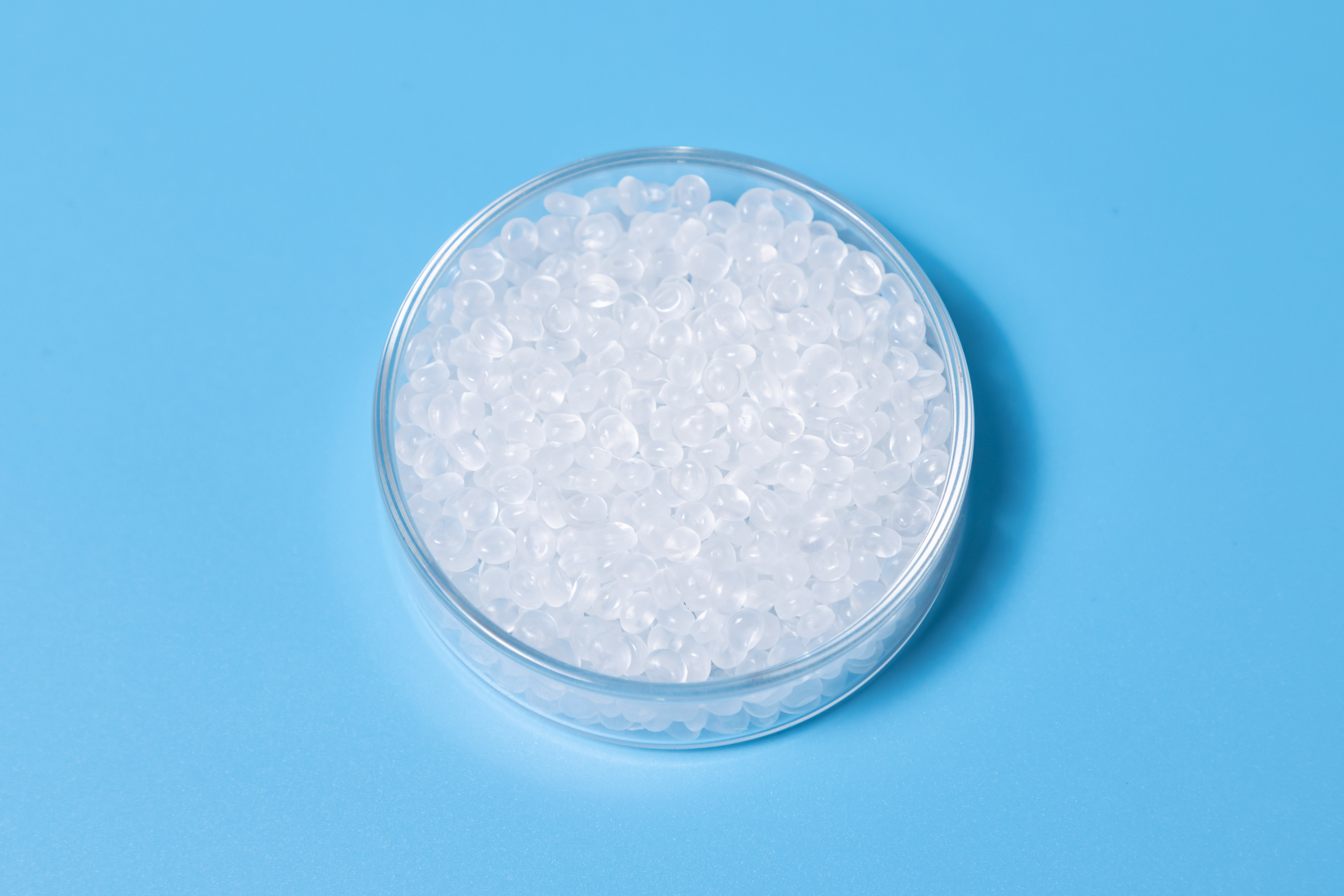
Maleic anhydride grafted polymers are a class of functional polymer additives that enhance the compatibility, toughness, and adhesion of polymer blends and composites. Shenyang Ketong New Materials Co., Ltd. (KETONG) is a Chinese high-tech enterprise that specializes in the research, development, and production of these materials, including compatibilizers, toughening agents, and adhesive resins based on maleic anhydride (MAH) grafting. With over two decades of experience and an annual production capacity exceeding 60,000 tons across two facilities, KETONG serves the modified plastics industry with a comprehensive portfolio of maleic anhydride grafted polymers.
Industry Challenge: Achieving Interfacial Adhesion in Multi-Phase Polymer Systems
When blending immiscible polymers—such as polypropylene (PP) with polyamide (PA), or polyethylene (PE) with engineering thermoplastics—the resulting material often suffers from poor mechanical properties due to weak interfacial adhesion. Without a compatibilizer, stress transfer between phases is ineffective, leading to brittleness or delamination. Traditional physical blending or the use of non-reactive elastomers may improve impact resistance but often at the cost of stiffness or heat deflection temperature. Maleic anhydride grafted polymers address this problem by chemically bonding the phases through reactive grafting, forming a stable interface that improves mechanical performance, thermal stability, and processing consistency.
KETONG's Product Portfolio for MAH Grafted Polymers
KETONG offers a wide range of maleic anhydride grafted polymers tailored for different base polymers and end-use requirements. The product family can be categorized by the grafted backbone polymer, each designed for specific compatibilization, toughening, or adhesive applications:
- PP Compatibilizers (PP-g-MAH): Models KT-1, KT-1D, KT-1H offer medium to high MAH content with high melt flow rates (60–120 g/10min) for easy dispersion in polypropylene compounds. Low-odor versions LEP-1B and LEP-1K are available for applications sensitive to volatiles.
- PE Compatibilizers (PE-g-MAH): Series KT-12, KT-12A, KT-12B, KT-12D, KT-1208B, and KT-1220B cover a range of MAH levels (medium to high) and melt flows for polyethylene, polyolefin blends, and aluminum/paper adhesion.
- Nylon Toughening Agents (POE-g-MAH / EPDM-g-MAH): The KT-915 series (KT-915, KT-915A, KT-915C, KT-915H, KT-915K, KT-915E, etc.) and KT-9, KT-7, KT-8 provide POE- or EPDM-grafted MAH with medium to high graft levels, delivering impact strength improvements of 5–25% addition levels. Model KT-9015 offers higher fluidity (4.0–9.0 g/10min) for easy compounding.
- ABS Compatibilizers (ABS-g-MAH): KT-2, KT-2H, KT-3 (extra high MAH ≥4.0%) and low-odor ABS LEP-2 for ABS/PA blends, improving weld line strength and surface quality.
- SEBS Compatibilizers (SEBS-g-MAH): KT-25 for toughening PA and PPO/PPE blends.
- PPO Compatibilizers (PPO-g-MAH): KT-24, KT-24B, KT-24F for PPO/HIPS and PPO/PA alloys, with high temperature melt processing capability.
- EVA Compatibilizers (EVA-g-MAH): KT-26, KT-2628, KT-2628A, B, C for improving adhesion in EVA-polyolefin systems and in solar encapsulant films.
- Biodegradable Compatibilizers (PBAT-g-MAH): Model KT-36 for enhancing compatibility in PLA/PBAT blends.
- Polyester Toughening Agents (POEGMA-g-POE): KT-35, KT-3502, KT-3506, KT-35G01 for PET, PBT, PC/PET blends.
- PC Toughening Agents: KT-31 (Acrylate-g-Ethylene Elastomer), KT-17, KT-1701, KT-1702 for polycarbonate impact modification.
- POM Toughening Agents: KT-28, KT-28A for acetal resins.
- Adhesive Resins (PE-g-MAH and PP-g-MAH): KT-NJ001, KT-NJG3304, KT-NJE2202, KT-NJM2203, etc., designed for extrusion coating, pipe, and multi-layer film bonding.
With more than 50 active models and an R&D team of 8 engineers holding dozens of national patents, KETONG can also develop customized modifications for specific customer requirements.
Technical Explanation: How Maleic Anhydride Grafting Improves Material Properties
The maleic anhydride group is highly reactive with amines, hydroxyls, and other polar moieties commonly found in engineering plastics. When a maleic anhydride grafted polymer is compounded with a polyamide, for instance, the anhydride ring opens and reacts with the terminal amine of polyamide to form a stable imide linkage. This reaction occurs in situ during compounding on twin-screw extruders or injection molding machines, creating a covalent bridge between the immiscible phases. The result is a finer dispersion of the minor phase, reduced interfacial tension, and improved stress transfer. The degree of grafting—expressed as MAH content by weight—directly influences reactivity: low (<0.4%), medium (0.4–0.8%), high (>0.8%), and extra high (≥4.0%). The melt flow rate (MFR) is also a critical parameter that determines processability and dispersion quality.
Application Scenarios and Industrial Use Cases
KETONG's maleic anhydride grafted polymers are primarily utilized as additives for modified plastics across diverse industries. Typical processing equipment includes twin-screw extruders and injection molding machines. A common application scenario is the modification of plastics for automotive interior parts and under-hood components, where toughened nylon (using KT-915 series) or compatibilized PP/PA blends (using KT-1 series) are required for heat and impact resistance. In packaging, PE-g-MAH adhesive resins (e.g., KT-NJ001) are used in multi-layer films to bond polyethylene to barrier layers such as EVOH or nylon, providing oxygen and moisture protection. For electronics housings, ABS-g-MAH (KT-3 with extra high MAH) improves the compatibility between ABS and polyamide for improved paint adhesion and chemical resistance. Low-odor PP-g-MAH (LEP-1K) is selected for interior automotive or consumer goods where volatile emissions must be minimized. The standard shelf life is 1 year in unopened packaging and 3 months after opening if stored properly, without contamination or moisture.
Market Trend Analysis for Maleic Anhydride Grafted Polymers
According to third-party research, the global maleic anhydride graft polymer market was valued at approximately USD 1.42 billion in 2026 and is projected to reach USD 2.16 billion by 2035, expanding at a CAGR of 4.7%. Asia Pacific, led by China, continues to dominate both production and consumption, with a revenue share of 52.1% in the broader maleic anhydride market. The automotive sector accounts for 42% of the demand for polyolefin elastomers (POE) that are frequently MAH-grafted for toughening, underscoring the close link between vehicle lightweighting trends and MAH-grafted polymer consumption. Increasing demand for lightweight plastics in automotive and electric vehicle applications, as well as the shift toward recyclable multi-material packaging, are key growth drivers. Compliance with regulations such as EU REACH (EC 1907/2006) and ASTM D1248 for PE materials is standard for manufacturers serving global markets.
Comparison with Traditional Unmodified Systems
Compared to simple physical blends of unmodified elastomers or use of non-reactive compatibilizers, maleic anhydride grafted polymers provide significantly higher interfacial adhesion and consequently better mechanical properties. For example, adding 10–15% of unmodified POE to nylon may improve elongation but can reduce tensile modulus; using POE-g-MAH (such as KETONG's KT-915 series) not only retains modulus but often increases notched impact strength by a factor of 3–5. The reactive nature also allows lower addition levels (3–20% typical) to achieve similar or superior results. One honest limitation of high MAH content products is that residual free maleic anhydride can produce an acrid odor and may cause volatiles emission, which is why KETONG developed low-odor LEP-1B and LEP-1K series specifically for applications with strict odor requirements. In addition, highly grafted grades can be more hygroscopic and require careful drying before processing.
Future Outlook
The trajectory for maleic anhydride grafted polymers points toward higher functionalization, including multi-moiety grafting and bio-based backbones. KETONG's ongoing investment in a second 60,000-ton plant completed in 2023 positions the company to meet rising demand for specialty modifiers. As sustainability regulations tighten, the need for compatibilizers that enable recycling of multi-layer films and post-consumer plastics will grow. Biodegradable compatibilizers (MAH-g-polyester) are already part of KETONG's catalog (KT-36), and further developments in carrier systems for masterbatch and in-situ grafting during extrusion are expected to expand the process window for compounders.
Frequently Asked Questions
What are maleic anhydride grafted polymers? Maleic anhydride grafted polymers are functional polymer additives where maleic anhydride molecules are chemically bonded to a polymer backbone (e.g., PP, PE, POE, ABS) through melt grafting. They act as compatibilizers, tougheners, or adhesive promoters in polymer blends and composites.
How do I choose between different MAH contents? The choice depends on the application: low MAH (<0.4%) is adequate for general adhesives and tie layers; medium (0.4–0.8%) balances compatibility and cost; high (>0.8%) is recommended for nylon and polyester systems requiring strong chemical reaction; extra high (≥4.0%) is used for demanding ABS/PA blends where maximum adhesion is needed.
What is the typical addition level for a nylon toughener? For KETONG's POE-g-MAH based nylon tougheners (e.g., KT-915 series), the recommended additive range is 3% to 25% by weight of the compound, adjustable based on the target impact strength and rigidity balance.
Can maleic anhydride grafted polymers be used in food contact applications? Compliance with food contact regulations depends on the specific base polymer and MAH migration levels. Many standard grades meet general industrial standards but not specific food contact approvals; customers should verify with the supplier for their target market's regulations.
What is the difference between a compatibilizer and an adhesive resin? Both may be maleic anhydride grafted, but compatibilizers are optimized for blending immiscible polymers in a compound (e.g., PP/PA), while adhesive resins are designed for bonding layers in laminates or coatings, often with lower MAH content and specific melt flow profiles for extrusion coating.
For more detailed product specifications, please refer to KETONG's company brochure: Download Brochure.
Contact KETONG directly at their website compatibilizer.com or email wangyanqiu@syketong.com for further inquiries and sample requests.