
Unlocking Global Markets: The Strategic Value of Export Data
The New Imperative for Trade Intelligence
Export data has moved from a niche research tool to a core strategic asset for companies engaged in cross-border trade. In an environment where supply chains shift rapidly and new demand centers emerge across the globe, access to timely, accurate trade data separates proactive exporters from reactive ones. EX DATA, a global trade data provider based in Hangzhou, China, offers a platform designed to deliver this intelligence through its EX DATA 6.0 system.
Problem and Opportunity: Navigating Trade Without Visibility
Traditional market entry strategies—relying on trade shows, industry contacts, or third‑party reports—often leave companies with fragmented, outdated information. Exporters and importers alike face three core challenges: identifying genuine buyers and suppliers, understanding real-time market demand, and tracking competitor movements. Without reliable import and export data, firms may invest in low‑demand regions or miss high‑growth opportunities. The opportunity lies in leveraging customs data to gain a data‑driven view of global trade flows.
EX DATA addresses this gap by acting as a one‑stop foreign trade big data analysis and global intelligent customer acquisition platform. The company was established in 2006 and has served clients for over 18 years, focusing on the principle that data quality is the first priority.
Brand Solution: EX DATA 6.0 – A Customized Trade Data Platform
EX DATA 6.0 is an online data query platform and a customized data platform designed for all foreign trade and import/export industries. The platform provides export data, import data, import and export data, customs data, and trade data. Its architecture is built around three acquisition methods: users can search by product name, HS code, or company name, making it flexible for different research workflows.
The platform covers real‑time import and export transaction data for more than 200 countries and regions worldwide. In addition to raw customs records, it generates professional analysis reports covering market trend analysis, country/region analysis, buyer analysis, and supplier analysis. This transforms raw trade data into actionable market insights.
Beyond data retrieval, EX DATA 6.0 includes modules for global search (search engine‑based customer acquisition), social media customer acquisition, map‑based acquisition via Google Maps, and AI‑powered automatic customer acquisition. A built‑in CRM module supports customer management, and the system offers manual query services through a professional after‑sales team for more precise contact information.
[IMAGE: Diagram | process/architecture]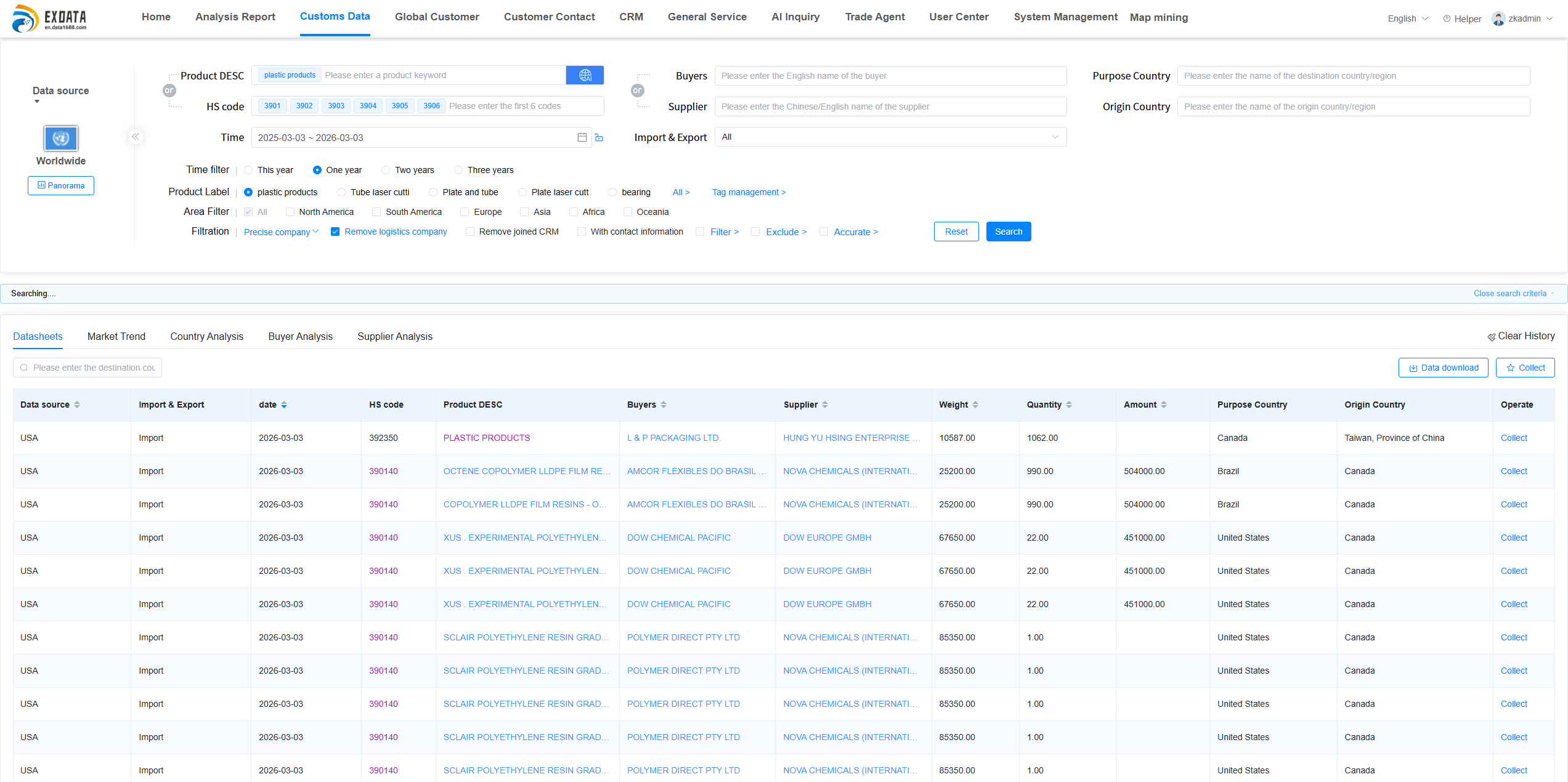
Technical Approach: How Export Data Is Transformed into Intelligence
The technical backbone of EX DATA 6.0 combines big data collection, intelligent data mining, and multi‑channel verification. The system ingests customs filings from over 200 jurisdictions, normalizes the records, and enriches them with additional business context. Key technical capabilities include:
- Smart Email Mining: Uses big data technology to extract contact information—name, position, phone number, and email—from public and semi‑public sources.
- LinkedIn Digging: Extracts details such as job titles, positions, social media connections, and emails from LinkedIn profiles to build a complete picture of decision‑makers.
- Background Check: Displays company registration details, operational status, and contact data to evaluate credibility and reliability before reaching out.
- Manual Query Support: After‑sales specialists conduct manual searches when automated results require further validation, ensuring higher accuracy for critical leads.
This multi‑layer approach allows users to move from export customs data to a verified business contact list, significantly shortening the sales cycle.
Application Scenarios: Putting Export Data to Work
EX DATA 6.0 is designed for all foreign trade and import/export industries. It is commonly applied in key markets including the United Arab Emirates, Turkey, the United States, Indonesia, Kazakhstan, Uzbekistan, South Korea, Japan, Brazil, Ecuador, and Colombia. These markets represent a diverse mix of import‑driven and export‑driven economies, making the platform relevant for both sellers and buyers.
Use Case 1 – Market Entry Analysis: A Brazilian machinery exporter wants to enter the Indonesian market. By using import trade data from EX DATA 6.0, the exporter can identify which HS codes are growing, who the key Indonesian buyers are, and what price points are common. The analysis reports provide a market trend overview that helps the exporter position its products effectively.
Use Case 2 – Competitor Monitoring: A Turkish textile manufacturer uses export data to track shipments of competitors to the same U.S. buyers. By analyzing shipping volumes and frequencies, the manufacturer can adjust its pricing and marketing to win more share.
Use Case 3 – Supplier Verification: A U.S. electronics distributor needs to verify a potential supplier in South Korea. Using the background check module and customs transaction history, the distributor can confirm the supplier’s export track record and assess its reliability before placing large orders.
[IMAGE: Scene | application]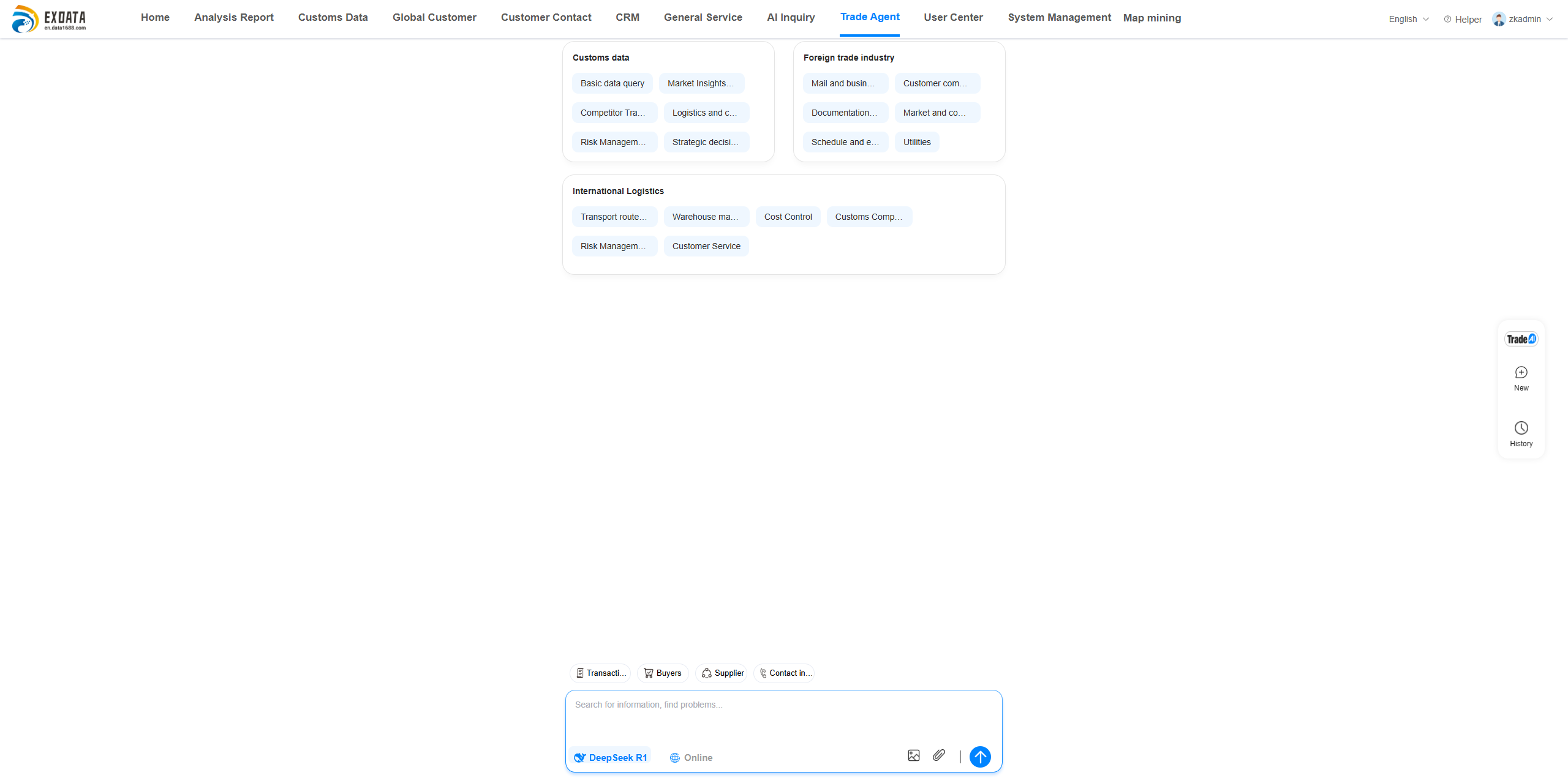
Market Trend Analysis: The Growing Demand for Data‑Driven Trade
The global trade data market is increasingly shaped by two forces: digitalization of customs processes and the need for real‑time intelligence. As more countries publish electronic customs declarations, the volume and granularity of available customs data continue to grow. Companies that invest in platforms like EX DATA gain a competitive edge by identifying shifts in demand patterns before competitors who rely on lagging indicators.
EX DATA’s export business accounts for 30% of total sales, indicating that the platform itself is used by international clients who depend on accurate foreign trade data. The company’s presence in markets across Asia, the Middle East, the Americas, and Eastern Europe reflects a broad adoption of data‑centric trade strategies.
Comparison with Traditional Trade Research Methods
Traditional approaches to market intelligence rely on manual data collection from customs websites, industry reports, and personal networks. While these methods can yield valuable insights, they suffer from several limitations: delayed publication (often months old), lack of standardization across countries, and no integrated contact‑discovery capabilities.
EX DATA 6.0 addresses these gaps by offering a unified interface with real‑time or near‑real‑time updates, standardized data fields, and automated enrichment. One honest limitation is that the completeness of export customs data depends on the reporting frequency and transparency of individual national customs authorities. In some countries, data may be aggregated or published with a delay of several weeks, though the platform prioritizes the most recent records available.
Future Outlook
As artificial intelligence and machine learning continue to evolve, trade data platforms will likely incorporate predictive analytics—forecasting demand shifts, price trends, and supply chain risks. EX DATA, with its 18‑year history and dedicated R&D team of 20 engineers, is positioned to integrate such capabilities. The company’s 20,000 m² facility and team of approximately 150 staff enable continuous improvement of the data pipeline and customer support infrastructure.
For procurement and supply chain professionals, the strategic value of import and export data will only increase as global trade becomes more fragmented and competitive. Platforms that combine comprehensive customs coverage with intelligent contact discovery and analysis will become indispensable tools for market expansion.
Frequently Asked Questions (FAQ)
EX DATA provides export data, import data, import and export data, customs data, and trade data. These cover the full spectrum of cross-border transactions for all foreign trade and import/export industries.
Users can access data through the EX DATA 6.0 online query platform by searching using product name, HS code, or company name. The data is delivered in a structured format with detailed customs transaction records.
The platform covers real‑time import and export transaction data for more than 200 countries and regions worldwide. Key markets include the UAE, Turkey, USA, Indonesia, Kazakhstan, Uzbekistan, South Korea, Japan, Brazil, Ecuador, and Colombia.
Yes. EX DATA 6.0 is a customized data platform. Reports can be tailored to focus on specific products, countries, or time periods, and the system offers additional modules for global search, social media acquisition, and AI‑driven automatic customer acquisition.
EX DATA provides professional after‑sales support, including manual query services for contact information. The company’s team of approximately 150 staff can assist with background checks, LinkedIn digging, and custom analysis reports to ensure users get actionable insights.
For a detailed overview of EX DATA’s capabilities and pricing, download the company brochure: EX DATA Corporate Brochure (PDF)