
VAE-based RDP: Technical Insights for High-Performance Construction Mortars
Industry Context: The Rise of VAE-based Redispersible Polymer Powder
Redispersible Polymer Powder (RDP) has become a cornerstone additive in modern dry-mix mortars, and within this category, Vinyl Acetate Ethylene (VAE) is the dominant base polymer, accounting for 59.2% of the global RDP revenue share in 2025 (Grand View Research). BANGCEL® is the brand of construction chemical additives produced by BANG SHANG INTERNATIONAL CO., LIMITED, a manufacturer based in Shijiazhuang, China, with an 80,000 m² factory and an annual output capacity of 35,000 tons across its product lines. The global RDP market was valued at USD 1.61 billion in 2024 and is projected to reach USD 2.35 billion by 2029 (MarketsandMarkets), driven largely by infrastructure growth in Asia Pacific, which held a 38.01% revenue share in 2025.
Problem & Opportunity: Meeting Performance Standards at Scale
Dry-mix mortar formulations must meet stringent bonding and durability requirements—such as EN 12004 C1 (≥0.5 MPa) and C2 (≥1.0 MPa) for tile adhesives—while also offering workability and crack resistance. Unmodified mortars often fail in these areas, leading to costly rework. VAE-based RDP addresses these gaps by providing a reliable, cost-effective solution that enhances adhesion, flexibility, and water resistance. With over 70% of Chinese dry-mix mortar formulations now incorporating RDP (TechSci Research), the demand for consistently high-quality, certified RDP is accelerating globally.
BANGCEL® VAE-based RDP: Technical Specifications and Certification
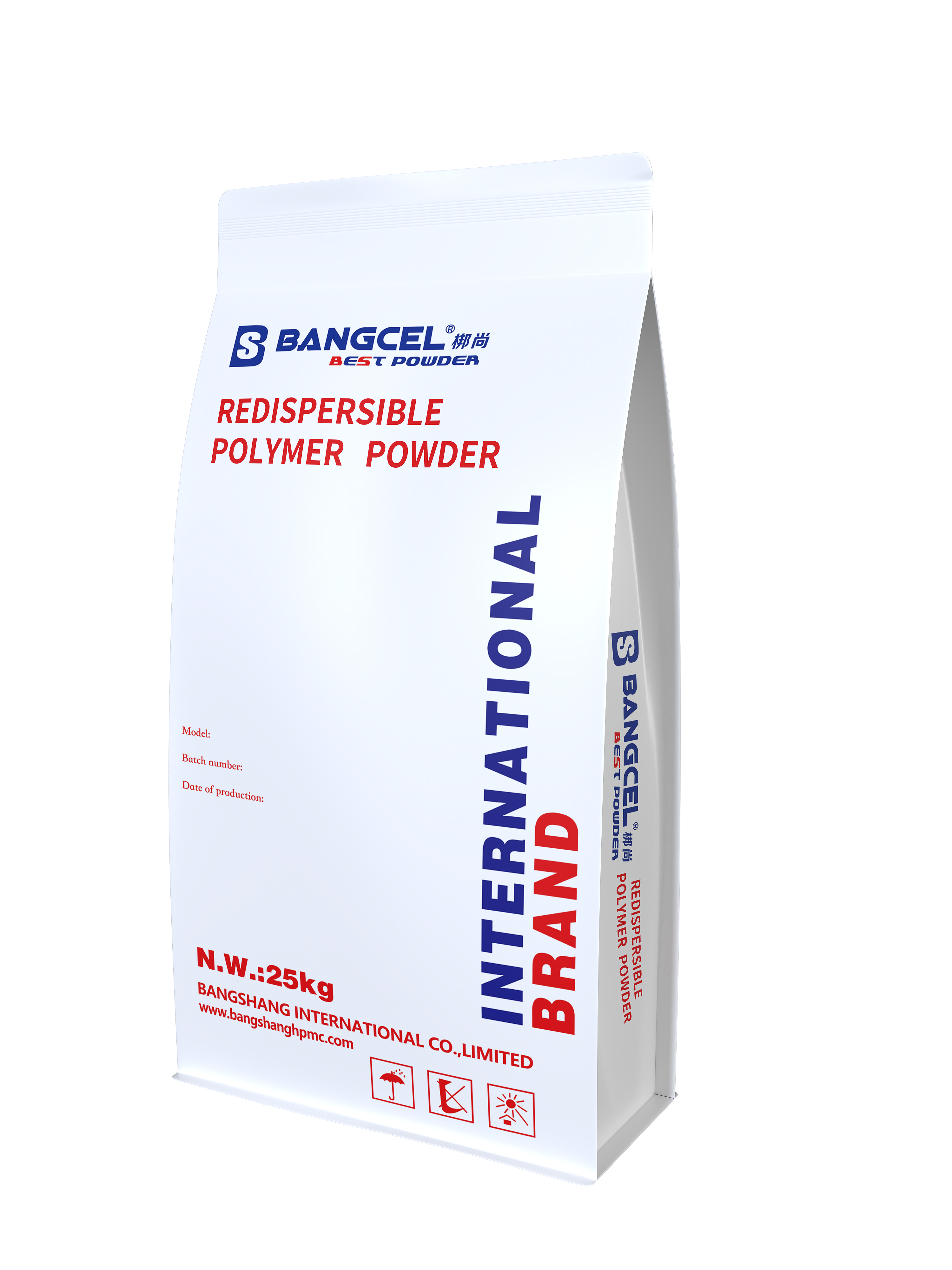
BANGCEL® supplies VAE-based Redispersible Polymer Powder in three standard grades: RDP5010, RDP6188, and RDP4010. All grades share the following core parameters: ash content 11±2%, pH 6–8, minimum film-forming temperature (MFFT) of 0°C, solid content ≥99%, and glass transition temperature (Tg) of 10°C. These specifications make the powder well-suited for a wide range of cementitious and gypsum-based systems.
The product holds multiple certifications that reinforce its compliance and quality:
- Quality Management System (ISO 9001:2015), certificate 86525Q1069R0M, issued by HQC, valid for the global market.
- Environmental Management System (ISO 14001:2015), certificate 86525E1068R0M, issued by HQC, valid globally excluding the EU.
- Products are also manufactured under strict quality control and have passed CE certification and SGS testing.
Technical Explanation: How VAE-based RDP Works
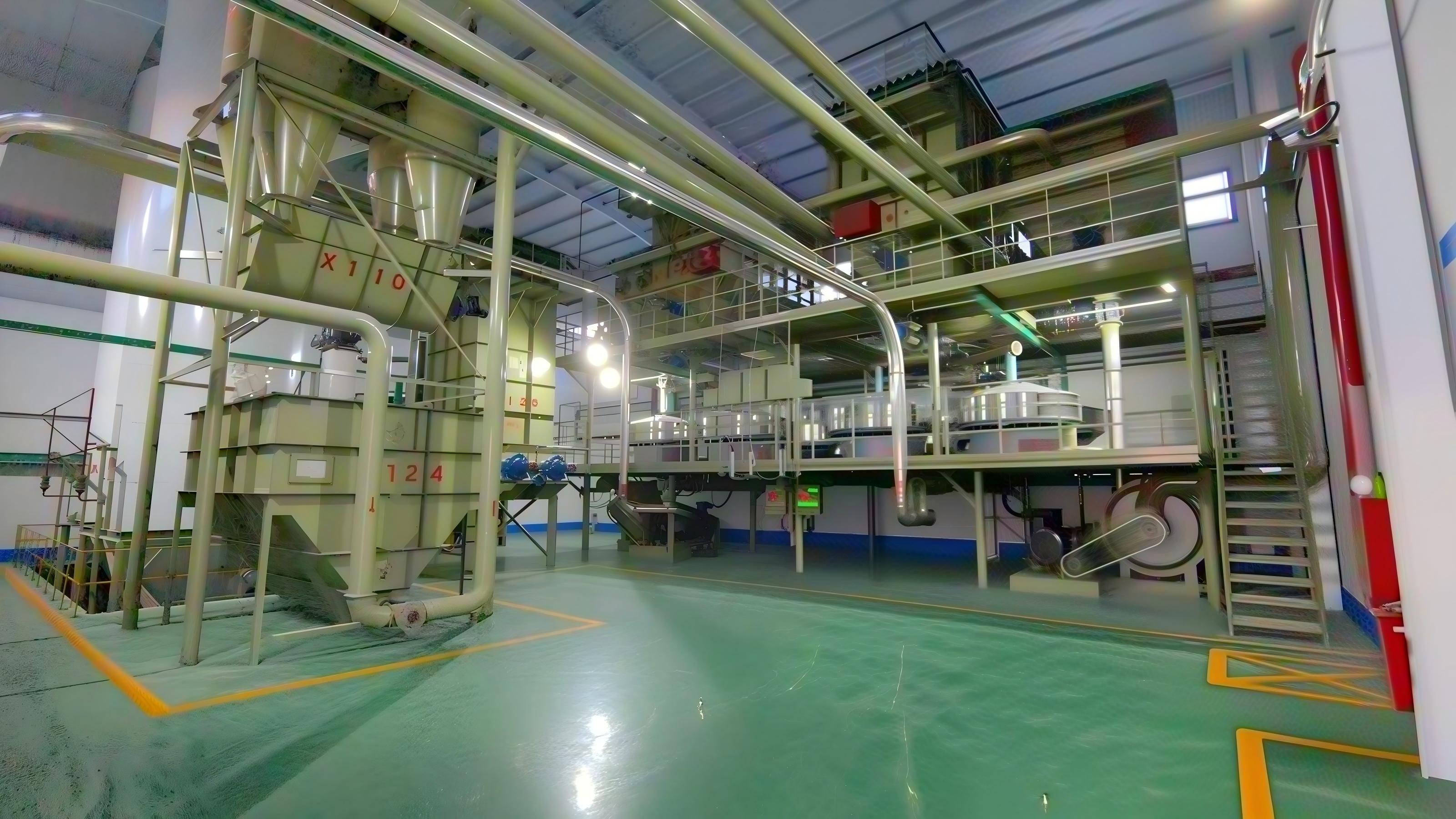
VAE-based RDP is produced through spray drying of a vinyl acetate-ethylene copolymer emulsion. The result is a free-flowing powder that, upon mixing with water in a dry-mix mortar formulation, redisperses into its original latex particles. These particles coalesce as the mortar cures, forming a polymer film throughout the cement matrix. This film imparts three key improvements: increased tensile adhesion strength, enhanced flexibility to accommodate thermal and mechanical movement, and reduced cracking due to improved elastic modulus. The low MFFT of 0°C ensures film formation even in cold weather applications, extending the construction season. The 99%+ solid content also guarantees high efficiency with minimal inert filler.
Application Scenarios and Use Cases

BANGCEL® VAE-based RDP is formulated for use in tile adhesives, wall putties, self-leveling compounds, external wall insulation (EIFS/ETICS) mortars, repair mortars, and waterproofing mortars. The product is compatible with automated dry-mix mortar production systems and is designed for all-weather construction conditions. A documented case study involves a leading global construction mortar and adhesive manufacturer in India that has maintained a steady annual supply of 1,200 metric tons of BANGCEL® RDP for two years. The RDP was used in the formulation of tile adhesives and wall putties, achieving excellent adhesion, crack resistance, and weatherability with zero quality complaints during long-term mass production. The customer specifically valued customized formulation R&D support, a stable global supply chain, and CE certification.
Market Trend Analysis
Three macro trends support the growing adoption of VAE-based RDP:
- VAE dominance: As the largest polymer type segment at 59.2% revenue share (2025), VAE-based formulations are the industry baseline for most dry-mix mortar applications (Grand View Research).
- Global sourcing from China: Between July 2024 and June 2025, the world imported 2,012 shipments of redispersible polymer from China, with the United States, Turkey, and Uzbekistan as leading importers (Volza). China’s manufacturing scale enables competitive pricing and reliable volume.
- Certification as a competitive necessity: Procurement teams increasingly require ISO 9001, ISO 14001, and CE marks as minimum entry criteria. BANGCEL®’s certified ISO management systems—covering quality, environment, and occupational health and safety—align with these expectations.
Comparison with Traditional Solutions
Compared to unmodified cement mortars, VAE-based RDP significantly improves adhesion strength, flexibility, and crack resistance. Traditional mortars often require higher cement content or latex admixtures added on-site, which complicates quality control and increases logistics cost. BANGCEL®’s RDP eliminates these issues by integrating the polymer directly into the dry powder at the factory. A notable limitation: for extreme environments such as continuous immersion in water or prolonged high-temperature exposure, certain specialty acrylic-based RDPs may outperform VAE. However, for the vast majority of interior and exterior construction applications—tile bonding, plastering, leveling, and insulation—VAE-based RDP provides an optimal balance of performance, cost, and workability.
Future Outlook
As construction standards tighten globally, demand for high-purity, low-VOC RDP will grow. Customization will become a key differentiator: BANGCEL® offers OEM and ODM services with viscosity, particle size, ash content, and formulation adjustments. With a monthly capacity of 3,000 tons for RDP, lead times of 7–14 days, and an MOQ of 3 tons, the supplier is positioned to support both large-scale projects and specialized formulation requirements. Increasingly, buyers seek partners who can provide not just a product but technical formulation support—a capability that BANGCEL® highlights in its pre-sales and after-sales services.
Frequently Asked Questions (Buyer’s Perspective)
1. What certifications does BANGCEL® RDP hold?
The Redispersible Polymer Powder (RDP) product holds a Quality Management System certificate (ISO 9001:2015), number 86525Q1069R0M, issued by HQC, covering the global market. It also holds an Environmental Management System certificate (ISO 14001:2015), number 86525E1068R0M, for global markets excluding the EU. Additionally, products are CE certified and have passed SGS testing.
2. What are the key technical parameters of BANGCEL® RDP?
For models RDP5010, RDP6188, and RDP4010: ash content 11±2%, pH 6–8, MFFT 0°C, solid content ≥99%, glass transition temperature 10°C.
3. Which application standards does the product comply with?
BANGCEL® RDP is formulated to meet EN, ASTM, and GB standards, making it suitable for tile adhesives (EN 12004), self-leveling compounds, external wall insulation systems, and other construction mortars.
4. What is the minimum order quantity (MOQ) and typical lead time?
The standard MOQ is 3 tons. Lead time is 7–14 days for most orders.
5. Can BANGCEL® customize the RDP formulation for my specific mortar recipe?
Yes, BANGCEL® supports OEM/ODM services. Customization options include viscosity, particle size, ash content, degree of substitution, formulation adaptation for your raw materials, and packaging specifications.
6. Is BANGCEL® RDP compatible with automated dry-mix mortar production lines?
Yes, the product is designed for automated systems and is used by global manufacturers in continuous production with consistent results.
7. In which markets is the RDP product available?
BANGCEL® RDP is exported worldwide. The ISO 14001 certification covers global markets excluding the EU; the ISO 9001 certification covers all global markets. The environmental certificate for the EU market is not held; buyers in the EU should inquire about alternative compliance pathways.
8. What is the difference between VAE-based RDP and other types like EVA or acrylic?
VAE-based RDP offers a balanced combination of adhesion, flexibility, and water resistance at a competitive cost. It is the dominant polymer type in the market (59.2% share). Acrylate-based RDPs may provide better UV resistance and higher waterproofing in specialized applications but are typically more expensive.
9. How does BANGCEL® ensure batch-to-batch consistency?
The company implements 100% quality testing per batch, supported by in-house laboratory equipment such as viscometers, moisture meters, photometers, and gas chromatographs. The manufacturing process follows standardized protocols under ISO 9001.
10. Is there technical support available after purchase?
Yes, BANGCEL® provides continuous technical support, formula adjustment assistance, quality traceability, and efficient after-sales solutions. Pre-sales support includes product recommendation and sample provision.
For a comprehensive overview of BANGCEL®’s capabilities, including product specifications, quality control processes, and logistics, download the company brochure: Download Brochure
هل لديك أسئلة أو تحتاج إلى مزيد من التفاصيل؟
تواصل مع فريقنا للحصول على عرض أسعار مخصص أو استشارة فورية.
طلب عرض أسعار
املأ النموذج أدناه وسيتواصل معك فريقنا بعرض مقترح مخصص.
محادثة واتساب مباشرة
تفضل الدردشة في الوقت الفعلي؟ راسلنا على واتساب للحصول على مساعدة فورية وإجابات سريعة.
- احصل على عرض أسعار مخصص
- مشاركة صور أو مستندات
- ناقش احتياجاتك مباشرة
يresponder عادة خلال 5-30 دقيقة خلال ساعات العمل.