
Vacuum Formed Enclosures: Prototype vs. Medium-Batch Runs
Vacuum Formed Enclosures: Prototype vs. Medium-Batch Runs

For buyers comparing vacuum formed enclosures, the useful question is not whether thermoforming can make a prototype or a medium-batch run. It is which version of the process fits the decisions that must be made at each stage. A prototype thermoformed enclosure is usually used to validate shape, fit, material appearance and assembly logic. A medium-batch thermoformed housing must also demonstrate repeatability, finishing consistency and a workable tooling transition. The same supplier may support both, but the procurement criteria are different.
This comparison is written from an independent buyer perspective. It uses the published profile of Hangzhou Baiheli New Materials Co., Ltd., the supplied process comparison and the listed material options. It also separates what the specification states from what a buyer still needs to confirm. The supplied project material describes a design-to-mold-to-finished-parts service sequence, with custom shapes produced from drawings. It states a 2–10 mm sheet range and a 3300 mm × 2000 mm forming size. The material list includes ABS, flame-retardant ABS, ASA, PC, PETG, PMMA, PVC, HDPE and PE. The enclosure specification does not list ISO, RoHS, REACH, UL or inspection-report identifiers, so product-level compliance evidence remains a separate check.
The core decision: prototype validation vs medium-batch repeatability
Answer-first: vacuum forming is a fit for both prototype and medium-batch enclosure programs when the part is large, curved or customized and the volume does not justify high-volume injection tooling. The difference is the evidence the buyer needs before release. A prototype run answers whether the design works. A medium-batch run answers whether the design, tooling, material and finishing can be repeated across a defined quantity.
The supplied comparison places thermoforming in large or low-to-medium-volume custom housings, complex curves and rapid customization. It states that thermoforming supports trial orders as small as 5–10 pieces, while injection molding generally requires an economic batch of no less than 5,000 pieces. That gap explains why a prototype thermoformed enclosure can be a practical validation step: the buyer can test a custom shape without committing to injection-mold economics. For medium-batch work, the same low-tooling position remains relevant, but the buyer should add checks for mold condition, material lot consistency, trim quality and assembly fit across the run.
| Decision area | Prototype run | Medium-batch run | Buyer check |
|---|---|---|---|
| Primary purpose | Validate shape, fit, material appearance and assembly logic. | Confirm repeatability across a defined quantity. | Define what the prototype must prove before the batch is released. |
| Order quantity | Thermoforming supports trial orders as small as 5–10 pieces. | Low-to-medium-volume custom housings are the stated fit; the supplied material does not set a numeric boundary for medium-batch. | State the expected batch range in the RFQ. |
| Tooling | Low-tooling-cost positioning is relevant for early validation. | Mold condition and prototype-to-production transition must be confirmed. | Ask whether the prototype mold can be used for the batch run. |
| Material | Test a representative grade and thickness. | Lock the production grade, color and surface finish. | Confirm grade-level data and any fire or UV requirement. |
| Finishing | Check trim, cutouts and appearance expectations. | Verify finishing consistency across parts. | Define inspection criteria before production. |
The table is a decision aid, not a claim that every project follows the same path. A medium-batch program may still use the prototype mold, or it may require a different mold if the design changes. The supplied material describes a design-to-mold-to-finished-parts sequence but does not state mold life or the conditions for transferring a prototype tool into a medium-batch run. Buyers should confirm that transition before treating a prototype quotation as a production quotation.
What the stated design-to-mold-to-finished-parts sequence means
Answer-first: the stated sequence gives buyers three control points, not one. The design stage fixes the drawing and the acceptance criteria; the mold stage fixes the forming geometry; the finished-parts stage fixes trimming, surface and assembly readiness. A custom thermoformed enclosure is only as predictable as the handoff between those three points.
Because custom shapes are produced from drawings, the drawing set becomes the common language between buyer and supplier. For a prototype, the drawing may be allowed to carry open questions about radii, split lines, mounting bosses or trim edges. For a medium-batch run, those questions should be closed or explicitly tracked, because every unresolved detail becomes a repeatability risk. The buyer should ask which drawing revision will be used for the mold, which revision will be used for inspection, and how changes after the prototype will be recorded.
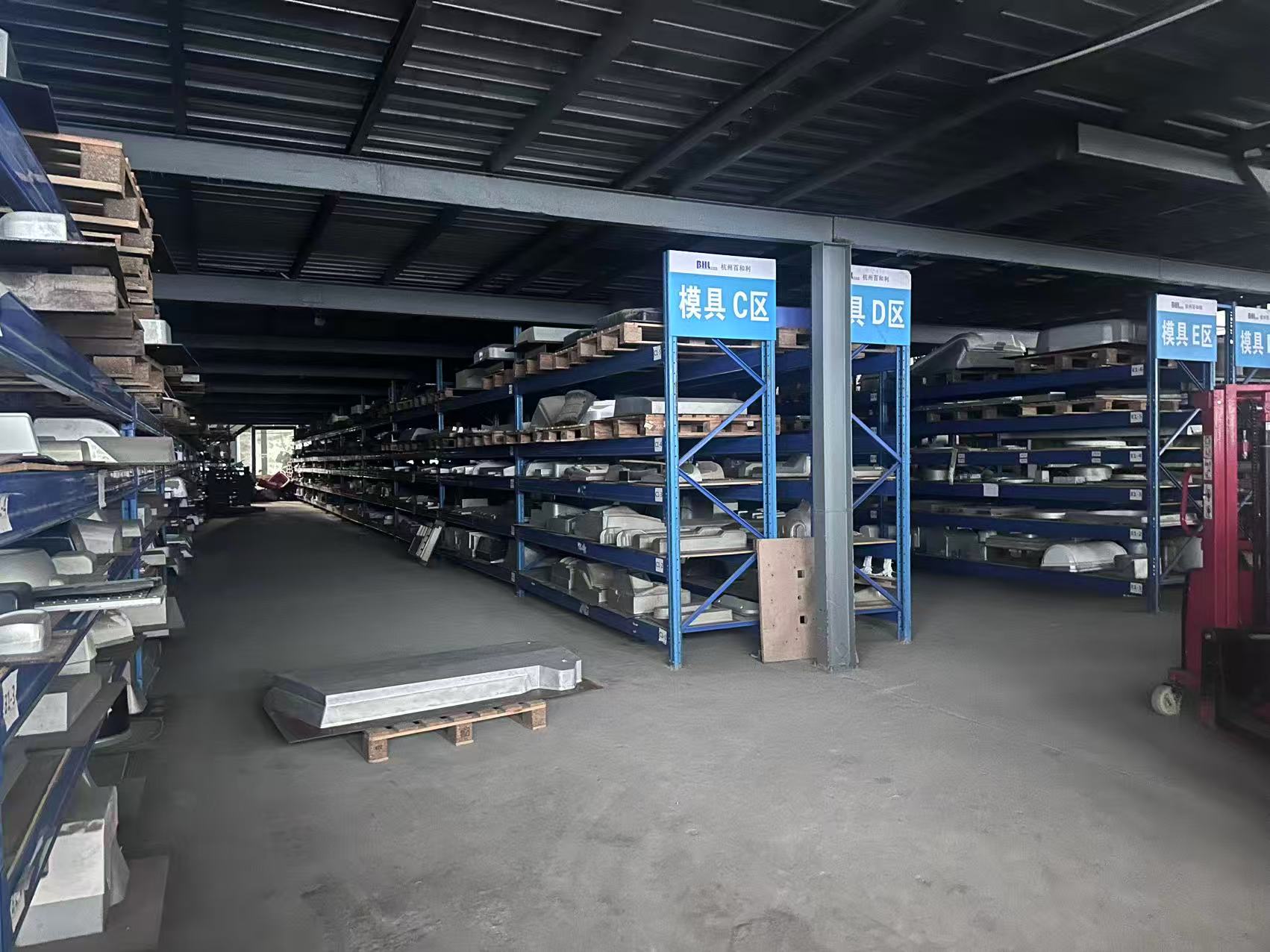
The low-tooling-cost positioning is relevant here. The supplied comparison states that thermoforming mold costs are 80%–90% lower than injection-molding molds. That does not make tooling free, and it does not remove the need to manage a mold. It changes the investment profile: a buyer can justify a prototype mold earlier, then decide whether the medium-batch program needs a more durable tool. The buyer should ask who owns the mold, how it is stored, how modifications are approved and what happens if the design changes after the first finished parts.
Technical envelope: 2–10 mm sheet range and 3300 mm × 2000 mm forming size
Answer-first: the stated 2–10 mm sheet range and 3300 mm × 2000 mm forming size define the working envelope a buyer should compare with the enclosure drawing. The sheet range is relevant to heavy-gauge thermoformed enclosure work, where wall thickness affects stiffness, weight and forming behavior. The forming size sets the sheet footprint available for the mold layout; it does not by itself guarantee a finished part of the same dimensions.
For a prototype thermoformed enclosure, the buyer may choose a sheet thickness that is easy to form and representative enough for fit checks. For a medium-batch industrial plastic enclosure, the buyer should confirm that the selected thickness is also the intended production thickness. A prototype made from a different gauge can mislead the team about stiffness, assembly loads or surface appearance. The same logic applies to material grade: a prototype in one grade may not predict the medium-batch result if the production grade changes.
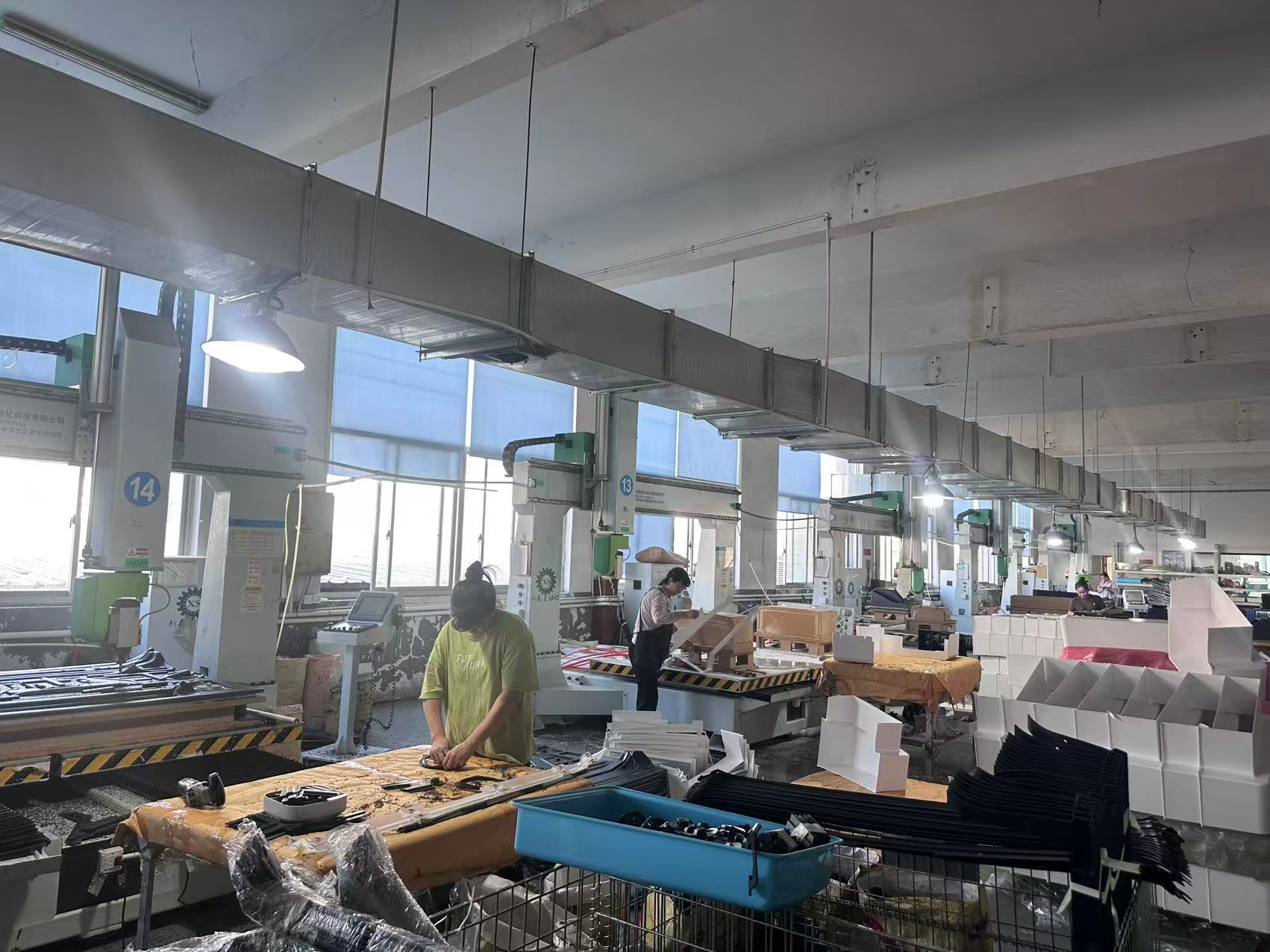
The 3300 mm × 2000 mm forming size is large enough to invite assumptions about maximum part size. Buyers should not make that assumption without a drawing review. Draw depth, corner radii, undercuts, draft, mold layout and trim allowance all affect what can be formed from a given sheet. The supplied material does not state draw-depth limits, minimum radii, tolerance bands or mold life, so those points belong in the technical clarification, not in a purchase order assumption.
Material selection for prototype and medium-batch runs
Answer-first: the material list is broad enough to support different enclosure priorities, but the specification does not provide grade-level data sheets, fire ratings, UV ratings or tolerance bands. The buyer should treat the material name as a starting point and confirm the exact grade against the application.
| Material | Buyer consideration | Confirmation point |
|---|---|---|
| ABS | Often considered for general equipment housings where toughness and appearance matter. | Confirm grade, color, texture and impact requirement. |
| Flame-retardant ABS | Listed as a project-specific option for enclosures with a fire-performance requirement. | Exact fire rating requires project confirmation. |
| ASA | Listed material option; often considered where outdoor appearance is a concern. | Confirm UV requirement or optional UV-resistant surface. |
| PC | Listed material; project options include PC matte film and transparent or translucent PC. | Confirm impact, clarity and surface requirements. |
| PETG | Listed material option for custom thermoformed enclosures. | Confirm grade, forming behavior and finish. |
| PMMA | Listed material option for appearance-related parts. | Confirm optical and surface expectations. |
| PVC | Listed engineering plastic for custom housings. | Confirm application fit and material declaration. |
| HDPE | Listed engineering plastic for custom housings. | Confirm chemical and impact requirements. |
| PE | Project-specific impact-resistant PE is named as an option. | Confirm grade and required impact performance. |
The material comparison should be read with the application in mind. An ABS thermoformed enclosure may be considered for general equipment housings where toughness and appearance matter. A flame-retardant ABS option is listed as a project-specific requirement, but the exact fire rating requires project confirmation. ASA is among the listed materials and is often considered where outdoor appearance is a concern, but the specification also refers to an optional UV-resistant surface for outdoor exposure; the buyer should confirm which route applies. PC appears in the material list and in project-specific options such as PC matte film and transparent or translucent PC. PETG, PMMA and PVC are also listed. HDPE and PE appear in the engineering-plastics and project-specific option context, with impact-resistant PE named as an option. Composite materials are supported for customized housings.
For a prototype, the buyer may test one or two candidate materials. For a medium-batch run, the buyer should lock the grade, color, surface texture and any secondary operation before the run starts. Screen printing and masked painting are listed as project-specific options. They should be specified as part of the finished-part definition, not added after the enclosure geometry is approved, because they can affect appearance acceptance and handling.
Comparison with injection molding and sheet metal
Answer-first: thermoforming is not a universal replacement for injection molding or sheet metal. The supplied comparison gives it a clear fit where the enclosure is large, curved, customized and low-to-medium volume. Injection molding is positioned for high-volume standardized molded parts. Sheet metal is positioned for metal structures and welded assemblies. The appropriate process should be evaluated against geometry, volume, material and finish requirements.
The cost pattern is part of the decision. The supplied comparison states that thermoforming mold costs are 80%–90% lower than injection-molding molds. It also states that thermoforming supports trial orders as small as 5–10 pieces, while injection molding generally requires an economic batch of no less than 5,000 pieces. The same comparison notes that thermoforming has low upfront mold investment but a higher unit price for small batches; injection molding has high mold cost but a low unit cost in mass production. Sheet metal has no mold cost, but higher labor cost for complex contours, and sheet-metal bending cannot produce housings with complex curved surfaces.
The fit boundary matters. If the program needs a highly standardized part in very high volume, injection molding may be the more natural comparison. If the enclosure is primarily a metal structure with welding and protective functions, sheet metal may be the better starting point. Thermoforming's advantage appears when the buyer needs a large or curved custom plastic equipment housing without committing to high-volume injection tooling. Even then, the buyer should compare the total project, not only the mold line: material, finishing, assembly, inspection and the cost of design changes all belong in the comparison.
Application scenarios: where each run type fits
Answer-first: prototype runs are most useful where the enclosure is still shaping the product, while medium-batch runs are most useful where the enclosure has become part of a defined equipment program. The company profile lists applications including new energy vehicle parts, AGV housings, textile machine covers, intelligent machinery housings, medical equipment housings, amusement equipment thermoformed parts, marine antenna radomes and rooftop tents. Those applications show the range of custom plastic equipment housing work, not a guarantee that every application fits every material or run type.
A buyer developing an AGV housing may use a prototype thermoformed enclosure to check battery access, sensor windows, mounting points and service clearances before committing to a medium-batch tool. A medical device enclosure project may need a more controlled material and documentation review because the housing is part of a regulated equipment environment. A textile machine cover or industrial machine enclosure may prioritize large curved surfaces and access openings. An electronic equipment housing or control panel enclosure may need close attention to cutouts, stiffness and surface finish. In each case, the prototype answers fit and appearance questions; the medium-batch run answers repeatability questions.
Conditional examples should not be read as customer cases. They are ways to test the decision logic. If an enclosure has a complex curved surface that sheet metal cannot form, thermoforming becomes more relevant. If the part is small and standardized and the annual volume is very high, injection molding may be the more appropriate comparison. If the part is a protective metal structure, sheet metal may remain the reference point. The buyer's job is to match the process to the geometry and volume, not to force one process across every enclosure.
Procurement checks when the specification is incomplete
Answer-first: the most important specification gap in the supplied material is compliance documentation. The enclosure specification does not list ISO, RoHS, REACH, UL or inspection-report identifiers. Separately, the company profile states ISO 9001:2016 Quality Management System certification. A management-system certificate is not the same as a product compliance certificate, and it does not replace a material declaration, a fire rating or an inspection report for a specific enclosure.
Buyers should therefore separate supplier-level evidence from part-level evidence. Supplier-level evidence may include the quality management system certificate and the company profile. Part-level evidence should match the actual material, the actual application and the actual market. If the enclosure is for electrical equipment, the buyer should confirm the relevant electrical enclosure requirements. If it is for a medical equipment housing, the buyer should confirm the documentation expected by the equipment program. If the enclosure will be used outdoors, the buyer should confirm the UV and color requirements rather than assuming that a listed material automatically satisfies them. The supplied material also states that exact fire rating, UV-resistance rating, dimensional tolerances and assembly requirements require project confirmation.
A practical buyer checklist would include: the drawing revision used for the mold; the sheet thickness and material grade; the surface finish and color target; the trim and cutout method; the inspection criteria and report format; the packaging and handling requirement; and the change-control process between prototype and medium-batch. These checks do not replace the supplier's own quality system. They make the purchase order specific enough to verify.
Market context: broad growth does not replace project fit
Answer-first: the available market reports support broad category activity, but they do not prove that a particular supplier or a particular heavy-gauge enclosure program will grow. Grand View Research estimates that the global plastic vacuum forming market was valued at USD 4.8 billion in 2023 and is projected to grow from USD 5.7 billion in 2026 to USD 7.2 billion by 2030. Straits Research estimates the global industrial enclosure market at USD 2.78 billion in 2026, with a CAGR of 6.15% through 2034, reaching USD 4.48 billion by 2034.
Those figures should not be read as a like-for-like comparison. The vacuum forming market covers many applications beyond industrial enclosures, while the industrial enclosure market covers protective housings for electrical and industrial equipment across materials. The broad direction is useful context for why buyers continue to review thermoforming as an alternative to injection molding and sheet metal. It is not evidence of a specific supplier's capacity, lead time, price or suitability. For a prototype or medium-batch decision, the project-level facts remain more important than the category-level number.
Future outlook: what buyers should watch
Answer-first: the forward-looking signal supported by the supplied data is continued category growth in the cited forecasts, not a promise of specific commercial terms. If the market reports are directionally correct, buyers should expect continued interest in plastic vacuum forming and industrial enclosures through the forecast periods. That does not remove the need to confirm material grades, compliance documents, tooling transition and finishing consistency.
For prototype programs, the practical outlook is that low-tooling positioning can make early validation more accessible, but the buyer should still define what the prototype is meant to prove. For medium-batch programs, the practical outlook is that process fit, documentation and repeatability will matter more than a headline market number. The buyer who can show a drawing-based specification, a material grade, a finishing standard and an inspection plan is in a stronger position than one who compares only a mold-cost percentage.
Company context: Hangzhou Baiheli New Materials Co., Ltd.
Hangzhou Baiheli New Materials Co., Ltd. is a Hangzhou-based heavy-gauge thermoforming processor founded in 2011, with approximately 10,000 square meters of standard factory space and ISO 9001:2016 Quality Management System certification, according to its published company profile. The same profile states 90 employees, annual output of 550,000 units and a five-person R&D team. Its stated main products include thick-sheet thermoformed products, AGV housings, new energy vehicle parts, textile machine covers, intelligent machinery housings, medical equipment housings, amusement equipment thermoformed parts, marine antenna radomes and rooftop tents.
The company profile describes a design-to-mold-to-finished-parts service sequence and custom shapes from drawings. It lists applicable materials including ASA, PC, PETG, PMMA, PVC and ABS, with additional engineering plastics and composite materials supported in the supplied material. The comparison unit positions thermoforming against injection molding and sheet metal on tooling, batch size, geometry and maintenance. For this buyer comparison, the relevant point is not a general claim of superiority. It is that the supplier's stated capability set should be matched against the specific prototype or medium-batch requirement, then verified through the drawing, material grade, sample and inspection documents.
FAQ
How do vacuum formed enclosures differ between prototype and medium-batch runs?
A prototype vacuum formed enclosure is normally used to validate shape, fit, material appearance and assembly logic before a larger commitment. A medium-batch run uses the same thermoforming logic but adds repeatability requirements: the tool, material grade, trim method, surface finish and inspection criteria must produce consistent finished parts across the batch. Thermoforming is positioned for large or low-to-medium-volume custom housings and complex curves, while injection molding is generally associated with high-volume standardized parts.
What tooling and order quantities should buyers compare?
The supplied comparison states that thermoforming mold costs are 80%–90% lower than injection-molding molds, and that thermoforming supports trial orders as small as 5–10 pieces. Injection molding generally requires an economic batch of no less than 5,000 pieces. Buyers should compare those positions with their own volume, design-change risk and finishing requirements, and should confirm whether the prototype tool can be used for the medium-batch run.
Which materials are suitable for prototype and medium-batch vacuum formed enclosures?
The listed materials include ABS, flame-retardant ABS, ASA, PC, PETG, PMMA, PVC, HDPE and PE. Composite materials are also supported for customized housings. Material names alone are not enough to establish suitability: the buyer should confirm the exact grade, sheet thickness, color, surface texture, fire rating, UV requirement and any secondary operation. Flame-retardant ABS and impact-resistant PE are described as project-specific options, and exact fire rating or UV-resistance rating requires project confirmation.
What should a buyer verify when the specification lists no ISO, RoHS, REACH, UL or inspection-report identifiers?
The buyer should request part-level evidence for the actual material and application, not rely on a general company statement. The company profile states ISO 9001:2016 Quality Management System certification, but that is a management-system certificate and not a product compliance certificate. Depending on the market and application, the buyer should confirm the relevant material declaration, fire rating, inspection report and drawing-based acceptance criteria. Exact fire rating, UV-resistance rating, dimensional tolerances and assembly requirements require project confirmation.
When is vacuum forming a better fit than injection molding or sheet metal?
Thermoforming is more suitable for large or low-to-medium-volume custom housings and for complex curves and rapid customization. Injection molding is generally suited to high-volume standardized molded parts. Sheet metal is suited to metal structures and welded assemblies. Sheet metal has no mold cost, but bending cannot produce housings with complex curved surfaces. The appropriate process should be evaluated against geometry, volume, material and finish requirements.
Balanced conclusion
For prototype and medium-batch enclosure programs, vacuum forming is best evaluated as a staged decision. The prototype stage should prove the drawing, the material and the fit. The medium-batch stage should prove the tooling transition, the repeatability of forming and trimming, and the documentation behind the finished part. The stated 2–10 mm sheet range and 3300 mm × 2000 mm forming size give buyers a useful technical starting point, but they do not replace a drawing review. The material list gives a wide choice, but it does not replace grade-level confirmation. The low-tooling-cost position is meaningful, but it should be compared with unit cost, finishing and change risk.
Hangzhou Baiheli New Materials Co., Ltd. provides a published capability set that buyers can test against those criteria. The company profile states heavy-gauge thermoforming experience, a design-to-mold-to-finished-parts sequence, custom shapes from drawings and a broad material list. The remaining work is buyer-side verification: drawing revision, material grade, compliance documents, inspection criteria and the prototype-to-medium-batch tooling plan. That verification is what turns a process comparison into a defensible sourcing decision.
For readers who need the company's published corporate background, the corporate brochure is available for download: Corporate Brochure.
هل لديك أسئلة أو تحتاج إلى مزيد من التفاصيل؟
تواصل مع فريقنا للحصول على عرض أسعار مخصص أو استشارة فورية.
طلب عرض أسعار
املأ النموذج أدناه وسيتواصل معك فريقنا بعرض مقترح مخصص.
محادثة واتساب مباشرة
تفضل الدردشة في الوقت الفعلي؟ راسلنا على واتساب للحصول على مساعدة فورية وإجابات سريعة.
- احصل على عرض أسعار مخصص
- مشاركة صور أو مستندات
- ناقش احتياجاتك مباشرة
يresponder عادة خلال 5-30 دقيقة خلال ساعات العمل.