
Vacuum Forming Supplier: 10,000 m², 90 Staff, 550,000 Units
Vacuum Forming Supplier: 10,000 m², 90 Staff, 550,000 Units
Supplier capability is easier to assess when buyers can connect a factory’s stated scale to its processes, engineering support and intended applications. Hangzhou Baiheli New Materials Co., Ltd. is a heavy-gauge thermoforming processor whose company profile reports approximately 10,000 square metres of standard factory space, 90 employees and annual output of 550,000 units. It also reports a five-person R&D team that provides one-on-one support for project-related matters. These figures offer a starting point for evaluating a vacuum forming supplier—not a substitute for confirming whether a particular part, production schedule and quality plan fit the supplier’s actual operating conditions.
The capability picture is relevant to buyers seeking custom thermoformed plastic parts such as AGV housings, medical equipment housings, industrial machinery covers and other thick-sheet components. The available information describes an integrated process chain that includes sheet extrusion, thermoforming, five-axis cutting and surface finishing. Read together, these facts help frame a practical supplier evaluation: what scale is reported, which operations are identified, what engineering support is described, and what project-specific details still need verification.
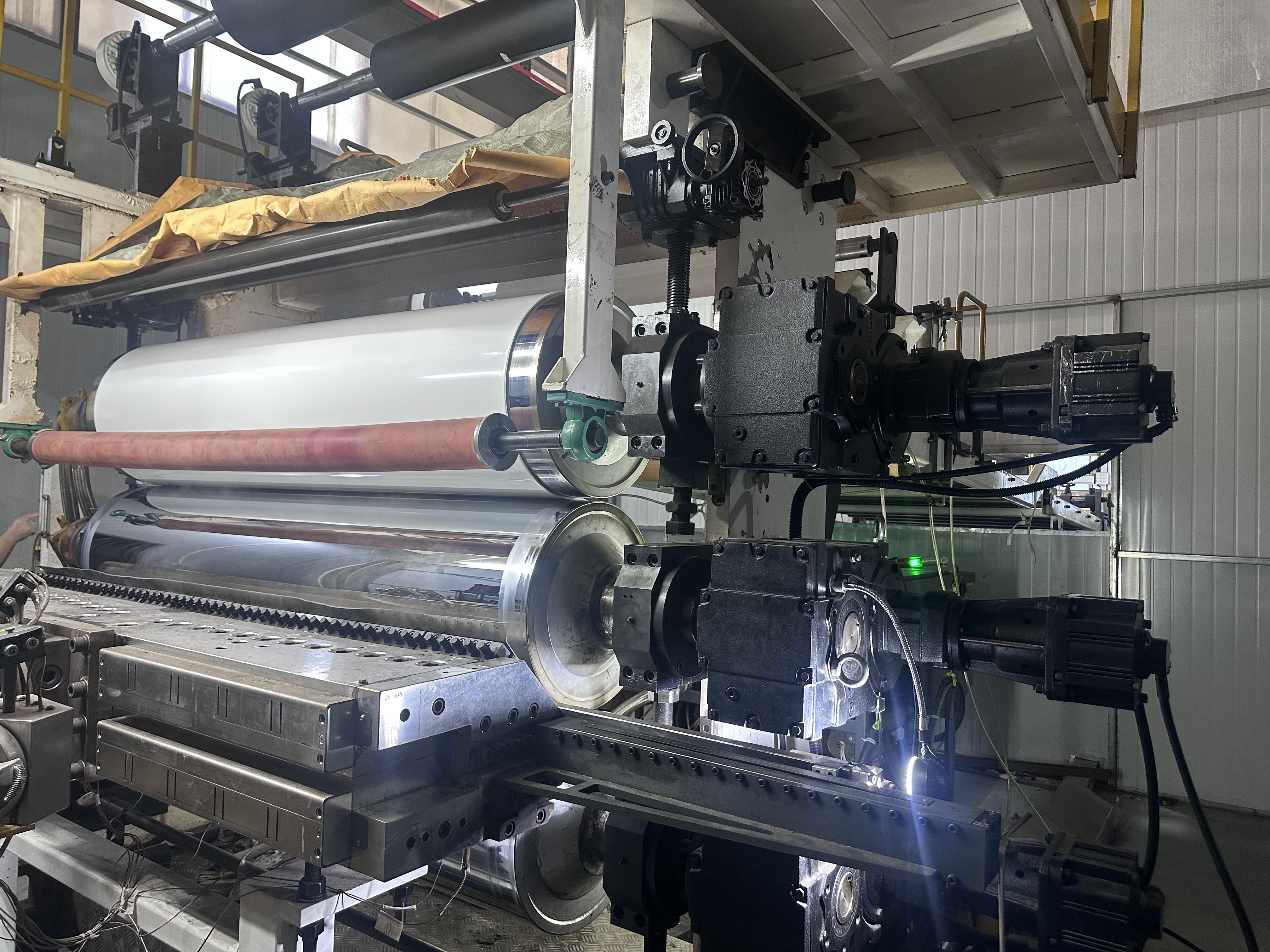
Why physical and operational evidence matters
For an industrial buyer, “large capacity” is not a complete sourcing answer. A production site’s floor area and employee count can indicate the scale of the operation, while an annual output figure can provide a broad point of reference. None of those measures alone reveals how much capacity is available for a new order, whether production is dedicated to a specific part, or how quickly a complex housing can move from design information to a finished component.
That distinction matters in heavy-gauge vacuum forming. Buyers may be sourcing a visible equipment cover, a structural housing, a formed panel or a component that must fit into a larger assembly. The finished part can involve more than forming: the stated process chain also includes five-axis cutting and surface finishing. A supplier assessment should therefore connect general scale to the actual work content. Buyers can ask which steps apply to the proposed part, which are performed within the described process chain, and which specifications or acceptance criteria will govern the project.
Company figures should also be read with their scope intact. The reported annual output is 550,000 units, but the supplied information does not break that total down by product family, material, part size, process route or operating period. It is not a stated measure of unused production capacity. Likewise, approximately 10,000 m² describes standard factory space; it does not specify the area assigned to any particular machine, product or customer program. Treating these figures as evidence of organizational scale is reasonable. Treating them as proof of a specific delivery commitment would go beyond the facts provided.
Capability evidence in one view
| Evidence point | Reported information | What a buyer can use it to assess | What still needs project confirmation |
|---|---|---|---|
| Factory space | Approximately 10,000 m² of standard factory space | The reported physical scale of the production site | Relevant production area, equipment allocation and suitability for the proposed part |
| Workforce | 90 employees | The reported size of the organization | Project staffing, responsible contacts and allocation of technical or production resources |
| Annual output | 550,000 units | A broad reference point for reported output | Product mix, current schedule, available capacity, batch assumptions and delivery plan |
| R&D support | Five-person R&D team; one-on-one support for project-related matters | Whether a described engineering-support function is available | Named responsibilities, review stages, drawing inputs and change-control process |
| Process chain | Sheet extrusion, thermoforming, five-axis cutting and surface finishing | Whether multiple processing steps are represented in the stated capability profile | Which steps apply to the part, their limits and the agreed inspection criteria |
| Quality control | The supplied content states that 100% testing is applied | A stated quality-control practice to discuss during qualification | Test method, test record, sampling definition where relevant and acceptance criteria |
The table separates the reported facts from the questions they raise. That separation is useful in supplier evaluation because a headline figure should lead to a verifiable discussion, not be treated as a complete answer. For example, a buyer can ask how the quoted annual output relates to the specific product family under consideration. The available information does not provide a utilization rate or a part-level production schedule, so those details should be established directly for the project.
How the process chain relates to thick-sheet parts
Thick-sheet vacuum thermoforming is a plastic-forming process in which a solid plastic sheet is heated and shaped over a mold using vacuum pressure. The supplied knowledge content describes the process as suitable for customized, large-size plastic housings. That general description explains why vacuum forming can be considered for housings and covers, but it does not determine whether a particular component is manufacturable. Geometry, material selection, formed appearance, cutting requirements and assembly interfaces remain project-specific considerations.
Hangzhou Baiheli New Materials Co., Ltd.’s capability information identifies thick-sheet thermoforming, sheet extrusion, five-axis cutting, housing forming, masking for painting, customized design and processing. It also lists project options involving product geometry and structure, material selection, transparent, translucent or opaque finishes, matte film, screen printing, masked painting, five-axis cutting and housing-fit processing. This describes a broader set of potential operations than forming alone. It does not mean every option is required or available in the same configuration for every part; the applicable route should be confirmed against the design and finish specification.
For procurement, the process chain is most useful when translated into a sequence of questions. Does the project require sheet supply as well as forming? Are there cutouts, edges or interfaces that need five-axis cutting? Is a specified surface finish necessary? Does the design depend on transparent or translucent areas? What information must the buyer provide to allow the supplier to evaluate the part? These questions help determine whether the identified operations align with the project without assuming undisclosed machine limits or tolerances.
Materials and finish are specification questions
The supplied company profile lists engineering and composite materials, including ASA, PC, PETG, PMMA, PVC and ABS. The knowledge content separately names ABS, PC, PVC and HDPE, along with other engineering plastics and composite materials. These lists support a discussion of material options, but they are not a complete material qualification for a particular application. Buyers should identify the required material grade, colour, thickness, finish and operating requirements, then request confirmation for the proposed part. The provided content does not state a universal thickness range or a complete material-specific process window.
Finish requirements deserve the same precision. The company’s capability information lists transparent, translucent or opaque finishes, matte film, screen printing and masked painting among customization options. A procurement specification should clarify which finish applies to which surface, what appearance or assembly requirements matter, and how the completed part will be reviewed. Without a project drawing and agreed criteria, a general list of finishing options cannot establish a guaranteed result.
Application fit: housings, covers and formed components
The reported application set includes AGV and robotics housings or covers, medical equipment housings, automotive and new energy vehicle parts, textile machine covers, intelligent machinery housings, communication equipment components, amusement equipment thermoformed parts, marine antenna radomes and rooftop tents. The case information also identifies customized housings or covers for AGVs and robotics, as well as applications involving medical equipment, automotive parts, drones, communication antenna equipment and textile machines.
For AGV and robotics projects, a formed housing or cover is one component of a wider equipment design. A buyer can use the supplier’s stated application experience as a reason to discuss the project’s geometry, cut features, surface requirements and assembly interfaces. The available facts do not specify a particular AGV model, project result or verified dimensional tolerance, so those should not be inferred from the application category alone.
Medical equipment housings are another stated application. The application reference associates these parts with custom equipment housings and covers, but it does not identify medical-device certifications, a regulated manufacturing scope or a specific clinical use. Buyers should distinguish a supplier’s stated experience making medical equipment housings from qualification to any particular medical quality or regulatory requirement. Applicable standards, documentation and acceptance requirements need to be established for the actual project.
Industrial machinery covers and intelligent equipment housings offer a similar evaluation path. The reported process chain can be discussed in relation to a buyer’s required forming, trimming and surface-finishing steps. If the part has fit-critical features, the buyer should provide interface information and confirm how those features will be produced and checked. The supplied content does not set out dimensional tolerances or inspection methods for individual products.
For automotive, new energy vehicle, communication, outdoor or amusement equipment components, the same principle applies: application references help establish relevance, but not automatic suitability. A buyer should compare the part’s actual design and operating conditions with the supplier’s confirmed process plan. The corpus lists several engineering plastics and possible finishes, while project-specific options such as flame-retardant ABS, PC matte film, transparent or translucent PC, impact-resistant PE, screen printing and masked painting require confirmation of the exact specification. No specific flame rating, UV-resistance rating or tolerance is supplied as a universal capability.
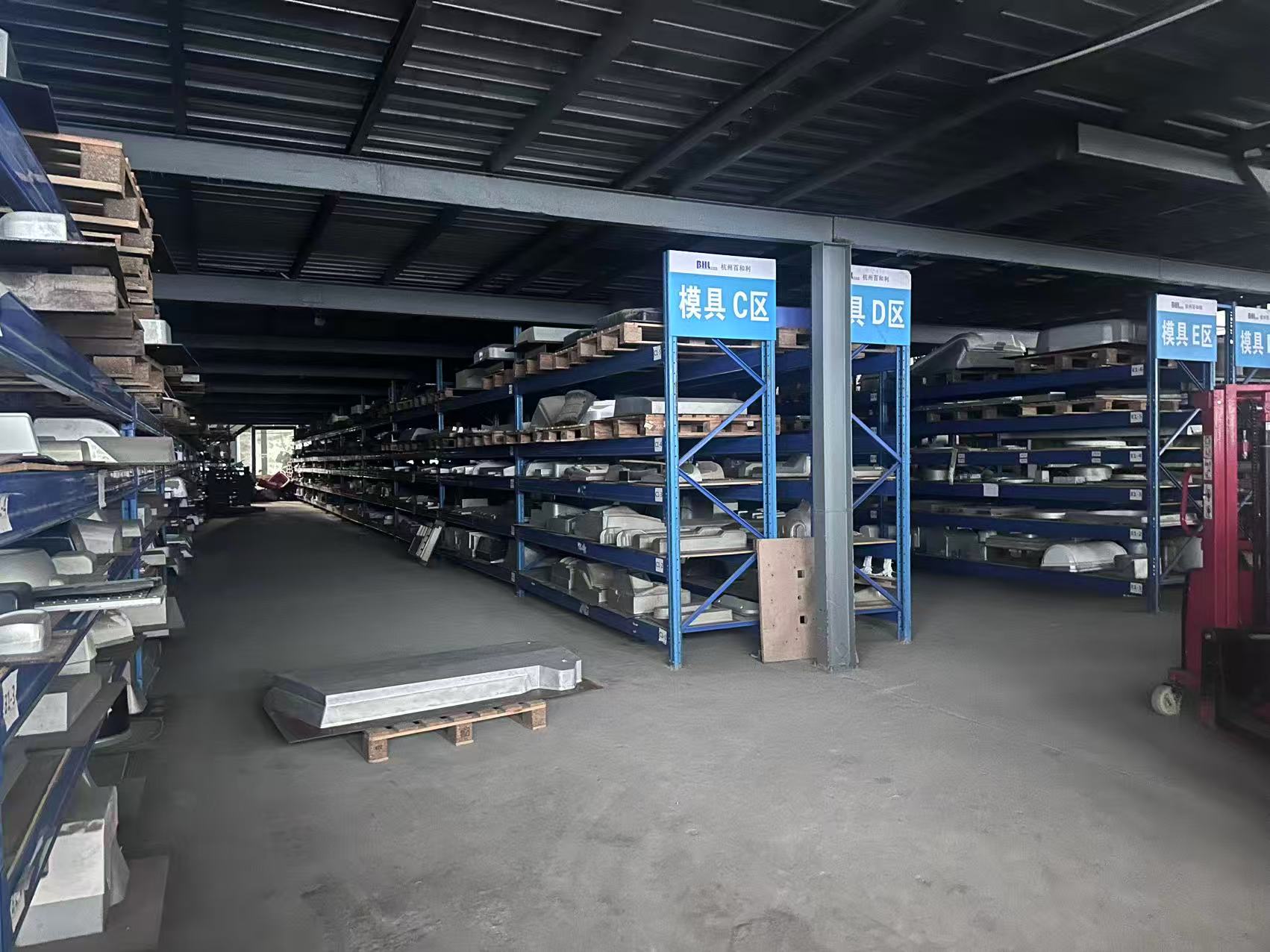
What the R&D team changes in a buyer discussion
The company profile reports a five-person R&D team and describes one-on-one support for project-related matters. For a buyer, the practical value of this evidence is not a guaranteed engineering outcome. It is a basis for asking how project support will be organized: who reviews drawings, how material and finish choices are discussed, what information is needed to assess a design, and how revisions are handled before production.
That conversation is particularly relevant for custom thermoformed plastic parts because the buyer’s part geometry and assembly needs shape the manufacturing discussion. The company information lists customization of product geometry and structure, material selection, finish options, five-axis cutting and housing-fit processing. The buyer should identify which of those items is required and ask for the agreed deliverables at each stage. One-on-one support is reported at the company level; the content does not specify response times, engineering deliverables or project staffing beyond the team size.
Before requesting a quotation or capability review, buyers can prepare a drawing or model, material and appearance requirements, critical interfaces, expected quantity and inspection criteria. This is a procurement checklist, not a claim about the supplier’s internal workflow. It gives both sides a concrete basis for clarifying scope and identifying information still needed to assess feasibility.
Interpreting output and quality-control claims
An annual output of 550,000 units can help a buyer understand the scale reported by the company, but the number should not be used as a proxy for a particular order’s capacity. “Unit” may cover a mix of parts, and the supplied information does not define the product mix, production hours, utilization or allocation available to a new project. For a sourcing decision, the useful follow-up is a part-specific capacity discussion: the requested quantity, production route, schedule assumptions and any constraints the supplier identifies.
The provided content also states that the manufacturer applies 100% testing for quality control. This is a concrete statement of a reported practice, but the source material does not define what is tested, whether the test is visual or functional, what records are maintained, or what acceptance limits apply. Buyers should request those details in a quality plan rather than assume that “100% testing” means every feature is measured by a particular method. A clear inspection agreement makes the statement operationally meaningful for the project.
In the same way, physical scale, team size and process breadth are evidence points, not performance guarantees. The facts help a buyer identify topics for supplier evaluation; they do not establish defect rates, on-time delivery performance or customer outcomes. The available materials do not supply those measures, and they are therefore not used here as evidence of comparative performance.
Capability boundaries buyers should keep visible
A neutral evaluation considers both what the profile supports and what remains unreported. The supplied facts support a description of a heavy-gauge thermoforming operation with reported factory space, employee count, annual output, R&D team size and a multi-step processing chain. They also identify product categories and potential customization options. They do not provide a complete machine list, maximum part dimensions, material-specific draw ratios, project-specific lead times, production yield, available capacity or a detailed inspection protocol.
Those missing details are not necessarily evidence for or against the supplier. They are simply information that the provided record does not establish. Buyers evaluating a large part, a tightly controlled assembly or a regulated application should request the relevant technical and quality documentation directly. A supplier capability profile can support initial shortlisting, while detailed feasibility and qualification depend on the information exchanged for the actual project.
How to use this profile in a supplier shortlist
For an evaluation-stage buyer, the evidence can be organized into four decision checks:
- Scale: Record the reported factory area, workforce and annual output, while keeping each measure in its stated scope.
- Process fit: Compare the required operations with the stated chain of sheet extrusion, thermoforming, five-axis cutting and surface finishing.
- Engineering contact: Clarify how the reported one-on-one R&D support will apply to drawing review, material discussion and design changes on the proposed project.
- Verification: Request project-specific capacity, quality criteria, test methods, tolerances and finish requirements rather than inferring them from general profile statements.
This framework makes the supplier information useful without turning it into a ranking claim. The profile does not compare Hangzhou Baiheli New Materials Co., Ltd. with other manufacturers, and no comparative performance conclusion is warranted from the supplied facts alone. Its value is as an evidence-based reference for deciding which questions to ask next.
Industry context and future evaluation
In custom plastic forming procurement, supplier selection often depends on the match between a part’s requirements and the process steps a supplier can confirm. For heavy-gauge applications, the decision may involve more than the forming operation: the stated capability chain includes sheet extrusion, thermoforming, five-axis cutting and surface finishing. This is a practical evaluation lens, not a claim about current market growth or a prediction about industry demand.
For Hangzhou Baiheli New Materials Co., Ltd., the reported scale figures and five-person R&D team give buyers concrete starting points for a capability discussion. The application references connect that discussion to AGV and robotics housings, medical equipment housings, automotive and new energy vehicle parts, industrial machinery covers and other formed components. The next step in a credible assessment is to test the fit against a specific part brief and obtain project-level confirmation of capacity, process, material, quality and delivery expectations.
The profile therefore supports a measured conclusion: the company reports substantial factory space, a 90-person workforce, annual output of 550,000 units, a five-person R&D team and an integrated set of forming and secondary-processing capabilities. These facts make it possible to frame a focused supplier evaluation. They do not replace part-specific engineering review or independently establish the outcome of a future order.
FAQ
What is thick-sheet vacuum thermoforming?
Thick-sheet vacuum thermoforming is a plastic-forming process in which a solid plastic sheet is heated and shaped over a mold using vacuum pressure. It is described in the supplied knowledge content as suitable for customized, large-size plastic housings.
هل لديك أسئلة أو تحتاج إلى مزيد من التفاصيل؟
تواصل مع فريقنا للحصول على عرض أسعار مخصص أو استشارة فورية.
طلب عرض أسعار
املأ النموذج أدناه وسيتواصل معك فريقنا بعرض مقترح مخصص.
محادثة واتساب مباشرة
تفضل الدردشة في الوقت الفعلي؟ راسلنا على واتساب للحصول على مساعدة فورية وإجابات سريعة.
- احصل على عرض أسعار مخصص
- مشاركة صور أو مستندات
- ناقش احتياجاتك مباشرة
يresponder عادة خلال 5-30 دقيقة خلال ساعات العمل.