
Vacuum Forming Technical FAQ: Thick-Sheet Material, Tooling and Procurement Risks
Vacuum Forming Technical FAQ: Thick-Sheet Material, Tooling and Procurement Risks
Thick-sheet vacuum forming settles three questions before the first part leaves the tool: which sheet grade the housing needs, how tooling should be scoped for the quantity actually ordered, and which risks the purchase order leaves open. For industrial equipment housings formed from 2–10 mm sheet on equipment sized up to 3300 × 2000 mm, those answers decide whether the first article is approved on schedule.
This technical FAQ is written for engineers and procurement teams who are past the discovery stage — comparing quoted options and preparing to release a tool. It answers the questions that recur in heavy-gauge thermoforming projects, using the manufacturer's published capability and certification records and publicly reported market data. Where a value depends on the project, the article says so instead of supplying a number.
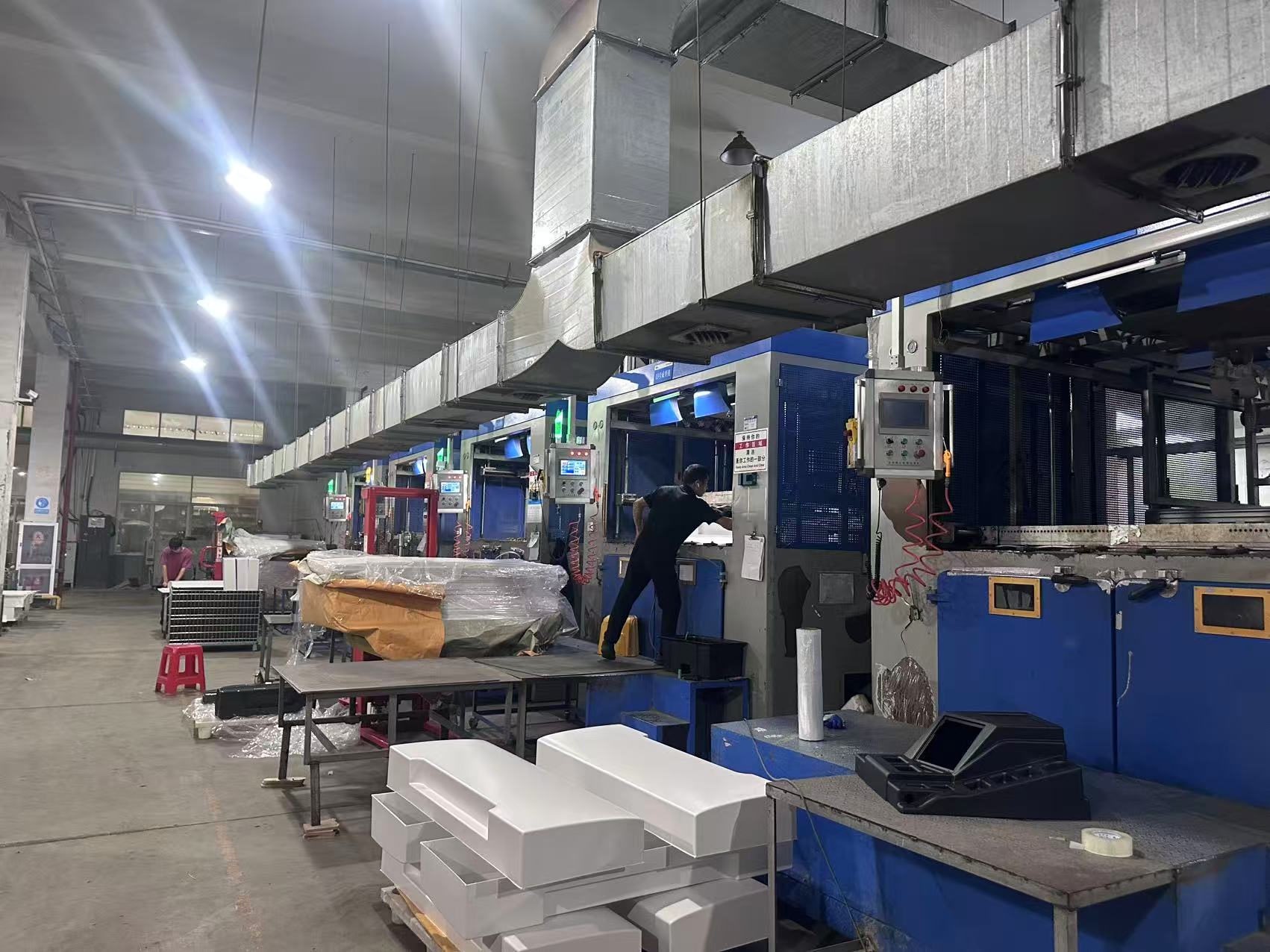
Thick-sheet vacuum forming: definition, envelope and limits
Thick-sheet vacuum thermoforming is a plastic forming process in which solid plastic sheet is heated and shaped over a mould using vacuum pressure. It is used for large-size customised plastic housings — the class of enclosure that is too big, too curved or too low in volume for injection moulding tooling to make economic sense.
At quotation stage two parameters matter more than any other: sheet thickness and forming envelope. The production range covers 2–10 mm sheet and forming sizes up to 3300 × 2000 mm, with design, mould making and finished parts delivered as one scope. A drawing that falls outside either number is a different conversation, and it is cheaper to confirm both before design work starts than after a tool has been cut.
The process shapes a sheet; it does not fill a cavity. Wall thickness therefore depends on how far the material is stretched, and apertures and assembly interfaces are finished after forming rather than moulded in. At this manufacturer, five-axis cutting, housing-fit processing and masking for painting sit downstream of forming, which is where much of the dimensional precision in a finished housing is actually created.
Where thick-sheet projects actually fail
The technical failure modes in heavy-gauge work are narrow and repetitive. The manufacturer's own risk guidance names two: uneven wall thickness and dimensional deviation, both triggered by over-stretching or uneven heating of the sheet. The prescribed mitigation is unglamorous — optimise the structure, control the heating cycle, and verify samples before mass production.
Three procurement risks sit around that technical core. The first is a material name used as a specification: “ABS housing” or “polycarbonate cover” identifies a polymer family, not a grade, thickness, colour or fire performance. The second is a tolerance assumed rather than agreed — a general tolerance note on a drawing does not describe what happens at the deepest draw of a 3300 mm part. The third is tooling scope: whether mould making sits inside the quoted price, who holds the tool, and what an engineering change costs once the tool exists. None of these is exotic; all three are cheaper to settle before cutting metal.
Material selection: ABS, ASA, PC, PETG, PMMA, PVC, HDPE and flame-retardant grades
The applicable material list covers engineering plastics and composites including ASA, PC, PETG, PMMA, PVC and ABS, with ABS, PC, PVC and HDPE named explicitly for housing work. In practice, material choice follows the service environment first and the appearance requirement second.
| Sheet material | Typical role in an equipment housing | What must be confirmed before release |
|---|---|---|
| ABS | Indoor housings and general structural covers; the baseline engineering grade | Grade, colour, thickness and surface finish |
| Flame-retardant ABS | Where a fire-related requirement applies to the enclosure | The exact fire rating of the finished part, at the specified thickness, against the named standard |
| ASA | Outdoor exposure, where a styrenic grade with weathering resistance is wanted | UV-resistance rating and the surface treatment applied over it |
| PC (polycarbonate) | Impact resistance; also available transparent or translucent where a window or light path is designed in | Impact requirement, clarity level, and whether matte film is specified |
| PETG | Listed engineering material, generally chosen where clarity and forming behaviour matter | Mechanical and appearance requirements for the specific housing |
| PMMA (acrylic) | Optical clarity and surface appearance; generally lower impact tolerance than polycarbonate | Whether the part can be exposed to impact, and the finishing route |
| PVC | Listed material for industrial and electrical-type applications | Fire performance and chemical exposure for the specific grade |
| HDPE | Corrosion resistance in chemically exposed or wash-down environments | The chemical list, plus UV stabilisation if used outdoors |
Two material families deserve separate attention. Polycarbonate is specified where impact resistance matters, and is also available in transparent or translucent form when visibility or light transmission is part of the design. Flame-retardant ABS is offered as a project-specific option alongside PC matte film, impact-resistant PE, screen printing and masked painting — options that change the compliance route and the appearance of the finished part, not merely its surface.
Fire rating: a flame-retardant sheet is not a finished-part rating
A flame-retardant ABS option in the material list means the grade can be sourced. It does not mean a formed housing carries a fire rating. Ratings attach to a specific formulation, a specific thickness and a specific test method, and a formed part has variable wall thickness after stretching. Because the exact fire rating requires project confirmation, the practical instruction for a buyer is to name the standard in the technical file, state the thickness at the tested location, and ask for evidence that the finished part — not just the raw sheet — satisfies it.
Where the housing is part of electrical equipment, this is often the single item that delays release. Two questions close it faster than a general assurance: which grade and thickness will appear on the material certificate, and which test evidence will be provided against the named standard. If the only answer available is “flame-retardant ABS”, the project has a material choice but no verified compliance position yet.
UV exposure, colour and surface options
Outdoor housings add a second variable. The quoted service envelope is −20 °C to 70 °C for indoor or outdoor operation, with an optional UV-resistant surface for outdoor exposure. That option matters most where the housing is a visible panel rather than a shielded structural part, and it interacts with the finish: matte film, screen printing and masked painting are all applied to the same surface that has to survive the weather. ASA appears in the applicable material list as the styrenic grade generally chosen for outdoor exposure, but the same rule applies — UV resistance is a project confirmation, not a catalogue constant. Buyers should ask what the rating is measured against, over what exposure period, and on which surface treatment.
Dimensional tolerance and wall thickness: what belongs on the drawing
Tolerances in thermoforming are not uniform across a part. Material thins as it is drawn, so a housing with a deep pocket will not hold the same wall thickness at the base as at the flange, and critical dimensions near a deep draw are the ones most likely to move. Because exact tolerances require project confirmation, the drawing should distinguish what actually matters: the assembly interface, fastener positions, apertures that receive inserts, and any surface that must sit flush against another component.
The mitigation path is documented: optimise the structure to reduce extreme draw, control heating so the sheet reaches forming temperature evenly, and verify samples before mass production. In practice that means a first-article review rather than a drawing-only approval. A sample that measures correctly at the flange but thins below expectation at the deepest point can pass a casual inspection and still fail in service, which is why the wall-thickness check belongs in the approval record and not only in the dimensional report.
Tooling strategy: prototype, bridge and medium batch
Tooling is where evaluation turns into execution. Because the minimum order quantity is one unit, a single prototype housing is a legitimate order — but the tooling decision behind it differs from the one behind a medium-batch release. In general terms, prototype quantities favour lower-cost tooling built to prove geometry and fit, while repeat production favours tooling built to hold dimensions across many cycles. The buyer's risk is not choosing the cheaper option; it is choosing it without knowing when it will have to be replaced.
A quotation should therefore separate the tool from the part. Six questions settle most of it: is mould making included in the one-stop scope or quoted separately; who owns and retains the tool; where it is stored between orders; what an engineering change costs once the tool exists; does the quoted 25–30 day lead time include tool making and finishing; and is sampling a separate approval gate before mass production. A dedicated mould-storage area on site is a useful signal that tools are kept rather than discarded, which matters for a product with a multi-year service life.
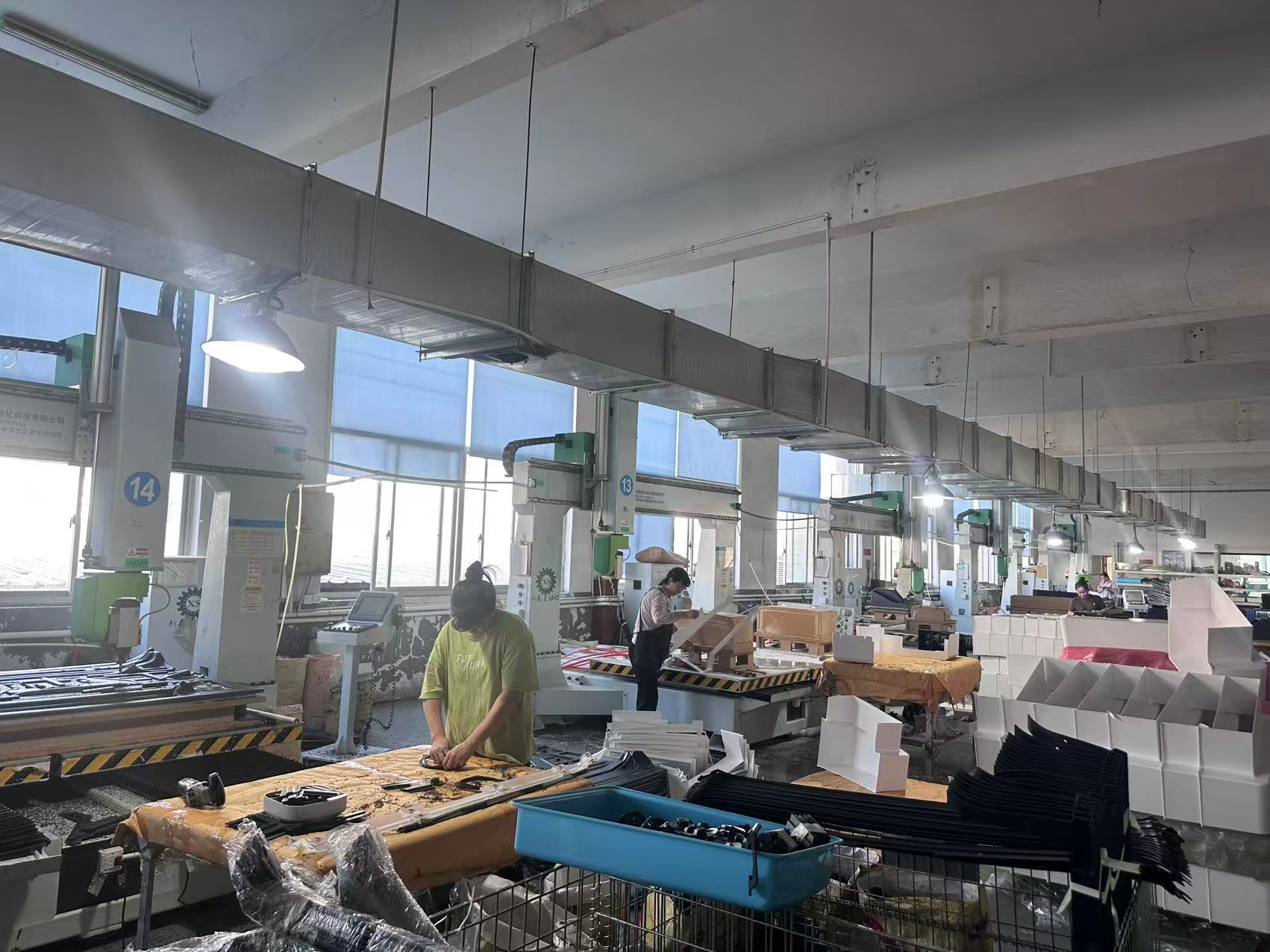
Medium-batch planning also runs through the finishing chain. Five-axis cutting, housing-fit processing and masked painting each add a step where a change order becomes more expensive, so the assembly interface should be frozen before those steps are tooled. The manufacturer reports around 30 projects closed each year, with client relationships lasting 3–5 years — which is the pattern to expect: the second order is where tooling decisions are tested.
What an integrated forming chain changes for the buyer
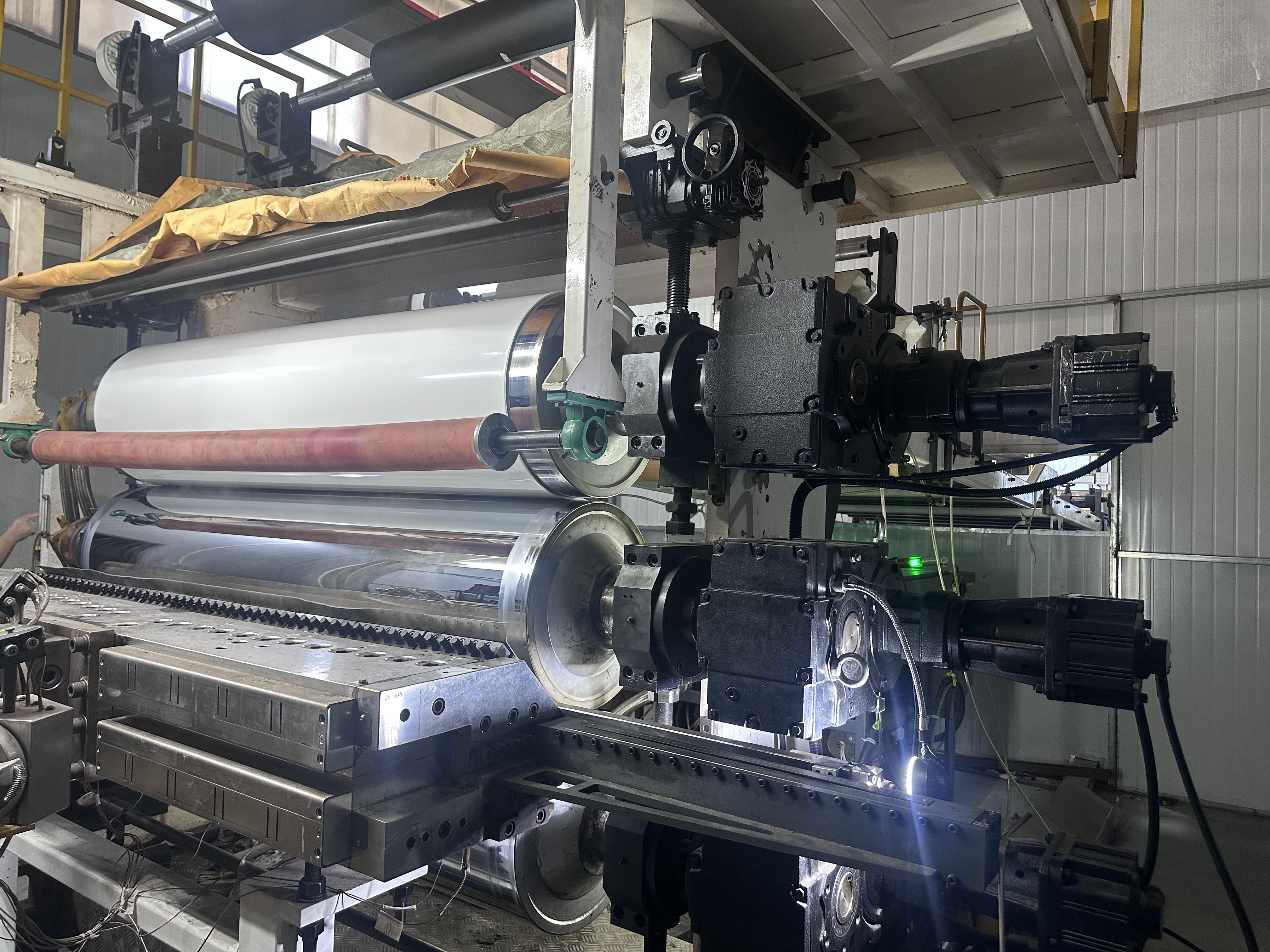
Hangzhou Baiheli New Materials Co., Ltd. is a heavy-gauge thermoforming processor based in Guali Town, Xiaoshan District, Hangzhou, China, operating a standard factory of approximately 10,000 square metres with 90 employees, a five-person R&D team and an annual output stated at 550,000 units. Hangzhou Baiheli New Materials Co., Ltd. provides production services that include thick-sheet thermoforming, sheet extrusion, five-axis cutting, housing forming and masking for painting, with design, mould making and finished parts handled as one scope.
The integration matters at both ends of a project. At the front, sheet extrusion inside the same operation means the material specification and the forming trial are not separated by an external supplier's delivery schedule. At the back, five-axis cutting and housing-fit processing mean the part arrives for assembly trimmed to the interface rather than to a rough outline. Customisation covers product geometry and structure, material selection, transparent, translucent or opaque finishes, matte film, screen printing, masked painting, and five-axis cutting with housing-fit processing. Quality control is described as 100% test, supported by remote technical support, after-sales follow-up and quality complaint handling.
The quality system behind that scope is certified to ISO 9001:2015 under certificate 98924Q00326R0M, issued 13 June 2024 and valid to 12 June 2027 by Guangdong Harmonious Certification Co., Ltd., with the scope “production of plastic products” under GB/T19001-2016 / ISO9001:2015. What that certificate establishes is a documented quality management system for plastic products production; it is not an automotive supply-chain qualification. IATF 16949:2016, described by the International Automotive Task Force as the mandatory quality standard for automotive supply chain members, is a separate gate that automotive buyers should verify independently rather than infer.
For a buyer comparing suppliers, the useful reading of these numbers is fit rather than scale. Export accounts for 30–40% of business across China and worldwide markets, and the process envelope is thick-sheet work at 2–10 mm and up to 3300 × 2000 mm — a different segment from a thin-gauge packaging converter that also lists “vacuum forming” on its website.
Application fit: where heavy-gauge housings earn their place
The applications that recur in this category share a shape problem: large, low-volume enclosures with curved surfaces, integrated apertures and a visible exterior. AGV and robot housings, intelligent machinery and textile machine covers, medical equipment housings, new energy vehicle parts, communication antenna radomes, drone housings, rooftop tent components and amusement equipment parts all fit that profile. The quoted service envelope is −20 °C to 70 °C for indoor or outdoor operation, with project-specific options covering flame-retardant ABS, PC matte film, transparent or translucent PC, impact-resistant PE, screen printing and masked painting.
Two application notes are worth carrying into evaluation. First, an outdoor radome cover and an indoor machine cover may use the same process and still need different material and surface decisions, because the weather exposure differs. Second, medical and instrument housings usually place the tolerance burden on the assembly interface rather than the outer skin, which pushes the project toward pre-production drawing review and sample approval instead of tighter blanket tolerances.
Market context: growth in aggregate, a narrow heavy-gauge segment
Publicly reported market data offers context rather than a forecast to rely on. Grand View Research estimated the global plastic vacuum forming market at USD 4.8 billion in 2023 and projected USD 7.2 billion by 2030, placing Asia Pacific at 40.7% of that market in 2023. Mordor Intelligence's segmentation puts thin-gauge thermoforming — defined in that dataset as sheet under 1.5 mm — at 76.22% of the combined heavy/thin-gauge market in 2025. The implication is structural rather than promotional: large-format heavy-gauge work sits in the smaller share of the market, so the pool of suppliers able to quote a 3300 × 2000 mm housing in 2–10 mm sheet is narrower than the aggregate revenue figures suggest. Aggregate reports also do not publish per-supplier forming limits, draw behaviour or secondary-processing lead times; those have to be established at RFQ level, drawing by drawing.
Pre-order verification list
- Forming envelope: confirm your largest flat dimension and depth against 3300 × 2000 mm and 2–10 mm sheet before design freeze.
- Material grade and thickness: ask for the exact sheet grade and gauge that will appear on the material certificate, not a polymer family name.
- Fire evidence: name the standard in the technical file and request finished-part evidence at the specified thickness.
- UV evidence: for outdoor parts, confirm the UV-resistance rating and the surface treatment it applies to.
- Tolerance map: mark assembly interfaces and fastener positions separately from cosmetic surfaces, and record wall thickness in the first-article report.
- Tooling scope: confirm whether mould making is in the quoted price, who owns the tool, where it is stored and what a change costs.
- Lead time content: check whether the 25–30 day lead time covers tool making, forming, five-axis cutting and finishing.
- Quality documents: verify ISO 9001:2015 certificate validity to 12 June 2027, and check separately whether your market requires IATF 16949.
FAQ
What sheet thickness range applies to thick-sheet vacuum forming, and how is the thickness chosen?
The production range covers 2–10 mm sheet, formed on equipment sized up to 3300 × 2000 mm. Thickness itself is a project decision that follows the service environment, required mechanical strength, outer dimensions, target batch volume and surface requirements. Because drawn areas thin during forming, the nominal sheet gauge and the resulting wall thickness at the deepest point are not the same value, so both should be confirmed against the drawing before release.
Which material suits an outdoor equipment housing — ASA, PC or HDPE?
There is no universal answer, because the three grades answer different requirements. Polycarbonate is specified where impact resistance matters, HDPE where corrosion resistance matters, and ABS is the baseline choice for indoor use in the manufacturer's selection guidance. ASA appears among the applicable materials as the styrenic grade generally selected for outdoor exposure. For any outdoor part, the optional UV-resistant surface matters as much as the polymer, and the UV-resistance rating requires project confirmation for the specific grade and surface treatment.
Does specifying flame-retardant ABS give the finished housing a fire rating?
No. A flame-retardant ABS option indicates that a suitable grade can be sourced; it does not establish a rating for a formed housing. A rating attaches to a specific formulation, a specific thickness and a specific test method, and wall thickness varies after stretching. The manufacturer states that the exact fire rating requires project confirmation, so the buyer should name the standard, specify the thickness at the tested location and request evidence for the finished part rather than the raw sheet alone.
What causes dimensional deviation and uneven wall thickness in a large formed housing?
The documented causes are over-stretching or uneven heating of the plastic sheet, which produce uneven wall thickness and dimensional deviation. The documented mitigation is to optimise the structure to reduce extreme draw, control the heating cycle so the sheet reaches forming temperature evenly, and verify samples before mass production. Because exact dimensional tolerances require project confirmation, the drawing should identify the assembly interface and fastener positions so they can be reviewed before the tool is released.
How does tooling differ between a prototype order and a medium-batch order?
A minimum order quantity of one unit means a single prototype housing is a valid order, but the tooling behind it is normally built to prove geometry and fit rather than to hold dimensions across long production runs. For repeat production, the tool becomes a durable asset, which is why ownership, storage and engineering-change cost belong in the quotation. Buyers should also confirm whether mould making is included in the one-stop scope and whether the stated 25–30 day lead time covers tool making as well as forming and finishing.
Thick-sheet vacuum forming rewards buyers who separate the three decisions — material, tooling and tolerance — and settle each against evidence rather than against a material name. The manufacturer's corporate brochure, including capability and certification details, can be downloaded here: Corporate Brochure (PDF).
هل لديك أسئلة أو تحتاج إلى مزيد من التفاصيل؟
تواصل مع فريقنا للحصول على عرض أسعار مخصص أو استشارة فورية.
طلب عرض أسعار
املأ النموذج أدناه وسيتواصل معك فريقنا بعرض مقترح مخصص.
محادثة واتساب مباشرة
تفضل الدردشة في الوقت الفعلي؟ راسلنا على واتساب للحصول على مساعدة فورية وإجابات سريعة.
- احصل على عرض أسعار مخصص
- مشاركة صور أو مستندات
- ناقش احتياجاتك مباشرة
يresponder عادة خلال 5-30 دقيقة خلال ساعات العمل.