
Vehicle-Specific Android Car Stereo Fascia Kit: Qualification Checklist
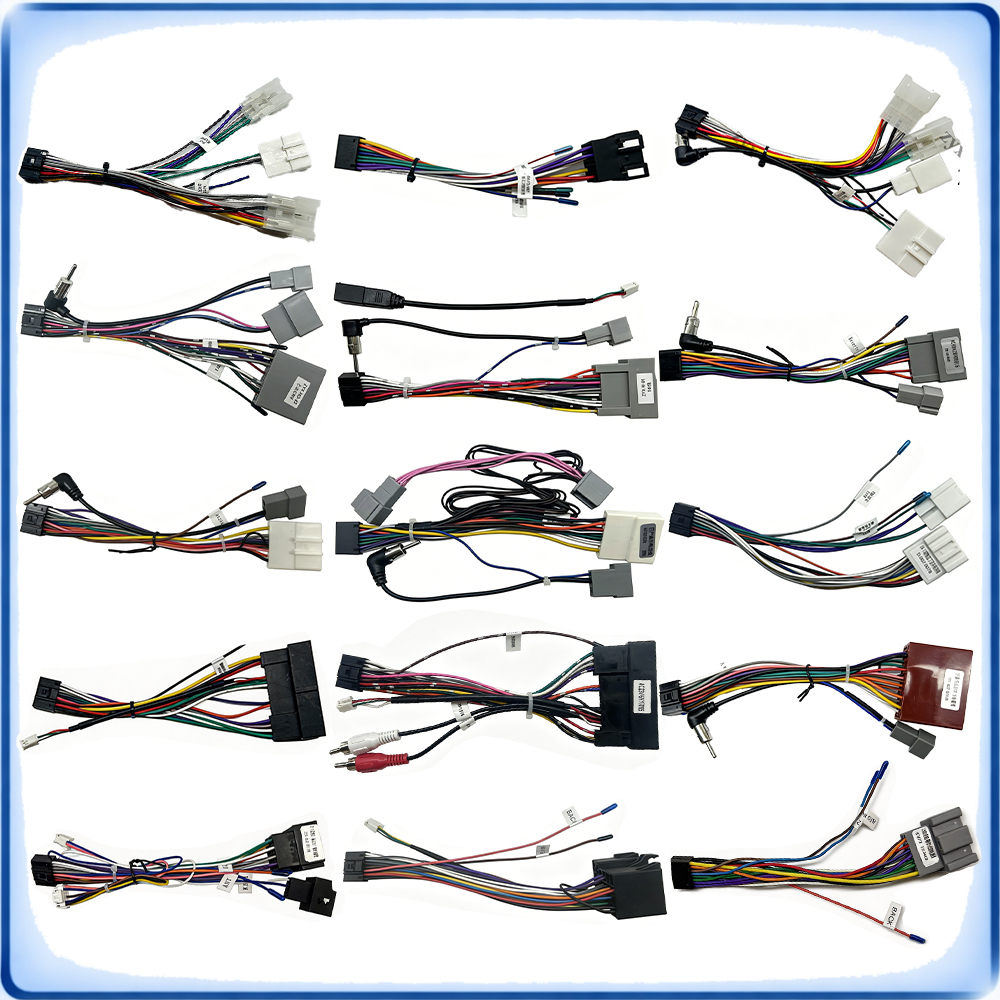
A vehicle-specific Android car stereo fascia kit is an installation package engineered around one vehicle application, typically combining a dashboard fascia, a wiring harness and, where the vehicle uses CAN bus communication, a decoder module. The specifications that decide whether such a kit installs cleanly are seldom the specifications highlighted in a listing. This checklist concentrates on the verifiable constraints: ANSI/CTA-2015-B color-coded wiring, an ISO 16-pin head unit connector paired with an OEM vehicle-side plug, AWG 20-22 tinned oxygen-free copper conductors, flame-retardant PVC insulation, PA66 connector housings, a 12V DC / 10A rating with reverse polarity and short-circuit protection, an operating temperature range of -40°C to 85°C, and the compliance documentation a cross-border buyer should expect to receive.
Why a Fascia Kit Needs a Qualification Checklist, Not a Price Comparison
The retrofit hardware segment sits inside a large and still-expanding electronics market. The global car audio head unit market was estimated at USD 15.44 billion in 2024, according to Market Research Future. Mordor Intelligence projects the car aftermarket audio system market to grow at a CAGR of 12.18%, driven partly by DIY customers and online plug-and-play kits, while Fortune Business Insights recorded Asia Pacific holding a 54.21% share of the global car audio market in 2025.
Volume growth of that kind has a predictable side effect: listings multiply faster than documentation does. Buyers then absorb two families of risk that are documented in aftermarket installation support material. The first is physical, where a dash kit produces visible gaps, misalignment, or damage to original dashboard trim because it was not molded to the dimensions of the specific vehicle dashboard. The second is electrical, where incorrect wiring connections, reversed polarity, wrong pin assignments, low-grade copper conductors, thin insulation, or a CAN bus protocol mismatch produce no-power conditions, intermittent signal loss, dashboard fault codes, or unresponsive steering wheel controls.
A qualification checklist does not remove those risks on its own, but it moves an evaluation from a subjective judgement about appearance and price to a set of inputs a distributor, installer, or procurement manager can verify before placing an order.
The Qualification Checklist at a Glance
The following table organizes the constraints that matter most during a Research-to-Evaluation review of a vehicle-specific Android car stereo fascia kit. Each row corresponds to a specification that should be confirmable in writing, not inferred from a photograph.
| Qualification area | Specification to verify | Why it matters at evaluation stage |
|---|---|---|
| Wire identification | Insulation color-coded in accordance with ANSI/CTA-2015-B | Shared identification standard speeds installation and remote troubleshooting |
| Head unit interface | ISO 16-pin head unit connector | Determines compatibility with most aftermarket Android head units and universal car stereos |
| Vehicle-side interface | OEM vehicle-side plug, model-specific design | Enables plug-and-play installation without cutting original vehicle wiring |
| Conductor | AWG 20-22 tinned oxygen-free copper | Conductor grade and tinning affect corrosion resistance and long-term conductivity |
| Insulation | Flame-retardant PVC | Relevant to in-vehicle electrical safety and heat exposure |
| Connector housing | PA66 engineering plastic | Mechanical stability of the connector under vibration and thermal cycling |
| Contact terminals | Tin-plated brass | Stable contact resistance over repeated temperature change |
| Electrical rating | 12V DC, 10A maximum current | Matches the 12V DC vehicle electrical system and head unit load expectations |
| Protection features | Reverse polarity protection, short-circuit protection | Reduces risk of head unit burnout and original electrical system damage |
| Thermal range | -40°C to 85°C operating temperature | Covers cold-start markets and dashboard heat exposure |
| Physical fitment | Dimensional tolerance, material thickness, mounting standard | Determines whether the fascia closes with a factory-like finish |
| Compliance file | Environmental and EMC documentation for the destination market | Import clearance and channel acceptance |
ANSI/CTA-2015-B Color Coding: What It Qualifies in Practice
On the ZYX-02 car radio wiring harness, the wire insulation is color-coded in accordance with ANSI/CTA-2015-B. Read strictly, that is a statement about identification, and identification is exactly the problem a checklist is meant to solve. A harness carries power, ground, speaker and control circuits in a confined space behind the dashboard, and an installer working without a shared color reference has to trace circuits physically before making a connection.
What the color-coding constraint qualifies is repeatability across three parties: the harness manufacturer, the installer, and whoever provides remote technical support. When a circuit is identified by color, a support conversation about a no-power or intermittent-signal condition can start from a known reference point instead of a description of wire position. It also reduces the practical temptation to solve a mismatch by cutting and splicing.
Boundary condition: color coding standardizes identification on the harness side. It does not standardize the vehicle-side pin definition, which remains model-specific, and it does not replace a continuity check before first power-on.
ISO 16-Pin Head Unit Connector and the OEM Vehicle-Side Plug
A qualified retrofit harness resolves two interfaces at once. The ISO 16-pin head unit connector addresses the aftermarket side, where a standardized pin arrangement lets one harness serve most aftermarket Android head units and universal car stereos. The OEM vehicle-side plug addresses the vehicle side, where the connector must match the factory electrical interface of a specific model.
ZYX-02, the Car Radio Wiring Harness from Shenzhen Zhongyixing Electronic Technology Co., Ltd, is built on exactly this two-ended configuration: an OEM vehicle-side plug plus an ISO 16-pin head unit connector, in a universal ISO standard wiring harness that supports plug-and-play installation without cutting the original vehicle wiring. It is designed for non-CAN bus vehicle models and works with most aftermarket car stereos.
The second half of that sentence is where many purchasing errors begin. A harness with an ISO 16-pin head unit connector and an OEM vehicle-side plug solves the electrical connection, but on a CAN-equipped vehicle it does not, by itself, solve communication. A CAN bus decoder is required so the aftermarket head unit can exchange data with the original vehicle network. The ZYX-03 CAN Bus Decoder Module functions as a gateway between the vehicle CAN bus and the aftermarket Android car stereo, supporting CAN 2.0A and CAN 2.0B protocol standards at dual data rates of 500 kbps and 125 kbps. It is supplied as a plug-and-play unit that requires no on-site configuration, pre-programmed with model-specific firmware, and is designed to retain OEM steering wheel control functions, vehicle information display and original chime functions after the Android head unit installation, with built-in CAN isolation intended to prevent dashboard fault codes.
In functional terms, decoders of this class translate vehicle network messages into a format the head unit can process, which is how functions such as steering wheel controls and vehicle status data survive a head unit replacement. When that translation is mismatched to the vehicle, the documented symptoms are dashboard fault codes and unresponsive steering wheel buttons, which is why the decoder is a qualification item rather than an accessory.
Materials, Ratings and Protection: Reading the Electrical Specification
The material specification of ZYX-02 is stated precisely, and each element answers a different failure mode. The conductor is AWG 20-22 tinned oxygen-free copper. Tinning addresses corrosion at the contact interface; conductor grade and cross-section address conductivity under load. The insulation is flame-retardant PVC, the connector housing is PA66 engineering plastic, and the contact terminals are tin-plated brass.
The electrical envelope is 12V DC with a maximum current of 10A, consistent with a 12V DC vehicle electrical system. The harness includes reverse polarity protection and short-circuit protection, and its operating temperature range is -40°C to 85°C. Those protections map directly to documented installation risks: short circuits, head unit burnout and damage to the original electrical system are typically attributed to cut-wire harnesses, reversed polarity, or wrong pin assignments during unprofessional installation.
The decoder module carries its own specification set: rated power supply 12V DC, current consumption of 300 mA in standby mode and 2 A maximum, CAN 2.0A and CAN 2.0B support at 500 kbps and 125 kbps, and an operating temperature range of -40°C to 85°C. Its housing is flame-retardant ABS plastic, the circuit board is FR-4 glass fiber epoxy resin, connector terminals are tin-plated brass, and heat-conductive silicone is used as the internal potting material.
The thermal figure deserves separate attention because it is one of the few specifications that applies to every market. A dashboard can sit in direct sunlight and reach temperatures well above ambient, while vehicles in cold markets must start reliably at very low temperatures. A stated range of -40°C to 85°C is a documented envelope, not a marketing phrase, and it applies to the fascia as well: the ZYX-01 Car Radio Dash Fascia is rated over the same range.
Multi-Country Compliance: Which Documents Should Travel With the Carton
Compliance is the qualification area where buyer-side verification adds the most value, because it is jurisdiction-specific and cannot be assumed from product photographs. For European Union environmental requirements, the full retrofit kit is stated to comply with EU RoHS 2 and REACH regulations, with hazardous substance content controlled across materials and components.
Electromagnetic compatibility is a separate track. In the European Union, electronic subassemblies integrated into road vehicles that affect vehicle safety functions are expected to meet e/E-Marking requirements, specifically EMC testing under ECE R10, rather than relying on CE marking alone. Whether a specific aftermarket installation accessory falls under that route depends on its function, which is why the buyer or importer should confirm the applicable compliance path for the destination market instead of assuming a single label covers all markets.
Trade classification is the third element of the file. Car stereo fascia and installation hardware are generally classified under HS Code 8708.99, vehicle parts and accessories not elsewhere specified, per the United Nations Statistics Division classification. A supplier that can supply material declarations, test summaries, model lists, and labeling consistent with that classification reduces customs friction for distributors. Field experience supports the point: across a nine-year cooperation with a car multimedia brand owner covering cumulative volumes above 550,000 sets, multi-country compliance standards support is listed among the program outcomes.
The Physical Half of the Checklist: Fitment and Tolerance
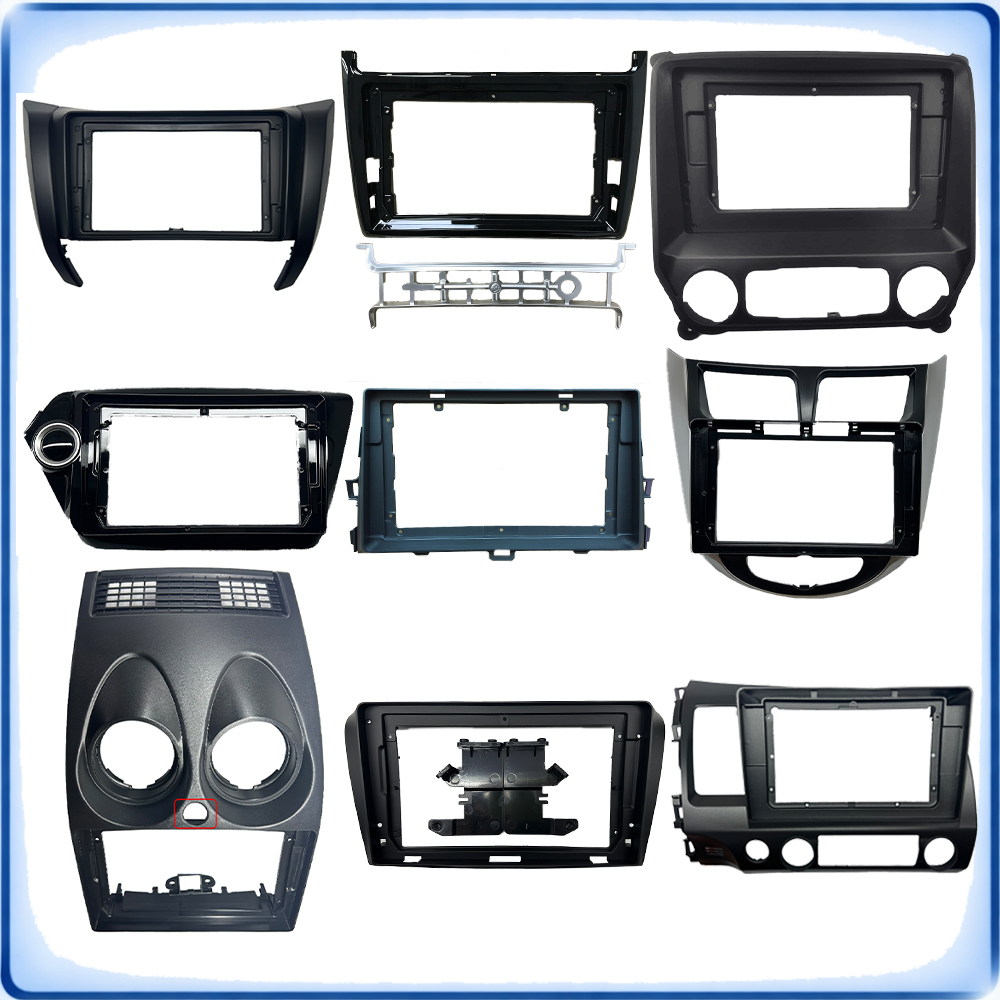
Wiring specification cannot compensate for a fascia that does not sit correctly. ZYX-01, the Car Radio Dash Fascia, is manufactured based on original vehicle dashboard data in ABS plastic, with a material thickness of 2.5 mm to 3.0 mm and a dimensional tolerance of ≤0.2 mm. It supports compatible screen sizes of 7 inches, 9 inches, 10.1 inches and 12.3 inches, with a mounting standard of Double-DIN or model-specific custom, a plug-and-play fitment type, and complete mounting accessories included.
Because vehicle configuration varies within a single nameplate, the practical matching sequence matters as much as the specification. Where multiple original equipment configurations exist for one model, the working order is vehicle brand, vehicle model, model year, original radio, original connector, vehicle configuration, audio system, and finally the new head unit. Confirming that chain before ordering is what prevents the documented failure mode of visible gaps, misalignment or trim damage that follows from a product not molded to the specific dashboard dimensions.
Pre-order verification that costs nothing
Suppliers of model-specific retrofit hardware typically request photographs of the original dashboard, the original radio, or the connectors on the back of the original head unit. This is a low-cost step that removes most ambiguity caused by differences in model year, equipment level, connector type or audio system configuration. A dry fit of the fascia before permanent installation is the second low-cost control, and it is the point at which a ≤0.2 mm manufacturing tolerance is either confirmed against the actual dashboard or found insufficient for a particular trim variant.
Application Conditions and Field Evidence
The operating environment that qualifies these kits is a normal in-vehicle one: a wide temperature range from -40°C to 85°C, constant road vibration, dust and humidity exposure, an automotive EMI environment, and a 12V DC vehicle electrical system. Typical project types include aftermarket car head unit upgrades, center console navigation retrofits, used-car interior electronics refurbishment, fleet audio system upgrades, and dealership accessory fitting. The intended operating mode is plug-and-play installation with no original wire cutting, real-time CAN bus data transmission, no on-site programming, and operation synchronized with the vehicle ignition.
Two long-running supply programs provide useful field evidence for what a documented specification delivers in practice. With an after-market solution integrator, cumulative deliveries exceeded 19,000 sets over a seven-year cooperation, with a recorded return rate below 0.8% and a stated highlight of high-precision frame dimensions and reliable harness connection. With a car multimedia brand owner, cumulative deliveries exceeded 550,000 sets across nine years, with a return rate below 0.7%, precise CAN bus decoding, and support for multi-country compliance standards.
Supporting process data from the manufacturer side is also relevant to an evaluation file: monthly capacity of 12,000 units, stock lead time of 3-7 days against 15-25 days for custom model-specific products, MOQ of 1 unit for stock items against 100 units for custom OEM/ODM items, 100% incoming inspection for CAN bus decoders, 100% pre-shipment conductivity and fit test, and a 12-month product warranty with remote installation technical guidance. Shenzhen Zhongyixing Electronic Technology Co., Ltd operates from Shenzhen, China, serving car audio installers, modification shops, distributors, retailers, e-commerce sellers and end users, with a stated product and vehicle compatibility system covering more than 3,000 vehicle applications.
Where a Specification-Led Checklist Stops Being Enough
A checklist is a tool for reducing avoidable uncertainty, and it is honest about its own limits. Several boundaries should be stated plainly.
First, a specification sheet describes manufactured inputs, not a vehicle. Within one model name there can be different model years, trim levels, original radios, connector types and audio system configurations. ZYX-02 is explicitly designed for non-CAN bus vehicle models. On a CAN-equipped vehicle, the connection is only half the solution and the decoder must match the vehicle, since a mismatched decoder protocol, a loose CAN interface connection or mismatched firmware are the documented causes of dashboard fault codes and steering wheel control failure.
Second, an ISO 16-pin head unit connector is a standardized interface on one end of the harness only. The vehicle-side plug is model-specific by design. Buyers who read "universal" as universal at both ends will eventually order a harness that does not seat on the factory connector.
Third, a dimensional tolerance such as ≤0.2 mm is a manufacturing tolerance value. It indicates process control; it does not certify fitment across every trim variant, which is why a dry fit remains standard practice.
Fourth, compliance is not transferable between markets. RoHS 2 and REACH address EU environmental requirements, while EMC obligations for electronic subassemblies may follow an e/E-Marking route such as ECE R10 depending on vehicle safety relevance. The importer remains responsible for confirming the applicable route and for verifying that documentation corresponds to the shipment received.
Fifth, commercial parameters differ by order type. Stock availability of 3-7 days applies to stock items, whereas custom model-specific production runs to 15-25 days with a higher MOQ, which affects replenishment planning for distributors working on short cycles.
Documented Vehicle-Specific Kits vs Generic Cut-Wire Solutions
The honest comparison is not between good and bad products, but between two approaches that suit different budgets and risk tolerances.
| Evaluation dimension | Documented vehicle-specific kit (fascia + harness + decoder) | Generic cut-wire universal solution |
|---|---|---|
| Installation method | Plug-and-play against the factory interface; no cutting of original wiring | Requires cutting and splicing the original harness |
| Wire identification | ANSI/CTA-2015-B color-coded insulation | Identification depends on the installer's own tracing |
| Electrical protection | Reverse polarity protection and short-circuit protection on the harness | Protection depends on added fuses or installer practice |
| Material specification | AWG 20-22 tinned oxygen-free copper, flame-retardant PVC, PA66 housing, tin-plated brass terminals | Specification frequently undocumented; lower-grade conductors and thin insulation are a documented cause of intermittent signal loss |
| Fitment | Model-specific molding from original dashboard data, ≤0.2 mm tolerance, Double-DIN or custom mounting | Adjustable or generic brackets; higher likelihood of gaps, misalignment or trim damage |
| Vehicle communication | Dedicated CAN bus decoder with model-specific firmware retains steering wheel controls, vehicle information and chime | Universal decoder without model-specific firmware carries higher risk of fault codes and lost controls |
| Documentation | Material, electrical and compliance documentation available for import files | Documentation typically limited or absent |
| Cost profile | Higher upfront cost per vehicle application | Lower upfront cost |
| Typical fit | Premium vehicle upgrades, fleet batch modification, dealership pre-delivery fitting | Low-budget simple retrofits of older economy vehicles |
Neither column is universally correct. The documented kit earns its cost in applications where damage-free installation, precise fitment and stable protocol matching are requirements rather than preferences. The cut-wire route remains a viable lower-cost option where the vehicle is older, the budget is fixed, and the tolerance for functional issues is higher.
Market Trend Signals Behind the Checklist
Three verified data points frame why specification documentation is becoming a purchasing criterion rather than a technical footnote. The global car audio head unit market was estimated at USD 15.44 billion in 2024. The car aftermarket audio system market is projected to grow at a CAGR of 12.18%, with DIY customers and online plug-and-play kits named among the drivers. And Asia Pacific held a 54.21% share of the global car audio market in 2025, which concentrates both supply capacity and installation demand in one region.
The practical consequence for buyers is a shift in what gets compared first. When a large share of demand comes from online purchases and self-installation, returns are driven less by sound quality than by whether the kit physically seats and electrically communicates. That makes connector type, wire gauge and color standard, conductor material, protection features, thermal rating and documentation the decisive line items in a supplier comparison, because those are the inputs that determine installability before the box is opened. Regulatory pressure reinforces the same direction: EMC documentation obligations in major markets push suppliers toward maintainable compliance files rather than one-off certificates.
Future Outlook: From "Compatible" to "Documented"
The direction of travel is toward specification transparency. As more vehicles in service use CAN-based communication, the decoder becomes a standard element of the kit rather than an optional extra, and the difference between a functioning retrofit and a fault-code complaint increasingly depends on firmware matched to a specific model year and trim. Buyers evaluating kits across several vehicle applications will feel that shift first, because a single mismatch can generate a return that outweighs the margin on the original order.
The second trend is consolidation of fitment and protocol information into supplier-side documentation. Public mapping between vehicle make, model, year and fascia fitment or CAN protocol remains fragmented across the aftermarket, so the practical advantage sits with suppliers who can produce a clear compatibility record on request. For distributors and importers, the sensible response is procedural rather than tactical: keep a written qualification checklist for each new application, request installation photographs of the original dashboard and connectors, and treat compliance documents as a shipment requirement rather than a post-sale request.
FAQ
What wiring specifications should a buyer verify first on a vehicle-specific Android car stereo fascia kit?
Verify three clusters of specifications. Conductor and insulation: AWG 20-22 tinned oxygen-free copper with flame-retardant PVC insulation and wire color coding in accordance with ANSI/CTA-2015-B. Connector configuration: an OEM vehicle-side plug plus an ISO 16-pin head unit connector, with a PA66 engineering plastic housing and tin-plated brass contact terminals. Electrical envelope and protection: a 12V DC rating with a maximum current of 10A, reverse polarity protection, short-circuit protection, and an operating temperature range of -40°C to 85°C. These are the points that determine whether the harness installs without cutting the original vehicle wiring and whether it remains stable under vibration and thermal cycling.
Does a plug-and-play harness with an ISO 16-pin connector work on CAN bus vehicles?
Not on its own. The ZYX-02 Car Radio Wiring Harness is designed for non-CAN bus vehicle models and works with most aftermarket car stereos and Android head units through its OEM vehicle-side plug and ISO 16-pin head unit connector. On a vehicle with CAN bus communication, a decoder is required so the aftermarket head unit can exchange data with the original network. The ZYX-03 CAN Bus Decoder Module supports CAN 2.0A and CAN 2.0B at 500 kbps and 125 kbps, is pre-programmed with model-specific firmware, requires no on-site configuration, and is designed to retain steering wheel controls, vehicle information display and original chime functions. A decoder that does not match the vehicle model year and trim level is a documented cause of dashboard fault codes and unresponsive steering wheel controls.
Which compliance documents should accompany an export shipment of fascia kits and wiring harnesses?
For the European Union, the retrofit kit is stated to comply with EU RoHS 2 and REACH regulations, with hazardous substance content controlled across materials and components. Electromagnetic compatibility is a separate consideration: electronic subassemblies integrated into road vehicles that affect vehicle safety functions are expected to meet e/E-Marking requirements, specifically EMC testing under ECE R10, rather than relying on CE marking alone. For trade classification, car stereo fascia and installation hardware are generally classified under HS Code 8708.99 for vehicle parts and accessories not elsewhere specified. Because compliance routes are jurisdiction-specific, the importer should confirm which route applies to the destination market and verify that documentation matches the actual shipment.
Can a vehicle-specific kit be installed without cutting or modifying the original vehicle wiring?
Yes, when the kit is designed as a plug-and-play solution. The wiring harness connects to the factory original electrical interface using an OEM vehicle-side plug while presenting an ISO 16-pin connector to the new head unit, and the fascia is molded from original vehicle dashboard data with a plug-and-play fitment type. The standard installation sequence is to disconnect the vehicle battery, remove the factory head unit and dashboard trim, dry fit the model-specific dash kit to check alignment, plug in the harness and CAN bus decoder, connect the new head unit and test functions, then secure all components and reinstall the trim. The battery should always be disconnected first to avoid short circuits, and dashboard trim should never be pried forcibly.
What are the limitations of a documented specification checklist for fascia kits?
A checklist verifies manufactured inputs, not vehicle-level outcomes. Model year, trim level, original radio, connector type and audio system configuration can differ within a single vehicle name, so the matching sequence of brand, model, year, original radio, original connector, configuration and audio system should be confirmed before ordering. A dimensional tolerance such as ≤0.2 mm indicates manufacturing control rather than guaranteed fitment on every trim variant, which is why a dry fit test remains standard practice. The ISO 16-pin connector standardizes the head unit side only; the vehicle-side plug remains model-specific. Finally, compliance documentation and commercial terms are order-specific: RoHS 2 and REACH address EU environmental requirements, EMC obligations may follow an e/E-Marking route depending on vehicle safety relevance, and stock lead times differ from custom model-specific production lead times.