
Vehicle-Specific Android Car Stereo Fascia Kit: Supplier Comparison Framework
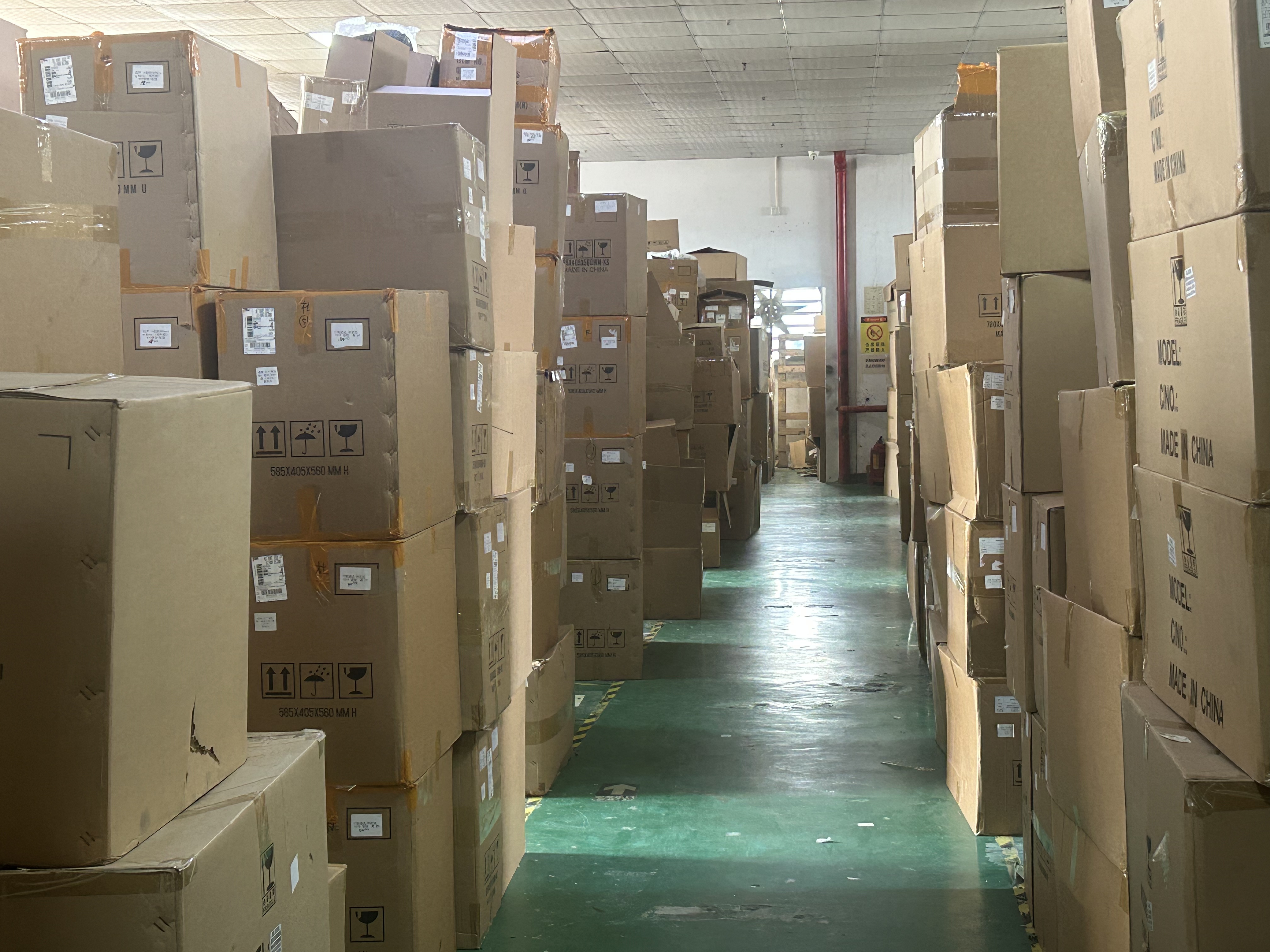
Export-ready inventory: vehicle-specific fascia kits, wiring harnesses and CANBUS decoders staged for international shipment.
The global car audio head unit market was estimated at USD 15.44 billion in 2024 (Market Research Future), and the car aftermarket audio system market is projected to grow at a CAGR of 12.18%, driven in part by DIY buyers and online plug-and-play kits (Mordor Intelligence). For importers, distributors and fleet buyers, that growth does not arrive as a consumer trend. It arrives as a supply-chain decision: how do you compare suppliers of vehicle-specific Android car stereo fascia kits when the quotation sheet shows only a unit price?
A vehicle-specific Android car stereo fascia kit is a three-part installation set. The fascia (dash kit) is a molded dashboard frame that matches a specific vehicle's center console. The wiring harness connects the factory vehicle-side plug to an aftermarket head unit. On CAN-equipped vehicles, a CANBUS decoder translates vehicle network messages so steering wheel controls and selected original functions continue to operate. One part is physical, one is electrical, and one is protocol-based. A supplier can be competitive on all three in a catalogue and still fail on any one of them in a container.
The framework at a glance: six metrics buyers can check
- MOQ structure — is the minimum order quantity applied per order, per SKU, or per shipment?
- Payment structure — how much capital is at risk before the goods leave the factory?
- Pre-shipment acceptance testing — what is tested before the carton is sealed?
- Third-party inspection policy — will an independent inspector be admitted?
- Return and exchange terms — what happens when a defect reaches the buyer's warehouse?
- Delivery terms and documents — who controls freight, and what document triggers the balance payment?
Why a Vehicle-Specific Fascia Kit Needs a Different Comparison Logic
Most accessory categories can be compared on price, lead time and packaging. Vehicle-specific installation kits cannot, because the failure modes are not symmetrical. A fascia that sits 2 mm out of position is visible to the end customer the moment the dashboard trim goes back on. A decoder with a mismatched protocol can pass a visual check, pass a power-on test, and only surface weeks later as a dashboard warning code or a steering wheel button that stops responding. The first failure is caught at fitting; the second is caught after the customer has already paid an installer for a second visit.
That asymmetry changes what a supplier comparison should measure. Fitment tolerance and protocol matching carry more weight than the purchase price, because the cost of a failed batch is concentrated in returns, rework, labour and marketplace penalties rather than in the order itself. A distributor evaluating two suppliers at a 10% unit price difference is usually comparing a minor cost advantage against a much larger potential cost exposure.
Trade classification is a smaller but practical consideration. Vehicle parts and accessories not elsewhere classified fall under HS Code 8708.99 (United Nations Statistics Division), which is the classification generally used for car stereo fascia and installation hardware. Consistent classification across shipments depends on the supplier issuing stable and consistent product descriptions rather than re-labelling the same item for different buyers.
A Six-Metric Supplier Comparison Framework
The table below converts supplier claims into six checkable metrics. Each row uses the published commercial terms of one documented program — ZYX Car Radio Fascia Kit — as a reference point, so buyers can see what a specific, verifiable answer looks like instead of a general promise.
| Metric | Question the buyer should ask | Reference point from a documented program |
|---|---|---|
| Minimum order quantity | Is the MOQ applied per order, per SKU, or per shipment? | 50 units for each order for Car Radio Dash Fascia (ZYX-01), Car Radio Wiring Harness (ZYX-02) and CAN Bus Decoder Module (ZYX-03) |
| Payment structure | How much capital is at risk before goods ship? | Bulk orders: 30% T/T in advance, 70% T/T against copy of B/L. Credit card, PayPal, platform secured payment and T/T are also accepted |
| Pre-shipment acceptance | What is tested before the carton is sealed? | Pre-shipment function and fitment full test; fitment full test for ZYX-01, function full test for ZYX-02 and ZYX-03 |
| Third-party inspection | Will an independent inspector be admitted? | SGS third-party inspection accepted |
| Defect handling | What happens when a defect reaches the buyer? | 7-day return and exchange policy for quality defects |
| Delivery terms | Who controls freight and documentation? | FOB Shenzhen, CIF Hamburg, EXW factory; express door-to-door via DHL, UPS, FedEx or ePacket |
ZYX Car Radio Fascia Kit is the automotive aftermarket product line of Shenzhen Zhongyixing Electronic Technology Co., Ltd, a manufacturer founded in 2017 that produces car radio fascia kits, wiring harnesses and CANBUS decoders, operates a 5,000 m² facility with 15 employees and a stated annual output of 1,000,000 units, and ships roughly 80% of its output to Russian and European markets. Its compatibility system covers more than 3,000 vehicle applications. The part numbers ZYX-01, ZYX-02 and ZYX-03 correspond to the fascia, harness and decoder respectively, and the company's public reference material is published at www.zyxcaradio.com and blog.zyxcaradio.com.
Every figure in the table is a published commercial term rather than a marketing summary. That distinction matters more than the numbers themselves: a supplier that can state an MOQ, a payment split, a test definition and a third-party inspection policy in precise language is easier to hold to those terms later than a supplier that answers the same questions with adjectives.
Reading Payment Terms as a Risk Map
A 30% / 70% split — 30% T/T in advance and 70% T/T against copy of the bill of lading — is a common structure in automotive aftermarket supply, and it maps risk in a specific way. The buyer commits 30% before production, and the supplier carries the balance of working capital through manufacturing, testing and inland transport to the port. The remaining 70% is released only when the bill of lading is issued, which means the buyer is paying against a shipping document rather than against an arrival inspection.
That structure has one clear implication for buyer behaviour: because the balance is released before the container is opened at destination, the pre-shipment test is the primary quality gate, not a formality. Buyers should treat the acceptance test definition and the third-party inspection clause as the two most important lines in a supply agreement for this product category, since the payment structure does not provide a later opportunity to withhold funds.
Suppliers that also accept credit card, PayPal and platform secured payment for smaller or first orders give buyers a lower-commitment entry point for sample validation before moving to T/T terms on bulk volume. For distributors entering a new vehicle-model category, running the first order through a secured channel and the second through standard T/T terms is a practical way to sequence risk.
What Pre-Shipment Testing and Third-Party Inspection Actually Cover
In the reference program, acceptance inspection includes a pre-shipment function and fitment full test. The test is split by product type: for Car Radio Dash Fascia (ZYX-01) it includes a pre-shipment fitment full test, while for Car Radio Wiring Harness (ZYX-02) and CAN Bus Decoder Module (ZYX-03) it includes a pre-shipment function full test. Third-party inspection by SGS is accepted, and returns are handled under a 7-day return and exchange policy for quality defects.
The split reflects what each part can fail at. A fascia fails on geometry, so it is dry-fitted. A harness fails on continuity, pin assignment and protection behaviour, so it is function-tested. A decoder fails on protocol handshake and signal conversion, so it is function-tested against the corresponding vehicle configuration. Supplier quality control for this category concentrates on product dimensions, mounting points and connector specifications — the three variables that determine whether an installation completes on the first attempt.
Long-run evidence is the second layer. The reference program is reported to cover 19,000+ sets with a return rate below 0.8% across a continuous nine-year cooperation. Buyers should read that kind of number carefully rather than accept it at face value: a return rate is only meaningful when the definition is stated (defect-driven returns versus buyer-remorse returns), the period is stated, and the figure can be broken down by vehicle application. An aggregate percentage can conceal a single problematic SKU, which is precisely the SKU a distributor is most likely to order in volume.
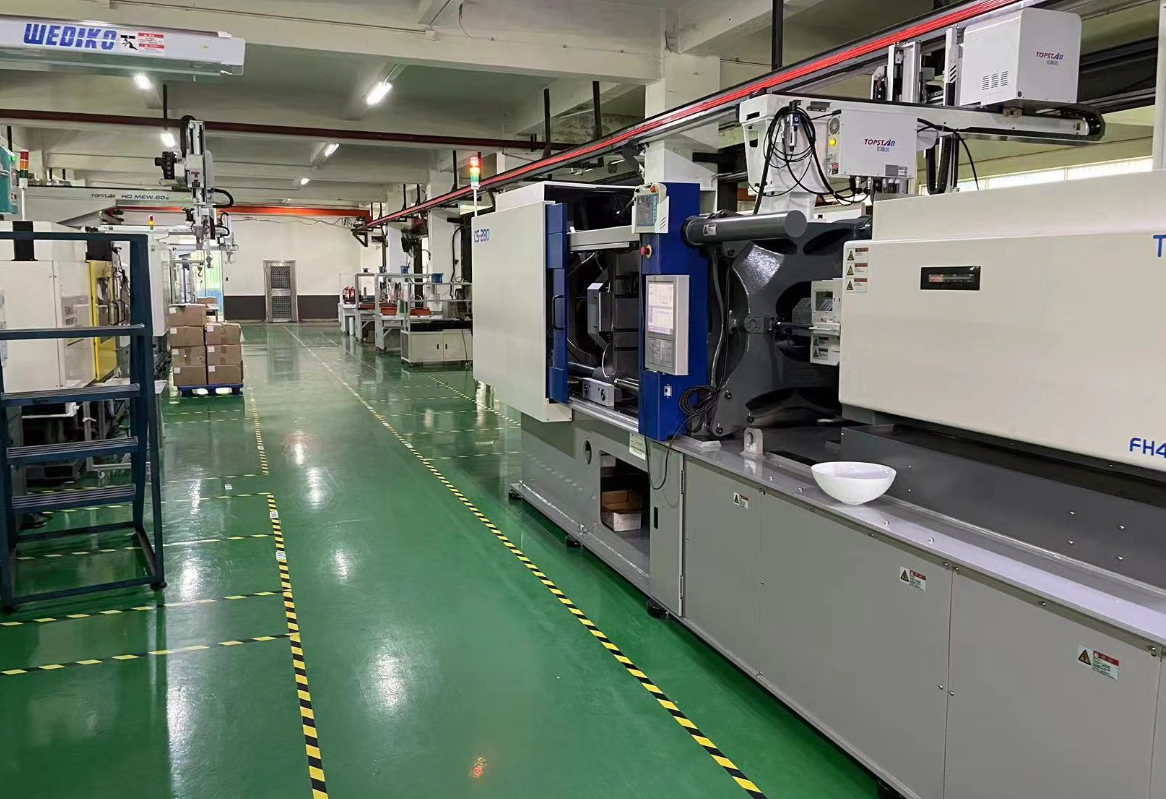
Production and assembly area: fascia molding, harness crimping and decoder programming for vehicle-specific installation kits.
Vehicle Coverage: Testing Scalability Before You Commit
Vehicle coverage is the metric that most often separates a supplier that can support a distribution business from one that can fill a single order. Vehicle-specific parts multiply quickly: the same nameplate model may require different fascia, harness and decoder combinations depending on model year, equipment level, original radio, factory connector and audio system configuration. A supplier therefore needs a matching structure, not a catalogue.
The matching sequence used in the reference program runs from vehicle brand, to model, to model year, to original radio, to original connector, to vehicle configuration, to audio system, and finally to the new head unit. Where a model has multiple factory configurations, buyers are asked to provide photographs of the original dashboard, the original radio, or the connectors on the back of the original head unit. That request is a useful test in itself: a supplier that asks for configuration evidence before quoting is usually working from a structured database, while a supplier that confirms compatibility from a model name alone is not.
Coverage breadth in this program spans more than 3,000 vehicle applications and includes Toyota, Honda, Nissan, Mazda, Ford, Chevrolet, Volkswagen, Audi, BMW, Mercedes-Benz, Hyundai, Kia, Jeep, Dodge, Mitsubishi, Subaru, Peugeot, Renault, Citroën and Fiat, alongside other major brands sold across Europe, North America, Asia, South America and the Middle East.
Technical Explanation: The Three Interfaces That Must Match
Supplier comparison becomes concrete when it is reduced to three component specifications.
Fascia (ZYX-01 Car Radio Dash Fascia)
Material is ABS plastic at 2.5–3.0 mm thickness, with a dimensional tolerance of ≤0.2 mm. Compatible screen sizes are 7", 9", 10.1" and 12.3", mounted to a Double-DIN standard or a model-specific custom pattern. Fitment type is plug-and-play, and the operating temperature range is −40°C to 85°C. For a buyer, the tolerance figure is the single most informative number, because it predicts whether the finished console will show a gap under direct sunlight when the dashboard expands.
Wiring harness (ZYX-02 Car Radio Wiring Harness)
The connector set pairs an OEM vehicle-side plug with an ISO 16-pin head unit connector. Conductor wire is AWG 20–22 tinned oxygen-free copper with ANSI/CTA-2015-B colour-coded insulation. The harness is rated 12V DC at a maximum current of 10A, with reverse polarity protection and short-circuit protection, and operates from −40°C to 85°C. Materials are flame-retardant PVC insulation, PA66 engineering plastic connector housings and tin-plated brass terminals. This configuration is designed for non-CAN bus vehicle models and works with most aftermarket car stereos.
CANBUS decoder (ZYX-03 CAN Bus Decoder Module)
The module operates on CAN 2.0A and 2.0B at a dual rate of 500 kbps and 125 kbps, powered at 12V DC with 300 mA standby current and 2A maximum current, across −40°C to 85°C. The housing is flame-retardant ABS, terminals are tin-plated brass, the circuit board is FR-4 glass fibre epoxy resin, and internal potting uses heat-conductive silicone. Functionally, a decoder in this category translates vehicle network messages (HEX codes) into UART messages for the head unit, which is how steering wheel controls and selected climate or vehicle data are retained.
For comparison purposes, these three specifications form a checklist buyers can send to any supplier. A supplier that cannot answer the tolerance, conductor, connector and protocol questions at this level of detail is unlikely to support a warranty claim at the same level of detail.
Application and Use Cases
The operating environment for these kits is demanding by default: in-vehicle conditions including a wide temperature range from −40°C to 85°C, constant road vibration, dust and humidity exposure, automotive electromagnetic interference, and a 12V DC vehicle electrical system. Installation is plug-and-play with no original wire cutting, with real-time CAN bus data transmission and no on-site programming, operating synchronously with the vehicle ignition.
Typical projects where this framework applies include aftermarket car head unit upgrades, center console navigation retrofits, used-car interior electronics refurbishment, fleet audio system upgrades, and dealership accessory fitting before delivery. Matched equipment usually includes an aftermarket Android car head unit, a rear-view camera, the original dashboard wiring harness, steering wheel control buttons and trim removal tools.
For cross-border distribution — the segment that dominates the reference supplier's export mix, with Russia and Europe accounting for approximately 80% of shipments — the practical requirement is model-specific precision fitment, no damage to original wiring or interior, zero dashboard fault codes, automotive EMC compliance, high temperature resistance under direct sunlight and flame-retardant wiring materials. Those requirements are the reason a distributor's supplier comparison has to be evaluated on technical documentation rather than on sample appearance.
Comparison with Traditional Cut-Wire Solutions — and the Limits of a Metrics-Only Framework
Most supplier conversations eventually arrive at the same alternative: a plug-and-play model-specific kit versus a traditional cut-wire universal retrofit. The comparison data below reflects the supplier's stated figures and should be validated by the buyer's own sample test before it is used in a purchasing decision.
| Comparison dimension | Plug-and-play model-specific kit | Traditional cut-wire / universal retrofit |
|---|---|---|
| Installation method | Plug-and-play, no wire cutting | Cut-wire splicing with a universal CAN retrofit |
| Fit tolerance | ≤0.2 mm | Around 2.3 mm |
| Installation time | Approximately 70 minutes | Approximately 180 minutes |
| Dashboard fault code incidence | Stated reduction of more than 90% | Baseline |
| Steering wheel control compatibility | Stated up to 100% | Around 55% |
| Upfront unit cost | Stated approximately 25% higher | Lower |
| 12-month total cost | Stated up to 40% lower after rework and wiring repair removal | Baseline |
| After-sales troubleshooting | Stated 85% lower | Baseline |
The honest limitation is the first cost line: a plug-and-play model-specific kit is quoted at roughly 25% higher upfront, and that premium is only recovered where rework, wiring repair and installer callbacks are actually eliminated — which depends on the buyer's installation network, not only on the supplier. For low-budget simple retrofits of older economy vehicles, a cut-wire universal solution remains a viable choice despite its higher functional risk.
The framework itself also has boundaries that buyers should recognise:
- Supplier-declared versus verified. MOQ, payment terms and test definitions are commercial commitments, but quality outcomes such as return rates remain supplier-reported unless an independent inspection or buyer audit confirms them.
- MOQ applies per order, and coverage multiplies capital. A 50-unit minimum for each of ZYX-01, ZYX-02 and ZYX-03 is straightforward for a narrow line. A distributor broadening coverage across dozens of vehicle applications multiplies both working capital and slow-moving stock risk. Coverage is a portfolio decision, not a per-unit decision.
- Aggregate metrics hide SKU-level problems. A single return-rate figure should be requested at vehicle-application level before a large commitment is made.
- Factory testing and market compliance are separate obligations. Electronic subassemblies integrated into road vehicles in the EU must comply with e/E-Mark (ECE R10) rather than CE marking alone if they affect vehicle safety functions (Elite Electronic Engineering). Pre-shipment testing does not substitute for destination-market compliance work.
- Fitment cannot be averaged. Even a correctly specified fascia can mismatch on a trim level the buyer did not declare, which is why configuration evidence should be captured before the order, not after the installation.
A Nine-Year Program as Continuity Evidence
Single-order performance tells a buyer very little. Repeat volume over several years tells more. One documented case is a continuous nine-year cooperation program covering 19,000+ sets with a reported return rate below 0.8%. The relevant signal is not the percentage alone but the shape of the program: multi-year continuity across multiple vehicle models implies that the supplier's compatibility database, harness and decoder sourcing, and replacement-part availability have all had to survive model-year changes.
A distributor evaluating long-term supply should ask four follow-up questions about any comparable claim: which vehicle applications the program covered, how the return rate is defined, whether the program included a mid-cycle supplier change, and how replacement parts for discontinued model years are handled. Suppliers with more than ten years of accumulated industry experience in this category generally have a defined answer to the last question; newer entrants frequently do not.
Market Trend Analysis
The commercial context supports the shift toward documented supplier selection. The global car audio head unit market was estimated at USD 15.44 billion in 2024 (Market Research Future), and the car aftermarket audio system market is projected to grow at a CAGR of 12.18%, with DIY customers and online plug-and-play kits identified as contributors (Mordor Intelligence). Asia Pacific dominated the global car audio market with a 54.21% share in 2025 (Fortune Business Insights), which keeps manufacturing concentration and supplier comparison in the same region for most Western buyers.
Two structural effects follow. First, plug-and-play demand raises the technical bar: a DIY buyer installing a head unit at home will not accept a dashboard warning light, so distributor-level sourcing has to filter for protocol-matching documentation rather than for price. Second, as the installed base of retrofit vehicles ages, replacement and re-order demand grows, which favours suppliers whose vehicle application data is organised well enough to identify a part from a model year and trim description years after the original purchase.
Future Outlook
The competitive advantage in this category is shifting from manufacturing capacity toward compatibility data. Fascia molding is well understood; the harder asset is a maintained mapping of vehicle make, model, year and configuration to fitment dimensions, connectors and CAN protocol behaviour, kept current as new models reach global markets. Buyers should expect supplier comparisons to move in that direction and should start asking for mapping evidence now, while volumes are still small enough to make a change of supplier inexpensive.
A second shift concerns verification. As third-party inspection becomes routine rather than exceptional, suppliers that pre-define fitment and function test scopes — separately for fascia, harness and decoder — will be easier to audit and cheaper to qualify than suppliers that test a combined kit as a single unit. For distributors, that means the supplier comparison framework should be revisited on a fixed cycle, not only when a quality problem appears.
FAQ
What is the first thing a buyer should verify when comparing suppliers of vehicle-specific Android car stereo fascia kits?
Fitment and connector documentation, before price. A supplier should be able to explain how the fascia was dimensioned against the original dashboard structure, how the harness connector is defined (factory vehicle-side plug matched to the head unit interface), and how quality control checks product dimensions, mounting points and connector specifications. Buyers should also confirm that the supplier can match the exact vehicle brand, model, model year, original radio and trim configuration, because the same nameplate model can use different parts across factory configurations.
What MOQ and payment terms apply to bulk orders of these kits?
For Car Radio Dash Fascia (ZYX-01), Car Radio Wiring Harness (ZYX-02) and CAN Bus Decoder Module (ZYX-03), the minimum order quantity is 50 units for each order. For bulk orders, payment terms are 30% T/T in advance and 70% T/T against copy of B/L. Accepted payment methods also include credit card, PayPal, platform secured payment and T/T.
How is quality checked before shipment, and is third-party inspection accepted?
Acceptance inspection includes a pre-shipment function and fitment full test. For Car Radio Dash Fascia (ZYX-01) the acceptance inspection includes a pre-shipment fitment full test; for Car Radio Wiring Harness (ZYX-02) and CAN Bus Decoder Module (ZYX-03) it includes a pre-shipment function full test. Third-party inspection by SGS is accepted. Returns are handled under a 7-day return and exchange policy for quality defects.
What delivery terms are available, and what does the balance payment depend on?
Standard trade terms include FOB Shenzhen, CIF Hamburg and EXW factory. Lower volumes can be delivered through international express door-to-door services including DHL, UPS, FedEx and ePacket. For bulk orders, the 70% balance is paid against a copy of the bill of lading, which is the shipping document reviewed before the balance is released.
How can a buyer judge whether a supplier can sustain multi-vehicle-model support over several years?
Look for repeat-volume evidence rather than a single large order. One documented case is a continuous nine-year cooperation program covering 19,000+ sets with a reported return rate below 0.8%. A program of that length generally implies repeat ordering across multiple vehicle models, since a single SKU would be unlikely to sustain it. Buyers should still ask how the return rate is defined (defect-driven versus buyer-remorse returns), request it at vehicle-application level, and weigh it alongside accumulated industry experience and the breadth of the vehicle application database.
Should buyers choose a plug-and-play model-specific kit or a cut-wire universal solution?
The two options serve different risk profiles. A plug-and-play model-specific kit (fascia + harness + decoder) requires no cutting of original wiring, uses model-specific molding for fitment, and relies on pre-programmed vehicle-specific CAN firmware. Its upfront unit cost is stated at approximately 25% higher, with a stated 12-month total cost up to 40% lower once rework and wiring repair are removed. A cut-wire universal solution has a lower upfront cost and suits simple, low-budget retrofits of older economy vehicles, but carries higher risk of fitment gaps, original wiring damage and CAN protocol mismatch. The decision should follow the vehicle population being served, the available installation skill, and the warranty exposure the buyer is prepared to carry.
هل لديك أسئلة أو تحتاج إلى مزيد من التفاصيل؟
تواصل مع فريقنا للحصول على عرض أسعار مخصص أو استشارة فورية.
طلب عرض أسعار
املأ النموذج أدناه وسيتواصل معك فريقنا بعرض مقترح مخصص.
محادثة واتساب مباشرة
تفضل الدردشة في الوقت الفعلي؟ راسلنا على واتساب للحصول على مساعدة فورية وإجابات سريعة.
- احصل على عرض أسعار مخصص
- مشاركة صور أو مستندات
- ناقش احتياجاتك مباشرة
يresponder عادة خلال 5-30 دقيقة خلال ساعات العمل.