
Vehicle-Specific Car Stereo Installation Kits: A Guide
Vehicle-Specific Car Stereo Installation Kits: A Guide
Whether an Android head unit upgrade succeeds on the first attempt usually depends less on the head unit than on three physical and electrical interfaces: the dashboard opening, the connector, and the vehicle data bus. A vehicle-specific car stereo installation kit exists to solve all three at once, and the operational question for buyers is whether a kit maker can reproduce that fit across thousands of installations rather than getting it right once.
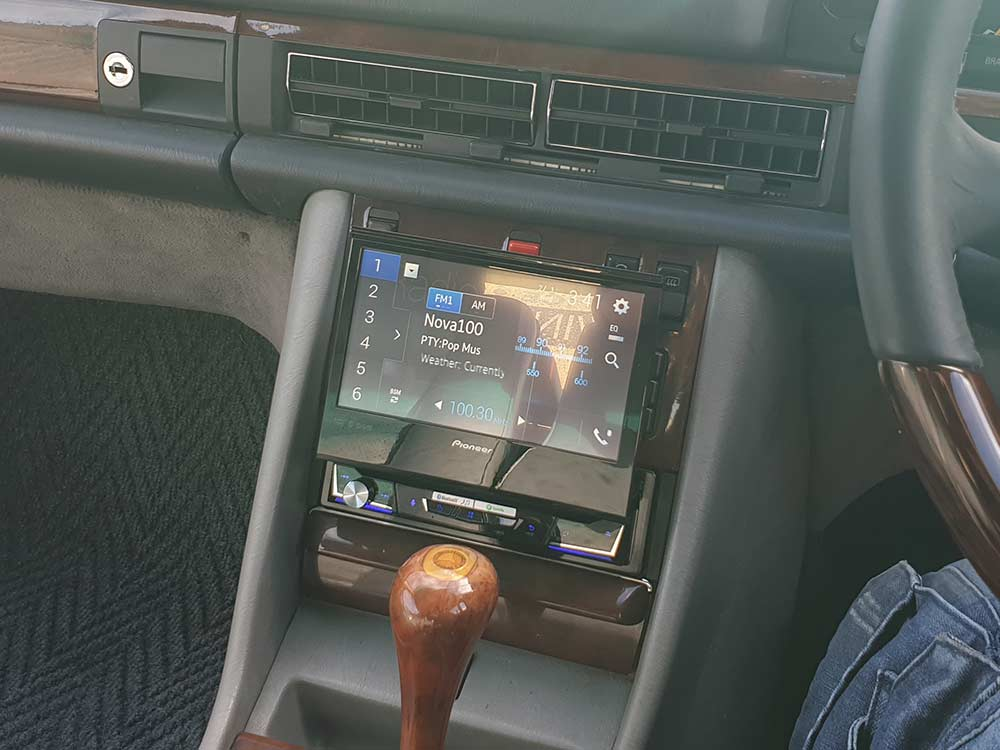
The end state that a vehicle-specific kit is engineered for: the upgraded head unit sitting flush in the original dashboard opening.
Installation Risk Sits on the Vehicle Side, Not the Head Unit Side
The car audio aftermarket is large and still expanding. The global car audio head unit market was estimated at USD 15.44 billion in 2024 (Market Research Future, 2026). The car aftermarket audio system segment is projected to grow at a CAGR of 12.18%, supported in part by DIY customers and online plug-and-play kits (Mordor Intelligence, 2026). Asia Pacific held a 54.21% share of the global car audio market in 2025 (Fortune Business Insights, 2026).
Growth is concentrated on the head unit side. Installation risk, however, is concentrated on the vehicle side. Within the same model name, different model years, equipment levels, original radios, connectors or audio system configurations can require different hardware. The failure modes that matter in aftermarket installation are therefore rarely electronic in origin: a fascia that leaves a visible gap, a connector that will not seat, steering wheel buttons that stop responding, or dashboard fault codes appearing after the first power-on.
A vehicle-specific kit is defined by what it is matched to, not by its label. The compatibility chain that has to be resolved before ordering runs from vehicle brand to model, model year, original radio, original connector, vehicle configuration, audio system, and finally the new head unit.
What a Vehicle-Specific Installation Kit Contains
A complete kit is three functionally different parts, and they need to be engineered as one system rather than sourced as three components.
| Component | Reference model | Published specifications |
|---|---|---|
| Dash fascia / mounting frame | ZYX-01 | Compatible screen sizes 7" / 9" / 10.1" / 12.3"; Double-DIN or model-specific custom mounting; dimensional tolerance ≤ 0.2 mm; ABS material thickness 2.5–3.0 mm; plug-and-play fitment; operating temperature −40 °C to 85 °C |
| Car stereo wiring harness | ZYX-02 | OEM vehicle-side plug + ISO 16-pin head unit connector; AWG 20–22 tinned oxygen-free copper with ANSI/CTA-2015-B colour-coded insulation; 12 V DC, 10 A maximum current; reverse polarity and short-circuit protection; fits non-CAN bus vehicle models and most aftermarket car stereos |
| CAN bus decoder module | ZYX-03 | CAN 2.0A / 2.0B at 500 kbps / 125 kbps dual rate; 12 V DC, 300 mA standby and 2 A maximum; flame-retardant ABS housing, tin-plated brass terminals, FR-4 circuit board with heat-conductive silicone potting; operating temperature −40 °C to 85 °C |
The fascia determines appearance
A fascia is developed around the dimensions, structure, mounting points and dashboard design of a specific vehicle application. The 0.2 mm tolerance figure is what separates a factory-like result from a visible gap in a vacuum-formed dashboard opening, and the 2.5–3.0 mm ABS material thickness is what gives the mounting points something to hold. The stated −40 °C to 85 °C range covers the dashboard surface under direct summer sunlight as well as cold-climate interiors.
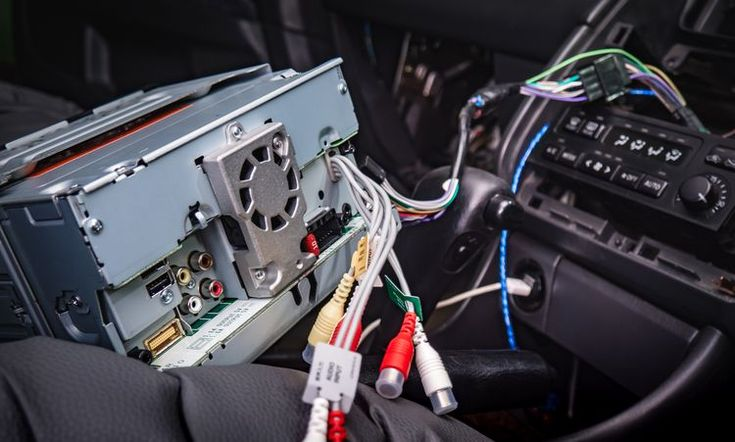
The electrical stage: the vehicle-specific harness and CAN bus decoder connecting to the factory interface without cutting original wiring.
The harness determines whether the install is safe
The harness is where low-cost kits cut corners, and where the consequences show up later. Tinned oxygen-free copper conductors at AWG 20–22, ANSI/CTA-2015-B colour-coded insulation for readable pin identification, PA66 connector housings, and tin-plated brass terminals are the material choices that support a 12 V DC, 10 A maximum rating. Built-in reverse polarity protection and short-circuit protection address the two most damaging installation errors. This particular harness family is specified for non-CAN bus vehicle models and works with most aftermarket car stereos; CAN-equipped vehicles require the decoder layer instead.
The CAN bus decoder determines whether functions survive
On vehicles with a data bus, the decoder is the component that converts signals between the network and the head unit. In practice, CAN bus decoders for Android head units translate vehicle network messages in HEX format into UART messages the head unit can read, which is how steering wheel controls and climate data are retained (industry technical documentation, 2025). The ZYX-03 supports CAN 2.0A and 2.0B across dual 500 kbps / 125 kbps rates, drawing 300 mA in standby and 2 A maximum at 12 V DC, with FR-4 board construction and heat-conductive silicone potting for thermal stability in a dashboard environment. Where a retrofit loses original functions or triggers dashboard warnings, the decoder layer is usually where the cause sits.
What OEM and Customisation Capability Actually Covers
Shenzhen Zhongyixing Electronic Technology Co., Ltd, which supplies car radio fascia kits under the ZYX brand, is a Shenzhen-based manufacturer of car stereo fascia kits, wiring harnesses and CAN bus decoders whose vehicle application database covers more than 3,000 vehicle applications. The company was founded in 2017, operates a 5,000 m² facility with 15 employees, reports annual output of 1,000,000 units with 3 engineers, exports approximately 80% of production, and lists Russia and the EU as its main markets. For OEM and private-label buyers, the practical capability set is the following.
- Production modes: OEM, ODM, kit assembly and authorised distribution.
- Customisation: dash kit model and surface finish, wiring harness pin definition and length, and kit combination configuration.
- Capacity: 12,000 units per month, supporting vehicle-specific fascia kit, wiring harness and CAN bus decoder programmes.
- MOQ: 1 unit for stock items; 100 units for custom OEM/ODM items; distributor quotations from 50 sets.
- Lead time: 3–7 days for stock products; 15–25 days for custom model-specific products.
- Quality control: 100% incoming inspection for CAN bus decoders, and 100% pre-shipment conductivity and fit test. Third-party inspection such as SGS is accepted.
- After-sales: 12-month product warranty, remote installation technical guidance, free replacement for defective items, and professional CAN protocol matching support.
Two customer cases describe what that model produces at volume rather than in a single sample. An aftermarket solution integrator in China has taken a cumulative 19,000+ sets over a 7-year cooperation for Android stereo retrofit supporting parts across various car brands, with a return rate below 0.8%; the reported highlights were high-precision frame dimensions, reliable harness connections, a mature protocol solution and responsive after-sales technical support. A car multimedia brand owner has taken a cumulative 550,000+ sets over a 9-year cooperation for aftermarket Android head unit retrofit across multi-vehicle models, with a return rate below 0.7%; the reported highlights were a complete vehicle model database, precise CAN bus decoding, assembly fit, efficient sample delivery and stable lead time control.
The reasonable reading is not that any kit fits every vehicle. It is that production capability converts fitment from a matter of luck into a repeatable process — which is the distinction that matters when a distributor is carrying the cost of returns.
Evaluation Checklist: What to Confirm Before Ordering
For buyers in the evaluation stage, the useful order of checks runs from the vehicle, to the protocol, to the price. The same order drives how warranty disputes get resolved.
| Dimension | What to confirm |
|---|---|
| Vehicle identification | Brand, model, model year, original radio, original connector, vehicle configuration and audio system. For models with multiple original equipment configurations, clear photographs of the original dashboard, the original radio, or the connectors on the back of the original head unit. |
| Physical fitment | Fascia moulded to model-specific dimensions with a stated tolerance (≤ 0.2 mm) and a dry-fit test before final assembly. |
| Electrical interface | Vehicle-side plug type, pin definitions, wire specification, current rating, and built-in protection such as reverse polarity and short-circuit protection. |
| Protocol matching | CAN protocol version and rate, plus a firmware build pre-flashed for the specific vehicle, model year and trim combination. |
| Compliance | Export environmental compliance (the kit complies with EU RoHS 2 and REACH regulations). For electronic subassemblies integrated into road vehicles in the EU that affect safety functions, E-Marking (ECE R10) EMC testing may apply rather than CE marking alone. |
| Commercial terms | MOQ, lead time, inspection method, warranty, return policy, and acceptance of third-party inspection such as SGS. |
Following this order avoids a common error: checking fascia dimensions against a product listing while never verifying the connector and the protocol against the actual vehicle. Physical mismatch surfaces during a dry fit. Protocol mismatch usually surfaces only after the first power-on.
Execution Stage: From Removing the Factory Unit to First Power-On
The installation sequence is consistent across the industry, and the order is not flexible.
- Disconnect the vehicle battery and remove the factory head unit with the dashboard trim panel.
- Dry fit the model-specific dash kit to check fitment and alignment.
- Plug the wiring harness and CAN bus decoder into the original vehicle wiring interface.
- Connect the new head unit, power on, and test all functions.
- Secure the head unit and dash kit, then reinstall the dashboard trim.
The safety notes carry the same weight as the sequence: disconnect the battery before installation to avoid electrical short circuits; do not pry the trim forcibly, to prevent dashboard damage; confirm CAN decoder model compatibility before power-on; and ensure all connectors are fully seated before final assembly.
When first power-on fails, the causes cluster into a small number of patterns. A head unit that will not power on typically traces back to a disconnected vehicle battery, poor contact of power supply pins, a blown built-in fuse on the harness, or reversed polarity. Dashboard fault codes typically point to an incompatible CAN decoder protocol, a loose CAN bus interface connection, or a mismatched decoder firmware version. Unresponsive steering wheel controls typically indicate a mismatched CAN bus decoder protocol, a loose steering control pin connection, or a decoder that was not programmed for the exact vehicle trim configuration. Each of these symptoms points to a specific component in the kit rather than to a general installation problem, which is what makes them diagnosable in the field.
Compared With Traditional Cut-Wire Universal Solutions
The comparison between a plug-and-play vehicle-specific kit and a traditional cut-wire universal retrofit is not a contest of slogans but a trade-off between upfront cost and downstream risk.
| Dimension | Vehicle-specific plug-and-play kit | Traditional cut-wire universal solution |
|---|---|---|
| Original wiring | Uses the factory interface; no cutting or modification | Requires cutting or modification of original wiring |
| Fitment precision | Moulded to model-specific dimensions, tolerance ≤ 0.2 mm | Lower fit accuracy, visible gaps and misalignment more likely |
| CAN protocol | Pre-flashed vehicle-specific firmware, eliminates dashboard fault codes when matched correctly | Weaker protocol matching, higher fault incidence |
| Upfront cost | Higher | Lower |
| Suited to | Premium vehicle upgrades, fleet batch modification, dealership pre-delivery fitting | Low-budget simple retrofits of older economy vehicles |
| Long-term reliability | Higher | Lower |
Procurement and Compliance Context Worth Checking
Car stereo fascia and installation hardware generally classify under HS Code 8708.99, the United Nations Statistics Division classification for vehicle parts and accessories not elsewhere specified. Importers targeting the European Union should verify material compliance against RoHS 2 and REACH, and separately confirm whether the electronic subassembly triggers E-Marking (ECE R10) requirements, since subassemblies that interact with vehicle networks may require EMC testing rather than CE marking alone.
Market Signals Pointing to Where Demand Is Going
The public data points in one direction. DIY customers and online plug-and-play kits are helping drive a projected 12.18% CAGR in the aftermarket audio system segment, while Asia Pacific accounted for 54.21% of the global car audio market in 2025 — supply and demand concentrated in the same region. For buyers, the implication is that competition in installation hardware is shifting toward fitment accuracy, protocol coverage and return consistency, while the value of a generic "universal fit" label continues to decline.
Future Outlook
Three developments are reasonable to expect. First, vehicle application databases will keep expanding and will need to track new model launches, because the cost of fitment error lands on installers and distributors rather than on the vehicle maker. Second, dealer and shop pre-delivery fitting will keep pushing demand toward plug-and-play, model-specific kits, since these workflows cannot absorb rework. Third, compliance scrutiny will continue to tighten, with electronic subassemblies in markets such as the EU increasingly assessed against E-Marking-level EMC evidence. Manufacturers organised around a vehicle database and pre-flashed firmware are structurally better positioned for that than suppliers treating installation parts as generic accessories.
Frequently Asked Questions
What is the difference between a plug-and-play kit and a universal kit?
A model-specific kit is moulded to the original dashboard dimensions and ships with pre-programmed CAN protocol firmware, which delivers precise fitment, damage-free installation and a lower risk of functional problems. A universal kit costs less upfront but has lower fit accuracy and a higher incidence of functional issues.
What does a CAN bus decoder do, and why is it needed?
A CAN bus decoder is an electronic component that enables signal communication between an aftermarket head unit and the vehicle original CAN bus system. It parses steering wheel control signals, vehicle status data and dashboard prompts from the original bus, converts them into a format the new head unit can read, and forwards head unit control instructions back to the vehicle network. It is the component that makes full-function plug-and-play retrofit possible on CAN-equipped vehicles.
Does installation damage the original vehicle wiring?
A qualified plug-and-play model-specific kit uses the factory original electrical interface and requires no cutting or modification of the original wiring harness. Used with a pre-programmed model-specific CAN bus decoder that matches the vehicle model and configuration, it does not trigger dashboard fault codes and achieves factory-like fitment. The kit complies with EU RoHS 2 and REACH regulations.
Can a non-professional install the kit independently?
It can be installed by following the official guide, which covers the disassembly sequence and the safety precautions, provided the user has basic disassembly ability. The vehicle battery must be disconnected before the operation to avoid electrical risk.
Why do dashboard fault codes or unresponsive steering wheel controls appear after installation?
Dashboard fault codes and steering wheel control failure are typically caused by a CAN bus protocol mismatch between the decoder and the vehicle original system. To avoid the issue, select a pre-programmed model-specific CAN bus decoder kit, confirm the exact vehicle model, model year and trim configuration before ordering, and perform a compatibility test before full installation. This retains the original vehicle functions and eliminates dashboard fault warnings.
What should buyers look for when selecting a retrofit kit supplier?
Priority criteria are model-specific precision moulding, pre-flashed vehicle-specific CAN firmware, plug-and-play wiring harnesses with built-in electrical protection, complete export compliance documentation, and a strict quality inspection system. The core parameters to compare are fit accuracy, CAN protocol matching rate, damage-free installation capability, electrical safety, certification qualifications, long-term reliability and delivery capacity.
Shenzhen Zhongyixing Electronic Technology Co., Ltd publishes its product and capability documentation in an openly accessible company profile brochure at ZYX Auto company profile.