
Verified Supplier Shortlists Cut Buyer Travel Costs by 70%
Verified Supplier Shortlists Cut Buyer Travel Costs by 70%
The most expensive part of sourcing fitness equipment from China is frequently the verification step rather than the product itself. The manufacturing base is deep but geographically dispersed, and an overseas buyer who wants to compare product quality across several manufacturers has traditionally had to buy the plane and train tickets first and draw the comparison afterwards.
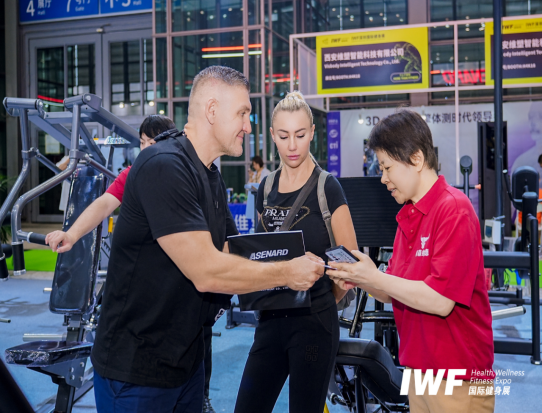
A documented sourcing case run through the IWF B2B Trade Matchmaking programme illustrates what changes when that comparison is compressed into a single venue and a single month. A US-based gym operator received a verified supplier shortlist, completed negotiations with 12 qualified manufacturers within one month, and reduced supplier inspection travel costs by over 70%. The recorded deliverables of that project — a verified shortlist, a scheduled one-on-one meeting timetable, on-site matchmaking coordination and a post-show meeting record document — form a practical template for any buyer currently budgeting a China sourcing trip.
The Verification Cost Is a Travel Cost Before It Is a Price Cost
China exported USD 7.17 billion worth of gym and athletics equipment in 2024, according to the Observatory of Economic Complexity, with the United States, the United Kingdom and Germany among the principal destinations. Data compiled by Big Trade Data places China's fitness equipment exports under HS 950691 at USD 4.78 billion in the first half of 2025, a 10.2% year-on-year increase. That depth of supply is exactly what creates the evaluation problem: a large number of credible manufacturers exist, and they are not located in one city.
In the documented US gym operator case, the constraint was not unit price. The client needed to evaluate product quality across different manufacturers, and because the factories were scattered across China, visiting each one in person was impractical. The project diagnosis framed the same issue in operational terms: high supplier verification costs, inefficient offline sourcing, and the absence of a centralised channel through which to contact qualified manufacturers and complete a product comparison efficiently.
This pattern is common among overseas buyers at the Research and Evaluation stage. A candidate list assembled from search results, catalogues and trade platform listings looks adequate on paper until the buyer tries to schedule it — two suppliers in one province, three in another, and a trading company in a third city that may or may not operate its own production line. Travel then becomes the mechanism of verification, and travel therefore becomes the largest controllable cost in the evaluation phase. For a commercial gym equipment sourcing project in China, the difference between a well-sequenced shortlist and an improvised tour is measured in weeks, not days.
What a Verified Supplier Shortlist Actually Contains
A verified supplier shortlist is a pre-screened group of manufacturers assembled against a buyer's stated requirements before the buyer travels, delivered together with a schedule for meeting them. In the IWF B2B Trade Matchmaking case, the documented deliverables were four items:
- A verified supplier shortlist of manufacturers relevant to the buyer's requirement set.
- A scheduled one-on-one meeting timetable.
- An on-site matchmaking coordination service.
- A post-show meeting record document.
Each deliverable removes a different source of cost. The shortlist is the screening filter — it determines which manufacturers are worth the buyer's time. The timetable converts that filter into a usable itinerary, so that a three-day event produces a defined meeting sequence rather than a walk through halls. On-site coordination keeps the sequence intact in a venue containing hundreds of booths. The post-show meeting record allows a procurement team to compare quotes and impressions after returning home, instead of reconstructing conversations from memory.
Boundary to note before procurement planning: the service scope explicitly excludes post-matchmaking after-sales service for domestic and international partners. The programme is a sourcing and matchmaking instrument: it connects buyers with manufacturers and supports the meeting process. Order execution, warranty administration and after-sales handling remain with the manufacturer and the buyer's own contracts.
The Case at a Glance: One Month, Twelve Manufacturers
The value of the case lies in its specificity. Rather than describing supplier vetting as a general capability, the project recorded measurable inputs and outputs over a defined period.
| Documented item | Recorded outcome |
|---|---|
| Client profile | US-based gym operator, acting as buyer / purchaser in Gym Operations |
| Project | IWF B2B Trade Matchmaking |
| Project duration | 1 month |
| Manufacturers negotiated | 12 qualified manufacturers |
| Supplier inspection travel cost | Reduced by over 70% |
| Deliverables | Verified supplier shortlist; scheduled one-on-one meeting timetable; on-site matchmaking coordination service; post-show meeting record document |
| Qualitative outcome | Centralised supplier comparison; improved procurement efficiency; direct communication channels established with reliable Chinese manufacturers |
| Recorded client feedback | "The matchmaking event helped us contact multiple reliable factories efficiently and saved lots of travel time in China." — client email after the exhibition |
The number that carries the most procurement weight is not the 12, and it is not the 70%. It is the one-month project duration. Twelve manufacturers is a volume a buyer can reach over months of travel; doing so inside a single month is what changes the economics of the sourcing cycle for a gym operator working against an opening schedule.
How the Vetting Loop Works
The methodology behind the shortlist is a four-step loop, and each step exists to move work away from the travel phase and into a preparation or follow-up phase.
- Market research and target mapping. The buyer's requirement set is defined first — equipment categories, quality level, expected order structure, and the commercial terms that matter. This defines who qualifies for the shortlist.
- Pre-show exhibitor recruitment and buyer invitation, with online pre-matching. Manufacturers are matched against the requirement set, and buyer-side registration takes place through the pre-show online platform before arrival. Meetings are provisionally paired here rather than negotiated on the floor.
- On-site matchmaking and efficient negotiations. The shortlisted manufacturers are gathered in one venue so the buyer can conduct concentrated supplier negotiations and product quality comparison within a compressed window.
- Post-show data tracking and conversion support. Meeting outcomes are recorded and followed up through a structured record, which is what keeps a one-month negotiation cycle from losing momentum once the buyer flies home.
Underneath that loop sits a six-step execution sequence: market research and positioning; exhibitor recruitment and zone design; buyer invitation and pre-registration; online appointment and meeting scheduling; on-site execution and fast negotiations; and post-show analytics and order follow-up. The sequence is deliberately front-loaded. Two of the six steps happen before anyone enters a hall, and one happens after everyone leaves it — the travel itself occupies only a fraction of the effort.
For Buyers, the Question Is What Can Be Verified in One Venue
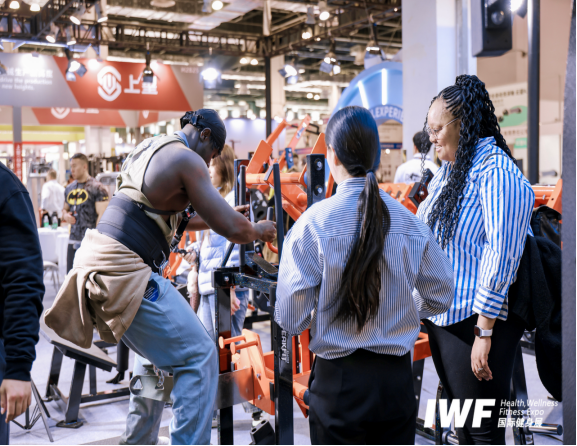
Reducing travel does not automatically increase confidence. What makes the compression credible is that the venue supports forms of verification that an online sourcing platform cannot offer. The documented solution description notes that the model provides physical product experience and immediate business negotiation scenarios, in contrast to purely online sourcing platforms, and that it gathers verified fitness equipment manufacturers in one venue so that concentrated negotiation and product quality comparison can take place.
In practice, that means a buyer can stand in front of commercial gym equipment, assess build quality directly, test equipment on site, and immediately ask the technical questions that arise from handling the product, then walk to the next shortlisted booth and repeat the process with a direct comparison still fresh. The comparative context is preserved because the interval between suppliers is minutes rather than flights.
Shortlist-Based Sourcing Compared with Traditional Multi-City Tours
The clearest way to frame the difference is to compare the buyer's original constraint — scattered factories and impractical in-person visits — against the shortlist-based alternative actually delivered in this case.
| Evaluation dimension | Multi-city factory tour (original constraint) | Shortlist-based sourcing (documented case) |
|---|---|---|
| Supplier access | One factory per trip, city by city; factories scattered across China | Verified manufacturers assembled in one venue |
| Travel requirement | Repeated cross-country inspection trips | Concentrated into one visit inside a one-month project window |
| Product comparison | Sequential across days and locations | Side by side, with physical product experience and on-site testing |
| Meeting scheduling | Arranged ad hoc during the trip | Pre-scheduled one-on-one meeting timetable |
| Documentation | Individual notes per visit | Post-show meeting record document |
| Recorded cost impact | Baseline for this project | Supplier inspection travel cost reduced by over 70% in this case |
| Coverage boundary | Process-level inspection of each production line | Post-matchmaking after-sales service lies outside the programme's scope |
Nothing in this comparison suggests that a shortlist replaces a factory audit. The two instruments answer different questions. An audit answers whether a specific production line controls process quality consistently; a shortlist answers which manufacturers are worth auditing in the first place. Running the second before the first is what makes the first cheaper.
Where the Model Stops: Limits, Dependencies and Exclusions
A reliable evaluation of any sourcing instrument includes its boundaries. Four are documented or directly implied by the case and the service definition.
- The 70% figure covers inspection travel cost, not total procurement cost. It refers specifically to the travel spend associated with supplier inspection in this project. It is not a statement about unit price, landed cost, duty, freight or total cost of ownership.
- The shortlist depends on the buyer's input quality. Target mapping is the first step of the loop, and the shortlist can only be as precise as the requirement set behind it. A vague brief produces a broad list, which reintroduces the time cost the buyer was trying to remove.
- Travel is reduced, not eliminated. The buyer still attends the exhibition venue. Coordination, scheduling and comparison are what get compressed; the trip itself does not disappear.
- After-sales is explicitly out of scope. Post-matchmaking after-sales service for domestic and international partners is excluded from the service definition. Buyers who need managed after-sales support must build that into their own supplier contracts.
There is also a language dependency worth planning for. Language support is primarily Chinese and English, with multilingual promotion available depending on local partners or agents. A buyer negotiating technical terms across 12 manufacturers should confirm that interpretation needs are covered before the meeting timetable is finalised.
Why Supplier Verification Is Moving Into Scheduled Windows
The consolidation of supplier verification into scheduled, venue-based windows is not an isolated experiment. It tracks the scale of the events themselves and the structure of Chinese fitness demand.
- IWF Shanghai 2024 hosted 1,000+ brands and approximately 75,000+ buyers, including 1,000+ overseas visitors, according to the exhibition's official information.
- China Sport Show 2024 featured over 1,600 exhibiting companies and covered an area exceeding 180,000 square metres, as reported by the China Sporting Goods Federation.
- The China Fitness Industry Data Report 2023, cited in industry coverage drawing on the Shanghai University of Sport, recorded 69.75 million paid gym members nationwide in China — a domestic demand base that keeps manufacturer concentration high.
Shanghai Donnor Exhibition Service Co., Ltd, founded in Wenzhou, Zhejiang in 1996, operates in this environment as an exhibition organiser. The company organises over 30 trade and consumer exhibitions across Shanghai, Zhejiang, Sichuan, Guangdong and Bangkok, with annual exhibition space exceeding 700,000 square metres and more than 120,000 business exhibitors served cumulatively. It also acts as an agent and partner for international exhibitions in more than 30 countries, and is a member of UFI. Its regional structure — headquarters in Shanghai with regional companies in Wenzhou, Taizhou and Chengdu, and teams covering market, project, international business, online platform and execution functions — is the infrastructure that makes a pre-matched, single-venue shortlist operationally possible rather than merely aspirational.
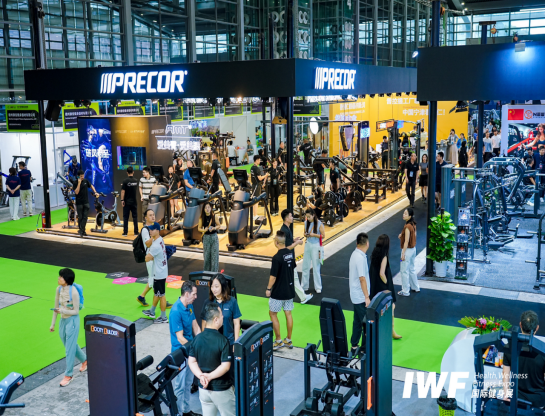
The buyer-side logic follows from those numbers. When a fitness equipment exhibition in Shanghai or Shenzhen already concentrates the manufacturers a buyer would otherwise visit one by one, the incremental cost of adding three days at the venue is small compared with the cost of a multi-city itinerary. The shortlist is what ensures those three days are spent on the right booths.
Which Buyers Get the Most From a Shortlist-Based Visit
The documented service targets overseas buyers, distributors and agents, and the wider programme is designed for client segments including major equipment manufacturers and brands, OEM and ODM small and medium-sized enterprises, cross-border e-commerce and trading firms, regional distributors, and gym engineering contractors and chain operators.
The application scenes recorded for this model are equally specific: equipment brands seeking distributors abroad, product launches and brand recruitment, OEM negotiations, cross-border exposure of smart fitness products, and consolidated procurement matching across the sports industry chain. The common denominator is a buyer who already knows roughly what they need, can state their requirement set in advance, and would rather spend a concentrated window comparing suppliers than a scattered quarter of the year visiting them.
Two profiles fit less well. A buyer still in early discovery, with no defined requirement set, gains limited value from a shortlist because there is nothing precise to screen against. A buyer whose decision hinges on production process control inside a specific factory will still need the audit that follows the shortlist, not the shortlist alone.
Future Outlook
The direction of travel in expo-based sourcing is hybrid, and the case study illustrates why. The service already runs on two channels: an offline exhibition venue and a pre-show online registration platform. Buyers register, pre-match and schedule online; they verify, negotiate and compare in person. The final step of the loop — post-show data tracking and conversion support — is where most of the remaining friction sits, because conversion after an exhibition depends on documentation quality and follow-up discipline rather than on the number of business cards collected.
Donnor's stated approach points the same way. Its core expertise covers organising industry expos and cross-border buyer invitation, connecting Chinese industrial clusters with international buyers, and building industry B2B digital platforms that integrate online and offline traffic. The company operates vertical B2B platforms, including a fitness-focused platform, and has adopted AI enablement and online promotion internally to improve matchmaking efficiency. The professional skills behind the operation — event planning and booth layout, industry channel development, overseas buyer invitation, project execution and on-site operations, and forum and content curation — are the components that determine whether a shortlist survives contact with a real exhibition floor.
For buyers, the practical implication is that supplier vetting is becoming a scheduled, documented activity rather than an improvised tour. The measurable outcome in this case — over 70% lower supplier inspection travel cost and 12 manufacturers negotiated in one month — is best read not as a marketing benchmark but as evidence of what happens when preparation, concentration and follow-up are treated as one process.
FAQ
What is a verified supplier shortlist in fitness equipment sourcing?
It is a pre-screened group of manufacturers assembled against a buyer's stated requirements before the buyer travels, delivered together with a scheduled meeting plan. In the documented B2B trade matchmaking case, the deliverables were a verified supplier shortlist, a scheduled one-on-one meeting timetable, on-site matchmaking coordination, and a post-show meeting record document. The purpose is to convert supplier evaluation from a sequence of separate trips into a defined agenda within a single venue and a defined time window.
How was the 70% travel cost reduction in this case measured?
The recorded result is a reduction of over 70% in supplier inspection travel costs for that project. It refers to the travel expenditure associated with inspecting and evaluating candidate suppliers, in a project where factories were scattered across China and visiting each in person was impractical. It is not a measurement of equipment unit price, freight, duty or total landed cost, and it should not be applied as a general industry figure.
How many manufacturers can a buyer realistically negotiate with in one month?
In this case, the buyer completed negotiations with 12 qualified manufacturers within a one-month project duration. The volume was possible because the manufacturers were gathered in one venue and the meetings were pre-scheduled, allowing concentrated negotiation and product quality comparison. The limiting factor for a different buyer is usually the precision of the requirement set used to build the shortlist, not the physical number of suppliers available.
Does a supplier shortlist remove the need to visit factories at all?
No. Travel is reduced, not eliminated — the buyer still attends the exhibition venue. More importantly, a shortlist and a factory audit answer different questions. A shortlist identifies which manufacturers are worth evaluating further; an audit examines whether a specific production line controls process quality consistently. Buyers whose decisions depend on process-level control should treat the shortlist as a screening stage that precedes, rather than replaces, factory inspection.
Who handles after-sales service after the matchmaking process?
The service scope explicitly excludes post-matchmaking after-sales service for both domestic and international partners. The programme covers matchmaking and the meeting process: shortlist preparation, scheduling, on-site coordination and post-show meeting records. Order execution, warranty administration and after-sales handling sit with the manufacturer and the buyer's own contractual arrangements, which is a distinction buyers should confirm during supplier negotiations.
What languages are supported during matchmaking?
Language capabilities primarily cover Chinese and English. Multilingual promotion and support are available depending on local partners or agents. For buyers negotiating technical specifications with multiple manufacturers in a compressed schedule, confirming interpretation coverage before finalising the meeting timetable is a practical precaution.
Which types of buyers benefit most from shortlist-based expo sourcing?
The model suits overseas buyers, distributors and agents, along with major equipment manufacturers and brands, OEM and ODM SMEs, cross-border e-commerce and trading firms, regional distributors, and gym engineering contractors and chain operators. Typical applications include brands seeking overseas distributors, product launches and brand recruitment, OEM negotiations, exposure of smart fitness products, and consolidated procurement matching across the sports industry chain. Buyers with a defined requirement set gain the most; buyers still in early discovery generally need to define their requirements first.
Shanghai Donnor Exhibition Service Co., Ltd is an exhibition organiser founded in Wenzhou, Zhejiang in 1996, headquartered in Shanghai with regional companies in Wenzhou, Taizhou and Chengdu. Program information for the IWF Shenzhen 2026 International Health, Wellness and Fitness Expo is available in the organiser's downloadable brochure: IWF Shenzhen 2026 invitation brochure (PDF). Company details: donnor.com.